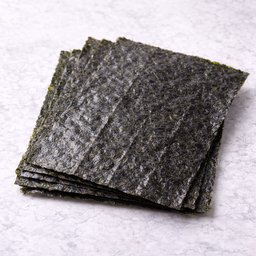
Nori
The Iodine-Rich Seaweed of Sushi
What is this ingredient?
Nori has been a staple of Japanese cuisine for centuries. The seaweed is cultivated in the sea, harvested, washed, pressed into sheets and dried. Interestingly, nori is one of the few plant sources containing vitamin B12, although its bioavailability is still being studied. It also contains porphyran, a unique polysaccharide with antioxidant properties. A sheet of nori weighs only 2-3 grams, so despite the high iodine values per 100g, the intake per portion is moderate (45-55 mcg per sheet).
How does it taste?
Salty-umami with a delicate, mildly sweet ocean flavor and crispy texture.
Pairs well with:
Pairs well with ricesesameavocadowasabi and soy sauce.
Did you know...?
- Nori was used as tax payment in Japan for a long time, so valuable was this seaweed.
- The Japanese nori industry is over 300 years old and started in Tokyo Bay.
Nutritional Value & Energy
Per 100g
Nori is low in calories thanks to natural nutrients .
Per 100g
Minerals
Vitamins
Omega-3 fatty acids
More nutrients
Trace Minerals
What's in a serving?
1 serving
Nori naturally contains iodine (1800 mcg per 100 g).
Nori naturally contains vitamin a (260 mcg per 100 g).
Nori naturally contains vitamin c (39 mg per 100 g).
Nori naturally contains potassium (356 mg per 100 g).
Nori naturally contains copper (0.3 mg per 100 g).
Nori naturally contains folate (146 mcg per 100 g).
% of daily reference intake (DRI)
EU-approved nutrition claims
This ingredient contains nutrients for which EFSA-authorized health claims exist (at nutrient level, not ingredient-specific).
Approved health claims (EU)
Vitamin_c EU 432/2012
Vitamin C contributes to the normal function of the immune system
Contains 39mg/100g (threshold: ≥12mg/100g)
Vitamin_c EU 432/2012
Vitamin C contributes to the reduction of tiredness and fatigue
Contains 39mg/100g (threshold: ≥12mg/100g)
Vitamin_c EU 432/2012
Vitamin C contributes to normal collagen formation for the normal function of skin
Contains 39mg/100g (threshold: ≥12mg/100g)
Potassium EU 432/2012
Potassium contributes to the maintenance of normal blood pressure
Contains 356mg/100g (threshold: ≥300mg/100g)
Folate EU 432/2012
Folate contributes to normal blood formation
Contains 146mcg/100g (threshold: ≥30mcg/100g)
Vitamin_a EU 432/2012
Vitamin A contributes to the normal function of the immune system
Contains 260mcg/100g (threshold: ≥120mcg/100g)
Vitamin_a EU 432/2012
Vitamin A contributes to the maintenance of normal skin
Contains 260mcg/100g (threshold: ≥120mcg/100g)
Vitamin_a EU 432/2012
Vitamin A contributes to the maintenance of normal mucous membranes
Contains 260mcg/100g (threshold: ≥120mcg/100g)
Vitamin_a EU 432/2012
Vitamin A contributes to the maintenance of normal vision
Contains 260mcg/100g (threshold: ≥120mcg/100g)
Vitamin_a EU 432/2012
Vitamin A contributes to normal iron metabolism
Contains 260mcg/100g (threshold: ≥120mcg/100g)
Vitamin_a EU 432/2012
Vitamin A has a role in the process of cell specialisation
Contains 260mcg/100g (threshold: ≥120mcg/100g)
Folate EU 432/2012
Folate contributes to normal amino acid synthesis
Contains 146mcg/100g (threshold: ≥30mcg/100g)
Folate EU 432/2012
Folate contributes to normal homocysteine metabolism
Contains 146mcg/100g (threshold: ≥30mcg/100g)
Folate EU 432/2012
Folate contributes to normal psychological function
Contains 146mcg/100g (threshold: ≥30mcg/100g)
Folate EU 432/2012
Folate contributes to the normal function of the immune system
Contains 146mcg/100g (threshold: ≥30mcg/100g)
Folate EU 432/2012
Folate has a role in the process of cell division
Contains 146mcg/100g (threshold: ≥30mcg/100g)
Folate EU 432/2012
Folate contributes to maternal tissue growth during pregnancy
Contains 146mcg/100g (threshold: ≥30mcg/100g)
Vitamin_c EU 432/2012
Vitamin C contributes to normal collagen formation for the normal function of blood vessels
Contains 39mg/100g (threshold: ≥12mg/100g)
Vitamin_c EU 432/2012
Vitamin C contributes to normal collagen formation for the normal function of bones
Contains 39mg/100g (threshold: ≥12mg/100g)
Vitamin_c EU 432/2012
Vitamin C contributes to normal collagen formation for the normal function of cartilage
Contains 39mg/100g (threshold: ≥12mg/100g)
Vitamin_c EU 432/2012
Vitamin C contributes to normal collagen formation for the normal function of gums
Contains 39mg/100g (threshold: ≥12mg/100g)
Vitamin_c EU 432/2012
Vitamin C contributes to normal collagen formation for the normal function of teeth
Contains 39mg/100g (threshold: ≥12mg/100g)
Vitamin_c EU 432/2012
Vitamin C contributes to normal energy-yielding metabolism
Contains 39mg/100g (threshold: ≥12mg/100g)
Vitamin_c EU 432/2012
Vitamin C contributes to normal functioning of the nervous system
Contains 39mg/100g (threshold: ≥12mg/100g)
Vitamin_c EU 432/2012
Vitamin C contributes to normal psychological function
Contains 39mg/100g (threshold: ≥12mg/100g)
Vitamin_c EU 432/2012
Vitamin C contributes to the protection of cells from oxidative stress
Contains 39mg/100g (threshold: ≥12mg/100g)
Vitamin_c EU 432/2012
Vitamin C contributes to the regeneration of the reduced form of vitamin E
Contains 39mg/100g (threshold: ≥12mg/100g)
Vitamin_c EU 432/2012
Vitamin C increases iron absorption
Contains 39mg/100g (threshold: ≥12mg/100g)
Vitamin_c EU 432/2012
Vitamin C contributes to maintain the normal function of the immune system during and after intense physical exercise
Contains 39mg/100g (threshold: ≥12mg/100g)
Copper EU 432/2012
Copper contributes to the maintenance of normal connective tissues
Contains 0.3mg/100g (threshold: ≥0.15mg/100g)
Copper EU 432/2012
Copper contributes to normal energy-yielding metabolism
Contains 0.3mg/100g (threshold: ≥0.15mg/100g)
Copper EU 432/2012
Copper contributes to normal functioning of the nervous system
Contains 0.3mg/100g (threshold: ≥0.15mg/100g)
Copper EU 432/2012
Copper contributes to normal hair pigmentation
Contains 0.3mg/100g (threshold: ≥0.15mg/100g)
Copper EU 432/2012
Copper contributes to normal iron transport in the body
Contains 0.3mg/100g (threshold: ≥0.15mg/100g)
Copper EU 432/2012
Copper contributes to normal skin pigmentation
Contains 0.3mg/100g (threshold: ≥0.15mg/100g)
Copper EU 432/2012
Copper contributes to the normal function of the immune system
Contains 0.3mg/100g (threshold: ≥0.15mg/100g)
Copper EU 432/2012
Copper contributes to the protection of cells from oxidative stress
Contains 0.3mg/100g (threshold: ≥0.15mg/100g)
Iodine EU 432/2012
Iodine contributes to normal cognitive function
Contains 1800mcg/100g (threshold: ≥22.5mcg/100g)
Iodine EU 432/2012
Iodine contributes to normal energy-yielding metabolism
Contains 1800mcg/100g (threshold: ≥22.5mcg/100g)
Iodine EU 432/2012
Iodine contributes to normal functioning of the nervous system
Contains 1800mcg/100g (threshold: ≥22.5mcg/100g)
Iodine EU 432/2012
Iodine contributes to the maintenance of normal skin
Contains 1800mcg/100g (threshold: ≥22.5mcg/100g)
Iodine EU 432/2012
Iodine contributes to the normal production of thyroid hormones and normal thyroid function
Contains 1800mcg/100g (threshold: ≥22.5mcg/100g)
Iodine EU 432/2012
Iodine contributes to the normal growth of children
Contains 1800mcg/100g (threshold: ≥22.5mcg/100g)
Potassium EU 432/2012
Potassium contributes to normal functioning of the nervous system
Contains 356mg/100g (threshold: ≥300mg/100g)
Potassium EU 432/2012
Potassium contributes to normal muscle function
Contains 356mg/100g (threshold: ≥300mg/100g)
What's being researched?
Nori and cardiovascular research
Peptides in nori are studied for ACE-inhibiting and blood pressure-related effects. Japanese epidemiological evidence is promising.
Supported by: [3] Teas (2009)
Good Combinations (Synergy)
Combine nori smartly to enhance the effect:
Nori 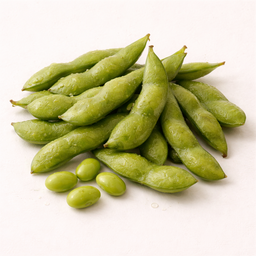 Edamame
 Japanese combination: isoflavones + iodine
Technical: Soy isoflavones can affect thyroid function at high doses through TPO inhibition. Seaweed provides iodine (16-2000μg per serving) that compensates this effect. Good to know: iodine contributes to the normal production of thyroid hormones and normal thyroid function (EFSA-approved). In Japan where lots of soy AND seaweed are eaten, this combination is standard.
What does this mean for you? If you regularly eat edamame or tofu, combine with seaweed (miso soup with wakame, sushi with nori). This is the traditional Japanese approach followed for centuries.
Nori 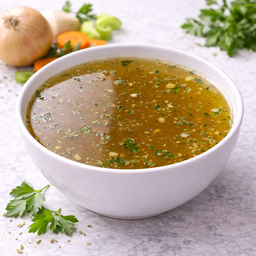 Vegetable Broth
 Mineral-rich base for Asian soups
Technical: Vegetable broth contains land minerals (potassium, magnesium, phosphorus) from vegetables. Nori and wakame add sea minerals: iodine (essential for thyroid), extra magnesium and trace elements (vanadium, chromium) scarce on land. Together they cover a broader mineral spectrum than land or sea sources alone.
What does this mean for you? Add a piece of nori or wakame to your vegetable broth or miso soup. You supplement minerals often lacking in land-based food — especially iodine for your thyroid.
Nori 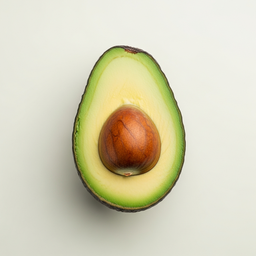 Avocado
 Fat increases absorption of iodine and fat-soluble vitamins from nori
Technical: Nori contains iodine (16-43μg per sheet), vitamin A, and vitamin K. These are fat-soluble and better absorbed with dietary fat. Avocado contains 15g healthy fats per 100g that stimulate micelle formation in the gut.
What does this mean for you? Make sushi bowls with avocado or eat your nori snacks with guacamole. The combination increases the nutritional value of both ingredients.
Nori 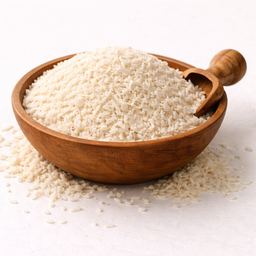 Rice
Rice Complete amino acids through seaweed + grain combination
Technical: Nori is exceptionally rich in iodine (16-43μg per sheet), vitamin B12 (rare in plant sources), and contains all essential amino acids but in small amounts. Rice provides carbohydrates for energy and methionine (an amino acid nori is low in). Together they form a more complete amino acid profile and deliver both quick energy and essential micronutrients.
What does this mean for you? Sushi (nori + rice) isn't just tasty — it's one of the oldest and smartest food combinations in the world. The Japanese tradition of nori around rice is scientifically a perfect match.
Nori 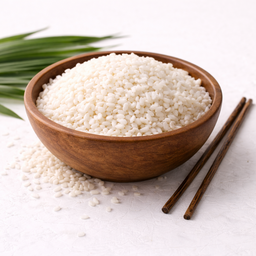 Sushi Rice (Short Grain)
 Complete amino acids through seaweed + grain combination
Technical: Nori is exceptionally rich in iodine (16-43μg per sheet), vitamin B12 (rare in plant sources), and contains all essential amino acids but in small amounts. Rice provides carbohydrates for energy and methionine (an amino acid nori is low in). Together they form a more complete amino acid profile and deliver both quick energy and essential micronutrients.
What does this mean for you? Sushi (nori + rice) isn't just tasty — it's one of the oldest and smartest food combinations in the world. The Japanese tradition of nori around rice is scientifically a perfect match.
Nori 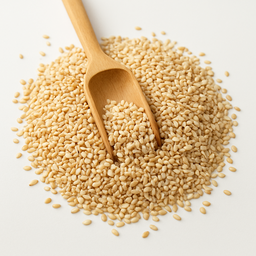 Sesame Seeds
 Classic Asian combination: minerals + healthy fats
Technical: Nori provides iodine and minerals, sesame seeds add calcium (975mg/100g), iron and healthy fats. The combination enhances absorption of fat-soluble vitamins from nori.
What does this mean for you? Sprinkle sesame seeds on your sushi or rice dishes for a more nutritious meal.
Recipes with Nori
Discover delicious recipes featuring nori:
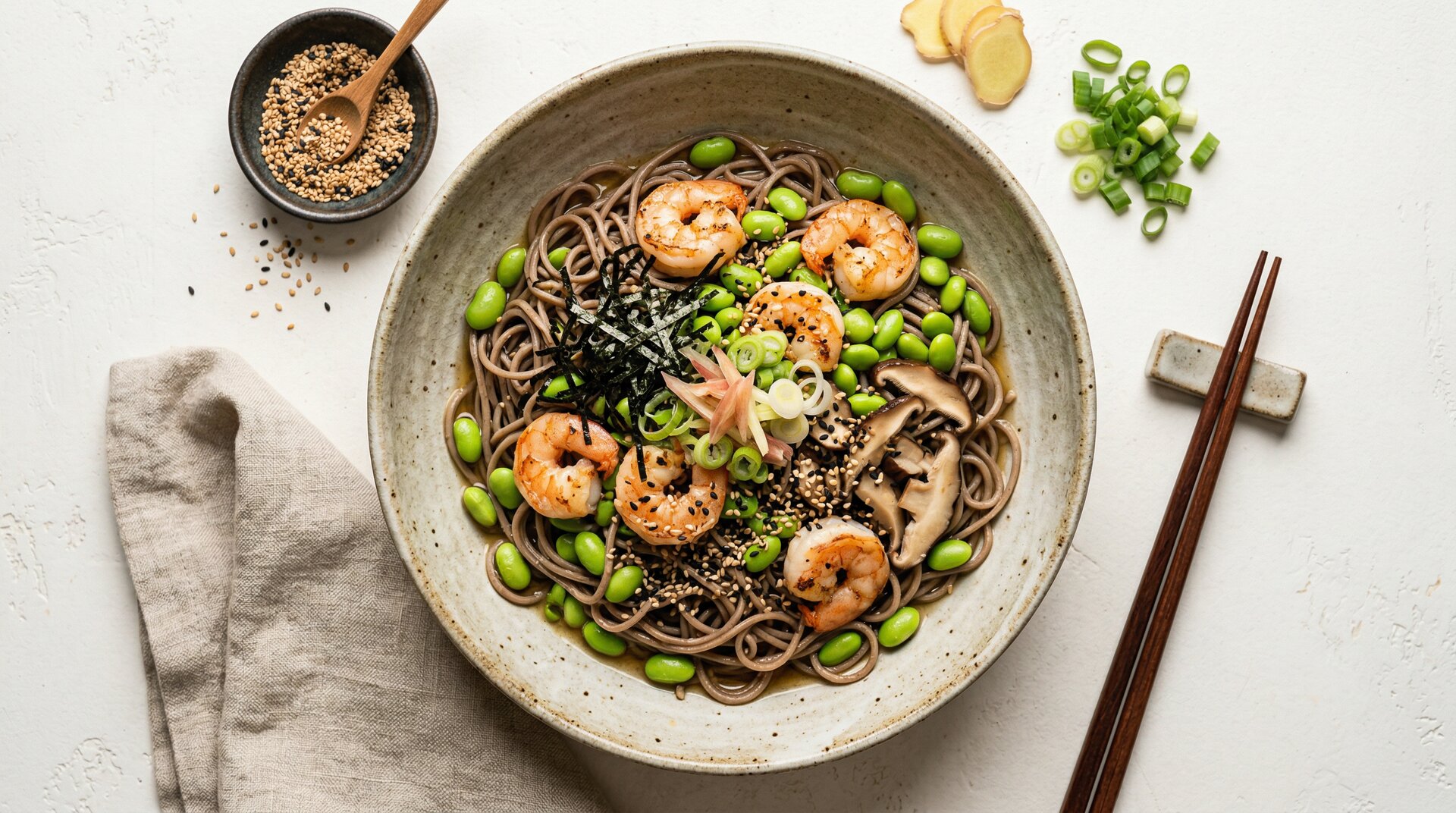 Japanese Shrimp Edamame Soba Noodles 25 min Buckwheat noodles with shrimp, edamame and an umami dressing
  560 kcal
  34g protein 2 synergies
 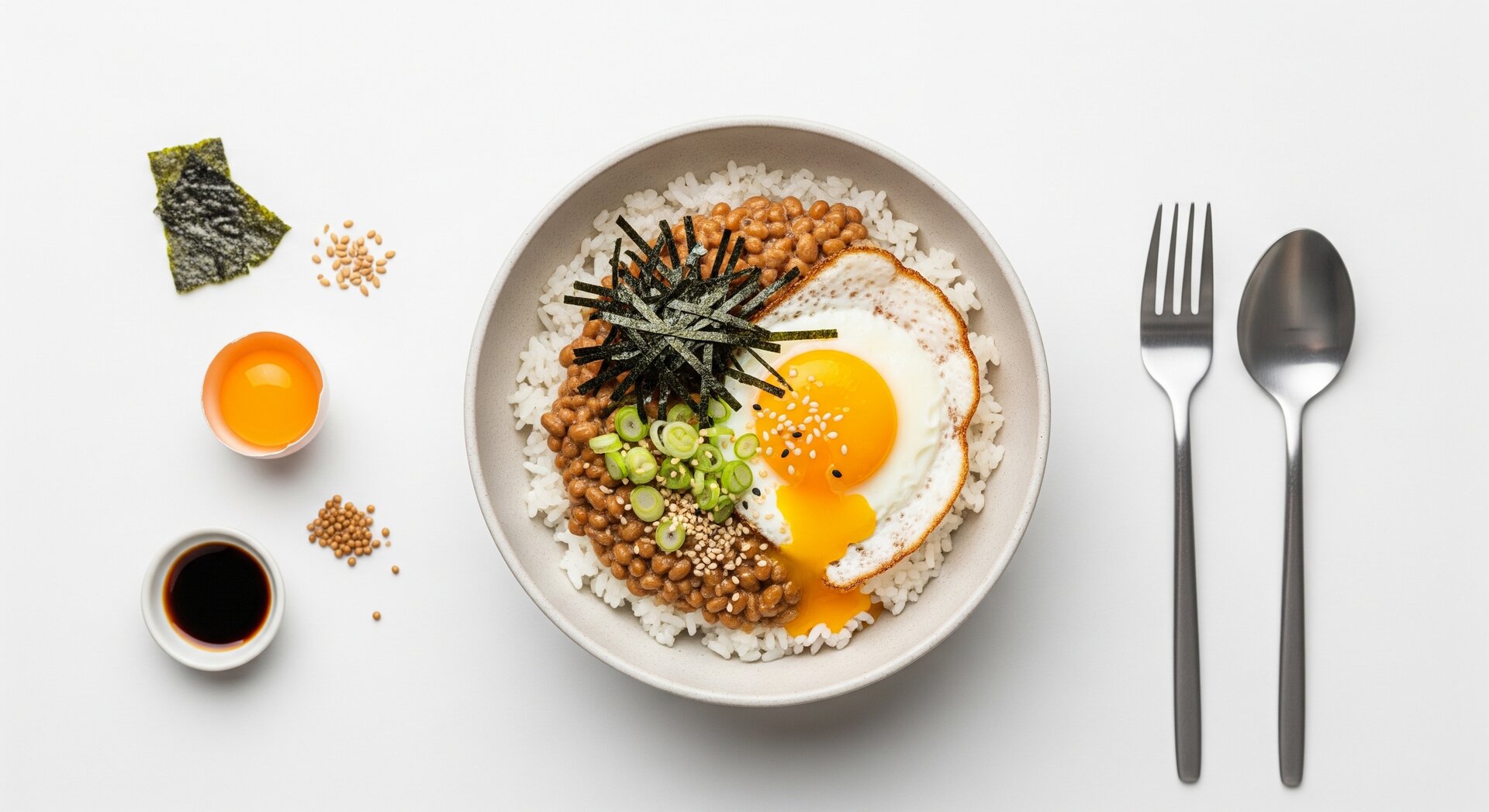 Japanese Natto Rice with Egg and Seaweed 20 min Fermented soybeans on warm rice with fried egg and nori 353 kcal 20g protein 1 synergies
 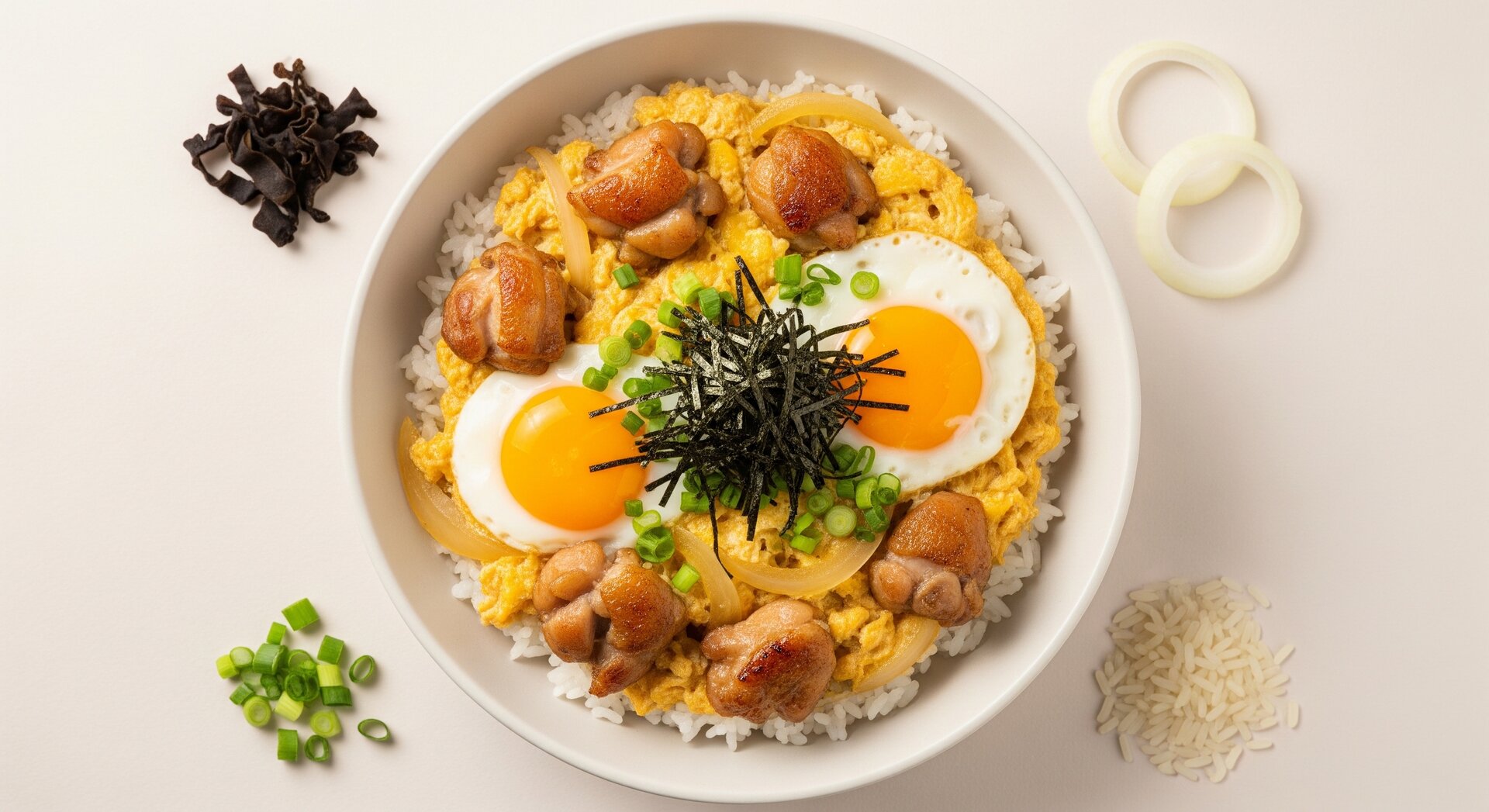 Japanese Oyakodon - Chicken and Egg over Rice 30 min Japanese comfort bowl with simmered chicken and silky egg 653 kcal 62g protein 2 synergies
 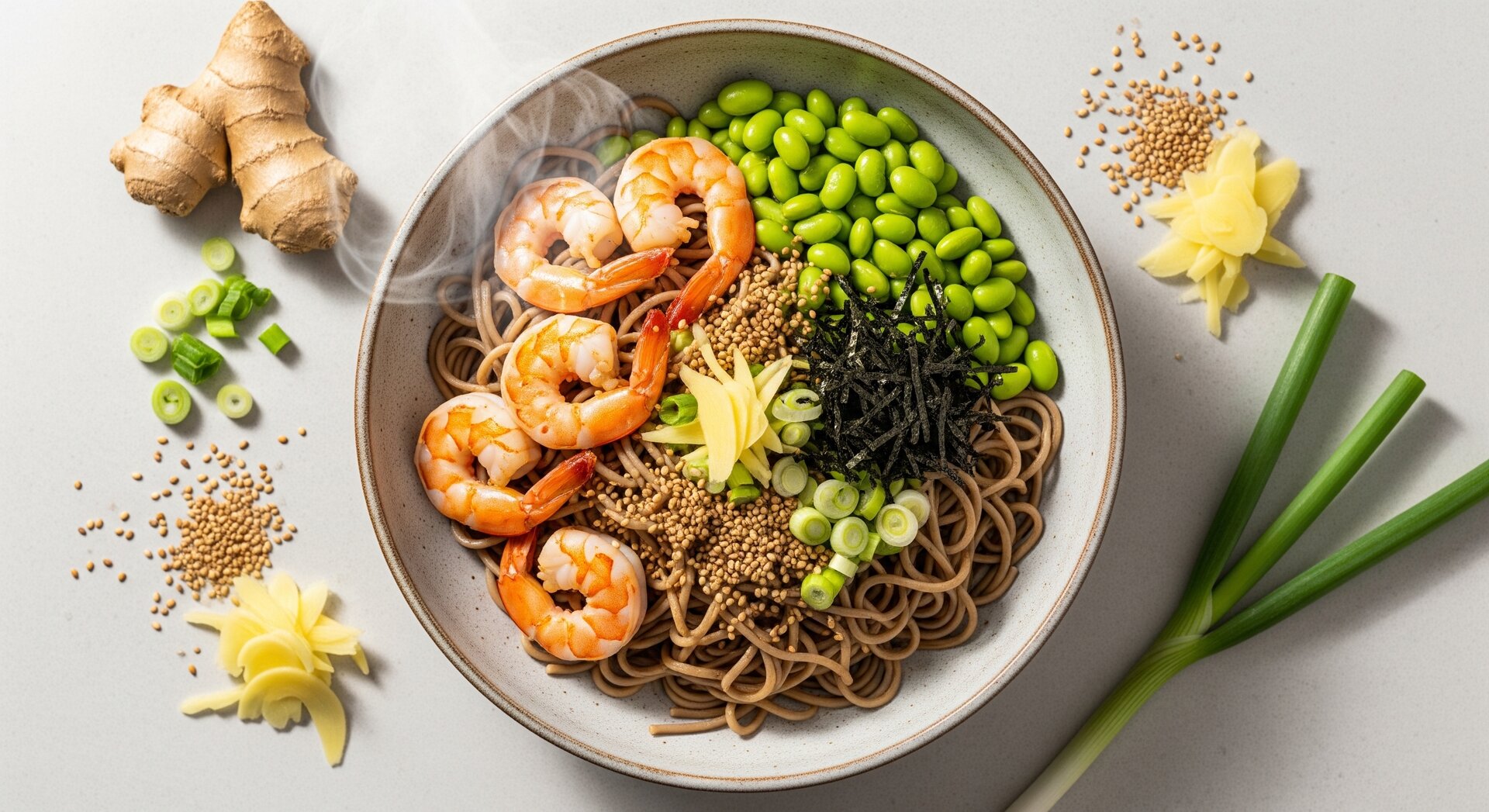 Japanese Teriyaki Salmon Bowl with Edamame and Sesame Rice 40 min Glazed salmon with edamame, avocado and fresh vegetables 920 kcal 45g protein 2 synergies
 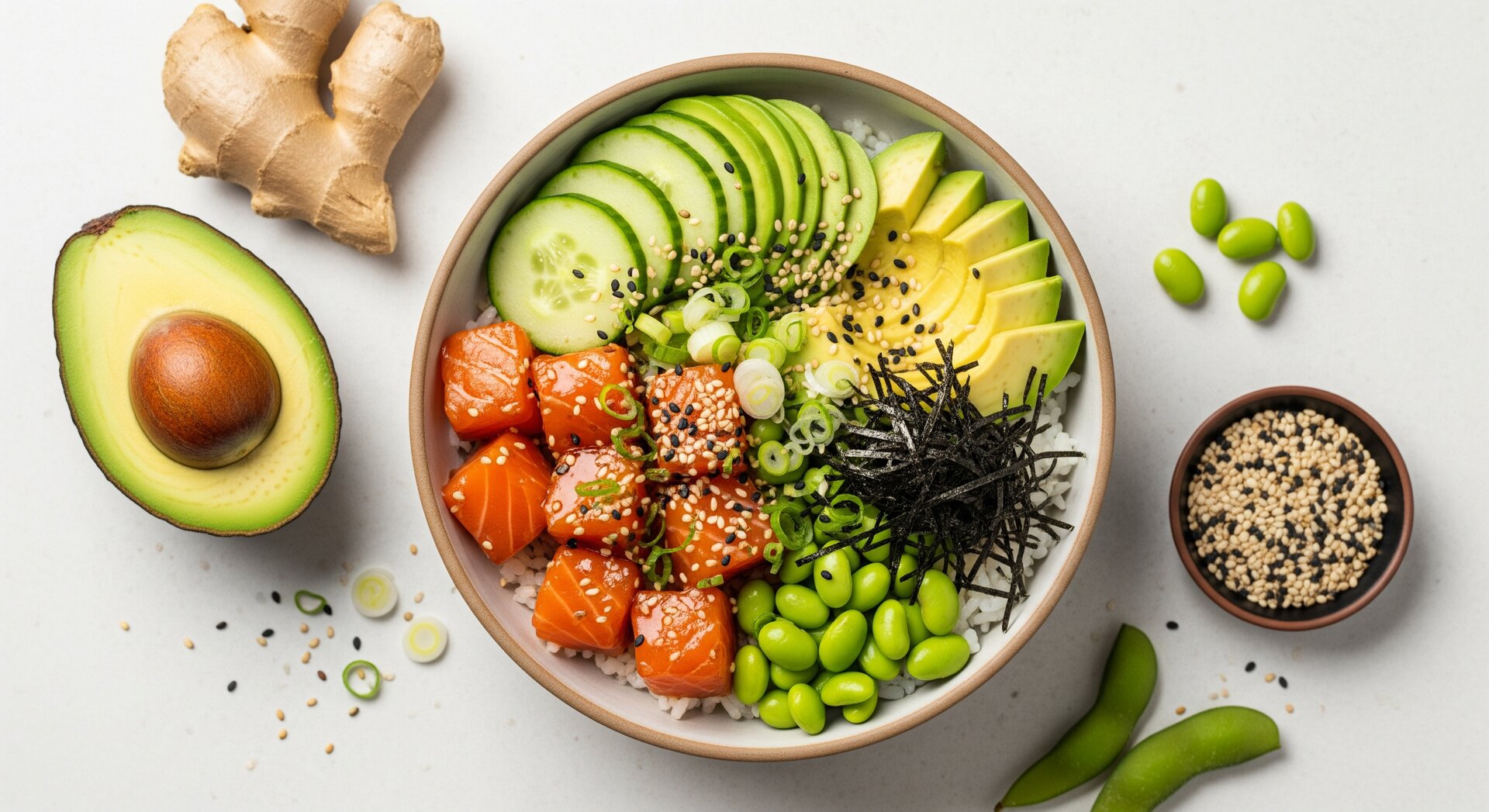 Japanese Salmon Poké Bowl 35 min Fresh salmon on sushi rice with avocado and edamame 520 kcal 35g protein 1 synergies
 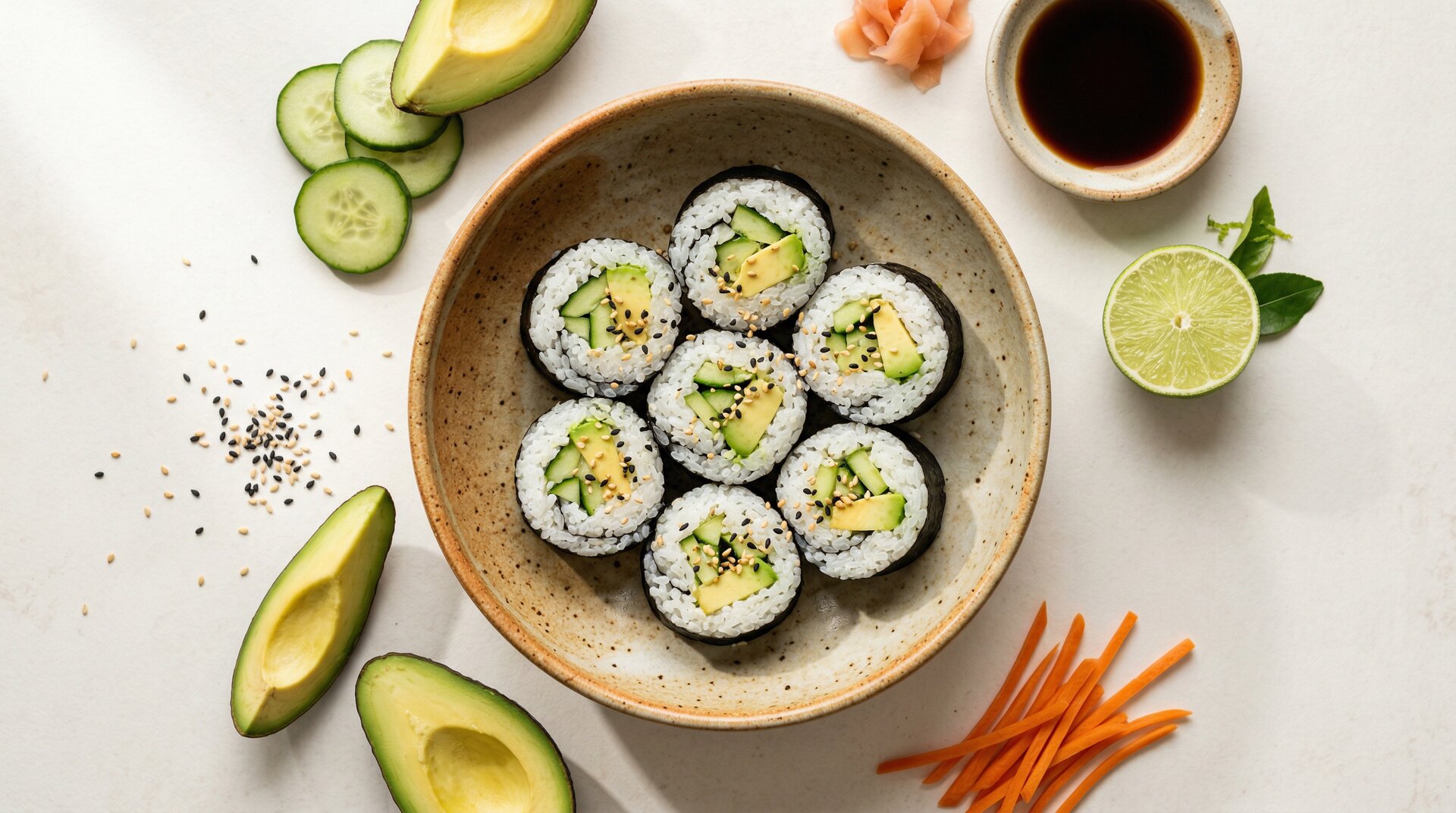 Cucumber Avocado Sushi Rolls 15 min Fresh no-cook bites with nori and sesame dip 110 kcal 2g protein 2 synergies
  In the Kitchen
Storage
Location:Pantry
Shelf life:1-2 jaar ongeopend, na openen binnen maanden gebruiken
Store in airtight packaging, away from moisture. Add silica gel packet to maintain crispness.
Preparation
Use directly for sushi/maki. For extra crispness: hold briefly over gas flame until it changes color. Crumble as garnish over rice or soup.
Conversions
Substitutes
Smart preparation
1Briefly toast nori over a gas flame or in a dry pan for extra crispness.
Why?
Toasting enhances the umami flavor and makes the sheet crispier.
2Store nori dry in a sealed package; it absorbs moisture quickly.
3Crumble nori over rice, salads, or soups as a flavorful garnish.
Caution / Warnings
Nori is very safe, but there are scientific considerations:
Thyroid Disorders Moderate
Excessive iodine intake can worsen both hypothyroidism and hyperthyroidism
Advice:
Consult doctor with known thyroid issues. Limit to 1-2 sheets per day.
Blood Thinners Mild
Nori contains vitamin K which may affect the action of blood thinners
Advice:
When using blood thinners: keep intake consistent and consult doctor
Traditional use
Other
Nori in Japanese Tradition
Nori has been harvested and consumed in Japan for over 1,000 years. It was originally sold as paste before the sheet form emerged in the Edo period.
Summary
The flavor maker behind sushi. Extremely rich in iodine for your thyroid, but in normal portions (1-2 sheets) perfectly fine to consume. Toast briefly over a flame for extra crispness.