- Medium
- 210 min
- 6 serv.
- 15 synergies
- Now at its best: Shallot
A legendary Indonesian dish — tender beef in a deep, complex sauce of coconut, ginger, galangal and lemongrass. Hours of simmering reduce the sauce to a dry, intense coating that envelops every piece of meat.
There's a reason rendang is consistently voted one of the world's most delicious dishes. It starts with a bumbu — a fresh spice paste of shallots, garlic, ginger, galangal, chillies and a handful of spices, all ground into a fragrant red paste. That bumbu goes into the pan with coconut milk, followed by large chunks of beef chuck that will slowly transform over the coming hours. The magic lies in patience: first the meat simmers in a rich, aromatic coconut sauce. As the hours pass, the liquid evaporates and the sauce begins to thicken. In the final hour — the critical hour — you stir constantly, and the sauce reduces to a dry, dark coating that completely envelops the meat. Toasted shredded coconut adds the finishing touch: a nutty crunch contrasting with the velvety, fall-apart beef.
- 30
- min prep
- 180
- min cook
- 210
- min total
Nutritional Synergies
This recipe combines ingredients that enhance each other:
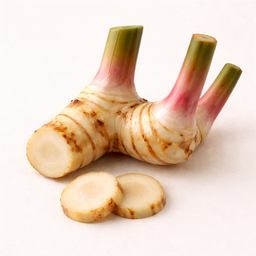 Galangal
 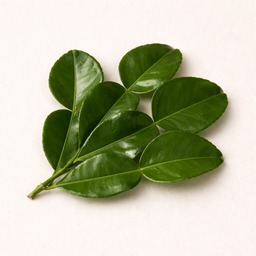 Kaffir lime leaves
 Thai aromatics with bioactive action
Technical: Galangal contains galangin and HMP (hydroxymethoxyphenyl) with bioactive action. Kaffir lime contains citronellal and limonene with bioactive properties. Together they provide a broad spectrum of bioactive compounds — the base of Tom Kha and Tom Yam.
What does this mean for you? Galangal + kaffir lime is the base of Tom Kha and Tom Yam. These Thai aromatics offer not just unique flavor, but also a broad spectrum of bioactive compounds.
Immune SystemDigestion
Kaffir lime leaves 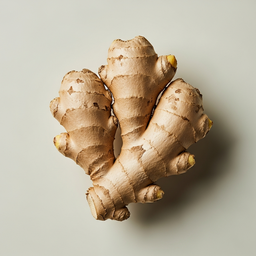 Ginger
 Citronellol + gingerols for aromatic digestion
Technical: Kaffir lime leaf contains citronellol (30-40%) and limonene (20%) — terpenes with bioactive and anxiolytic action. Ginger's gingerols promote gastric motility and bile flow. The combination offers multi-level digestive support: kaffir lime's terpenes calm the gut nervous system (enteric nervous system), ginger activates mechanical digestion. This is the scientific basis behind Tom Kha Gai (coconut soup).
What does this mean for you? Use kaffir lime leaf with ginger in Thai soups and curries. Tear the leaf for maximum aromatic release. The combination makes fatty coconut dishes easier to digest.
DigestionStress Relief
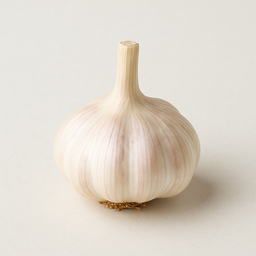 Garlic Ginger
 Allicin + gingerols: complementary bioactive action
Technical: Garlic's allicin works via thiol enzyme inhibition — effective against gram-positive bacteria (Staphylococcus, Streptococcus). Ginger's gingerols and shogaols influence viral replication and stimulate interferon production. Together they cover both bacterial and viral pathways.
What does this mean for you? Garlic-ginger tea is a classic combination. Garlic works via thiol enzymes, ginger via interferon pathways. Cut both fresh for maximum active compounds — allicin only forms after 10 minutes of air exposure.
Immune System
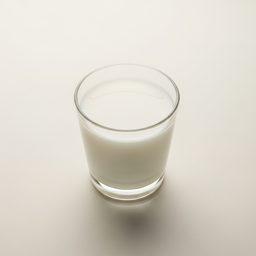 Coconut Milk
 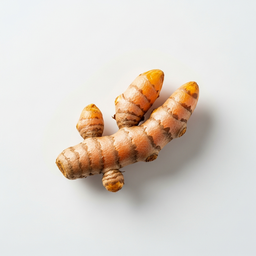 Turmeric
 Golden Milk base - optimal curcumin absorption
Technical: Curcumin from turmeric is fat-soluble with bioavailability below 1% without fat. Coconut milk contains lauric acid and other MCTs that dissolve curcumin and significantly increase gut absorption. MCTs are also rapidly absorbed, efficiently transporting curcumin. This is the principle behind traditional Golden Milk.
What does this mean for you? Make golden milk with coconut milk as base — the coconut fat ensures your body actually absorbs the curcumin. Always add a pinch of black pepper for maximum effect.
Anti-inflammatoryJoints
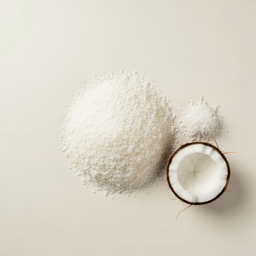 Shredded coconut Turmeric
 MCTs in desiccated coconut improve curcumin absorption
Technical: Desiccated coconut contains 65g fat per 100g, mostly MCTs that are rapidly absorbed. These MCTs form a lipid matrix that efficiently transports fat-soluble curcumin from turmeric through the gut wall. The absorption increase is comparable to coconut milk but in concentrated solid form.
What does this mean for you? Use desiccated coconut together with turmeric in curries, energy balls or granola. The coconut fat in the flakes helps your body better absorb the curcumin.
Anti-inflammatoryJoints
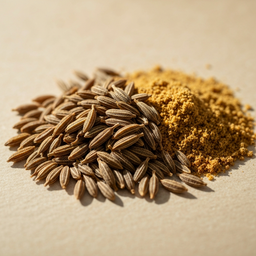 Cumin Garlic
 Double digestive support: enzymes + bioactive compounds
Technical: Cumin promotes digestive enzyme activity (amylase, lipase, protease) and increases bile flow. Garlic's allicin has broad bioactivity targeting pathogenic gut bacteria while sparing beneficial ones.
What does this mean for you? Fry garlic and cumin together as base for curries, soups and stews. Classic combination in virtually every cuisine in the world.
DigestionImmune System
Cumin Turmeric Classic curry base with enhanced digestion
Technical: Cumin promotes production of digestive enzymes (amylase, lipase, protease) and increases bile flow. Turmeric's curcumin modulates NF-κB and COX-2 signal transduction and supports hepatobiliary activity via bile stimulation. Together they provide enhanced digestion + bioactive action.
What does this mean for you? Cumin + turmeric is the base of every curry. The cumin promotes your digestion, the turmeric adds bioactive action — the perfect combination for a nutritious curry.
DigestionAnti-inflammatory
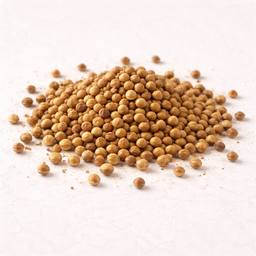 Coriander Seeds Cumin
 Linalool + cuminaldehyde for digestion and biotransformation
Technical: Coriander seed contains linalool (60-80% of oil) that acts antispasmodically on the GI tract and promotes bile flow. Cumin's cuminaldehyde (25-35%) promotes pancreatic enzyme activity (amylase, lipase, protease) by 20-30%. Together they promote the complete digestive cascade: coriander seed promotes bile flow (fat digestion), cumin activates pancreatic enzymes (protein/starch digestion). Studies show the combination meaningfully reduces gas formation.
What does this mean for you? Coriander seed + cumin is the Indian digestive duo (jeera-dhaniya). Dry toast both seeds in a pan for maximum aroma development and add to dal, curry or rice.
DigestionAntioxidants
Turmeric Ginger Enhanced bioactive action via two pathways
Technical: Turmeric and ginger belong to the same plant family (Zingiberaceae). Curcumin (turmeric) modulates NF-kB, while gingerol (ginger) modulates COX-2 and LOX (lipoxygenase). Because they target different signaling pathways, they enhance each other's bioactive action.
What does this mean for you? Turmeric + ginger in curry, soup or tea — two related spices that work bioactively via different pathways. Broader together than alone.
Anti-inflammatoryJoints
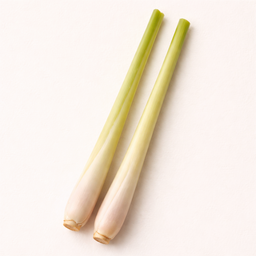 Lemongrass Galangal
 Tom Yum base with bioactive action
Technical: Lemongrass contains citral (geranial + neral) with bioactive action. Galangal contains galangin working bioactively via a different mechanism (enzyme modulation). Together they provide a broad spectrum of bioactive compounds. The broth extracts the volatile oils — Tom Yum is a soup traditionally prepared and enjoyed in Thailand.
What does this mean for you? Tom Yum with fresh lemongrass and galangal is more than just soup — it's a traditional Thai recipe with a broad spectrum of bioactive compounds.
Anti-inflammatoryDigestion
Lemongrass Ginger Classic Asian digestive support
Technical: Lemongrass contains citral that promotes digestive enzymes and is bioactive. Ginger's gingerol accelerates gastric motility (prokinetic) and suppresses nausea. Together they promote digestion via two complementary pathways.
What does this mean for you? Lemongrass + ginger in soup or tea — a classic Asian combination. Two herbs that promote your digestion via complementary pathways.
DigestionAnti-inflammatory
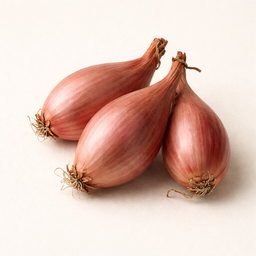 Shallot Garlic
 Complementary Allium sulfur compounds: >15 organosulfur in one combination
Technical: Shallots contain quercetin (32mg/100g) plus allyl propyl disulfide. Garlic contains allicin and ajoene. Together they provide >15 unique organosulfur compounds that influence platelet aggregation signaling and modulate fibrinolysis. Allium crops are intensively studied in epidemiological research.
What does this mean for you? Shallot and garlic together (base of many sauces and stews) combine more than 15 unique organosulfur compounds. The different Allium sulfur compounds complement each other through different biochemical pathways.
HeartAnti-inflammatory
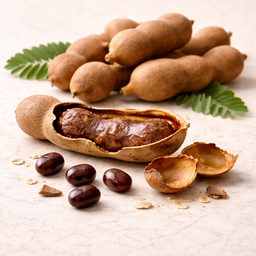 Tamarind paste Ginger
 Tartaric acid + gingerols for GI tract and bioactive support
Technical: Tamarind's tartaric acid acts as a mild laxative by drawing water into the intestine (osmotic effect). Ginger's gingerols promote peristalsis via prokinetic action. Together they promote intestinal transit via two complementary mechanisms: osmotic (tamarind) + mechanical (ginger). Both also offer bioactive support: tartaric acid modulates NF-kB, gingerols modulate COX-2.
What does this mean for you? Tamarind-ginger drink is a South Asian digestive aid. Mix tamarind pulp with grated ginger in warm water after a heavy meal for smooth digestion.
DigestionAnti-inflammatory
Tamarind paste Coconut Milk Acid + fat + protein for satay sauce perfection
Technical: Tamarind contains tartaric acid that lowers stomach pH and promotes pepsinogen (protein digestion enzyme) activity. Peanut provides 25g protein and healthy fats. Coconut milk's MCTs improve absorption of fat-soluble compounds. The acid + protein + fat trio optimizes nutrient absorption from the entire dish.
What does this mean for you? Make satay sauce with tamarind, peanut and coconut milk. The acid from tamarind helps better digest proteins from peanut — traditional Indonesian nutritional wisdom.
DigestionMuscle Gain
Tamarind paste Cumin Tartaric acid + cuminaldehyde for digestion and iron
Technical: Tamarind contains tartaric acid (8-14%) that lowers stomach pH and improves iron absorption. Tamarind is also one of the richest plant sources of iron (2.8mg/100g) and magnesium (92mg). Cumin's cuminaldehyde stimulates pancreatic enzymes by 20-30%. Tartaric acid chelates iron from both sources into soluble forms. The combination is the base of Indian chutneys and rasam soup.
What does this mean for you? Tamarind-cumin chutney or rasam is an Indian digestive aid that's scientifically supported. The sour + spicy profile stimulates every phase of digestion.
DigestionEnergy
Ingredients (14)
-
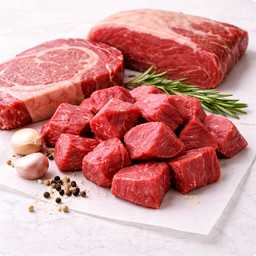 Beef — 800 g chuck or rib, cubed
 - Coconut Milk — 800 ml
- Shredded coconut — 100 g unsweetened, toasted
Instructions
- 1 Make bumbu: blend shallots, garlic, ginger, galangal, chili, coriander, cumin and turmeric.
- 2 Toast coconut in dry pan until golden, blend finely.
Nutrition per serving
Indicative values per serving.
Timing & Suitability
Shelf life: 5 days in fridge