Galangal
The Thai ginger-like spice
What is this ingredient?
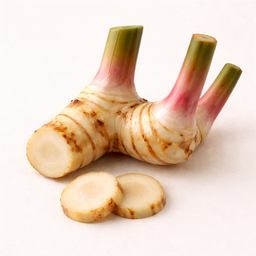
Galangal is indispensable in Thai and Indonesian cuisine, especially in dishes such as Tom Yum soup, laksa and aromatic curry pastes. Where ginger tastes warm and rounded, galangal has a cooler, peppery profile with clear citrus and pine-like notes.
The rhizome is firm and fibrous. For that reason, it is usually sliced and infused in broths, soups and curries, then removed before serving. For pastes, young galangal can be grated or pounded very finely.
In Southeast Asian culinary traditions, galangal has been used for centuries as an aromatic base for dishes that need freshness, sharpness and depth. It gives food a bright spicy character that ordinary ginger cannot fully replace.
How does it taste?
Sharp, citrusy and peppery with a slightly pine-like, resinous flavor.
Pairs well with:
Pairs well with coconut milklemongrasskaffir limechilicilantro and shrimp.
Did you know...?
- Galangal was used in medieval Europe as an aromatic substitute for pepper.
- Although galangal resembles ginger, they belong to the same plant family but to different genera.
Nutritional Value & Energy
Per 100g
Galangal provides energy thanks to natural nutrients .
Per 100g
Minerals
Vitamins
More nutrients
B-Vitamins
Trace Minerals
EU-approved nutrition claims
There are currently no EFSA-authorized health claims specific to galangal. Various applications for herbs and spices have been submitted but have not yet been assessed (botanical 'on hold' list).
What's being researched?
Galangal and bioactive compounds
Galangin and other flavonoids in galangal are mainly studied in laboratory and preclinical models. The studies describe bioactivity of individual compounds, but do not yet provide an ingredient-specific health claim for normal culinary use.
Supported by: [1] Tang X (2018) , [2] Pradubyat N (2022)
Good Combinations (Synergy)
Combine galangal smartly to enhance the effect:
Galangal 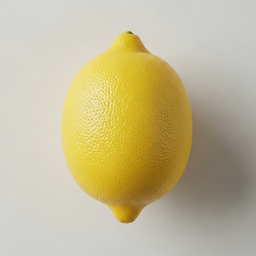 Lemon
Lemon Galangin + vitamin C for antioxidant and digestion
Technical: Galangal (Alpinia galanga) contains galangin (flavonoid) and 1'-acetoxychavicol acetate (ACA) — a powerful antioxidant 10x stronger than vitamin E in DPPH assay. Lemon's vitamin C works synergistically as aqueous-phase antioxidant while galangal's ACA inhibits lipid-phase oxidation. Together they cover the complete antioxidant spectrum. Galangal also promotes bile flow, lemon gastric acid secretion — complementary digestive promoters.
What does this mean for you? Add galangal and lemon together to Tom Kha or other Thai soups. The combination offers powerful antioxidant protection and makes fatty dishes more digestible.
Galangal 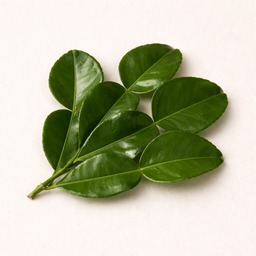 Makrut Lime Leaf
 Thai aromatics with bioactive action
Technical: Galangal contains galangin and HMP (hydroxymethoxyphenyl) with bioactive action. Kaffir lime contains citronellal and limonene with bioactive properties. Together they provide a broad spectrum of bioactive compounds — the base of Tom Kha and Tom Yam.
What does this mean for you? Galangal + kaffir lime is the base of Tom Kha and Tom Yam. These Thai aromatics offer not just unique flavor, but also a broad spectrum of bioactive compounds.
Galangal 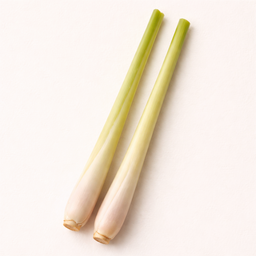 Lemongrass
 Tom Yum base with bioactive action
Technical: Lemongrass contains citral (geranial + neral) with bioactive action. Galangal contains galangin working bioactively via a different mechanism (enzyme modulation). Together they provide a broad spectrum of bioactive compounds. The broth extracts the volatile oils — Tom Yum is a soup traditionally prepared and enjoyed in Thailand.
What does this mean for you? Tom Yum with fresh lemongrass and galangal is more than just soup — it's a traditional Thai recipe with a broad spectrum of bioactive compounds.
Recipes with Galangal
Discover delicious recipes featuring galangal:
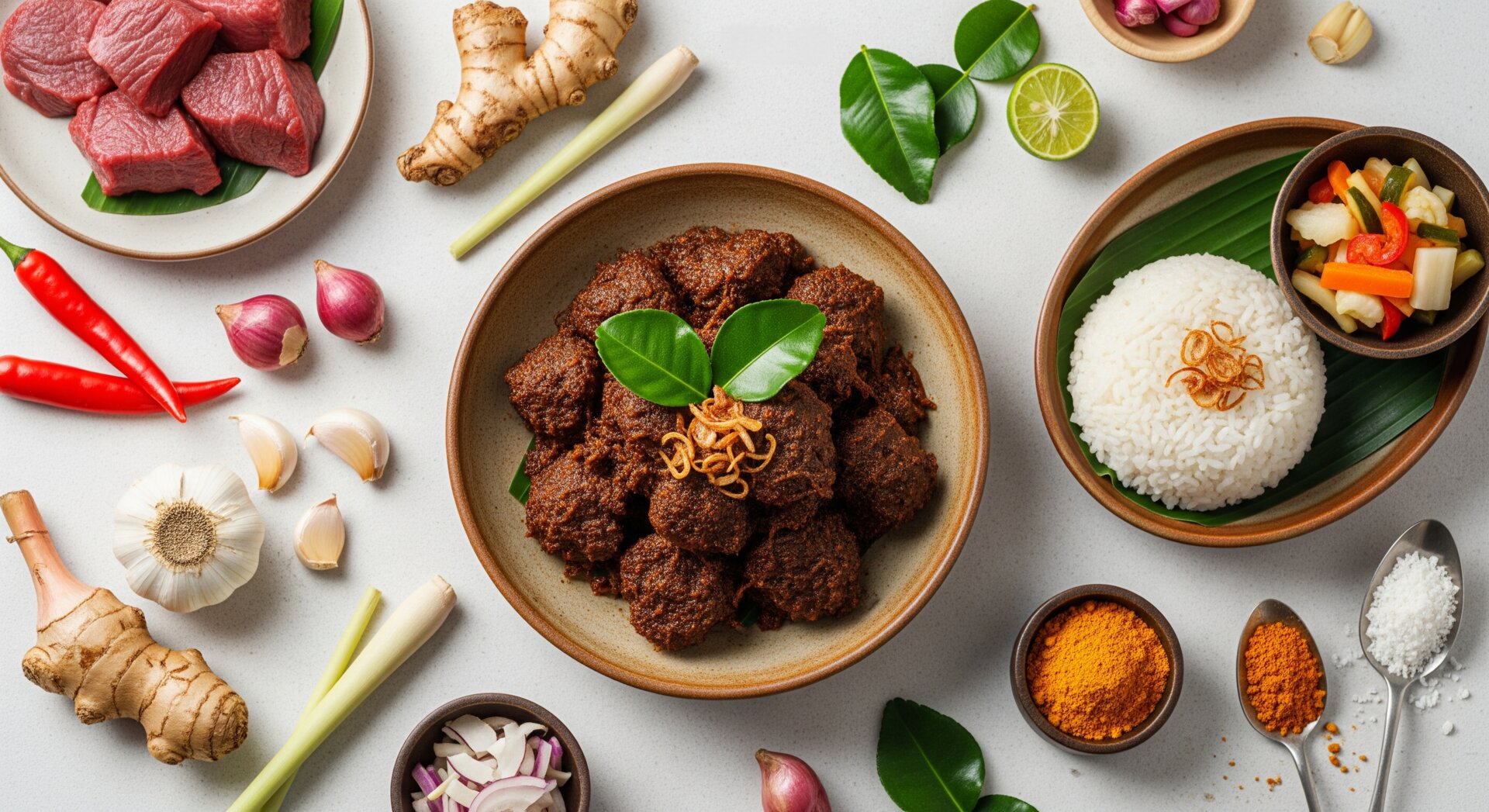 Indonesian Beef Rendang 210 min Slow-cooked beef in rich coconut-spice sauce
  520 kcal
  42g protein 2 synergies
 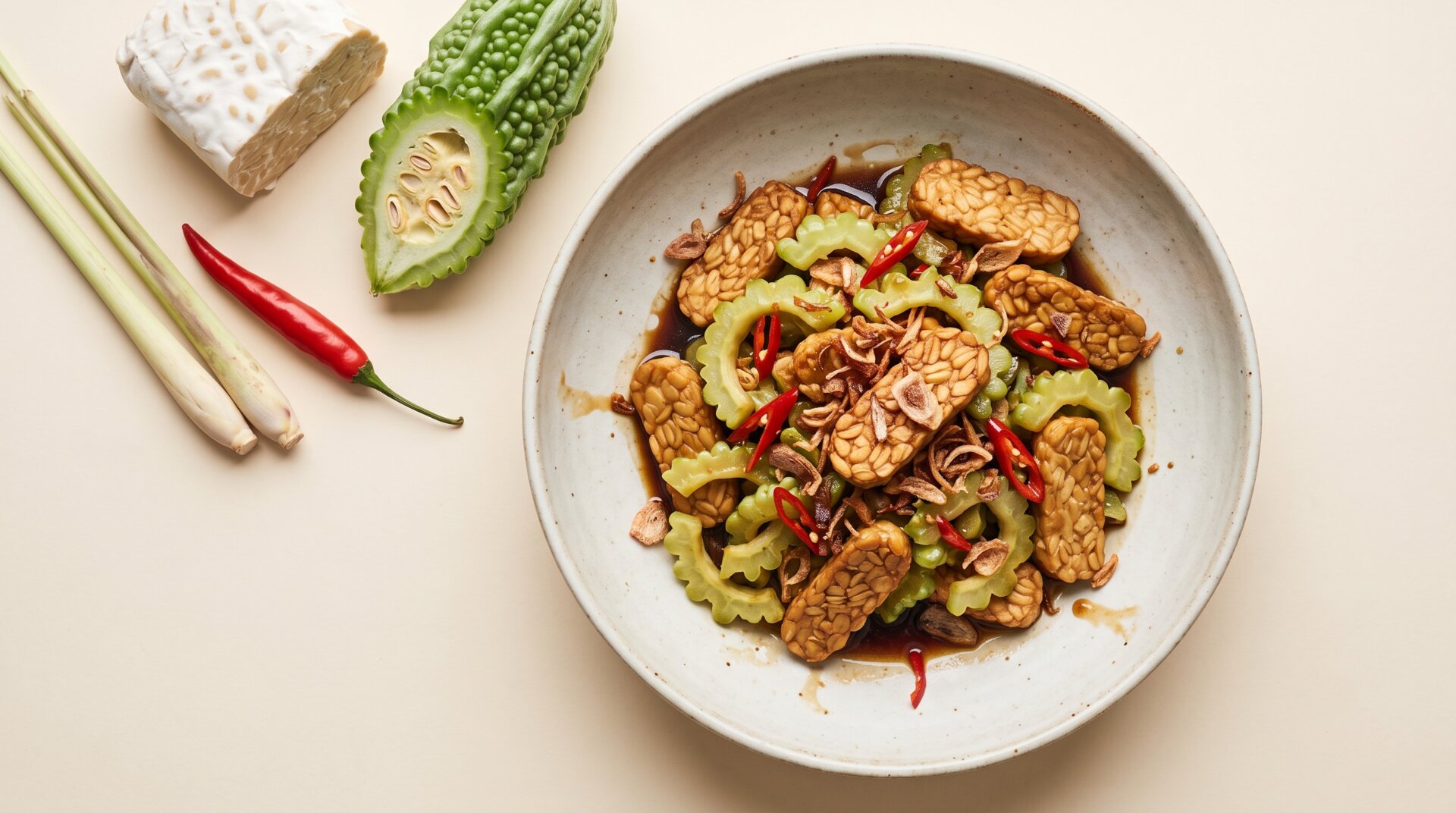 Indonesian Tempeh with Bitter Melon 45 min Stir-fry with kecap manis, galangal and lemongrass 320 kcal 18g protein 2 synergies
 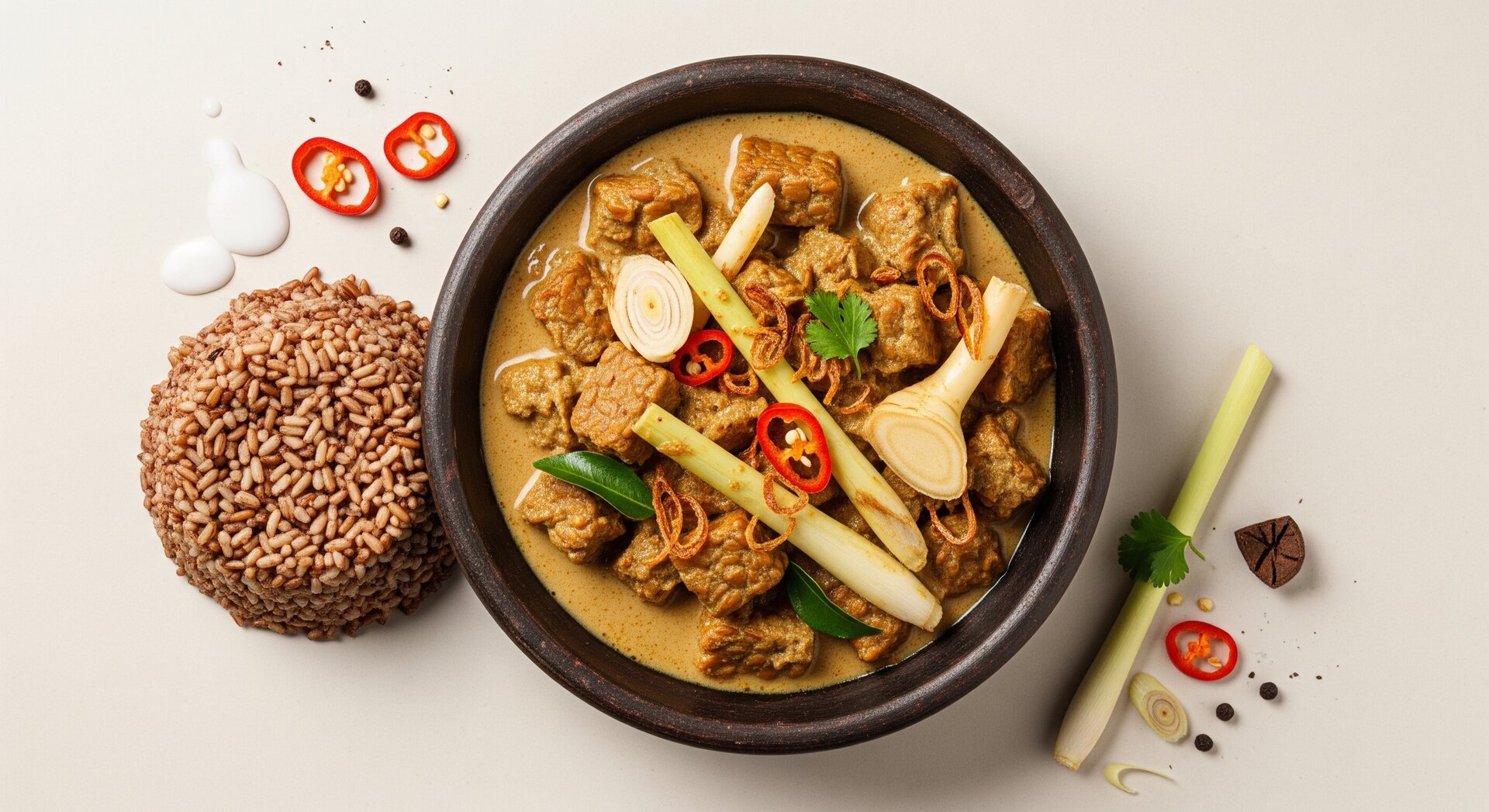 Tempeh Rendang with Brown Rice 60 min Vegan Indonesian classic with tempeh in creamy coconut sauce 880 kcal 39g protein 2 synergies
 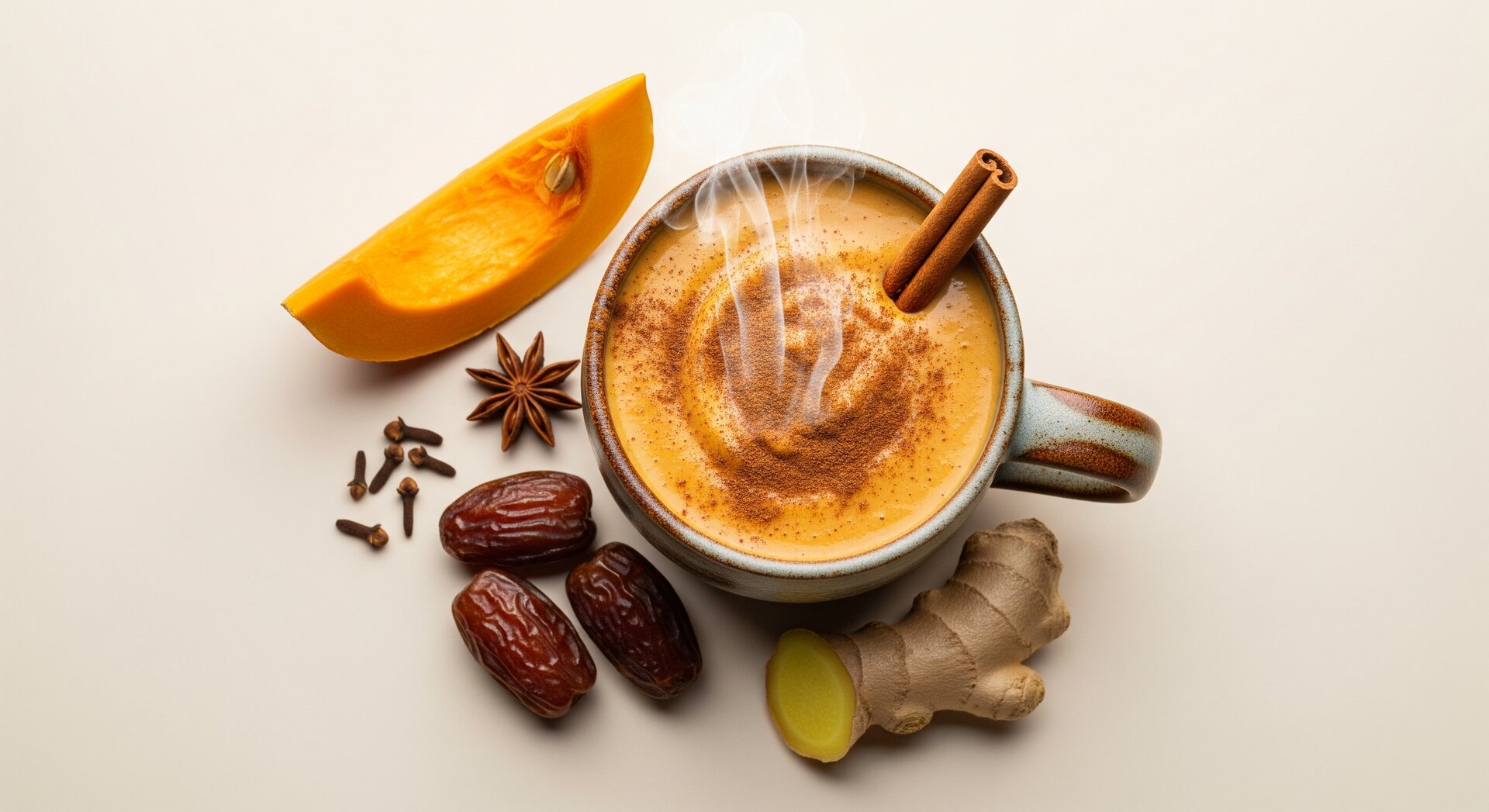 Thai Coconut Curry Soup 45 min Creamy coconut soup with red curry, chicken, mushrooms and lime 540 kcal 22g protein 2 synergies
 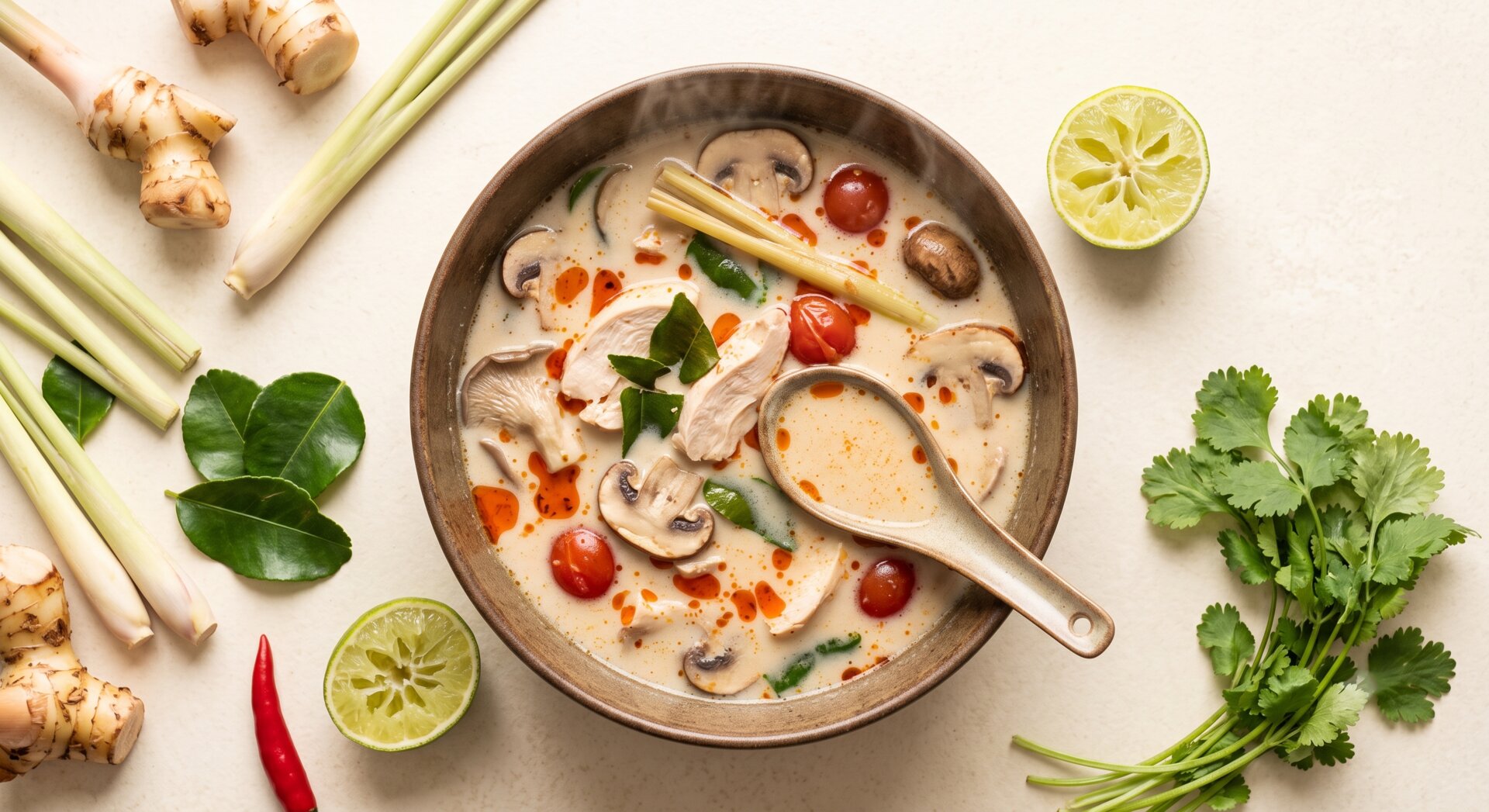 Tom Kha Gai — Thai Coconut Soup with Galangal 40 min Creamy Thai coconut soup with chicken, galangal, lemongrass and lime 335 kcal 31g protein 2 synergies
 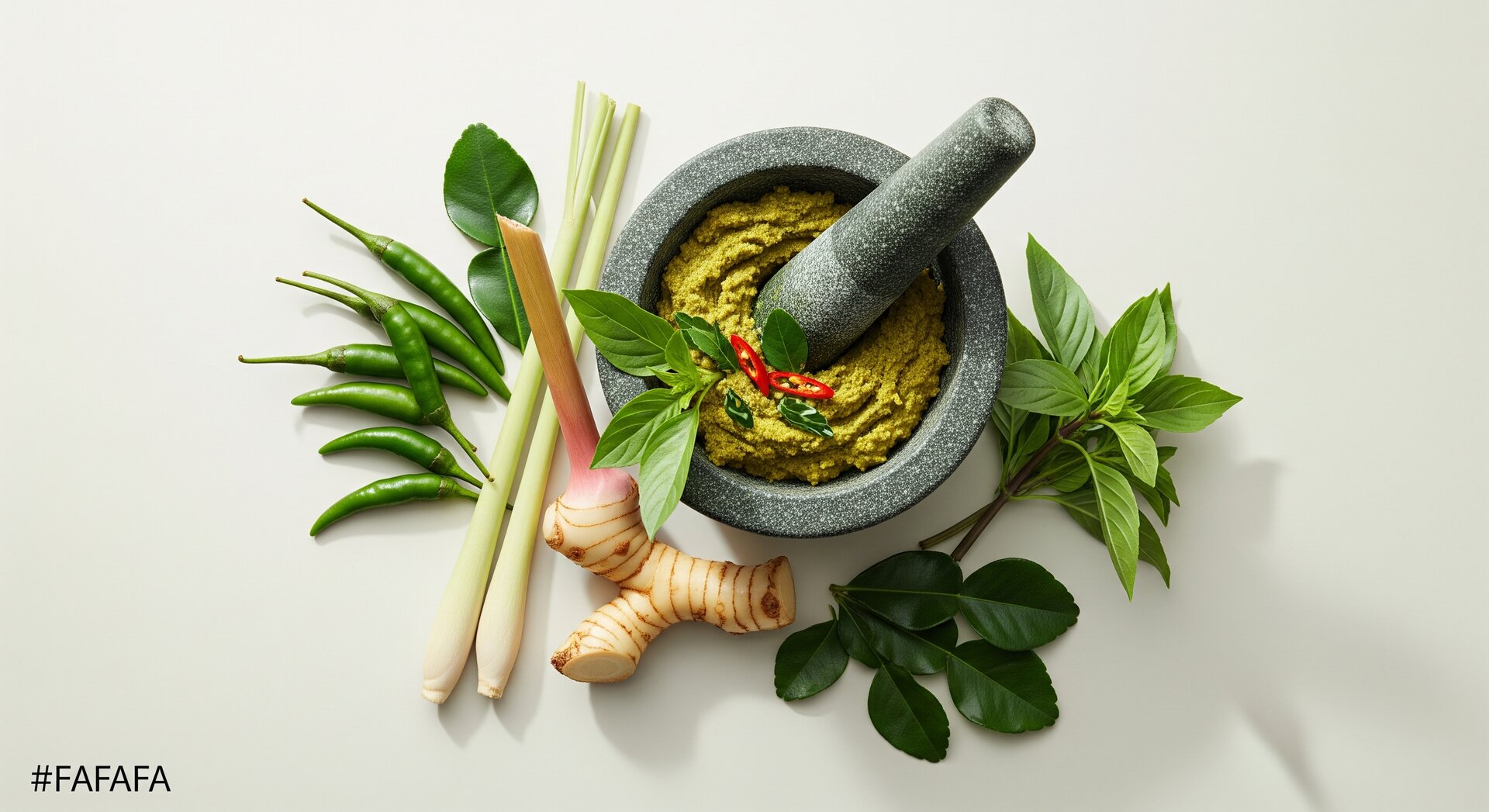 Homemade Green Curry Paste 30 min Fresh Thai herb paste full of aroma 12 kcal 1g protein 2 synergies
  In the Kitchen
Storage
Location:Refrigerator
Shelf life:2-3 weken
Wrap fresh galangal in kitchen paper and store it in a sealed container in the refrigerator. You can also slice and freeze the root, so you can add a few slices directly to soup or curry.
Preparation
Slice galangal into thick rounds and bruise them with the back of a knife to release aroma. Simmer the slices in soups, broths and curries, then remove before serving. For curry pastes, young galangal can be grated or pounded very finely.
Substitutes
Smart preparation
1Cut galangal into thin to medium slices; grating works best with young, less fibrous root.
Why?
Galangal is much harder and more fibrous than ginger, so larger pieces are mainly useful for releasing flavor.
2Remove galangal slices before serving; they are firm and unpleasant to chew.
3Store fresh galangal for up to 3 weeks in the refrigerator, or freeze slices for quick soups and curries.
Caution / Warnings
Galangal is very safe, but there are scientific considerations:
Peptic ulcers Moderate
Pungent rhizomes may cause discomfort in some people with existing peptic ulcers. Use small culinary amounts and stop if clear irritation occurs.
Traditional use
Southeast Asian
Southeast Asian culinary traditions
Galangal is an essential ingredient in Thai, Indonesian and Malaysian cuisine and has been used for centuries in curries, soups, sambals and aromatic spice pastes.
Traditional Chinese Medicine
Gao liang jiang in Chinese herbal traditions
In Chinese herbal traditions, galangal is known as gao liang jiang. Since the Tang dynasty, it has been described as a pungent, warming ingredient for hot preparations, infusions and spice blends.
Summary
Galangal looks like ginger, but tastes clearly different: citrusy, peppery and slightly pine-like. It is essential for authentic Thai and Indonesian dishes. Use it mainly as an aromatic seasoning in slices, pastes, soups and curries, not as a vegetable.