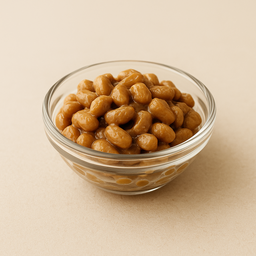
Natto
Japanese fermented soybeans rich in vitamin K and plant protein
What is this ingredient?
Natto is a distinctive Japanese fermented food: loved by many in Japan, but often surprising for beginners because of its sticky strings, strong smell, and savory bean flavor. Nutritionally, natto stands out for vitamin K, especially the long-acting K2 form MK-7, and for a solid amount of plant protein from soybeans. Vitamin K contributes to normal blood clotting and to the maintenance of normal bones; natto also provides magnesium, iron, zinc, potassium, and calcium. During fermentation with Bacillus subtilis var. natto, characteristic enzymes and aromas develop that set natto apart from other soy foods. In Japan, natto is usually eaten cold with rice, soy sauce, mustard, and spring onion, especially at breakfast. Research on natto and nattokinase looks at clotting-related biomarkers and cardiovascular outcomes in population studies, but in the kitchen natto is above all a bold traditional fermented ingredient with a texture of its own.
How does it taste?
Strongly fermented and savory, with nutty soybeans, an ammonia-like note, and a sticky, stringy texture.
Pairs well with:
Pairs well with ricesoy sauceJapanese mustardspring onioneggnoriand sesame oil.
Varieties
Itohiki Natto
Classic stringy natto, the most common type for rice bowls and breakfast.
Hikiwari Natto
Finely chopped soybeans with a softer bite; useful for beginners and easy to mix with rice.
Daitokuji Natto
Dried, saltier style without the typical strings; suitable as a savory topping or in salads.
Did you know...?
- Natto is made by fermenting cooked soybeans with Bacillus subtilis var. natto.
- Natto’s characteristic sticky strings can become surprisingly long when you stir it vigorously.
Nutritional Value & Energy
Per 100g
Natto provides energy thanks to natural nutrients , buffered by fiber.
Per 100g
Minerals
Vitamins
Omega-3 fatty acids
More nutrients
Trace Minerals
What's in a serving?
1 serving
Natto naturally contains vitamin K (1000 mcg per 100 g).
Natto naturally contains vitamin C (13 mg per 100 g).
Natto naturally contains iron (8.6 mg per 100 g).
Natto naturally contains zinc (3 mg per 100 g).
Natto naturally contains magnesium (115 mg per 100 g).
Natto naturally contains potassium (729 mg per 100 g).
Natto naturally contains calcium (217 mg per 100 g).
% of daily reference intake (DRI)
EU-approved nutrition claims
This ingredient contains nutrients for which EFSA-authorized health claims exist at nutrient level, not ingredient-specific.
Approved health claims (EU)
Vitamin_c EU 432/2012
Vitamin C contributes to the normal function of the immune system
Contains 13mg/100g (threshold: ≥12mg/100g)
Vitamin_c EU 432/2012
Vitamin C contributes to the reduction of tiredness and fatigue
Contains 13mg/100g (threshold: ≥12mg/100g)
Vitamin_c EU 432/2012
Vitamin C contributes to normal collagen formation for the normal function of skin
Contains 13mg/100g (threshold: ≥12mg/100g)
Magnesium EU 432/2012
Magnesium contributes to normal muscle function
Contains 115mg/100g (threshold: ≥56.25mg/100g)
Magnesium EU 432/2012
Magnesium contributes to the reduction of tiredness and fatigue
Contains 115mg/100g (threshold: ≥56.25mg/100g)
Magnesium EU 432/2012
Magnesium contributes to normal functioning of the nervous system
Contains 115mg/100g (threshold: ≥56.25mg/100g)
Zinc EU 432/2012
Zinc contributes to the normal function of the immune system
Contains 3mg/100g (threshold: ≥1.5mg/100g)
Zinc EU 432/2012
Zinc contributes to the maintenance of normal skin
Contains 3mg/100g (threshold: ≥1.5mg/100g)
Iron EU 432/2012
Iron contributes to normal energy-yielding metabolism
Contains 8.6mg/100g (threshold: ≥2.1mg/100g)
Iron EU 432/2012
Iron contributes to the reduction of tiredness and fatigue
Contains 8.6mg/100g (threshold: ≥2.1mg/100g)
Calcium EU 432/2012
Calcium is needed for the maintenance of normal bones
Contains 217mg/100g (threshold: ≥120mg/100g)
Potassium EU 432/2012
Potassium contributes to the maintenance of normal blood pressure
Contains 729mg/100g (threshold: ≥300mg/100g)
Vitamin_c EU 432/2012
Vitamin C contributes to normal collagen formation for the normal function of blood vessels
Contains 13mg/100g (threshold: ≥12mg/100g)
Vitamin_c EU 432/2012
Vitamin C contributes to normal collagen formation for the normal function of bones
Contains 13mg/100g (threshold: ≥12mg/100g)
Vitamin_c EU 432/2012
Vitamin C contributes to normal collagen formation for the normal function of cartilage
Contains 13mg/100g (threshold: ≥12mg/100g)
Vitamin_c EU 432/2012
Vitamin C contributes to normal collagen formation for the normal function of gums
Contains 13mg/100g (threshold: ≥12mg/100g)
Vitamin_c EU 432/2012
Vitamin C contributes to normal collagen formation for the normal function of teeth
Contains 13mg/100g (threshold: ≥12mg/100g)
Vitamin_c EU 432/2012
Vitamin C contributes to normal energy-yielding metabolism
Contains 13mg/100g (threshold: ≥12mg/100g)
Vitamin_c EU 432/2012
Vitamin C contributes to normal functioning of the nervous system
Contains 13mg/100g (threshold: ≥12mg/100g)
Vitamin_c EU 432/2012
Vitamin C contributes to normal psychological function
Contains 13mg/100g (threshold: ≥12mg/100g)
Vitamin_c EU 432/2012
Vitamin C contributes to the protection of cells from oxidative stress
Contains 13mg/100g (threshold: ≥12mg/100g)
Vitamin_c EU 432/2012
Vitamin C contributes to the regeneration of the reduced form of vitamin E
Contains 13mg/100g (threshold: ≥12mg/100g)
Vitamin_c EU 432/2012
Vitamin C increases iron absorption
Contains 13mg/100g (threshold: ≥12mg/100g)
Vitamin_c EU 432/2012
Vitamin C contributes to maintain the normal function of the immune system during and after intense physical exercise
Contains 13mg/100g (threshold: ≥12mg/100g)
Vitamin_k EU 432/2012
Vitamin K contributes to normal blood clotting
Contains 1000mcg/100g (threshold: ≥11.25mcg/100g)
Vitamin_k EU 432/2012
Vitamin K contributes to the maintenance of normal bones
Contains 1000mcg/100g (threshold: ≥11.25mcg/100g)
Calcium EU 432/2012
Calcium is needed for the maintenance of normal teeth
Contains 217mg/100g (threshold: ≥120mg/100g)
Calcium EU 432/2012
Calcium contributes to normal blood clotting
Contains 217mg/100g (threshold: ≥120mg/100g)
Calcium EU 432/2012
Calcium contributes to normal energy-yielding metabolism
Contains 217mg/100g (threshold: ≥120mg/100g)
Calcium EU 432/2012
Calcium contributes to normal muscle function
Contains 217mg/100g (threshold: ≥120mg/100g)
Calcium EU 432/2012
Calcium contributes to normal neurotransmission
Contains 217mg/100g (threshold: ≥120mg/100g)
Calcium EU 432/2012
Calcium contributes to the normal function of digestive enzymes
Contains 217mg/100g (threshold: ≥120mg/100g)
Calcium EU 432/2012
Calcium has a role in the process of cell division and specialisation
Contains 217mg/100g (threshold: ≥120mg/100g)
Magnesium EU 432/2012
Magnesium contributes to normal energy-yielding metabolism
Contains 115mg/100g (threshold: ≥56.25mg/100g)
Magnesium EU 432/2012
Magnesium contributes to electrolyte balance
Contains 115mg/100g (threshold: ≥56.25mg/100g)
Magnesium EU 432/2012
Magnesium contributes to normal protein synthesis
Contains 115mg/100g (threshold: ≥56.25mg/100g)
Magnesium EU 432/2012
Magnesium contributes to normal psychological function
Contains 115mg/100g (threshold: ≥56.25mg/100g)
Magnesium EU 432/2012
Magnesium contributes to the maintenance of normal bones
Contains 115mg/100g (threshold: ≥56.25mg/100g)
Magnesium EU 432/2012
Magnesium contributes to the maintenance of normal teeth
Contains 115mg/100g (threshold: ≥56.25mg/100g)
Magnesium EU 432/2012
Magnesium has a role in the process of cell division
Contains 115mg/100g (threshold: ≥56.25mg/100g)
Iron EU 432/2012
Iron contributes to normal cognitive function
Contains 8.6mg/100g (threshold: ≥2.1mg/100g)
Iron EU 432/2012
Iron contributes to normal formation of red blood cells and haemoglobin
Contains 8.6mg/100g (threshold: ≥2.1mg/100g)
Iron EU 432/2012
Iron contributes to normal oxygen transport in the body
Contains 8.6mg/100g (threshold: ≥2.1mg/100g)
Iron EU 432/2012
Iron contributes to the normal function of the immune system
Contains 8.6mg/100g (threshold: ≥2.1mg/100g)
Iron EU 432/2012
Iron has a role in the process of cell division
Contains 8.6mg/100g (threshold: ≥2.1mg/100g)
Zinc EU 432/2012
Zinc contributes to normal acid-base metabolism
Contains 3mg/100g (threshold: ≥1.5mg/100g)
Zinc EU 432/2012
Zinc contributes to normal carbohydrate metabolism
Contains 3mg/100g (threshold: ≥1.5mg/100g)
Zinc EU 432/2012
Zinc contributes to normal cognitive function
Contains 3mg/100g (threshold: ≥1.5mg/100g)
Zinc EU 432/2012
Zinc contributes to normal DNA synthesis
Contains 3mg/100g (threshold: ≥1.5mg/100g)
Zinc EU 432/2012
Zinc contributes to normal fertility and reproduction
Contains 3mg/100g (threshold: ≥1.5mg/100g)
Zinc EU 432/2012
Zinc contributes to normal macronutrient metabolism
Contains 3mg/100g (threshold: ≥1.5mg/100g)
Zinc EU 432/2012
Zinc contributes to normal metabolism of fatty acids
Contains 3mg/100g (threshold: ≥1.5mg/100g)
Zinc EU 432/2012
Zinc contributes to normal metabolism of vitamin A
Contains 3mg/100g (threshold: ≥1.5mg/100g)
Zinc EU 432/2012
Zinc contributes to normal protein synthesis
Contains 3mg/100g (threshold: ≥1.5mg/100g)
Zinc EU 432/2012
Zinc contributes to the maintenance of normal bones
Contains 3mg/100g (threshold: ≥1.5mg/100g)
Zinc EU 432/2012
Zinc contributes to the maintenance of normal hair
Contains 3mg/100g (threshold: ≥1.5mg/100g)
Zinc EU 432/2012
Zinc contributes to the maintenance of normal nails
Contains 3mg/100g (threshold: ≥1.5mg/100g)
Zinc EU 432/2012
Zinc contributes to the maintenance of normal testosterone levels in the blood
Contains 3mg/100g (threshold: ≥1.5mg/100g)
Zinc EU 432/2012
Zinc contributes to the maintenance of normal vision
Contains 3mg/100g (threshold: ≥1.5mg/100g)
Zinc EU 432/2012
Zinc contributes to the protection of cells from oxidative stress
Contains 3mg/100g (threshold: ≥1.5mg/100g)
Zinc EU 432/2012
Zinc has a role in the process of cell division
Contains 3mg/100g (threshold: ≥1.5mg/100g)
Potassium EU 432/2012
Potassium contributes to normal functioning of the nervous system
Contains 729mg/100g (threshold: ≥300mg/100g)
Potassium EU 432/2012
Potassium contributes to normal muscle function
Contains 729mg/100g (threshold: ≥300mg/100g)
Comparison
vsspinazie
Natto contains about 3× more iron per 100g than spinach.
vsbanaan
Natto contains about 2× more potassium per 100g than banana.
vsmelk
Natto contains about 2× more calcium per 100g than milk.
What's being researched?
Nattokinase and clotting-related biomarkers
Nattokinase, an enzyme formed during natto fermentation, is studied for clotting-related biomarkers and fibrin breakdown in experimental and clinical contexts. The results are interesting, but public food information should remain cautious and should not suggest a therapeutic effect.
Supported by: [3] Ikeda (2017) , [2] Diederichsen ACP (2022)
Natto and vitamin K2
Natto is an especially rich dietary source of vitamin K, especially MK-7. Vitamin K contributes to normal blood clotting and to the maintenance of normal bones; research on K2 also examines calcium metabolism and long-term patterns in population studies.
Supported by: [2] Diederichsen ACP (2022)
Good Combinations (Synergy)
Combine natto smartly to enhance the effect:
Natto  Eggs
Eggs Vitamin K2 + D synergy for calcium metabolism
Technical: Natto is the richest food source of vitamin K2 (menaquinone-7, 1100μg/100g). Eggs provide vitamin D3 (82 IU per egg) and choline. K2 activates osteocalcin (which directs calcium to bones) and MGP (which keeps calcium out of blood vessels), but needs vitamin D to enable calcium absorption in the gut in the first place. Without D, K2 doesn't work optimally.
What does this mean for you? Eat natto with your egg breakfast — this is a traditional Japanese breakfast. The K2 directs calcium to your bones, while vitamin D from the eggs enables calcium absorption in the gut.
Natto  Spring Onion
 Nattokinase + allyl sulfides for blood circulation
Technical: Natto contains nattokinase — a fibrinolytic enzyme dissolving blood clots by activating plasminogen. Green onion's allyl sulfides affect platelet aggregation via cyclooxygenase modulation. Together they offer two complementary pathways supporting blood circulation.
What does this mean for you? Natto with green onion is a traditional Japanese breakfast supporting blood circulation two ways. Green onion also masks natto's strong taste for beginners.
Natto 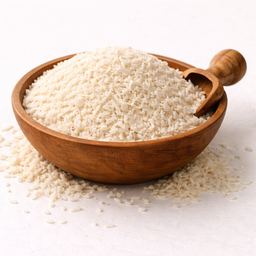 Rice
Rice Traditional Japanese breakfast: K2 + complete proteins
Technical: Natto is the richest K2 source (1100μg per 100g) and contains nattokinase (a fibrinolytic enzyme). Rice complements the amino acids (natto low in methionine, rice provides this). The slimy texture of natto is balanced by rice. This is the standard Japanese breakfast.
What does this mean for you? Eat natto over warm rice with a little soy sauce and mustard. The texture grows on you quickly and the nutritional value is impressive: 1100μg vitamin K2 per 100g natto, plus complete protein through the rice combination.
Recipes with Natto
Discover delicious recipes featuring natto:
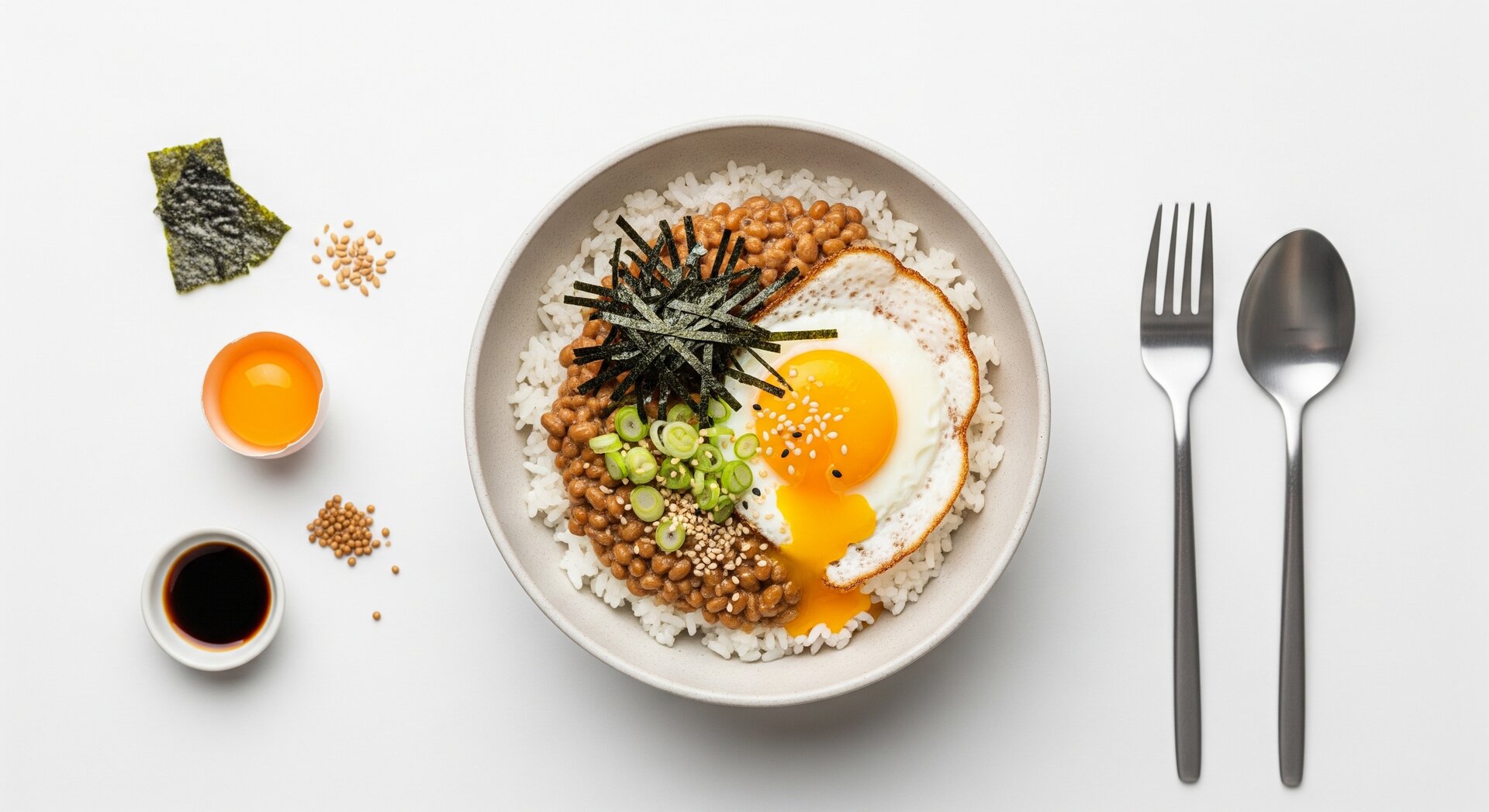 Japanese Natto Rice with Egg and Seaweed 20 min Fermented soybeans on warm rice with fried egg and nori
  353 kcal
  20g protein 1 synergies
  In the Kitchen
Storage
Location:Refrigerator
Shelf life:1-2 weken in koelkast, maanden in vriezer
Store natto in its original packaging in the refrigerator. A white haze can be normal and often consists of tyrosine crystals. Freezing extends shelf life; thaw gently in the fridge.
Preparation
Eat natto preferably cold or at room temperature: heat changes the texture and may reduce enzyme activity. Serve over rice with soy sauce, mustard, egg, or spring onion. Stir vigorously for more strings; that is part of the classic Japanese breakfast style.
Conversions
Substitutes
Smart preparation
1Stir natto vigorously before eating.
Why?
Stirring creates more strings and makes the texture creamier and more even.
2Let natto come briefly to room temperature for a softer flavor.
3Add soy sauce, Japanese mustard, and spring onion for a classic preparation.
Caution / Warnings
Natto is very safe, but there are scientific considerations:
Blood thinners (warfarin/coumarin) Severe
Natto is very high in vitamin K and contains nattokinase; this may be relevant for people using warfarin or coumarin.
Advice:
Do not use natto with warfarin/coumarin without medical guidance. Discuss it first with your doctor or pharmacist, because stable vitamin K intake matters with this medication.
Blood clotting disorders Severe
Because natto contains nattokinase, extra caution is appropriate with known clotting disorders or an increased tendency to bleed.
Advice:
With hemophilia, planned procedures, or other clotting issues: consult a doctor before using natto regularly.
Soy allergy Severe
Natto is made from fermented soybeans.
Advice:
Avoid natto completely with soy allergy.
Traditional use
Other
Natto in Japanese tradition
Natto is a traditional Japanese fermented soybean food prepared for centuries, especially in eastern Japan. It is often eaten for breakfast with rice, soy sauce, mustard, and spring onion.
Summary
Natto is an intense Japanese fermented food: sticky, savory, and rich in vitamin K, plant protein, magnesium, iron, zinc, potassium, and calcium. Vitamin K contributes to normal blood clotting and to the maintenance of normal bones. Take extra care if you use warfarin/coumarin or have clotting issues: consult a doctor, because natto is very high in vitamin K and contains nattokinase. Start with a small portion, eat it cold over rice, and soften the flavor with mustard, soy sauce, spring onion, or egg.