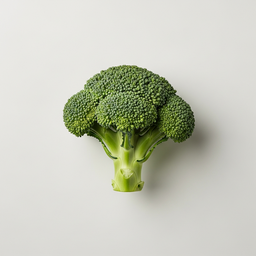
Broccoli
The 'Green Protector'
What is this ingredient?
Broccoli is a green vegetable belonging to the cruciferous family (Brassicaceae), the same family as cauliflower, kale and Brussels sprouts. The plant consists of a thick, edible stem and a flower head of undeveloped green flower buds.
Broccoli is known in science for its unique sulfur-containing compounds, which are responsible for both the specific odor and a nutritional profile that is being extensively studied. It is one of the most nutrient-dense vegetables in the world: extremely few calories for a huge amount of vitamins. 100g of broccoli contains more than 100% of the RDA for Vitamin C and Vitamin K.
How does it taste?
Mild, slightly grassy and faintly bitter with a pleasant green flavor.
Pairs well with:
Pairs well with garliclemoncheddarsesame oil and chili flakes.
Did you know...?
- Broccoli was developed by the Romans from wild cabbage over 2,000 years ago.
- The name 'broccoli' comes from the Italian 'broccolo', meaning 'small arm' or 'branch'.
Nutritional Value & Energy
Per 100g
Broccoli is low in calories thanks to natural nutrients , buffered by fiber.
Per 100g
Minerals
Vitamins
Omega-3 fatty acids
More nutrients
B-Vitamins
Trace Minerals
What's in a serving?
1 serving
Broccoli naturally contains potassium (316 mg per 100 g).
Broccoli naturally contains vitamin c (89.2 mg per 100 g).
Broccoli naturally contains vitamin k (101.6 mcg per 100 g).
Broccoli naturally contains folate (63 mcg per 100 g).
% of daily reference intake (DRI)
EU-approved nutrition claims
This ingredient contains nutrients for which EFSA-authorized health claims exist (at nutrient level, not ingredient-specific).
Approved health claims (EU)
Vitamin_c EU 432/2012
Vitamin C contributes to the normal function of the immune system
Contains 89.2mg/100g (threshold: ≥12mg/100g)
Vitamin_c EU 432/2012
Vitamin C contributes to the reduction of tiredness and fatigue
Contains 89.2mg/100g (threshold: ≥12mg/100g)
Vitamin_c EU 432/2012
Vitamin C contributes to normal collagen formation for the normal function of skin
Contains 89.2mg/100g (threshold: ≥12mg/100g)
Potassium EU 432/2012
Potassium contributes to the maintenance of normal blood pressure
Contains 316mg/100g (threshold: ≥300mg/100g)
Folate EU 432/2012
Folate contributes to normal blood formation
Contains 63mcg/100g (threshold: ≥30mcg/100g)
Folate EU 432/2012
Folate contributes to normal amino acid synthesis
Contains 63mcg/100g (threshold: ≥30mcg/100g)
Folate EU 432/2012
Folate contributes to normal homocysteine metabolism
Contains 63mcg/100g (threshold: ≥30mcg/100g)
Folate EU 432/2012
Folate contributes to normal psychological function
Contains 63mcg/100g (threshold: ≥30mcg/100g)
Folate EU 432/2012
Folate contributes to the normal function of the immune system
Contains 63mcg/100g (threshold: ≥30mcg/100g)
Folate EU 432/2012
Folate has a role in the process of cell division
Contains 63mcg/100g (threshold: ≥30mcg/100g)
Folate EU 432/2012
Folate contributes to maternal tissue growth during pregnancy
Contains 63mcg/100g (threshold: ≥30mcg/100g)
Vitamin_c EU 432/2012
Vitamin C contributes to normal collagen formation for the normal function of blood vessels
Contains 89.2mg/100g (threshold: ≥12mg/100g)
Vitamin_c EU 432/2012
Vitamin C contributes to normal collagen formation for the normal function of bones
Contains 89.2mg/100g (threshold: ≥12mg/100g)
Vitamin_c EU 432/2012
Vitamin C contributes to normal collagen formation for the normal function of cartilage
Contains 89.2mg/100g (threshold: ≥12mg/100g)
Vitamin_c EU 432/2012
Vitamin C contributes to normal collagen formation for the normal function of gums
Contains 89.2mg/100g (threshold: ≥12mg/100g)
Vitamin_c EU 432/2012
Vitamin C contributes to normal collagen formation for the normal function of teeth
Contains 89.2mg/100g (threshold: ≥12mg/100g)
Vitamin_c EU 432/2012
Vitamin C contributes to normal energy-yielding metabolism
Contains 89.2mg/100g (threshold: ≥12mg/100g)
Vitamin_c EU 432/2012
Vitamin C contributes to normal functioning of the nervous system
Contains 89.2mg/100g (threshold: ≥12mg/100g)
Vitamin_c EU 432/2012
Vitamin C contributes to normal psychological function
Contains 89.2mg/100g (threshold: ≥12mg/100g)
Vitamin_c EU 432/2012
Vitamin C contributes to the protection of cells from oxidative stress
Contains 89.2mg/100g (threshold: ≥12mg/100g)
Vitamin_c EU 432/2012
Vitamin C contributes to the regeneration of the reduced form of vitamin E
Contains 89.2mg/100g (threshold: ≥12mg/100g)
Vitamin_c EU 432/2012
Vitamin C increases iron absorption
Contains 89.2mg/100g (threshold: ≥12mg/100g)
Vitamin_c EU 432/2012
Vitamin C contributes to maintain the normal function of the immune system during and after intense physical exercise
Contains 89.2mg/100g (threshold: ≥12mg/100g)
Vitamin_k EU 432/2012
Vitamin K contributes to normal blood clotting
Contains 101.6mcg/100g (threshold: ≥11.25mcg/100g)
Vitamin_k EU 432/2012
Vitamin K contributes to the maintenance of normal bones
Contains 101.6mcg/100g (threshold: ≥11.25mcg/100g)
Potassium EU 432/2012
Potassium contributes to normal functioning of the nervous system
Contains 316mg/100g (threshold: ≥300mg/100g)
Potassium EU 432/2012
Potassium contributes to normal muscle function
Contains 316mg/100g (threshold: ≥300mg/100g)
Comparison
vssinaasappel
Broccoli contains about 2× more vitamin C per 100g than orange.
What's being researched?
Sulforaphane and cellular protection
Sulforaphane in broccoli is one of the most studied plant compounds in relation to cellular protection. Promising preclinical results, but clinical trials are still ongoing.
Supported by: [1] Fahey (1997) , [3] Tortorella (2015) , [2] Higdon (2007)
Fibre and cardiovascular research
The combination of fiber, sulforaphane and potassium in broccoli is being studied in relation to cardiovascular parameters. Observational studies show associations with reduced risk.
Supported by: [4] Kahlon (2007)
Kaempferol and inflammation reduction
Kaempferol in broccoli is being studied for its bioactive properties in relation to inflammatory markers. Laboratory studies show interaction with these markers, but human evidence is still limited.
Supported by: [1] Fahey (1997) , [4] Kahlon (2007)
Good Combinations (Synergy)
Combine broccoli smartly to enhance the effect:
Broccoli 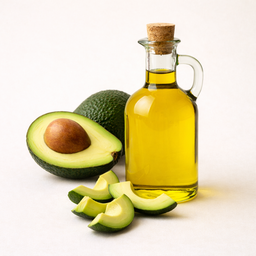 Avocado Oil
 Oleic acid increases sulforaphane and lutein absorption from broccoli
Technical: Avocado oil contains 70% oleic acid (omega-9) with a smoke point of 271°C — ideal for stir-frying. Broccoli contains sulforaphane precursor glucoraphanin (44-171mg/100g) activated by myrosinase at 60-70°C, plus lutein (1,403μg/100g). Oleic acid increases sulforaphane absorption via improved intestinal transport and dissolves lutein for micelle formation. Studies show 40% higher plasma sulforaphane after consumption with fat.
What does this mean for you? Stir-fry broccoli in avocado oil on high heat (briefly, 3-4 minutes). The oil is stable at high temperatures and increases your absorption of sulforaphane — a bioactive compound that is intensively studied in science. Add a pinch of mustard seed for extra myrosinase.
Broccoli 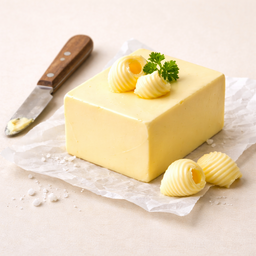 Butter
 Butter fat increases absorption of broccoli's fat-soluble vitamins
Technical: Broccoli contains vitamin K1 and beta-carotene that are fat-soluble. Butter's saturated fat and cholesterol form effective micelles for absorption. Additionally, butter itself contains vitamins A and D that work synergistically with broccoli's vitamin K.
What does this mean for you? Broccoli with a knob of butter is more than comfort food — the butter fat ensures you absorb much more vitamins from the broccoli.
Broccoli 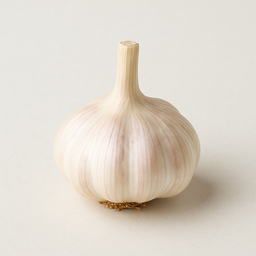 Garlic
 Double sulfur compounds for Nrf2 activation and phase-II enzymes
Technical: Broccoli contains sulforaphane (isothiocyanate) activating the Nrf2 pathway and inducing phase-II enzymes (glutathione S-transferase, quinone reductase). Garlic contains allicin and diallyl sulfide — also sulfur compounds activating the same Nrf2 pathway via thiol reaction. Both are sulfur-containing compounds working synergistically.
What does this mean for you? Briefly sauté garlic and add broccoli — a classic stir-fry base. Two sulfur-rich ingredients each activating the same Nrf2 pathway through their own route. Cut garlic 10 minutes before heating for maximum allicin.
Broccoli 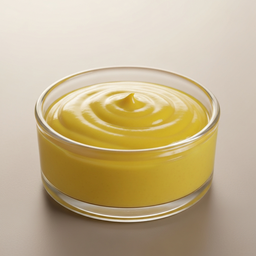 Mustard
 The "Mustard Hack" - quadruples sulforaphane absorption
Study by Ghawi et al. (2013) in Food Chemistry showed that adding mustard increases sulforaphane absorption by 400%.
Technical: Broccoli contains glucoraphanin (precursor to sulforaphane). The enzyme myrosinase converts this, but is completely inactivated above 60°C. Mustard seed contains thermostable myrosinase that increases sulforaphane conversion by 400% when added to cooked broccoli (Ghawi et al., 2013, Food Chemistry).
What does this mean for you? Cooking broccoli? Add a pinch of mustard powder or mustard seeds after cooking. This mustard hack reactivates sulforaphane formation lost during cooking.
Broccoli  Olive Oil
 Improves absorption of fat-soluble vitamins
Technical: Broccoli contains 102μg vitamin K per 100g (85% RDI) and 623 IU vitamin A (provitamin A as beta-carotene). Both are fat-soluble — without fat only 5-10% is absorbed. Olive oil's unsaturated fats stimulate micelle formation in the small intestine, increasing absorption up to 5x.
What does this mean for you? A drizzle of olive oil on broccoli isn't luxury but necessity. Without fat you barely absorb vitamin K — essential for blood clotting. Good to know: vitamin K contributes to normal blood clotting (EFSA-approved).
Broccoli 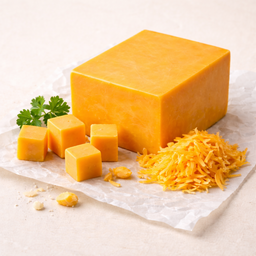 Cheddar
 Cheddar calcium + broccoli vitamin K for bone metabolism
Technical: Cheddar is an excellent source of calcium (720mg/100g) and contains vitamin K2 (menaquinone). Broccoli provides vitamin K1 (phylloquinone) and vitamin C. Vitamin K1 activates osteocalcin that directs calcium to bones, while K2 prevents calcium from depositing in blood vessels.
What does this mean for you? Broccoli-cheddar soup is a smart combination — calcium contributes to the maintenance of normal bones (EFSA), and vitamin K from broccoli helps with calcium metabolism.
Broccoli 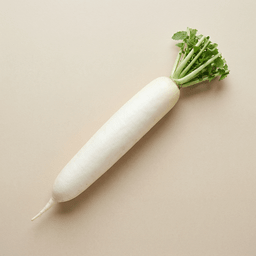 Daikon (Japanese Radish)
 Myrosinase from daikon activates sulforaphane from cooked broccoli
Daikon myrosinase hydrolyzes glucosinolates to bioactive sulforaphane (PMID: 18345631)
Technical: Cooking destroys myrosinase in broccoli, preventing glucosinolate conversion to sulforaphane. Raw daikon contains active myrosinase that performs this conversion. Sulforaphane activates phase-II enzymes via the Nrf2 pathway.
What does this mean for you? Add raw grated daikon to cooked broccoli. Daikon's myrosinase restores the sulforaphane production lost during cooking. A clever Japanese kitchen trick with biochemical backing.
Broccoli  Eggs
Eggs Complete meal with all nutrients
Technical: Eggs provide fat, protein and fat-soluble vitamins (A, D, E, K). Broccoli contains vitamin K1, folate, vitamin C and sulforaphane. Egg fat increases absorption of broccoli's fat-soluble vitamin K1 by 3-5x. Meanwhile broccoli's vitamin C protects iron from the egg against oxidation. A complete nutrient exchange.
What does this mean for you? Scrambled eggs with broccoli is an ideal meal — the egg fat helps absorb vitamins from broccoli, the broccoli adds fiber and vitamin C that the egg lacks.
Broccoli 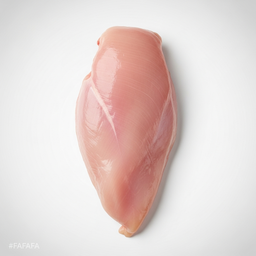 Chicken Breast
 The classic fitness meal
Technical: Chicken breast provides 31g complete protein per 100g with high BCAA concentration (leucine 2.4g) for muscle protein synthesis. Broccoli contains 89mg vitamin C per 100g that lowers cortisol after exercise, plus sulforaphane that activates the Nrf2 pathway for antioxidant protection. Fiber in broccoli (2.6g) slows protein digestion, giving a slower, more even amino acid release.
What does this mean for you? Chicken with broccoli is the classic fitness meal for good reason. The chicken provides building blocks for your muscles, the broccoli helps recovery after exercise and reduces oxidative stress. Lightly steam broccoli for maximum sulforaphane.
Broccoli 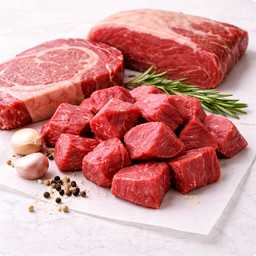 Beef
Beef Optimal iron and vitamin C combination
Technical: Beef contains 2.6mg heme iron per 100g and 4.8mg zinc — both crucial for energy production and immune function. Broccoli provides 89mg vitamin C per 100g that improves non-heme iron absorption, plus 102μg vitamin K for bone health. Vitamin C also forms a chelate with zinc that increases absorption. Broccoli's sulforaphane activates phase II biotransformation enzymes.
What does this mean for you? Beef with broccoli is not only a popular Chinese-American dish but also a nutritional winner. The heme iron from beef is already well absorbed, and the vitamin C from broccoli maximizes absorption of all other minerals.
Broccoli 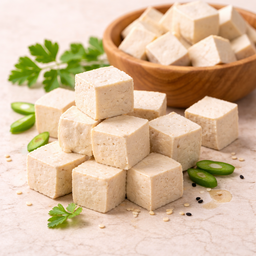 Tofu
Tofu Isoflavones + sulforaphane: complementary phytochemicals
Technical: Tofu contains genistein and daidzein (isoflavones) that modulate estrogen receptors. Broccoli contains sulforaphane that activates phase II enzymes in the liver. Together they deliver a broad spectrum of bioactive plant compounds via complementary pathways.
What does this mean for you? Stir-fry tofu with broccoli — an Asian classic. The combination provides diverse phytochemicals and complete protein in one dish.
Broccoli 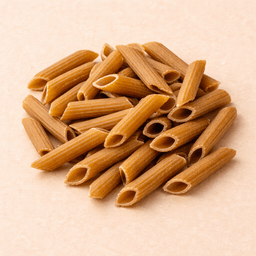 Whole wheat pasta
 Vitamin C increases iron absorption from whole wheat by 6x
Technical: Whole wheat pasta contains 3.6mg non-heme iron per 100g (dry), but also phytate that inhibits iron absorption. Broccoli provides 89mg vitamin C per 100g that reduces Fe³⁺ to Fe²⁺ (the bioavailable form) and counteracts phytate inhibition. Studies show 50mg vitamin C (≈55g broccoli) increases iron absorption from grains by 400-600%. Broccoli also contains sulforaphane, a much-studied bioactive compound.
What does this mean for you? Whole wheat pasta with broccoli is an ideal iron combination — the vitamin C from broccoli makes the iron from pasta available that would otherwise be lost to phytate in the grain.
Broccoli 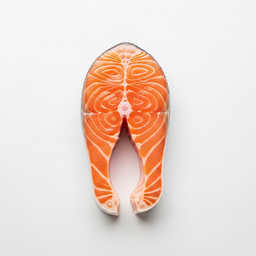 Salmon
 Vitamin D + K: complementary bone metabolism
Technical: Salmon provides 526 IU vitamin D per 100g that increases calcium absorption in the gut, plus 31μg selenium as antioxidant. Broccoli contains 102μg vitamin K per 100g that activates osteocalcin — a protein that directs calcium to bones. Together they optimize the entire calcium pathway: absorption (vitamin D) → transport to bones (vitamin K). Broccoli also provides 89mg vitamin C and magnesium.
What does this mean for you? Salmon with steamed broccoli is an optimal combination for your bone metabolism. Vitamin D from salmon helps absorb calcium, vitamin K from broccoli activates osteocalcin directing calcium to your bones.
Recipes with Broccoli
Discover delicious recipes featuring broccoli:
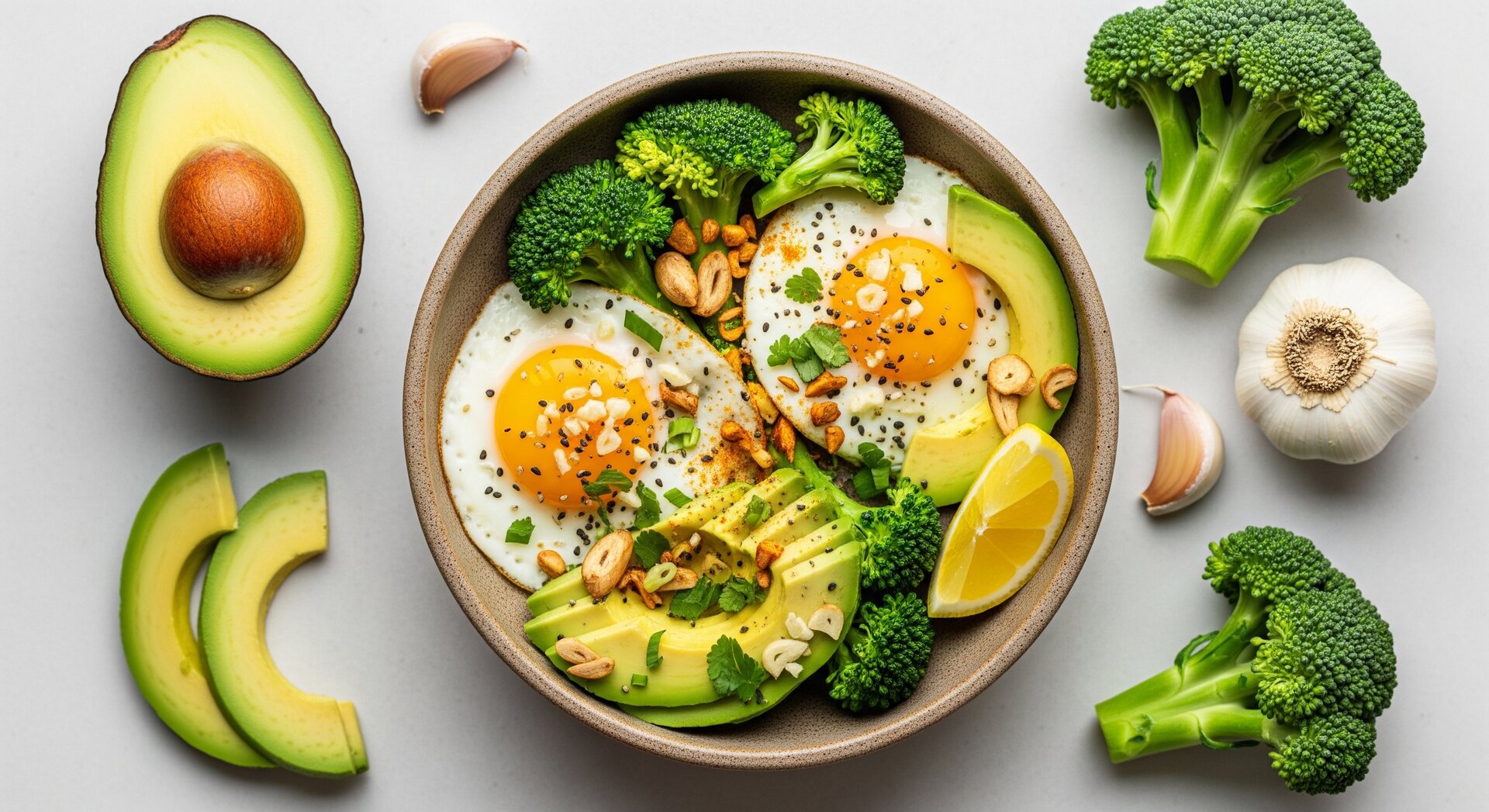 Avocado Eggs with Roasted Broccoli 15 min Golden turmeric and crispy broccoli
  365 kcal
  16g protein 2 synergies
 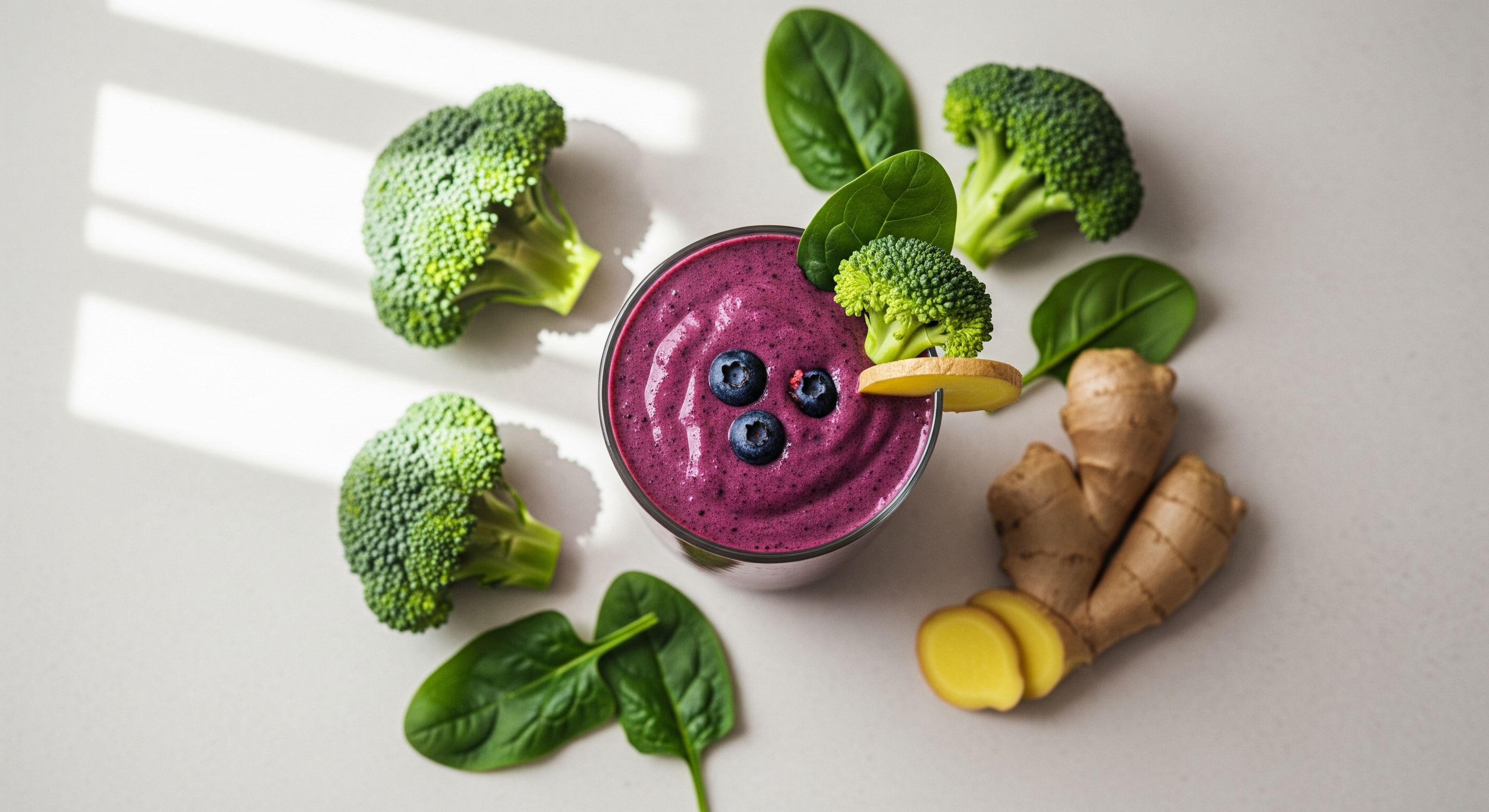 Blueberry Smoothie with Broccoli and Ginger 5 min Fresh, fruity and gently spicy 126 kcal 4g protein 2 synergies
 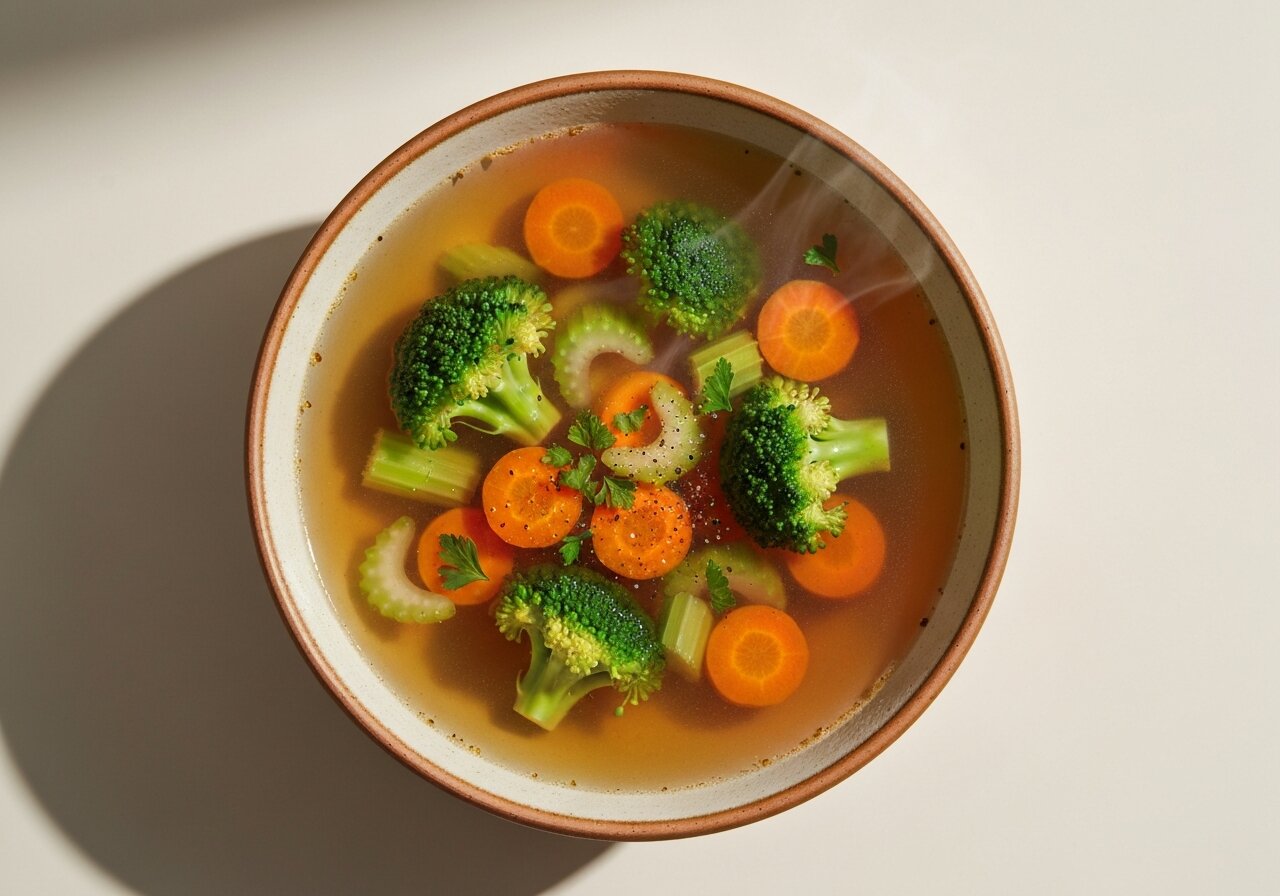 Bone Broth with Vegetables 30 min Clear broth soup with broccoli, carrot, celery and parsley 120 kcal 10g protein 3 synergies
 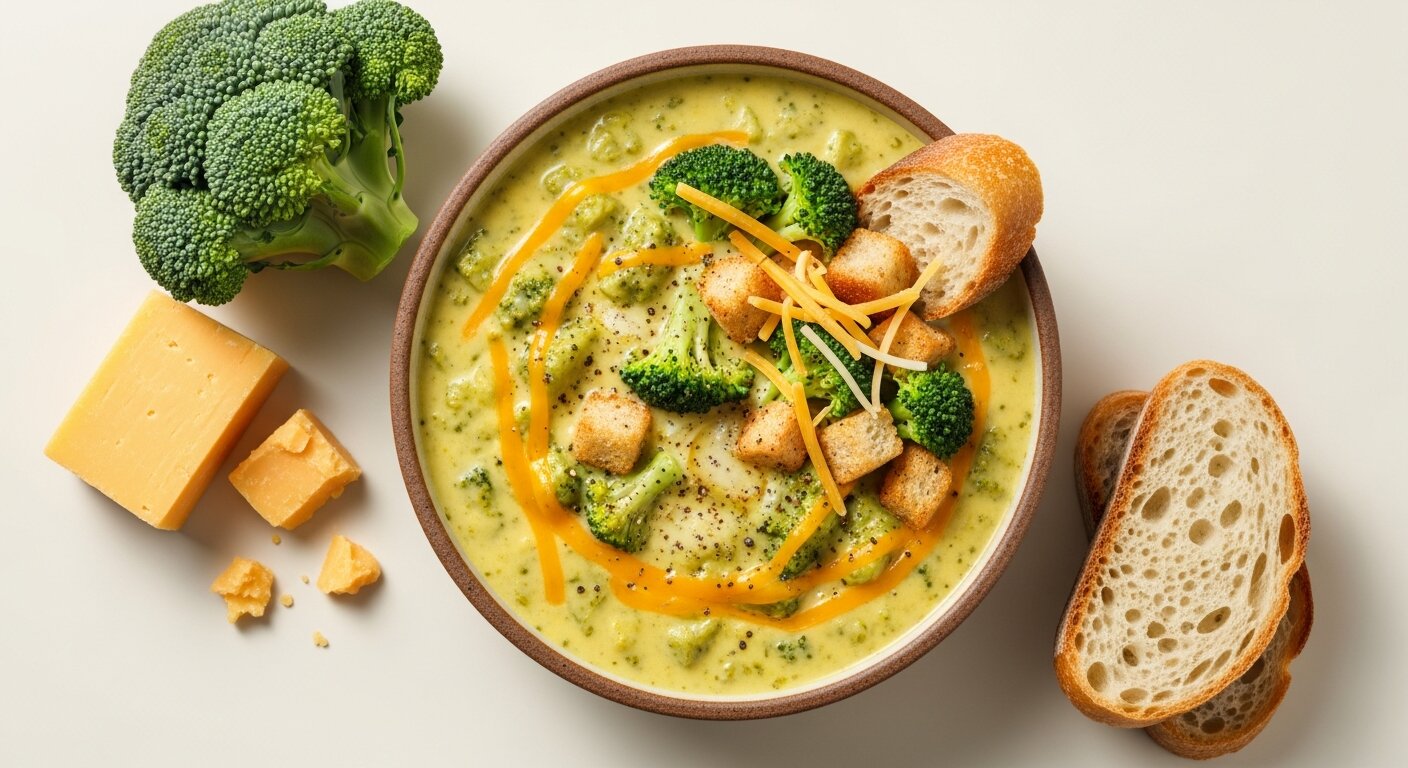 Broccoli Cheddar Soup 40 min Creamy soup with broccoli, aged cheddar and a hint of nutmeg 430 kcal 20g protein 2 synergies
 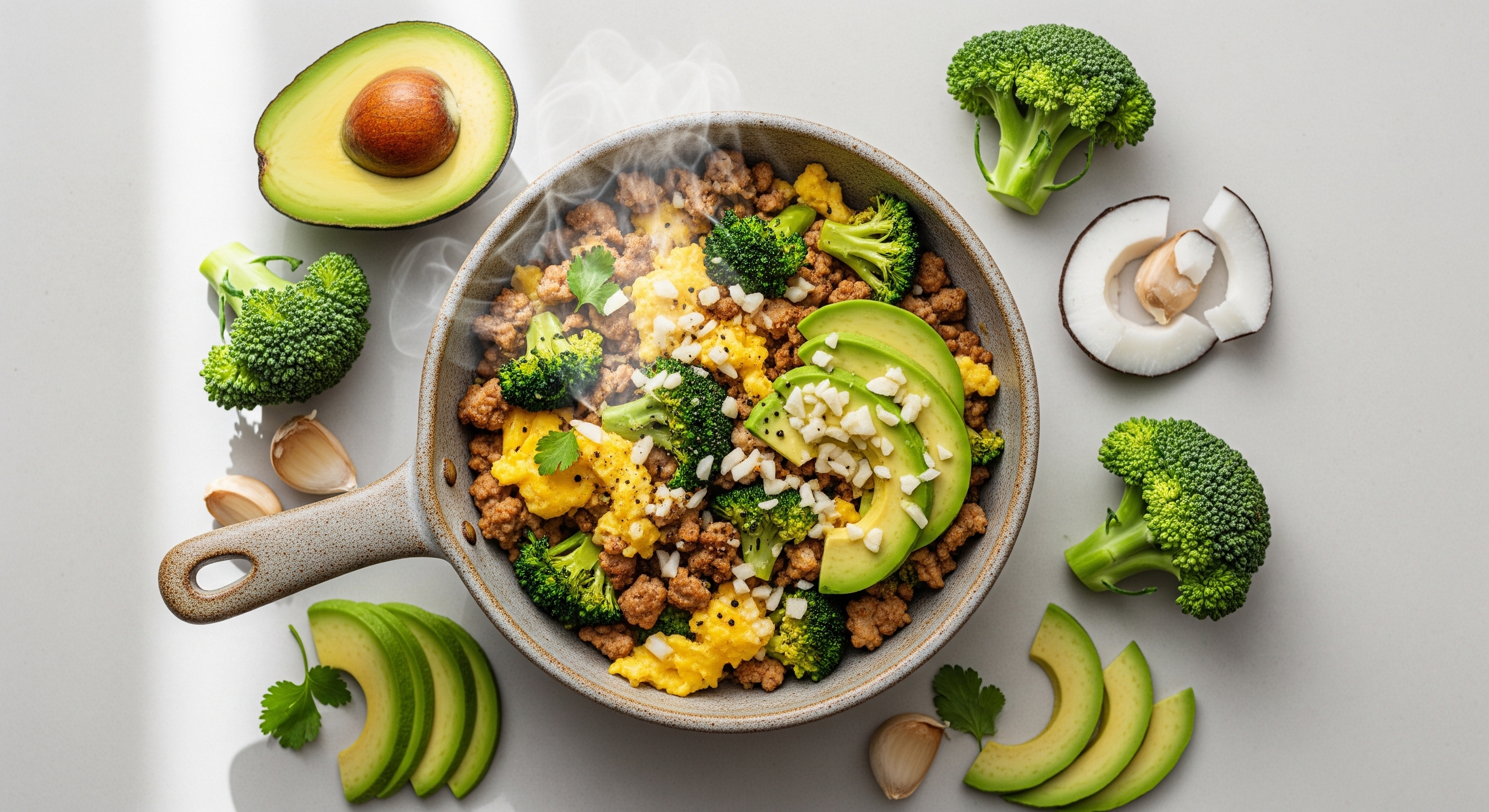 Broccoli Turkey Breakfast Skillet 25 min Savory keto breakfast with ground turkey and vegetables 445 kcal 32g protein 2 synergies
 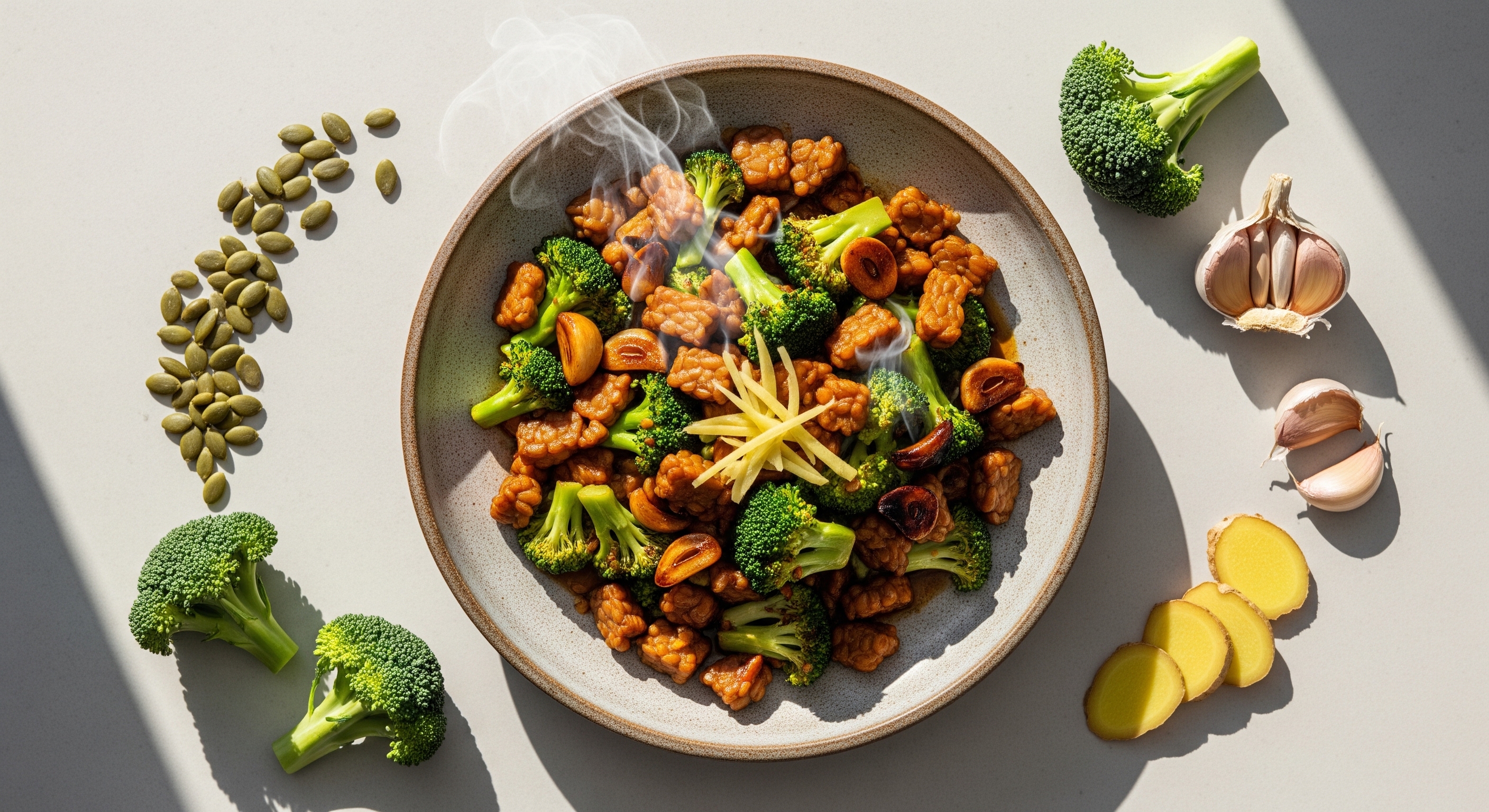 Broccoli Tempeh Stir-Fry with Sesame 30 min Savory, nutty and crisp from the wok 365 kcal 26g protein 2 synergies
  In the Kitchen
Storage
Location:Refrigerator
Shelf life:5-7 dagen
Store unwashed in a perforated plastic bag in the crisper drawer. Wash just before use.
Preparation
Steam 3-4 minutes for maximum sulforaphane. Add mustard or radish AFTER cooking for extra myrosinase.
Conversions
Substitutes
Smart preparation
1Slice the stem and cook it too; the stem is also edible.
2Steam broccoli 3-4 minutes until bright green; no longer.
Why?
Overcooking makes broccoli mushy and fades the color.
3Plunge broccoli into ice water immediately after blanching.
Why?
This stops the cooking process and preserves the bright green color.
Caution / Warnings
Broccoli is very safe, but there are scientific considerations:
Blood thinners (Warfarin/Acenocoumarol) Severe
Broccoli contains extremely high Vitamin K1 (>100% RDI per 100g), which can block the effect of blood thinners
Advice:
Keep intake consistent if using blood thinners. Sudden increase can disrupt medication effect
Thyroid problems Moderate
Cruciferous vegetables contain goitrogens that may affect thyroid function when consumed excessively raw
Advice:
Cooking significantly reduces goitrogens. Normal portions of cooked broccoli are safe
Irritable Bowel Syndrome (IBS) Mild
Broccoli contains oligosaccharides (FODMAPs) that may cause gas in sensitive individuals
Advice:
Start with small portions and steam well. Florets are usually better tolerated than stems
Traditional use
Mediterranean
Roman development and use
Broccoli was developed by the Romans from wild cabbage over 2000 years ago. It was valued as a digestion-promoting food.
Summary
Broccoli is the "green pharmacy". It is one of the few vegetables that can actually "turn on" the body's defense mechanisms against cancer and cell damage.
To benefit from this, preparation is crucial: steam the broccoli until al dente (3-4 minutes) and combine it with a little fat (olive oil) and something spicy (like mustard or radish) for maximum effect.