- Medium
- 65 min
- 4 serv.
- 11 synergies
- Now at its best: Onion
An aromatic Moroccan tagine with tender chicken thighs, chickpeas, soft apricots and toasted almonds. Served with whole wheat couscous for a filling, warmly spiced dinner.
This tagine brings together everything that makes Moroccan comfort food so recognizable: softened onions, warm spices, juicy chicken and gentle sweetness from apricots and honey. The cinnamon stick adds depth without making the dish heavy, while saffron brings a floral, luxurious note. Chickpeas make the sauce fuller and add bite alongside the tender chicken. Toasted almonds are added only at the end so they stay crunchy and contrast beautifully with the soft stew. Served over whole wheat couscous, this becomes a rich yet balanced plate: spiced, rounded, gently sweet and savory all at once.
- 20
- min prep
- 45
- min cook
- 65
- min total
Nutritional Synergies
This recipe combines ingredients that enhance each other:
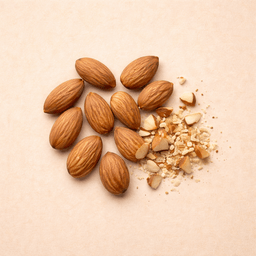 Almonds
 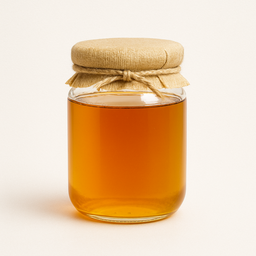 Honey
Honey Vitamin E + flavonoids for enhanced antioxidant protection
Technical: Almonds are rich in alpha-tocopherol (vitamin E), a fat-soluble antioxidant. Honey's flavonoids (chrysin, pinocembrin) are water-soluble antioxidants. Together they provide protection in both lipid and aqueous compartments of cells.
What does this mean for you? Almonds with a bit of honey is not just a classic snack, but gives your cells double antioxidant protection — in fat and water.
Anti-inflammatorySkin & HairImmune System
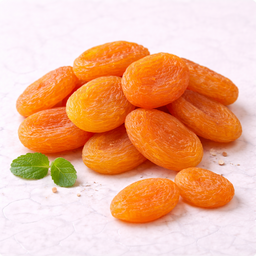 Dried apricots Almonds
 Vitamin E + fats increase beta-carotene absorption by 400%
Technical: Dried apricots contain 1,090μg beta-carotene per 100g (concentrated by drying), converted to vitamin A via BCO1 enzyme in enterocytes. Almonds provide 25.6mg vitamin E per 100g (171% RDI) and 49g fat. Beta-carotene is fat-soluble requiring micelle formation for absorption. Studies show fat consumption (>10g per meal) increases carotene bioavailability by 300-500%. Vitamin E protects beta-carotene from gastric oxidation.
What does this mean for you? Eat 3-4 dried apricots with a handful of almonds as snack. You absorb 4x more beta-carotene (provitamin A) for eyes, skin and immune system.
Skin & HairImmune SystemGeneral Wellness
Honey 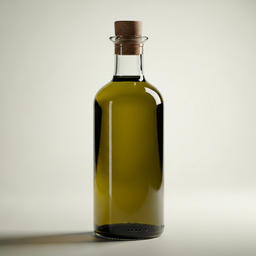 Olive oil
 Dual bioactive action via chrysin + oleocanthal
Technical: Honey contains chrysin and olive oil oleocanthal — bioactive phenolic compounds studied in research in connection with NF-κB and COX signaling. Together they provide plant compounds through two independent routes.
What does this mean for you? A dressing of honey and olive oil is not just tasty — the chrysin and oleocanthal work through two different routes in your body.
Anti-inflammatoryHeartJoints
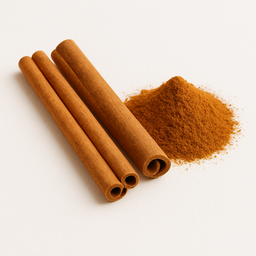 Cinnamon stick Honey
 Traditional warm combination of cinnamon and honey
Technical: Cinnamon contains cinnamaldehyde and proanthocyanidins with bioactive action via cell wall disruption. Honey's glucose oxidase produces hydrogen peroxide with bioactive action, while honey's high viscosity forms a physical barrier. Two independent bioactive mechanisms that work more broadly together.
What does this mean for you? Cinnamon + honey in warm tea — a classic combination. Both have bioactive action via different pathways — broader together than alone.
Immune System
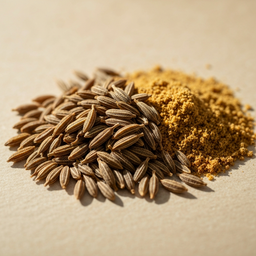 Ground cumin Olive oil
 Fat activates volatile oils and increases cuminaldehyde absorption
Technical: Cumin's active compounds (cuminaldehyde, cymene, terpinene) are volatile, fat-soluble compounds. Frying in olive oil extracts and stabilizes these compounds, and the fat improves their gut absorption.
What does this mean for you? Briefly fry cumin in olive oil before adding other ingredients (tadka/tempering). This is why Indian and Middle Eastern cuisines always fry cumin in oil.
DigestionAnti-inflammatoryBlood Sugar
Ground cumin 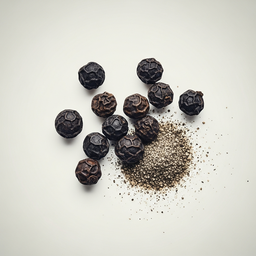 Black pepper
 Piperine increases absorption of cumin's active compounds 2-3x
Technical: Cumin contains cuminaldehyde and thymoquinone with digestive-promoting and bioactive properties. Piperine from black pepper inhibits CYP3A4 enzymes, reducing breakdown and improving absorption 2-3x.
What does this mean for you? Always add black pepper to dishes with cumin. This is why many spice blends (garam masala, ras el hanout) contain both.
DigestionAnti-inflammatory
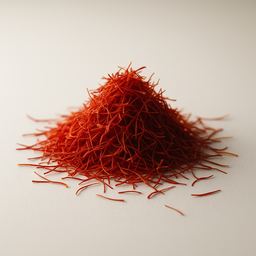 Saffron Almonds
 Fats increase absorption of saffron's carotenoids up to 5x
Technical: Crocin and other carotenoids in saffron are fat-soluble. Almonds contain 50g healthy fats per 100g that stimulate micelle formation in the gut. This increases bioavailability of crocin by 3-5x. Traditional in Persian and Indian desserts.
What does this mean for you? Combine saffron with almonds in rice pudding, halwa or golden almond milk. The nuts not only increase nutrient absorption but also complement the delicate flavor.
Stress ReliefFocus
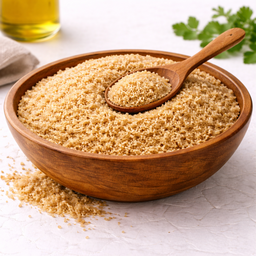 Whole wheat couscous
 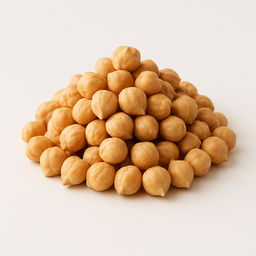 Chickpeas
 Complete proteins through grain-legume combination
Technical: Whole wheat couscous contains methionine and cysteine but is low in lysine — the limiting amino acid in grains. Chickpeas are rich in lysine (1.3g per 100g) but low in methionine. Together they form a complete protein profile with a PDCAAS (Protein Digestibility Corrected Amino Acid Score) close to 1.0, comparable to animal protein. This is the biochemical basis behind centuries-old North African couscous.
What does this mean for you? Couscous with chickpeas isn't just a tradition — it's nutritional science that has been applied for centuries. Serve whole wheat couscous with chickpea stew for a complete protein meal without meat. Add vegetables and herbs for extra micronutrients.
Muscle GainEnergyGeneral Wellness
Whole wheat couscous Ground cumin Whole grain fiber + cuminaldehyde for improved digestion
Technical: Whole grain couscous provides 5g fiber per 100g that regulates intestinal transit time. Cumin contains cuminaldehyde that stimulates production of digestive enzymes (amylase, lipase, protease) by 20-30%. Cumin's essential oils (3-4%) also promote bile secretion, supporting fat digestion. The combination accelerates complex carbohydrate breakdown and reduces gas formation.
What does this mean for you? Stirring cumin through your couscous isn't just a North African flavor tradition — it also aids digestion. Less bloating after eating, and you extract more nutrients from the grains.
DigestionEnergy
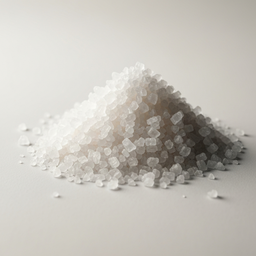 Sea salt Olive oil
 Minerals + polyphenols for cellular balance
Technical: Sea salt's sodium is essential for the sodium-potassium pump (Na+/K+-ATPase) that regulates every body cell. Olive oil's oleuropein and hydroxytyrosol provide antioxidant protection for cell membranes. The combination supports cell integrity: sea salt regulates ion balance, olive oil protects the membrane. In Mediterranean cuisine, coarse sea salt + olive oil is the most basic flavor profile.
What does this mean for you? Freshly ground sea salt with extra virgin olive oil is the simplest and most nutritious finishing of any dish. The combination provides the basic needs of your cells: minerals for function, polyphenols for protection.
HeartGeneral Wellness
Black pepper Olive oil Fat increases piperine absorption and enhances polyphenols
Technical: Piperine is fat-soluble and absorbed 2-3x better with dietary fat. Olive oil's oleocanthal and piperine both modulate COX signal transduction through different mechanisms, providing additive bioactive effect.
What does this mean for you? Grind fresh pepper over salads with olive oil dressing. The combination enhances both pepper absorption and bioactive action.
Anti-inflammatoryHeartDigestion
Ingredients (15)
-
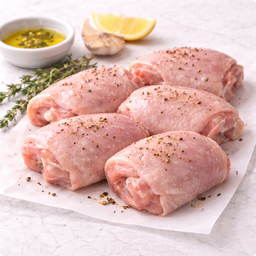 Boneless chicken thighs — 500 g cut into large pieces
 - Dried apricots — 80 g halved
- Almonds — 50 g roughly chopped
Instructions
- 1 Heat the olive oil in a large Dutch oven or tagine over medium heat. Sauté the onion for 5 minutes until soft and lightly golden.
- 2 Season the chicken with sea salt and black pepper. Add it to the pan and brown for 6-8 minutes until lightly golden on all sides.
Nutrition per serving
Indicative values per serving.
Timing & Suitability
Shelf life: 3 days in fridge
Tags & Diet
Allergens: Gluten, Nuts