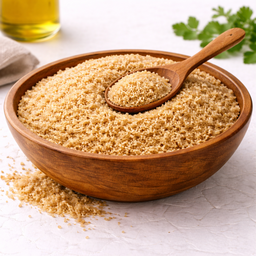
Whole Wheat Couscous
North African grain with lower GI
What is this ingredient?
Whole wheat couscous is made from whole grain durum wheat (Triticum durum) where the bran and germ are retained. This makes it higher in fiber and more nutritious than refined couscous.
## Nutritional Benefits
Whole wheat couscous has a glycemic index of ~45 versus ~65 for white couscous. This means more stable blood sugar levels and longer satiety. It contains 3x more fiber (7g vs 2g per 100g) and significantly more B-vitamins, magnesium and iron.
## Synergy with Legumes
The combination of whole wheat couscous with chickpeas (a classic North African combination) provides a complete protein profile. Grains are low in lysine but rich in methionine, legumes exactly the opposite. Together they complement each other perfectly.
## Traditional Preparation
In the Maghreb, couscous is traditionally steamed in a couscoussier, making it fluffy. For the quick method: pour hot water or broth over it (1:1), let stand 5 minutes and fluff with a fork.
How does it taste?
Mildly nutty and slightly earthy with a fluffy, granular texture.
Pairs well with:
Pairs well with harissachickpeasmintdates and roasted vegetables.
Did you know...?
- Couscous is not a grain but tiny pasta balls, made from semolina and water.
- In 2020, couscous preparation was recognized by UNESCO as intangible cultural heritage.
Nutritional Value & Energy
Per 100g
Whole Wheat Couscous provides energy thanks to natural nutrients , buffered by fiber.
Per 100g
Minerals
Vitamins
More nutrients
Trace Minerals
Low GI means blood sugar doesn't spike quickly.
What's in a serving?
1 serving (dry)
Whole Wheat Couscous naturally contains iron (3.5 mg per 100 g).
Whole Wheat Couscous naturally contains magnesium (120 mg per 100 g).
Whole Wheat Couscous naturally contains zinc (2.5 mg per 100 g).
Whole Wheat Couscous naturally contains folate (40 mcg per 100 g).
Whole Wheat Couscous naturally contains manganese (2.5 mg per 100 g).
Whole Wheat Couscous naturally contains selenium (60 mcg per 100 g).
% of daily reference intake (DRI)
EU-approved nutrition claims
This ingredient contains nutrients for which EFSA-authorized health claims exist (at nutrient level, not ingredient-specific).
Approved health claims (EU)
Magnesium EU 432/2012
Magnesium contributes to normal muscle function
Contains 120mg/100g (threshold: ≥56.25mg/100g)
Magnesium EU 432/2012
Magnesium contributes to the reduction of tiredness and fatigue
Contains 120mg/100g (threshold: ≥56.25mg/100g)
Magnesium EU 432/2012
Magnesium contributes to normal functioning of the nervous system
Contains 120mg/100g (threshold: ≥56.25mg/100g)
Zinc EU 432/2012
Zinc contributes to the normal function of the immune system
Contains 2.5mg/100g (threshold: ≥1.5mg/100g)
Zinc EU 432/2012
Zinc contributes to the maintenance of normal skin
Contains 2.5mg/100g (threshold: ≥1.5mg/100g)
Iron EU 432/2012
Iron contributes to normal energy-yielding metabolism
Contains 3.5mg/100g (threshold: ≥2.1mg/100g)
Iron EU 432/2012
Iron contributes to the reduction of tiredness and fatigue
Contains 3.5mg/100g (threshold: ≥2.1mg/100g)
Folate EU 432/2012
Folate contributes to normal blood formation
Contains 40mcg/100g (threshold: ≥30mcg/100g)
Folate EU 432/2012
Folate contributes to normal amino acid synthesis
Contains 40mcg/100g (threshold: ≥30mcg/100g)
Folate EU 432/2012
Folate contributes to normal homocysteine metabolism
Contains 40mcg/100g (threshold: ≥30mcg/100g)
Folate EU 432/2012
Folate contributes to normal psychological function
Contains 40mcg/100g (threshold: ≥30mcg/100g)
Folate EU 432/2012
Folate contributes to the normal function of the immune system
Contains 40mcg/100g (threshold: ≥30mcg/100g)
Folate EU 432/2012
Folate has a role in the process of cell division
Contains 40mcg/100g (threshold: ≥30mcg/100g)
Folate EU 432/2012
Folate contributes to maternal tissue growth during pregnancy
Contains 40mcg/100g (threshold: ≥30mcg/100g)
Magnesium EU 432/2012
Magnesium contributes to normal energy-yielding metabolism
Contains 120mg/100g (threshold: ≥56.25mg/100g)
Magnesium EU 432/2012
Magnesium contributes to electrolyte balance
Contains 120mg/100g (threshold: ≥56.25mg/100g)
Magnesium EU 432/2012
Magnesium contributes to normal protein synthesis
Contains 120mg/100g (threshold: ≥56.25mg/100g)
Magnesium EU 432/2012
Magnesium contributes to normal psychological function
Contains 120mg/100g (threshold: ≥56.25mg/100g)
Magnesium EU 432/2012
Magnesium contributes to the maintenance of normal bones
Contains 120mg/100g (threshold: ≥56.25mg/100g)
Magnesium EU 432/2012
Magnesium contributes to the maintenance of normal teeth
Contains 120mg/100g (threshold: ≥56.25mg/100g)
Magnesium EU 432/2012
Magnesium has a role in the process of cell division
Contains 120mg/100g (threshold: ≥56.25mg/100g)
Iron EU 432/2012
Iron contributes to normal cognitive function
Contains 3.5mg/100g (threshold: ≥2.1mg/100g)
Iron EU 432/2012
Iron contributes to normal formation of red blood cells and haemoglobin
Contains 3.5mg/100g (threshold: ≥2.1mg/100g)
Iron EU 432/2012
Iron contributes to normal oxygen transport in the body
Contains 3.5mg/100g (threshold: ≥2.1mg/100g)
Iron EU 432/2012
Iron contributes to the normal function of the immune system
Contains 3.5mg/100g (threshold: ≥2.1mg/100g)
Iron EU 432/2012
Iron has a role in the process of cell division
Contains 3.5mg/100g (threshold: ≥2.1mg/100g)
Zinc EU 432/2012
Zinc contributes to normal acid-base metabolism
Contains 2.5mg/100g (threshold: ≥1.5mg/100g)
Zinc EU 432/2012
Zinc contributes to normal carbohydrate metabolism
Contains 2.5mg/100g (threshold: ≥1.5mg/100g)
Zinc EU 432/2012
Zinc contributes to normal cognitive function
Contains 2.5mg/100g (threshold: ≥1.5mg/100g)
Zinc EU 432/2012
Zinc contributes to normal DNA synthesis
Contains 2.5mg/100g (threshold: ≥1.5mg/100g)
Zinc EU 432/2012
Zinc contributes to normal fertility and reproduction
Contains 2.5mg/100g (threshold: ≥1.5mg/100g)
Zinc EU 432/2012
Zinc contributes to normal macronutrient metabolism
Contains 2.5mg/100g (threshold: ≥1.5mg/100g)
Zinc EU 432/2012
Zinc contributes to normal metabolism of fatty acids
Contains 2.5mg/100g (threshold: ≥1.5mg/100g)
Zinc EU 432/2012
Zinc contributes to normal metabolism of vitamin A
Contains 2.5mg/100g (threshold: ≥1.5mg/100g)
Zinc EU 432/2012
Zinc contributes to normal protein synthesis
Contains 2.5mg/100g (threshold: ≥1.5mg/100g)
Zinc EU 432/2012
Zinc contributes to the maintenance of normal bones
Contains 2.5mg/100g (threshold: ≥1.5mg/100g)
Zinc EU 432/2012
Zinc contributes to the maintenance of normal hair
Contains 2.5mg/100g (threshold: ≥1.5mg/100g)
Zinc EU 432/2012
Zinc contributes to the maintenance of normal nails
Contains 2.5mg/100g (threshold: ≥1.5mg/100g)
Zinc EU 432/2012
Zinc contributes to the maintenance of normal testosterone levels in the blood
Contains 2.5mg/100g (threshold: ≥1.5mg/100g)
Zinc EU 432/2012
Zinc contributes to the maintenance of normal vision
Contains 2.5mg/100g (threshold: ≥1.5mg/100g)
Zinc EU 432/2012
Zinc contributes to the protection of cells from oxidative stress
Contains 2.5mg/100g (threshold: ≥1.5mg/100g)
Zinc EU 432/2012
Zinc has a role in the process of cell division
Contains 2.5mg/100g (threshold: ≥1.5mg/100g)
Manganese EU 432/2012
Manganese contributes to normal energy-yielding metabolism
Contains 2.5mg/100g (threshold: ≥0.3mg/100g)
Manganese EU 432/2012
Manganese contributes to the maintenance of normal bones
Contains 2.5mg/100g (threshold: ≥0.3mg/100g)
Manganese EU 432/2012
Manganese contributes to the normal formation of connective tissue
Contains 2.5mg/100g (threshold: ≥0.3mg/100g)
Manganese EU 432/2012
Manganese contributes to the protection of cells from oxidative stress
Contains 2.5mg/100g (threshold: ≥0.3mg/100g)
Selenium EU 432/2012
Selenium contributes to the maintenance of normal hair
Contains 60mcg/100g (threshold: ≥8.25mcg/100g)
Selenium EU 432/2012
Selenium contributes to the maintenance of normal nails
Contains 60mcg/100g (threshold: ≥8.25mcg/100g)
Selenium EU 432/2012
Selenium contributes to the normal function of the immune system
Contains 60mcg/100g (threshold: ≥8.25mcg/100g)
Selenium EU 432/2012
Selenium contributes to normal thyroid function
Contains 60mcg/100g (threshold: ≥8.25mcg/100g)
Selenium EU 432/2012
Selenium contributes to normal spermatogenesis
Contains 60mcg/100g (threshold: ≥8.25mcg/100g)
Selenium EU 432/2012
Selenium contributes to the protection of cells from oxidative stress
Contains 60mcg/100g (threshold: ≥8.25mcg/100g)
What's being researched?
Whole grain couscous and fiber intake
Whole grain couscous is studied as a means to increase daily fiber intake. The higher fiber content compared to refined couscous is associated with improved intestinal transit in observational studies.
Supported by: [1] Anderson JW (2003)
Good Combinations (Synergy)
Combine whole wheat couscous smartly to enhance the effect:
Whole Wheat Couscous  Lemon
Lemon Vitamin C neutralizes phytate and enhances iron absorption
Technical: Whole grain couscous contains phytic acid that binds iron (1.1mg/100g) and zinc (0.8mg). Lemon's vitamin C (53mg) works in two ways: it reduces Fe³⁺ to Fe²⁺ for 3-6x better absorption, and forms chelates with iron that are stronger than phytate-iron bonds. Studies show 50mg vitamin C doubles iron absorption from phytate-rich grains.
What does this mean for you? Always add lemon juice to your couscous — this is standard in North African cuisine and literally doubles the iron your body absorbs from the couscous.
Whole Wheat Couscous 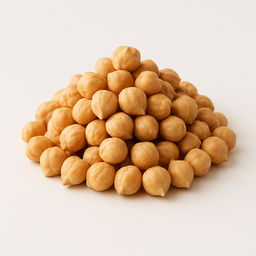 Chickpeas
 Complete proteins through grain-legume combination
Technical: Whole wheat couscous contains methionine and cysteine but is low in lysine — the limiting amino acid in grains. Chickpeas are rich in lysine (1.3g per 100g) but low in methionine. Together they form a complete protein profile with a PDCAAS (Protein Digestibility Corrected Amino Acid Score) close to 1.0, comparable to animal protein. This is the biochemical basis behind centuries-old North African couscous.
What does this mean for you? Couscous with chickpeas isn't just a tradition — it's nutritional science that has been applied for centuries. Serve whole wheat couscous with chickpea stew for a complete protein meal without meat. Add vegetables and herbs for extra micronutrients.
Whole Wheat Couscous 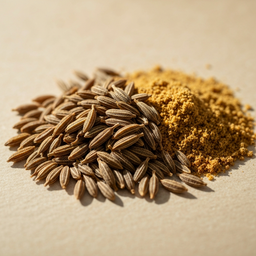 Cumin
Cumin Whole grain fiber + cuminaldehyde for improved digestion
Technical: Whole grain couscous provides 5g fiber per 100g that regulates intestinal transit time. Cumin contains cuminaldehyde that stimulates production of digestive enzymes (amylase, lipase, protease) by 20-30%. Cumin's essential oils (3-4%) also promote bile secretion, supporting fat digestion. The combination accelerates complex carbohydrate breakdown and reduces gas formation.
What does this mean for you? Stirring cumin through your couscous isn't just a North African flavor tradition — it also aids digestion. Less bloating after eating, and you extract more nutrients from the grains.
Recipes with Whole Wheat Couscous
Discover delicious recipes featuring whole wheat couscous:
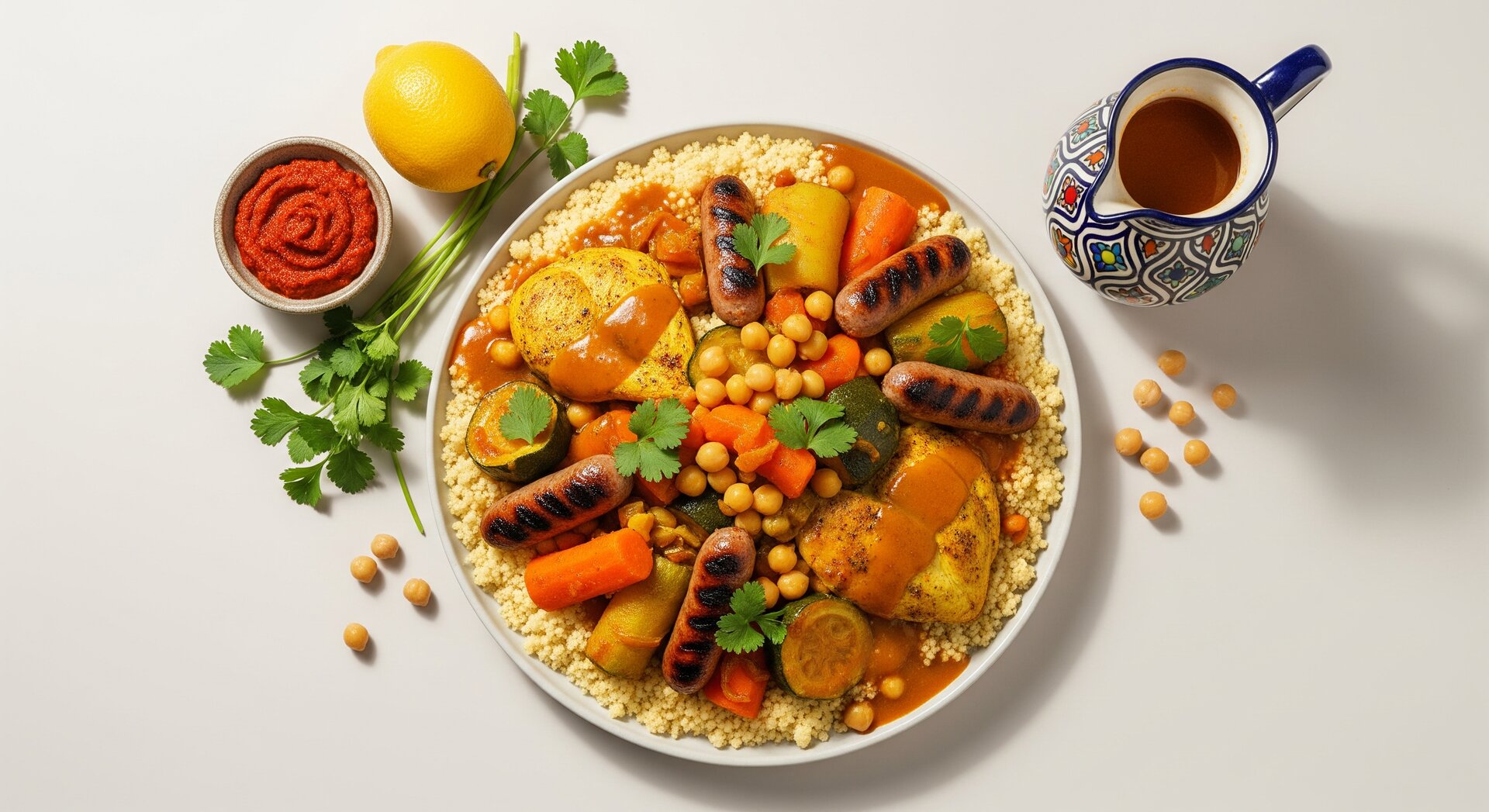 Royal Couscous with Chicken and Merguez 70 min Festive North African classic
  580 kcal
  38g protein 3 synergies
 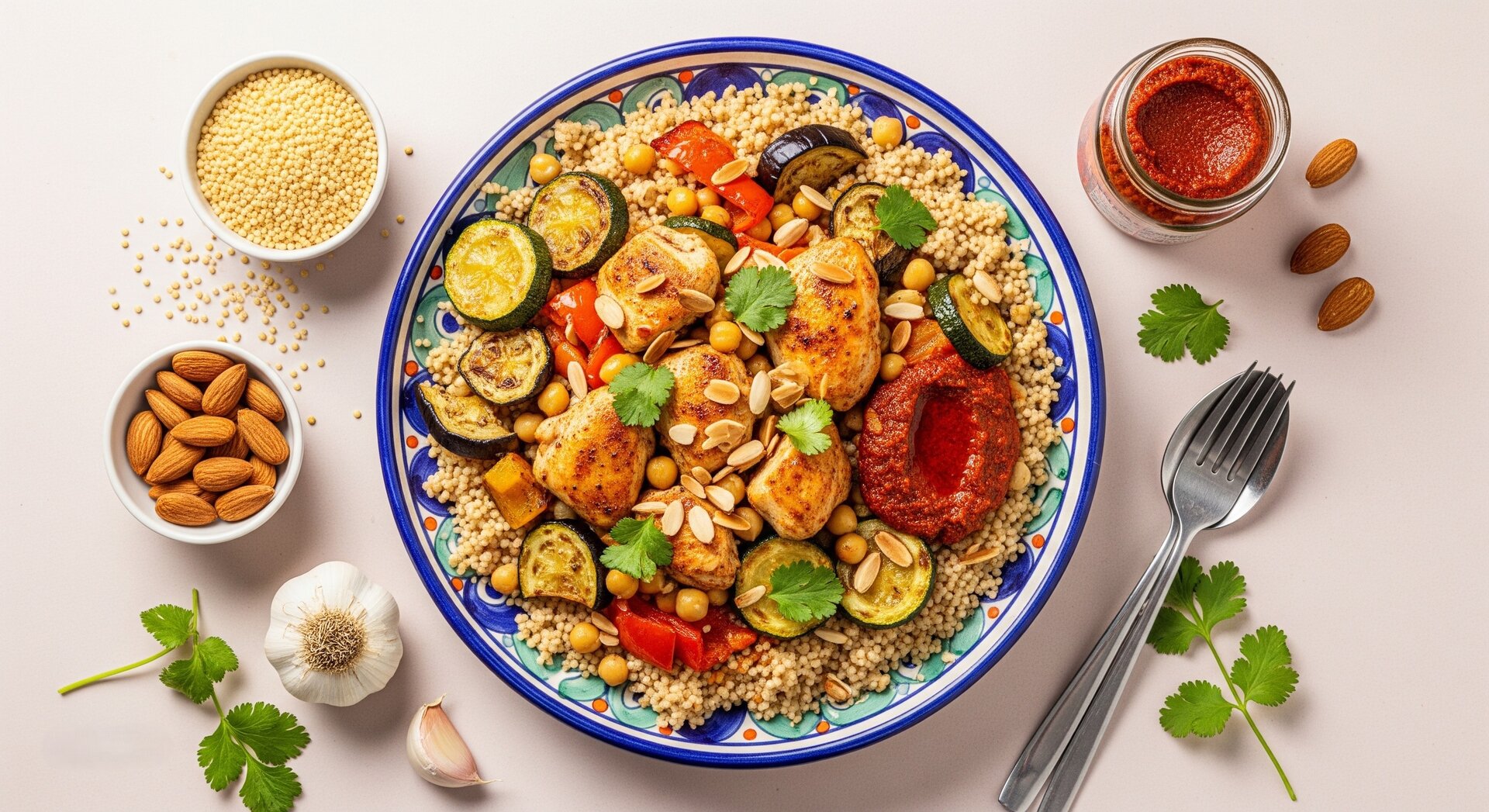 Moroccan Couscous with Chicken and Roasted Vegetables 50 min Spiced couscous with harissa and almonds 1100 kcal 66g protein 2 synergies
 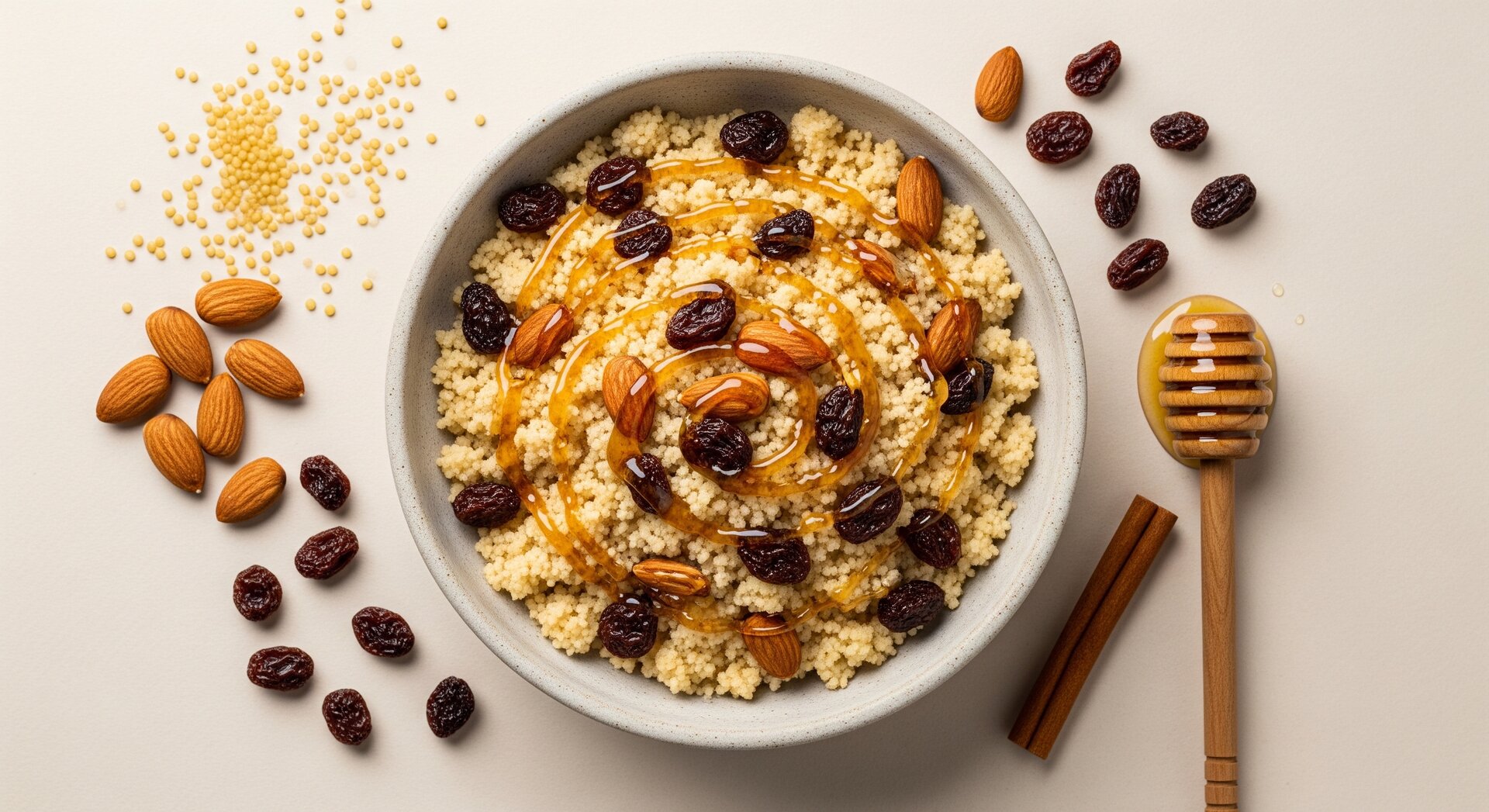 Moroccan Couscous with Raisins and Almonds 20 min Fluffy couscous with cinnamon, honey, sweet raisins and toasted almonds 340 kcal 10g protein 1 synergies
 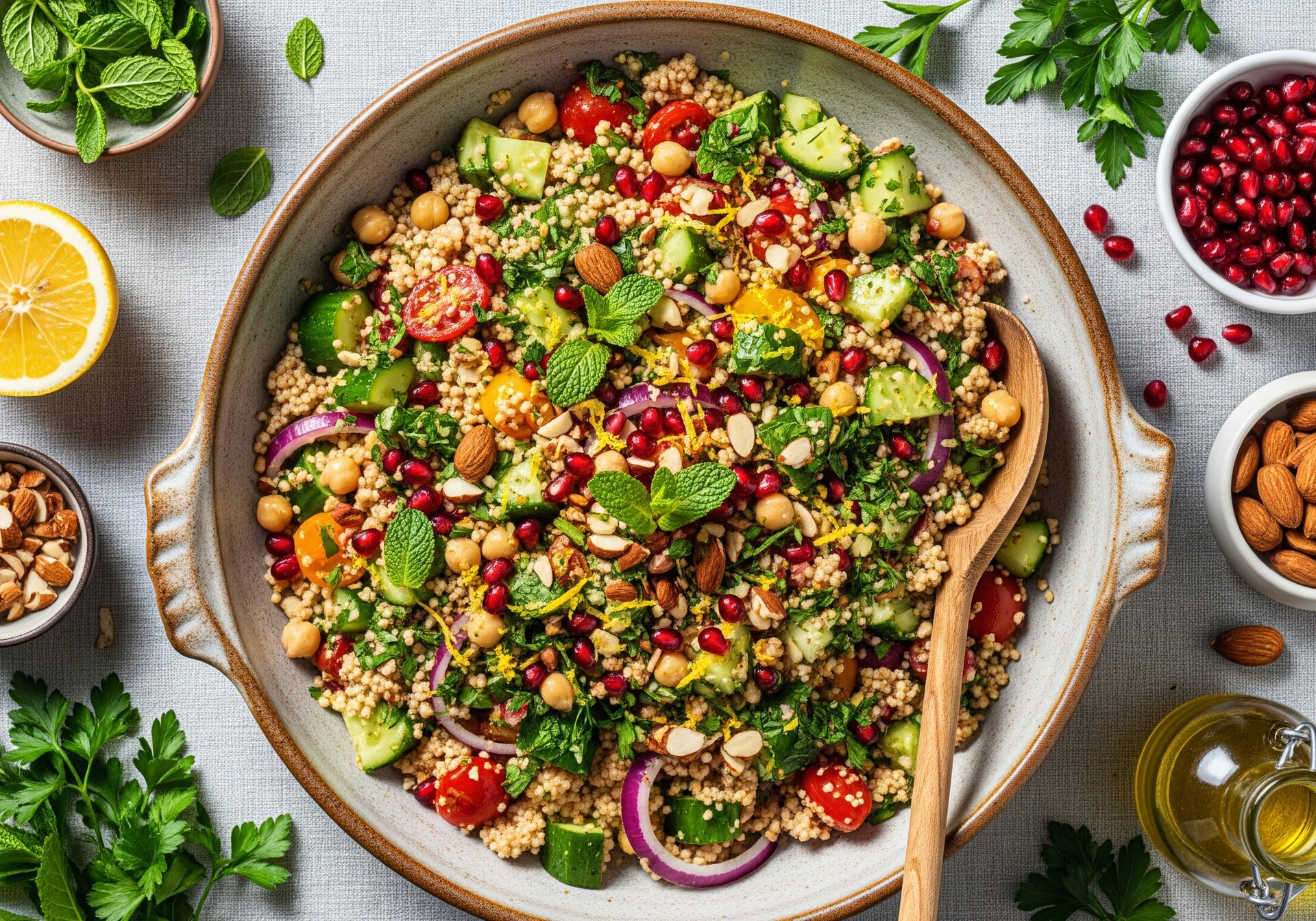 Moroccan Couscous Salad 25 min Colourful salad with herbs and citrus 485 kcal 14g protein 1 synergies
 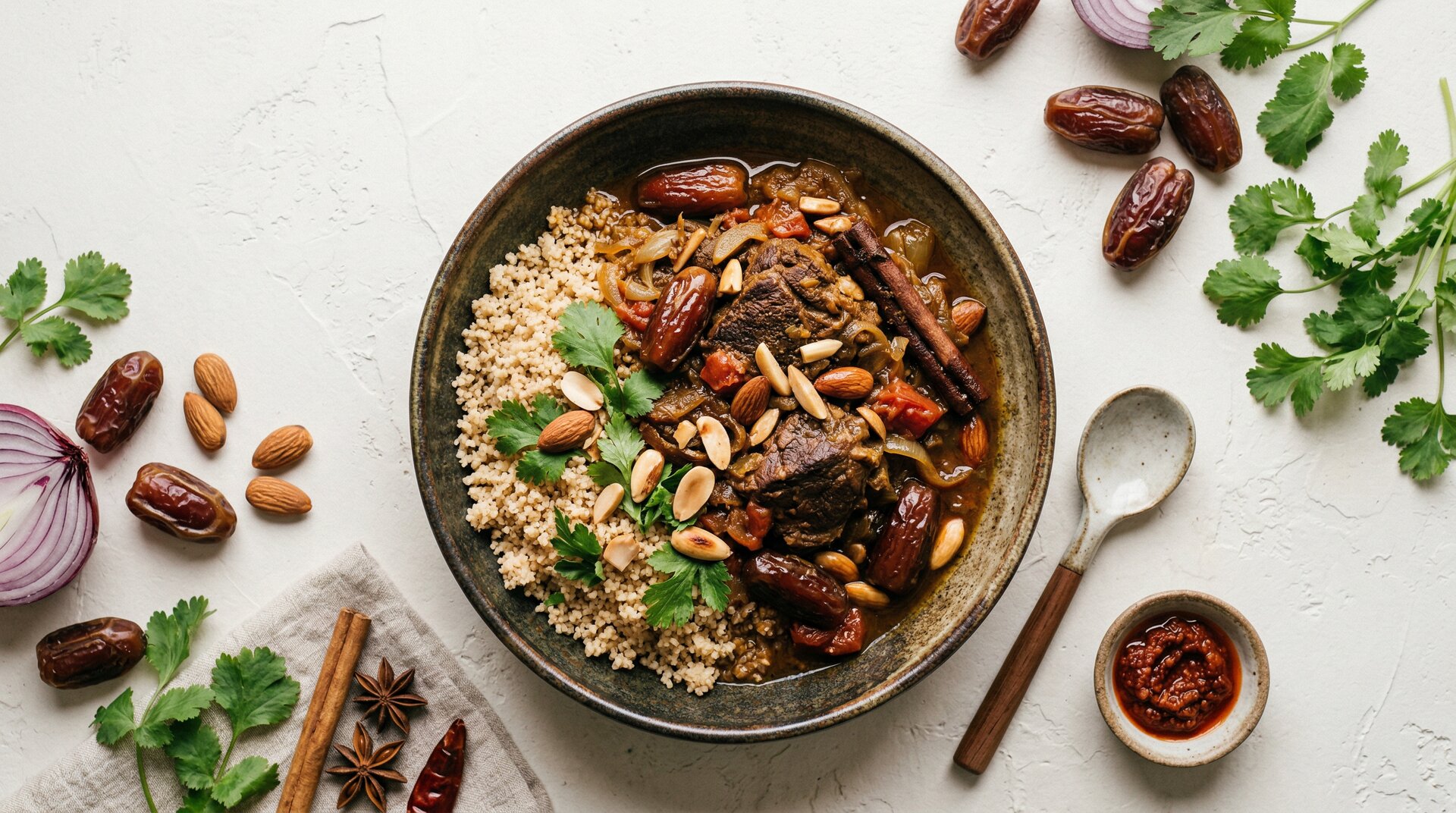 Moroccan Lamb Tagine with Dates, Almonds and Couscous 110 min Festive Moroccan stew with tender lamb, sweet dates and toasted almonds 890 kcal 40g protein 3 synergies
 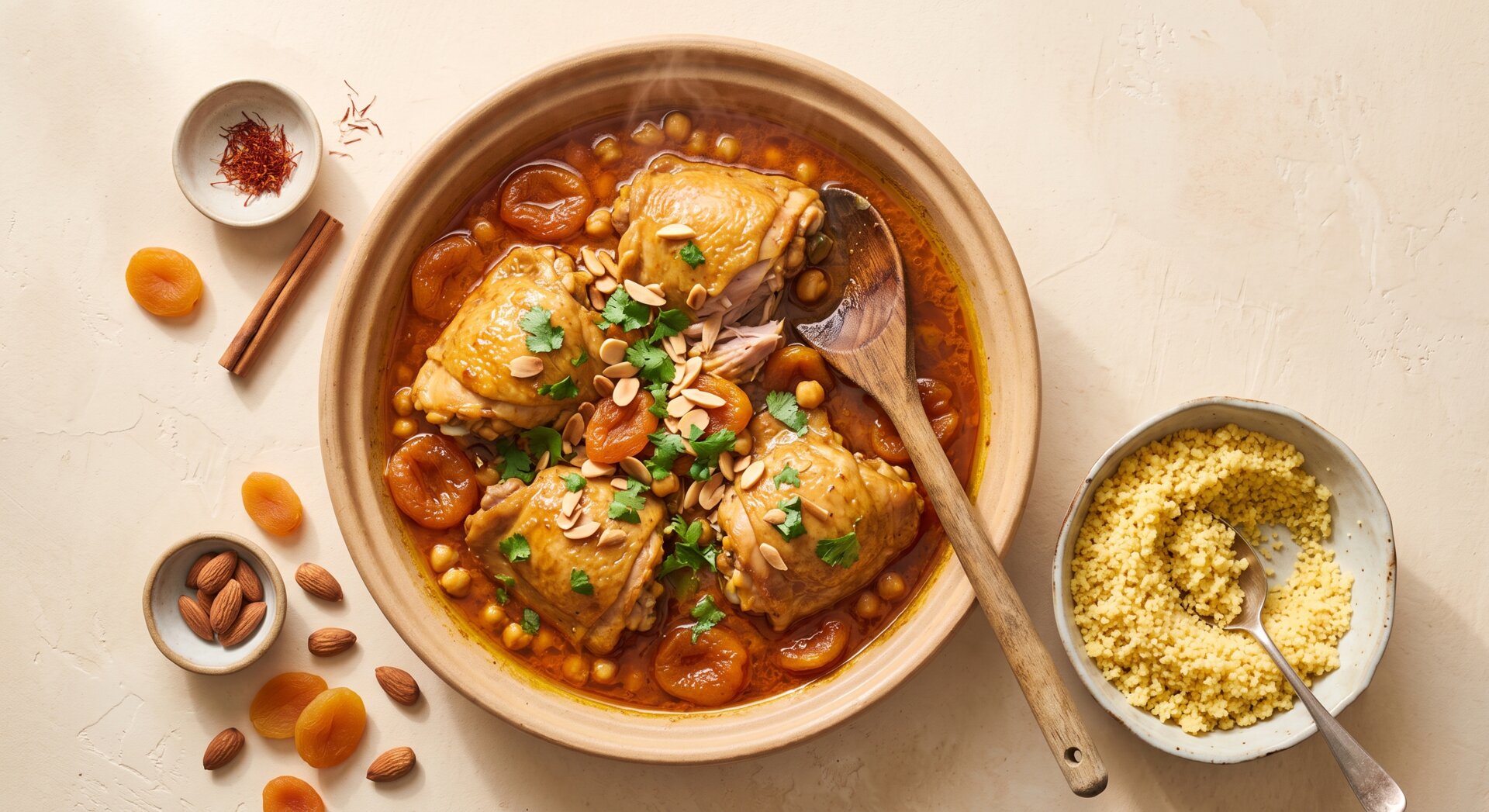 Moroccan Tagine with Chicken, Apricots and Almonds 65 min Sweet-savory stew with saffron, cinnamon and whole wheat couscous 735 kcal 39g protein 2 synergies
  In the Kitchen
Storage
Location:Pantry
Shelf life:1-2 jaar (ongeopend)
Preparation
Pour boiling water or broth over it, cover and let stand 5 min. Fluff with fork. For extra flavor: use vegetable broth.
Conversions
Substitutes
Smart preparation
1Pour 1.5x boiling water over whole wheat couscous and cover.
Why?
Whole wheat couscous needs slightly more water than regular.
2Let sit for 10 minutes, then fluff with a fork.
3Add a splash of olive oil before pouring the water.
Why?
Oil prevents the grains from sticking together.
Caution / Warnings
Whole Wheat Couscous is very safe, but there are scientific considerations:
Gluten Intolerance/Celiac Disease Severe
Couscous is made from wheat and contains gluten
Summary
Whole wheat couscous is the healthier choice with 3x more fiber and a 30% lower GI than white couscous. Combine with chickpeas for complete plant protein. Perfect base for North African dishes.