- Medium
- 50 min
- 2 serv.
- 15 synergies
- Now at its best: Bell Pepper
A colorful Moroccan dish combining whole wheat couscous with tender chicken and roasted vegetables. Chickpeas and couscous together form a complete protein profile. Spicy seasoned with harissa and cumin, finished with crunchy almonds.
The aroma that greets you when the roasted vegetables are done is irresistible: golden-charred zucchini, sweet bell pepper with caramel edges, and eggplant that melts together softly. Over it all, tender chicken glistening with harissa — just enough heat to make your lips tingle without overpowering the other flavors. The whole wheat couscous soaks up every drop of juice like a little sponge, and the chickpeas give each bite a satisfying heft. And then those almonds: toasted until they smell like a Moroccan souk, crunchy enough to break through the soft ensemble. Garnish with a handful of fresh cilantro and you have a plate that looks like it came straight from a Moroccan cookbook — yet sits on your table on a regular weeknight.
- 20
- min prep
- 30
- min cook
- 50
- min total
Nutritional Synergies
This recipe combines ingredients that enhance each other:
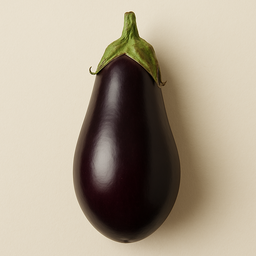 eggplant
 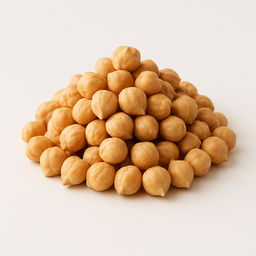 chickpeas
 Complete vegetarian meal: protein + fiber + nasunin
Technical: Eggplant contains only 1g protein per 100g but is rich in nasunin (antioxidant) and fiber (3g/100g). Chickpeas provide 19g protein per 100g with all essential amino acids. Combined fiber (10g+) feeds Bifidobacterium in the gut.
What does this mean for you? Eggplant curry with chickpeas perfectly complements the missing protein and provides a substantial fiber boost. Chickpeas bring the protein, eggplant the fiber and nasunin. An ideal complete vegetarian meal.
DigestionWeight LossGeneral Wellness
eggplant 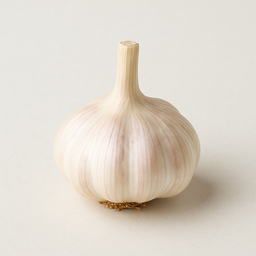 garlic
 Chlorogenic acid + allicin: complementary NF-κB modulation
Technical: Eggplant contains chlorogenic acid (NF-κB modulation) and nasunin (iron chelator influencing lipid peroxidation). Garlic's allicin (formed when cut) has bioactive action via thiol enzyme inhibition. Together they modulate NF-κB signaling through complementary pathways.
What does this mean for you? Baba ganoush or imam bayıldı — classic combinations that have existed for centuries. Cut garlic 10 minutes before heating for maximum allicin formation.
Immune SystemAnti-inflammatory
eggplant 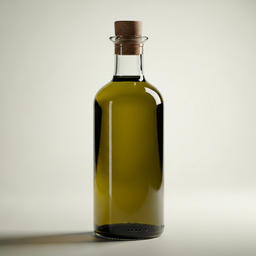 olive oil
 Fat makes nasunin (purple antioxidant) absorbable
Technical: Nasunin in the purple eggplant skin is a fat-soluble anthocyanin that crosses the blood-brain barrier. Olive oil's unsaturated fats (73% oleic acid) form micelles that increase nasunin absorption up to 3x.
What does this mean for you? Eggplant absorbs oil like a sponge — that's actually an advantage! The oil makes nasunin absorbable. Fry in olive oil for maximum effect.
FocusHeart
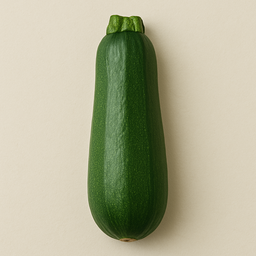 zucchini garlic
 Potassium + allicin: complementary mineral-sulfur pathway
Technical: Zucchini contains 261mg potassium per 100g — potassium contributes to the maintenance of normal blood pressure (EFSA-approved). Garlic's allicin influences angiotensin-converting enzyme (ACE) and stimulates NO production via the nitrate-nitrite-NO pathway. Together they influence vascular physiology via two complementary mechanisms: electrolyte balance and NO signaling.
What does this mean for you? Sautéed zucchini with garlic is a simple side dish with two pathways influencing vascular physiology. Potassium from zucchini and allicin from garlic work complementarily. Add olive oil for extra polyphenols.
HeartAnti-inflammatory
zucchini olive oil Better absorption of lutein and zeaxanthin
Technical: Zucchini contains 2125μg lutein + zeaxanthin per 100g — carotenoids that accumulate in the macula lutea (the center of the retina). These are fat-soluble and absorbed up to 6x better with olive oil. Zucchini's mild flavor makes it an ideal carrier for olive oil in various dishes.
What does this mean for you? Sauté zucchini in olive oil or grill with a drizzle of oil. Without fat you barely absorb lutein — the eye pigment that concentrates in your macula. Lutein and zeaxanthin contribute to the maintenance of normal vision.
General Wellness
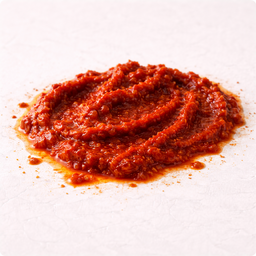 harissa paste
 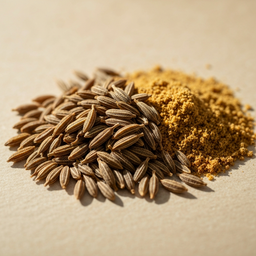 cumin powder
 Cumin softens harissa's heat and improves digestion
Technical: Harissa's capsaicin can irritate the stomach lining through TRPV1 activation. Cumin contains cuminaldehyde that promotes digestive enzyme activity (amylase, lipase) and relaxes gastric smooth muscles. This calms the stomach lining during capsaicin irritation while promoting digestion. Traditional harissa always contains cumin for good reason.
What does this mean for you? Add extra cumin to dishes with harissa. The cumin calms your stomach from the heat and helps you digest your food better.
DigestionAnti-inflammatory
harissa paste olive oil Fat activates capsaicinoids for maximum thermogenic effect
Technical: Capsaicin and dihydrocapsaicin from harissa are fat-soluble. Olive oil dissolves these compounds and increases their bioavailability 2-3x. Moreover, dissolved capsaicin activates thermogenesis (heat production) more effectively. Olive oil's oleocanthal is studied in research in connection with COX signaling.
What does this mean for you? Stir harissa into warm olive oil as base for North African dishes. The fat makes the heat milder and carries the bold flavour.
EnergyWeight LossAnti-inflammatory
chickpeas 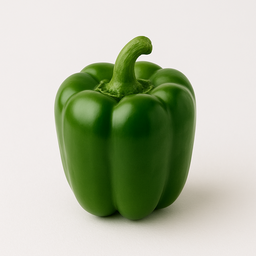 red bell pepper
 Vitamin C increases iron absorption from chickpeas
Technical: Chickpeas (base of hummus) contain 2.9mg non-heme iron per 100g with high phytate concentration. Red bell pepper provides 128mg vitamin C per 100g — the highest of all vegetables. This reduces Fe³⁺ to Fe²⁺ and completely overcomes phytate inhibition. The combination increases iron absorption by factor 4-6.
What does this mean for you? Dip red bell pepper strips in hummus — this isn't just a popular snack but also nutritionally optimal. The pepper provides the vitamin C needed to absorb iron from the chickpeas. Yellow pepper also works well (183mg vitamin C).
Energy
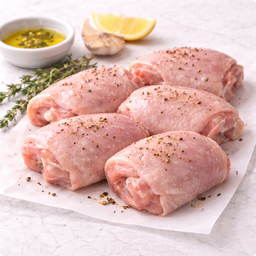 chicken thighs garlic
 Classic combination: allicin for flavor and health
Technical: Chicken thighs contain more fat and flavor than breast, plus extra iron and zinc from dark meat. Garlic contains allicin that influences lipid metabolism. The sulfur compounds in garlic also help digest the fat in thighs.
What does this mean for you? Cook chicken thighs with lots of garlic — this is the basis of dishes like 'chicken with 40 cloves of garlic' and Moroccan tajines. The fat in thighs makes chicken juicier and garlic softer.
HeartImmune System
cumin powder garlic Double digestive support: enzymes + bioactive compounds
Technical: Cumin promotes digestive enzyme activity (amylase, lipase, protease) and increases bile flow. Garlic's allicin has broad bioactivity targeting pathogenic gut bacteria while sparing beneficial ones.
What does this mean for you? Fry garlic and cumin together as base for curries, soups and stews. Classic combination in virtually every cuisine in the world.
DigestionImmune System
cumin powder olive oil Fat activates volatile oils and increases cuminaldehyde absorption
Technical: Cumin's active compounds (cuminaldehyde, cymene, terpinene) are volatile, fat-soluble compounds. Frying in olive oil extracts and stabilizes these compounds, and the fat improves their gut absorption.
What does this mean for you? Briefly fry cumin in olive oil before adding other ingredients (tadka/tempering). This is why Indian and Middle Eastern cuisines always fry cumin in oil.
DigestionAnti-inflammatoryBlood Sugar
olive oil garlic Aglio e olio: allicin + oleocanthal via complementary biochemical pathways
Technical: Garlic contains allicin (formed when cutting/crushing) that influences HMG-CoA reductase (involved in lipid metabolism). Olive oil contains oleocanthal that modulates COX-1/2 enzymes. Together they influence lipid metabolism and prostaglandin cascade via complementary biochemical pathways. The fat also helps absorb fat-soluble garlic compounds.
What does this mean for you? Gently warm garlic in olive oil (don't burn!) as the base for many dishes. This is why 'aglio e olio' pasta is so beloved — two bioactive compounds that reinforce each other.
HeartImmune System
red bell pepper olive oil Fat improves carotenoid absorption from bell pepper
Technical: Red bell pepper contains 3131μg beta-carotene and 51μg lutein per 100g, plus 127mg vitamin C (211% RDI). Carotenoids are fat-soluble — without fat only 3-5% is absorbed. Olive oil increases bioavailability to 15-20% through micelle formation in the small intestine.
What does this mean for you? Roast bell pepper with olive oil or make a salad with olive oil dressing. Red pepper contains 10x more carotenoids than green — choose red for maximum effect.
Immune SystemSkin & Hair
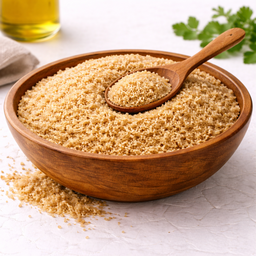 whole wheat couscous chickpeas
 Complete proteins through grain-legume combination
Technical: Whole wheat couscous contains methionine and cysteine but is low in lysine — the limiting amino acid in grains. Chickpeas are rich in lysine (1.3g per 100g) but low in methionine. Together they form a complete protein profile with a PDCAAS (Protein Digestibility Corrected Amino Acid Score) close to 1.0, comparable to animal protein. This is the biochemical basis behind centuries-old North African couscous.
What does this mean for you? Couscous with chickpeas isn't just a tradition — it's nutritional science that has been applied for centuries. Serve whole wheat couscous with chickpea stew for a complete protein meal without meat. Add vegetables and herbs for extra micronutrients.
Muscle GainEnergyGeneral Wellness
whole wheat couscous cumin powder Whole grain fiber + cuminaldehyde for improved digestion
Technical: Whole grain couscous provides 5g fiber per 100g that regulates intestinal transit time. Cumin contains cuminaldehyde that stimulates production of digestive enzymes (amylase, lipase, protease) by 20-30%. Cumin's essential oils (3-4%) also promote bile secretion, supporting fat digestion. The combination accelerates complex carbohydrate breakdown and reduces gas formation.
What does this mean for you? Stirring cumin through your couscous isn't just a North African flavor tradition — it also aids digestion. Less bloating after eating, and you extract more nutrients from the grains.
DigestionEnergy
Ingredients (12)
+9 more ingredientsInstructions
- 1 Preheat the oven to 200°C. Cut zucchini, bell pepper and eggplant into 2-3 cm cubes.
- 2 Mix the vegetables with 1 tablespoon olive oil, cumin and a pinch of salt. Spread on a baking sheet and roast for 25-30 minutes until golden.
Nutrition per serving
Indicative values per serving.
Timing & Suitability
Shelf life: 3 days in fridge
Tags & Diet
Allergens: Gluten, Nuts