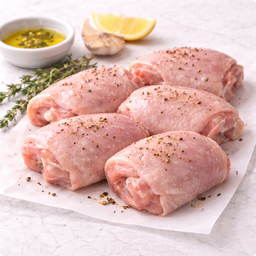
Chicken Thighs
Juicy dark chicken meat
What is this ingredient?
Chicken thighs are dark chicken meat: muscles that are used more actively and therefore contain more myoglobin than chicken breast. This gives the meat a deeper color, fuller flavor and juicier texture.
## Dark meat and minerals
Dark chicken meat naturally contains iron, zinc, selenium and several B vitamins. Its nutritional profile therefore differs from chicken breast, which is usually leaner but also milder in flavor.
## Protein-rich base
Chicken thighs provide high-quality protein and work well in meals with vegetables, grains, potatoes or legumes. Because of their slightly higher fat content, they often stay more tender during pan-frying, roasting or braising than chicken breast.
## Culinary uses
Chicken thighs are suitable for pan-frying, grilling, braising or slow roasting. Use an internal temperature of 74°C for safe preparation. Bone-in and skin-on thighs stay extra juicy; skinless thighs are lighter and cook faster.
How does it taste?
Juicy, richer and deeper in flavor than chicken breast; more tender because of the higher fat content.
Pairs well with:
Pairs well with harissaoliveslemonthyme and honey.
Did you know...?
- Chicken thighs contain more myoglobin than chicken breast, giving the meat its darker color.
- In many Asian and African cuisines, chicken thighs are preferred over breast for their richer flavor.
Nutritional Value & Energy
Per 100g
Chicken Thighs provides energy thanks to natural nutrients .
Per 100g
Minerals
Vitamins
Omega-3 fatty acids
More nutrients
B-Vitamins
Trace Minerals
What's in a serving?
1 serving
Chicken Thighs naturally contains zinc (2.4 mg per 100 g).
Chicken Thighs naturally contains phosphorus (195 mg per 100 g).
Chicken Thighs naturally contains selenium (22 mcg per 100 g).
Chicken Thighs naturally contains vitamin b12 (0.6 mcg per 100 g).
Chicken Thighs naturally contains vitamin b6 (0.4 mg per 100 g).
% of daily reference intake (DRI)
EU-approved nutrition claims
This ingredient contains nutrients for which EFSA-authorized health claims exist (at nutrient level, not ingredient-specific).
Approved health claims (EU)
Vitamin_b12 EU 432/2012
Vitamin B12 contributes to the normal function of the immune system
Contains 0.6mcg/100g (threshold: ≥0.375mcg/100g)
Vitamin_b12 EU 432/2012
Vitamin B12 contributes to the reduction of tiredness and fatigue
Contains 0.6mcg/100g (threshold: ≥0.375mcg/100g)
Vitamin_b12 EU 432/2012
Vitamin B12 contributes to the normal functioning of the nervous system
Contains 0.6mcg/100g (threshold: ≥0.375mcg/100g)
Zinc EU 432/2012
Zinc contributes to the normal function of the immune system
Contains 2.4mg/100g (threshold: ≥1.5mg/100g)
Zinc EU 432/2012
Zinc contributes to the maintenance of normal skin
Contains 2.4mg/100g (threshold: ≥1.5mg/100g)
Vitamin_b6 EU 432/2012
Vitamin B6 contributes to normal cysteine synthesis
Contains 0.4mg/100g (threshold: ≥0.21mg/100g)
Vitamin_b6 EU 432/2012
Vitamin B6 contributes to normal energy-yielding metabolism
Contains 0.4mg/100g (threshold: ≥0.21mg/100g)
Vitamin_b6 EU 432/2012
Vitamin B6 contributes to normal functioning of the nervous system
Contains 0.4mg/100g (threshold: ≥0.21mg/100g)
Vitamin_b6 EU 432/2012
Vitamin B6 contributes to normal homocysteine metabolism
Contains 0.4mg/100g (threshold: ≥0.21mg/100g)
Vitamin_b6 EU 432/2012
Vitamin B6 contributes to normal protein and glycogen metabolism
Contains 0.4mg/100g (threshold: ≥0.21mg/100g)
Vitamin_b6 EU 432/2012
Vitamin B6 contributes to normal psychological function
Contains 0.4mg/100g (threshold: ≥0.21mg/100g)
Vitamin_b6 EU 432/2012
Vitamin B6 contributes to normal red blood cell formation
Contains 0.4mg/100g (threshold: ≥0.21mg/100g)
Vitamin_b6 EU 432/2012
Vitamin B6 contributes to the normal function of the immune system
Contains 0.4mg/100g (threshold: ≥0.21mg/100g)
Vitamin_b6 EU 432/2012
Vitamin B6 contributes to the regulation of hormonal activity
Contains 0.4mg/100g (threshold: ≥0.21mg/100g)
Vitamin_b6 EU 432/2012
Vitamin B6 contributes to the reduction of tiredness and fatigue
Contains 0.4mg/100g (threshold: ≥0.21mg/100g)
Vitamin_b12 EU 432/2012
Vitamin B12 contributes to normal energy-yielding metabolism
Contains 0.6mcg/100g (threshold: ≥0.375mcg/100g)
Vitamin_b12 EU 432/2012
Vitamin B12 contributes to normal homocysteine metabolism
Contains 0.6mcg/100g (threshold: ≥0.375mcg/100g)
Vitamin_b12 EU 432/2012
Vitamin B12 contributes to normal psychological function
Contains 0.6mcg/100g (threshold: ≥0.375mcg/100g)
Vitamin_b12 EU 432/2012
Vitamin B12 contributes to normal red blood cell formation
Contains 0.6mcg/100g (threshold: ≥0.375mcg/100g)
Vitamin_b12 EU 432/2012
Vitamin B12 has a role in the process of cell division
Contains 0.6mcg/100g (threshold: ≥0.375mcg/100g)
Phosphorus EU 432/2012
Phosphorus contributes to normal energy-yielding metabolism
Contains 195mg/100g (threshold: ≥105mg/100g)
Phosphorus EU 432/2012
Phosphorus contributes to the normal function of cell membranes
Contains 195mg/100g (threshold: ≥105mg/100g)
Phosphorus EU 432/2012
Phosphorus contributes to the maintenance of normal bones
Contains 195mg/100g (threshold: ≥105mg/100g)
Phosphorus EU 432/2012
Phosphorus contributes to the maintenance of normal teeth
Contains 195mg/100g (threshold: ≥105mg/100g)
Zinc EU 432/2012
Zinc contributes to normal acid-base metabolism
Contains 2.4mg/100g (threshold: ≥1.5mg/100g)
Zinc EU 432/2012
Zinc contributes to normal carbohydrate metabolism
Contains 2.4mg/100g (threshold: ≥1.5mg/100g)
Zinc EU 432/2012
Zinc contributes to normal cognitive function
Contains 2.4mg/100g (threshold: ≥1.5mg/100g)
Zinc EU 432/2012
Zinc contributes to normal DNA synthesis
Contains 2.4mg/100g (threshold: ≥1.5mg/100g)
Zinc EU 432/2012
Zinc contributes to normal fertility and reproduction
Contains 2.4mg/100g (threshold: ≥1.5mg/100g)
Zinc EU 432/2012
Zinc contributes to normal macronutrient metabolism
Contains 2.4mg/100g (threshold: ≥1.5mg/100g)
Zinc EU 432/2012
Zinc contributes to normal metabolism of fatty acids
Contains 2.4mg/100g (threshold: ≥1.5mg/100g)
Zinc EU 432/2012
Zinc contributes to normal metabolism of vitamin A
Contains 2.4mg/100g (threshold: ≥1.5mg/100g)
Zinc EU 432/2012
Zinc contributes to normal protein synthesis
Contains 2.4mg/100g (threshold: ≥1.5mg/100g)
Zinc EU 432/2012
Zinc contributes to the maintenance of normal bones
Contains 2.4mg/100g (threshold: ≥1.5mg/100g)
Zinc EU 432/2012
Zinc contributes to the maintenance of normal hair
Contains 2.4mg/100g (threshold: ≥1.5mg/100g)
Zinc EU 432/2012
Zinc contributes to the maintenance of normal nails
Contains 2.4mg/100g (threshold: ≥1.5mg/100g)
Zinc EU 432/2012
Zinc contributes to the maintenance of normal testosterone levels in the blood
Contains 2.4mg/100g (threshold: ≥1.5mg/100g)
Zinc EU 432/2012
Zinc contributes to the maintenance of normal vision
Contains 2.4mg/100g (threshold: ≥1.5mg/100g)
Zinc EU 432/2012
Zinc contributes to the protection of cells from oxidative stress
Contains 2.4mg/100g (threshold: ≥1.5mg/100g)
Zinc EU 432/2012
Zinc has a role in the process of cell division
Contains 2.4mg/100g (threshold: ≥1.5mg/100g)
Selenium EU 432/2012
Selenium contributes to the maintenance of normal hair
Contains 22mcg/100g (threshold: ≥8.25mcg/100g)
Selenium EU 432/2012
Selenium contributes to the maintenance of normal nails
Contains 22mcg/100g (threshold: ≥8.25mcg/100g)
Selenium EU 432/2012
Selenium contributes to the normal function of the immune system
Contains 22mcg/100g (threshold: ≥8.25mcg/100g)
Selenium EU 432/2012
Selenium contributes to normal thyroid function
Contains 22mcg/100g (threshold: ≥8.25mcg/100g)
Selenium EU 432/2012
Selenium contributes to normal spermatogenesis
Contains 22mcg/100g (threshold: ≥8.25mcg/100g)
Selenium EU 432/2012
Selenium contributes to the protection of cells from oxidative stress
Contains 22mcg/100g (threshold: ≥8.25mcg/100g)
What's being researched?
Dark chicken meat and nutrients
The iron, zinc and B vitamin content of dark chicken meat is often compared with that of chicken breast. Dark meat generally has a richer micronutrient profile, but also a slightly higher fat content.
Supported by: [1] Hurrell R (2010)
Good Combinations (Synergy)
Combine chicken thighs smartly to enhance the effect:
Chicken Thighs  Lemon
Lemon Vitamin C increases iron absorption and activates collagen formation
Technical: Chicken thighs contain 1.3mg heme iron per 100g with 15-35% bioavailability, plus 20g protein rich in proline and hydroxyproline (collagen precursors). Lemon provides 53mg vitamin C per 100g that reduces Fe³⁺→Fe²⁺ (300-400% better iron absorption) and is essential cofactor for prolyl/lysyl-hydroxylases that hydroxylate procollagen for stable collagen triple-helix formation. Without vitamin C, defective collagen forms.
What does this mean for you? Drizzle chicken thighs with lemon juice after roasting. The vitamin C improves your iron absorption and activates collagen formation from chicken amino acids. Vitamin C contributes to normal collagen formation for the normal function of skin (EFSA-approved). Especially useful with iron deficiency.
Chicken Thighs 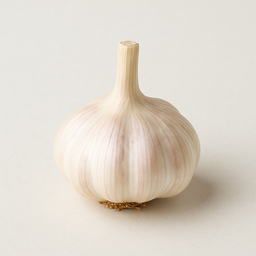 Garlic
 Classic combination: allicin for flavor and health
Technical: Chicken thighs contain more fat and flavor than breast, plus extra iron and zinc from dark meat. Garlic contains allicin that influences lipid metabolism. The sulfur compounds in garlic also help digest the fat in thighs.
What does this mean for you? Cook chicken thighs with lots of garlic — this is the basis of dishes like 'chicken with 40 cloves of garlic' and Moroccan tajines. The fat in thighs makes chicken juicier and garlic softer.
Chicken Thighs  Turmeric
 Thigh fat increases curcumin absorption for joint and bioactive support
Technical: Chicken thighs contain 10-14g fat per 100g (more than breast: 3g), of which 30% MUFA and 20% PUFA. This higher fat content creates superior micelles for curcumin absorption compared to lean meat. Curcumin (diferuloylmethane) is studied in research in connection with NF-κB and COX-2 signaling (IC50 1-5μM). The iron in chicken thighs (1.3mg/100g heme iron) is protected from oxidation by curcumin's iron-chelating properties.
What does this mean for you? Chicken thighs with turmeric (yellow braised) works better than chicken breast with turmeric — the extra fat from the thighs dissolves more curcumin. Perfect for a curry or roasted chicken thighs with turmeric paste.
Recipes with Chicken Thighs
Discover delicious recipes featuring chicken thighs:
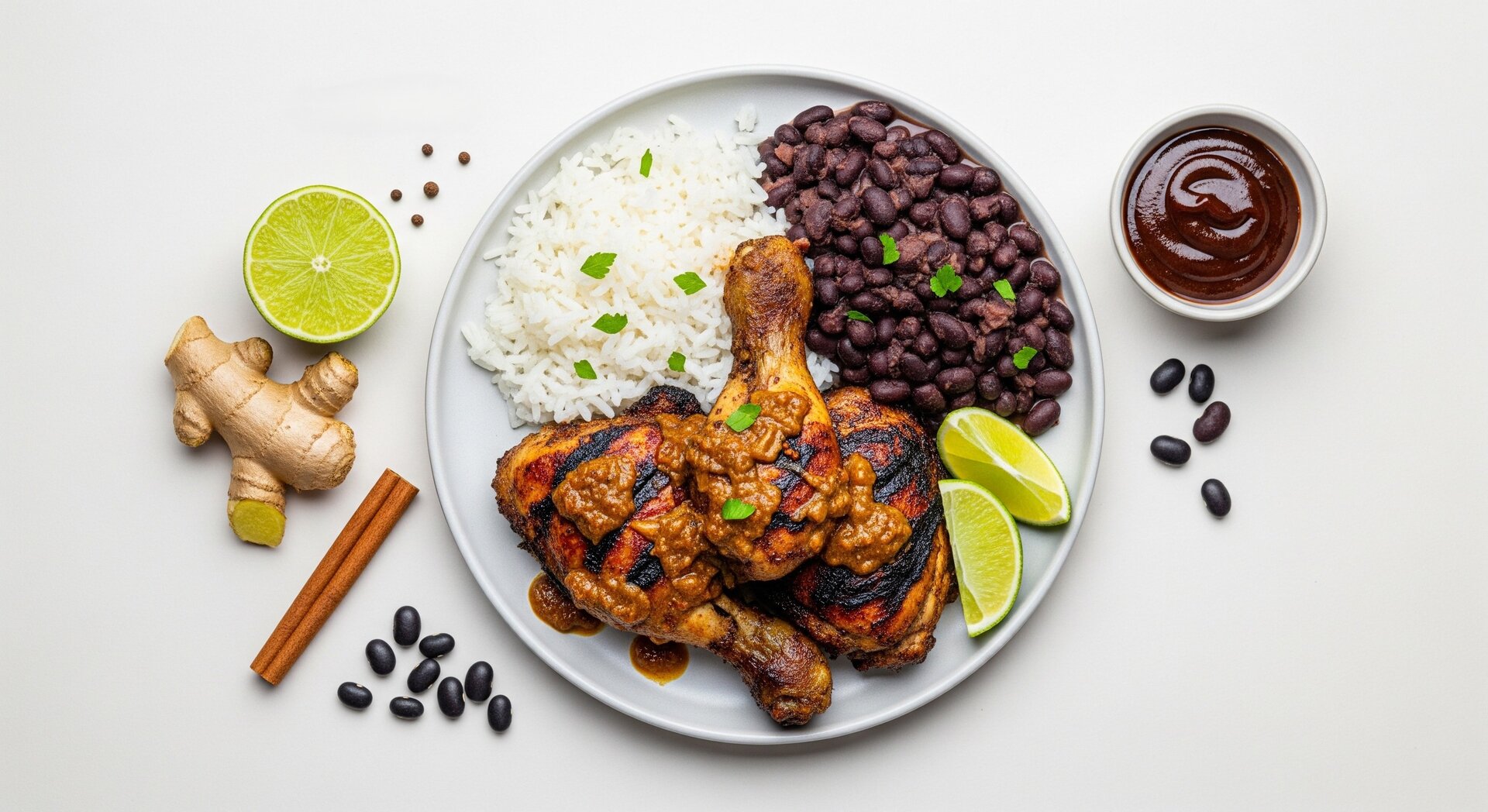 Caribbean Jerk Chicken with Rice and Peas 65 min Spiced chicken with coconut rice and black beans
  868 kcal
  57g protein 1 synergies
 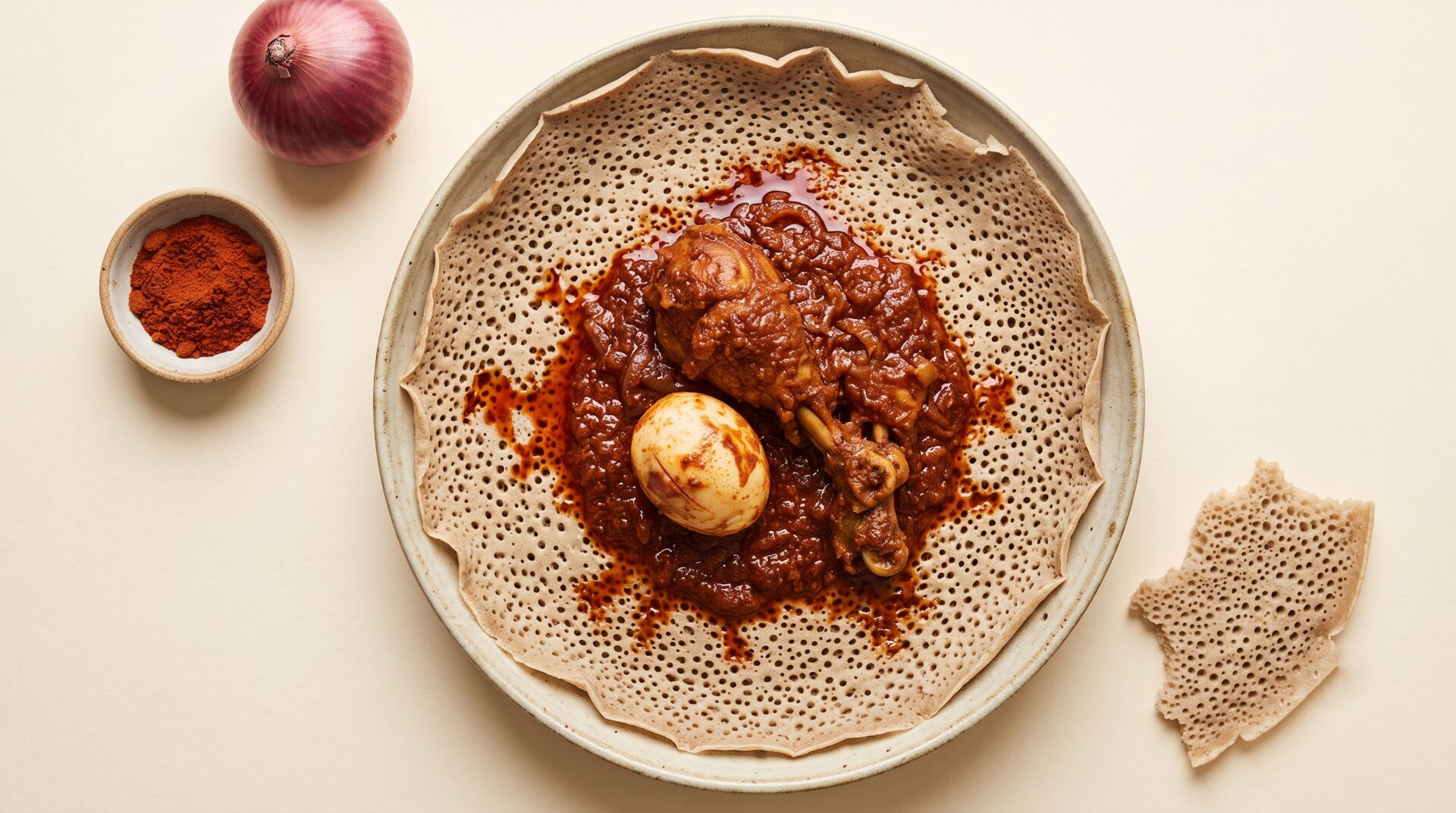 Ethiopian Doro Wat with Injera-Style Flatbread 80 min Festive chicken stew with berbere and homemade buckwheat flatbread 712 kcal 44g protein 2 synergies
 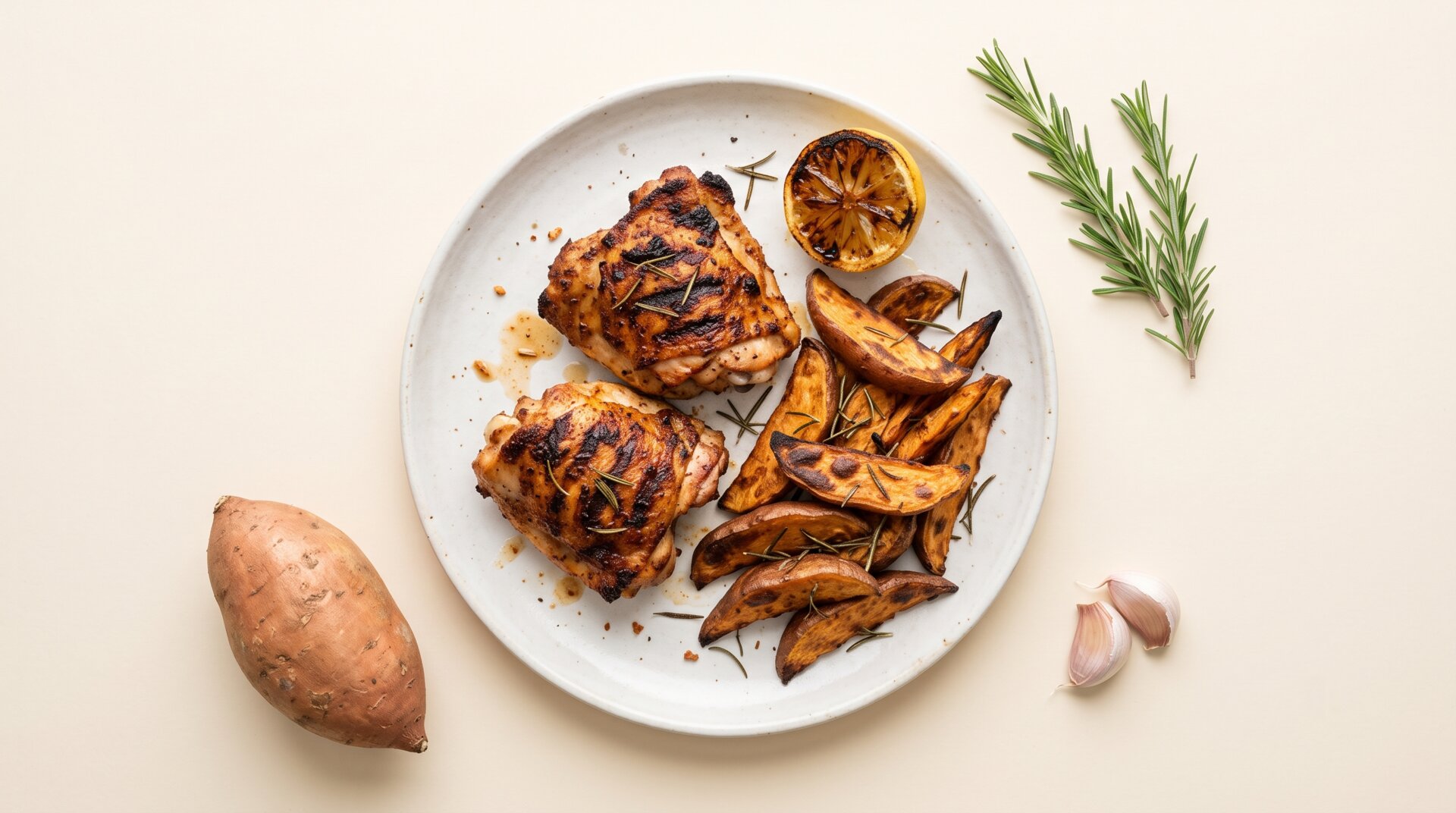 Grilled Chicken with Sweet Potato and Rosemary (Paleo) 40 min Grilled chicken thighs with crispy sweet potato and fresh rosemary 700 kcal 44g protein 2 synergies
 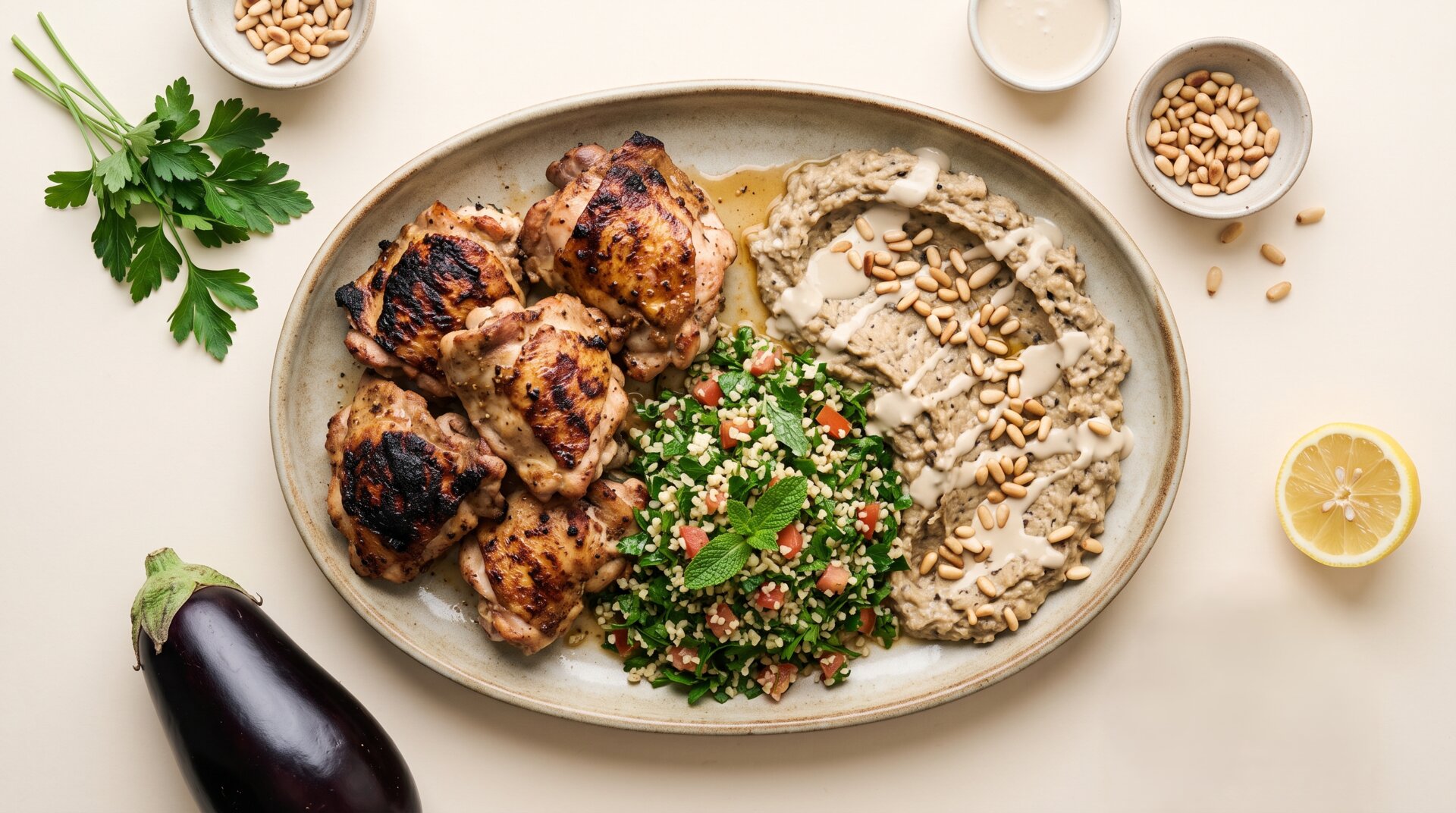 Grilled Chicken Thighs with Baba Ganoush and Tabbouleh 65 min Lebanese-inspired meal with smoky eggplant and fresh herbs 930 kcal 52g protein 3 synergies
 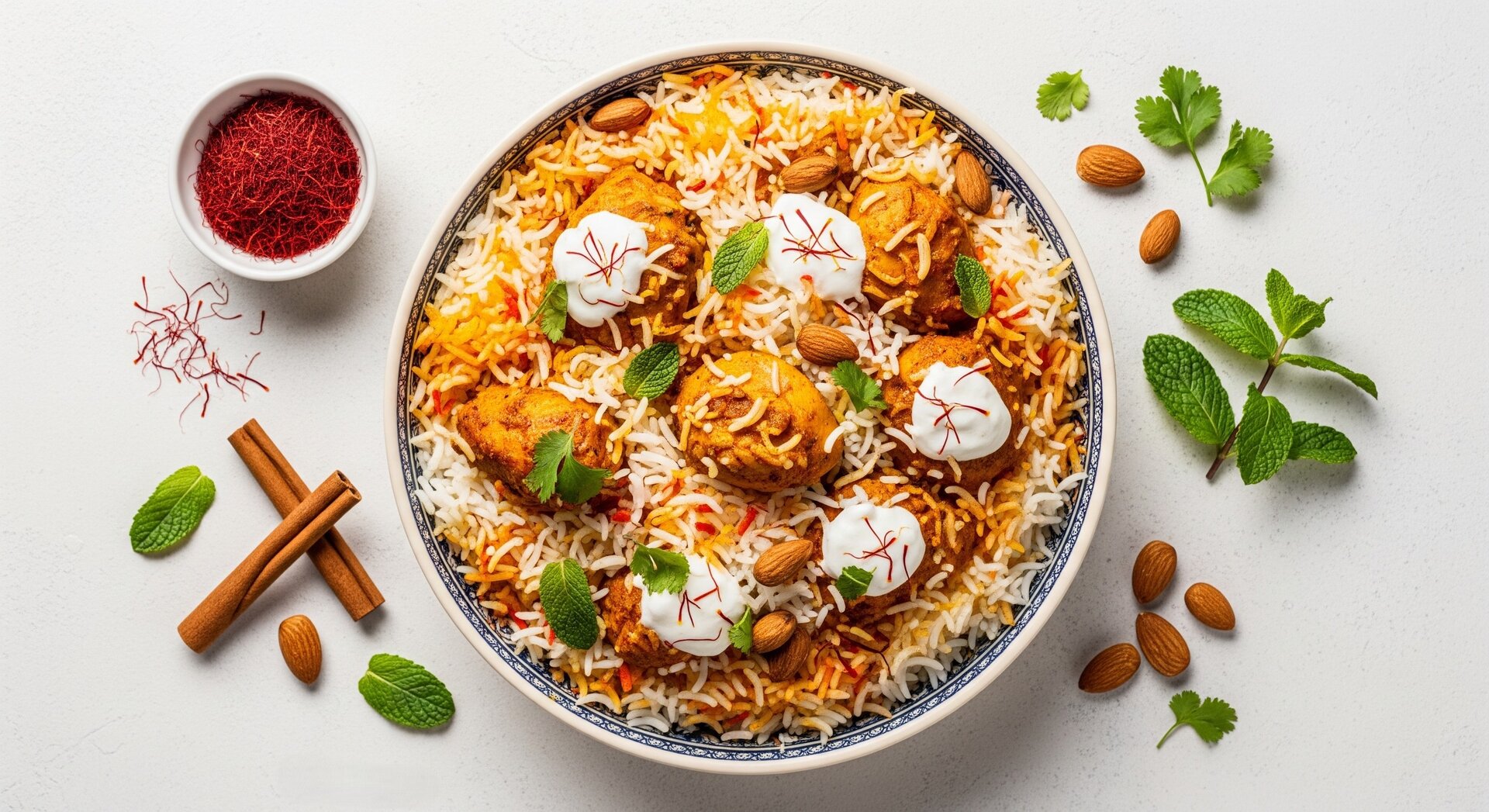 Indian Chicken Biryani with Saffron and Almonds 95 min Layered rice with fragrant chicken and saffron 730 kcal 56g protein 1 synergies
 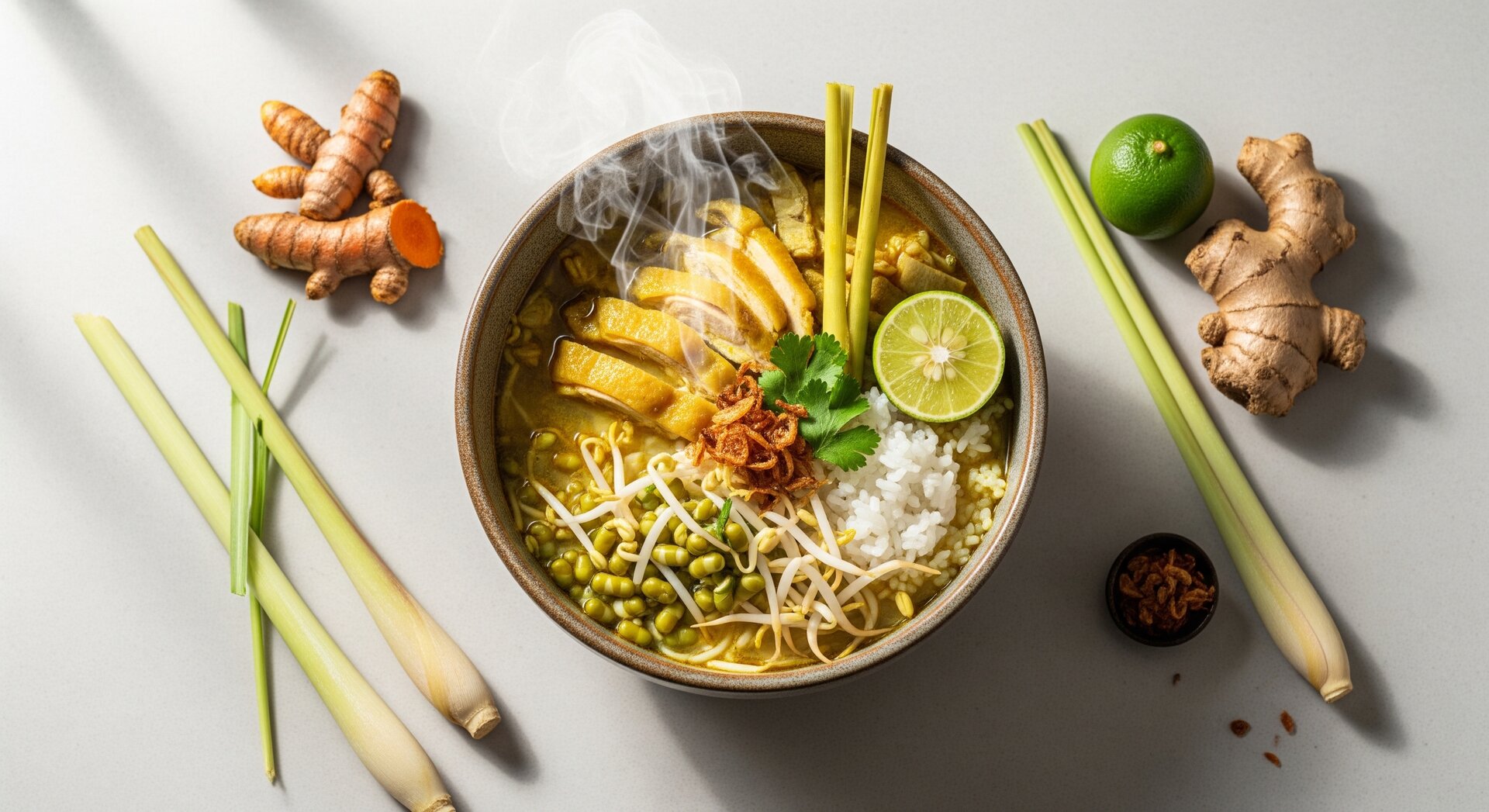 Indonesian Soto Ayam with Turmeric and Lemongrass 45 min Golden Indonesian chicken soup with lemongrass, ginger and bean sprouts 520 kcal 36g protein 2 synergies
  In the Kitchen
Storage
Location:Refrigerator
Shelf life:2-3 dagen vers, 6 maanden ingevroren
Preparation
Pan-fry, grill, braise or roast. Cook fully to an internal temperature of 74°C.
Conversions
Substitutes
Smart preparation
1Roast chicken thighs skin-side down until crispy.
Why?
The fat under the skin renders out and makes the skin crispy.
2Chicken thighs are more forgiving than breast during longer cooking.
Why?
The higher fat content helps keep the meat juicy.
3Use an internal temperature of 74°C as a guide for doneness.
Caution / Warnings
Chicken Thighs is very safe, but there are scientific considerations:
Gout Moderate
Chicken thighs contain purines, which may contribute to a higher uric acid load in sensitive individuals.
Advice:
Limit portion size with gout or elevated uric acid and discuss suitable protein sources with a doctor or dietitian.
Cardiovascular disease Mild
Chicken thighs contain more fat than chicken breast, including saturated fat and cholesterol.
Advice:
Choose skinless cuts if preferred, watch portion size and combine with vegetables and fibre-rich sides.
Summary
Chicken thighs are juicy dark chicken meat with a high protein content and a richer flavor than chicken breast. They contain zinc, selenium, vitamin B6 and vitamin B12. Always cook them fully to an internal temperature of 74°C.