Saffron
Red gold for color, aroma and refined dishes
What is this ingredient?
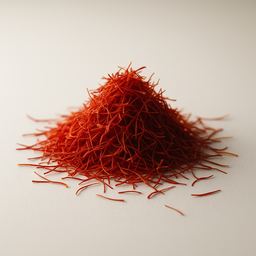
Saffron (Crocus sativus) is the red gold of the spice world. Each thread is a stigma from the crocus flower and is harvested by hand; about 150,000 flowers are needed for 1 kg of saffron. That makes saffron precious, but in cooking you only use a pinch.
## Color, aroma and craftsmanship
The golden color comes mainly from crocin, while safranal gives the recognizable warm, floral aroma. Picrocrocin adds the slight bitterness that distinguishes good saffron from cheaper coloring ingredients. Whole threads are usually more reliable than powder, because powder is easier to mix with other plants or colorants.
## Research into bioactive compounds
Saffron is studied in clinical and nutrition research around mood-related questionnaires, sleep-quality scores, visual-function measurements and carotenoid-like compounds. This makes it an interesting research ingredient, but Tayb keeps the public text educational: saffron is not a substitute for treatment, diagnosis or personal medical advice.
## Culinary use
Soak the threads first in warm water, milk or broth. This gradually releases color and aroma and distributes them evenly through paella, risotto, tahdig, bouillabaisse, tagine, desserts and warm drinks.
How does it taste?
Floral and honeyed with light bitterness, warm earthy notes and a subtle metallic edge.
Pairs well with:
Pairs well with riceseafoodcardamomalmondcitrusmilk and honey.
Did you know...?
- One kilogram of saffron requires about 150,000 to 200,000 crocus flowers, hand-picked.
- Saffron is the most expensive spice in the world and is therefore often called ‘red gold’.
- Each crocus flower produces only three red stigma threads that become saffron after drying.
Nutritional Value & Energy
Per 100g
Saffron provides energy thanks to natural nutrients , buffered by fiber.
Per 100g
Minerals
Vitamins
Omega-3 fatty acids
More nutrients
B-Vitamins
Trace Minerals
What's in a serving?
Saffron naturally contains potassium (1724 mg per 100 g dried threads). At typical spice use, the contribution is small because you usually use only a few threads.
Saffron naturally contains manganese (28.4 mg per 100 g dried threads). At typical spice use, the contribution is small because you usually use only a few threads.
Saffron naturally contains vitamin C (80.8 mg per 100 g dried threads). At typical spice use, the contribution is small because you usually use only a few threads.
Saffron naturally contains iron (11.1 mg per 100 g dried threads). At typical spice use, the contribution is small because you usually use only a few threads.
Saffron naturally contains magnesium (264 mg per 100 g dried threads). At typical spice use, the contribution is small because you usually use only a few threads.
Saffron naturally contains potassium (1724 mg per 100 g dried threads). At typical spice use, the contribution is small because you usually use only a few threads.
Saffron naturally contains manganese (28.4 mg per 100 g dried threads). At typical spice use, the contribution is small because you usually use only a few threads.
Saffron naturally contains copper (0.33 mg per 100 g dried threads). At typical spice use, the contribution is small because you usually use only a few threads.
Saffron naturally contains phosphorus (252 mg per 100 g dried threads). At typical spice use, the contribution is small because you usually use only a few threads.
Saffron naturally contains vitamin C (80.8 mg per 100 g dried threads). At typical spice use, the contribution is small because you usually use only a few threads.
Saffron naturally contains vitamin B6 (1.01 mg per 100 g dried threads). At typical spice use, the contribution is small because you usually use only a few threads.
Saffron naturally contains folate (93 mcg per 100 g dried threads). At typical spice use, the contribution is small because you usually use only a few threads.
% of daily reference intake (DRI)
EU-approved nutrition claims
This ingredient contains nutrients for which EFSA-authorized health claims exist at nutrient level, not ingredient-specific level. With normal culinary use of saffron, portions are very small.
Approved health claims (EU)
Manganese EU 432/2012
Manganese contributes to normal energy-yielding metabolism
Contains 28.4mg/100g (threshold: ≥0.3mg/100g)
Manganese EU 432/2012
Manganese contributes to the maintenance of normal bones
Contains 28.4mg/100g (threshold: ≥0.3mg/100g)
Manganese EU 432/2012
Manganese contributes to the normal formation of connective tissue
Contains 28.4mg/100g (threshold: ≥0.3mg/100g)
Manganese EU 432/2012
Manganese contributes to the protection of cells from oxidative stress
Contains 28.4mg/100g (threshold: ≥0.3mg/100g)
Comparison
vsbanaan
Saffron contains about 5× more potassium per 100 g than banana — but you use much less saffron per serving, often only a few threads.
vsspinazie
Saffron contains about 4× more iron per 100 g than spinach — but a normal saffron portion is so small that the contribution remains limited.
vssinaasappel
Saffron contains about 2× more vitamin C per 100 g than orange — but you usually use only a pinch.
What's being researched?
Saffron and mood-related scores
Crocin and safranal are studied in clinical studies using mood-related questionnaires. The results are often described as promising, but the public explanation remains educational and non-therapeutic.
Supported by: [1] Hausenblas (2013) , [3] Noorbala (2005) , [5] Kashani (2013)
Saffron and visual-function measurements
Saffron is studied in research on age-related visual-function measurements. Early clinical studies describe interesting signals, but these are not ingredient-specific EFSA health claims.
Supported by: [2] Falsini (2010)
Good Combinations (Synergy)
Combine saffron smartly to enhance the effect:
Saffron 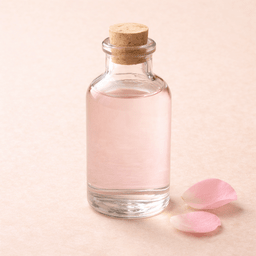 Rose Water
 Dual anxiolytic effect via aromatherapy and crocin
Saffron has proven antidepressant effects comparable to fluoxetine (Lopresti & Drummond, 2014; PMID: 25384672)
Technical: Rose water contains 2-phenylethanol and geraniol that activate the GABA system via the olfactory bulb, with proven anxiolytic (anxiety-reducing) effects in clinical trials. Saffron contains crocin and safranal that inhibit serotonin reuptake — similar to the mechanism of SSRI antidepressants (Lopresti & Drummond, 2014). Together they work on two neurotransmitter systems: GABA (calming) and serotonin (mood-improving).
What does this mean for you? Add rose water and a pinch of saffron to warm milk or rice pudding. The Persian "relaxation formula" used for centuries now has scientific backing: roses calm via your nose, saffron improves mood via your blood.
Saffron 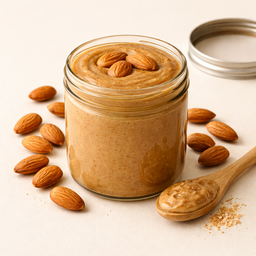 Almond Butter
 Fats increase absorption of saffron's carotenoids up to 5x
Technical: Crocin and other carotenoids in saffron are fat-soluble. Almonds contain 50g healthy fats per 100g that stimulate micelle formation in the gut. This increases bioavailability of crocin by 3-5x. Traditional in Persian and Indian desserts.
What does this mean for you? Combine saffron with almonds in rice pudding, halwa or golden almond milk. The nuts not only increase nutrient absorption but also complement the delicate flavor.
Saffron 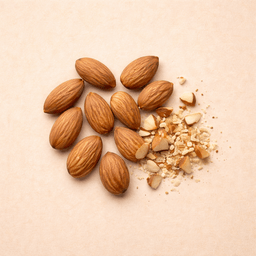 Almonds
 Fats increase absorption of saffron's carotenoids up to 5x
Technical: Crocin and other carotenoids in saffron are fat-soluble. Almonds contain 50g healthy fats per 100g that stimulate micelle formation in the gut. This increases bioavailability of crocin by 3-5x. Traditional in Persian and Indian desserts.
What does this mean for you? Combine saffron with almonds in rice pudding, halwa or golden almond milk. The nuts not only increase nutrient absorption but also complement the delicate flavor.
Saffron 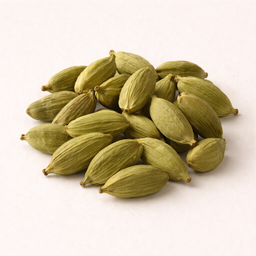 Cardamom
 Persian mood enhancer: double GABA modulation
Technical: Both safranal (saffron) and 1,8-cineole (cardamom) modulate GABA-A receptors, the main calming neurotransmitter system. Saffron also increases serotonin. This combination is traditional in Persian cuisine (rice dishes, desserts) and has synergistic calming effects.
What does this mean for you? Add a pinch of saffron and cardamom to rice or warm milk for a calming evening drink. Ideal for stress or sleep issues.
Saffron 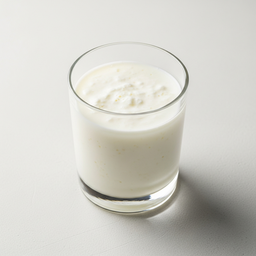 Kefir
Kefir Golden milk for mood and sleep
Technical: Saffron contains safranal (sedative via GABAergic action) and crocin (carotenoid antioxidant). Safranal increases serotonin through reuptake inhibition. Milk contains tryptophan (serotonin precursor) and fat that makes fat-soluble crocin more absorbable. Together: sleep promotion via serotonin + GABA + fat absorption.
What does this mean for you? Warm milk with a pinch of saffron before bed. The saffron aids sleep through two routes (serotonin and GABA), the milk fat ensures optimal absorption.
Recipes with Saffron
Discover delicious recipes featuring saffron:
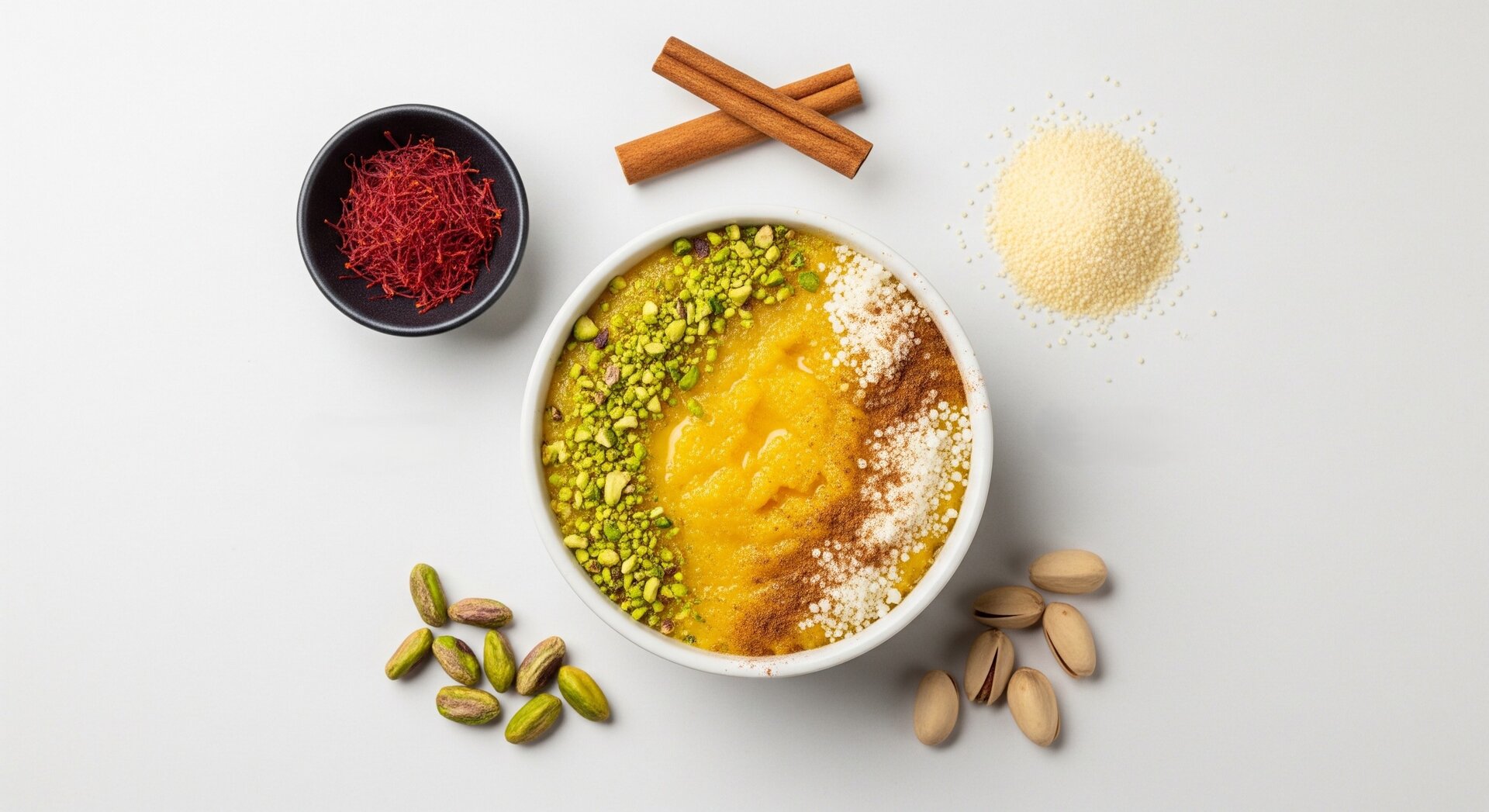 Halwa - Semolina Pudding with Saffron 35 min Creamy Turkish semolina pudding with saffron and pistachios
  329 kcal
  10g protein 2 synergies
 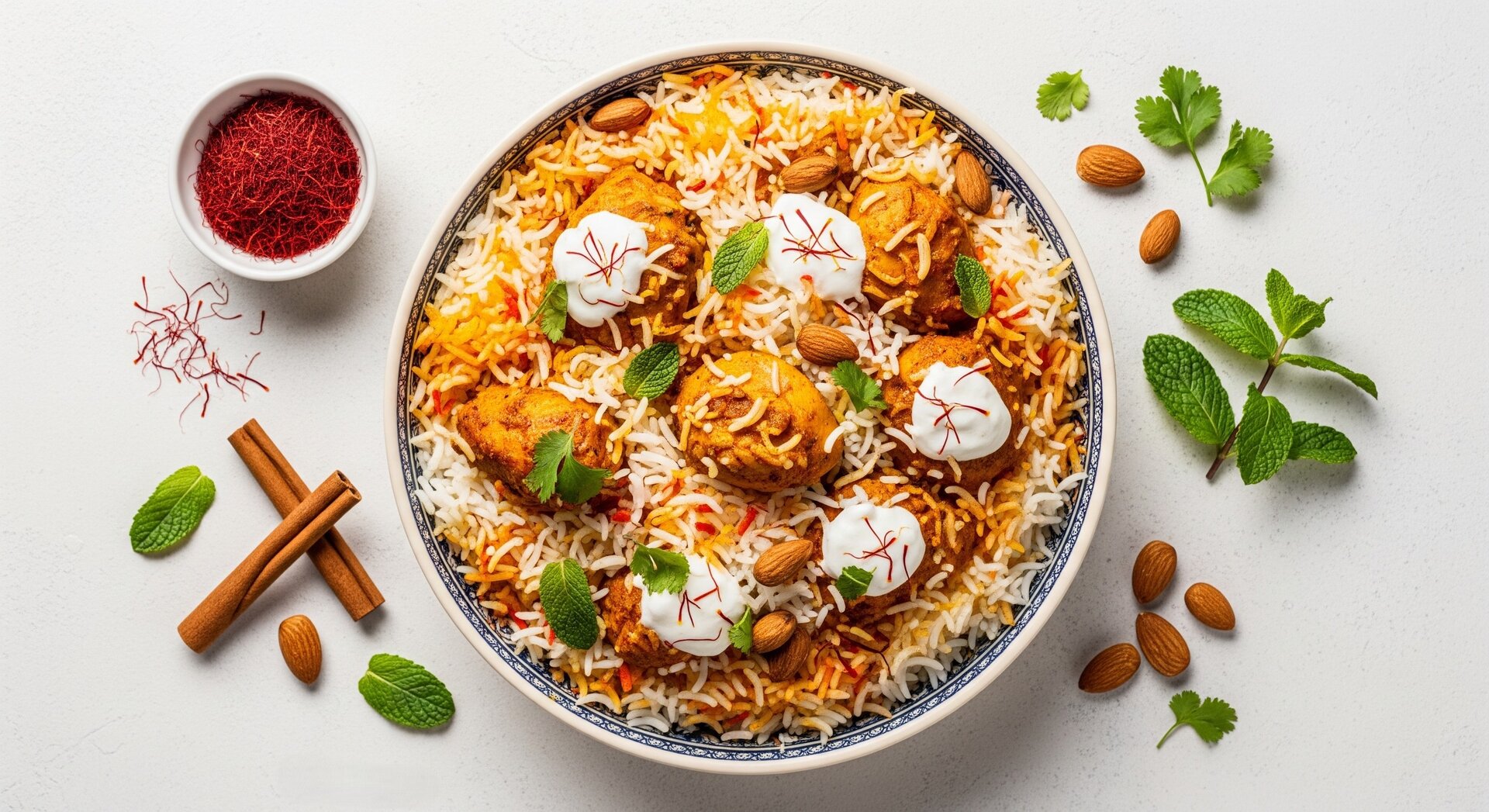 Indian Chicken Biryani with Saffron and Almonds 95 min Layered rice with fragrant chicken and saffron 730 kcal 56g protein 1 synergies
 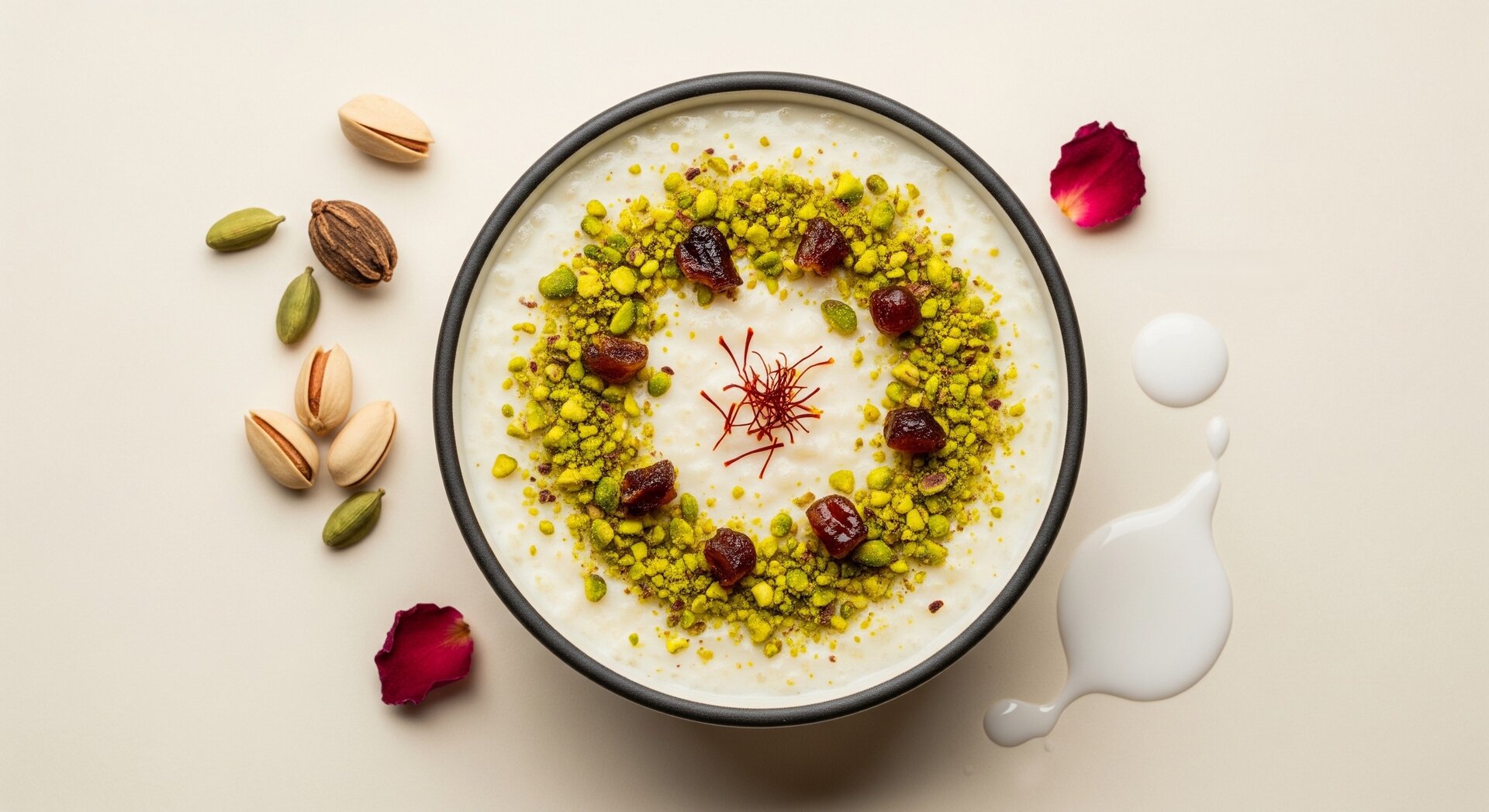 Coconut Kheer - Indian Rice Pudding with Cardamom 40 min Creamy vegan rice pudding with coconut milk, cardamom and saffron 323 kcal 5g protein 2 synergies
 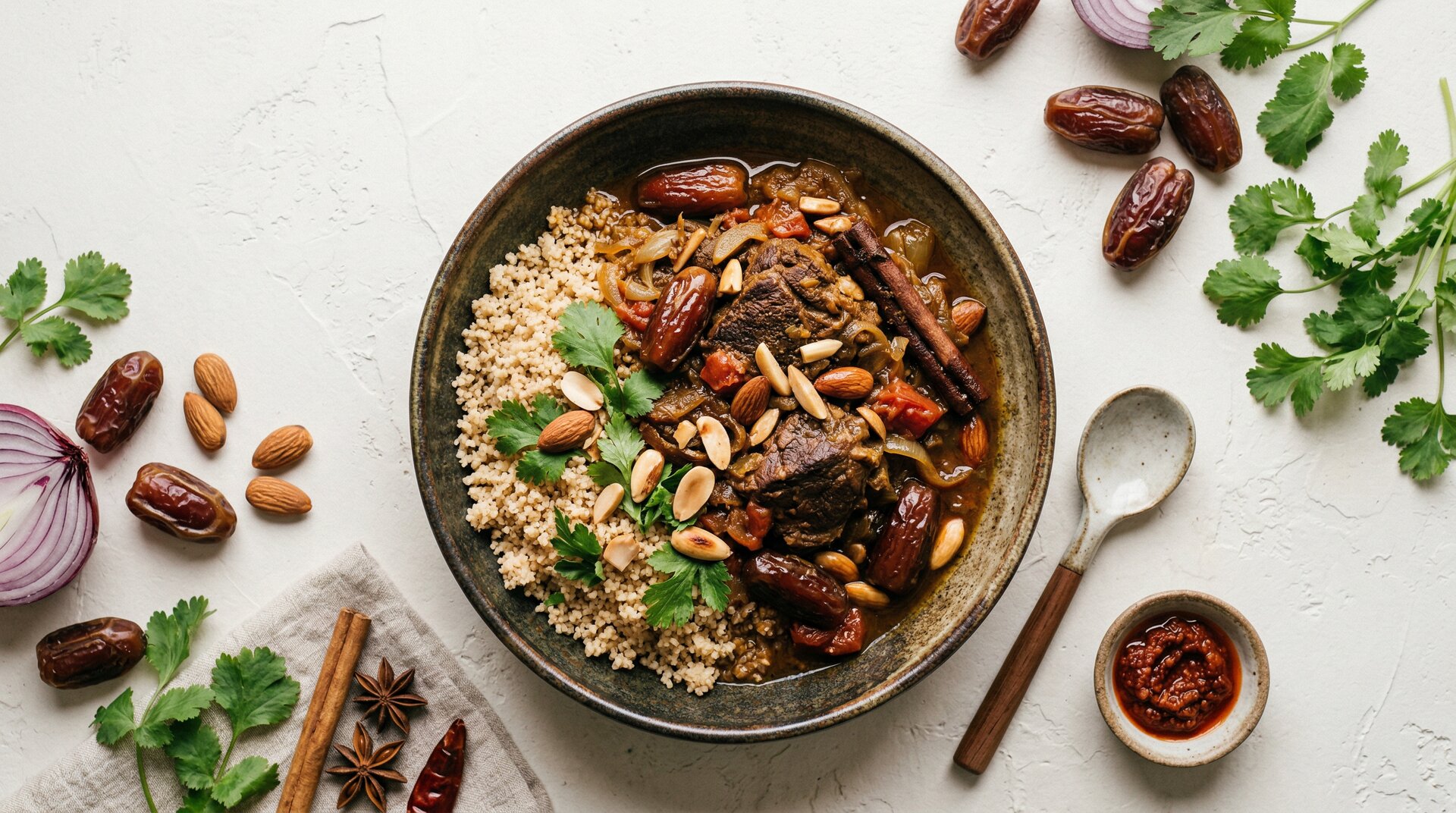 Moroccan Lamb Tagine with Dates, Almonds and Couscous 110 min Festive Moroccan stew with tender lamb, sweet dates and toasted almonds 890 kcal 40g protein 3 synergies
 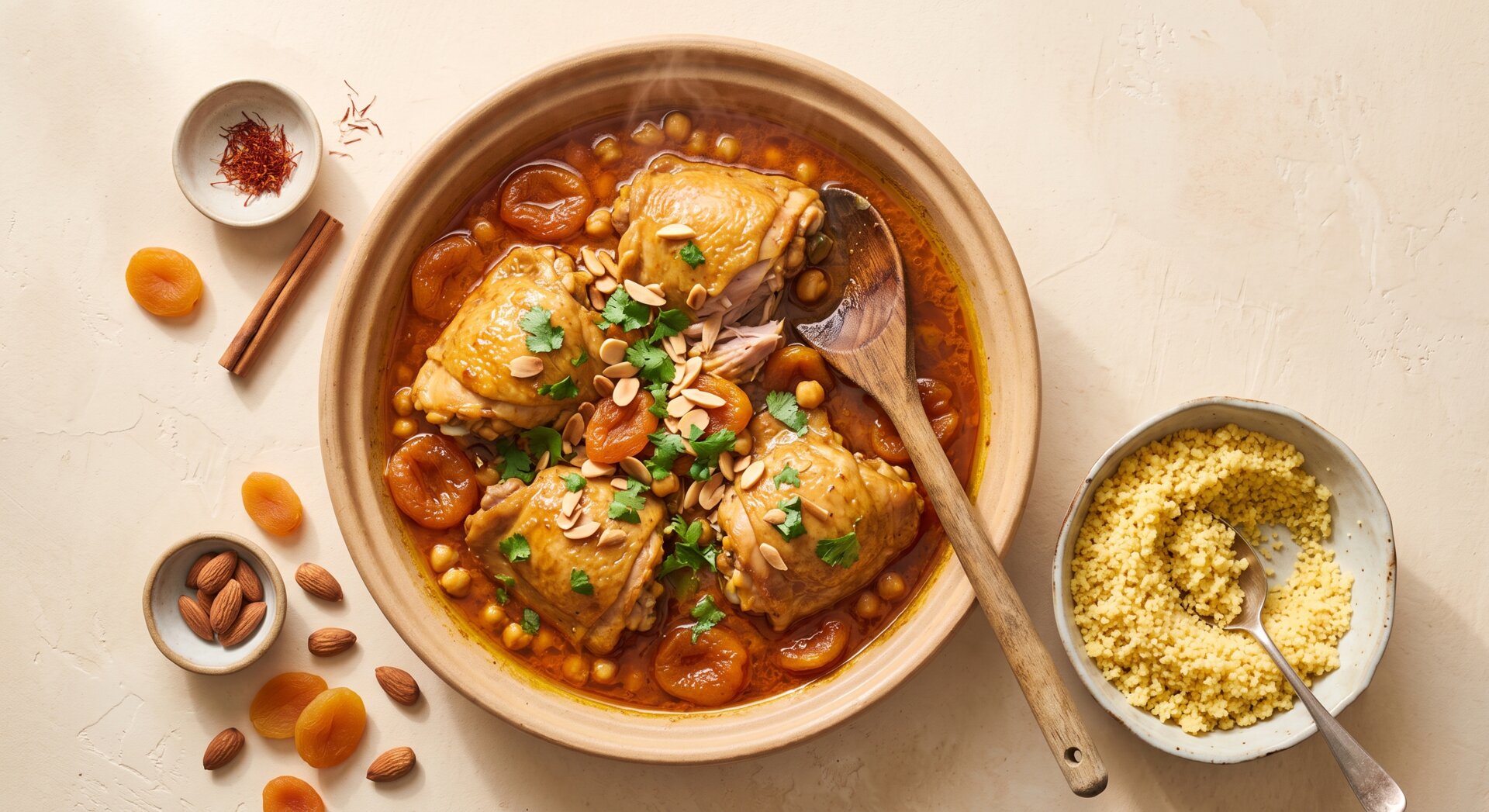 Moroccan Tagine with Chicken, Apricots and Almonds 65 min Sweet-savory stew with saffron, cinnamon and whole wheat couscous 735 kcal 39g protein 2 synergies
 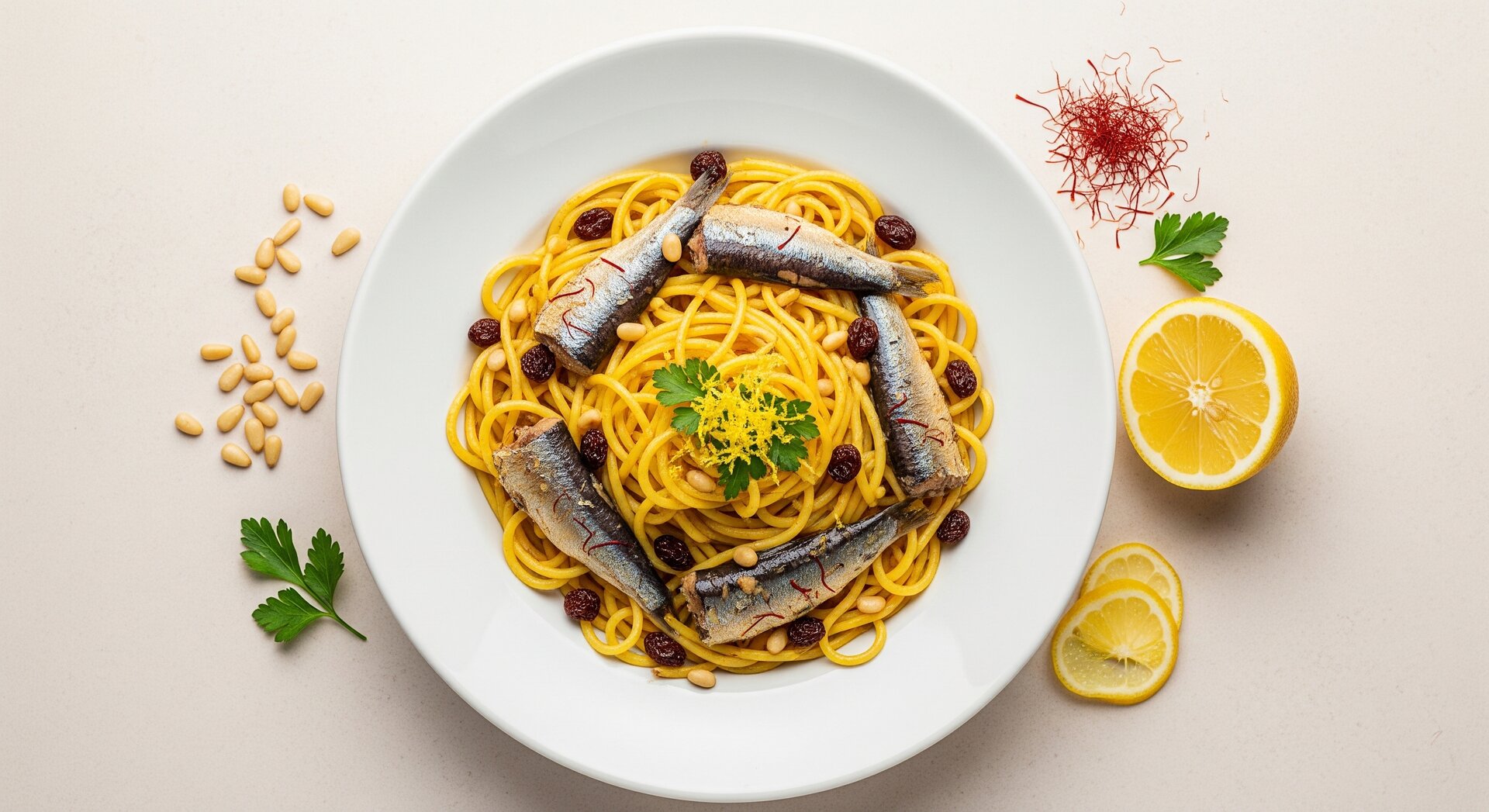 Sicilian Spaghetti with Sardines, Fennel and Saffron 30 min Briny pasta with sardines, fennel, raisins, pine nuts and lemon 795 kcal 41g protein 2 synergies
  In the Kitchen
Storage
Location:Pantry
Shelf life:2-3 jaar in luchtdichte container, na openen 6 maanden optimaal
Store saffron in a dark, airtight container, away from heat, light and moisture. Prefer whole threads over powder; whole threads are more aromatic and less prone to being mixed with cheaper coloring ingredients.
Preparation
Soak saffron threads for 15-20 minutes in warm water, milk or broth to release color and aroma. Then add the liquid to rice, stews, soups, desserts or warm drinks. Do not use boiling water and do not fry the threads directly in hot oil, because the delicate aroma is lost more quickly.
Conversions
Substitutes
Smart preparation
1Soak saffron threads for 20 minutes in warm water, milk or broth.
Why?
Soaking fully extracts the color and flavor from the threads and distributes them evenly through the dish.
2Do not use boiling water; it makes the delicate aroma fade more quickly.
3A pinch is enough: usually use 10-15 threads for 4 servings.
Caution / Warnings
Saffron is very safe, but there are scientific considerations:
Pregnancy Severe
High supplemental amounts of saffron are not recommended during pregnancy, because very high intakes are linked in safety literature with uterine contractions.
Advice:
Culinary amounts, such as a few threads in a dish, are different from supplement dosages. Avoid supplement doses during pregnancy and ask your doctor or midwife for personal advice.
Bipolar disorder Moderate
Saffron is studied in relation to neurotransmitter systems. With bipolar disorder, extra caution is appropriate when considering concentrated products or supplements.
Advice:
Use supplements only in consultation with a doctor. Normal culinary use as a spice is much lower in dose than studied supplemental amounts.
Antidepressants (SSRIs) Moderate
Saffron is studied in research around serotonergic systems. Do not combine concentrated saffron products with antidepressants on your own.
Advice:
Consult your doctor or pharmacist, especially for supplements or high daily doses. Use in dishes is usually only a small amount.
Blood thinners Mild
Concentrated saffron products may be relevant for people using blood thinners, especially when intake is higher than normal culinary amounts.
Advice:
Culinary amounts are usually small. Discuss supplements or high doses with your doctor if you use warfarin, aspirin or other blood thinners.
Traditional use
Mediterranean
Ancient and precious spice
Saffron has been used for over 3,500 years, from the Minoan civilization on Crete to Persian and Greek antiquity. It served as a dye, perfume, kitchen ingredient and part of ceremonial rituals.
Islamic tradition
Saffron in Islamic culture
Saffron holds a special place in Islamic culture. It was valued in medieval Arab cuisine, perfumery, calligraphic ink and festive preparations.
Ayurveda
Kumkuma in Ayurveda
In Ayurveda, saffron is known as kumkuma. It appears in ancient culinary and ritual contexts, often in milk drinks, rice dishes, sweets and fragrant preparations.
Summary
Saffron is precious, but you need very little: a few threads give dishes a deep golden color and a floral, honeyed aroma. It is studied around mood-related scores, sleep quality and visual-function measurements, but Tayb presents this as educational information, not medical advice. Soak the threads first in warm water, milk or broth for the best color and flavor.