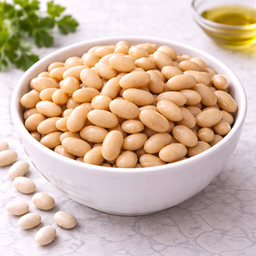
White Beans (Cannellini)
The Creamy Fiber-Protein Mix
What is this ingredient?
White beans (like cannellini) are rich in soluble fiber—the type that can help stabilize blood sugar and cholesterol. They keep you full longer and, thanks to their creamy texture, can thicken soups and sauces without cream. Note: the ‘carb blocker’ idea (phaseolamine) is mainly studied as a concentrated extract; in whole beans, the real-world benefit is mostly fiber, protein, and low energy density.
How does it taste?
Soft, creamy and mild with a neutral, slightly earthy flavor.
Pairs well with:
Pairs well with rosemarygarlictomatosage and olive oil.
Did you know...?
- White beans originally come from Peru and only arrived in Europe after 1492.
- During World War I, canned white beans were an important ration for soldiers.
Nutritional Value & Energy
Per 100g
White Beans (Cannellini) provides energy thanks to natural nutrients , buffered by fiber.
Per 100g
Minerals
Vitamins
Omega-3 fatty acids
More nutrients
B-Vitamins
Trace Minerals
Low GI means blood sugar doesn't spike quickly.
What's in a serving?
1 serving (dry)
White Beans (Cannellini) naturally contains iron (3.7 mg per 100 g).
White Beans (Cannellini) naturally contains magnesium (63 mg per 100 g).
White Beans (Cannellini) naturally contains phosphorus (113 mg per 100 g).
White Beans (Cannellini) naturally contains potassium (561 mg per 100 g).
White Beans (Cannellini) naturally contains folate (102 mcg per 100 g).
White Beans (Cannellini) naturally contains manganese (0.5 mg per 100 g).
White Beans (Cannellini) naturally contains copper (0.2 mg per 100 g).
% of daily reference intake (DRI)
EU-approved nutrition claims
This ingredient contains nutrients for which EFSA-authorized health claims exist (at nutrient level, not ingredient-specific).
Approved health claims (EU)
Magnesium EU 432/2012
Magnesium contributes to normal muscle function
Contains 63mg/100g (threshold: ≥56.25mg/100g)
Magnesium EU 432/2012
Magnesium contributes to the reduction of tiredness and fatigue
Contains 63mg/100g (threshold: ≥56.25mg/100g)
Magnesium EU 432/2012
Magnesium contributes to normal functioning of the nervous system
Contains 63mg/100g (threshold: ≥56.25mg/100g)
Iron EU 432/2012
Iron contributes to normal energy-yielding metabolism
Contains 3.7mg/100g (threshold: ≥2.1mg/100g)
Iron EU 432/2012
Iron contributes to the reduction of tiredness and fatigue
Contains 3.7mg/100g (threshold: ≥2.1mg/100g)
Potassium EU 432/2012
Potassium contributes to the maintenance of normal blood pressure
Contains 561mg/100g (threshold: ≥300mg/100g)
Folate EU 432/2012
Folate contributes to normal blood formation
Contains 102mcg/100g (threshold: ≥30mcg/100g)
Folate EU 432/2012
Folate contributes to normal amino acid synthesis
Contains 102mcg/100g (threshold: ≥30mcg/100g)
Folate EU 432/2012
Folate contributes to normal homocysteine metabolism
Contains 102mcg/100g (threshold: ≥30mcg/100g)
Folate EU 432/2012
Folate contributes to normal psychological function
Contains 102mcg/100g (threshold: ≥30mcg/100g)
Folate EU 432/2012
Folate contributes to the normal function of the immune system
Contains 102mcg/100g (threshold: ≥30mcg/100g)
Folate EU 432/2012
Folate has a role in the process of cell division
Contains 102mcg/100g (threshold: ≥30mcg/100g)
Folate EU 432/2012
Folate contributes to maternal tissue growth during pregnancy
Contains 102mcg/100g (threshold: ≥30mcg/100g)
Phosphorus EU 432/2012
Phosphorus contributes to normal energy-yielding metabolism
Contains 113mg/100g (threshold: ≥105mg/100g)
Phosphorus EU 432/2012
Phosphorus contributes to the normal function of cell membranes
Contains 113mg/100g (threshold: ≥105mg/100g)
Phosphorus EU 432/2012
Phosphorus contributes to the maintenance of normal bones
Contains 113mg/100g (threshold: ≥105mg/100g)
Phosphorus EU 432/2012
Phosphorus contributes to the maintenance of normal teeth
Contains 113mg/100g (threshold: ≥105mg/100g)
Magnesium EU 432/2012
Magnesium contributes to normal energy-yielding metabolism
Contains 63mg/100g (threshold: ≥56.25mg/100g)
Magnesium EU 432/2012
Magnesium contributes to electrolyte balance
Contains 63mg/100g (threshold: ≥56.25mg/100g)
Magnesium EU 432/2012
Magnesium contributes to normal protein synthesis
Contains 63mg/100g (threshold: ≥56.25mg/100g)
Magnesium EU 432/2012
Magnesium contributes to normal psychological function
Contains 63mg/100g (threshold: ≥56.25mg/100g)
Magnesium EU 432/2012
Magnesium contributes to the maintenance of normal bones
Contains 63mg/100g (threshold: ≥56.25mg/100g)
Magnesium EU 432/2012
Magnesium contributes to the maintenance of normal teeth
Contains 63mg/100g (threshold: ≥56.25mg/100g)
Magnesium EU 432/2012
Magnesium has a role in the process of cell division
Contains 63mg/100g (threshold: ≥56.25mg/100g)
Iron EU 432/2012
Iron contributes to normal cognitive function
Contains 3.7mg/100g (threshold: ≥2.1mg/100g)
Iron EU 432/2012
Iron contributes to normal formation of red blood cells and haemoglobin
Contains 3.7mg/100g (threshold: ≥2.1mg/100g)
Iron EU 432/2012
Iron contributes to normal oxygen transport in the body
Contains 3.7mg/100g (threshold: ≥2.1mg/100g)
Iron EU 432/2012
Iron contributes to the normal function of the immune system
Contains 3.7mg/100g (threshold: ≥2.1mg/100g)
Iron EU 432/2012
Iron has a role in the process of cell division
Contains 3.7mg/100g (threshold: ≥2.1mg/100g)
Copper EU 432/2012
Copper contributes to the maintenance of normal connective tissues
Contains 0.2mg/100g (threshold: ≥0.15mg/100g)
Copper EU 432/2012
Copper contributes to normal energy-yielding metabolism
Contains 0.2mg/100g (threshold: ≥0.15mg/100g)
Copper EU 432/2012
Copper contributes to normal functioning of the nervous system
Contains 0.2mg/100g (threshold: ≥0.15mg/100g)
Copper EU 432/2012
Copper contributes to normal hair pigmentation
Contains 0.2mg/100g (threshold: ≥0.15mg/100g)
Copper EU 432/2012
Copper contributes to normal iron transport in the body
Contains 0.2mg/100g (threshold: ≥0.15mg/100g)
Copper EU 432/2012
Copper contributes to normal skin pigmentation
Contains 0.2mg/100g (threshold: ≥0.15mg/100g)
Copper EU 432/2012
Copper contributes to the normal function of the immune system
Contains 0.2mg/100g (threshold: ≥0.15mg/100g)
Copper EU 432/2012
Copper contributes to the protection of cells from oxidative stress
Contains 0.2mg/100g (threshold: ≥0.15mg/100g)
Manganese EU 432/2012
Manganese contributes to normal energy-yielding metabolism
Contains 0.5mg/100g (threshold: ≥0.3mg/100g)
Manganese EU 432/2012
Manganese contributes to the maintenance of normal bones
Contains 0.5mg/100g (threshold: ≥0.3mg/100g)
Manganese EU 432/2012
Manganese contributes to the normal formation of connective tissue
Contains 0.5mg/100g (threshold: ≥0.3mg/100g)
Manganese EU 432/2012
Manganese contributes to the protection of cells from oxidative stress
Contains 0.5mg/100g (threshold: ≥0.3mg/100g)
Potassium EU 432/2012
Potassium contributes to normal functioning of the nervous system
Contains 561mg/100g (threshold: ≥300mg/100g)
Potassium EU 432/2012
Potassium contributes to normal muscle function
Contains 561mg/100g (threshold: ≥300mg/100g)
Comparison
vsbanaan
White Beans (Cannellini) contains about 2× more potassium per 100g than banana.
What's being researched?
White beans and alpha-amylase inhibition
Phaseolamin from white beans is studied as a natural alpha-amylase inhibitor that slows starch digestion. Clinical studies show mixed results for weight management, more research is needed.
Supported by: [1] Layer P (1986) , [2] Bazzano (2001)
Good Combinations (Synergy)
Combine white beans (cannellini) smartly to enhance the effect:
White Beans (Cannellini) 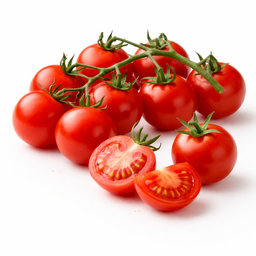 Cherry Tomatoes
 Classic Tuscan combination: fiber + lycopene
Technical: White beans contain 7g soluble and insoluble fiber per 100g that bind LDL cholesterol and remove it via stool. Tomatoes contain lycopene (up to 15mg per 100g cooked), a carotenoid that as an antioxidant counteracts oxidation of LDL particles. Together they offer two complementary routes: fiber removes cholesterol, lycopene protects remaining LDL against oxidative damage.
What does this mean for you? White beans in tomato sauce (fagioli al pomodoro) is a Tuscan staple dish with impressive nutritional value. Cook the tomatoes at least 15 minutes for maximum lycopene — it's actually better absorbed when heated.
White Beans (Cannellini) 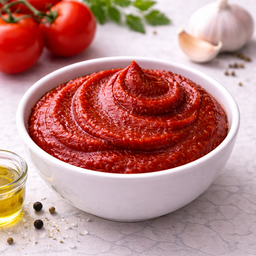 Tomato Paste
 Classic Tuscan combination: fiber + lycopene
Technical: White beans contain 7g soluble and insoluble fiber per 100g that bind LDL cholesterol and remove it via stool. Tomatoes contain lycopene (up to 15mg per 100g cooked), a carotenoid that as an antioxidant counteracts oxidation of LDL particles. Together they offer two complementary routes: fiber removes cholesterol, lycopene protects remaining LDL against oxidative damage.
What does this mean for you? White beans in tomato sauce (fagioli al pomodoro) is a Tuscan staple dish with impressive nutritional value. Cook the tomatoes at least 15 minutes for maximum lycopene — it's actually better absorbed when heated.
White Beans (Cannellini) 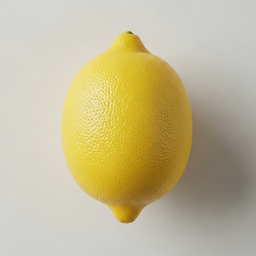 Lemon
Lemon Vitamin C triples iron absorption from white beans
Technical: White beans contain 3.7mg non-heme iron per 100g but also phytate that binds iron. Vitamin C from lemon (53mg/100g) reduces Fe³⁺ to Fe²⁺ and forms soluble iron-ascorbate complexes breaking phytate binding. Iron absorption rises from 2-3% to 8-12%.
What does this mean for you? Add lemon juice to white bean dishes (soup, salad, hummus variant). Without vitamin C most iron remains bound to phytate. Good to know: vitamin C increases iron absorption (EFSA-approved).
White Beans (Cannellini) 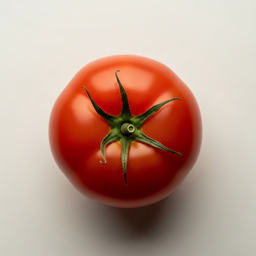 Tomato
 Protein + lycopene: versatile nutritional combination
Technical: White beans provide 21g protein per 100g with high lysine (1.4g). Tomato provides lycopene (2573μg/100g), a potent carotenoid. White bean fiber (6.3g/100g) also feeds Faecalibacterium prausnitzii producing butyrate. Tomato's vitamin C (14mg) improves iron absorption from beans.
What does this mean for you? White beans in tomato sauce (cassoulet, ribollita, baked beans) is a timeless combination with protein, lycopene and fiber. Tomato also makes bean iron more absorbable.
Recipes with White Beans (Cannellini)
Discover delicious recipes featuring white beans (cannellini):
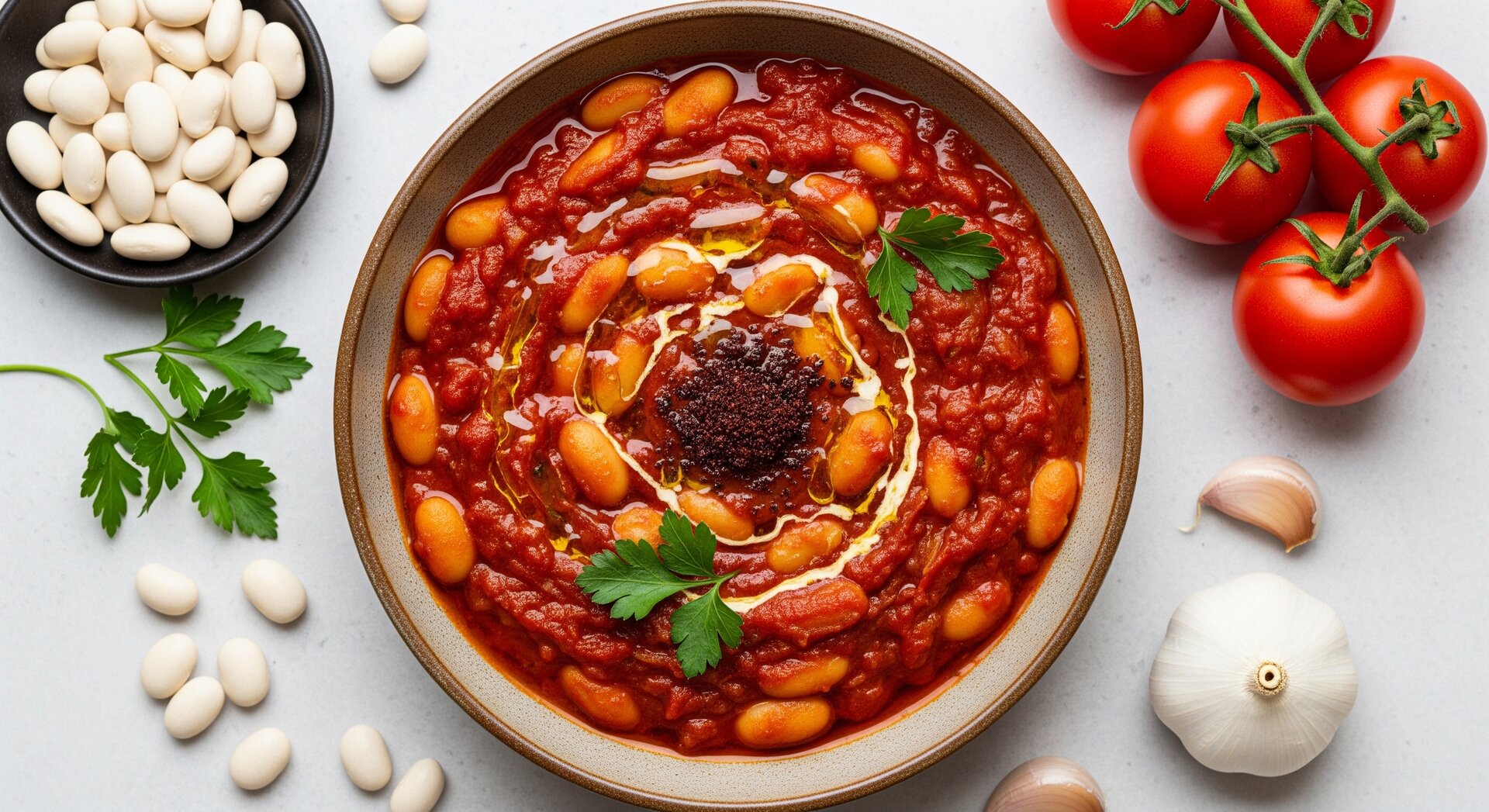 Greek Gigantes Plaki with Giant Beans 45 min Baked white beans in rich tomato sauce
  290 kcal
  12g protein 1 synergies
 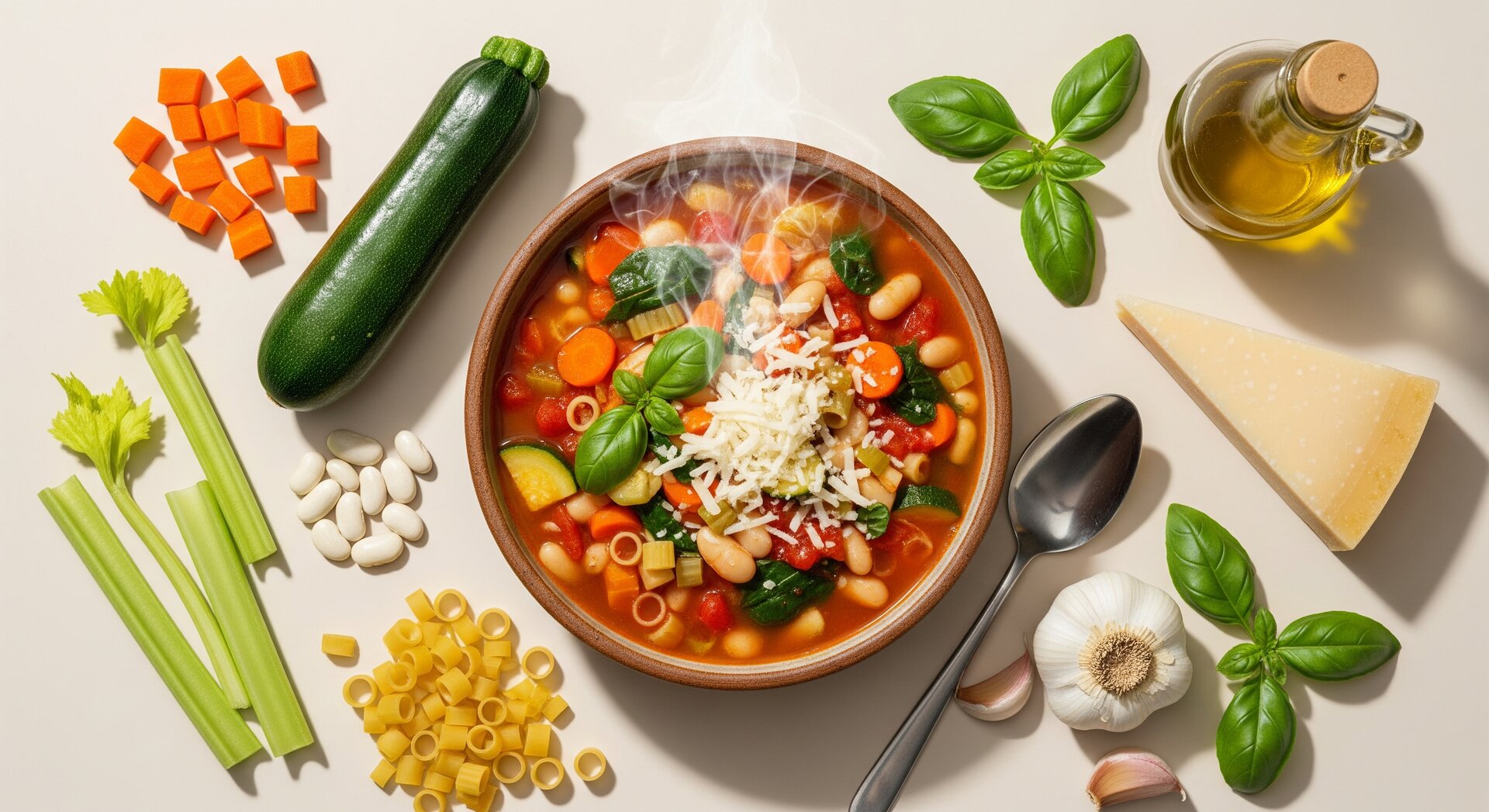 Italian Minestrone 50 min Hearty vegetable soup with white beans, small pasta and basil 260 kcal 12g protein 2 synergies
 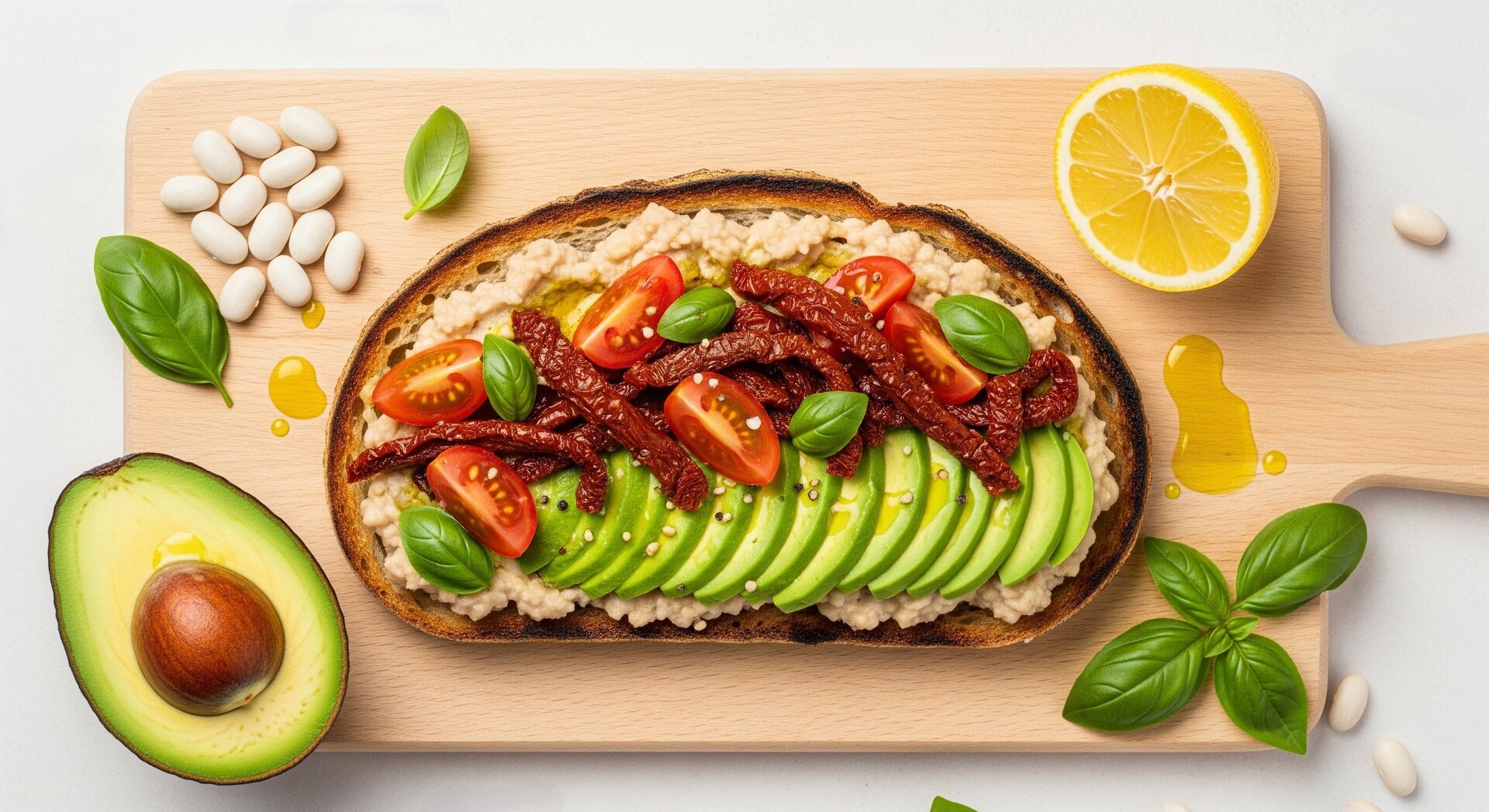 Mediterranean Avocado Toast with White Beans 13 min Mashed white beans with avocado on sourdough 485 kcal 18g protein 1 synergies
 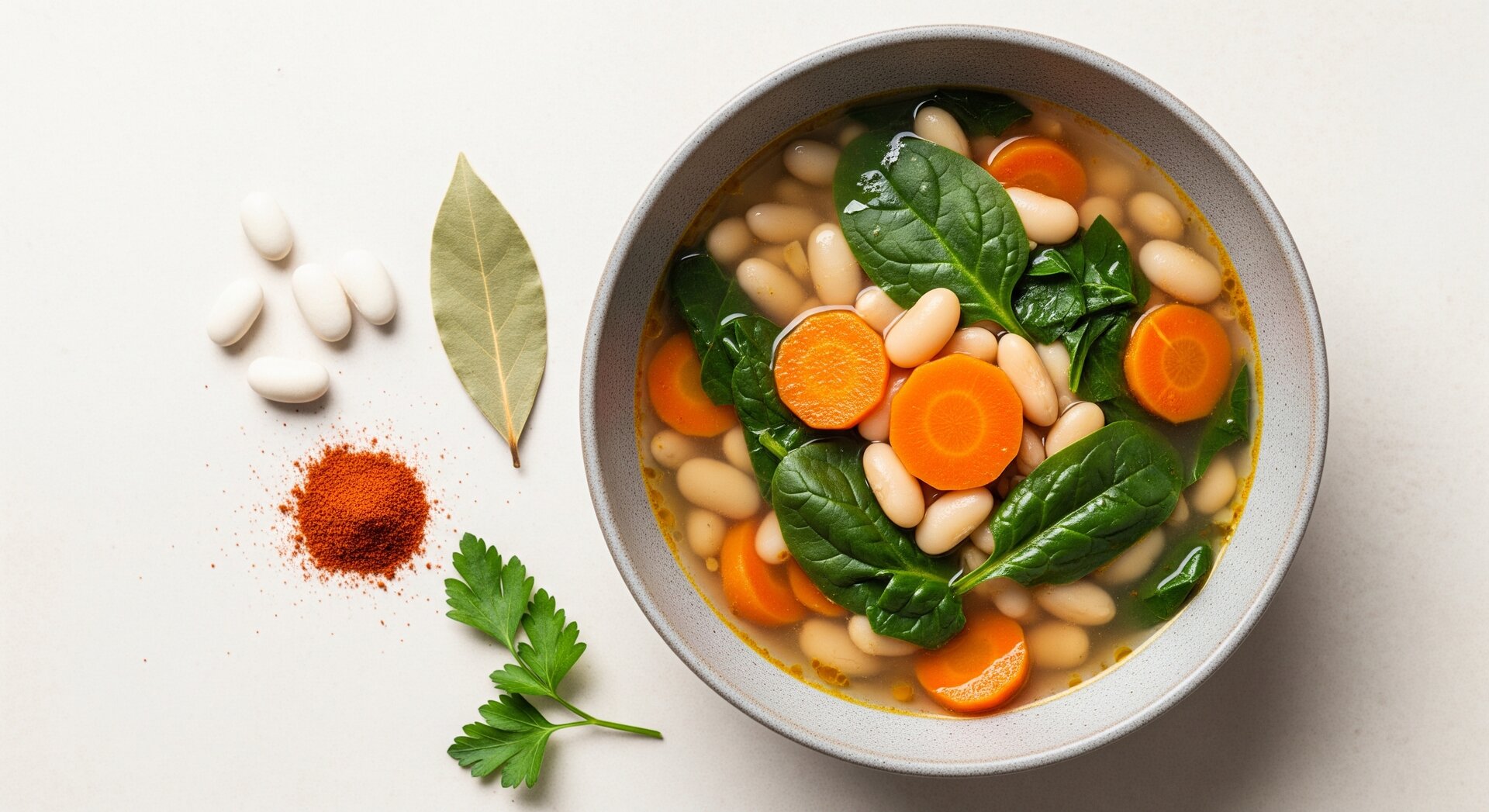 Spanish White Bean Soup with Spinach 50 min Hearty Spanish soup with white beans, spinach, tomato and smoked paprika 371 kcal 16g protein 2 synergies
  In the Kitchen
Storage
Location:Pantry
Shelf life:1-2 jaar (blik/droog)
Preparation
Dry: soak 8–12 hours, simmer 60–90 min. Canned: rinse well and heat briefly. Add salt/acid toward the end for creamier beans.
Conversions
Substitutes
Smart preparation
1Soak white beans for at least 8 hours in cold water.
2Cook white beans on low heat for 60-90 minutes.
Why?
Hard boiling loosens the skins and makes the beans mushy.
3Only add salt when the beans are almost done.
Why?
Salt hardens the skin and significantly extends cooking time.
Caution / Warnings
White Beans (Cannellini) is very safe, but there are scientific considerations:
Gas / Flatulence Moderate
Contains oligosaccharides fermented by gut bacteria
Advice:
Rinse well (especially canned), start small, and cook with bay leaf/savory
Traditional use
Indigenous
Native American 'Three Sisters' crop
Beans were cultivated by Native North Americans together with corn and squash as the 'Three Sisters' — an ingenious agricultural system thousands of years old.
Summary
Creamy comfort food without cream. Use white beans to thicken soups and sauces, or blend into a dip. For weight/energy, the real win is fiber + protein—not ‘carb blocker’ claims.