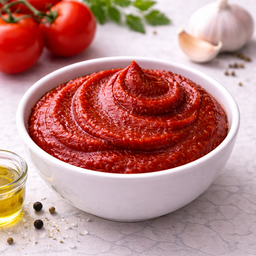
Tomato Paste
Concentrated tomato base
What is this ingredient?
Tomato paste is a concentrated tomato paste with deep color, firm texture, and pronounced umami. Because it is reduced, a small amount carries a lot of tomato flavor and naturally occurring tomato compounds such as lycopene.
## Concentration and absorption
Heating and reducing tomatoes softens their cell structures. This helps release lycopene, the red carotenoid in tomatoes. Research on tomato products often compares this absorption with that from raw tomatoes. Absorption is especially favorable when tomato paste is used with a fat source such as olive oil.
## Flavor base in cooking
Briefly frying tomato paste in oil removes the raw, acidic edge and gives sauces, stews, soups, and marinades more depth. A small spoonful is often enough to make a dish rounder and more savory.
## Practical use
Choose tomato paste without added salt or sugar when possible. Because the product is highly concentrated, small amounts are usually enough per dish.
How does it taste?
Concentrated tomato-forward with an intense, slightly caramelized sweetness.
Pairs well with:
Pairs well with oniongarlicpaprikaherbs and stews.
Did you know...?
- Tomato paste is five to six times as concentrated as tomato passata.
- Tomatoes only came to Europe in the 16th century and were initially considered poisonous.
Nutritional Value & Energy
Per 100g
Tomato Paste provides energy thanks to natural nutrients , buffered by fiber.
Per 100g
Minerals
Vitamins
More nutrients
B-Vitamins
Trace Minerals
What's in a serving?
1 serving
Tomato paste naturally contains vitamin C (21.9 mg per 100 g).
Tomato paste naturally contains potassium (1014 mg per 100 g).
Tomato paste naturally contains iron (3.4 mg per 100 g).
Tomato paste naturally contains vitamin E (4.3 mg per 100 g).
Tomato paste naturally contains manganese (0.3 mg per 100 g).
Tomato paste naturally contains copper (0.5 mg per 100 g).
% of daily reference intake (DRI)
EU-approved nutrition claims
This ingredient contains nutrients for which EFSA-authorized health claims exist (at nutrient level, not ingredient-specific).
Approved health claims (EU)
Vitamin_c EU 432/2012
Vitamin C contributes to the normal function of the immune system
Contains 21.9mg/100g (threshold: ≥12mg/100g)
Vitamin_c EU 432/2012
Vitamin C contributes to the reduction of tiredness and fatigue
Contains 21.9mg/100g (threshold: ≥12mg/100g)
Vitamin_c EU 432/2012
Vitamin C contributes to normal collagen formation for the normal function of skin
Contains 21.9mg/100g (threshold: ≥12mg/100g)
Iron EU 432/2012
Iron contributes to normal energy-yielding metabolism
Contains 3.4mg/100g (threshold: ≥2.1mg/100g)
Iron EU 432/2012
Iron contributes to the reduction of tiredness and fatigue
Contains 3.4mg/100g (threshold: ≥2.1mg/100g)
Potassium EU 432/2012
Potassium contributes to the maintenance of normal blood pressure
Contains 1014mg/100g (threshold: ≥300mg/100g)
Vitamin_c EU 432/2012
Vitamin C contributes to normal collagen formation for the normal function of blood vessels
Contains 21.9mg/100g (threshold: ≥12mg/100g)
Vitamin_c EU 432/2012
Vitamin C contributes to normal collagen formation for the normal function of bones
Contains 21.9mg/100g (threshold: ≥12mg/100g)
Vitamin_c EU 432/2012
Vitamin C contributes to normal collagen formation for the normal function of cartilage
Contains 21.9mg/100g (threshold: ≥12mg/100g)
Vitamin_c EU 432/2012
Vitamin C contributes to normal collagen formation for the normal function of gums
Contains 21.9mg/100g (threshold: ≥12mg/100g)
Vitamin_c EU 432/2012
Vitamin C contributes to normal collagen formation for the normal function of teeth
Contains 21.9mg/100g (threshold: ≥12mg/100g)
Vitamin_c EU 432/2012
Vitamin C contributes to normal energy-yielding metabolism
Contains 21.9mg/100g (threshold: ≥12mg/100g)
Vitamin_c EU 432/2012
Vitamin C contributes to normal functioning of the nervous system
Contains 21.9mg/100g (threshold: ≥12mg/100g)
Vitamin_c EU 432/2012
Vitamin C contributes to normal psychological function
Contains 21.9mg/100g (threshold: ≥12mg/100g)
Vitamin_c EU 432/2012
Vitamin C contributes to the protection of cells from oxidative stress
Contains 21.9mg/100g (threshold: ≥12mg/100g)
Vitamin_c EU 432/2012
Vitamin C contributes to the regeneration of the reduced form of vitamin E
Contains 21.9mg/100g (threshold: ≥12mg/100g)
Vitamin_c EU 432/2012
Vitamin C increases iron absorption
Contains 21.9mg/100g (threshold: ≥12mg/100g)
Vitamin_c EU 432/2012
Vitamin C contributes to maintain the normal function of the immune system during and after intense physical exercise
Contains 21.9mg/100g (threshold: ≥12mg/100g)
Vitamin_e EU 432/2012
Vitamin E contributes to the protection of cells from oxidative stress
Contains 4.3mg/100g (threshold: ≥1.8mg/100g)
Iron EU 432/2012
Iron contributes to normal cognitive function
Contains 3.4mg/100g (threshold: ≥2.1mg/100g)
Iron EU 432/2012
Iron contributes to normal formation of red blood cells and haemoglobin
Contains 3.4mg/100g (threshold: ≥2.1mg/100g)
Iron EU 432/2012
Iron contributes to normal oxygen transport in the body
Contains 3.4mg/100g (threshold: ≥2.1mg/100g)
Iron EU 432/2012
Iron contributes to the normal function of the immune system
Contains 3.4mg/100g (threshold: ≥2.1mg/100g)
Iron EU 432/2012
Iron has a role in the process of cell division
Contains 3.4mg/100g (threshold: ≥2.1mg/100g)
Copper EU 432/2012
Copper contributes to the maintenance of normal connective tissues
Contains 0.5mg/100g (threshold: ≥0.15mg/100g)
Copper EU 432/2012
Copper contributes to normal energy-yielding metabolism
Contains 0.5mg/100g (threshold: ≥0.15mg/100g)
Copper EU 432/2012
Copper contributes to normal functioning of the nervous system
Contains 0.5mg/100g (threshold: ≥0.15mg/100g)
Copper EU 432/2012
Copper contributes to normal hair pigmentation
Contains 0.5mg/100g (threshold: ≥0.15mg/100g)
Copper EU 432/2012
Copper contributes to normal iron transport in the body
Contains 0.5mg/100g (threshold: ≥0.15mg/100g)
Copper EU 432/2012
Copper contributes to normal skin pigmentation
Contains 0.5mg/100g (threshold: ≥0.15mg/100g)
Copper EU 432/2012
Copper contributes to the normal function of the immune system
Contains 0.5mg/100g (threshold: ≥0.15mg/100g)
Copper EU 432/2012
Copper contributes to the protection of cells from oxidative stress
Contains 0.5mg/100g (threshold: ≥0.15mg/100g)
Manganese EU 432/2012
Manganese contributes to normal energy-yielding metabolism
Contains 0.3mg/100g (threshold: ≥0.3mg/100g)
Manganese EU 432/2012
Manganese contributes to the maintenance of normal bones
Contains 0.3mg/100g (threshold: ≥0.3mg/100g)
Manganese EU 432/2012
Manganese contributes to the normal formation of connective tissue
Contains 0.3mg/100g (threshold: ≥0.3mg/100g)
Manganese EU 432/2012
Manganese contributes to the protection of cells from oxidative stress
Contains 0.3mg/100g (threshold: ≥0.3mg/100g)
Potassium EU 432/2012
Potassium contributes to normal functioning of the nervous system
Contains 1014mg/100g (threshold: ≥300mg/100g)
Potassium EU 432/2012
Potassium contributes to normal muscle function
Contains 1014mg/100g (threshold: ≥300mg/100g)
Comparison
vsbanaan
Tomato paste contains about 3× more potassium per 100 g than banana.
What's being researched?
Concentrated lycopene in tomato paste
Because it is reduced, tomato paste contains a lot of lycopene per 100 g. Research on tomato products discusses how heating and added fat can influence lycopene absorption.
Supported by: [2] Rizwan (2011) , [1] Rao AV (2004)
Good Combinations (Synergy)
Combine tomato paste smartly to enhance the effect:
Tomato Paste  Garlic
 Concentrated lycopene + allicin for heart and immunity
Technical: Tomato puree is 6x more concentrated than fresh tomato (lycopene 28mg/100g vs 3-7mg fresh). The cooking process has already converted lycopene from trans to cis isomer, increasing bioavailability 2.5x. Garlic's allicin stimulates NO production (vasodilation) and inhibits LDL oxidation. Lycopene + allicin offer synergy in antioxidant support: lycopene neutralizes singlet oxygen in LDL, allicin supports vascular function.
What does this mean for you? Fry garlic and add tomato puree as the base of your sauce. The puree is the most concentrated source of bioavailable lycopene, and garlic enhances the antioxidant effect.
Tomato Paste  Olive Oil
 Up to 4x more lycopene absorption through heating in oil
Technical: Tomato paste is 6x more concentrated than fresh tomato, making lycopene content very high. Heating has already released lycopene from cell walls (cis-isomer, better absorbable). Olive oil fats form micelles that efficiently transport this released lycopene through the gut wall — absorption increases up to 4x.
What does this mean for you? Always briefly fry tomato paste in olive oil before adding other ingredients. This maximizes lycopene absorption — the quintessential Italian cooking method.
Tomato Paste  White Beans (Cannellini)
 Classic Tuscan combination: fiber + lycopene
Technical: White beans contain 7g soluble and insoluble fiber per 100g that bind LDL cholesterol and remove it via stool. Tomatoes contain lycopene (up to 15mg per 100g cooked), a carotenoid that as an antioxidant counteracts oxidation of LDL particles. Together they offer two complementary routes: fiber removes cholesterol, lycopene protects remaining LDL against oxidative damage.
What does this mean for you? White beans in tomato sauce (fagioli al pomodoro) is a Tuscan staple dish with impressive nutritional value. Cook the tomatoes at least 15 minutes for maximum lycopene — it's actually better absorbed when heated.
Recipes with Tomato Paste
Discover delicious recipes featuring tomato paste:
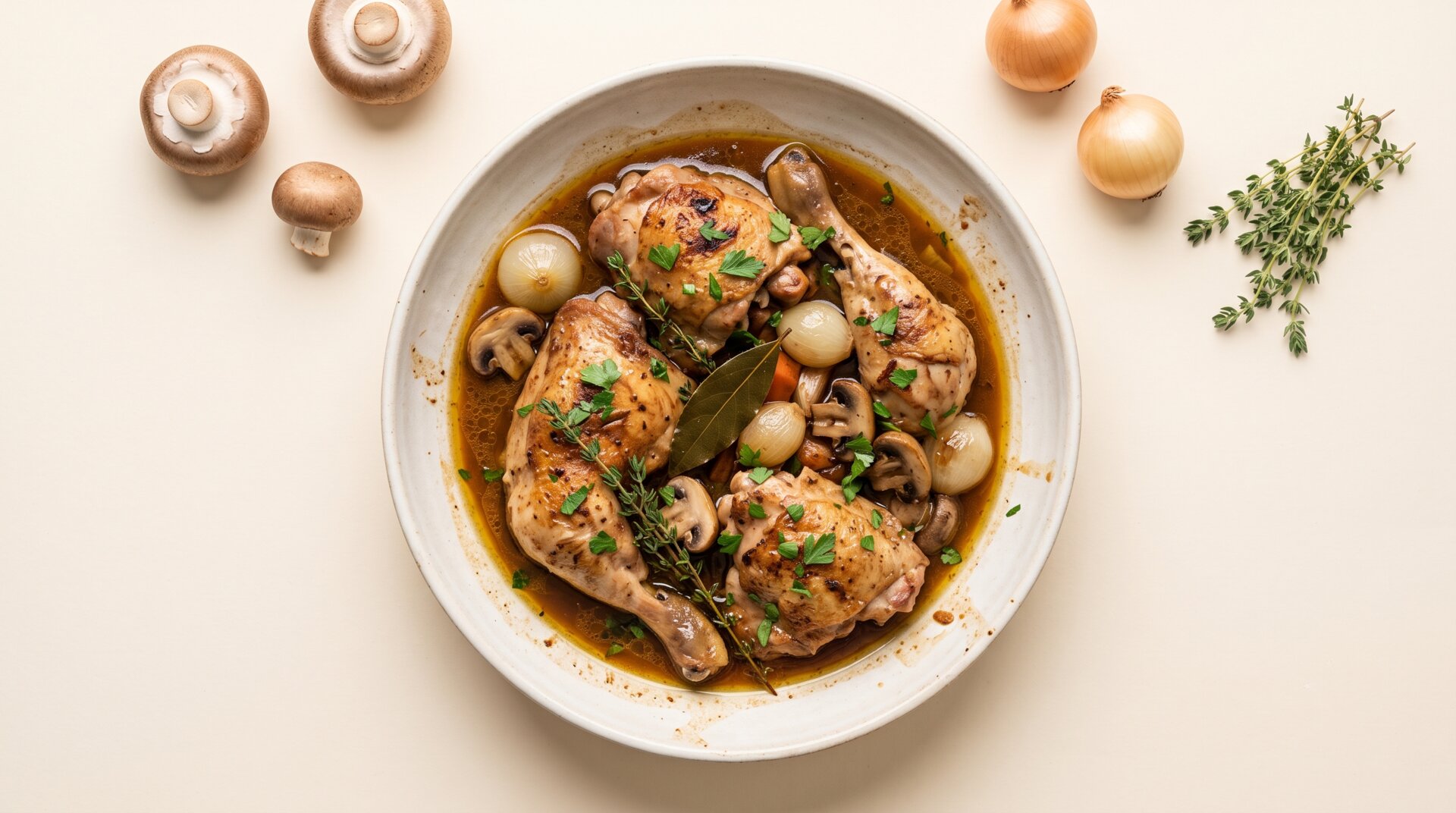 Chicken in Grape Juice 100 min Slow-braised chicken with herbs, vegetables and a rich sauce
  410 kcal
  45g protein 1 synergies
 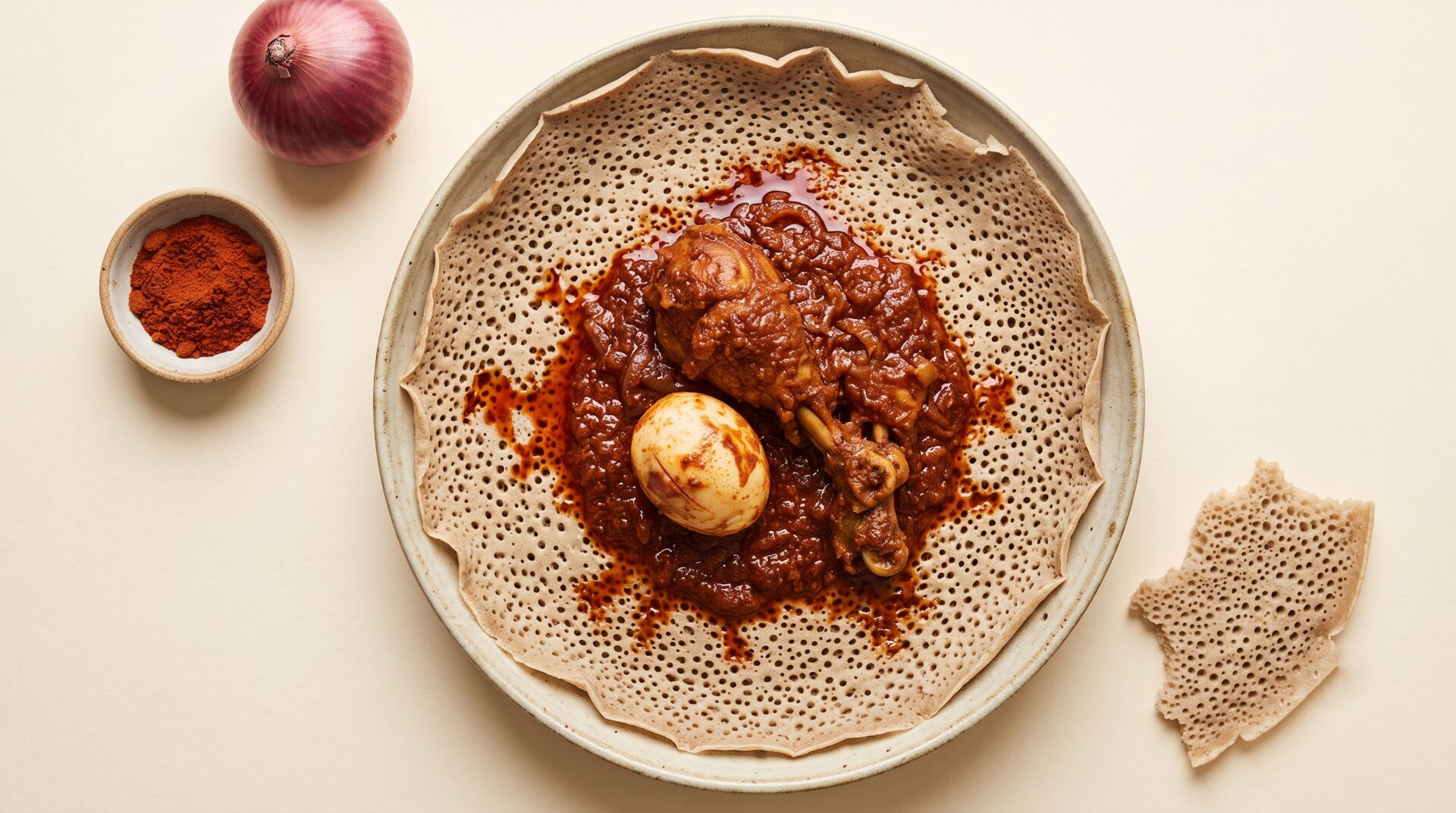 Ethiopian Doro Wat with Injera-Style Flatbread 80 min Festive chicken stew with berbere and homemade buckwheat flatbread 712 kcal 44g protein 2 synergies
 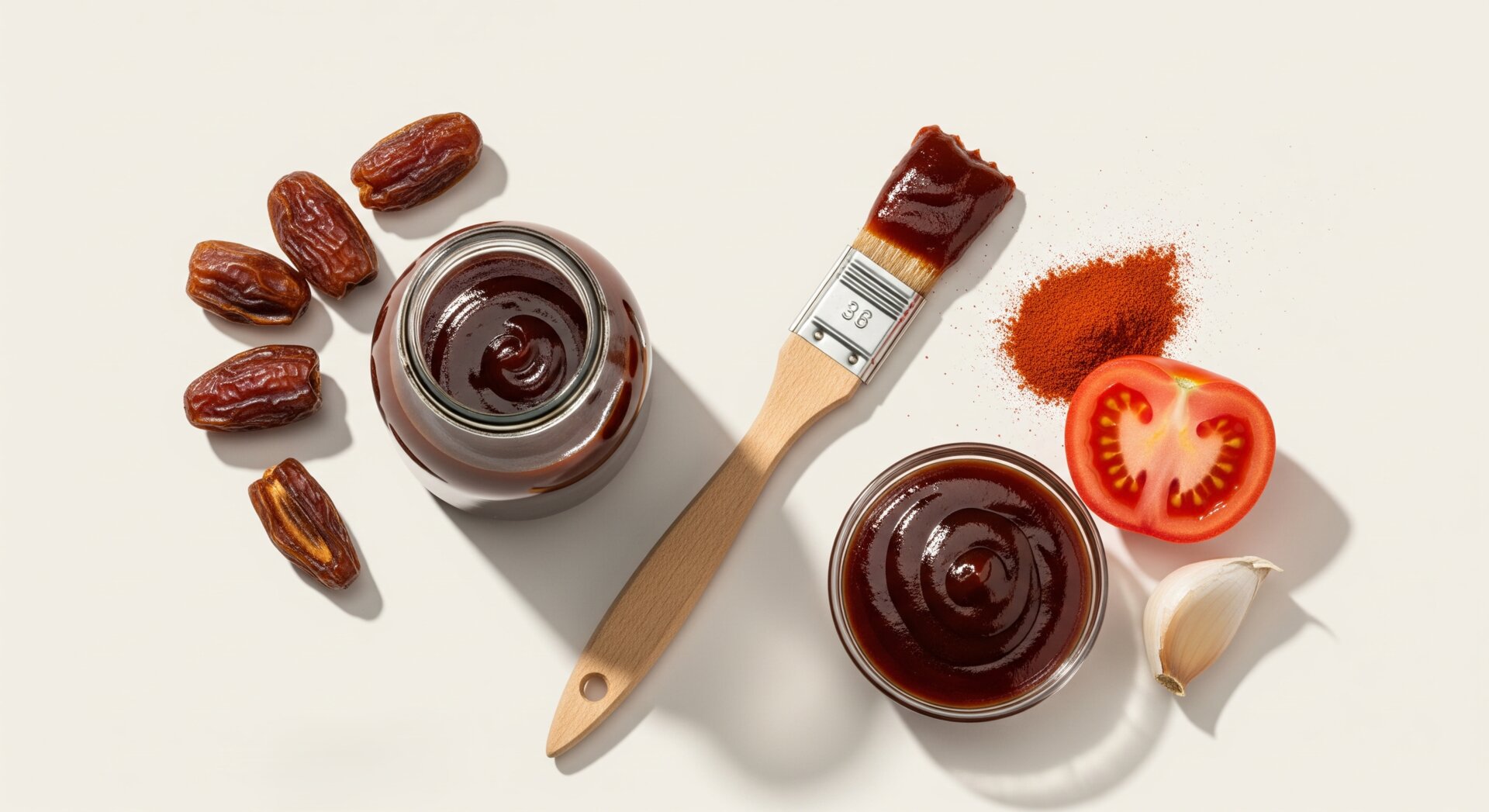 Smoky BBQ Sauce 35 min Sweetened with dates, smoked with paprika 30 kcal 0g protein 1 synergies
 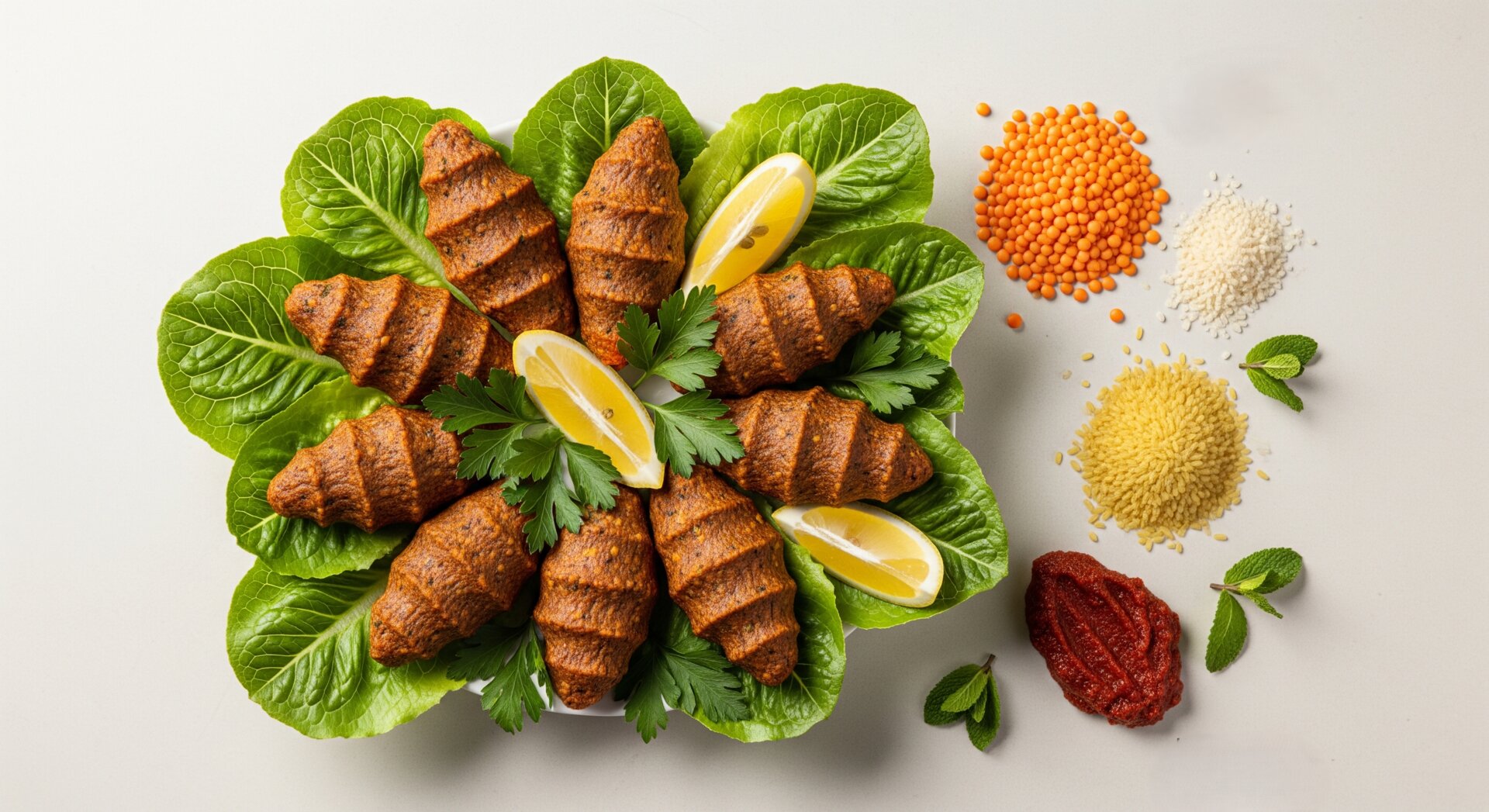 Turkish Lentil Köfte 50 min Traditional mercimek köfte with bulgur and herbs 345 kcal 14g protein 1 synergies
 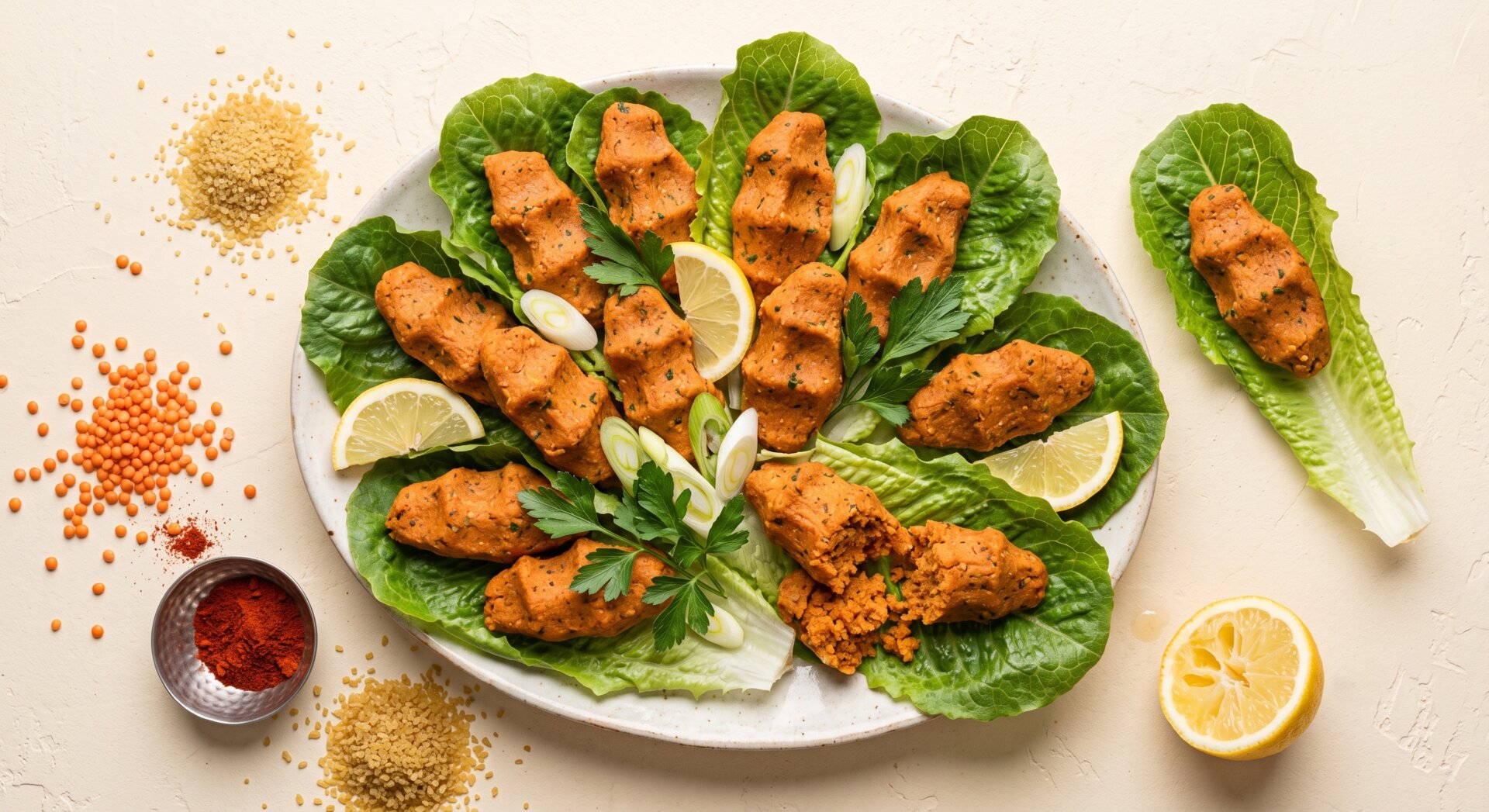 Turkish Mercimek Köfte 60 min Spiced red lentil balls with fresh herbs 320 kcal 14g protein 1 synergies
  In the Kitchen
Storage
Location:Refrigerator
Shelf life:1-2 weken (na openen)
Store airtight. Freeze portions, for example in an ice cube tray, if you won’t use it quickly.
Preparation
Fry for 1–2 minutes in oil at the start of cooking. This removes raw acidity and makes sauces taste rounder.
Conversions
Substitutes
Smart preparation
1Fry tomato paste for 1–2 minutes in the pan before adding liquid.
Why?
This caramelizes the sugars and removes the metallic raw taste.
2Store remaining tomato paste frozen in teaspoon portions on parchment paper.
3Add tomato paste together with the onions for maximum flavor depth.
Caution / Warnings
Tomato Paste is very safe, but there are scientific considerations:
Heartburn / reflux Moderate
Acidic tomato products can trigger or worsen reflux symptoms in some people.
Advice:
Use smaller amounts and pair with fat, dairy, or less acidic ingredients. Reduce or stop if symptoms occur.
Traditional use
Mediterranean
Tomato paste in Mediterranean traditions
Concentrated tomato paste has long been used in Italy, Turkey, and North Africa, where tomatoes are cooked down or sun-concentrated for sauces and stews.
Summary
A small spoon makes a big sauce. Fry briefly in oil to remove raw acidity and unlock more umami.