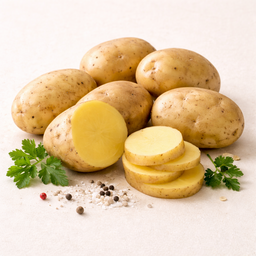
Potato
The 'Smart Energy Tuber'
What is this ingredient?
Potatoes are unfairly demonized. In their whole form (boiled/steamed), they're nutrient-dense: rich in potassium, vitamin C, and B6, with relatively few calories per 100g. Preparation is everything.
A key tip: cook and cool — this increases resistant starch (a fiber-like starch), supporting digestion and potentially improving blood sugar response. Reheating can preserve part of that benefit.
For weight loss, potatoes can actually help when not fried: they deliver strong satiety per calorie, especially paired with vegetables and protein.
How does it taste?
Mild, earthy and slightly sweet with a creamy, starchy texture when cooked.
Pairs well with:
Pairs well with butterrosemarygarlicsour cream and chives.
Varieties
Waxy (Nicola, Charlotte)
Stays firm after cooking; ideal for salads and gratins. Higher RS formation when cooled.
Floury (Bintje, Russet)
Falls apart when cooking; ideal for mash and fries. Higher GI than waxy varieties.
Sweet potato (Ipomoea batatas)
Technically not a potato; lower GI, more beta-carotene, different taste
Did you know...?
- The potato originates from Peru, where it has been cultivated for 8,000 years.
- Potatoes were the first food grown in space, in 1995.
- The potato belongs to the nightshade family, along with tomatoes and tobacco.
Nutritional Value & Energy
Per 100g
Potato provides energy thanks to natural nutrients , buffered by fiber.
Per 100g
Minerals
Vitamins
More nutrients
B-Vitamins
Trace Minerals
What's in a serving?
1 serving
Potato naturally contains potassium (425 mg per 100 g).
Potato naturally contains vitamin c (19.7 mg per 100 g).
% of daily reference intake (DRI)
EU-approved nutrition claims
This ingredient contains nutrients for which EFSA-authorized health claims exist (at nutrient level, not ingredient-specific).
Approved health claims (EU)
Vitamin_c EU 432/2012
Vitamin C contributes to the normal function of the immune system
Contains 19.7mg/100g (threshold: ≥12mg/100g)
Vitamin_c EU 432/2012
Vitamin C contributes to the reduction of tiredness and fatigue
Contains 19.7mg/100g (threshold: ≥12mg/100g)
Vitamin_c EU 432/2012
Vitamin C contributes to normal collagen formation for the normal function of skin
Contains 19.7mg/100g (threshold: ≥12mg/100g)
Potassium EU 432/2012
Potassium contributes to the maintenance of normal blood pressure
Contains 425mg/100g (threshold: ≥300mg/100g)
Vitamin_c EU 432/2012
Vitamin C contributes to normal collagen formation for the normal function of blood vessels
Contains 19.7mg/100g (threshold: ≥12mg/100g)
Vitamin_c EU 432/2012
Vitamin C contributes to normal collagen formation for the normal function of bones
Contains 19.7mg/100g (threshold: ≥12mg/100g)
Vitamin_c EU 432/2012
Vitamin C contributes to normal collagen formation for the normal function of cartilage
Contains 19.7mg/100g (threshold: ≥12mg/100g)
Vitamin_c EU 432/2012
Vitamin C contributes to normal collagen formation for the normal function of gums
Contains 19.7mg/100g (threshold: ≥12mg/100g)
Vitamin_c EU 432/2012
Vitamin C contributes to normal collagen formation for the normal function of teeth
Contains 19.7mg/100g (threshold: ≥12mg/100g)
Vitamin_c EU 432/2012
Vitamin C contributes to normal energy-yielding metabolism
Contains 19.7mg/100g (threshold: ≥12mg/100g)
Vitamin_c EU 432/2012
Vitamin C contributes to normal functioning of the nervous system
Contains 19.7mg/100g (threshold: ≥12mg/100g)
Vitamin_c EU 432/2012
Vitamin C contributes to normal psychological function
Contains 19.7mg/100g (threshold: ≥12mg/100g)
Vitamin_c EU 432/2012
Vitamin C contributes to the protection of cells from oxidative stress
Contains 19.7mg/100g (threshold: ≥12mg/100g)
Vitamin_c EU 432/2012
Vitamin C contributes to the regeneration of the reduced form of vitamin E
Contains 19.7mg/100g (threshold: ≥12mg/100g)
Vitamin_c EU 432/2012
Vitamin C increases iron absorption
Contains 19.7mg/100g (threshold: ≥12mg/100g)
Vitamin_c EU 432/2012
Vitamin C contributes to maintain the normal function of the immune system during and after intense physical exercise
Contains 19.7mg/100g (threshold: ≥12mg/100g)
Potassium EU 432/2012
Potassium contributes to normal functioning of the nervous system
Contains 425mg/100g (threshold: ≥300mg/100g)
Potassium EU 432/2012
Potassium contributes to normal muscle function
Contains 425mg/100g (threshold: ≥300mg/100g)
What's being researched?
Resistant starch and interaction with carbohydrate metabolism
Resistant starch in cooled potatoes is being researched for potential beneficial effects on blood sugar levels. Preliminary evidence suggests a lowered glycemic response, but more research is needed.
Supported by: [6] Karimi P (2020) , [3] Robertson MD (2005) , [5] Bethany M (2019) , [2] Holt SH (1995)
Prebiotic effects of resistant starch
The prebiotic properties of resistant starch in potatoes are being studied in relation to the gut microbiome. Promising results show potential stimulation of beneficial gut bacteria.
Supported by: [1] Larder CE (2018) , [5] Bethany M (2019) , [6] Karimi P (2020)
Good Combinations (Synergy)
Combine potato smartly to enhance the effect:
Potato 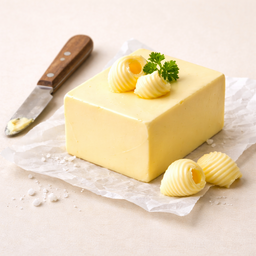 Butter
 Better absorption of carotenoids and vitamin A
Technical: Yellow potatoes contain up to 400μg carotenoids per 100g (lutein, zeaxanthin). Butter provides saturated fats (52g/100g) plus its own vitamin A (684μg retinol). Saturated fats improve micelle formation for carotenoid absorption up to 3x. Butter also contains butyrate precursors that nourish colonocytes.
What does this mean for you? Butter on your potato isn't just tasty — it increases carotenoid absorption up to 3x. Choose yellow potato varieties for the most beta-carotene.
Potato 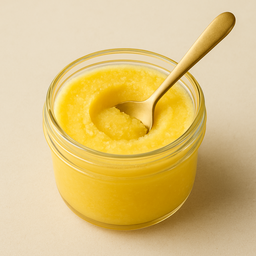 Ghee
Ghee Better absorption of carotenoids and vitamin A
Technical: Yellow potatoes contain up to 400μg carotenoids per 100g (lutein, zeaxanthin). Butter provides saturated fats (52g/100g) plus its own vitamin A (684μg retinol). Saturated fats improve micelle formation for carotenoid absorption up to 3x. Butter also contains butyrate precursors that nourish colonocytes.
What does this mean for you? Butter on your potato isn't just tasty — it increases carotenoid absorption up to 3x. Choose yellow potato varieties for the most beta-carotene.
Potato 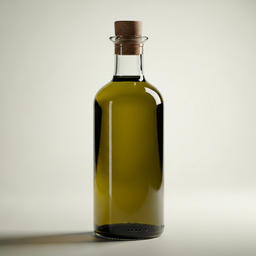 Olive Oil
 Olive oil improves carotenoid absorption from yellow potatoes
Technical: Yellow potato varieties contain up to 400μg carotenoids per 100g, including lutein and violaxanthin. These are fat-soluble and only 5-10% absorbed without fat. Olive oil's oleic acid (73%) forms mixed micelles increasing absorption up to 3x.
What does this mean for you? Roast or fry potatoes in olive oil — this significantly increases carotenoid absorption. Choose yellow varieties for maximum effect.
Potato 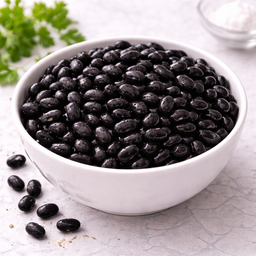 Black Beans
 Complete protein combination through lysine + methionine
Technical: Potatoes contain 2g protein per 100g with methionine as strong amino acid but lysine as limiting. Black beans provide 21g protein per 100g with high lysine (1.5g/100g) but low methionine. Complementation creates a complete amino acid profile with PDCAAS of 0.90+ — comparable to animal protein.
What does this mean for you? Potato with beans is a classic Latin American combination providing complete protein. Ideal for vegetarians — no meat needed to get all amino acids.
Recipes with Potato
Discover delicious recipes featuring potato:
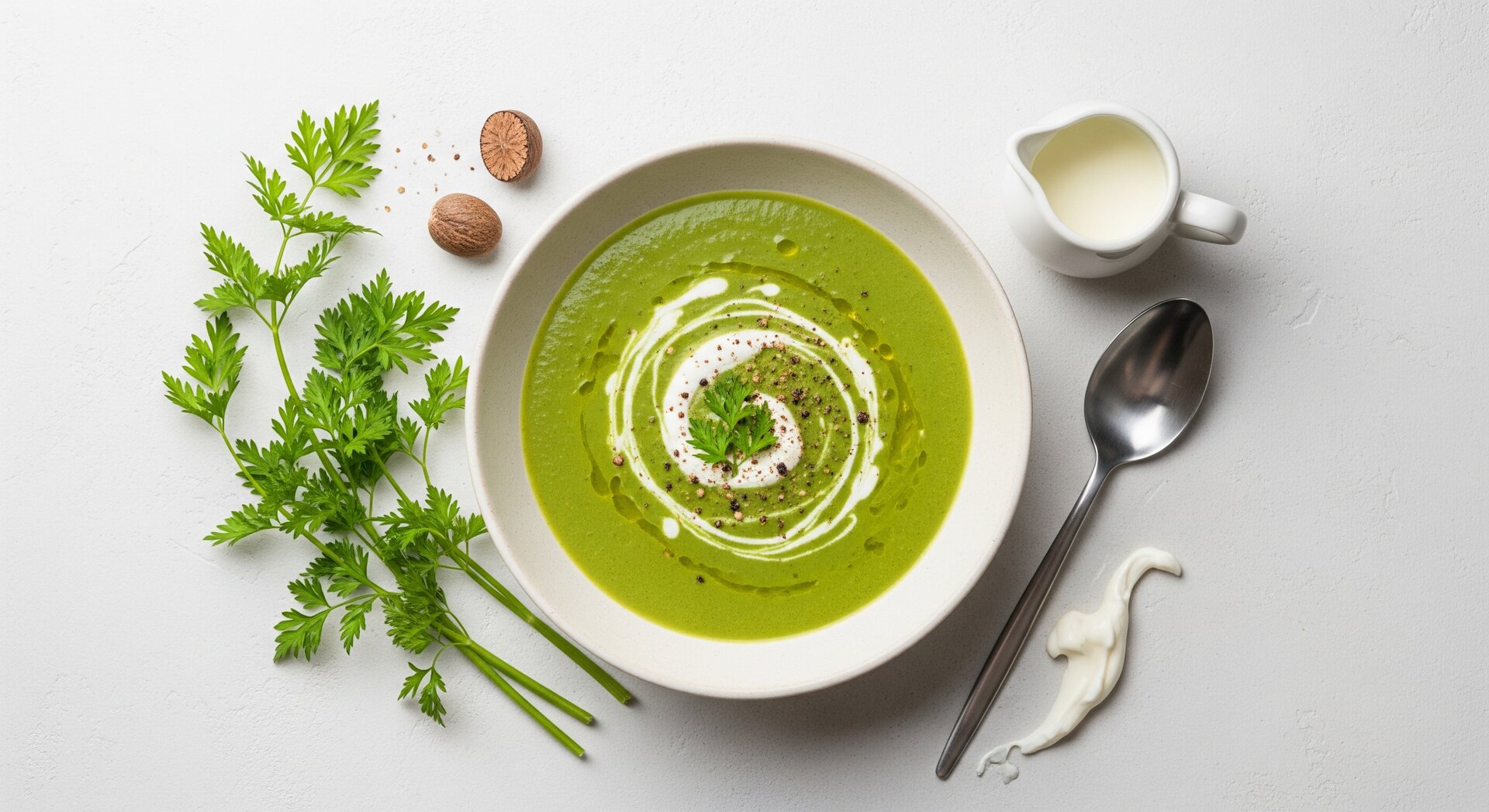 Belgian Chervil Soup with Cream 40 min Classic spring soup with fresh chervil, potato and a hint of nutmeg
  265 kcal
  5g protein 2 synergies
 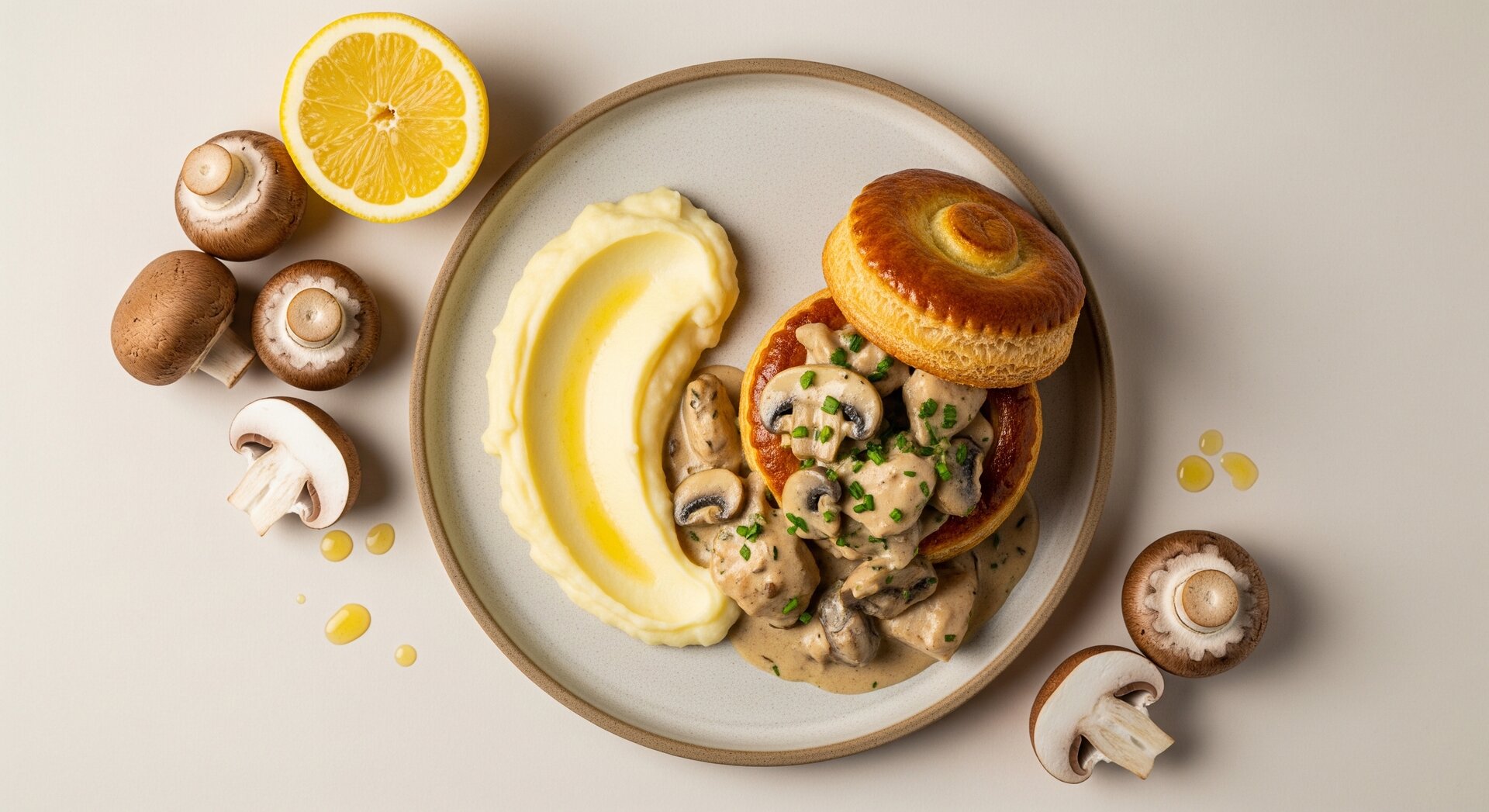 Belgian Vol-au-Vent with Mashed Potatoes 70 min Creamy chicken ragout with mushrooms, leek and soft mash 735 kcal 43g protein 2 synergies
 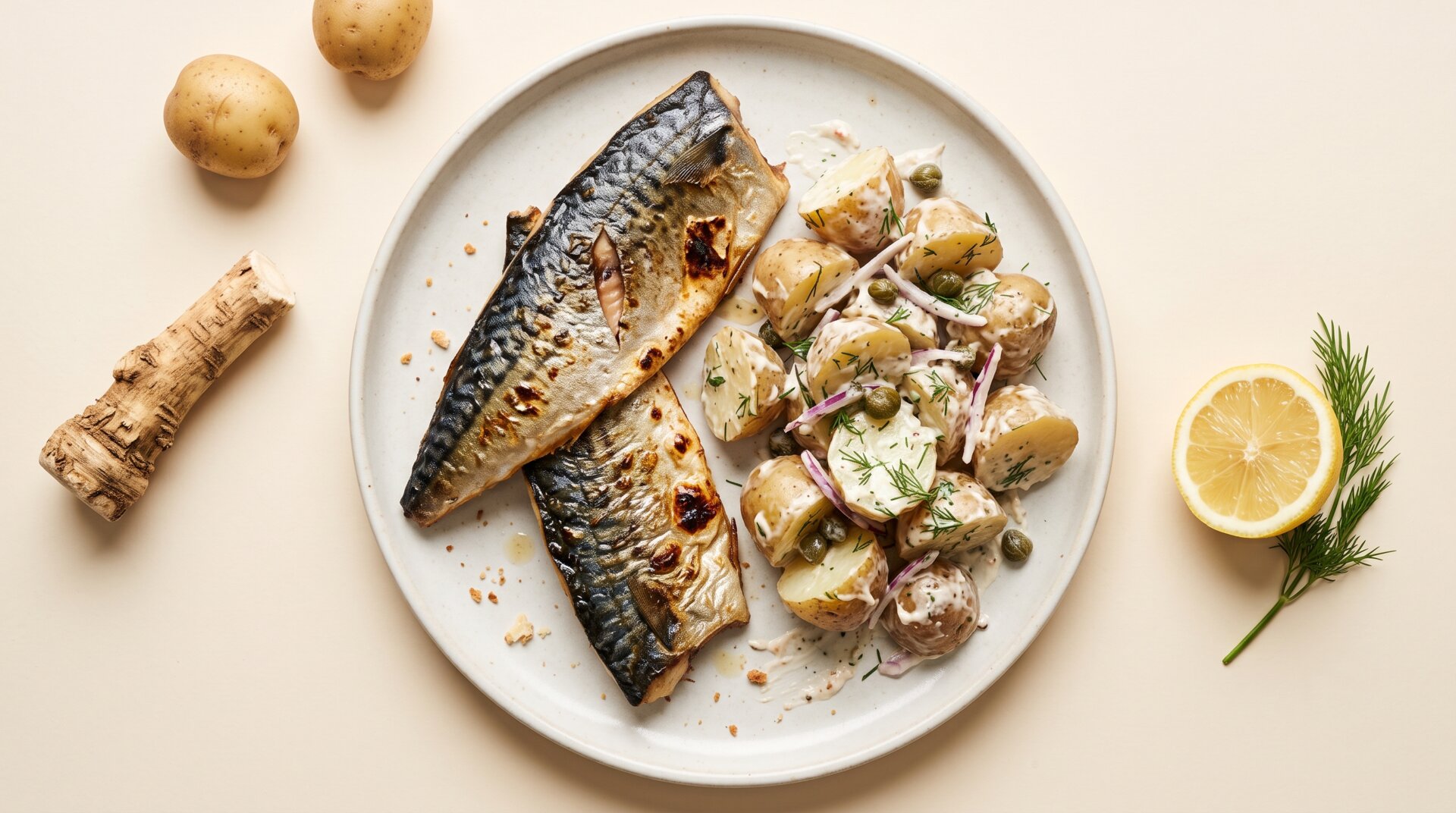 Pan-Fried Mackerel with Potato Salad and Horseradish 40 min Omega-3 rich mackerel with spicy horseradish 667 kcal 36g protein 2 synergies
 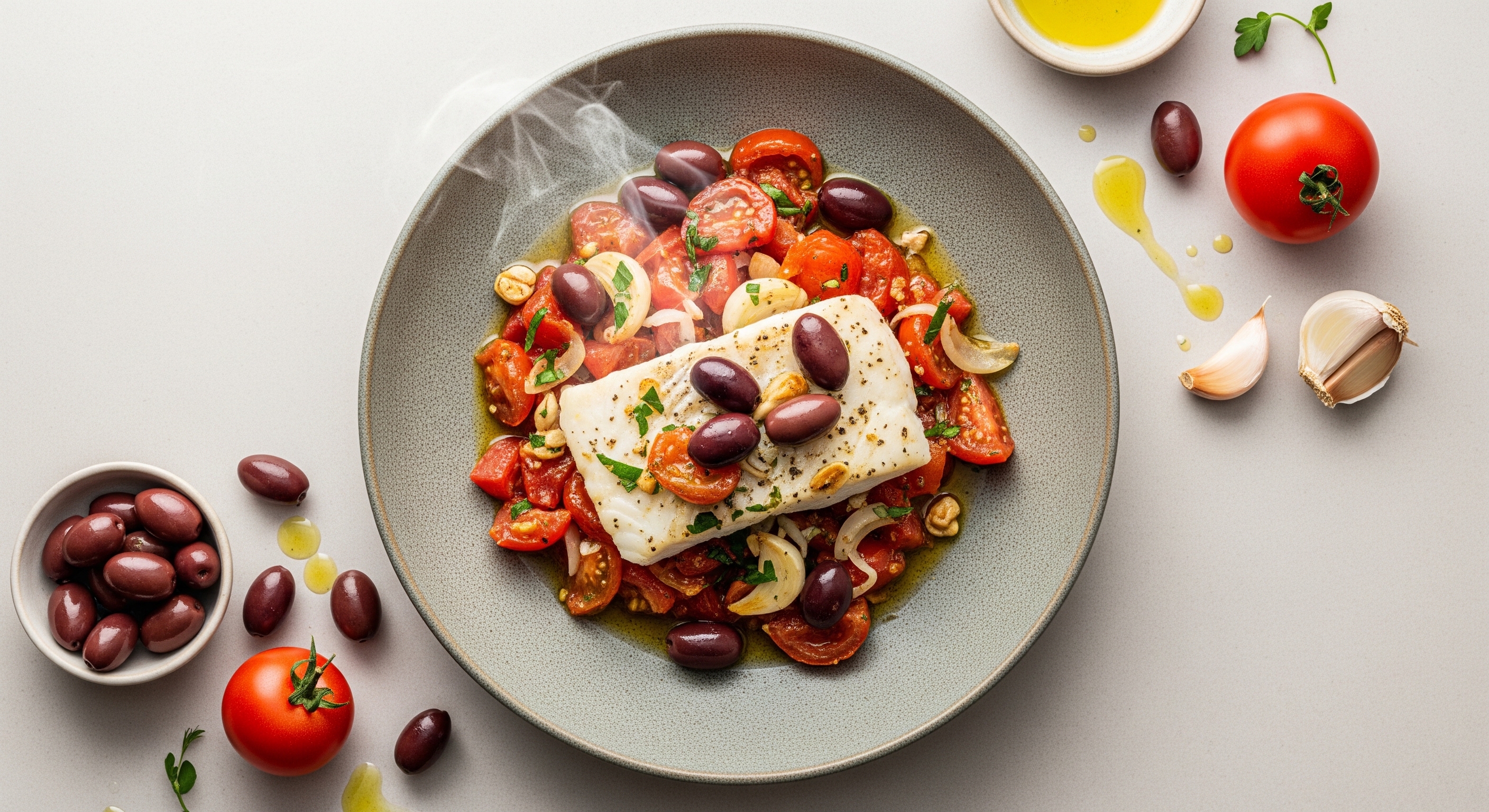 Greek Fish Plaki with Tomato and Olives 60 min Greek oven-baked fish in spiced tomato sauce with potato and olives 620 kcal 38g protein 2 synergies
 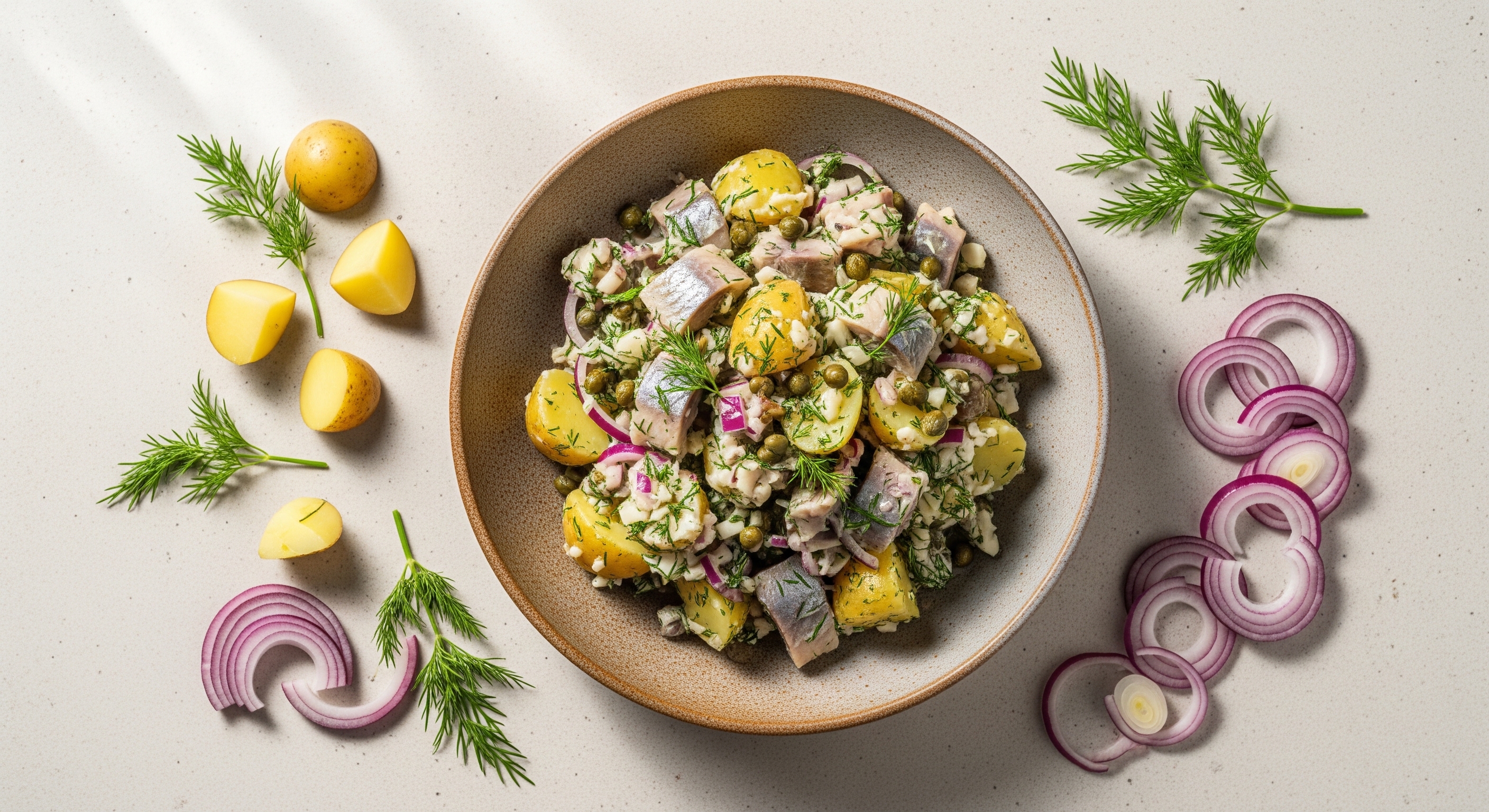 Herring Potato Salad with Dill and Capers 35 min Dutch potato salad with matjes herring, fresh dill and briny capers 520 kcal 28g protein 2 synergies
 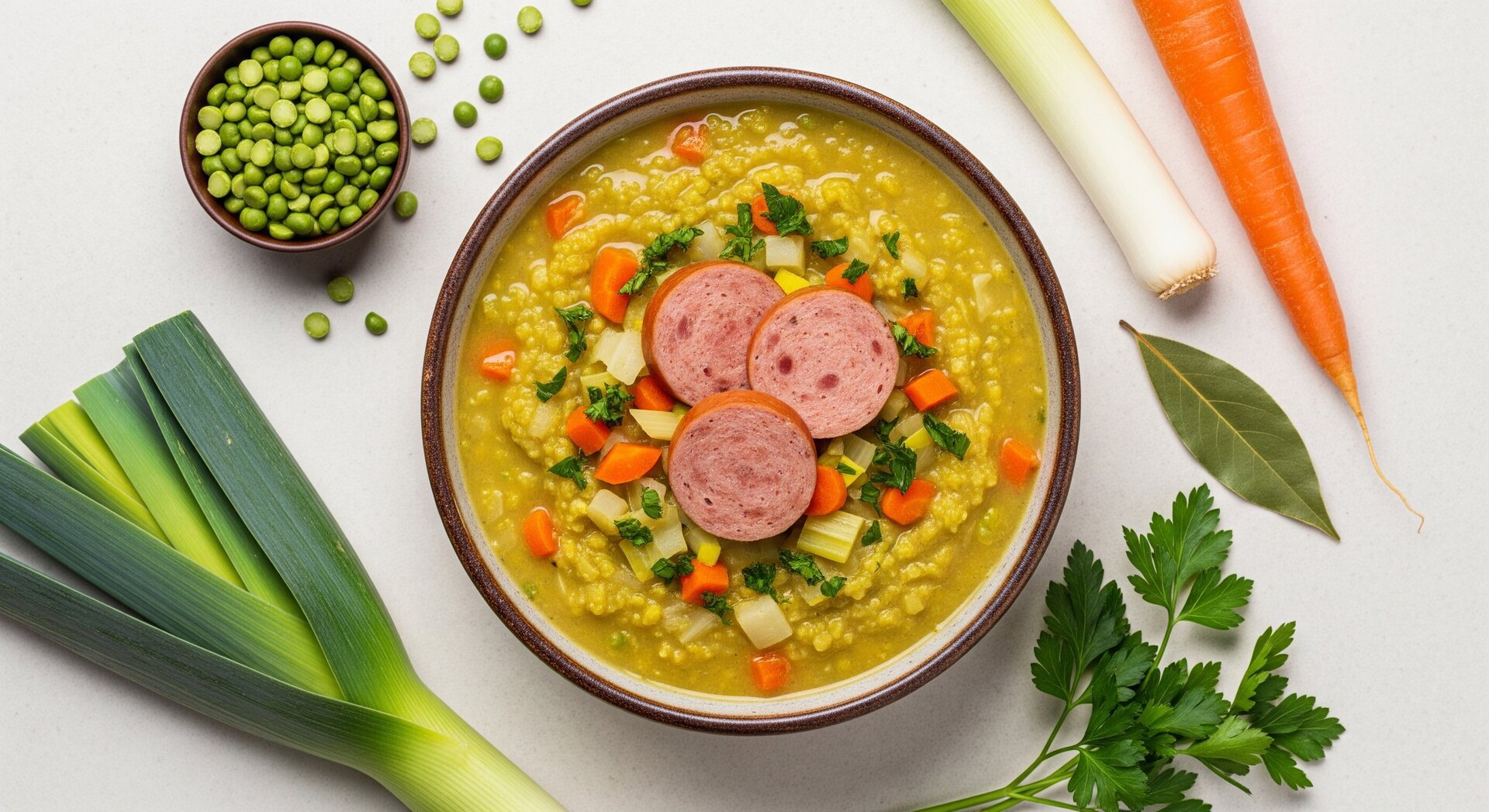 Dutch Split Pea Soup with Turkey Sausage 135 min Thick pea soup with split peas, vegetables and lean smoked sausage 774 kcal 49g protein 1 synergies
  In the Kitchen
Storage
Location:Pantry
Shelf life:2-4 weken
Store cool, dark, and dry. Avoid fridge (can increase sweetness).
Preparation
Boil/steam. For the cooling hack: cook → cool 8–12h → optionally reheat.
Conversions
Substitutes
Smart preparation
1Soak cut potatoes in cold water to remove excess starch.
Why?
Less starch results in crispier fried or roasted potatoes.
2Start potatoes in cold water, not boiling water.
Why?
This ensures even cooking from the outside in.
3Pierce potatoes with a fork before baking in the oven.
Why?
This allows steam to escape and prevents them from bursting.
Caution / Warnings
Potato is very safe, but there are scientific considerations:
Blood sugar sensitivity Mild
Frying/mashing can spike glucose; prefer boiled/steamed and the cooling hack.
Traditional use
Indigenous
Inca tradition in the Andes
The Incas applied raw potato slices as compresses on wounds and burns, and drank potato juice to relieve stomach ailments.
Summary
Potatoes aren't the problem — frying is. Boil/steam, cool, and pair with veggies + protein for energy + satiety without the crash.