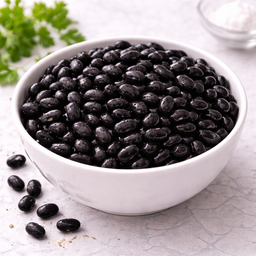
Black Beans
Dark beans with fiber and plant protein
What is this ingredient?
Black beans get their dark skin from polyphenols, including anthocyanins. These pigments give the beans their deep color and make them interesting in nutritional research on legumes and plant pigments.
In the kitchen, black beans are especially valued for their combination of fiber, plant protein, and firm texture. This makes them a filling base for burritos, chili, soups, salads, and veggie burgers. Paired with rice or corn, their amino acid profiles complement each other well, a traditional and practical combination in many Latin American dishes.
The dark cooking liquid is useful too: it contains color and flavor compounds from the skin and adds extra depth to stews, chili, and bean soups.
How does it taste?
Firm and earthy with a rich, mildly sweet flavor and creamy interior.
Pairs well with:
Pairs well with cuminlimecilantroavocado and chipotle.
Did you know...?
- Black beans have been a staple food in Central and South America for over 7,000 years.
- The black color comes from anthocyanins, the same pigment group that also gives blueberries their color.
Nutritional Value & Energy
Per 100g
Black Beans provides energy thanks to natural nutrients , buffered by fiber.
Per 100g
Minerals
Vitamins
Omega-3 fatty acids
More nutrients
B-Vitamins
Trace Minerals
Low GI means blood sugar doesn't spike quickly.
What's in a serving?
1 serving (dry)
Black beans naturally contain iron (2.1 mg per 100 g).
Black beans naturally contain magnesium (70 mg per 100 g).
Black beans naturally contain phosphorus (140 mg per 100 g).
Black beans naturally contain potassium (355 mg per 100 g).
Black beans naturally contain folate (149 mcg per 100 g).
Black beans naturally contain manganese (0.4 mg per 100 g).
Black beans naturally contain copper (0.2 mg per 100 g).
% of daily reference intake (DRI)
EU-approved nutrition claims
This ingredient contains nutrients for which EFSA-authorized health claims exist (at nutrient level, not ingredient-specific).
Approved health claims (EU)
Magnesium EU 432/2012
Magnesium contributes to normal muscle function
Contains 70mg/100g (threshold: ≥56.25mg/100g)
Magnesium EU 432/2012
Magnesium contributes to the reduction of tiredness and fatigue
Contains 70mg/100g (threshold: ≥56.25mg/100g)
Magnesium EU 432/2012
Magnesium contributes to normal functioning of the nervous system
Contains 70mg/100g (threshold: ≥56.25mg/100g)
Iron EU 432/2012
Iron contributes to normal energy-yielding metabolism
Contains 2.1mg/100g (threshold: ≥2.1mg/100g)
Iron EU 432/2012
Iron contributes to the reduction of tiredness and fatigue
Contains 2.1mg/100g (threshold: ≥2.1mg/100g)
Potassium EU 432/2012
Potassium contributes to the maintenance of normal blood pressure
Contains 355mg/100g (threshold: ≥300mg/100g)
Folate EU 432/2012
Folate contributes to normal blood formation
Contains 149mcg/100g (threshold: ≥30mcg/100g)
Folate EU 432/2012
Folate contributes to normal amino acid synthesis
Contains 149mcg/100g (threshold: ≥30mcg/100g)
Folate EU 432/2012
Folate contributes to normal homocysteine metabolism
Contains 149mcg/100g (threshold: ≥30mcg/100g)
Folate EU 432/2012
Folate contributes to normal psychological function
Contains 149mcg/100g (threshold: ≥30mcg/100g)
Folate EU 432/2012
Folate contributes to the normal function of the immune system
Contains 149mcg/100g (threshold: ≥30mcg/100g)
Folate EU 432/2012
Folate has a role in the process of cell division
Contains 149mcg/100g (threshold: ≥30mcg/100g)
Folate EU 432/2012
Folate contributes to maternal tissue growth during pregnancy
Contains 149mcg/100g (threshold: ≥30mcg/100g)
Phosphorus EU 432/2012
Phosphorus contributes to normal energy-yielding metabolism
Contains 140mg/100g (threshold: ≥105mg/100g)
Phosphorus EU 432/2012
Phosphorus contributes to the normal function of cell membranes
Contains 140mg/100g (threshold: ≥105mg/100g)
Phosphorus EU 432/2012
Phosphorus contributes to the maintenance of normal bones
Contains 140mg/100g (threshold: ≥105mg/100g)
Phosphorus EU 432/2012
Phosphorus contributes to the maintenance of normal teeth
Contains 140mg/100g (threshold: ≥105mg/100g)
Magnesium EU 432/2012
Magnesium contributes to normal energy-yielding metabolism
Contains 70mg/100g (threshold: ≥56.25mg/100g)
Magnesium EU 432/2012
Magnesium contributes to electrolyte balance
Contains 70mg/100g (threshold: ≥56.25mg/100g)
Magnesium EU 432/2012
Magnesium contributes to normal protein synthesis
Contains 70mg/100g (threshold: ≥56.25mg/100g)
Magnesium EU 432/2012
Magnesium contributes to normal psychological function
Contains 70mg/100g (threshold: ≥56.25mg/100g)
Magnesium EU 432/2012
Magnesium contributes to the maintenance of normal bones
Contains 70mg/100g (threshold: ≥56.25mg/100g)
Magnesium EU 432/2012
Magnesium contributes to the maintenance of normal teeth
Contains 70mg/100g (threshold: ≥56.25mg/100g)
Magnesium EU 432/2012
Magnesium has a role in the process of cell division
Contains 70mg/100g (threshold: ≥56.25mg/100g)
Iron EU 432/2012
Iron contributes to normal cognitive function
Contains 2.1mg/100g (threshold: ≥2.1mg/100g)
Iron EU 432/2012
Iron contributes to normal formation of red blood cells and haemoglobin
Contains 2.1mg/100g (threshold: ≥2.1mg/100g)
Iron EU 432/2012
Iron contributes to normal oxygen transport in the body
Contains 2.1mg/100g (threshold: ≥2.1mg/100g)
Iron EU 432/2012
Iron contributes to the normal function of the immune system
Contains 2.1mg/100g (threshold: ≥2.1mg/100g)
Iron EU 432/2012
Iron has a role in the process of cell division
Contains 2.1mg/100g (threshold: ≥2.1mg/100g)
Copper EU 432/2012
Copper contributes to the maintenance of normal connective tissues
Contains 0.2mg/100g (threshold: ≥0.15mg/100g)
Copper EU 432/2012
Copper contributes to normal energy-yielding metabolism
Contains 0.2mg/100g (threshold: ≥0.15mg/100g)
Copper EU 432/2012
Copper contributes to normal functioning of the nervous system
Contains 0.2mg/100g (threshold: ≥0.15mg/100g)
Copper EU 432/2012
Copper contributes to normal hair pigmentation
Contains 0.2mg/100g (threshold: ≥0.15mg/100g)
Copper EU 432/2012
Copper contributes to normal iron transport in the body
Contains 0.2mg/100g (threshold: ≥0.15mg/100g)
Copper EU 432/2012
Copper contributes to normal skin pigmentation
Contains 0.2mg/100g (threshold: ≥0.15mg/100g)
Copper EU 432/2012
Copper contributes to the normal function of the immune system
Contains 0.2mg/100g (threshold: ≥0.15mg/100g)
Copper EU 432/2012
Copper contributes to the protection of cells from oxidative stress
Contains 0.2mg/100g (threshold: ≥0.15mg/100g)
Manganese EU 432/2012
Manganese contributes to normal energy-yielding metabolism
Contains 0.4mg/100g (threshold: ≥0.3mg/100g)
Manganese EU 432/2012
Manganese contributes to the maintenance of normal bones
Contains 0.4mg/100g (threshold: ≥0.3mg/100g)
Manganese EU 432/2012
Manganese contributes to the normal formation of connective tissue
Contains 0.4mg/100g (threshold: ≥0.3mg/100g)
Manganese EU 432/2012
Manganese contributes to the protection of cells from oxidative stress
Contains 0.4mg/100g (threshold: ≥0.3mg/100g)
Potassium EU 432/2012
Potassium contributes to normal functioning of the nervous system
Contains 355mg/100g (threshold: ≥300mg/100g)
Potassium EU 432/2012
Potassium contributes to normal muscle function
Contains 355mg/100g (threshold: ≥300mg/100g)
What's being researched?
Black beans and anthocyanins
The pigments in the skin of black beans are being studied in nutritional laboratory research. In-vitro studies measure antioxidant capacity, among other markers, while absorption and changes after cooking are still being investigated.
Supported by: [1] Xu BJ (2007)
Black beans and gut fermentation
Resistant starch and oligosaccharides in black beans are being studied for their role in fermentation processes in the colon. Studies examine, among other things, the formation of short-chain fatty acids after legume consumption.
Supported by: [1] Xu BJ (2007) , [2] Sánchez-Tapia M (2020)
Good Combinations (Synergy)
Combine black beans smartly to enhance the effect:
Black Beans 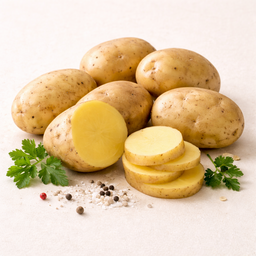 Potato
 Complete protein combination through lysine + methionine
Technical: Potatoes contain 2g protein per 100g with methionine as strong amino acid but lysine as limiting. Black beans provide 21g protein per 100g with high lysine (1.5g/100g) but low methionine. Complementation creates a complete amino acid profile with PDCAAS of 0.90+ — comparable to animal protein.
What does this mean for you? Potato with beans is a classic Latin American combination providing complete protein. Ideal for vegetarians — no meat needed to get all amino acids.
Black Beans 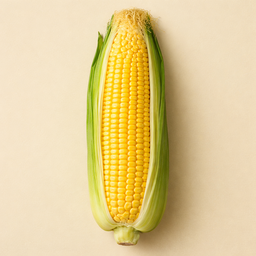 Corn
Corn Complete amino acid profile through lysine + tryptophan complementation
Technical: Corn lacks lysine (limiting amino acid, 0.26g/100g) but has sufficient methionine (0.20g) and tryptophan (0.07g). Black beans are rich in lysine (1.5g/100g) but low in methionine. Together they achieve a PDCAAS of 0.85+ — comparable to animal protein. This is the biochemical basis of millennia of Mesoamerican nutrition.
What does this mean for you? Corn tortilla with black beans — the basis of Mexican cuisine for millennia. Together they form complete protein without meat. Add lime for extra vitamin C and iron absorption.
Black Beans 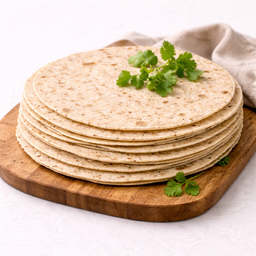 Whole Wheat Tortilla
 Complete protein combination + healthy fats
Technical: Whole wheat contains methionine and cysteine but is low in lysine. Black beans are rich in lysine (1.5g per 100g) but low in sulfur-containing amino acids. Together they form a complete protein profile — the biochemical basis of the Mexican burrito. Avocado provides 15g monounsaturated fats that increase absorption of fat-soluble vitamins (A, D, E, K) from all ingredients.
What does this mean for you? The Mexican burrito with whole wheat tortilla, black beans and avocado is a nutritionally complete meal. The beans complement the wheat protein, and the avocado ensures you absorb the vitamins. Add tomato for vitamin C and extra iron absorption.
Black Beans 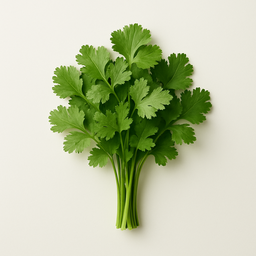 Cilantro
 Latin American combination: vitamin C increases iron absorption
Technical: Black beans contain 2.1mg iron per 100g cooked plus anthocyanins (same antioxidants as blueberries). Fresh cilantro contains 27mg vitamin C per 100g that increases iron absorption. The polyphenols in both ingredients enhance each other's antioxidant action.
What does this mean for you? Always garnish your black bean dish with fresh cilantro — this is why it's a staple in Mexican cuisine.
Black Beans 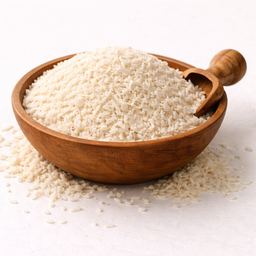 Rice
Rice Complete protein combination in frijoles negros
Technical: Black beans are rich in lysine (1.5g per 100g) but low in methionine — the limiting amino acid in legumes. Rice provides methionine and cysteine but lacks lysine. Together they reach a PDCAAS of ~0.9, comparable to egg. Black beans also contain anthocyanins (same antioxidants as blueberries).
What does this mean for you? Black beans with rice (frijoles negros con arroz) is the national dish of Cuba, Brazil and all of Latin America. This isn't just tradition but also optimal nutrition — complete protein, fiber, antioxidants and slow energy. Add cilantro and lime for extra vitamin C.
Recipes with Black Beans
Discover delicious recipes featuring black beans:
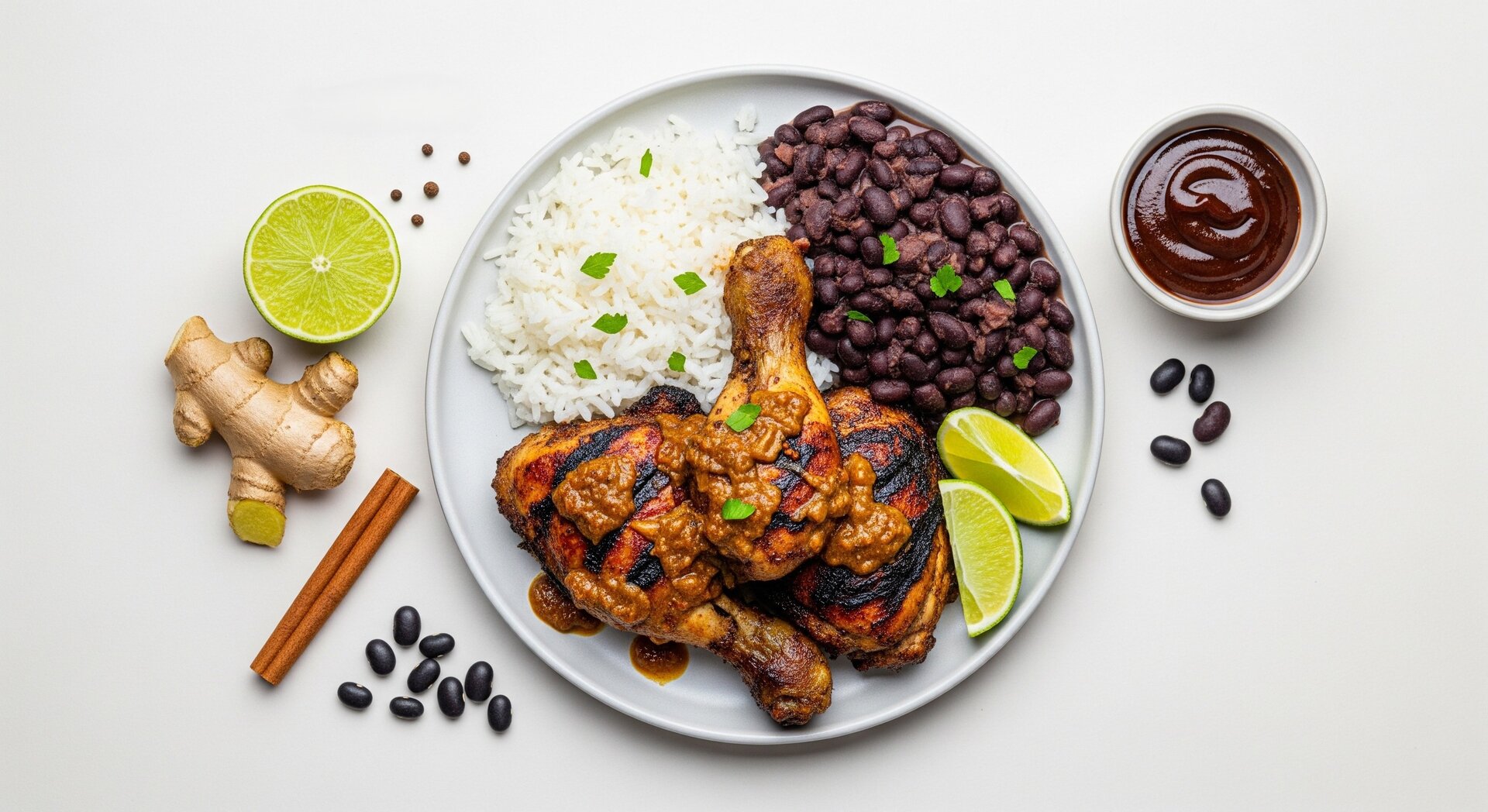 Caribbean Jerk Chicken with Rice and Peas 65 min Spiced chicken with coconut rice and black beans
  868 kcal
  57g protein 1 synergies
 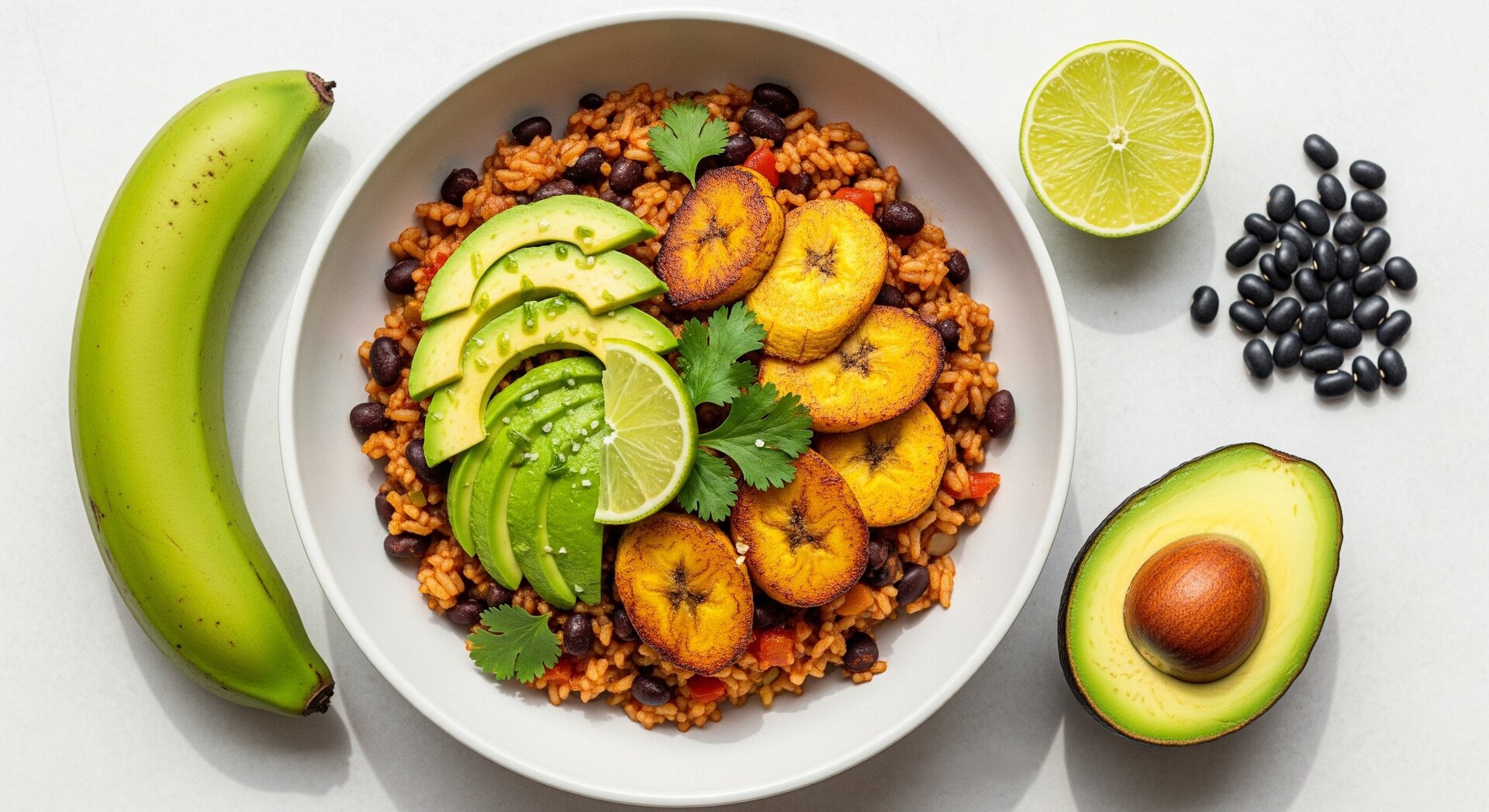 Cuban Moros y Cristianos Bowl 40 min Black beans and rice with sofrito, avocado and plantain 750 kcal 19g protein 2 synergies
 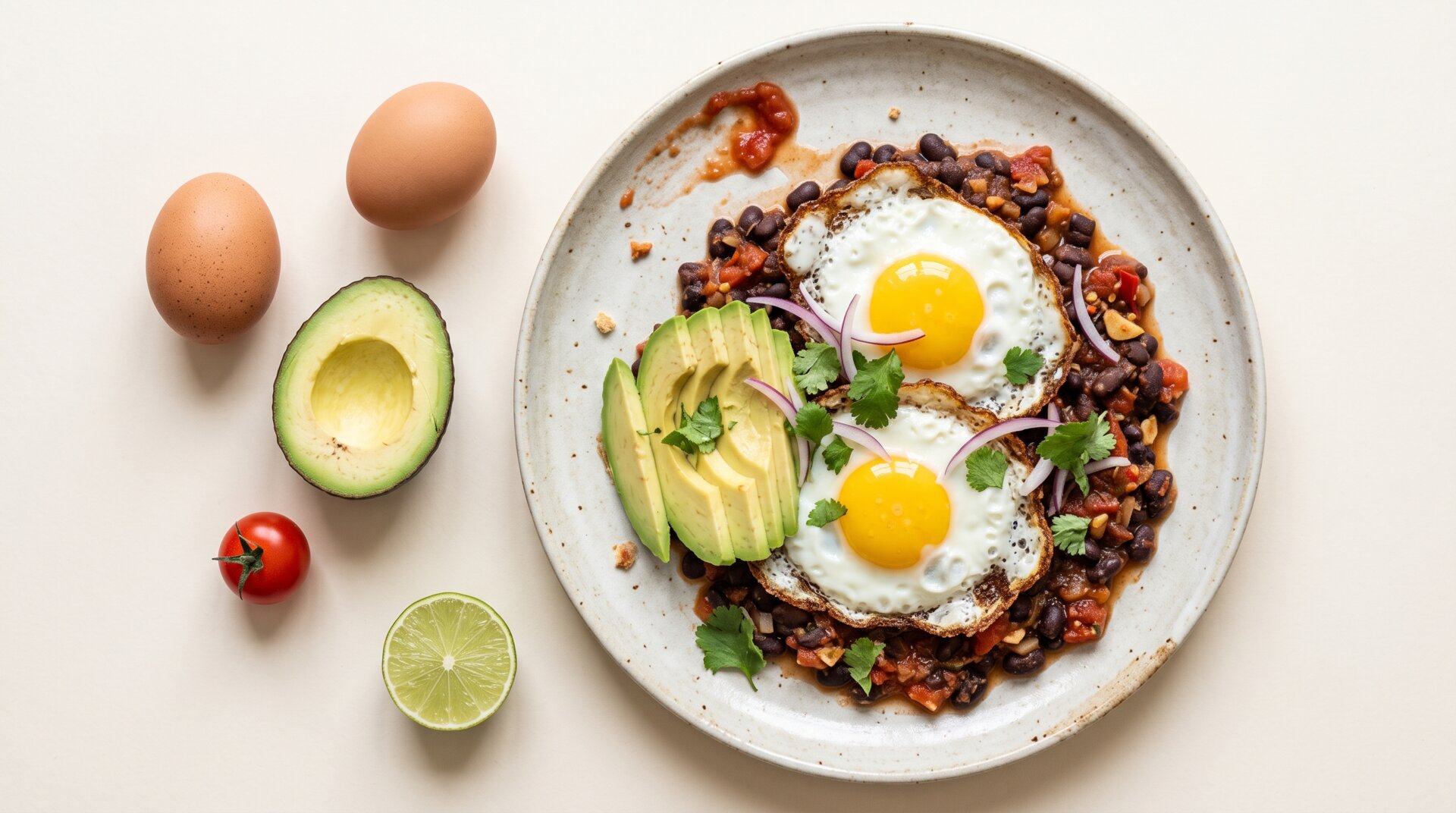 Huevos Rancheros 25 min Mexican breakfast with poached eggs and black beans 420 kcal 22g protein 1 synergies
 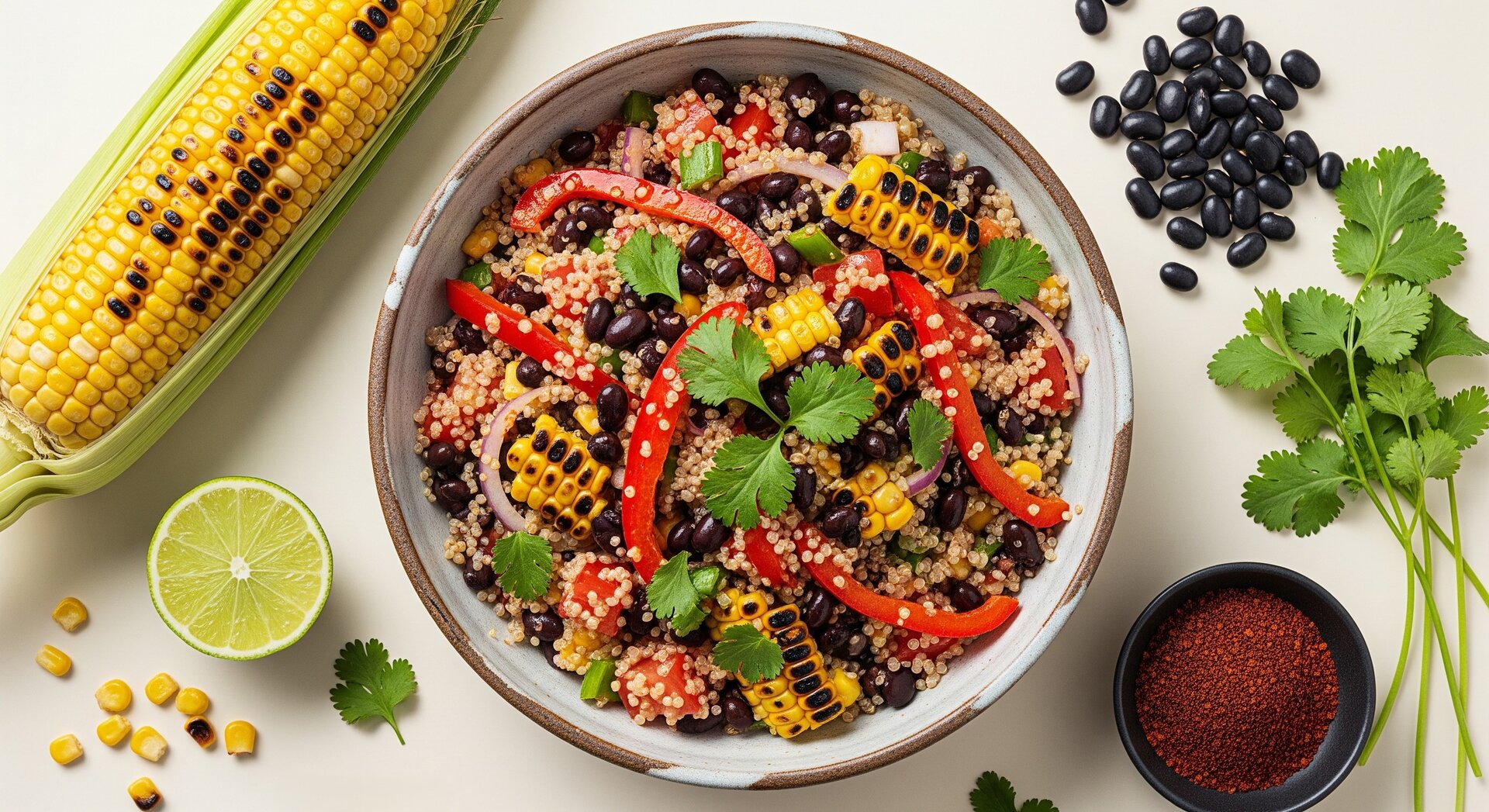 Latin American Quinoa Salad with Chipotle and Corn 35 min Smoky quinoa salad with sweet corn and spicy chipotle 533 kcal 18g protein 1 synergies
 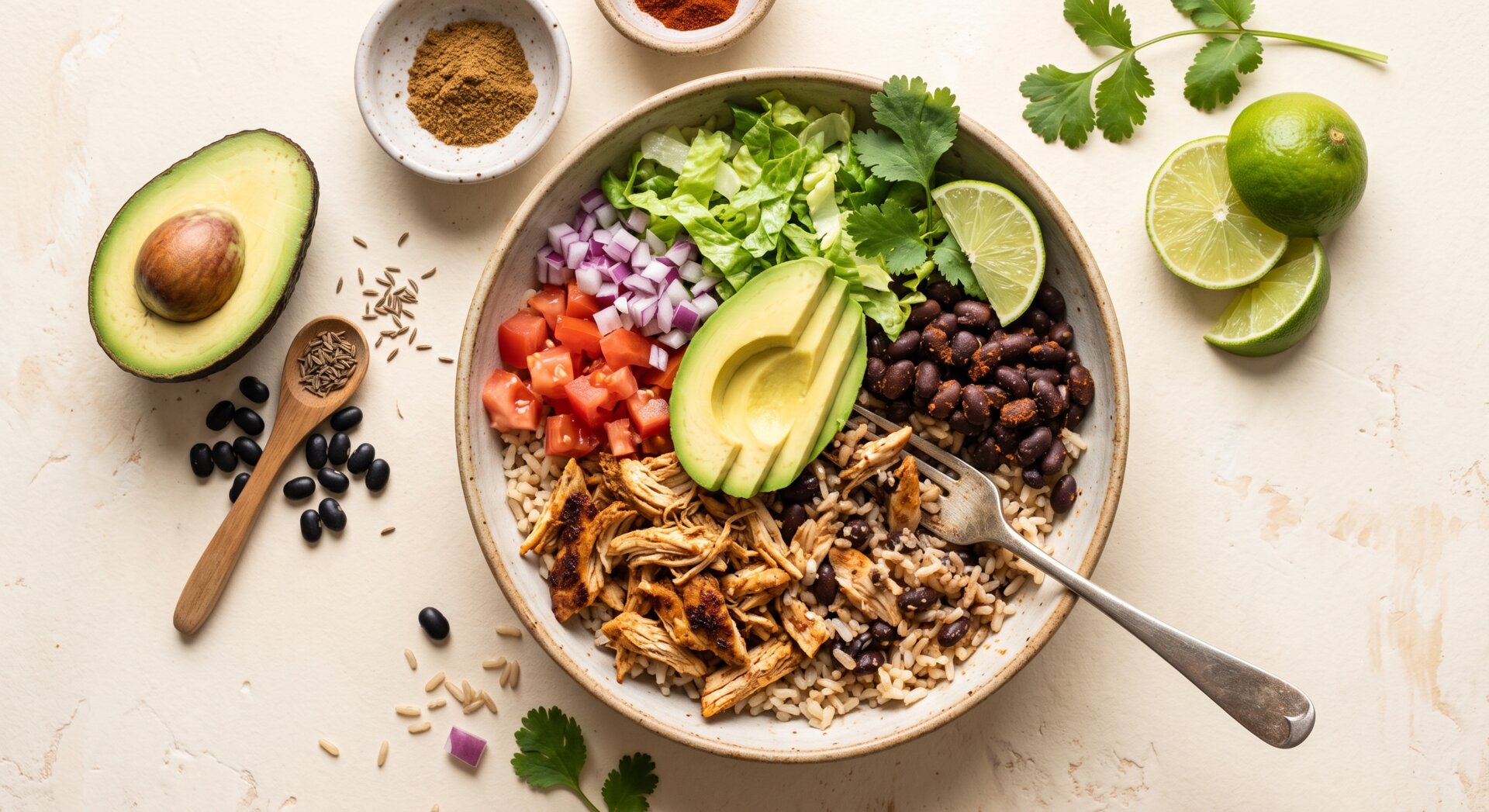 Mexican Burrito Bowl 45 min Everything from a burrito, in a bowl 620 kcal 42g protein 1 synergies
 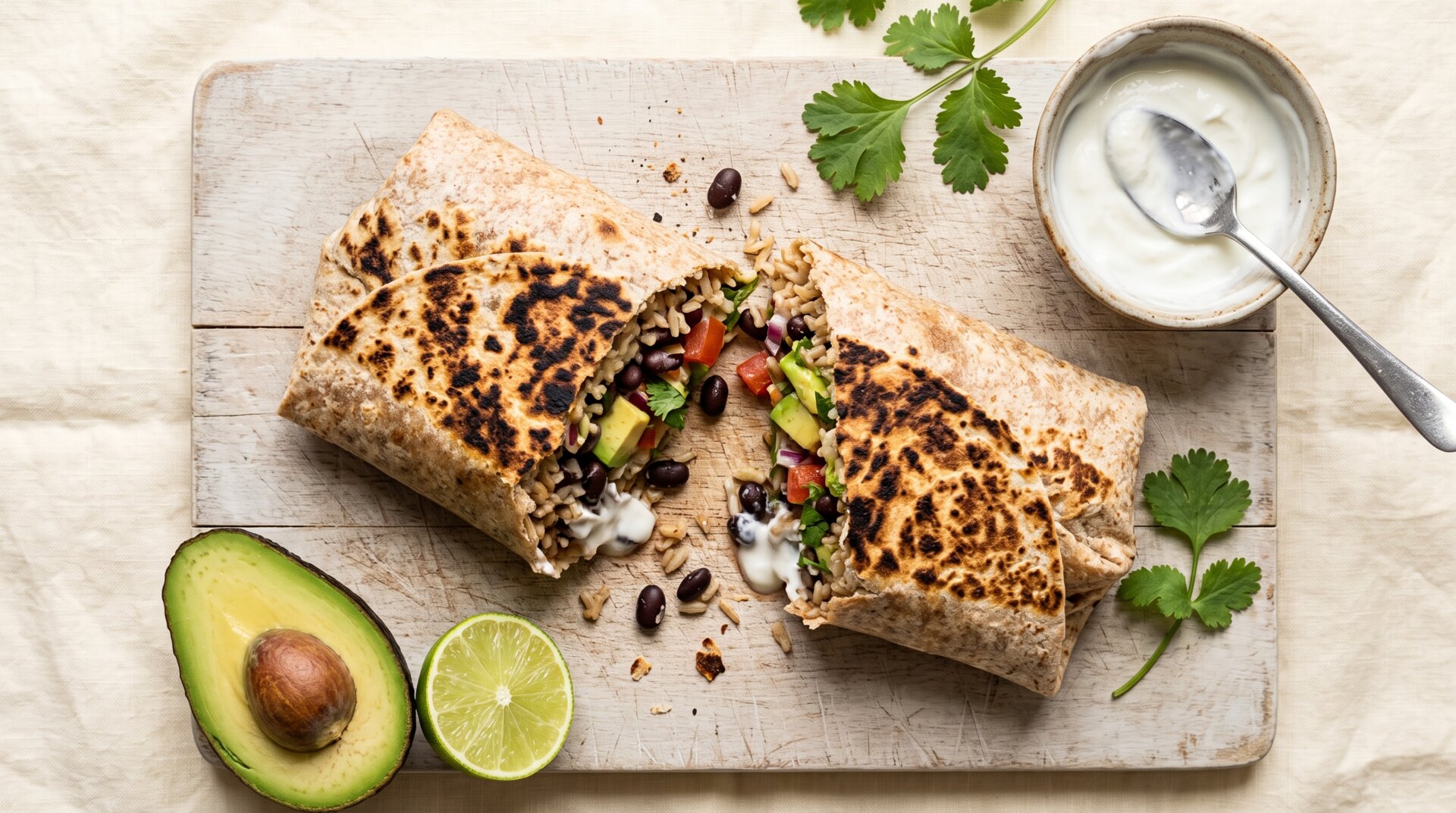 Mexican Burrito Wrap 20 min Spiced black beans with brown rice, fresh pico de gallo and mashed avocado 480 kcal 18g protein 1 synergies
  In the Kitchen
Storage
Location:Pantry
Shelf life:1-2 jaar (droog) / 2-4 dagen (gekookt in koelkast)
Preparation
Dry: soak 8–12 hours, or quick-boil for 2 minutes and let stand for 1 hour. Then simmer for 60–90 minutes. Add salt near the end. Save the cooking liquid for chili, soups, and stews.
Conversions
Substitutes
Smart preparation
1Soak black beans for 8–12 hours in cold water.
2Gently cook black beans over low heat for 60–90 minutes.
Why?
Gentle cooking keeps the beans whole and the skin intact.
3Use the dark cooking liquid when you want extra color and flavor in soup or chili.
Why?
The cooking liquid contains color and flavor compounds from the skin.
Caution / Warnings
Black Beans is very safe, but there are scientific considerations:
Flatulence Moderate
Oligosaccharides in black beans can be fermented by gut bacteria.
Advice:
Soak well, rinse, and cook until fully tender. Add cumin or epazote and increase portions gradually.
Traditional use
Indigenous
Mesoamerican staple food
Black beans have been cultivated in Central and South America for over 7,000 years. In Aztec and Maya cuisines, they were an important staple alongside corn, squash, and chili.
Summary
Firm, filling, and ideal for burritos, chili, salads, or as a veggie burger base. Black beans provide fiber and plant protein, with an earthy flavor and creamy interior. Tip: save the dark cooking liquid for extra flavor in soups and stews.