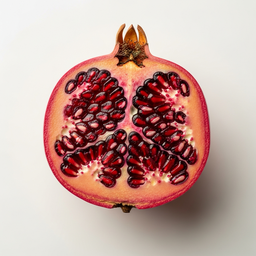
Pomegranate
Sweet-tart fruit with ruby-red arils
What is this ingredient?
Pomegranate (Punica granatum) is one of the oldest cultivated fruits in the world and is valued for its ruby-red seeds, also called arils. The flavour is fresh and sweet-tart, fitting well in salads, yoghurt, grain dishes, sauces and Middle Eastern recipes.
## Polyphenols and arils
Pomegranate contains polyphenols such as punicalagins and ellagitannins. These compounds are found mainly in the peel and white membrane; the edible arils provide juice, fibre and a fresh bite. Research on pomegranate looks at markers such as LDL oxidation, vascular function and antioxidant activity, but the fruit is not a treatment or a replacement for medical advice.
## Juice or whole fruit
Pomegranate juice is concentrated and contains less fibre than the whole arils. For everyday use, fresh arils are usually the most practical choice: they add texture, colour and portion control. The white membrane is edible but bitter; use it only if you enjoy the taste.
How does it taste?
Sweet-tart and complex with crunchy arils and a wine-like character.
Pairs well with:
Pairs well with walnutfetamintlamb and pomegranate molasses.
Sunnah
In them are fruit and palm trees and pomegranates. (Surah Ar-Rahman) The pomegranate is mentioned three times in the Quran as one of the fruits of Paradise.
Quran #Quran 55:68
Did you know...?
- A pomegranate can contain 200 to 1,400 seeds, each encased in juicy flesh.
- Pomegranate is one of the oldest cultivated fruits, with archaeological traces from ancient Iran.
- The word 'grenade' is linked to the pomegranate because of its shape and many seeds.
Nutritional Value & Energy
Per 100g
Pomegranate provides energy thanks to natural nutrients , buffered by fiber.
Per 100g
Minerals
Vitamins
Omega-3 fatty acids
More nutrients
B-Vitamins
Trace Minerals
What's in a serving?
1 serving
Pomegranate naturally contains vitamin K (16.4 mcg per 100 g).
Pomegranate naturally contains folate (38 mcg per 100 g).
% of daily reference intake (DRI)
EU-approved nutrition claims
This ingredient contains nutrients for which EFSA-authorized health claims exist (at nutrient level, not ingredient-specific).
Approved health claims (EU)
Folate EU 432/2012
Folate contributes to normal blood formation
Contains 38mcg/100g (threshold: ≥30mcg/100g)
Folate EU 432/2012
Folate contributes to normal amino acid synthesis
Contains 38mcg/100g (threshold: ≥30mcg/100g)
Folate EU 432/2012
Folate contributes to normal homocysteine metabolism
Contains 38mcg/100g (threshold: ≥30mcg/100g)
Folate EU 432/2012
Folate contributes to normal psychological function
Contains 38mcg/100g (threshold: ≥30mcg/100g)
Folate EU 432/2012
Folate contributes to the normal function of the immune system
Contains 38mcg/100g (threshold: ≥30mcg/100g)
Folate EU 432/2012
Folate has a role in the process of cell division
Contains 38mcg/100g (threshold: ≥30mcg/100g)
Folate EU 432/2012
Folate contributes to maternal tissue growth during pregnancy
Contains 38mcg/100g (threshold: ≥30mcg/100g)
Vitamin_k EU 432/2012
Vitamin K contributes to normal blood clotting
Contains 16.4mcg/100g (threshold: ≥11.25mcg/100g)
Vitamin_k EU 432/2012
Vitamin K contributes to the maintenance of normal bones
Contains 16.4mcg/100g (threshold: ≥11.25mcg/100g)
What's being researched?
Punicalagin and vascular markers
Punicalagin and other ellagitannins in pomegranate are being studied in relation to vascular markers. Clinical studies show promising results on topics such as endothelial function and LDL oxidation, but this remains ingredient research and not a medical treatment.
Supported by: [1] Aviram (2004)
Polyphenol profile and antioxidant activity
The polyphenol profile of pomegranate is being studied for antioxidant activity. In-vitro studies show high activity, but translation to effects in the body depends on absorption, metabolism and dietary context.
Supported by: [2] Viuda-Martos (2010) , [1] Aviram (2004)
Urolithins and cellular research
Urolithins, metabolites of pomegranate polyphenols formed by gut bacteria, are being studied for their role in cellular processes. The response can differ between people because microbiome composition varies.
Supported by: [2] Viuda-Martos (2010) , [1] Aviram (2004)
Good Combinations (Synergy)
Combine pomegranate smartly to enhance the effect:
Pomegranate 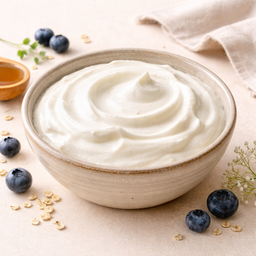 Greek Yogurt
 Punicalagins + probiotics for microbiome and urolithin conversion
Technical: Pomegranate contains punicalagins that are converted in the gut to urolithins by bacteria. Yogurt provides probiotics that improve this conversion. The combination strengthens both the bacterial colony and the production of bioactive urolithins — a truly synbiotic effect.
What does this mean for you? Add pomegranate seeds to yogurt. The seeds give a crunchy texture and tart flavor, while the probiotics in yogurt strengthen the conversion of pomegranate polyphenols into bioactive urolithins.
Pomegranate  Yogurt
 Punicalagins + probiotics for microbiome and urolithin conversion
Technical: Pomegranate contains punicalagins that are converted in the gut to urolithins by bacteria. Yogurt provides probiotics that improve this conversion. The combination strengthens both the bacterial colony and the production of bioactive urolithins — a truly synbiotic effect.
What does this mean for you? Add pomegranate seeds to yogurt. The seeds give a crunchy texture and tart flavor, while the probiotics in yogurt strengthen the conversion of pomegranate polyphenols into bioactive urolithins.
Pomegranate 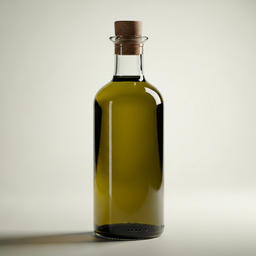 Olive Oil
 Mediterranean polyphenol combination: punicalagins + oleocanthal
Technical: Pomegranate contains punicalagins and punicalins — unique ellagitannins that work via multiple biochemical pathways, including modulation of NF-kB signaling. Olive oil contains oleocanthal — a bioactive phenolic compound that influences COX enzymes. Together they offer complementary polyphenol pathways: ellagitannins via urolithin conversion, oleocanthal via direct enzyme interaction.
What does this mean for you? Drizzle extra virgin olive oil over pomegranate seeds in a salad. This Middle Eastern combination offers two powerful polyphenol sources working via different biochemical pathways. Always use extra virgin olive oil — oleocanthal is lost during refining.
Pomegranate 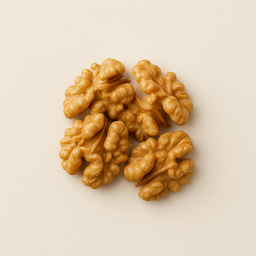 Walnuts
 Complementary polyphenols and omega-3
Technical: Pomegranate contains punicalagins studied in research in connection with LDL oxidation. Walnuts provide ALA omega-3 (9g per 100g); alpha-linolenic acid contributes to the maintenance of normal blood cholesterol levels (EFSA). Both contain unique polyphenols (pomegranate: ellagitannins, walnuts: ellagic acid + pedunculagin) with complementary bioactive pathways.
What does this mean for you? Sprinkle pomegranate seeds and chopped walnuts over your salad or yogurt. This combination provides complementary plant compounds through two routes: polyphenols (pomegranate) + omega-3 fatty acids (walnuts).
Pomegranate 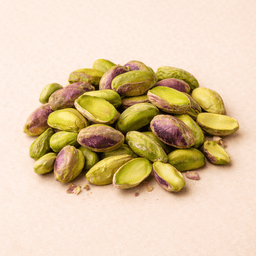 Pistachio Nuts
 Complementary pathways via phytosterols and punicalagins for lipid metabolism
Technical: Pistachios contain phytosterols (214mg/100g) and pomegranate contains punicalagins (a unique polyphenol). These plant compounds are studied in research in connection with cholesterol absorption and LDL oxidation, via two complementary routes.
What does this mean for you? Combine pistachios and pomegranate seeds in a salad or as garnish on hummus. Two complementary pathways for lipid metabolism — popular in Persian cuisine, for good reason.
Recipes with Pomegranate
Discover delicious recipes featuring pomegranate:
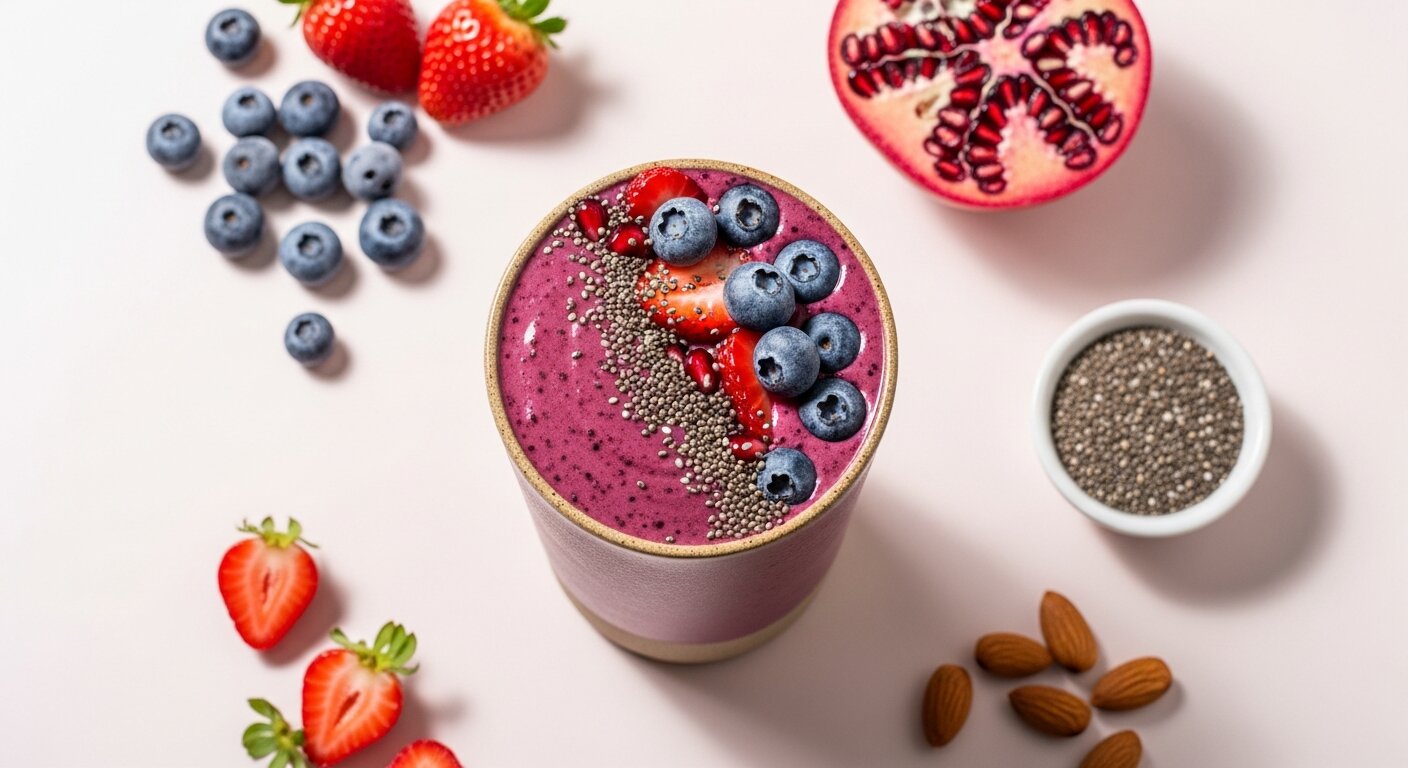 Berry Antioxidant Blast 5 min Deep purple smoothie with blueberries, strawberries and pomegranate
  320 kcal
  6g protein 2 synergies
 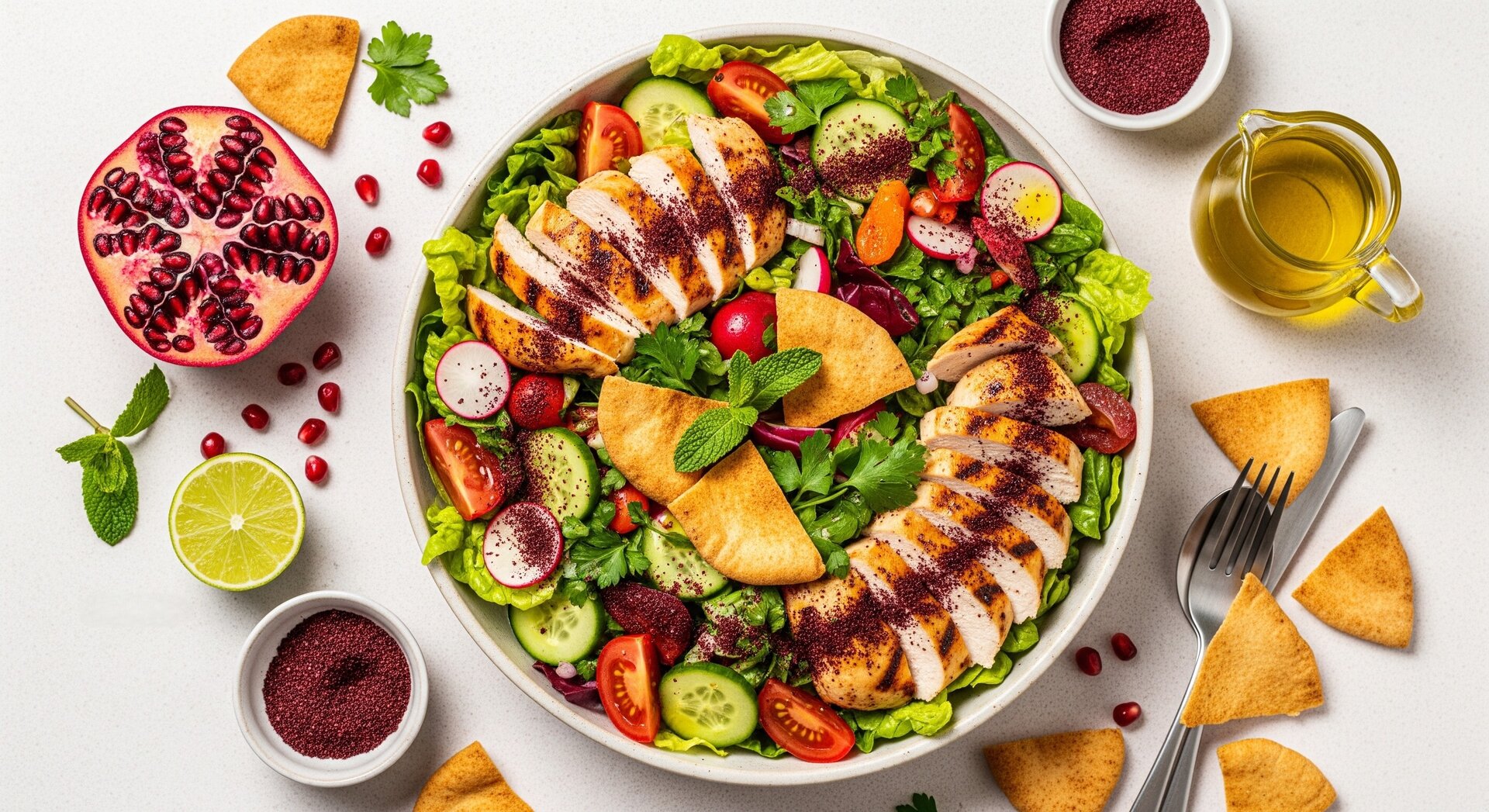 Fattoush Salad with Grilled Chicken and Sumac 35 min Lebanese bread salad with grilled chicken, radish and sumac dressing 660 kcal 48g protein 1 synergies
 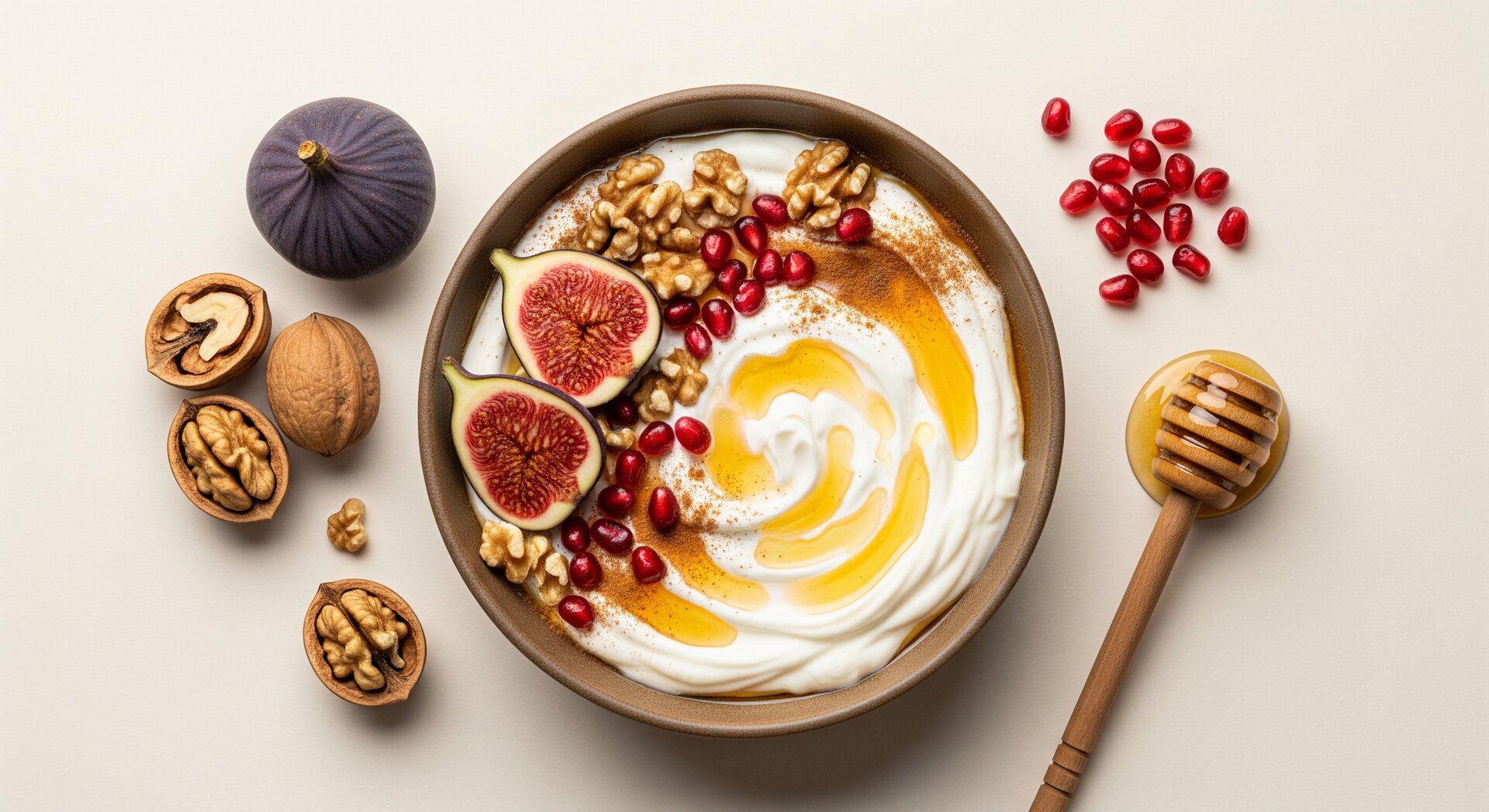 Greek Yogurt Bowl with Honey and Walnuts 5 min Creamy, fresh and lightly nutty 380 kcal 18g protein 1 synergies
 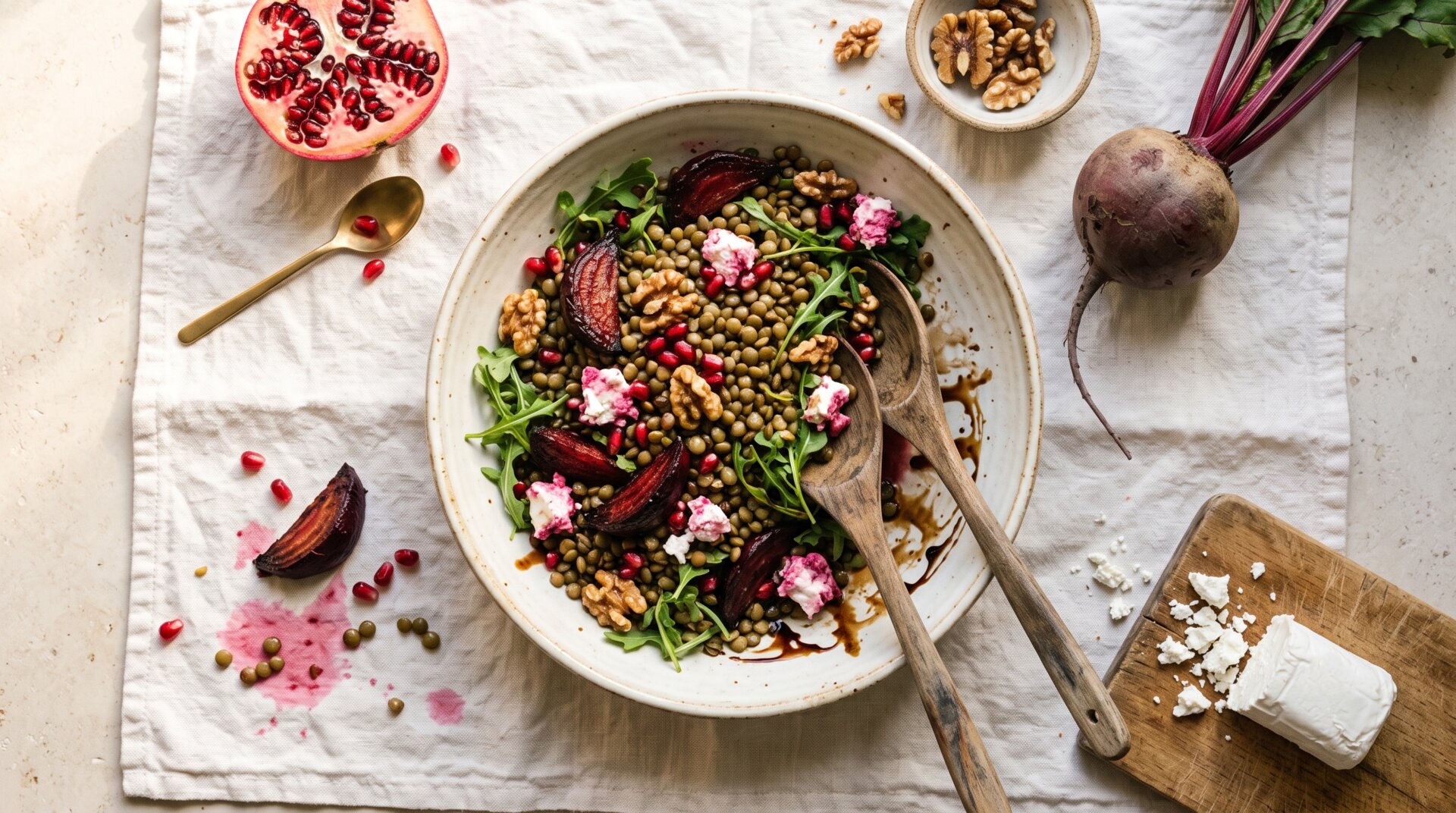 Mediterranean Lentil Salad with Goat Cheese 40 min Hearty salad with beetroot and walnuts 793 kcal 31g protein 1 synergies
 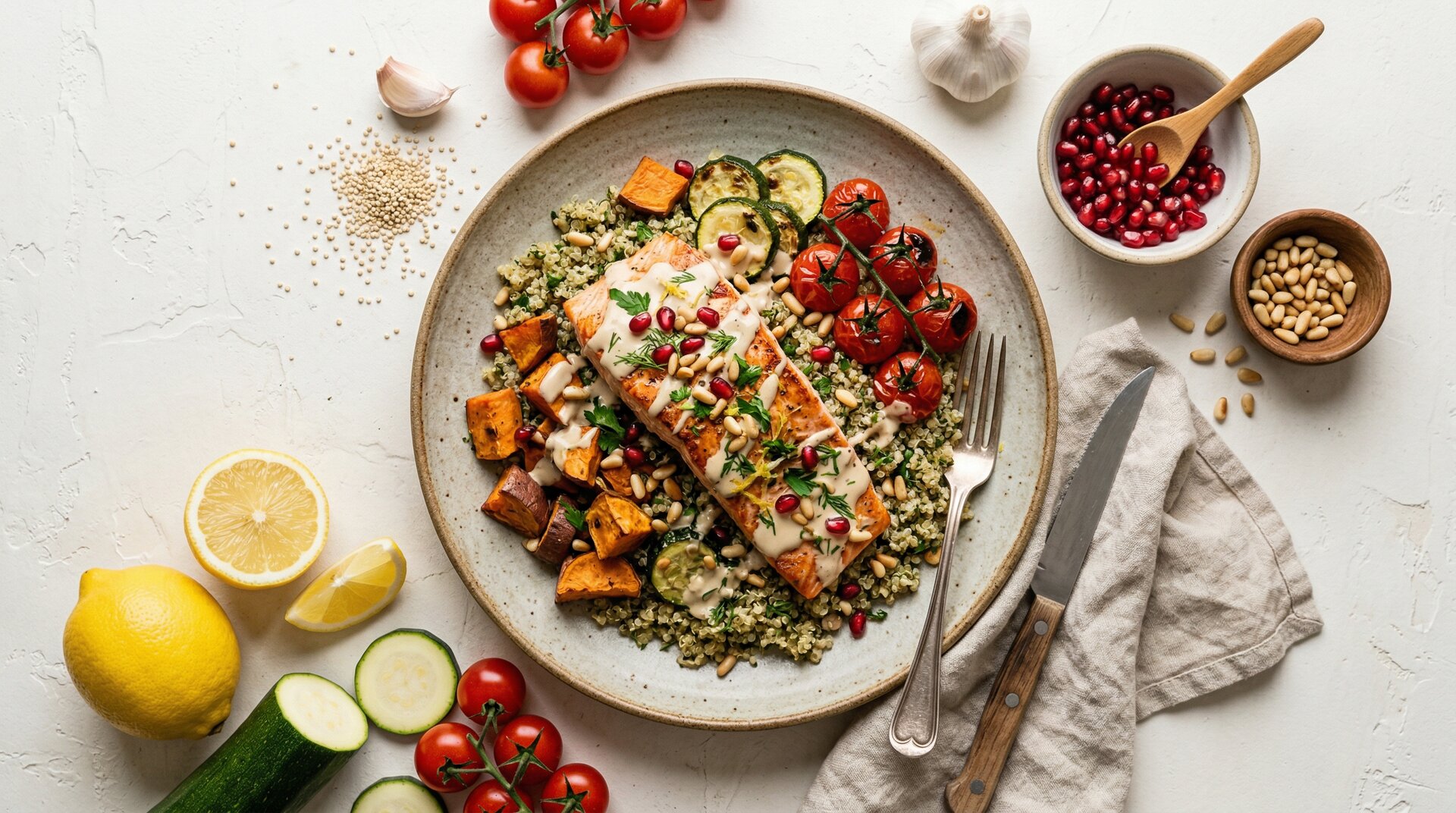 Mediterranean Salmon with Quinoa, Tahini and Roasted Vegetables 45 min Oven-baked salmon with herby quinoa, lemon tahini sauce and sweet roasted vegetables 805 kcal 42g protein 3 synergies
 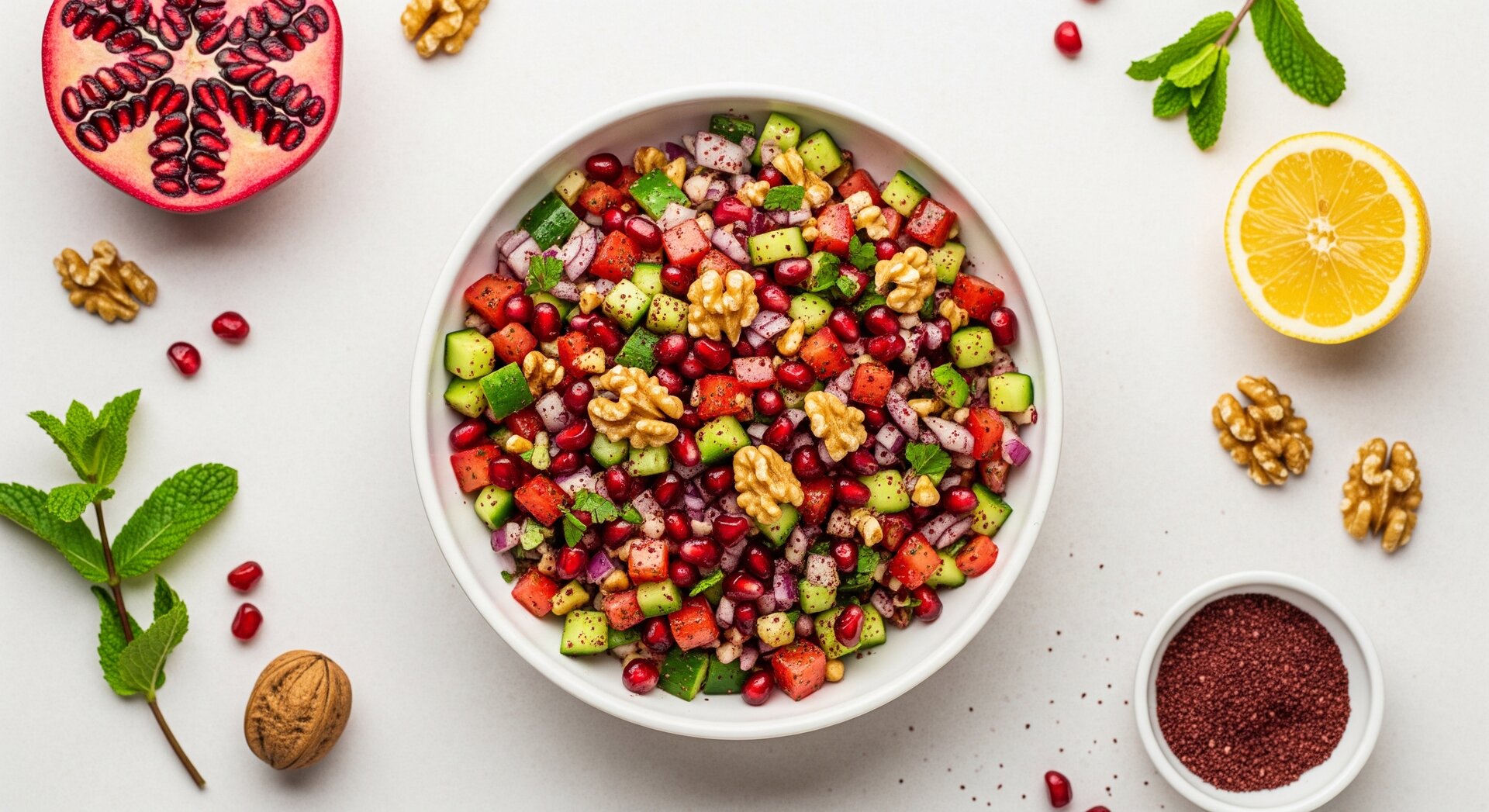 Persian Shirazi Salad with Walnuts and Pomegranate 20 min Refreshing finely chopped vegetable salad with pomegranate 440 kcal 8g protein 1 synergies
  In the Kitchen
Storage
Location:Refrigerator
Shelf life:2-3 maanden (hele vrucht, koelkast), 5 dagen (pitjes, koelkast)
Whole pomegranates keep well in the fridge. Store loose arils airtight and use them within a few days, or freeze them first in a single layer. For juice, preferably choose a version without added sugars.
Preparation
Eat the arils raw for their fresh texture. Sprinkle them over salads, yoghurt, grain dishes or roasted vegetables. Juice is useful for dressings and sauces, but it is more concentrated than the whole fruit.
Conversions
Substitutes
Smart preparation
1Tap the outside with a spoon over a bowl to release the arils.
2Halve and deseed pomegranates under water to prevent splattering.
Why?
The water catches the arils and the membrane floats to the top.
3Roll the pomegranate firmly on the counter before opening.
Why?
This loosens the arils from the inner wall.
Caution / Warnings
Pomegranate is very safe, but there are scientific considerations:
Blood thinners Moderate
Pomegranate may affect the action or breakdown of certain blood-thinning medicines in some people.
Advice:
Consult your doctor or pharmacist if you use blood thinners, such as warfarin or acetylsalicylic acid.
Sugar content Mild
Pomegranate juice contains concentrated natural sugars and less fibre than the whole arils.
Advice:
Choose fresh arils more often than juice and keep juice portions small.
Traditional use
Mediterranean
Ancient Greek symbol of life
In Greek mythology, pomegranate was connected to Persephone and the underworld. In historical herbal traditions, the fruit was also described in relation to digestive complaints; this is cultural context, not medical advice.
Ayurveda
Ayurvedic tradition
In Ayurveda, pomegranate is traditionally valued for its sweet-tart taste and its place in balanced meals. Descriptions such as dosha balance belong to the traditional context.
Islamic tradition
Quranic fruit
Pomegranate is mentioned in the Quran as a special fruit. In Islamic food cultures, it therefore also has symbolic and culinary meaning.
Summary
Pomegranate adds colour, fresh sweet-tart juice and crunchy arils to salads, yoghurt and Middle Eastern dishes. The fruit contains fibre and polyphenols such as punicalagins, which are studied in relation to vascular and antioxidant markers. Usually choose the whole arils; juice is more concentrated and contains less fibre.