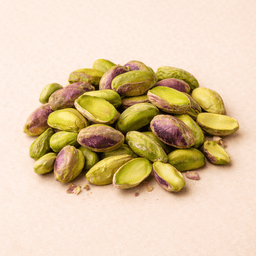
Pistachio Nuts
Green nuts with vitamin B6, potassium and unsaturated fats
What is this ingredient?
Pistachio nuts are the seeds of the pistachio tree (Pistacia vera), a crop with a history of more than 9,000 years in the Middle East and Central Asia. Archaeological finds show that pistachios were eaten as early as around 7000 BCE in areas around modern Turkey and Iran. In Persian, Arab and Mediterranean cuisines, they belong in festive sweets, rice dishes, nut mixes and aromatic desserts with rose water or cardamom.
## Green colour and carotenoids
The recognisable green colour comes from natural pigments such as chlorophyll and carotenoids. Pistachios contain lutein and zeaxanthin, two carotenoids also found in green leafy vegetables and often discussed in nutrition research in relation to the macula, the central part of the retina. A recent human study from 2024 examined daily pistachio intake of 43 g and reported higher macular pigment optical density (MPOD) measurements, a research marker related to macular pigment levels.
## Fatty acid profile, potassium and fibre
Per 100 g, pistachios provide about 20 g protein, 10 g fibre, 45 g fat and plenty of unsaturated fatty acids. They also contain potassium (1025 mg per 100 g) and magnesium (121 mg per 100 g). Potassium contributes to the maintenance of normal blood pressure, magnesium contributes to normal energy-yielding metabolism and vitamin E contributes to the protection of cells from oxidative stress. Pistachios also contain phytosterols, plant sterols often studied in nutrition research together with fatty acid profiles and blood lipid markers.
## Portion and culinary use
Because of their high energy density, pistachios are most practical in portions of about 30-40 g. In-shell pistachios slow down snacking because you open them one by one. In the kitchen they are versatile: raw as a topping, briefly roasted for a deeper nutty flavour, roughly chopped over salads or yoghurt, or ground into pistachio paste for baklava, ma'amoul, gelato and other Middle Eastern and Mediterranean preparations.
How does it taste?
Finely nutty, lightly sweet and grassy with an elegant, green flavour.
Pairs well with:
Pairs well with rose watercardamomhoneylemon and raspberry.
Did you know...?
- Pistachios are also called ‘green almonds’ and are botanically related to cashews and mangoes.
- According to a well-known legend, the Queen of Sheba had the pistachio harvest reserved for the royal court.
Nutritional Value & Energy
Per 100g
Pistachio Nuts provides energy thanks to natural nutrients , buffered by fiber.
Per 100g
Minerals
Vitamins
Omega-3 fatty acids
More nutrients
B-Vitamins
Trace Minerals
What's in a serving?
1 handful
Pistachio nuts naturally contain iron (3.9 mg per 100 g).
Pistachio nuts naturally contain magnesium (121 mg per 100 g).
Pistachio nuts naturally contain potassium (1025 mg per 100 g).
Pistachio nuts naturally contain vitamin e (2.3 mg per 100 g).
Pistachio nuts naturally contain zinc (2.2 mg per 100 g).
Pistachio nuts naturally contain folate (51 mcg per 100 g).
% of daily reference intake (DRI)
EU-approved nutrition claims
This ingredient contains nutrients for which EFSA-authorized health claims exist at nutrient level, not ingredient-specific level.
Approved health claims (EU)
Magnesium EU 432/2012
Magnesium contributes to normal muscle function
Contains 121mg/100g (threshold: ≥56.25mg/100g)
Magnesium EU 432/2012
Magnesium contributes to the reduction of tiredness and fatigue
Contains 121mg/100g (threshold: ≥56.25mg/100g)
Magnesium EU 432/2012
Magnesium contributes to normal functioning of the nervous system
Contains 121mg/100g (threshold: ≥56.25mg/100g)
Zinc EU 432/2012
Zinc contributes to the normal function of the immune system
Contains 2.2mg/100g (threshold: ≥1.5mg/100g)
Zinc EU 432/2012
Zinc contributes to the maintenance of normal skin
Contains 2.2mg/100g (threshold: ≥1.5mg/100g)
Iron EU 432/2012
Iron contributes to normal energy-yielding metabolism
Contains 3.9mg/100g (threshold: ≥2.1mg/100g)
Iron EU 432/2012
Iron contributes to the reduction of tiredness and fatigue
Contains 3.9mg/100g (threshold: ≥2.1mg/100g)
Potassium EU 432/2012
Potassium contributes to the maintenance of normal blood pressure
Contains 1025mg/100g (threshold: ≥300mg/100g)
Folate EU 432/2012
Folate contributes to normal blood formation
Contains 51mcg/100g (threshold: ≥30mcg/100g)
Folate EU 432/2012
Folate contributes to normal amino acid synthesis
Contains 51mcg/100g (threshold: ≥30mcg/100g)
Folate EU 432/2012
Folate contributes to normal homocysteine metabolism
Contains 51mcg/100g (threshold: ≥30mcg/100g)
Folate EU 432/2012
Folate contributes to normal psychological function
Contains 51mcg/100g (threshold: ≥30mcg/100g)
Folate EU 432/2012
Folate contributes to the normal function of the immune system
Contains 51mcg/100g (threshold: ≥30mcg/100g)
Folate EU 432/2012
Folate has a role in the process of cell division
Contains 51mcg/100g (threshold: ≥30mcg/100g)
Folate EU 432/2012
Folate contributes to maternal tissue growth during pregnancy
Contains 51mcg/100g (threshold: ≥30mcg/100g)
Vitamin_e EU 432/2012
Vitamin E contributes to the protection of cells from oxidative stress
Contains 2.3mg/100g (threshold: ≥1.8mg/100g)
Magnesium EU 432/2012
Magnesium contributes to normal energy-yielding metabolism
Contains 121mg/100g (threshold: ≥56.25mg/100g)
Magnesium EU 432/2012
Magnesium contributes to electrolyte balance
Contains 121mg/100g (threshold: ≥56.25mg/100g)
Magnesium EU 432/2012
Magnesium contributes to normal protein synthesis
Contains 121mg/100g (threshold: ≥56.25mg/100g)
Magnesium EU 432/2012
Magnesium contributes to normal psychological function
Contains 121mg/100g (threshold: ≥56.25mg/100g)
Magnesium EU 432/2012
Magnesium contributes to the maintenance of normal bones
Contains 121mg/100g (threshold: ≥56.25mg/100g)
Magnesium EU 432/2012
Magnesium contributes to the maintenance of normal teeth
Contains 121mg/100g (threshold: ≥56.25mg/100g)
Magnesium EU 432/2012
Magnesium has a role in the process of cell division
Contains 121mg/100g (threshold: ≥56.25mg/100g)
Iron EU 432/2012
Iron contributes to normal cognitive function
Contains 3.9mg/100g (threshold: ≥2.1mg/100g)
Iron EU 432/2012
Iron contributes to normal formation of red blood cells and haemoglobin
Contains 3.9mg/100g (threshold: ≥2.1mg/100g)
Iron EU 432/2012
Iron contributes to normal oxygen transport in the body
Contains 3.9mg/100g (threshold: ≥2.1mg/100g)
Iron EU 432/2012
Iron contributes to the normal function of the immune system
Contains 3.9mg/100g (threshold: ≥2.1mg/100g)
Iron EU 432/2012
Iron has a role in the process of cell division
Contains 3.9mg/100g (threshold: ≥2.1mg/100g)
Zinc EU 432/2012
Zinc contributes to normal acid-base metabolism
Contains 2.2mg/100g (threshold: ≥1.5mg/100g)
Zinc EU 432/2012
Zinc contributes to normal carbohydrate metabolism
Contains 2.2mg/100g (threshold: ≥1.5mg/100g)
Zinc EU 432/2012
Zinc contributes to normal cognitive function
Contains 2.2mg/100g (threshold: ≥1.5mg/100g)
Zinc EU 432/2012
Zinc contributes to normal DNA synthesis
Contains 2.2mg/100g (threshold: ≥1.5mg/100g)
Zinc EU 432/2012
Zinc contributes to normal fertility and reproduction
Contains 2.2mg/100g (threshold: ≥1.5mg/100g)
Zinc EU 432/2012
Zinc contributes to normal macronutrient metabolism
Contains 2.2mg/100g (threshold: ≥1.5mg/100g)
Zinc EU 432/2012
Zinc contributes to normal metabolism of fatty acids
Contains 2.2mg/100g (threshold: ≥1.5mg/100g)
Zinc EU 432/2012
Zinc contributes to normal metabolism of vitamin A
Contains 2.2mg/100g (threshold: ≥1.5mg/100g)
Zinc EU 432/2012
Zinc contributes to normal protein synthesis
Contains 2.2mg/100g (threshold: ≥1.5mg/100g)
Zinc EU 432/2012
Zinc contributes to the maintenance of normal bones
Contains 2.2mg/100g (threshold: ≥1.5mg/100g)
Zinc EU 432/2012
Zinc contributes to the maintenance of normal hair
Contains 2.2mg/100g (threshold: ≥1.5mg/100g)
Zinc EU 432/2012
Zinc contributes to the maintenance of normal nails
Contains 2.2mg/100g (threshold: ≥1.5mg/100g)
Zinc EU 432/2012
Zinc contributes to the maintenance of normal testosterone levels in the blood
Contains 2.2mg/100g (threshold: ≥1.5mg/100g)
Zinc EU 432/2012
Zinc contributes to the maintenance of normal vision
Contains 2.2mg/100g (threshold: ≥1.5mg/100g)
Zinc EU 432/2012
Zinc contributes to the protection of cells from oxidative stress
Contains 2.2mg/100g (threshold: ≥1.5mg/100g)
Zinc EU 432/2012
Zinc has a role in the process of cell division
Contains 2.2mg/100g (threshold: ≥1.5mg/100g)
Potassium EU 432/2012
Potassium contributes to normal functioning of the nervous system
Contains 1025mg/100g (threshold: ≥300mg/100g)
Potassium EU 432/2012
Potassium contributes to normal muscle function
Contains 1025mg/100g (threshold: ≥300mg/100g)
Comparison
vsbanaan
Pistachio nuts contain about 3× more potassium per 100 g than banana.
What's being researched?
Pistachios and lipid profile
Pistachios are studied in human nutrition research in relation to blood lipids, phytosterols and fatty acid profile. Meta-analyses of RCTs describe changes in total and LDL cholesterol markers with daily pistachio intake within a controlled dietary pattern.
Supported by: [6] West SG (2012) , [4] Asbaghi O (2020) , [1] Esmaeili Nadimi A (2020)
Pistachios and Blood Glucose Markers
Pistachios are examined in studies on glycemic markers such as fasting glucose, insulin and HbA1c, especially in participants with elevated metabolic risk. Results are usually assessed as part of an overall dietary pattern, not as an ingredient-specific treatment.
Supported by: [4] Asbaghi O (2020) , [7] Rock CL (2019) , [8] Fantino M (2019) , [1] Esmaeili Nadimi A (2020)
Good Combinations (Synergy)
Combine pistachio nuts smartly to enhance the effect:
Pistachio Nuts 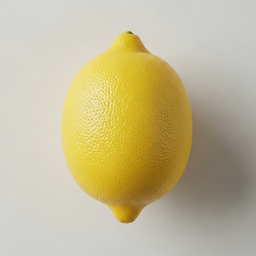 Lemon
Lemon Vitamin C protects γ-tocopherol and lutein in pistachios against oxidation
Ascorbic acid regenerates oxidized tocopherol via tocopheroxyl radical reduction (PMID: 29099763)
Technical: Pistachios contain γ-tocopherol (20.4mg/100g) and lutein (1205μg/100g) — both oxidation-sensitive. Ascorbic acid from lemon functions as primary antioxidant regenerating oxidized tocopherol (tocopheroxyl radical) to its active form. This 'tocopherol recycling' mechanism also protects lutein against co-oxidation. Additionally, vitamin C increases non-heme iron absorption from pistachios (3.9mg/100g).
What does this mean for you? Squeeze lemon over pistachios in salads or use lemon in pistachio dishes. The lemon juice protects vitamin E and lutein and helps you absorb more iron — triple benefit.
Pistachio Nuts 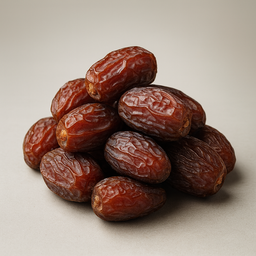 Dates
Dates B6 + tryptophan for sleep hormone production
Technical: Pistachios contain 1.7mg vitamin B6 per 100g (130% RDA) — the highest concentration of all nuts. B6 (pyridoxal phosphate) is the essential cofactor for aromatic amino acid decarboxylase, the enzyme converting tryptophan to serotonin, then melatonin. Dates provide tryptophan (a precursor) plus fast carbohydrates that raise insulin, allowing tryptophan to cross the blood-brain barrier more efficiently.
What does this mean for you? Eat a few dates with pistachios as an evening snack. The B6 from pistachios is literally needed to convert tryptophan from dates into melatonin. A Middle Eastern tradition with biochemical backing.
Pistachio Nuts 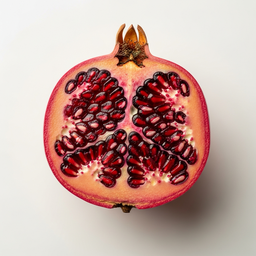 Pomegranate
 Complementary pathways via phytosterols and punicalagins for lipid metabolism
Technical: Pistachios contain phytosterols (214mg/100g) and pomegranate contains punicalagins (a unique polyphenol). These plant compounds are studied in research in connection with cholesterol absorption and LDL oxidation, via two complementary routes.
What does this mean for you? Combine pistachios and pomegranate seeds in a salad or as garnish on hummus. Two complementary pathways for lipid metabolism — popular in Persian cuisine, for good reason.
Recipes with Pistachio Nuts
Discover delicious recipes featuring pistachio nuts:
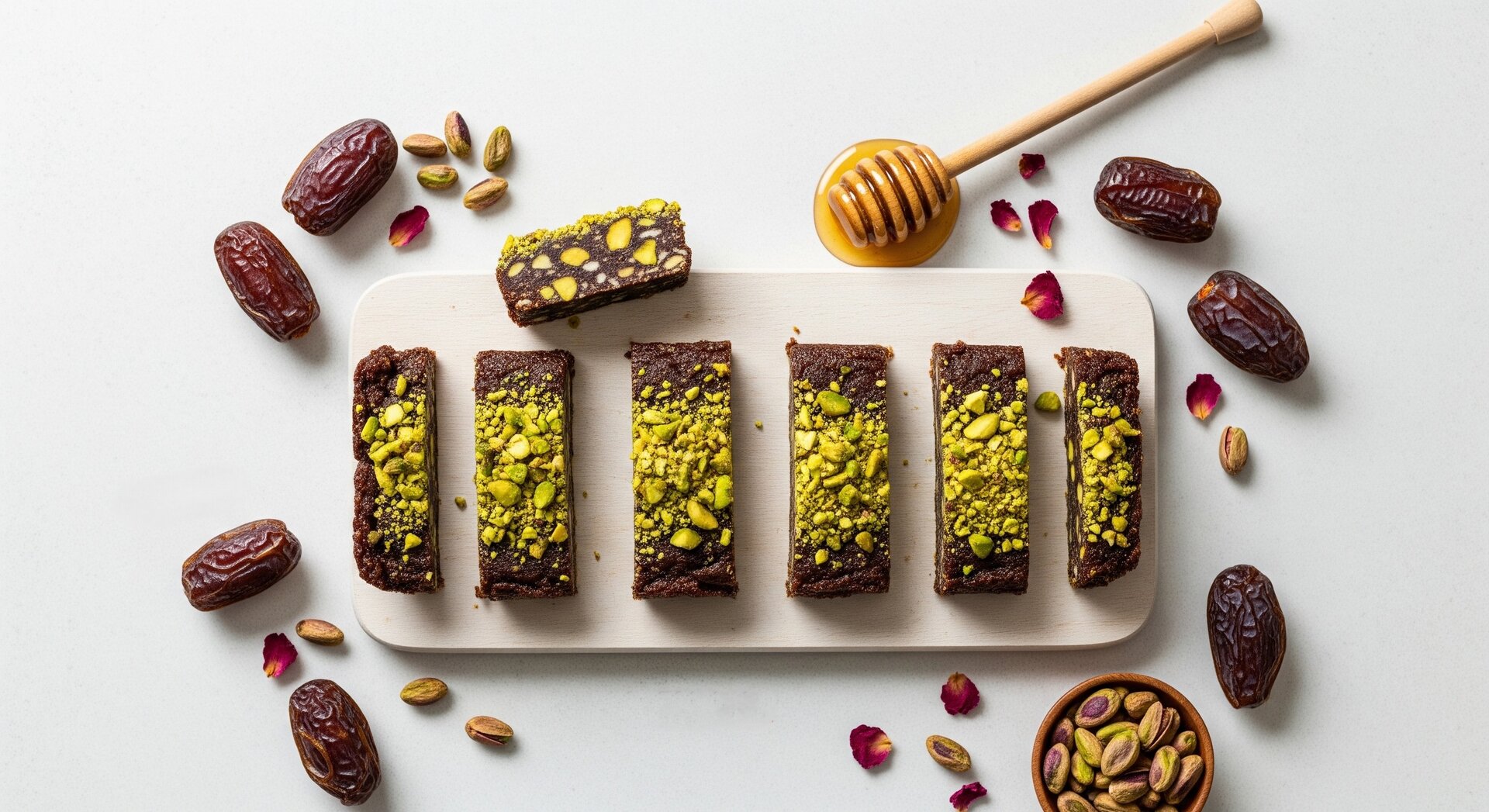 Baklava-Style Bars with Pistachio 135 min No-bake bars with pistachio, dates, honey and rose water
  133 kcal
  3g protein 1 synergies
 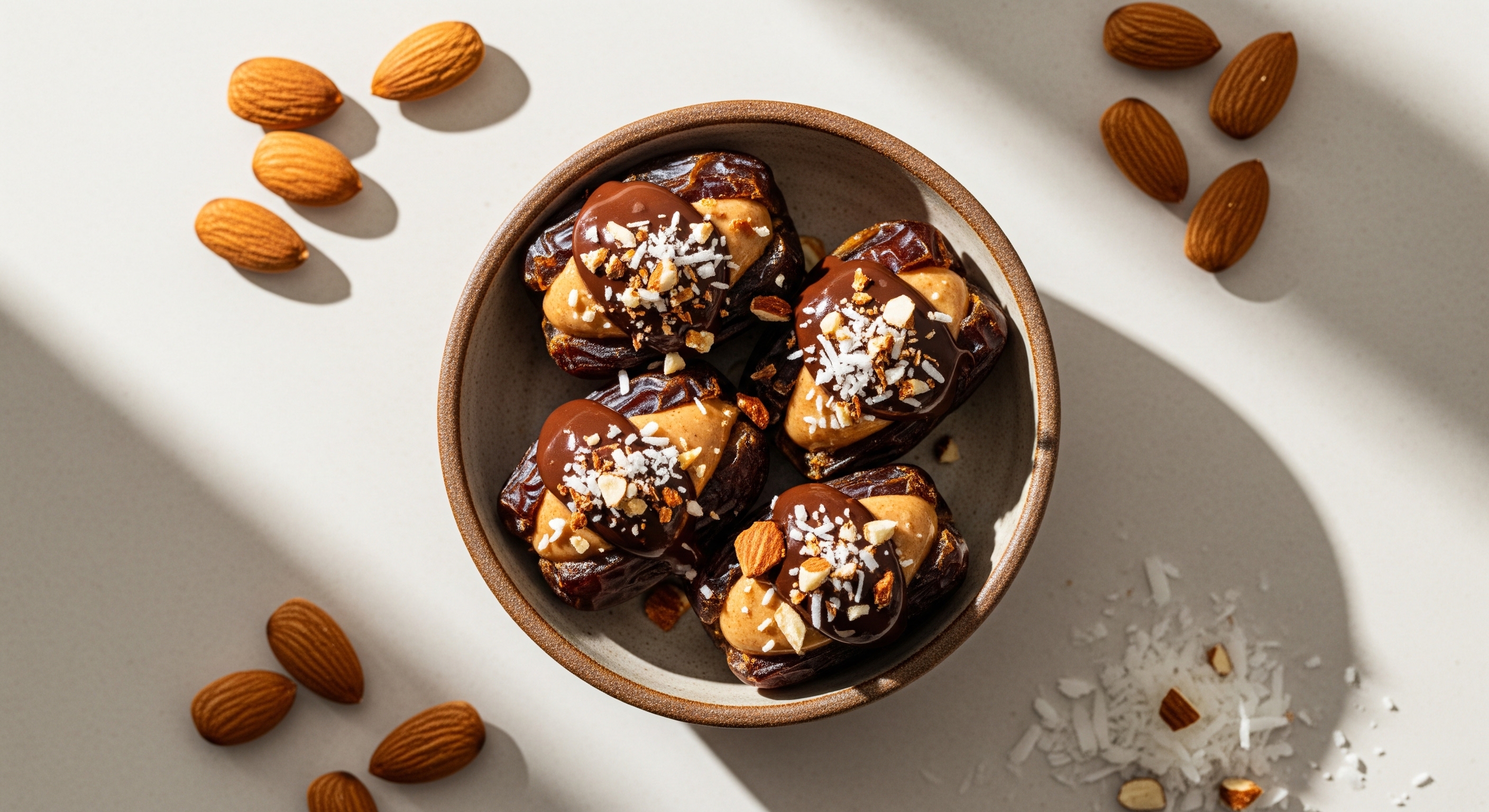 Stuffed Dates with Almond Butter & Dark Chocolate 15 min Medjool dates stuffed with almond butter, dipped in dark chocolate 482 kcal 10g protein 2 synergies
 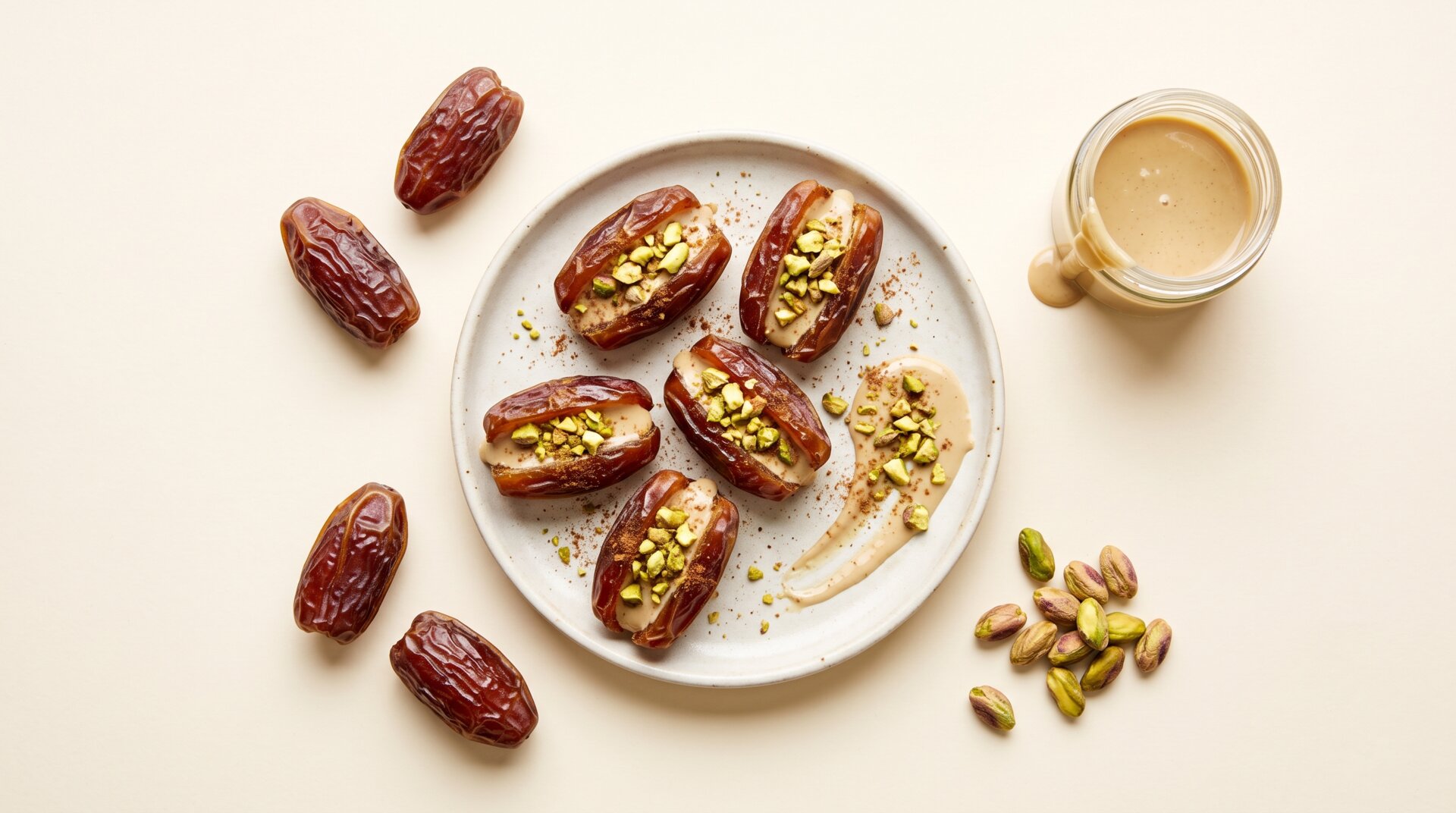 Stuffed Medjool Dates with Tahini Paste 10 min Creamy tahini and crunchy pistachios in sweet Medjool dates 413 kcal 8g protein 1 synergies
 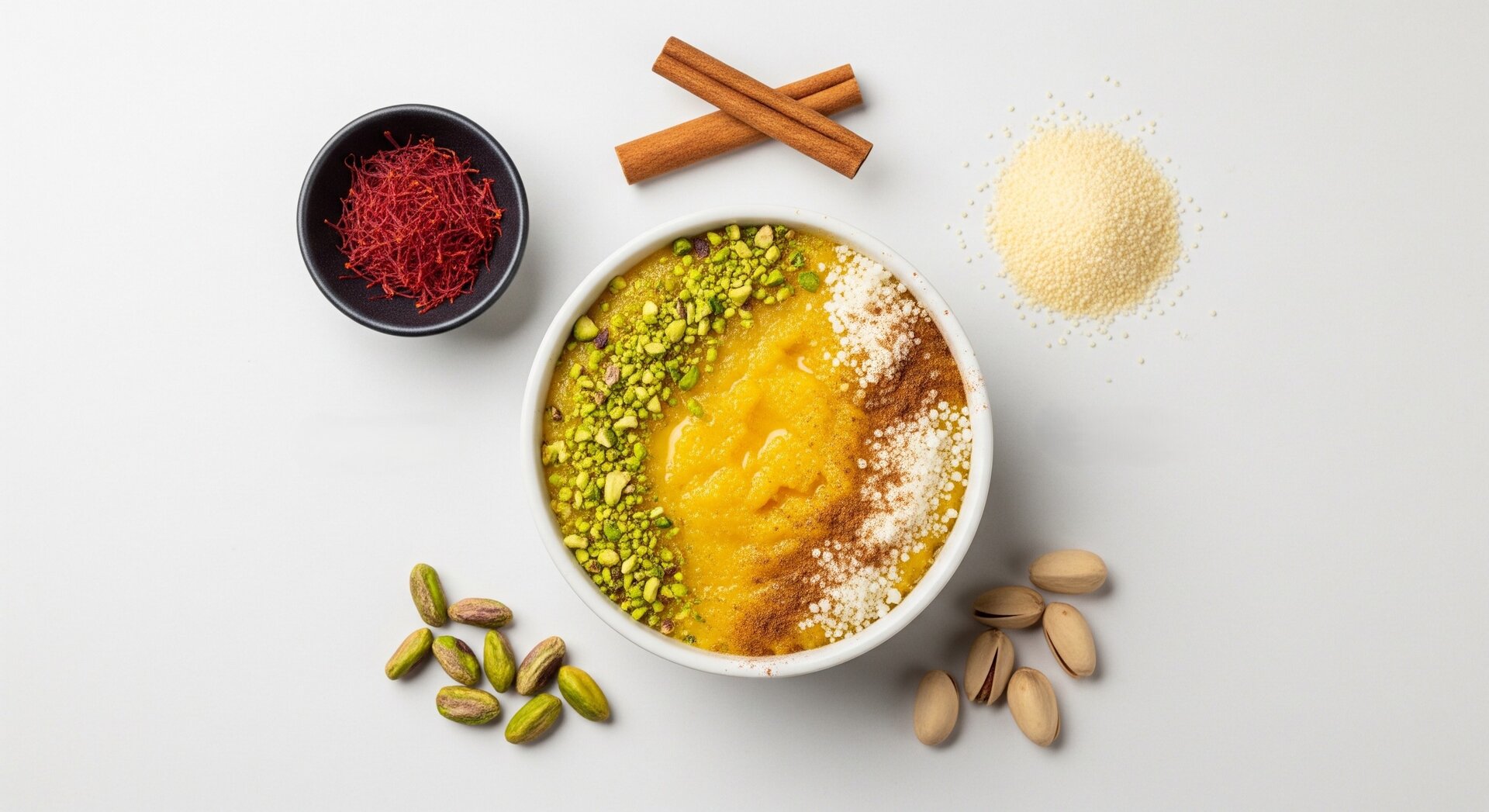 Halwa - Semolina Pudding with Saffron 35 min Creamy Turkish semolina pudding with saffron and pistachios 329 kcal 10g protein 2 synergies
 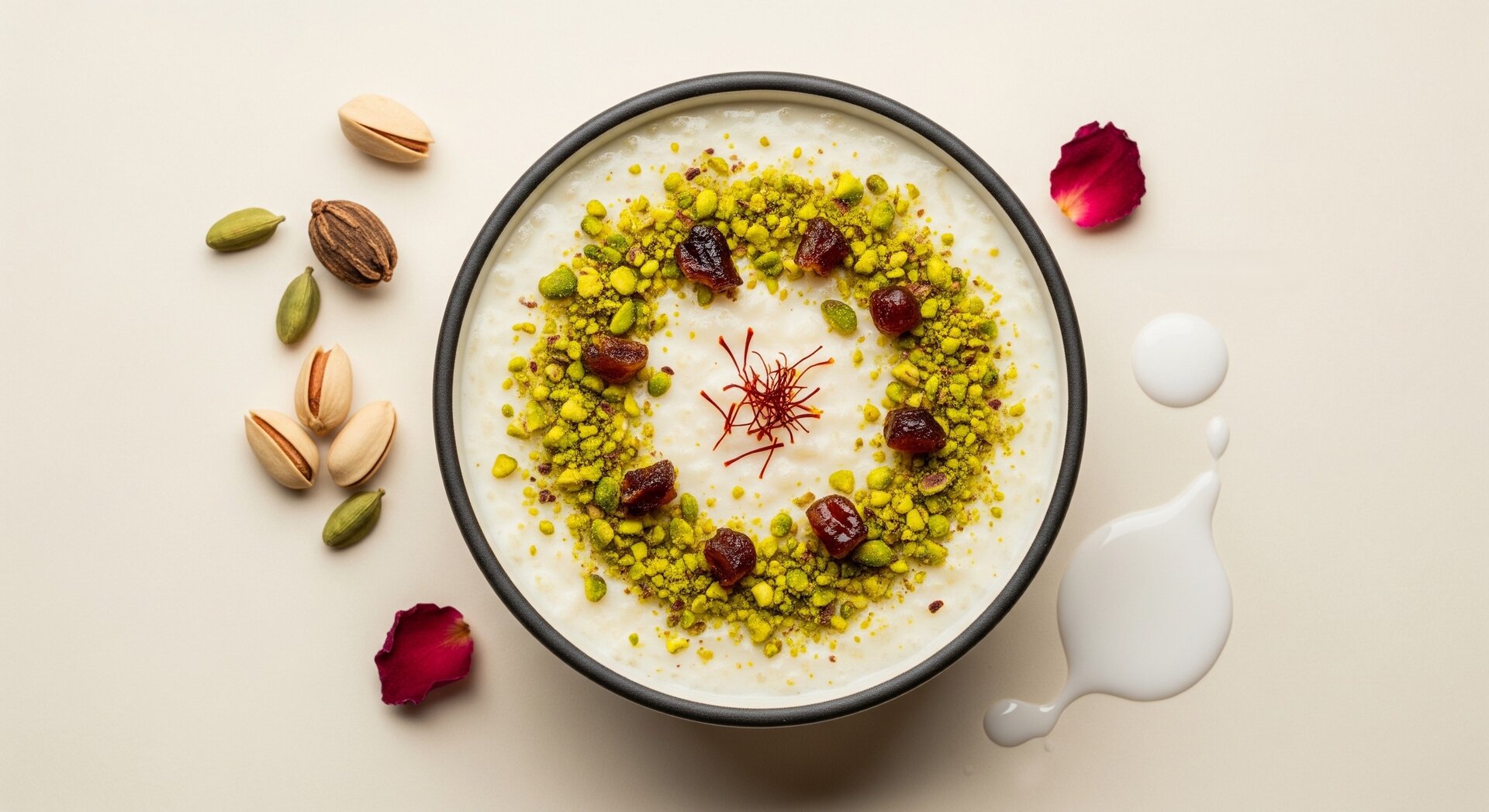 Coconut Kheer - Indian Rice Pudding with Cardamom 40 min Creamy vegan rice pudding with coconut milk, cardamom and saffron 323 kcal 5g protein 2 synergies
 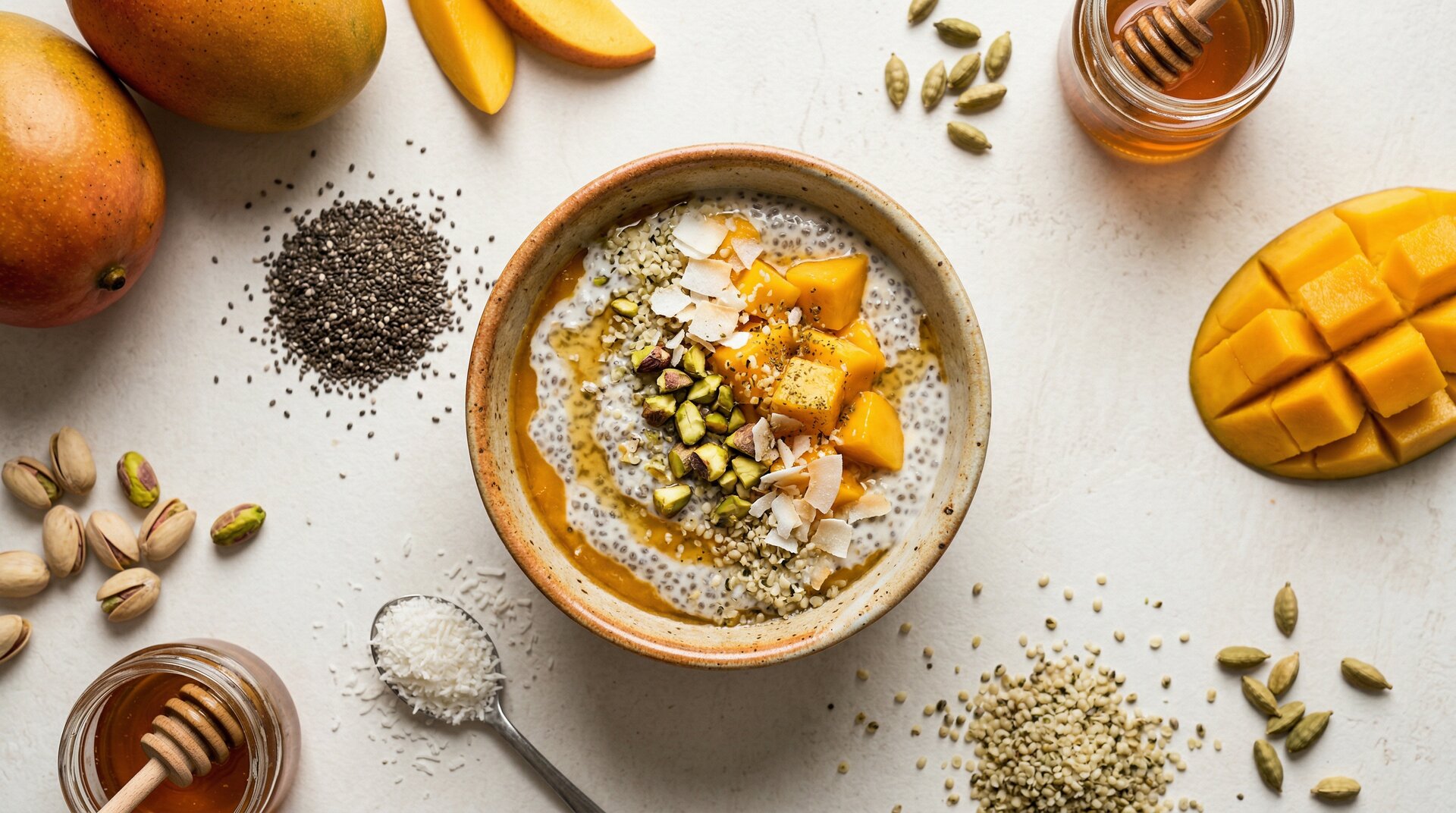 Coconut-Mango Chia Pudding with Pistachio 15 min Nutritious snack with ingredients that may contribute to digestive health and skin and hair 458 kcal 12g protein 2 synergies
  In the Kitchen
Storage
Location:Pantry
Shelf life:Ongepeld: 6-12 maanden op koele plaats. Gepeld: 3-6 maanden luchtdicht op kamertemperatuur, 12+ maanden in koelkast of vriezer.
Store in an airtight container, protected from light, heat and moisture. Refrigeration extends shelf life because fats oxidise more slowly. Freeze portions for longer storage. Discard if there is a rancid smell, bitter taste, visible mold or dark damp spots.
Preparation
Raw: straight from the shell as a snack or topping. Roasted: 160°C for 8-10 minutes for a deeper nutty flavour; watch closely because pistachios can darken quickly. Ground: blend into pistachio paste for desserts or chop roughly for texture. Works well in pesto, salads, granola, baklava, gelato and as a crust for fish or meat.
Substitutes
Smart preparation
1Use unsalted, unroasted pistachios for cooking and baking.
2Blanch pistachios for 1 minute to remove the purple skin more easily.
Why?
Without the skin, they keep a brighter green colour in desserts, sauces and toppings.
3Roughly chop pistachios with a knife instead of putting them straight into a blender.
Why?
Because of their fat content, a blender quickly turns them into paste; rough chopping gives more crunch.
Caution / Warnings
Pistachio Nuts is very safe, but there are scientific considerations:
Tree Nut Allergy Severe
Pistachios are tree nuts and can cause severe allergic reactions in sensitive people. Cross-reactivity with cashews and sometimes mango is possible because they belong to the same plant family.
Advice:
Avoid pistachios completely with a known pistachio or tree nut allergy. Read labels carefully and watch for cross-contamination. Follow the personal emergency plan provided by your doctor or allergist.
Kidney Stones (Oxalates) Moderate
Pistachios contain oxalates. In people with a history of calcium oxalate kidney stones, high intake of oxalate-rich foods can be relevant for personalised dietary advice.
Advice:
Discuss serving size with a doctor or dietitian if you have had calcium oxalate kidney stones before. Keep portions moderate, drink enough water and include pistachios within a varied eating pattern.
High Calorie Content Mild
Pistachios are energy-dense: a 30 g handful provides about 168 kcal. With mindless snacking, portions can quickly become larger than planned.
Advice:
Pre-portion 30-40 g into a small bowl. Choose unsalted pistachios and use them as part of a meal or planned snack, not as an unlimited extra.
FODMAP Sensitivity Mild
Pistachios contain fructans, a type of FODMAP. In some people with irritable bowel syndrome or FODMAP sensitivity, larger portions can cause digestive discomfort.
Advice:
Keep portions small if you are FODMAP-sensitive and follow your dietitian’s advice during an elimination or reintroduction phase.
Traditional use
Islamic tradition
Pistachio in Persian Tradition
Pistachios have been cultivated in Persia for more than 3,000 years and are linked in Persian and Arab food culture with hospitality, festive desserts and luxurious nut mixes.
Mediterranean
Pistachio in the Mediterranean
Pistachios spread in antiquity through trade routes such as the Silk Road and became a beloved ingredient in Roman, Byzantine, Ottoman and Mediterranean cuisines.
Summary
Pistachios are green nuts with vitamin B6, potassium, fibre, unsaturated fats and carotenoids such as lutein and zeaxanthin. They fit well in Middle Eastern and Mediterranean dishes, from baklava and ma’amoul to pesto, yoghurt and salads. A practical serving is 30-40 g, preferably unsalted and optionally in-shell for slower snacking.