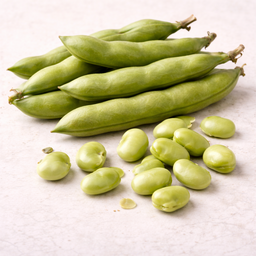
Fava Beans
L-DOPA-rich protein bean
What is this ingredient?
Fava beans (Vicia faba) are classic Mediterranean legumes with a fresh, slightly buttery flavour. They provide plant protein, fibre, folate, potassium and vitamin C.
## L-DOPA in food
Fava beans naturally contain L-DOPA, a compound discussed in research as a precursor to dopamine. The amount can vary widely by variety, portion and preparation. Treat this as nutritional context, not as a medical or ingredient-specific health claim.
## In the kitchen
Fresh fava beans are often boiled briefly and then optionally double-peeled for a softer texture. They pair well with mint, lemon, olive oil, feta and Mediterranean herbs.
## Important warning
With G6PD deficiency (favism), fava beans should be avoided because vicine and convicine can trigger haemolytic reactions. If you use MAO inhibitors or dopamine-related medication, consult a doctor before using fava beans regularly.
How does it taste?
Fresh, slightly bittersweet and grassy with a creamy, buttery texture.
Pairs well with:
Pairs well with pecorinomintlemongarlic and dill.
Did you know...?
- Romans used fava beans in elections: white beans for 'yes' and dark ones for 'no'.
- According to tradition, Pythagoras forbade his followers from eating fava beans, possibly because of ancient cultural ideas around this bean.
Nutritional Value & Energy
Per 100g
Fava Beans provides energy thanks to natural nutrients , buffered by fiber.
Per 100g
Minerals
Vitamins
Omega-3 fatty acids
More nutrients
Trace Minerals
What's in a serving?
1 serving (dry)
Fava beans naturally contain folate (148 mcg per 100 g).
Fava beans naturally contain potassium (332 mg per 100 g).
Fava beans naturally contain vitamin C (19 mg per 100 g).
% of daily reference intake (DRI)
EU-approved nutrition claims
This ingredient contains nutrients for which EFSA-authorized health claims exist (at nutrient level, not ingredient-specific).
Approved health claims (EU)
Vitamin_c EU 432/2012
Vitamin C contributes to the normal function of the immune system
Contains 19mg/100g (threshold: ≥12mg/100g)
Vitamin_c EU 432/2012
Vitamin C contributes to the reduction of tiredness and fatigue
Contains 19mg/100g (threshold: ≥12mg/100g)
Vitamin_c EU 432/2012
Vitamin C contributes to normal collagen formation for the normal function of skin
Contains 19mg/100g (threshold: ≥12mg/100g)
Potassium EU 432/2012
Potassium contributes to the maintenance of normal blood pressure
Contains 332mg/100g (threshold: ≥300mg/100g)
Folate EU 432/2012
Folate contributes to normal blood formation
Contains 148mcg/100g (threshold: ≥30mcg/100g)
Folate EU 432/2012
Folate contributes to normal amino acid synthesis
Contains 148mcg/100g (threshold: ≥30mcg/100g)
Folate EU 432/2012
Folate contributes to normal homocysteine metabolism
Contains 148mcg/100g (threshold: ≥30mcg/100g)
Folate EU 432/2012
Folate contributes to normal psychological function
Contains 148mcg/100g (threshold: ≥30mcg/100g)
Folate EU 432/2012
Folate contributes to the normal function of the immune system
Contains 148mcg/100g (threshold: ≥30mcg/100g)
Folate EU 432/2012
Folate has a role in the process of cell division
Contains 148mcg/100g (threshold: ≥30mcg/100g)
Folate EU 432/2012
Folate contributes to maternal tissue growth during pregnancy
Contains 148mcg/100g (threshold: ≥30mcg/100g)
Vitamin_c EU 432/2012
Vitamin C contributes to normal collagen formation for the normal function of blood vessels
Contains 19mg/100g (threshold: ≥12mg/100g)
Vitamin_c EU 432/2012
Vitamin C contributes to normal collagen formation for the normal function of bones
Contains 19mg/100g (threshold: ≥12mg/100g)
Vitamin_c EU 432/2012
Vitamin C contributes to normal collagen formation for the normal function of cartilage
Contains 19mg/100g (threshold: ≥12mg/100g)
Vitamin_c EU 432/2012
Vitamin C contributes to normal collagen formation for the normal function of gums
Contains 19mg/100g (threshold: ≥12mg/100g)
Vitamin_c EU 432/2012
Vitamin C contributes to normal collagen formation for the normal function of teeth
Contains 19mg/100g (threshold: ≥12mg/100g)
Vitamin_c EU 432/2012
Vitamin C contributes to normal energy-yielding metabolism
Contains 19mg/100g (threshold: ≥12mg/100g)
Vitamin_c EU 432/2012
Vitamin C contributes to normal functioning of the nervous system
Contains 19mg/100g (threshold: ≥12mg/100g)
Vitamin_c EU 432/2012
Vitamin C contributes to normal psychological function
Contains 19mg/100g (threshold: ≥12mg/100g)
Vitamin_c EU 432/2012
Vitamin C contributes to the protection of cells from oxidative stress
Contains 19mg/100g (threshold: ≥12mg/100g)
Vitamin_c EU 432/2012
Vitamin C contributes to the regeneration of the reduced form of vitamin E
Contains 19mg/100g (threshold: ≥12mg/100g)
Vitamin_c EU 432/2012
Vitamin C increases iron absorption
Contains 19mg/100g (threshold: ≥12mg/100g)
Vitamin_c EU 432/2012
Vitamin C contributes to maintain the normal function of the immune system during and after intense physical exercise
Contains 19mg/100g (threshold: ≥12mg/100g)
Potassium EU 432/2012
Potassium contributes to normal functioning of the nervous system
Contains 332mg/100g (threshold: ≥300mg/100g)
Potassium EU 432/2012
Potassium contributes to normal muscle function
Contains 332mg/100g (threshold: ≥300mg/100g)
What's being researched?
Fava beans and L-DOPA
The natural L-DOPA content of fava beans is studied in small clinical and nutritional studies. The amount of L-DOPA in food is not standardised, so findings should not be read as an ingredient-specific health claim.
Supported by: [1] Rabey JM (1992)
Fava beans and meal markers
Fava beans are examined within broader legume research, partly because of their fibre and protein content. Such studies usually focus on whole dietary patterns or controlled meals, not on a standalone effect of one ingredient.
Supported by: [2] Jenkins DJA (2012)
Good Combinations (Synergy)
Combine fava beans smartly to enhance the effect:
Fava Beans 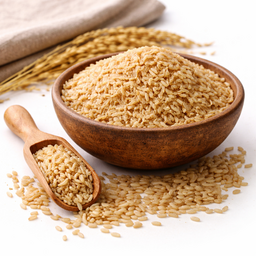 Brown Rice
 Complete protein source through amino acid complementation
Technical: Fava beans are rich in lysine but low in methionine. Rice is the opposite. Together they form complete protein with all 9 essential amino acids.
What does this mean for you? Serve fava beans with rice (classic in Persian and Egyptian cuisine). Vegetarian complete protein source.
Fava Beans 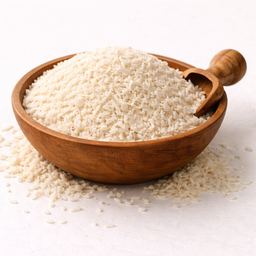 Rice
Rice Complete protein source through amino acid complementation
Technical: Fava beans are rich in lysine but low in methionine. Rice is the opposite. Together they form complete protein with all 9 essential amino acids.
What does this mean for you? Serve fava beans with rice (classic in Persian and Egyptian cuisine). Vegetarian complete protein source.
Fava Beans 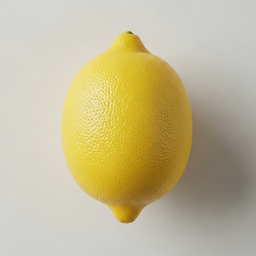 Lemon
Lemon Vitamin C increases iron absorption from fava beans up to 6x
Technical: Fava beans contain 1.7mg iron per 100g (cooked). Lemon (53mg vitamin C) reduces Fe³⁺ to Fe²⁺ and forms chelates that bypass phytate inhibition.
What does this mean for you? Sprinkle fava beans with lemon juice or serve with lemon wedges. Classic in Mediterranean and Middle Eastern dishes.
Fava Beans 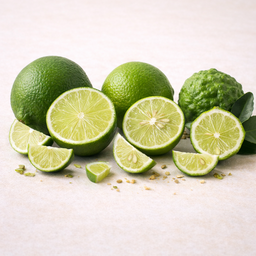 Lime
Lime Vitamin C increases iron absorption from fava beans up to 6x
Technical: Fava beans contain 1.7mg iron per 100g (cooked). Lemon (53mg vitamin C) reduces Fe³⁺ to Fe²⁺ and forms chelates that bypass phytate inhibition.
What does this mean for you? Sprinkle fava beans with lemon juice or serve with lemon wedges. Classic in Mediterranean and Middle Eastern dishes.
Fava Beans 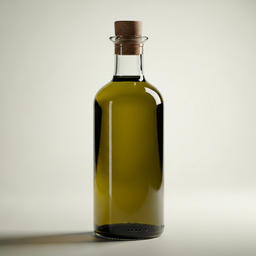 Olive Oil
 Fat increases absorption of fat-soluble vitamins from fava beans
Technical: Fava beans contain L-DOPA (dopamine precursor) and folate (B9). Olive oil's fats improve absorption of fat-soluble nutrients and protect L-DOPA from oxidation.
What does this mean for you? Serve fava beans with olive oil (classic in foul medames). The oil maximizes nutrient absorption.
Recipes with Fava Beans
Discover delicious recipes featuring fava beans:
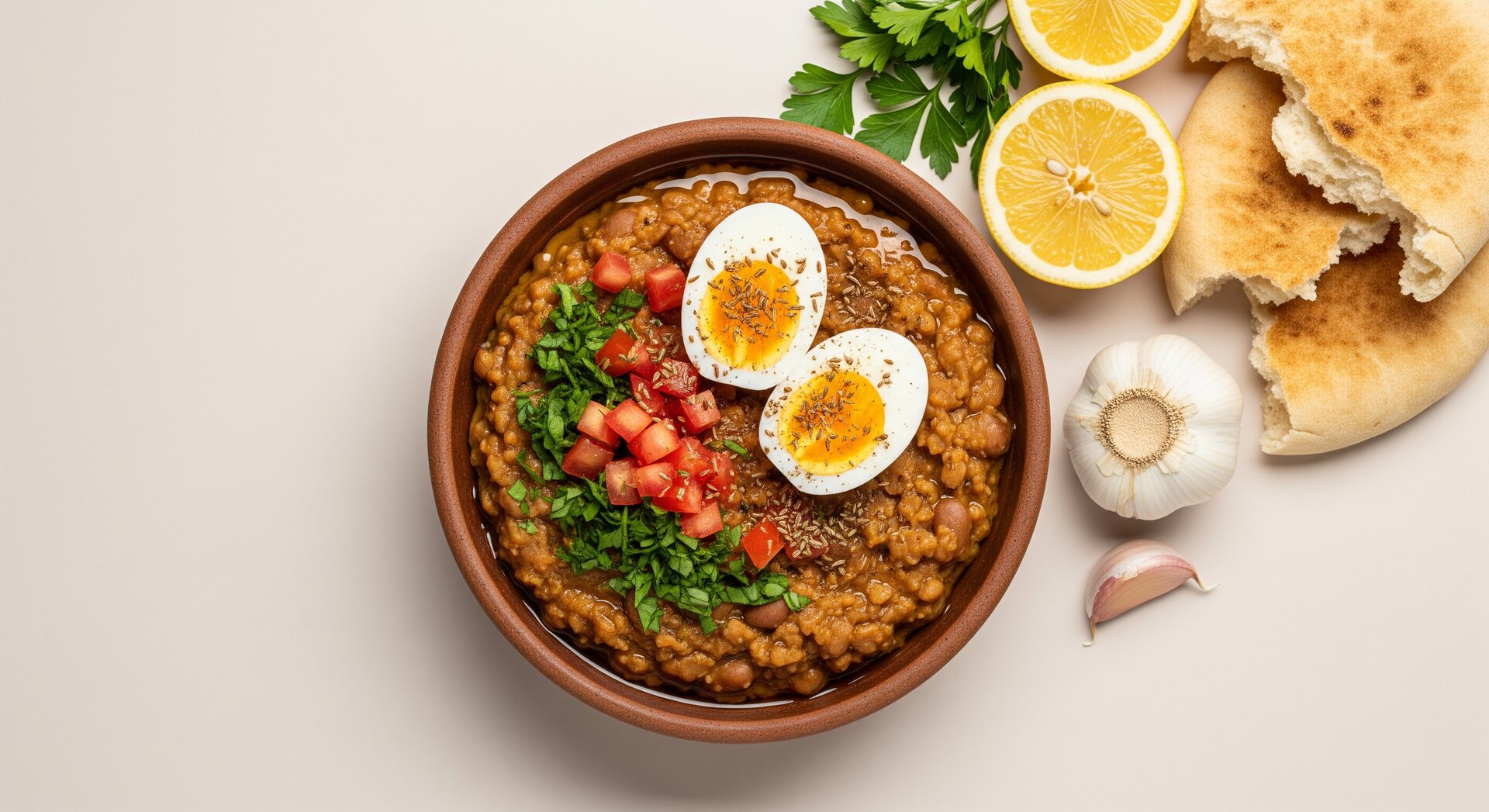 Egyptian Ful Medames 25 min Spiced fava bean mash with garlic and cumin
  420 kcal
  22g protein 1 synergies
 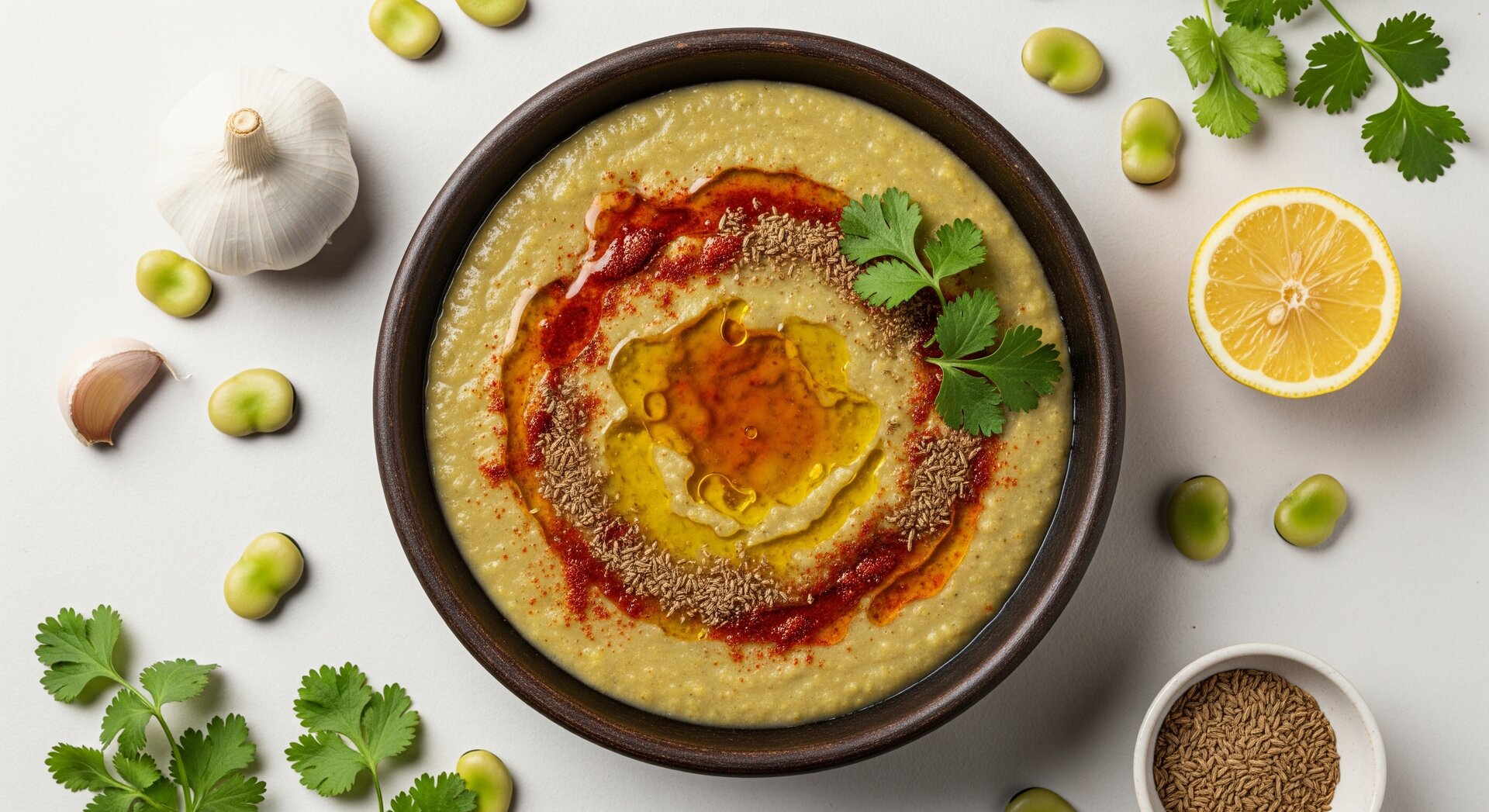 Moroccan Bessara with Fava Beans 70 min Traditional Moroccan fava bean soup with cumin, garlic, lemon and olive oil 355 kcal 16g protein 3 synergies
 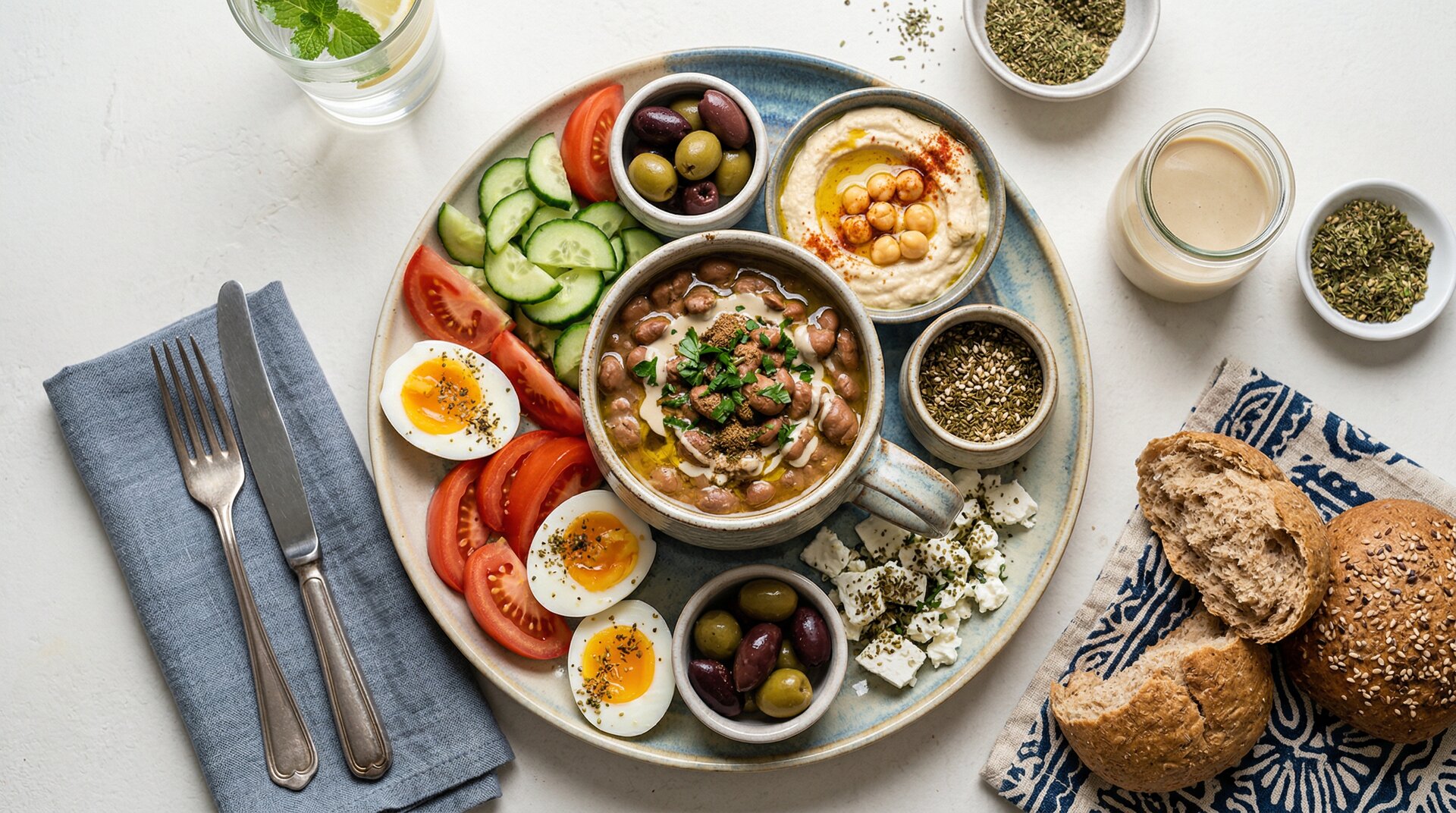 Middle Eastern Breakfast Platter (Ful Medames, Hummus & Za'atar) 30 min Colorful sharing breakfast with spiced fava beans, creamy hummus and fresh vegetables 768 kcal 31g protein 2 synergies
  In the Kitchen
Storage
Location:Refrigerator
Shelf life:3-5 dagen
Store fresh fava beans in their pods and shell them just before use.
Preparation
Boil for 3-5 minutes, chill, and optionally double-peel by removing the outer skin.
Conversions
Substitutes
Smart preparation
1Soak dried fava beans overnight in plenty of water.
2Remove the grey skin after cooking for a nicer colour.
Why?
The skin is tough and makes the bean less appealing.
3Shock cooked fava beans in ice water; the skin then peels off more easily.
Caution / Warnings
Fava Beans is very safe, but there are scientific considerations:
G6PD deficiency (favism) Severe
Vicine and convicine in fava beans can trigger severe haemolytic reactions in G6PD deficiency.
Advice:
Avoid fava beans completely with G6PD deficiency. Consult a doctor if in doubt or if symptoms occur after exposure.
MAO inhibitors Moderate
Fava beans naturally contain L-DOPA; this may be relevant when using MAO inhibitors or dopamine-related medication.
Advice:
Consult a doctor or pharmacist before eating fava beans regularly when using this medication.
Traditional use
Mediterranean
Ancient Egyptian and Roman staple
Fava beans have been cultivated for over 6000 years and were a staple in ancient Egypt and Rome. Romans also used them in voting and rituals.
Summary
Fava beans are protein- and fibre-rich legumes with a fresh, creamy flavour. They work well in Mediterranean dishes with mint, lemon, olive oil and feta. They provide folate, potassium and vitamin C, among other nutrients. Important: avoid fava beans completely with G6PD deficiency.