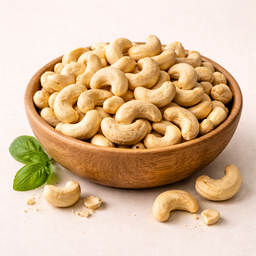
Cashew nuts
Soft tropical nut
What is this ingredient?
Cashew nuts are the kidney-shaped seeds of the cashew apple (Anacardium occidentale), a tropical tree originally from Northeast Brazil and now grown mainly in warm regions. What makes cashew unusual is that the nut grows outside the fruit, attached to the bottom of the cashew apple. The hard shell contains urushiol, an irritating compound also known from poison ivy, so cashews are shelled and heat-treated before they reach shops. Their soft, creamy bite comes from the combination of fats, starch and relatively low fibre compared with many other nuts. Per 100 g, cashews naturally contain copper (2.2 mg), iron (6.7 mg), zinc (5.8 mg), magnesium (292 mg), selenium (19.9 µg) and vitamin K (34.1 µg). In the kitchen, they are loved for vegan cream, cashew sauce, curries, no-bake tart bases, nut butter and crunchy toppings. Soaking makes them easier to blend smoothly; light roasting gives more aroma and a deeper nutty flavour.
How does it taste?
Soft, buttery and lightly sweet with a creamy, mild flavour.
Pairs well with:
Pairs well with coconutgingerlimechili and cilantro.
Did you know...?
- Cashews grow at the bottom of the cashew apple, a fruit popular in Brazil as juice.
- Cashews are always sold shelled because the shell contains urushiol, the same irritant found in poison ivy.
Nutritional Value & Energy
Per 100g
Cashew nuts provides energy thanks to natural nutrients , buffered by fiber.
Per 100g
Minerals
Vitamins
Omega-3 fatty acids
More nutrients
B-Vitamins
Trace Minerals
What's in a serving?
1 handful
Cashews naturally contain iron (6.7 mg per 100 g).
Cashews naturally contain magnesium (292 mg per 100 g).
Cashews naturally contain potassium (660 mg per 100 g).
Cashews naturally contain selenium (19.9 µg per 100 g).
Cashews naturally contain vitamin K (34.1 µg per 100 g).
Cashews naturally contain zinc (5.8 mg per 100 g).
% of daily reference intake (DRI)
EU-approved nutrition claims
This ingredient contains nutrients for which EFSA-authorized health claims exist (at nutrient level, not ingredient-specific).
Approved health claims (EU)
Magnesium EU 432/2012
Magnesium contributes to normal muscle function
Contains 292mg/100g (threshold: ≥56.25mg/100g)
Magnesium EU 432/2012
Magnesium contributes to the reduction of tiredness and fatigue
Contains 292mg/100g (threshold: ≥56.25mg/100g)
Magnesium EU 432/2012
Magnesium contributes to normal functioning of the nervous system
Contains 292mg/100g (threshold: ≥56.25mg/100g)
Zinc EU 432/2012
Zinc contributes to the normal function of the immune system
Contains 5.8mg/100g (threshold: ≥1.5mg/100g)
Zinc EU 432/2012
Zinc contributes to the maintenance of normal skin
Contains 5.8mg/100g (threshold: ≥1.5mg/100g)
Iron EU 432/2012
Iron contributes to normal energy-yielding metabolism
Contains 6.7mg/100g (threshold: ≥2.1mg/100g)
Iron EU 432/2012
Iron contributes to the reduction of tiredness and fatigue
Contains 6.7mg/100g (threshold: ≥2.1mg/100g)
Potassium EU 432/2012
Potassium contributes to the maintenance of normal blood pressure
Contains 660mg/100g (threshold: ≥300mg/100g)
Vitamin_k EU 432/2012
Vitamin K contributes to normal blood clotting
Contains 34.1mcg/100g (threshold: ≥11.25mcg/100g)
Vitamin_k EU 432/2012
Vitamin K contributes to the maintenance of normal bones
Contains 34.1mcg/100g (threshold: ≥11.25mcg/100g)
Magnesium EU 432/2012
Magnesium contributes to normal energy-yielding metabolism
Contains 292mg/100g (threshold: ≥56.25mg/100g)
Magnesium EU 432/2012
Magnesium contributes to electrolyte balance
Contains 292mg/100g (threshold: ≥56.25mg/100g)
Magnesium EU 432/2012
Magnesium contributes to normal protein synthesis
Contains 292mg/100g (threshold: ≥56.25mg/100g)
Magnesium EU 432/2012
Magnesium contributes to normal psychological function
Contains 292mg/100g (threshold: ≥56.25mg/100g)
Magnesium EU 432/2012
Magnesium contributes to the maintenance of normal bones
Contains 292mg/100g (threshold: ≥56.25mg/100g)
Magnesium EU 432/2012
Magnesium contributes to the maintenance of normal teeth
Contains 292mg/100g (threshold: ≥56.25mg/100g)
Magnesium EU 432/2012
Magnesium has a role in the process of cell division
Contains 292mg/100g (threshold: ≥56.25mg/100g)
Iron EU 432/2012
Iron contributes to normal cognitive function
Contains 6.7mg/100g (threshold: ≥2.1mg/100g)
Iron EU 432/2012
Iron contributes to normal formation of red blood cells and haemoglobin
Contains 6.7mg/100g (threshold: ≥2.1mg/100g)
Iron EU 432/2012
Iron contributes to normal oxygen transport in the body
Contains 6.7mg/100g (threshold: ≥2.1mg/100g)
Iron EU 432/2012
Iron contributes to the normal function of the immune system
Contains 6.7mg/100g (threshold: ≥2.1mg/100g)
Iron EU 432/2012
Iron has a role in the process of cell division
Contains 6.7mg/100g (threshold: ≥2.1mg/100g)
Zinc EU 432/2012
Zinc contributes to normal acid-base metabolism
Contains 5.8mg/100g (threshold: ≥1.5mg/100g)
Zinc EU 432/2012
Zinc contributes to normal carbohydrate metabolism
Contains 5.8mg/100g (threshold: ≥1.5mg/100g)
Zinc EU 432/2012
Zinc contributes to normal cognitive function
Contains 5.8mg/100g (threshold: ≥1.5mg/100g)
Zinc EU 432/2012
Zinc contributes to normal DNA synthesis
Contains 5.8mg/100g (threshold: ≥1.5mg/100g)
Zinc EU 432/2012
Zinc contributes to normal fertility and reproduction
Contains 5.8mg/100g (threshold: ≥1.5mg/100g)
Zinc EU 432/2012
Zinc contributes to normal macronutrient metabolism
Contains 5.8mg/100g (threshold: ≥1.5mg/100g)
Zinc EU 432/2012
Zinc contributes to normal metabolism of fatty acids
Contains 5.8mg/100g (threshold: ≥1.5mg/100g)
Zinc EU 432/2012
Zinc contributes to normal metabolism of vitamin A
Contains 5.8mg/100g (threshold: ≥1.5mg/100g)
Zinc EU 432/2012
Zinc contributes to normal protein synthesis
Contains 5.8mg/100g (threshold: ≥1.5mg/100g)
Zinc EU 432/2012
Zinc contributes to the maintenance of normal bones
Contains 5.8mg/100g (threshold: ≥1.5mg/100g)
Zinc EU 432/2012
Zinc contributes to the maintenance of normal hair
Contains 5.8mg/100g (threshold: ≥1.5mg/100g)
Zinc EU 432/2012
Zinc contributes to the maintenance of normal nails
Contains 5.8mg/100g (threshold: ≥1.5mg/100g)
Zinc EU 432/2012
Zinc contributes to the maintenance of normal testosterone levels in the blood
Contains 5.8mg/100g (threshold: ≥1.5mg/100g)
Zinc EU 432/2012
Zinc contributes to the maintenance of normal vision
Contains 5.8mg/100g (threshold: ≥1.5mg/100g)
Zinc EU 432/2012
Zinc contributes to the protection of cells from oxidative stress
Contains 5.8mg/100g (threshold: ≥1.5mg/100g)
Zinc EU 432/2012
Zinc has a role in the process of cell division
Contains 5.8mg/100g (threshold: ≥1.5mg/100g)
Selenium EU 432/2012
Selenium contributes to the maintenance of normal hair
Contains 19.9mcg/100g (threshold: ≥8.25mcg/100g)
Selenium EU 432/2012
Selenium contributes to the maintenance of normal nails
Contains 19.9mcg/100g (threshold: ≥8.25mcg/100g)
Selenium EU 432/2012
Selenium contributes to the normal function of the immune system
Contains 19.9mcg/100g (threshold: ≥8.25mcg/100g)
Selenium EU 432/2012
Selenium contributes to normal thyroid function
Contains 19.9mcg/100g (threshold: ≥8.25mcg/100g)
Selenium EU 432/2012
Selenium contributes to normal spermatogenesis
Contains 19.9mcg/100g (threshold: ≥8.25mcg/100g)
Selenium EU 432/2012
Selenium contributes to the protection of cells from oxidative stress
Contains 19.9mcg/100g (threshold: ≥8.25mcg/100g)
Potassium EU 432/2012
Potassium contributes to normal functioning of the nervous system
Contains 660mg/100g (threshold: ≥300mg/100g)
Potassium EU 432/2012
Potassium contributes to normal muscle function
Contains 660mg/100g (threshold: ≥300mg/100g)
Comparison
vsspinazie
Cashews contain about 2× more iron per 100 g than spinach.
vsbanaan
Cashews contain about 2× more potassium per 100 g than banana.
What's being researched?
Cashews and blood lipids
Research on cashews and blood lipids looks at factors such as their fatty acid profile, including oleic and stearic acid, and how cashew portions fit within controlled dietary patterns. Results are usually interpreted at study-diet and nutrient level, not as a stand-alone ingredient claim.
Supported by: [7] Mah (2017)
Cashews and magnesium
Cashews naturally provide magnesium, a mineral with several EU-authorized claims at nutrient level. Research on magnesium often examines total magnesium intake within complete dietary patterns, so results are not attributed one-to-one to cashews alone.
Supported by: [4] Mooren FC (2015) , [3] Adetola OY (2023)
Good Combinations (Synergy)
Combine cashew nuts smartly to enhance the effect:
Cashew nuts 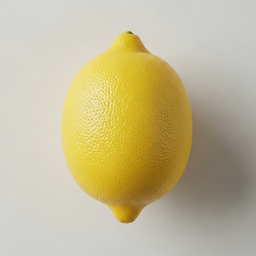 Lemon
Lemon Vitamin C increases iron absorption from cashew nuts up to 6x
Technical: Cashew nuts are a good plant-based source of non-heme iron (6.7mg/100g). Lemon's vitamin C reduces Fe³⁺ to Fe²⁺ in the gut, increasing non-heme iron bioavailability up to 6x. This is especially important in plant-based eating.
What does this mean for you? Add lemon juice to dishes with cashew nuts — it helps your body absorb much more iron, especially important in a plant-based diet.
Cashew nuts 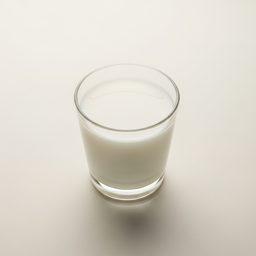 Coconut Milk
 Magnesium + MCTs for improved mineral absorption
Technical: Cashews contain 292mg magnesium and 593mg phosphorus per 100g. Coconut milk contains MCTs that are quickly absorbed and serve as transport for fat-soluble compounds. The fat content also improves mineral absorption from cashews.
What does this mean for you? Use cashews in curries with coconut milk or make cashew-coconut smoothies. Classic combination in Indian and Thai cuisine.
Cashew nuts 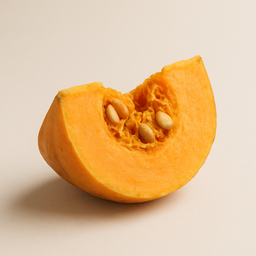 Pumpkin
 Double zinc dose: cofactor for 300+ enzymes
Technical: Cashew nuts contain 5.8mg zinc per 100g (39% RDA). Pumpkin seeds (pepitas) are a top source with 7.6mg zinc (51% RDA). Together they provide 6-13mg zinc depending on portion. Zinc is cofactor for 300+ enzymes, including those involved in T-cell activation, antibody production and collagen synthesis. Zinc contributes to the normal function of the immune system (EFSA). Plant zinc is less well absorbed (15-40%), but the high dose compensates.
What does this mean for you? Mix cashews with pumpkin seeds as trail mix or in salads. Double zinc source — zinc contributes to the normal function of the immune system (EFSA).
Cashew nuts 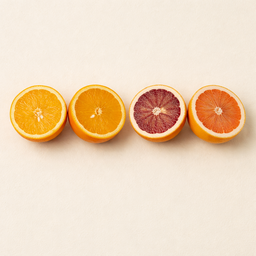 Orange
 Vitamin C increases iron absorption from cashews by 3-6x
Vitamin C significantly increases non-heme iron absorption (PMID: 2507689)
Technical: Cashew nuts contain 6.7mg non-heme iron per 100g (37% RDA) — highest of all nuts. Non-heme iron is normally poorly absorbed (5-15%). Vitamin C from orange (53mg, 66% RDA) reduces Fe³⁺ to Fe²⁺, the better absorbable form, and prevents phytate binding. This increases iron absorption 3-6x.
What does this mean for you? Eat cashews with an orange as a snack, or add citrus dressing to cashew salads. Especially important for vegetarians: you'll absorb 3-6x more iron from your nuts.
Cashew nuts 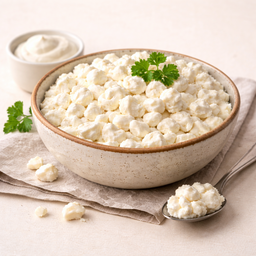 Cottage Cheese
 Slow casein + healthy fats for overnight recovery and muscle growth
Technical: Cottage cheese contains 80% casein — a protein that digests slowly over 6-8 hours continuously releasing amino acids. Nuts add healthy fats that further slow digestion, plus magnesium (270mg/100g in almonds). Magnesium contributes to the reduction of tiredness and fatigue (EFSA). This provides continuous amino acid release: your muscles are fed throughout the night.
What does this mean for you? Eat cottage cheese with a handful of almonds or walnuts before bed. The protein feeds your muscles all night, the magnesium contributes to reducing tiredness.
Cashew nuts 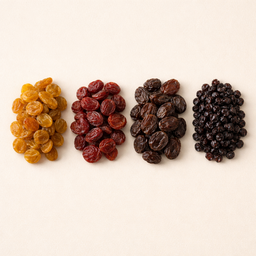 Raisins
 Quick + sustained energy for balanced fuel
Technical: Raisins contain 59g concentrated sugars per 100g (glucose + fructose) available as glycogen within 15-30 minutes. Nuts provide slow fuels: fats (49-65g per 100g), proteins (15-25g) and fiber providing 2-4 hours of energy. The fats slow absorption of raisin sugars, flattening the glycemic response. Nuts also contain magnesium (150-270mg) for energy metabolism.
What does this mean for you? Trail mix is scientifically sound: raisins for immediate energy, nuts for sustained fuel. Ideal as pre-workout, hiking snack or emergency rations. Choose a mix of walnuts, almonds and cashews for the broadest nutritional profile.
Recipes with Cashew nuts
Discover delicious recipes featuring cashew nuts:
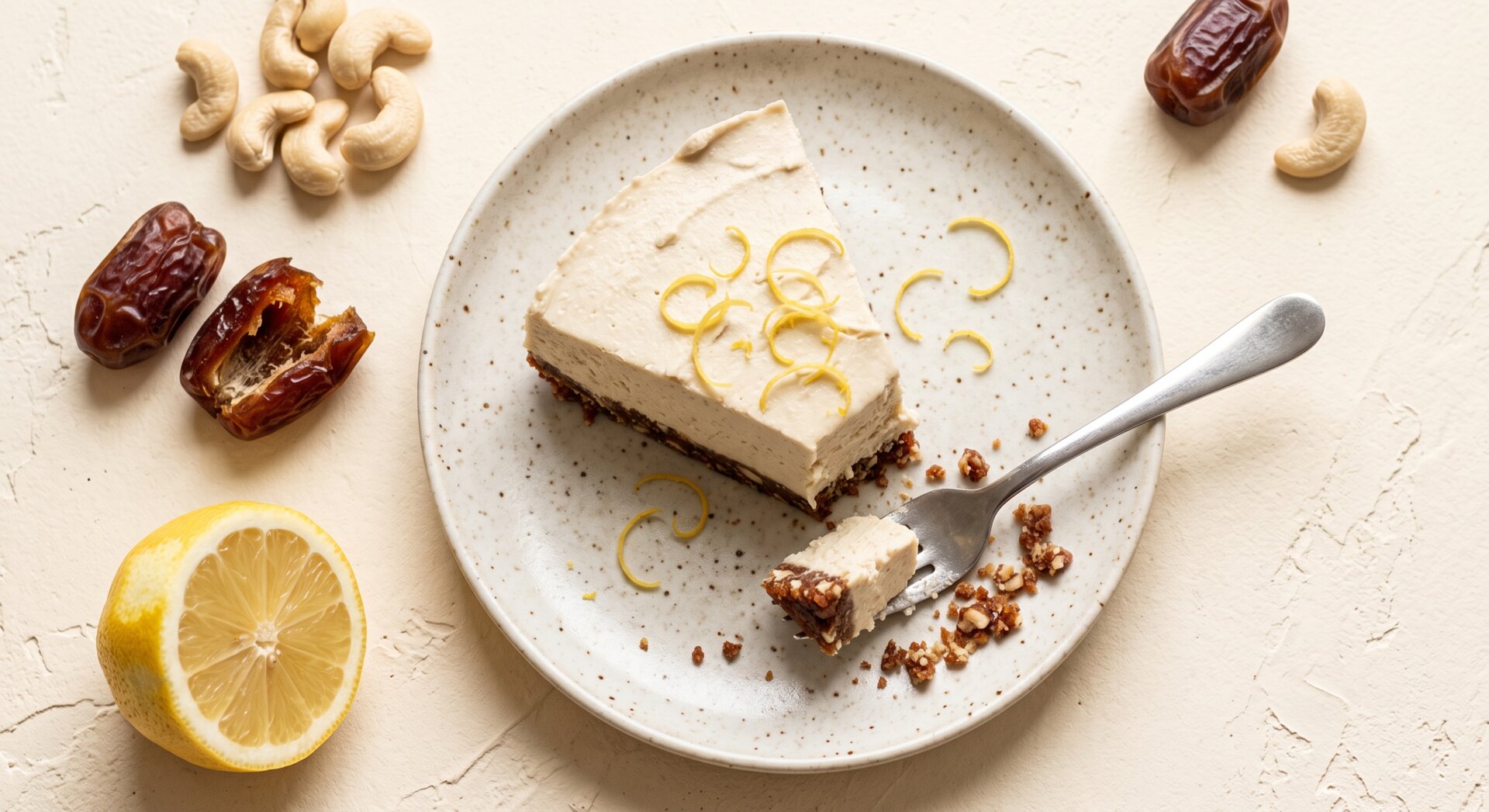 Cashew-Lemon Cheesecake 270 min No-bake cheesecake with an almond-date crust and a silky cashew-lemon filling — without dairy, without refined sugar and without an oven
  255 kcal
  5g protein 2 synergies
 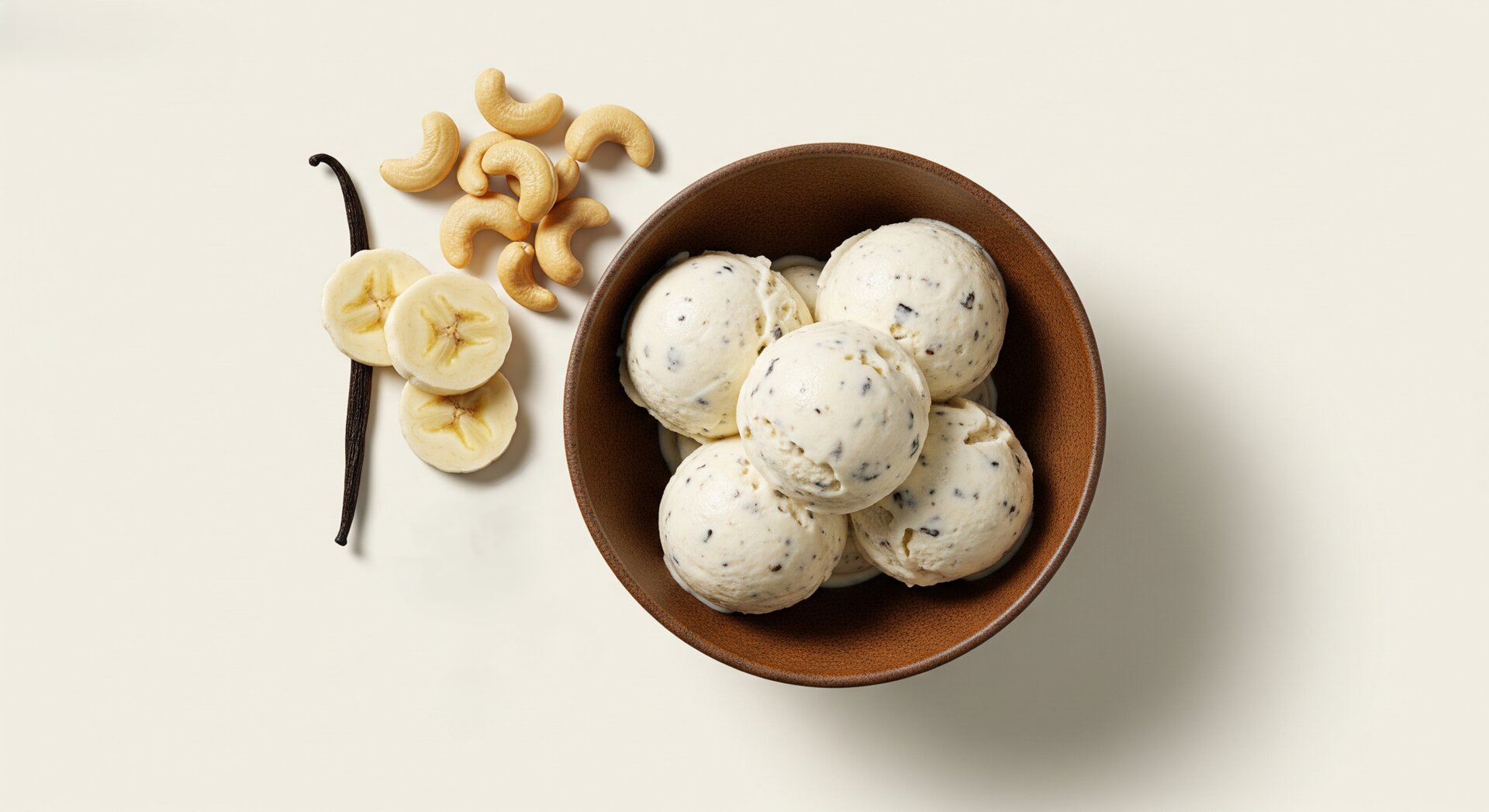 Cashew-Vanilla Nice Cream 15 min Creamy vanilla nice cream built on soaked cashews, frozen banana and full-fat coconut milk — without dairy and without refined sugar 245 kcal 5g protein 1 synergies
 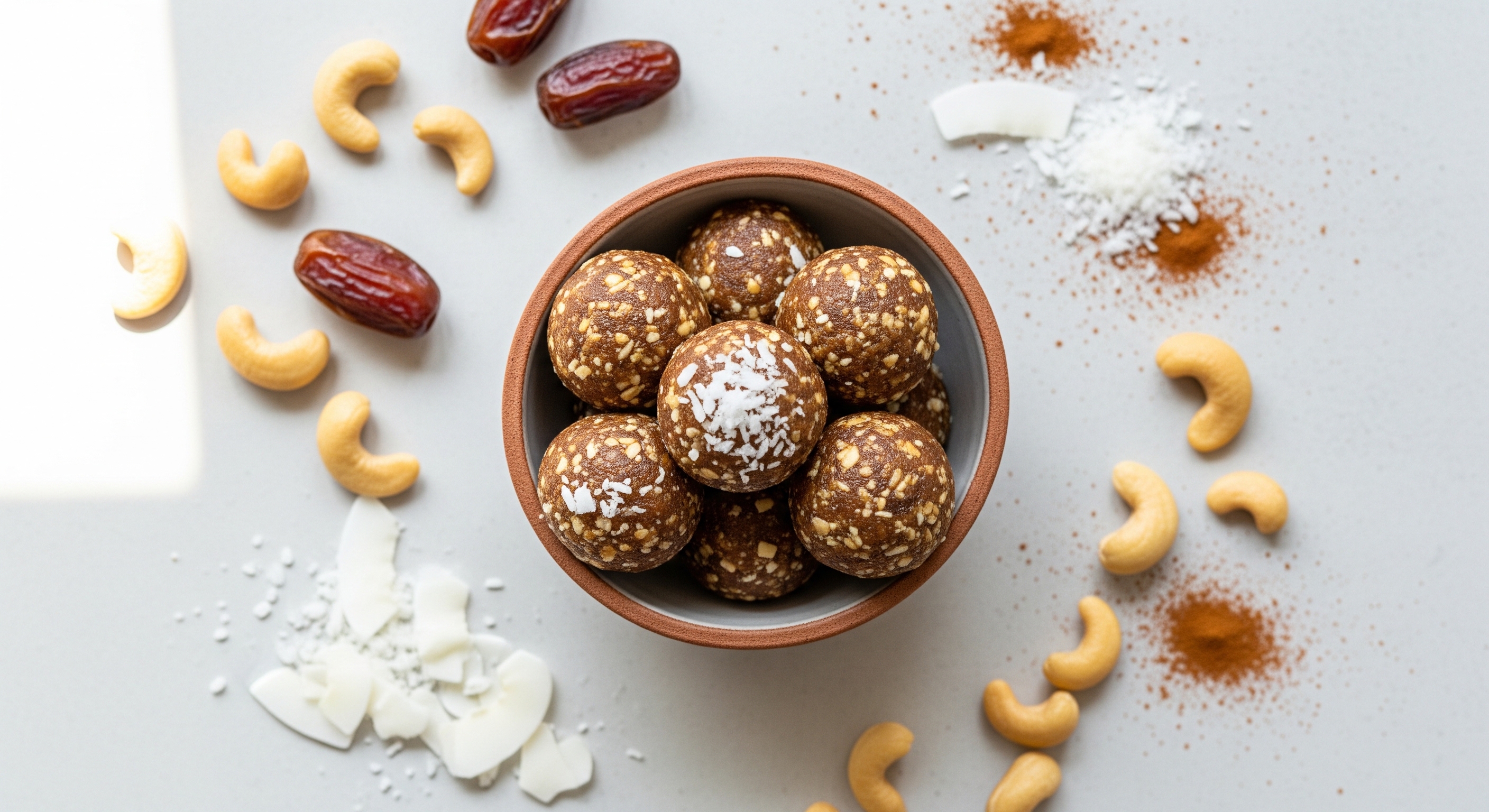 Date Cashew Balls with Ashwagandha and Cocoa 35 min Fudgy, cocoa-rich and softly spiced 91 kcal 2g protein 2 synergies
 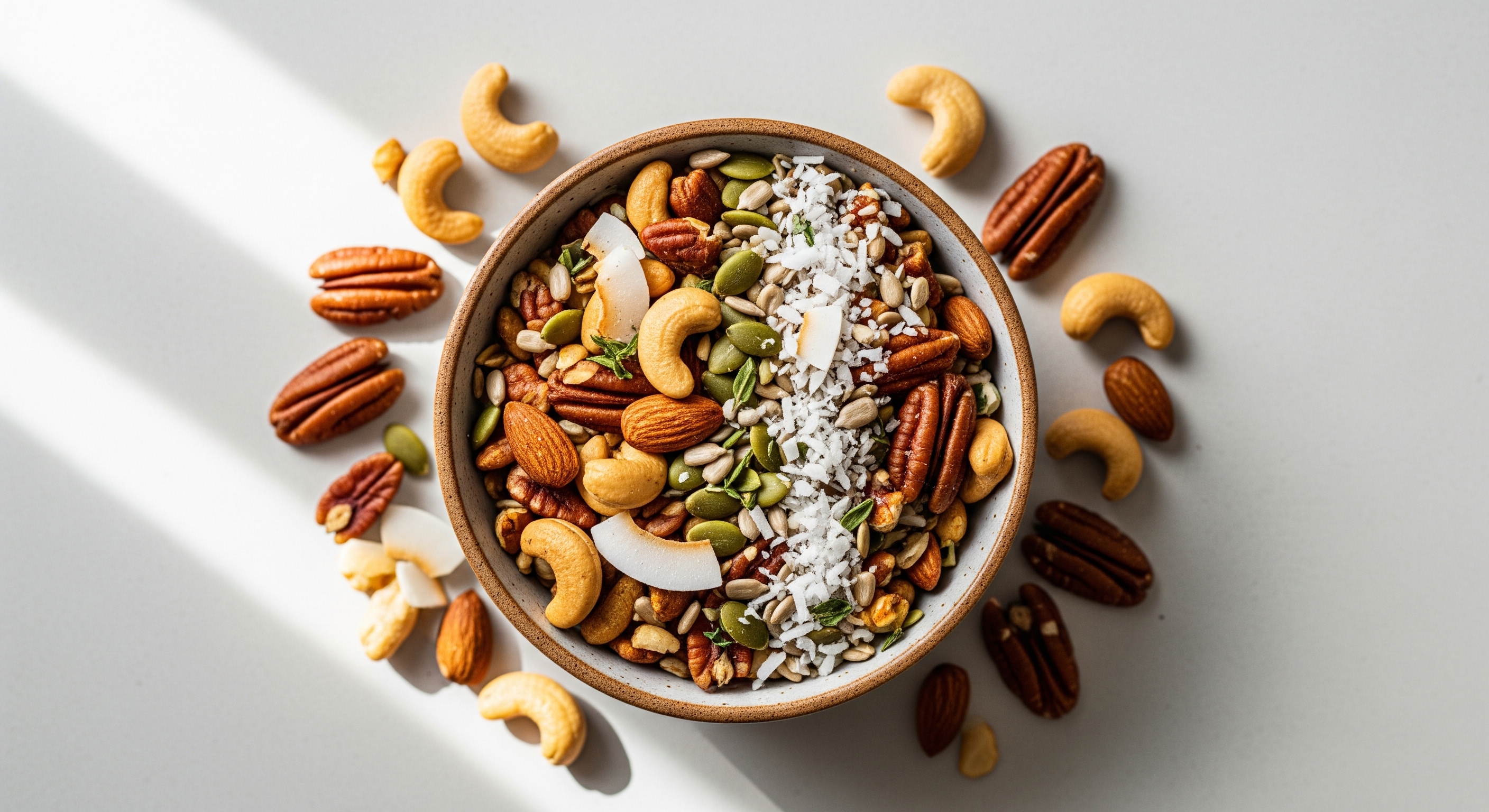 Savory Spiced Nut Mix with Herbs & Coconut 25 min Roasted nuts and seeds with spices, coconut flakes and a hint of cayenne 478 kcal 14g protein 1 synergies
 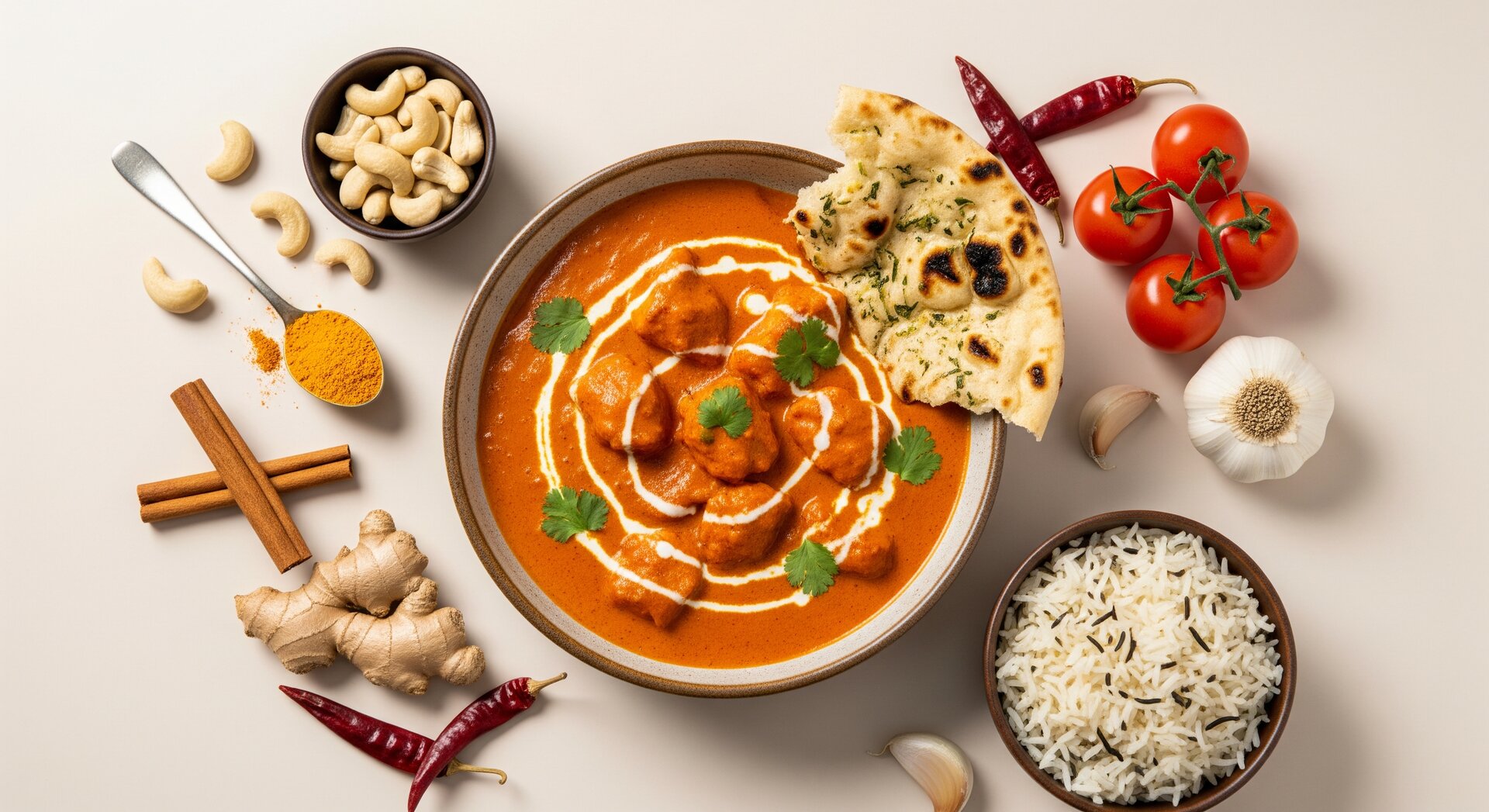 Indian Butter Chicken 70 min Creamy tomato-spice sauce with tender chicken 380 kcal 32g protein 2 synergies
 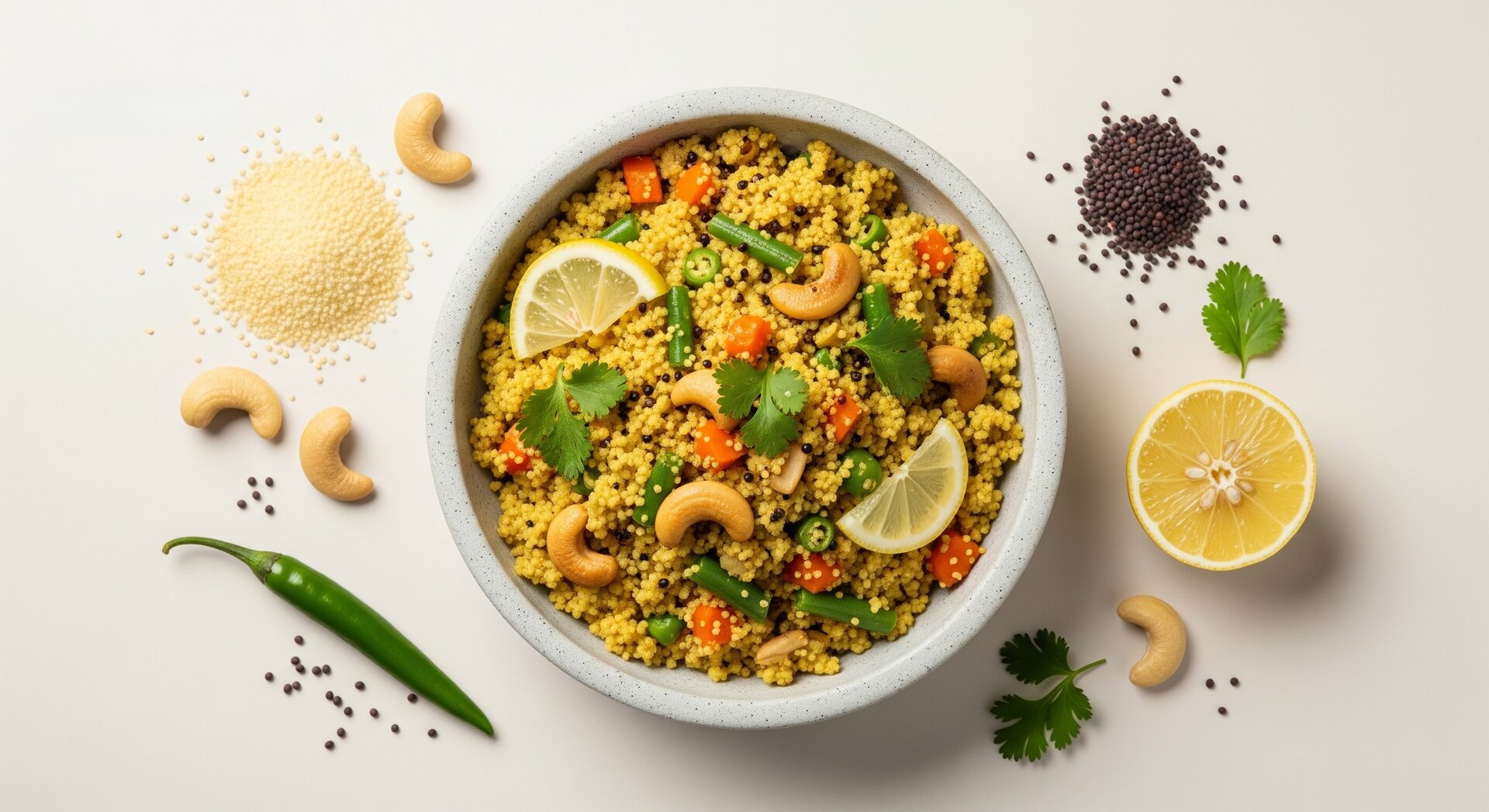 Indian Upma with Vegetables and Cashew 25 min Hearty South Indian semolina bowl with cashew nuts 529 kcal 15g protein 1 synergies
  In the Kitchen
Storage
Location:Pantry
Substitutes
Smart preparation
1Soak cashews for 2-4 hours in water for creamy sauces.
Why?
Soaked cashews blend into a smooth, creamy texture.
2Toast cashews at 160°C in the oven for 8-10 minutes.
3Add toasted cashews only at the end to stir-fry dishes.
Why?
Cooking too long makes them soft instead of crunchy.
Caution / Warnings
Cashew nuts is very safe, but there are scientific considerations:
Cashew allergy (tree nut allergy) Severe
Cashews can cause severe allergic reactions in people with a cashew or tree nut allergy. Symptoms can appear quickly after contact or consumption.
Advice:
Avoid cashews completely with a known allergy and check labels for cross-contamination. Ask a doctor or allergist for personal advice.
Copper load (rare) Moderate
Cashews contain a relatively high amount of copper. For most people this fits within a varied diet, but in rare disorders of copper metabolism, extra copper from foods may be relevant.
Advice:
With a known copper metabolism disorder or a medically copper-restricted diet: discuss cashew portions with your doctor or dietitian.
High energy density and portion size Mild
Cashews are energy-dense because of their natural fat content. A small portion can provide many calories, especially when roasted, salted or eaten in nut mixes.
Advice:
Prefer a measured portion, for example a handful of about 30 g, and choose unsalted versions when they fit your nutrition goal.
Traditional use
Indigenous
Cashew among the Tupi peoples
Cashew originally comes from Brazil, where Tupi peoples knew both the cashew apple and the nut. The fruit was used for juice and fermented drinks, while the nut, after careful processing, became a nourishing part of local food cultures.
Ayurveda
Cashew in South Asian food cultures
In South Asian cuisines, cashews are used for creamy sauces, festive rice dishes, sweet preparations and nut pastes. Their gentle flavour pairs well with cardamom, saffron, coconut, ghee, raisins and warm spices.
Summary
Cashews are soft, creamy tropical nuts with a lightly sweet taste. Per 100 g, they naturally contain copper (2.2 mg), iron (6.7 mg), zinc (5.8 mg), magnesium (292 mg), selenium (19.9 µg) and vitamin K (34.1 µg). Their mild flavour and starchy texture make them ideal for cashew cream, vegan sauces, curries, nut butter and no-bake desserts. Soak them for an extra-smooth sauce or roast them briefly for more aroma. A practical portion is about 30 g, because cashews are energy-dense.