- Easy
- 35 min
- 4 serv.
- 11 synergies
- Now at its best: Honey
An elegant layered dessert with creamy Greek yogurt, fresh blueberries and strawberries, a drizzle of honey and homemade crunchy granola. Four servings, ideal for a Sunday brunch or as a weekday breakfast you can make ahead.
The smell of cinnamon and warm honey fills the kitchen as the granola slowly turns golden brown in the oven. Every ten minutes you stir — the oat flakes get a darker edge, the almonds turn crunchy and the coconut caramelizes lightly. Only when everything has fully cooled does it become truly crunchy: those dry, almost brittle clusters that crack when you bite in. In tall glasses you then build the layers: a thick spoonful of cold Greek yogurt, a handful of blueberries that roll like marbles, a layer of granola, yogurt again. The strawberries you slice into fans that sit against the glass. On top of the final granola layer you drizzle honey and place a few mint leaves — more for scent than for taste. The trick is not to layer too early: the granola must be crunchy at the moment the spoon goes in.
- 10
- min prep
- 25
- min cook
- 35
- min total
Nutritional Synergies
This recipe combines ingredients that enhance each other:
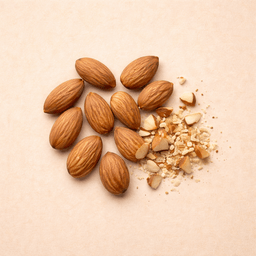 Almonds
 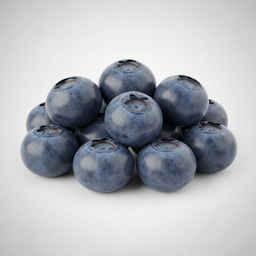 Blueberries
 Vitamin E + anthocyanins: complementary antioxidant pathways in lipid and aqueous phase
Chun OK et al. (2008) in Journal of Nutrition demonstrated synergistic action between polyphenols and vitamin E.
Technical: Almonds are the best nut source of vitamin E (26mg/100g), blocking lipid peroxidation in cell membranes. Blueberries provide anthocyanins working as antioxidants in the cell's aqueous environment. This complementary duo — fat- and water-soluble — works in both the lipid and aqueous phases of the cell.
What does this mean for you? Mix almonds into your blueberry yogurt or smoothie bowl. Two types of antioxidant protection in one bite — complementary pathways via lipid and aqueous phase.
FocusHeartSkin & Hair
Almonds 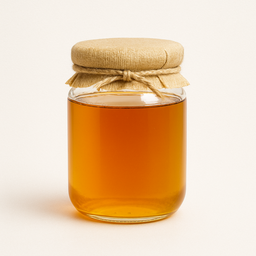 Honey
Honey Vitamin E + flavonoids for enhanced antioxidant protection
Technical: Almonds are rich in alpha-tocopherol (vitamin E), a fat-soluble antioxidant. Honey's flavonoids (chrysin, pinocembrin) are water-soluble antioxidants. Together they provide protection in both lipid and aqueous compartments of cells.
What does this mean for you? Almonds with a bit of honey is not just a classic snack, but gives your cells double antioxidant protection — in fat and water.
Anti-inflammatorySkin & HairImmune System
Blueberries 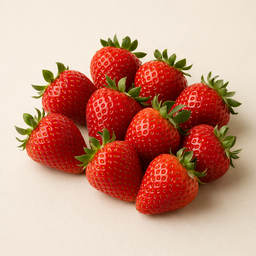 Strawberries
 Double antioxidant power: different anthocyanins
Technical: Blueberries contain malvidin and delphinidin (blue-purple), strawberries contain pelargonidin (red). These different anthocyanins work complementarily and provide broader antioxidant protection. Together they have a higher ORAC value than either alone.
What does this mean for you? Mix blueberries and strawberries in smoothies, yogurt or as toppings. The color combination is not only beautiful but also functional - more colors = more protection.
Anti-inflammatorySkin & HairFocus
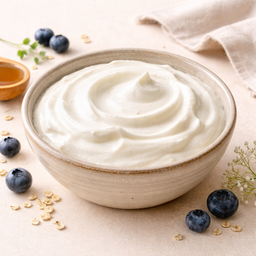 Greek Yogurt Blueberries
 Probiotics + prebiotic fibers for optimal gut flora
Technical: Greek yogurt provides 1-100 billion CFU probiotics (Lactobacillus, Bifidobacterium). Blueberries contain prebiotic fibers (2.4g/100g) and polyphenols (anthocyanins) that selectively promote growth of beneficial bacteria. This synbiotic effect increases production of short-chain fatty acids (butyrate, propionate) by 20-40%.
What does this mean for you? Greek yogurt with blueberries is an ideal synbiotic combination. The yogurt provides good bacteria, the berries feed them — together they support your gut flora.
DigestionImmune SystemAntioxidants
Greek Yogurt Honey Prebiotic honey feeds probiotic bacteria in yogurt (synbiotic effect)
Synbiotics improve probiotic survival (PMID: 16633129)
Technical: Greek yogurt contains live probiotics (Lactobacillus, Streptococcus). Honey contains oligosaccharides and FOS acting as prebiotics. This 'synbiotic' — pre- and probiotics together — increases survival and colonization of probiotic bacteria in the gut by 10-100x. The prebiotic fibers give bacteria nutrition to multiply.
What does this mean for you? Add raw honey to your Greek yogurt. The honey doesn't just sweeten — it literally feeds the good bacteria from the yogurt so they survive in your gut.
DigestionImmune System
Greek Yogurt 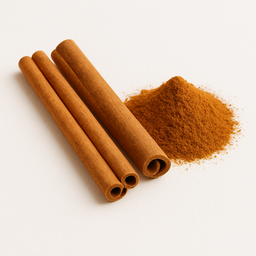 Cinnamon
 Probiotics + AMPK activation for metabolic balance
Cinnamon improves insulin sensitivity (PMID: 20854384)
Technical: Greek yogurt has a low GI (11-14) and contains probiotics that influence insulin sensitivity via the gut-pancreas axis. Cinnamon contains MHCP (methylhydroxy chalcone polymers) that activate AMPK and sensitize insulin receptors. Together they modulate postprandial glycemic response.
What does this mean for you? Add a teaspoon of cinnamon to your Greek yogurt. The cinnamon contains bioactive polyphenols that activate AMPK, the yogurt keeps your blood sugar low anyway — together they keep your energy level stable.
Blood SugarDigestionWeight Loss
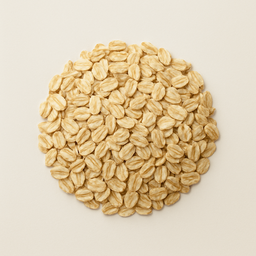 Oatmeal Blueberries
 Vitamin C lifts iron blockade
Technical: Oatmeal contains 3.9mg non-heme iron per 100g, but also phytic acid (0.5-1.4g per 100g) that can inhibit iron absorption by 50-80% by forming insoluble complexes. Blueberries contain 9.7mg vitamin C per 100g that reduces Fe³⁺ (non-absorbable) to Fe²⁺ (absorbable) and forms a soluble iron-ascorbate complex that bypasses phytate binding.
What does this mean for you? Always top your oatmeal with fresh blueberries or other fruit. Without vitamin C, most iron from your oatmeal is lost due to phytic acid. Especially important for vegetarians and women who depend on plant-based iron.
EnergyImmune System
Cinnamon Oatmeal Flattens the sugar spike after carbohydrate-rich meals
Technical: Oatmeal contains complex carbohydrates that raise blood sugar. Cinnamon's MHCP (methylhydroxy chalcone polymers) increase insulin activity up to 20x and cinnamaldehyde activates AMPK, improving glucose transport to cells. This lowers postprandial glucose peak by 18-29% and extends satiety.
What does this mean for you? Always add cinnamon to your oatmeal, apple or banana bread. The cinnamon helps keep your blood sugar more stable after these carb-rich meals.
EnergyWeight Loss
Cinnamon Honey Traditional warm combination of cinnamon and honey
Technical: Cinnamon contains cinnamaldehyde and proanthocyanidins with bioactive action via cell wall disruption. Honey's glucose oxidase produces hydrogen peroxide with bioactive action, while honey's high viscosity forms a physical barrier. Two independent bioactive mechanisms that work more broadly together.
What does this mean for you? Cinnamon + honey in warm tea — a classic combination. Both have bioactive action via different pathways — broader together than alone.
Immune System
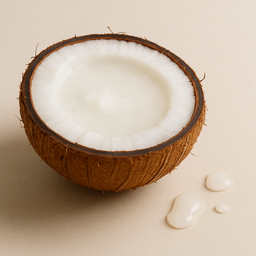 Coconut Oil Almonds
 MCTs improve vitamin E absorption from almonds
Technical: Almonds contain 25mg vitamin E per 100g (167% RDI). Vitamin E is fat-soluble and better absorbed with MCTs that quickly pass the gut wall. Coconut oil contains 60% MCTs serving as transport.
What does this mean for you? Coat almonds with coconut oil and lightly roast for a crunchy snack with improved vitamin E absorption.
Skin & HairAnti-inflammatoryGeneral Wellness
Coconut Oil Honey MCTs protect honey enzymes — complementary bioactive compounds
Technical: Coconut oil contains lauric acid (48%), a medium-chain fatty acid (MCT). Honey contains glucose oxidase producing hydrogen peroxide. Together they provide complementary bioactive compounds. MCTs also help preserve fat-soluble compounds in honey.
What does this mean for you? Combine coconut oil with honey in energy balls, granola or as coating for snacks. The combination is both flavorful and functional.
Immune SystemEnergyDigestion
Instructions
- 1 Preheat the oven to 160°C.
- 2 Mix oats, almonds, 4 tbsp honey, coconut oil and cinnamon in a bowl.
Nutrition per serving
Indicative values per serving.
Timing & Suitability
Tags & Diet
Allergens: Dairy, Nuts, Gluten