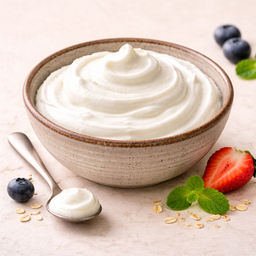
Skyr
the Icelandic protein product
What is this ingredient?
Skyr has been made in Iceland for over 1000 years. The difference from yogurt is fundamental: skyr is actually a curdled milk cheese with whey drained off. It takes about 4 times as much milk for the same amount of skyr as for yogurt, hence the high protein content. Traditional skyr is fat-free and contains around 11g protein per 100g - more than double regular yogurt. The thick, creamy texture makes it ideal for people wanting more protein without supplements.
How does it taste?
Thick, mildly tangy and creamy with a neutral, clean flavor.
Pairs well with:
Pairs well with blueberrieshoneynutsbanana and cinnamon.
Did you know...?
- Skyr was brought to Iceland by the Vikings more than 1,000 years ago.
- Technically, skyr is not yogurt but a fresh cheese, although it is eaten like yogurt.
Nutritional Value & Energy
Per 100g
Skyr provides energy thanks to natural nutrients .
Per 100g
Minerals
Vitamins
Omega-3 fatty acids
More nutrients
B-Vitamins
Trace Minerals
Low GI means blood sugar doesn't spike quickly.
What's in a serving?
1 serving
Skyr naturally contains calcium (150 mg per 100 g).
Skyr naturally contains vitamin b12 (0.7 mcg per 100 g).
% of daily reference intake (DRI)
EU-approved nutrition claims
This ingredient contains nutrients for which EFSA-authorized health claims exist (at nutrient level, not ingredient-specific).
Approved health claims (EU)
Vitamin_b12 EU 432/2012
Vitamin B12 contributes to the normal function of the immune system
Contains 0.7mcg/100g (threshold: ≥0.375mcg/100g)
Vitamin_b12 EU 432/2012
Vitamin B12 contributes to the reduction of tiredness and fatigue
Contains 0.7mcg/100g (threshold: ≥0.375mcg/100g)
Vitamin_b12 EU 432/2012
Vitamin B12 contributes to the normal functioning of the nervous system
Contains 0.7mcg/100g (threshold: ≥0.375mcg/100g)
Calcium EU 432/2012
Calcium is needed for the maintenance of normal bones
Contains 150mg/100g (threshold: ≥120mg/100g)
Vitamin_b12 EU 432/2012
Vitamin B12 contributes to normal energy-yielding metabolism
Contains 0.7mcg/100g (threshold: ≥0.375mcg/100g)
Vitamin_b12 EU 432/2012
Vitamin B12 contributes to normal homocysteine metabolism
Contains 0.7mcg/100g (threshold: ≥0.375mcg/100g)
Vitamin_b12 EU 432/2012
Vitamin B12 contributes to normal psychological function
Contains 0.7mcg/100g (threshold: ≥0.375mcg/100g)
Vitamin_b12 EU 432/2012
Vitamin B12 contributes to normal red blood cell formation
Contains 0.7mcg/100g (threshold: ≥0.375mcg/100g)
Vitamin_b12 EU 432/2012
Vitamin B12 has a role in the process of cell division
Contains 0.7mcg/100g (threshold: ≥0.375mcg/100g)
Calcium EU 432/2012
Calcium is needed for the maintenance of normal teeth
Contains 150mg/100g (threshold: ≥120mg/100g)
Calcium EU 432/2012
Calcium contributes to normal blood clotting
Contains 150mg/100g (threshold: ≥120mg/100g)
Calcium EU 432/2012
Calcium contributes to normal energy-yielding metabolism
Contains 150mg/100g (threshold: ≥120mg/100g)
Calcium EU 432/2012
Calcium contributes to normal muscle function
Contains 150mg/100g (threshold: ≥120mg/100g)
Calcium EU 432/2012
Calcium contributes to normal neurotransmission
Contains 150mg/100g (threshold: ≥120mg/100g)
Calcium EU 432/2012
Calcium contributes to the normal function of digestive enzymes
Contains 150mg/100g (threshold: ≥120mg/100g)
Calcium EU 432/2012
Calcium has a role in the process of cell division and specialisation
Contains 150mg/100g (threshold: ≥120mg/100g)
What's being researched?
Skyr and protein density
Skyr as a very high-protein dairy product is being studied for effects on satiety and body composition. The protein content (10-12g/100g) makes it an interesting study subject for sports nutrition research.
Supported by: [2] Leidy HJ (2015)
Good Combinations (Synergy)
Combine skyr smartly to enhance the effect:
Skyr 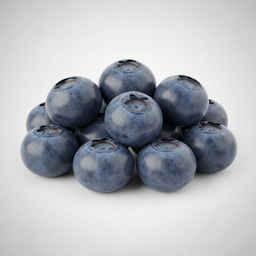 Blueberries
 High protein + anthocyanins for muscle recovery
Technical: Skyr contains 10-11% protein (2x as much as yogurt) with a high PDCAAS score, ideal for muscle recovery. Blueberries and raspberries provide anthocyanins that modulate the DOMS response (delayed onset muscle soreness) after exercise via NF-κB and COX-2 pathways. Together: protein for building + anthocyanins as bioactive polyphenols.
What does this mean for you? Eat skyr with berries after your workout. The protein contributes to muscle recovery, the anthocyanins from the berries are bioactive polyphenols — an ideal post-workout combination.
Skyr 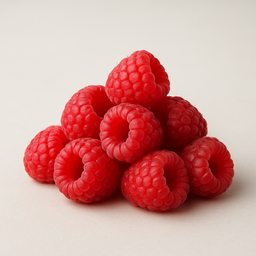 Raspberries
 High protein + anthocyanins for muscle recovery
Technical: Skyr contains 10-11% protein (2x as much as yogurt) with a high PDCAAS score, ideal for muscle recovery. Blueberries and raspberries provide anthocyanins that modulate the DOMS response (delayed onset muscle soreness) after exercise via NF-κB and COX-2 pathways. Together: protein for building + anthocyanins as bioactive polyphenols.
What does this mean for you? Eat skyr with berries after your workout. The protein contributes to muscle recovery, the anthocyanins from the berries are bioactive polyphenols — an ideal post-workout combination.
Skyr 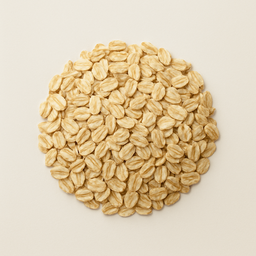 Oatmeal
 Tri-phasic energy profile: fast + medium + slow for hours of energy
Technical: Skyr contains 10-11% casein protein that digests slowly (6-8 hours). Oatmeal provides beta-glucans (soluble fiber, 4g/100g, GI 55) that modulate glycemic response through delayed glucose absorption. Together they form a breakfast with sustained satiety: slow-digesting protein + slow carbs. Honey's prebiotic FOS feed the probiotics from skyr (synbiotic).
What does this mean for you? Oatmeal porridge with skyr and honey is a triple synbiotic breakfast bowl. The casein protein keeps you satiated for hours, the beta-glucans provide slow energy and the honey feeds the good bacteria from skyr.
Skyr 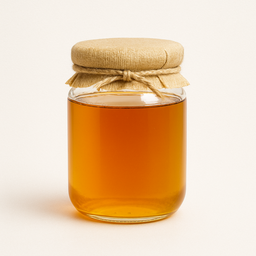 Honey
Honey Tri-phasic energy profile: fast + medium + slow for hours of energy
Technical: Skyr contains 10-11% casein protein that digests slowly (6-8 hours). Oatmeal provides beta-glucans (soluble fiber, 4g/100g, GI 55) that modulate glycemic response through delayed glucose absorption. Together they form a breakfast with sustained satiety: slow-digesting protein + slow carbs. Honey's prebiotic FOS feed the probiotics from skyr (synbiotic).
What does this mean for you? Oatmeal porridge with skyr and honey is a triple synbiotic breakfast bowl. The casein protein keeps you satiated for hours, the beta-glucans provide slow energy and the honey feeds the good bacteria from skyr.
Skyr 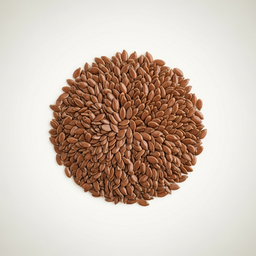 Flaxseed
 High-quality casein protein + omega-3 ALA for recovery
Technical: Skyr contains 10-11% protein (3-4x more than yogurt) with PDCAAS 1.0. Casein digests over 6-8 hours → slow amino acid release ideal for muscle recovery. Flaxseed provides 20g ALA (alpha-linolenic acid, omega-3) per 100g — the highest plant source. ALA is partially converted to EPA/DHA (5-10% conversion) producing resolvins. Casein slows ALA absorption, keeping it available longer for conversion.
What does this mean for you? Skyr with ground flaxseed after training is a powerful recovery meal. The slow protein contributes to muscle recovery for hours, the omega-3 provides bioactive fatty acids. Plant-based alternative to fish omega-3.
Recipes with Skyr
Discover delicious recipes featuring skyr:
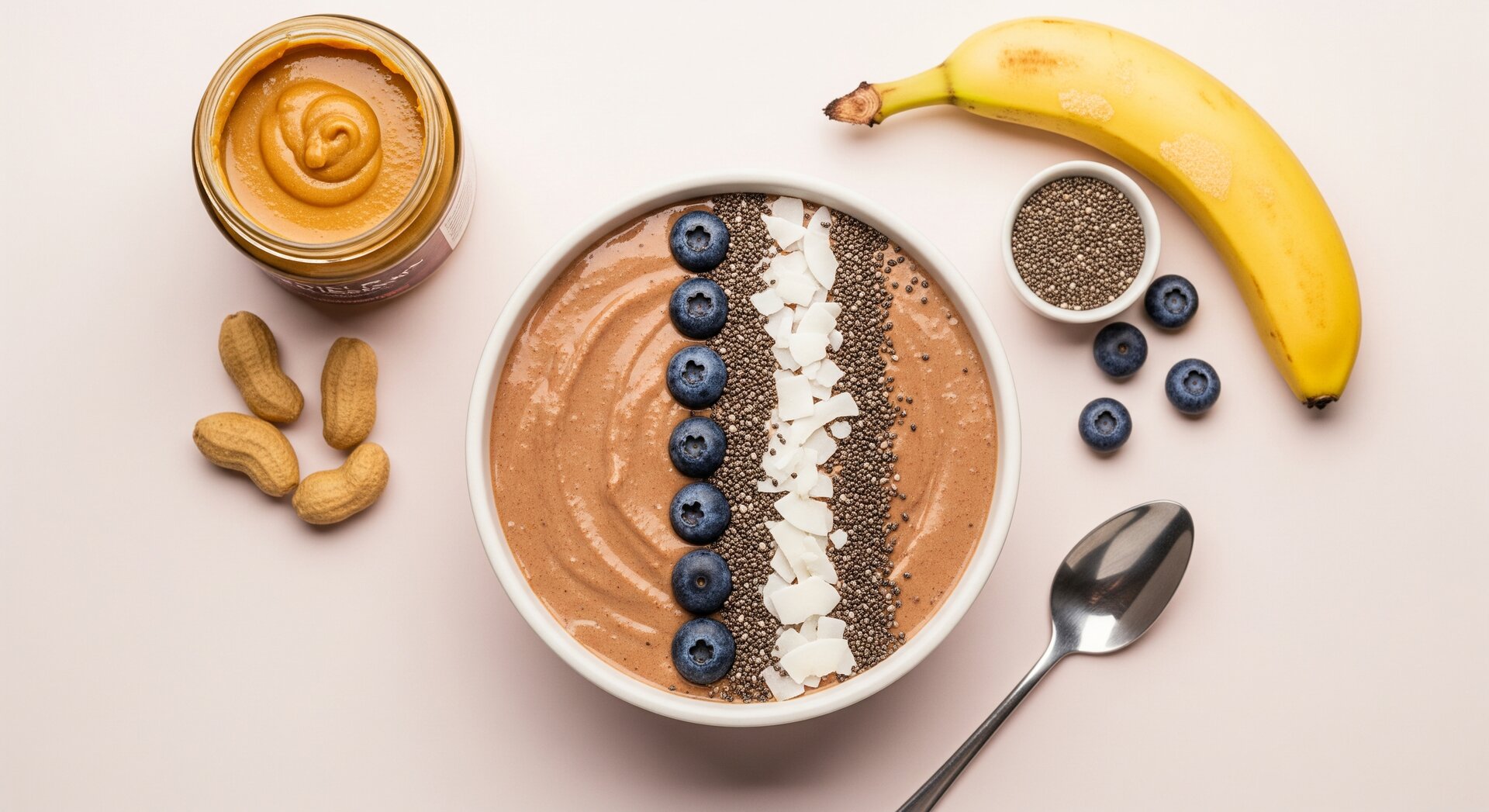 Protein Smoothie Bowl with Toppings 5 min Spoonable bowl with skyr, cacao and blueberries
  460 kcal
  25g protein 2 synergies
 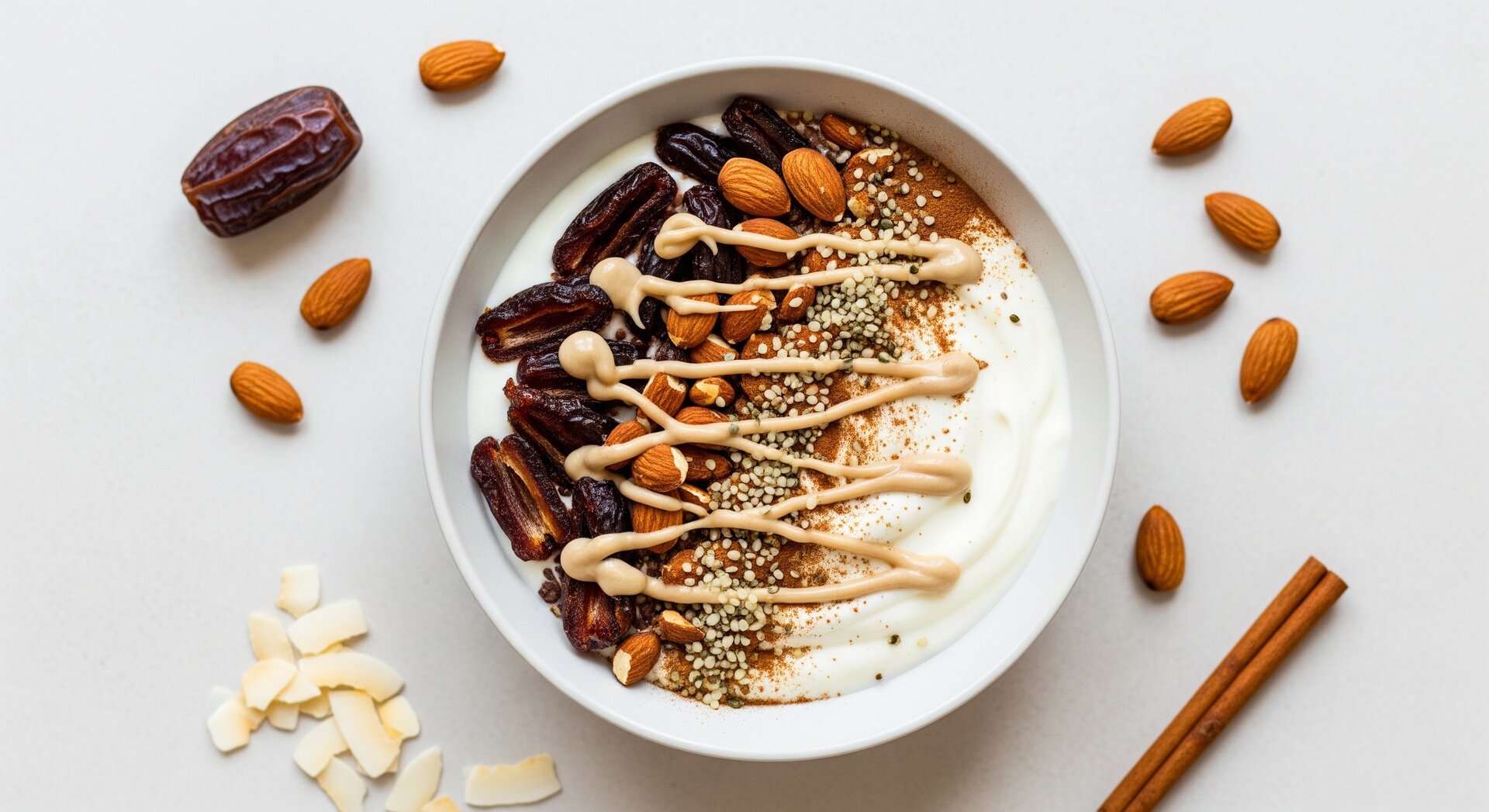 Skyr Bowl with Stuffed Dates, Almonds and Tahini 5 min Middle-Eastern inspired protein bowl with tahini, coconut and hemp seeds 964 kcal 46g protein 2 synergies
 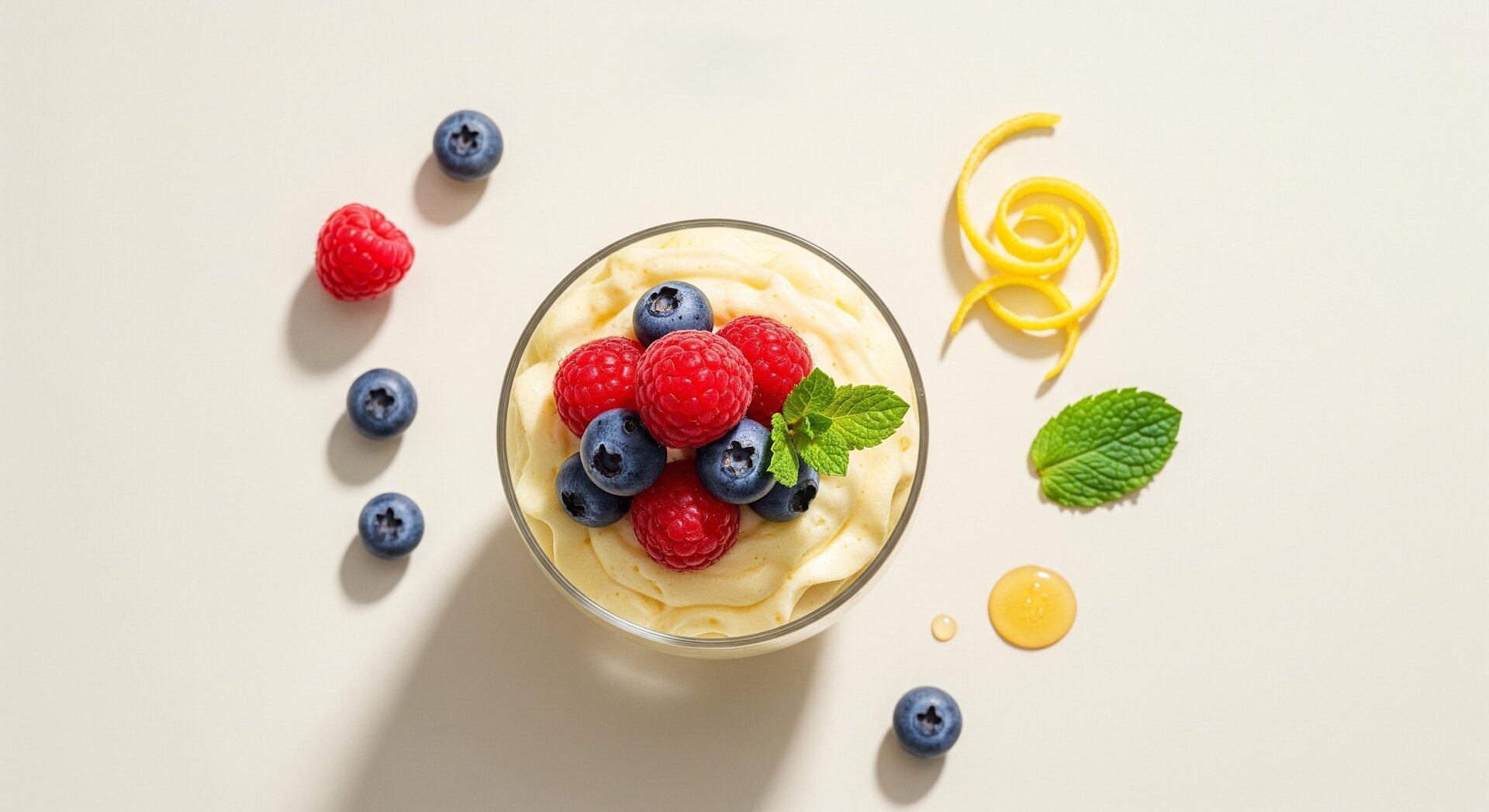 Skyr Lemon Mousse with Fresh Berries 140 min Light lemon mousse with skyr, raspberries and blueberries 107 kcal 9g protein 2 synergies
 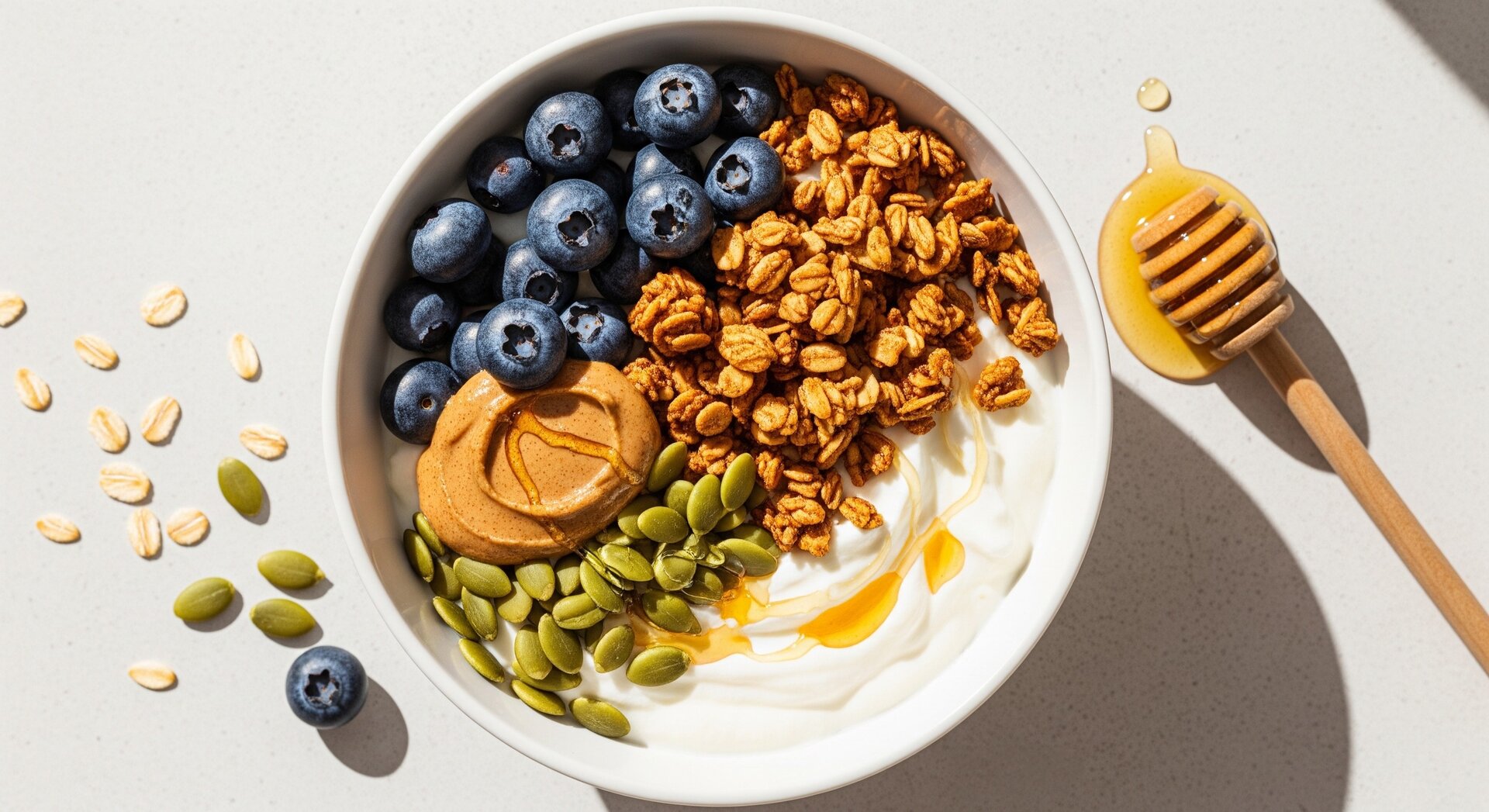 Skyr Power Bowl with Granola and Nuts 5 min Creamy Icelandic skyr with crunchy granola, berries and nuts 976 kcal 55g protein 1 synergies
 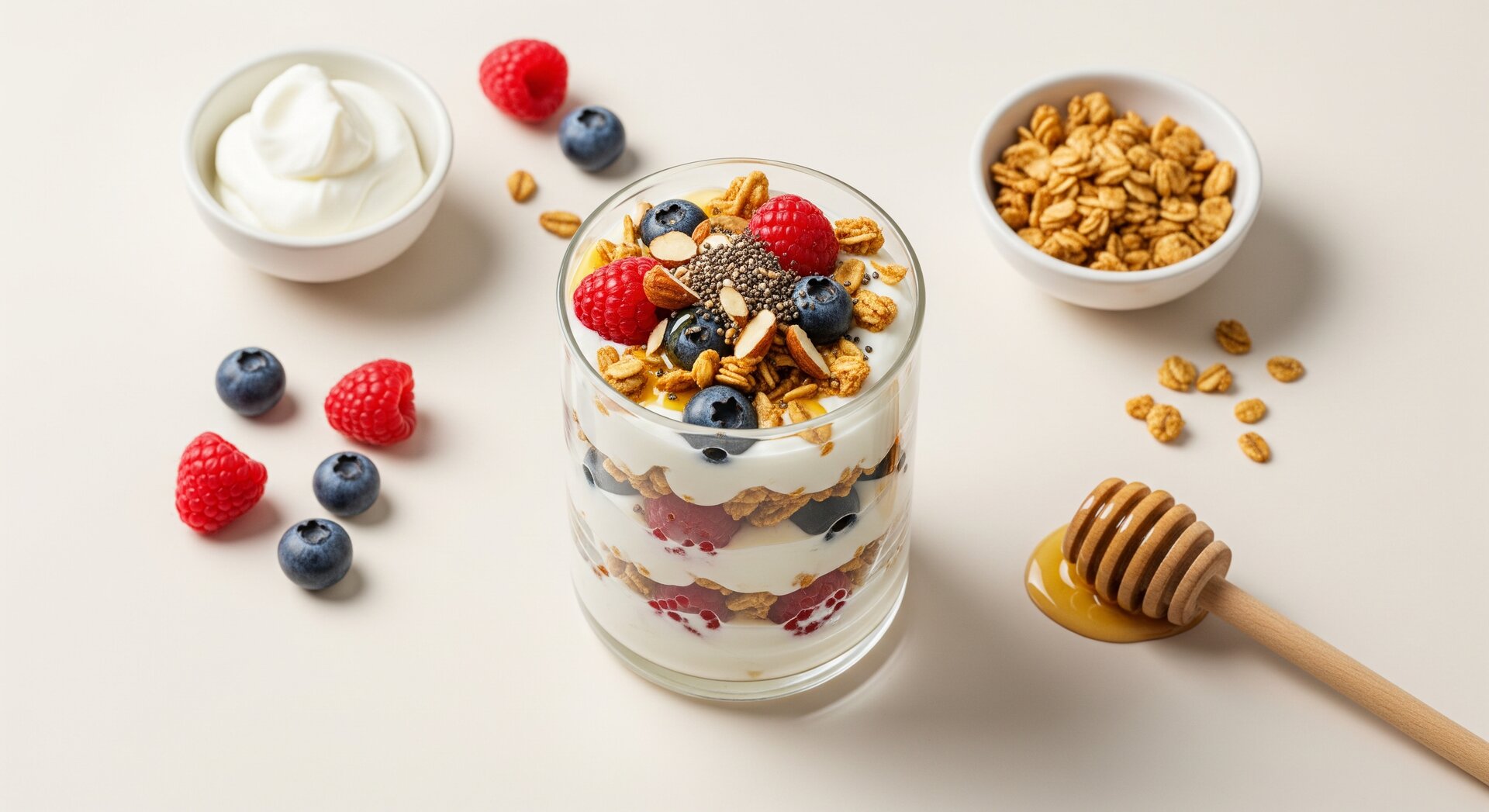 Skyr Protein Parfait with Granola 5 min Layered breakfast with creamy skyr, crunchy granola and fresh berries 420 kcal 28g protein 1 synergies
  In the Kitchen
Storage
Location:Refrigerator
Shelf life:2-3 weken (zie verpakking)
Always keep refrigerated. Stir before use - liquid on top is normal (whey).
Preparation
Eat as breakfast with fruit and nuts, use in smoothies, or as base for dips. Replace sour cream or mayonnaise for healthier option.
Conversions
Substitutes
Smart preparation
1Whisk skyr smooth before use — it is thicker than yoghurt.
2Use skyr as a substitute for mascarpone in cold desserts.
3Do not heat skyr directly, first mix it with other liquid.
Why?
Pure heating makes skyr grainy due to the high protein content.
Caution / Warnings
Skyr is very safe, but there are scientific considerations:
Lactose Intolerance Moderate
Skyr contains less lactose than milk, but not lactose-free
Advice:
Try small amounts - many people with mild intolerance tolerate skyr well
Milk Allergy Severe
Skyr is a dairy product and contains milk proteins
Advice:
Completely avoid with milk allergy
Traditional use
Other
Skyr in Icelandic Tradition
Skyr has been produced in Iceland for over a thousand years and was a crucial protein-rich food source during the long winters.
Summary
Skyr is the secret weapon for anyone wanting more protein without supplements. With 11g protein per 100g and only 63 calories, it's ideal for muscle building, weight loss and as slow-digesting protein source for suhoor or before bed. Choose plain and add your own fruit to limit sugar.