- Easy
- 5 min
- 1 serv.
- 7 synergies
- Now at its best: Honey
A layered parfait with creamy skyr, crunchy granola, fresh blueberries and raspberries, roughly chopped almonds, chia seeds and a touch of honey.
The glass reveals everything: at the bottom a thick layer of snow-white skyr, then a strip of crunchy granola that slowly darkens where it meets the moisture, and above a handful of berries — blueberries like dark marbles, raspberries in their fragile honeycomb structure. Almond slivers jut out at angles like tiny rooftops. A drop of honey slides down the glass. Each spoonful passes through every layer: the cool, tangy skyr, the crunch of granola, the burst of berry juice, the nutty grittiness of chia seeds. Halfway through the glass you feel like you're eating something that wouldn't be out of place on the menu of a Scandinavian breakfast restaurant — simple, deliberate, exactly enough.
- 5
- min prep
- 0
- min cook
- 5
- min total
Nutritional Synergies
This recipe combines ingredients that enhance each other:
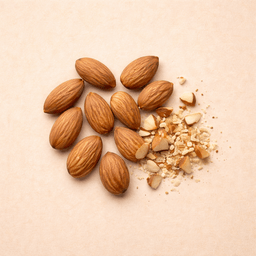 Almonds
 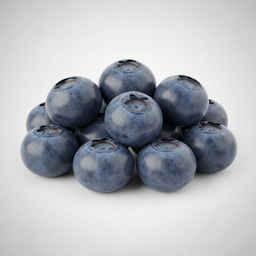 Fresh blueberries
 Vitamin E + anthocyanins: complementary antioxidant pathways in lipid and aqueous phase
Chun OK et al. (2008) in Journal of Nutrition demonstrated synergistic action between polyphenols and vitamin E.
Technical: Almonds are the best nut source of vitamin E (26mg/100g), blocking lipid peroxidation in cell membranes. Blueberries provide anthocyanins working as antioxidants in the cell's aqueous environment. This complementary duo — fat- and water-soluble — works in both the lipid and aqueous phases of the cell.
What does this mean for you? Mix almonds into your blueberry yogurt or smoothie bowl. Two types of antioxidant protection in one bite — complementary pathways via lipid and aqueous phase.
FocusHeartSkin & Hair
Almonds 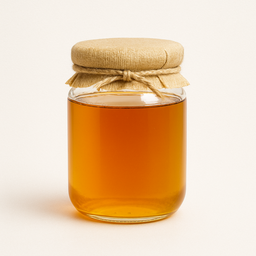 Honey
Honey Vitamin E + flavonoids for enhanced antioxidant protection
Technical: Almonds are rich in alpha-tocopherol (vitamin E), a fat-soluble antioxidant. Honey's flavonoids (chrysin, pinocembrin) are water-soluble antioxidants. Together they provide protection in both lipid and aqueous compartments of cells.
What does this mean for you? Almonds with a bit of honey is not just a classic snack, but gives your cells double antioxidant protection — in fat and water.
Anti-inflammatorySkin & HairImmune System
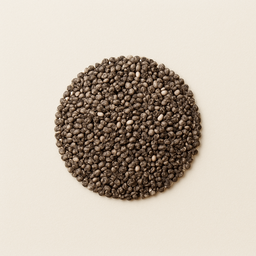 Chia seeds Honey
 Fiber + prebiotics for the microbiome and satiety
Technical: Chia seeds contain 34g fiber per 100g forming a gel in the gut promoting satiety. Honey contains prebiotic oligosaccharides (FOS) feeding beneficial gut bacteria. Together they support the microbiome.
What does this mean for you? Mix chia pudding with a spoonful of raw honey. The honey sweetens and feeds your good gut bacteria.
DigestionEnergyBlood Sugar
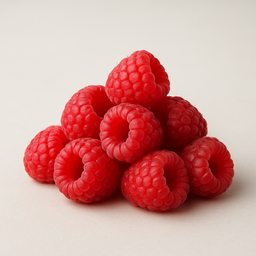 Fresh raspberries Chia seeds
 Ellagitannins + omega-3 for complementary bioactive support
Ellagitannins metabolize to bioactive urolithins (PMID: 16159193)
Technical: Raspberries are the richest source of ellagitannins (300mg/100g), which are converted in the gut to urolithins — bioactive metabolites that influence multiple signaling pathways. Chia seeds provide 5g ALA omega-3 per tablespoon, which modulates eicosanoid production via the COX/LOX pathway. Together they cover multiple biochemical pathways: urolithins via NF-kB modulation, omega-3 via eicosanoid balance.
What does this mean for you? Make a raspberry-chia pudding by soaking 2 tablespoons chia seeds in almond milk with raspberries. The raspberries give color and flavor, the chia provides texture and omega-3. Perfect as breakfast or dessert.
Anti-inflammatoryJointsDigestion
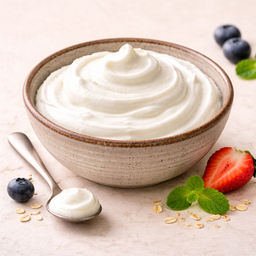 Skyr (plain) Fresh blueberries
 High protein + anthocyanins for muscle recovery
Technical: Skyr contains 10-11% protein (2x as much as yogurt) with a high PDCAAS score, ideal for muscle recovery. Blueberries and raspberries provide anthocyanins that modulate the DOMS response (delayed onset muscle soreness) after exercise via NF-κB and COX-2 pathways. Together: protein for building + anthocyanins as bioactive polyphenols.
What does this mean for you? Eat skyr with berries after your workout. The protein contributes to muscle recovery, the anthocyanins from the berries are bioactive polyphenols — an ideal post-workout combination.
Muscle GainSleep
Skyr (plain) Fresh raspberries High protein + anthocyanins for muscle recovery
Technical: Skyr contains 10-11% protein (2x as much as yogurt) with a high PDCAAS score, ideal for muscle recovery. Blueberries and raspberries provide anthocyanins that modulate the DOMS response (delayed onset muscle soreness) after exercise via NF-κB and COX-2 pathways. Together: protein for building + anthocyanins as bioactive polyphenols.
What does this mean for you? Eat skyr with berries after your workout. The protein contributes to muscle recovery, the anthocyanins from the berries are bioactive polyphenols — an ideal post-workout combination.
Muscle GainSleep
Skyr (plain) Honey Tri-phasic energy profile: fast + medium + slow for hours of energy
Technical: Skyr contains 10-11% casein protein that digests slowly (6-8 hours). Oatmeal provides beta-glucans (soluble fiber, 4g/100g, GI 55) that modulate glycemic response through delayed glucose absorption. Together they form a breakfast with sustained satiety: slow-digesting protein + slow carbs. Honey's prebiotic FOS feed the probiotics from skyr (synbiotic).
What does this mean for you? Oatmeal porridge with skyr and honey is a triple synbiotic breakfast bowl. The casein protein keeps you satiated for hours, the beta-glucans provide slow energy and the honey feeds the good bacteria from skyr.
EnergyMuscle GainWeight Loss
Instructions
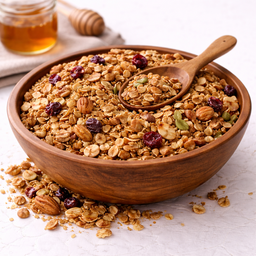
- 1 Divide half of the skyr into a glass or bowl.
- 2 Add a layer of granola.
Nutrition per serving
Indicative values per serving.
Timing & Suitability
Tags & Diet
Allergens: Dairy, Gluten, Nuts