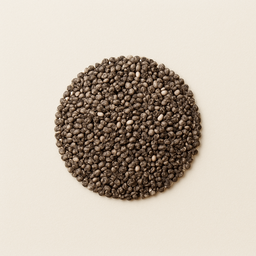
Chia Seeds
Aztec seed with omega-3, fiber and minerals
What is this ingredient?
Chia seeds (Salvia hispanica) were a staple crop in Aztec and Maya kitchens. In historical context, they were carried on long journeys because the dry seeds are light, store well and can be mixed easily with water or drinks.
The tiny seeds can absorb 10-12 times their weight in water and form a soft gel. This makes them practical for chia pudding, overnight oats, smoothies and as a plant-based binder in baking.
Nutritionally, chia seeds stand out for alpha-linolenic acid (ALA, a plant omega-3), plenty of fiber, minerals such as calcium, magnesium, phosphorus and zinc, and protein containing all essential amino acids.
How does it taste?
Very mild and neutral, with a gelatinous texture when the seeds are soaked.
Pairs well with:
Pairs well with coconut milkberriesbananamangooatmeal and honey.
Did you know...?
- Chia seeds were a staple food of the Aztecs and Maya; 'chia' is often linked to the Nahuatl word for 'strength'.
- Chia seeds can absorb up to 12 times their own weight in water, forming a soft gel.
Nutritional Value & Energy
Per 100g
Chia Seeds provides energy thanks to natural nutrients , buffered by fiber.
Per 100g
Minerals
Vitamins
Omega-3 fatty acids
More nutrients
Trace Minerals
What's in a serving?
1 handful
Chia seeds naturally contain calcium (631 mg per 100 g).
Chia seeds naturally contain iron (7.72 mg per 100 g).
Chia seeds naturally contain magnesium (335 mg per 100 g).
Chia seeds naturally contain potassium (407 mg per 100 g).
Chia seeds naturally contain phosphorus (860 mg per 100 g).
Chia seeds naturally contain zinc (4.58 mg per 100 g).
Chia seeds naturally contain folate (49 mcg per 100 g).
Chia seeds naturally contain selenium (55.2 mcg per 100 g).
Chia seeds naturally contain manganese (2.72 mg per 100 g).
% of daily reference intake (DRI)
EU-approved nutrition claims
This ingredient contains nutrients for which EFSA-authorized health claims exist (at nutrient level, not ingredient-specific).
Approved health claims (EU)
Magnesium EU 432/2012
Magnesium contributes to normal muscle function
Contains 335mg/100g (threshold: ≥56.25mg/100g)
Magnesium EU 432/2012
Magnesium contributes to the reduction of tiredness and fatigue
Contains 335mg/100g (threshold: ≥56.25mg/100g)
Magnesium EU 432/2012
Magnesium contributes to normal functioning of the nervous system
Contains 335mg/100g (threshold: ≥56.25mg/100g)
Zinc EU 432/2012
Zinc contributes to the normal function of the immune system
Contains 4.58mg/100g (threshold: ≥1.5mg/100g)
Zinc EU 432/2012
Zinc contributes to the maintenance of normal skin
Contains 4.58mg/100g (threshold: ≥1.5mg/100g)
Iron EU 432/2012
Iron contributes to normal energy-yielding metabolism
Contains 7.72mg/100g (threshold: ≥2.1mg/100g)
Iron EU 432/2012
Iron contributes to the reduction of tiredness and fatigue
Contains 7.72mg/100g (threshold: ≥2.1mg/100g)
Calcium EU 432/2012
Calcium is needed for the maintenance of normal bones
Contains 631mg/100g (threshold: ≥120mg/100g)
Potassium EU 432/2012
Potassium contributes to the maintenance of normal blood pressure
Contains 407mg/100g (threshold: ≥300mg/100g)
Folate EU 432/2012
Folate contributes to normal blood formation
Contains 49mcg/100g (threshold: ≥30mcg/100g)
Folate EU 432/2012
Folate contributes to normal amino acid synthesis
Contains 49mcg/100g (threshold: ≥30mcg/100g)
Folate EU 432/2012
Folate contributes to normal homocysteine metabolism
Contains 49mcg/100g (threshold: ≥30mcg/100g)
Folate EU 432/2012
Folate contributes to normal psychological function
Contains 49mcg/100g (threshold: ≥30mcg/100g)
Folate EU 432/2012
Folate contributes to the normal function of the immune system
Contains 49mcg/100g (threshold: ≥30mcg/100g)
Folate EU 432/2012
Folate has a role in the process of cell division
Contains 49mcg/100g (threshold: ≥30mcg/100g)
Folate EU 432/2012
Folate contributes to maternal tissue growth during pregnancy
Contains 49mcg/100g (threshold: ≥30mcg/100g)
Calcium EU 432/2012
Calcium is needed for the maintenance of normal teeth
Contains 631mg/100g (threshold: ≥120mg/100g)
Calcium EU 432/2012
Calcium contributes to normal blood clotting
Contains 631mg/100g (threshold: ≥120mg/100g)
Calcium EU 432/2012
Calcium contributes to normal energy-yielding metabolism
Contains 631mg/100g (threshold: ≥120mg/100g)
Calcium EU 432/2012
Calcium contributes to normal muscle function
Contains 631mg/100g (threshold: ≥120mg/100g)
Calcium EU 432/2012
Calcium contributes to normal neurotransmission
Contains 631mg/100g (threshold: ≥120mg/100g)
Calcium EU 432/2012
Calcium contributes to the normal function of digestive enzymes
Contains 631mg/100g (threshold: ≥120mg/100g)
Calcium EU 432/2012
Calcium has a role in the process of cell division and specialisation
Contains 631mg/100g (threshold: ≥120mg/100g)
Phosphorus EU 432/2012
Phosphorus contributes to normal energy-yielding metabolism
Contains 860mg/100g (threshold: ≥105mg/100g)
Phosphorus EU 432/2012
Phosphorus contributes to the normal function of cell membranes
Contains 860mg/100g (threshold: ≥105mg/100g)
Phosphorus EU 432/2012
Phosphorus contributes to the maintenance of normal bones
Contains 860mg/100g (threshold: ≥105mg/100g)
Phosphorus EU 432/2012
Phosphorus contributes to the maintenance of normal teeth
Contains 860mg/100g (threshold: ≥105mg/100g)
Magnesium EU 432/2012
Magnesium contributes to normal energy-yielding metabolism
Contains 335mg/100g (threshold: ≥56.25mg/100g)
Magnesium EU 432/2012
Magnesium contributes to electrolyte balance
Contains 335mg/100g (threshold: ≥56.25mg/100g)
Magnesium EU 432/2012
Magnesium contributes to normal protein synthesis
Contains 335mg/100g (threshold: ≥56.25mg/100g)
Magnesium EU 432/2012
Magnesium contributes to normal psychological function
Contains 335mg/100g (threshold: ≥56.25mg/100g)
Magnesium EU 432/2012
Magnesium contributes to the maintenance of normal bones
Contains 335mg/100g (threshold: ≥56.25mg/100g)
Magnesium EU 432/2012
Magnesium contributes to the maintenance of normal teeth
Contains 335mg/100g (threshold: ≥56.25mg/100g)
Magnesium EU 432/2012
Magnesium has a role in the process of cell division
Contains 335mg/100g (threshold: ≥56.25mg/100g)
Iron EU 432/2012
Iron contributes to normal cognitive function
Contains 7.72mg/100g (threshold: ≥2.1mg/100g)
Iron EU 432/2012
Iron contributes to normal formation of red blood cells and haemoglobin
Contains 7.72mg/100g (threshold: ≥2.1mg/100g)
Iron EU 432/2012
Iron contributes to normal oxygen transport in the body
Contains 7.72mg/100g (threshold: ≥2.1mg/100g)
Iron EU 432/2012
Iron contributes to the normal function of the immune system
Contains 7.72mg/100g (threshold: ≥2.1mg/100g)
Iron EU 432/2012
Iron has a role in the process of cell division
Contains 7.72mg/100g (threshold: ≥2.1mg/100g)
Zinc EU 432/2012
Zinc contributes to normal acid-base metabolism
Contains 4.58mg/100g (threshold: ≥1.5mg/100g)
Zinc EU 432/2012
Zinc contributes to normal carbohydrate metabolism
Contains 4.58mg/100g (threshold: ≥1.5mg/100g)
Zinc EU 432/2012
Zinc contributes to normal cognitive function
Contains 4.58mg/100g (threshold: ≥1.5mg/100g)
Zinc EU 432/2012
Zinc contributes to normal DNA synthesis
Contains 4.58mg/100g (threshold: ≥1.5mg/100g)
Zinc EU 432/2012
Zinc contributes to normal fertility and reproduction
Contains 4.58mg/100g (threshold: ≥1.5mg/100g)
Zinc EU 432/2012
Zinc contributes to normal macronutrient metabolism
Contains 4.58mg/100g (threshold: ≥1.5mg/100g)
Zinc EU 432/2012
Zinc contributes to normal metabolism of fatty acids
Contains 4.58mg/100g (threshold: ≥1.5mg/100g)
Zinc EU 432/2012
Zinc contributes to normal metabolism of vitamin A
Contains 4.58mg/100g (threshold: ≥1.5mg/100g)
Zinc EU 432/2012
Zinc contributes to normal protein synthesis
Contains 4.58mg/100g (threshold: ≥1.5mg/100g)
Zinc EU 432/2012
Zinc contributes to the maintenance of normal bones
Contains 4.58mg/100g (threshold: ≥1.5mg/100g)
Zinc EU 432/2012
Zinc contributes to the maintenance of normal hair
Contains 4.58mg/100g (threshold: ≥1.5mg/100g)
Zinc EU 432/2012
Zinc contributes to the maintenance of normal nails
Contains 4.58mg/100g (threshold: ≥1.5mg/100g)
Zinc EU 432/2012
Zinc contributes to the maintenance of normal testosterone levels in the blood
Contains 4.58mg/100g (threshold: ≥1.5mg/100g)
Zinc EU 432/2012
Zinc contributes to the maintenance of normal vision
Contains 4.58mg/100g (threshold: ≥1.5mg/100g)
Zinc EU 432/2012
Zinc contributes to the protection of cells from oxidative stress
Contains 4.58mg/100g (threshold: ≥1.5mg/100g)
Zinc EU 432/2012
Zinc has a role in the process of cell division
Contains 4.58mg/100g (threshold: ≥1.5mg/100g)
Manganese EU 432/2012
Manganese contributes to normal energy-yielding metabolism
Contains 2.72mg/100g (threshold: ≥0.3mg/100g)
Manganese EU 432/2012
Manganese contributes to the maintenance of normal bones
Contains 2.72mg/100g (threshold: ≥0.3mg/100g)
Manganese EU 432/2012
Manganese contributes to the normal formation of connective tissue
Contains 2.72mg/100g (threshold: ≥0.3mg/100g)
Manganese EU 432/2012
Manganese contributes to the protection of cells from oxidative stress
Contains 2.72mg/100g (threshold: ≥0.3mg/100g)
Selenium EU 432/2012
Selenium contributes to the maintenance of normal hair
Contains 55.2mcg/100g (threshold: ≥8.25mcg/100g)
Selenium EU 432/2012
Selenium contributes to the maintenance of normal nails
Contains 55.2mcg/100g (threshold: ≥8.25mcg/100g)
Selenium EU 432/2012
Selenium contributes to the normal function of the immune system
Contains 55.2mcg/100g (threshold: ≥8.25mcg/100g)
Selenium EU 432/2012
Selenium contributes to normal thyroid function
Contains 55.2mcg/100g (threshold: ≥8.25mcg/100g)
Selenium EU 432/2012
Selenium contributes to normal spermatogenesis
Contains 55.2mcg/100g (threshold: ≥8.25mcg/100g)
Selenium EU 432/2012
Selenium contributes to the protection of cells from oxidative stress
Contains 55.2mcg/100g (threshold: ≥8.25mcg/100g)
Potassium EU 432/2012
Potassium contributes to normal functioning of the nervous system
Contains 407mg/100g (threshold: ≥300mg/100g)
Potassium EU 432/2012
Potassium contributes to normal muscle function
Contains 407mg/100g (threshold: ≥300mg/100g)
Comparison
vsmelk
Chia seeds contain about 5× as much calcium per 100 g as milk.
vsspinazie
Chia seeds contain about 3× as much iron per 100 g as spinach.
What's being researched?
Chia seeds and alpha-linolenic acid
The high ALA (omega-3) content of chia seeds is being studied in nutrition research. Conversion of ALA to EPA and DHA is limited, so nutritional comparison with fish oil remains nuanced.
Supported by: [1] Grancieri M (2019) , [3] Ullah (2016)
Chia seeds and satiety
The gel formation of chia seeds in water and its relationship with meal texture and satiety are being studied. Studies show mixed results, with some RCTs reporting greater satiety.
Supported by: [2] Vuksan (2017)
Good Combinations (Synergy)
Combine chia seeds smartly to enhance the effect:
Chia Seeds 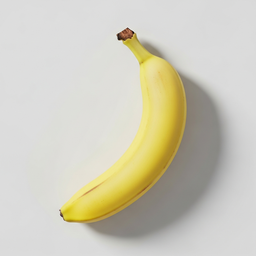 Banana
 Sustained energy through fiber + quick sugars
Technical: Chia seeds contain 34g fiber per 100g and absorb up to 12x their weight in liquid, forming a gel in the gut. This slows absorption of banana's fast sugars (fructose and glucose). The result: a slower, more stable blood sugar rise instead of a sharp spike followed by a dip.
What does this mean for you? Make chia pudding with banana slices or mix chia seeds into your banana smoothie. The banana gives instant energy, the chia seeds make that energy last for hours.
Chia Seeds 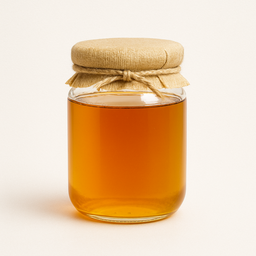 Honey
Honey Fiber + prebiotics for the microbiome and satiety
Technical: Chia seeds contain 34g fiber per 100g forming a gel in the gut promoting satiety. Honey contains prebiotic oligosaccharides (FOS) feeding beneficial gut bacteria. Together they support the microbiome.
What does this mean for you? Mix chia pudding with a spoonful of raw honey. The honey sweetens and feeds your good gut bacteria.
Chia Seeds  Coconut Milk
 Perfect chia pudding base
Technical: Chia seeds contain ALA omega-3 fatty acids that are fat-soluble. The MCTs (medium-chain triglycerides) in coconut milk are rapidly absorbed and form a fat matrix that increases bioavailability of omega-3 from chia seeds. Additionally, chia seeds absorb the liquid forming a pudding-like texture with optimal nutrient delivery.
What does this mean for you? Soak chia seeds overnight in coconut milk for the perfect pudding. The coconut fat helps your body absorb more omega-3 from the chia seeds.
Chia Seeds 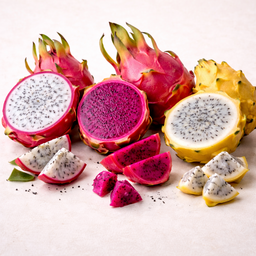 Dragon Fruit (Pitaya)
 Prebiotic fiber + omega-3 for microbiome and bioactive support
Technical: Dragon fruit contains 3g fiber per 100g (80% soluble pectin and mucilage) acting as prebiotics for Bifidobacterium and Lactobacillus. Chia seeds provide 34g fiber per 100g plus 17.8g ALA omega-3 per 100g. The combination offers both prebiotic fiber (for gut flora) and omega-3 fatty acids (bioactive lipids). Dragon fruit's betacyanins (red pigment) are additional antioxidants.
What does this mean for you? Make a dragon fruit bowl with chia seeds — the spectacular color is not just beautiful but also functional. The fibers from both sources feed your gut flora, while the omega-3 from chia provides bioactive support.
Chia Seeds  Protein Powder (unsweetened)
 Leucine muscle synthesis + omega-3 bioactive support = complementary post-workout recovery
Leucine activates mTOR muscle protein synthesis, omega-3 ALA inhibits post-exercise COX-2 inflammation
Technical: Protein powder (whey) contains 10-12% leucine — the primary trigger for mTOR-mediated muscle protein synthesis after training. Chia seed provides 17.8g omega-3 ALA per 100g that modulates COX-2 mediated signaling pathways via EPA/DHA conversion. Post-workout, both muscle repair (anabolic) and signaling pathway management are needed — leucine and omega-3 address both needs complementarily.
What does this mean for you? Add chia seeds to your protein shake after working out. The protein repairs your muscles while the omega-3 fatty acids modulate the training response — recovery on two fronts.
Chia Seeds 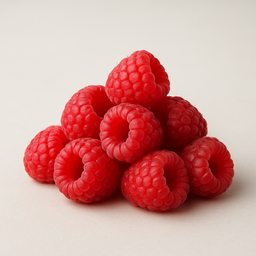 Raspberries
 Ellagitannins + omega-3 for complementary bioactive support
Ellagitannins metabolize to bioactive urolithins (PMID: 16159193)
Technical: Raspberries are the richest source of ellagitannins (300mg/100g), which are converted in the gut to urolithins — bioactive metabolites that influence multiple signaling pathways. Chia seeds provide 5g ALA omega-3 per tablespoon, which modulates eicosanoid production via the COX/LOX pathway. Together they cover multiple biochemical pathways: urolithins via NF-kB modulation, omega-3 via eicosanoid balance.
What does this mean for you? Make a raspberry-chia pudding by soaking 2 tablespoons chia seeds in almond milk with raspberries. The raspberries give color and flavor, the chia provides texture and omega-3. Perfect as breakfast or dessert.
Chia Seeds 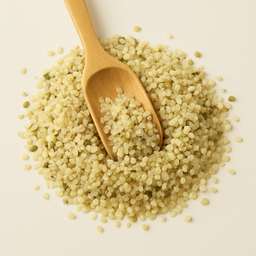 Hemp Seeds
 Complementary omega-3 profiles for a more favorable fatty acid balance
Technical: Hemp seeds have an ideal omega-6:3 ratio of 3:1 (gamma-linolenic acid + alpha-linolenic acid). Chia seeds and flaxseed are particularly rich in ALA omega-3. Combined, the total fatty acid balance shifts toward a more favorable profile. This is relevant because the modern diet often has a 15:1 to 20:1 omega-6:3 ratio — much higher than the recommended 4:1 or lower.
What does this mean for you? Sprinkle hemp seeds together with chia seeds or flaxseed over your oatmeal or salads. The combination brings the fatty acid balance closer to recommended ratios — beneficial for heart and blood vessels.
Chia Seeds 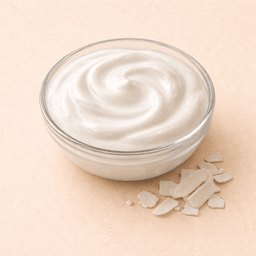 Coconut Yogurt
 Double synbiotic: chia mucilage prebiotic + coconut probiotics + SCFA production
Seed mucilages increase SCFA production through Lactobacillus and Bifidobacterium fermentation (Santos et al., 2025, Food Chemistry)
Technical: Chia seed mucilage contains indigestible carbohydrates (soluble fibers) serving as prebiotic substrate. Lactobacillus and Bifidobacterium from coconut yogurt ferment these fibers into short-chain fatty acids (SCFAs), especially butyrate and propionate. Research shows seed mucilages significantly increase SCFA production compared to probiotics alone.
What does this mean for you? Chia pudding with coconut yogurt is a synbiotic combination. The mucilage fibers from chia feed the good bacteria from the yogurt — together they produce more short-chain fatty acids than either ingredient alone.
Chia Seeds 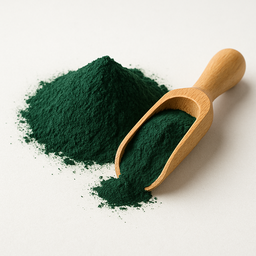 Spirulina
 Nutrient-dense combination: complete protein + omega-3
Technical: Spirulina provides 57g complete protein per 100g with all 9 essential amino acids. Chia seeds add 18g ALA omega-3 per 100g plus 34g fiber. The combination offers omega-3 fatty acids AND muscle-building protein in one.
What does this mean for you? Add 1 teaspoon spirulina + 1 tablespoon chia seeds to your smoothie or overnight oats. This is one of the most nutrient-dense combinations you can make.
Recipes with Chia Seeds
Discover delicious recipes featuring chia seeds:
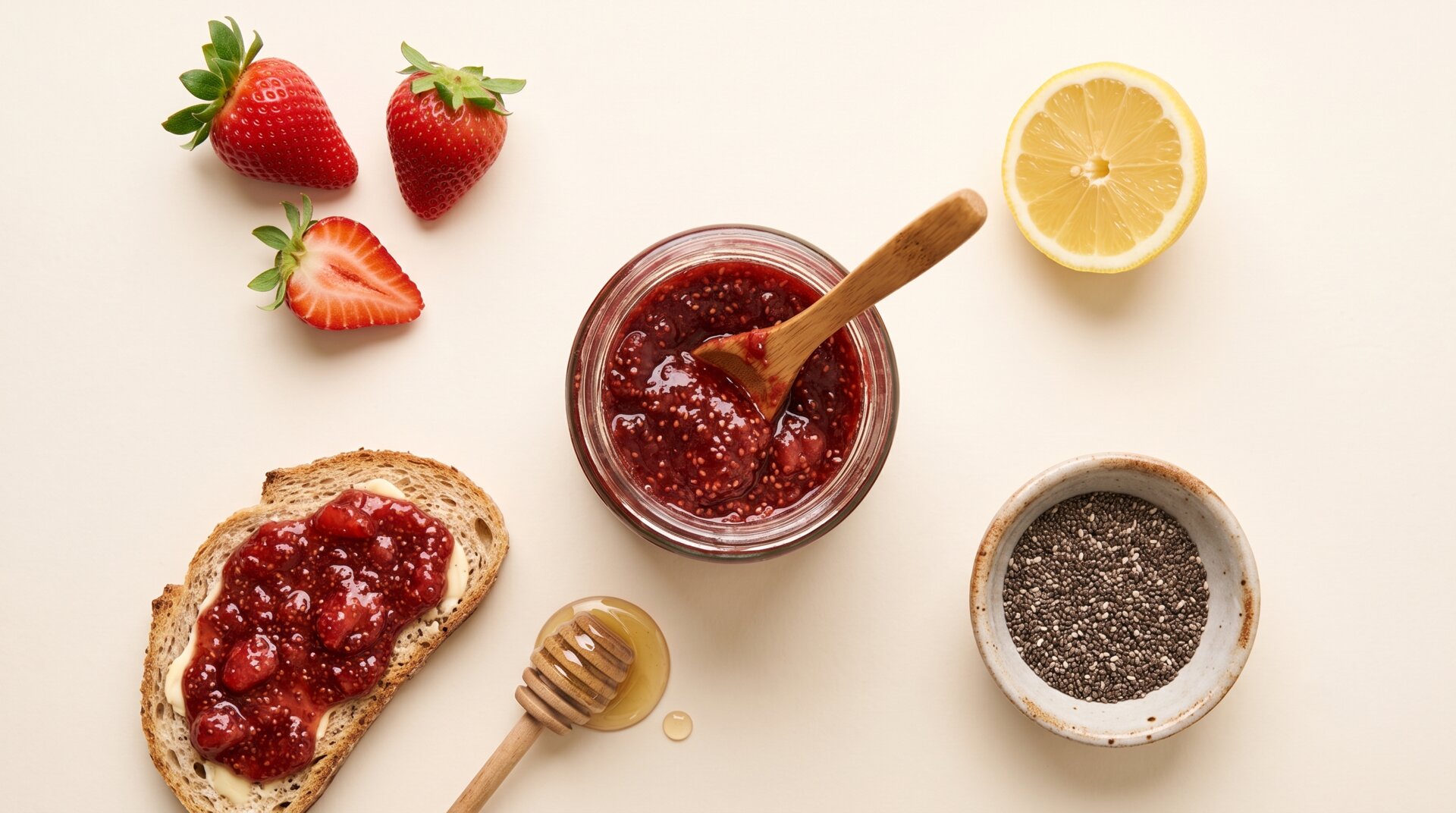 Strawberry chia jam 13 min Homemade jam from strawberries and chia seeds, sweetened only with honey
  34 kcal
  1g protein
 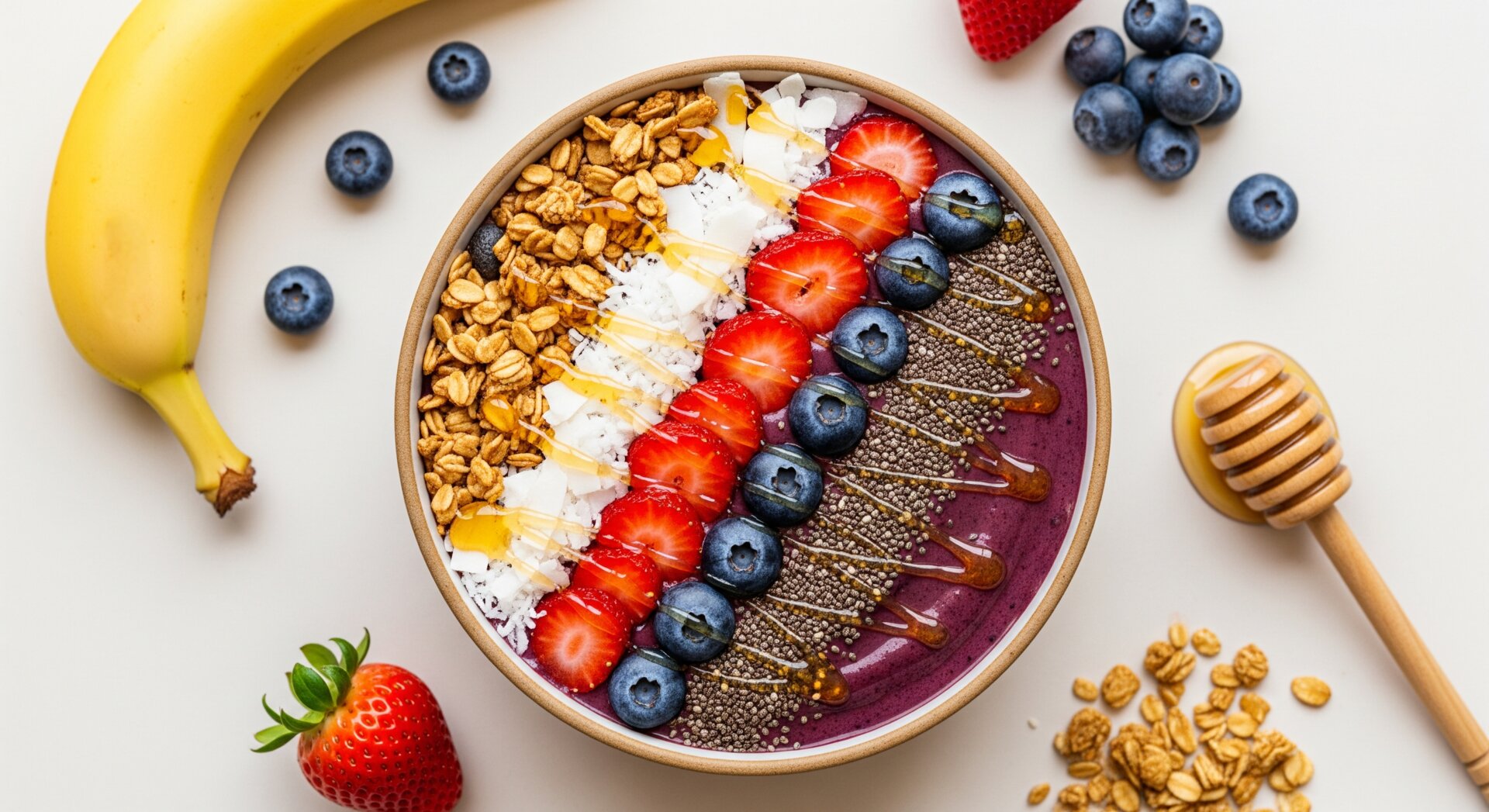 Acai Bowl with Banana, Berries and Oats 10 min Fresh berry bowl for fresh mornings 431 kcal 8g protein 2 synergies Acai Bowl with Banana, Berries and Oats 10 min Fresh berry bowl for fresh mornings 431 kcal 8g protein 2 synergies
 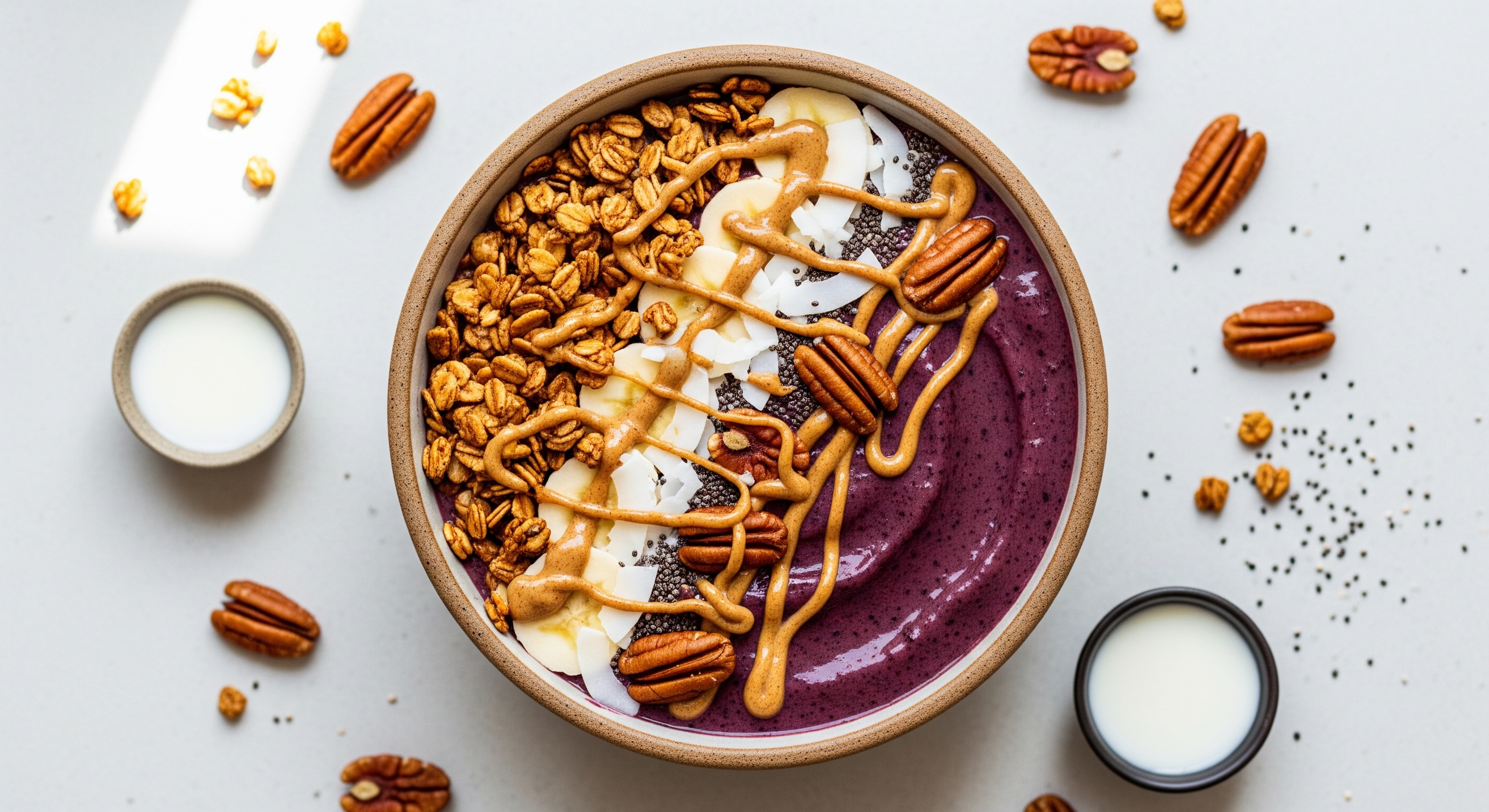 Açaí Bowl with Nuts, Granola & Coconut Base 10 min Colorful bowl with açaí, nuts and seeds on a creamy coconut-banana base 745 kcal 16g protein 2 synergies
 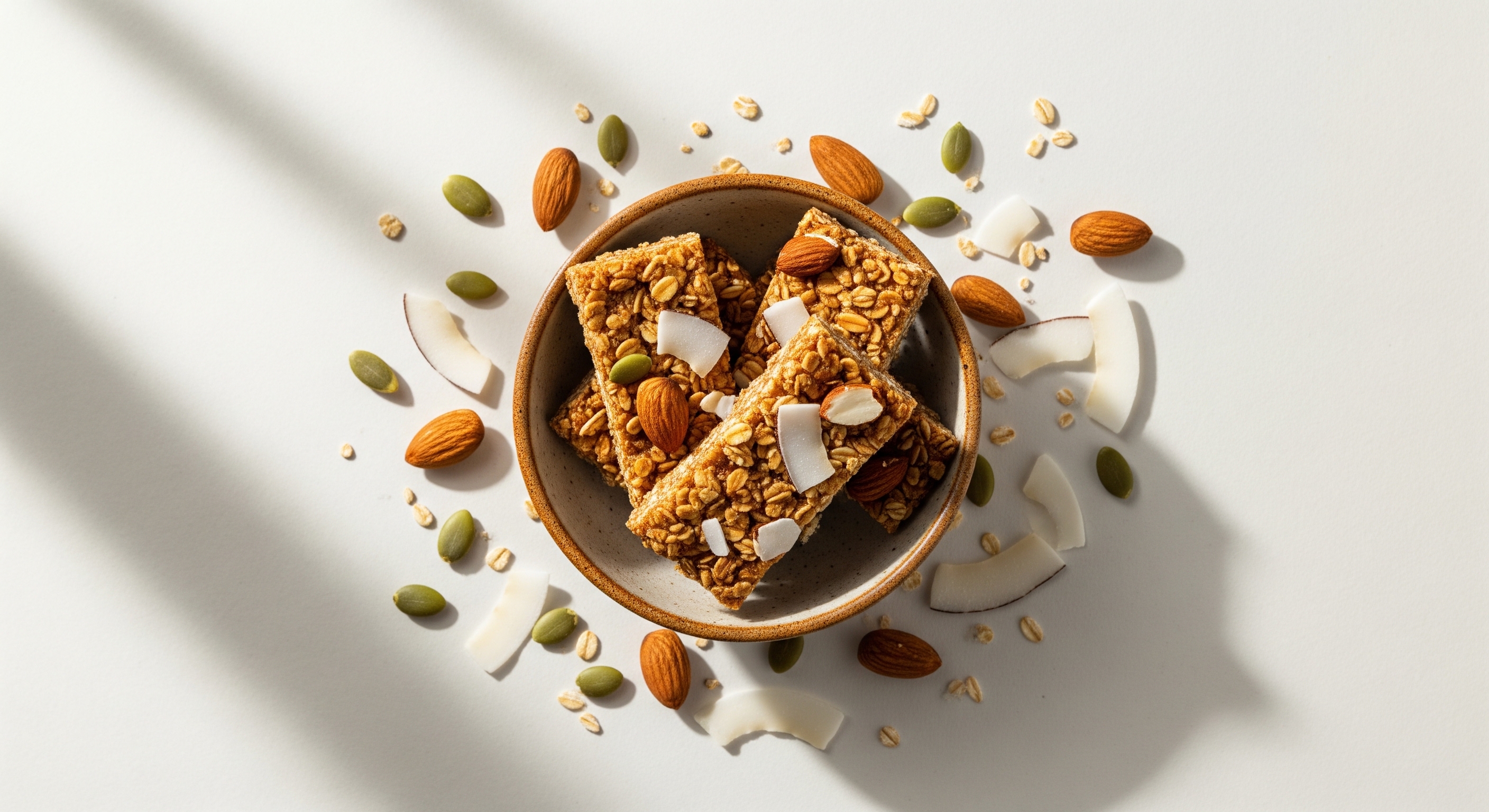 Almond-Coconut Granola Bars 40 min Crunchy, nutty and sweet from honey and apricots 412 kcal 10g protein 2 synergies
 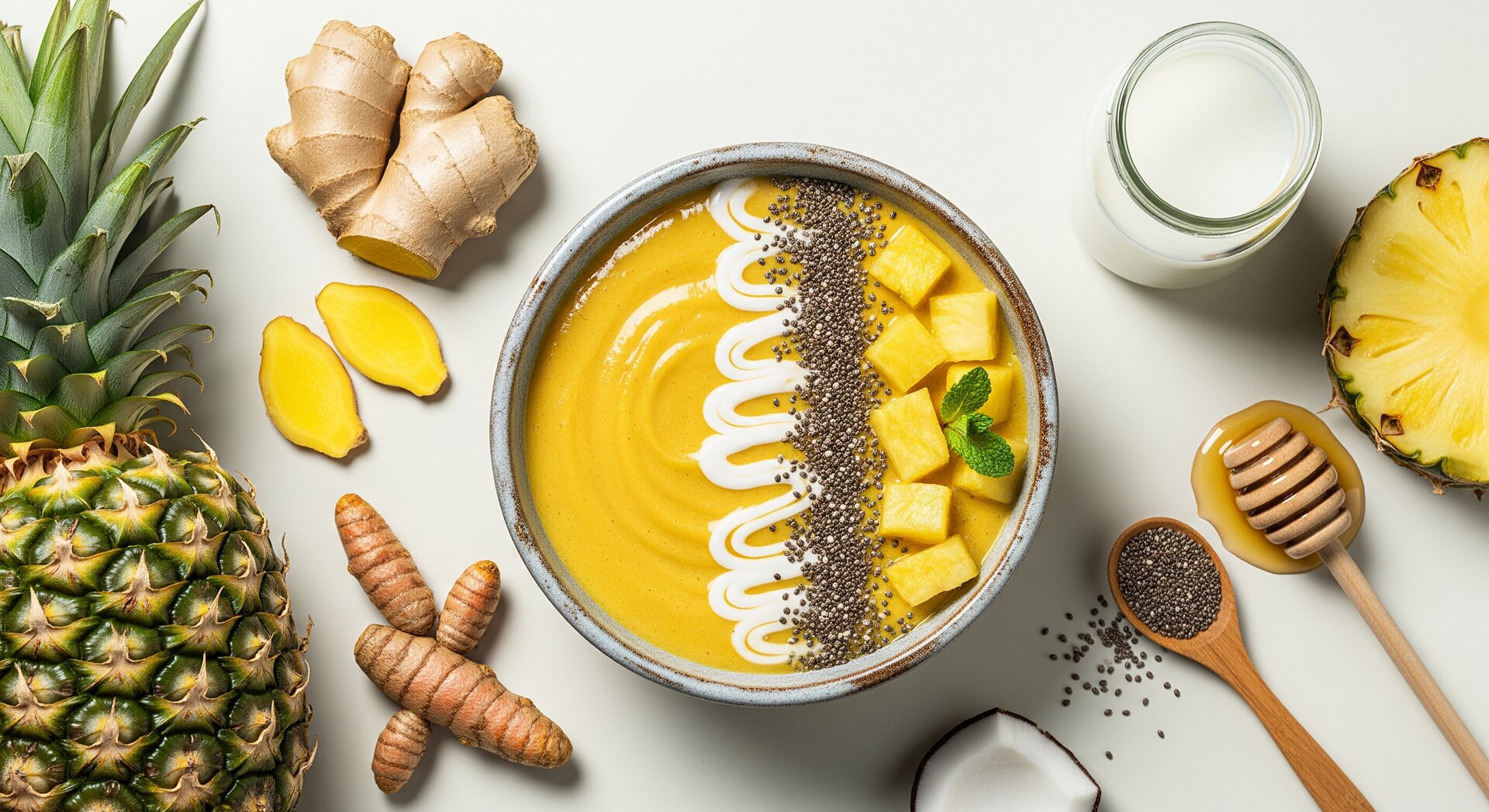 Pineapple Ginger Smoothie 5 min Tropical smoothie with turmeric, chia seeds and coconut milk 220 kcal 4g protein 3 synergies
  In the Kitchen
Storage
Location:Pantry
Shelf life:2-4 jaar
Store chia seeds in an airtight jar, cool, dry and away from direct light. Because of their unsaturated fat content, the flavor stays best when you avoid heat and moisture.
Preparation
Soak in oat milk, coconut milk or water. Stir after 5 minutes to prevent clumps and let stand until the desired gel texture forms.
Conversions
Substitutes
Smart preparation
1Soak chia seeds for at least 15 minutes in liquid (about a 1:4 ratio).
Why?
Chia seeds absorb plenty of liquid and form a gel that softens the seeds.
2Stir chia seeds again after 5 minutes of soaking.
Why?
This prevents clumps and distributes the gel evenly through the mixture.
3Use chia seeds dry as a topping and soaked as a plant-based binder.
Caution / Warnings
Chia Seeds is very safe, but there are scientific considerations:
Blood Thinners Moderate
Omega-3 fatty acids may be relevant for people using blood-thinning medication, especially at high intakes.
Advice:
In normal food amounts (1-2 tbsp per day), chia seeds usually fit within a regular diet; consult a doctor or dietitian for high intakes or medication use.
Swallowing Difficulties Moderate
Dry chia seeds absorb liquid quickly and can swell when eaten without enough fluid.
Advice:
Preferably soak chia seeds in liquid for at least 10-15 minutes before eating, especially with swallowing difficulties or a sensitive esophagus.
Traditional use
Indigenous
Chia Seeds Among the Aztecs and Maya
Chia seed was one of the important food crops in Aztec culinary traditions and was used as a compact, long-lasting food supply for travelers, messengers and warriors.
Summary
Chia seeds are nutritious seeds rich in omega-3 (ALA), fiber and minerals. They work well in chia pudding (soak 2 tbsp in 150 ml oat milk overnight) or as a topping on oatmeal. Important: preferably let chia seeds soak in liquid, especially when using larger amounts.