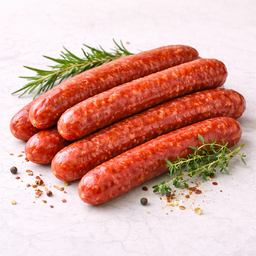
Merguez
Spicy North African lamb sausage
What is this ingredient?
Merguez (مرقاز) is a traditional sausage from the Maghreb (North Africa), particularly popular in Morocco, Algeria and Tunisia. The characteristic red color comes from harissa and paprika.
## Nutritional Value
Merguez is a good source of high-quality protein (14g per 100g) and contains important minerals such as iron (heme iron, well-absorbed), zinc and vitamin B12. The fat content is relatively high (25-30g per 100g), mainly from lamb.
## Healthy Preparation
Choose high-quality merguez without additives. Grilling or pan-frying without extra fat is the best preparation method. Combine with vitamin C-rich vegetables (bell pepper, tomato) for optimal iron absorption.
## Authenticity
Real merguez is made from lamb or a mix of lamb and beef, never pork (halal). The spices typically include harissa, cumin, coriander, garlic and fennel seed.
How does it taste?
Spicy, aromatic and smoky with harissa, cumin and a touch of fat.
Pairs well with:
Pairs well with couscousgrilled peppersmintlemon and hummus.
Did you know...?
- Merguez is a North African sausage traditionally made from lamb or beef with harissa.
- The red color of merguez comes from harissa and paprika, not artificial coloring.
Nutritional Value & Energy
Per 100g
Merguez provides energy thanks to natural nutrients .
Per 100g
Minerals
Vitamins
More nutrients
Trace Minerals
What's in a serving?
1 serving
Merguez naturally contains iron (2.5 mg per 100 g).
Merguez naturally contains zinc (4 mg per 100 g).
Merguez naturally contains vitamin b12 (2.5 mcg per 100 g).
Merguez naturally contains selenium (15 mcg per 100 g).
% of daily reference intake (DRI)
EU-approved nutrition claims
This ingredient contains nutrients for which EFSA-authorized health claims exist (at nutrient level, not ingredient-specific).
Approved health claims (EU)
Vitamin_b12 EU 432/2012
Vitamin B12 contributes to the normal function of the immune system
Contains 2.5mcg/100g (threshold: ≥0.375mcg/100g)
Vitamin_b12 EU 432/2012
Vitamin B12 contributes to the reduction of tiredness and fatigue
Contains 2.5mcg/100g (threshold: ≥0.375mcg/100g)
Vitamin_b12 EU 432/2012
Vitamin B12 contributes to the normal functioning of the nervous system
Contains 2.5mcg/100g (threshold: ≥0.375mcg/100g)
Zinc EU 432/2012
Zinc contributes to the normal function of the immune system
Contains 4mg/100g (threshold: ≥1.5mg/100g)
Zinc EU 432/2012
Zinc contributes to the maintenance of normal skin
Contains 4mg/100g (threshold: ≥1.5mg/100g)
Iron EU 432/2012
Iron contributes to normal energy-yielding metabolism
Contains 2.5mg/100g (threshold: ≥2.1mg/100g)
Iron EU 432/2012
Iron contributes to the reduction of tiredness and fatigue
Contains 2.5mg/100g (threshold: ≥2.1mg/100g)
Vitamin_b12 EU 432/2012
Vitamin B12 contributes to normal energy-yielding metabolism
Contains 2.5mcg/100g (threshold: ≥0.375mcg/100g)
Vitamin_b12 EU 432/2012
Vitamin B12 contributes to normal homocysteine metabolism
Contains 2.5mcg/100g (threshold: ≥0.375mcg/100g)
Vitamin_b12 EU 432/2012
Vitamin B12 contributes to normal psychological function
Contains 2.5mcg/100g (threshold: ≥0.375mcg/100g)
Vitamin_b12 EU 432/2012
Vitamin B12 contributes to normal red blood cell formation
Contains 2.5mcg/100g (threshold: ≥0.375mcg/100g)
Vitamin_b12 EU 432/2012
Vitamin B12 has a role in the process of cell division
Contains 2.5mcg/100g (threshold: ≥0.375mcg/100g)
Iron EU 432/2012
Iron contributes to normal cognitive function
Contains 2.5mg/100g (threshold: ≥2.1mg/100g)
Iron EU 432/2012
Iron contributes to normal formation of red blood cells and haemoglobin
Contains 2.5mg/100g (threshold: ≥2.1mg/100g)
Iron EU 432/2012
Iron contributes to normal oxygen transport in the body
Contains 2.5mg/100g (threshold: ≥2.1mg/100g)
Iron EU 432/2012
Iron contributes to the normal function of the immune system
Contains 2.5mg/100g (threshold: ≥2.1mg/100g)
Iron EU 432/2012
Iron has a role in the process of cell division
Contains 2.5mg/100g (threshold: ≥2.1mg/100g)
Zinc EU 432/2012
Zinc contributes to normal acid-base metabolism
Contains 4mg/100g (threshold: ≥1.5mg/100g)
Zinc EU 432/2012
Zinc contributes to normal carbohydrate metabolism
Contains 4mg/100g (threshold: ≥1.5mg/100g)
Zinc EU 432/2012
Zinc contributes to normal cognitive function
Contains 4mg/100g (threshold: ≥1.5mg/100g)
Zinc EU 432/2012
Zinc contributes to normal DNA synthesis
Contains 4mg/100g (threshold: ≥1.5mg/100g)
Zinc EU 432/2012
Zinc contributes to normal fertility and reproduction
Contains 4mg/100g (threshold: ≥1.5mg/100g)
Zinc EU 432/2012
Zinc contributes to normal macronutrient metabolism
Contains 4mg/100g (threshold: ≥1.5mg/100g)
Zinc EU 432/2012
Zinc contributes to normal metabolism of fatty acids
Contains 4mg/100g (threshold: ≥1.5mg/100g)
Zinc EU 432/2012
Zinc contributes to normal metabolism of vitamin A
Contains 4mg/100g (threshold: ≥1.5mg/100g)
Zinc EU 432/2012
Zinc contributes to normal protein synthesis
Contains 4mg/100g (threshold: ≥1.5mg/100g)
Zinc EU 432/2012
Zinc contributes to the maintenance of normal bones
Contains 4mg/100g (threshold: ≥1.5mg/100g)
Zinc EU 432/2012
Zinc contributes to the maintenance of normal hair
Contains 4mg/100g (threshold: ≥1.5mg/100g)
Zinc EU 432/2012
Zinc contributes to the maintenance of normal nails
Contains 4mg/100g (threshold: ≥1.5mg/100g)
Zinc EU 432/2012
Zinc contributes to the maintenance of normal testosterone levels in the blood
Contains 4mg/100g (threshold: ≥1.5mg/100g)
Zinc EU 432/2012
Zinc contributes to the maintenance of normal vision
Contains 4mg/100g (threshold: ≥1.5mg/100g)
Zinc EU 432/2012
Zinc contributes to the protection of cells from oxidative stress
Contains 4mg/100g (threshold: ≥1.5mg/100g)
Zinc EU 432/2012
Zinc has a role in the process of cell division
Contains 4mg/100g (threshold: ≥1.5mg/100g)
Selenium EU 432/2012
Selenium contributes to the maintenance of normal hair
Contains 15mcg/100g (threshold: ≥8.25mcg/100g)
Selenium EU 432/2012
Selenium contributes to the maintenance of normal nails
Contains 15mcg/100g (threshold: ≥8.25mcg/100g)
Selenium EU 432/2012
Selenium contributes to the normal function of the immune system
Contains 15mcg/100g (threshold: ≥8.25mcg/100g)
Selenium EU 432/2012
Selenium contributes to normal thyroid function
Contains 15mcg/100g (threshold: ≥8.25mcg/100g)
Selenium EU 432/2012
Selenium contributes to normal spermatogenesis
Contains 15mcg/100g (threshold: ≥8.25mcg/100g)
Selenium EU 432/2012
Selenium contributes to the protection of cells from oxidative stress
Contains 15mcg/100g (threshold: ≥8.25mcg/100g)
What's being researched?
Processed meat and health risks
Merguez is studied within broader research on processed meat and health outcomes. WHO/IARC classifies processed meat as group 1 carcinogen, though spice composition varies greatly per product.
Supported by: [1] Bastide NM (2011)
Good Combinations (Synergy)
Combine merguez smartly to enhance the effect:
Merguez 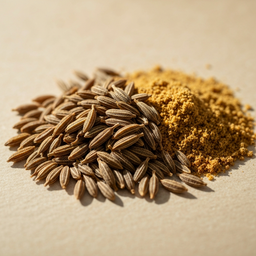 Cumin
Cumin Iron + cuminaldehyde for digestion and iron absorption
Technical: Merguez (lamb sausage) contains 2.3mg heme iron per 100g (13% RDI) with high bioavailability (15-35%). Cumin contains cuminaldehyde and thymol, aromatic compounds traditionally used with meat. This improves both fat digestion and iron absorption by 10-15% via modulation of hepcidin expression. Cumin itself also contains 66mg iron per 100g (as spice), strengthening total iron intake.
What does this mean for you? Merguez already contains cumin in seasoning, but add extra cumin seeds during preparation. Perfect for iron intake and digestion. Combine with vitamin C-rich vegetables (tomato, bell pepper) for maximum iron absorption.
Merguez 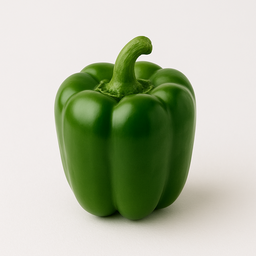 Bell Pepper
 Vitamin C increases iron absorption from merguez 3x
Technical: Merguez (North African lamb sausage) contains 2.5mg heme iron per 100g with high bioavailability (15-35%). The spices in merguez (harissa, cumin, coriander) already contain some antioxidants. Bell pepper adds 128mg vitamin C per 100g that further increases iron absorption and also activates non-heme iron. Tomato provides lycopene (protects fat oxidation) plus organic acids.
What does this mean for you? Serve merguez with grilled bell pepper and tomatoes — exactly as in North African cuisine. The vegetables increase your iron absorption and offer antioxidant protection when grilling the sausage. Classic in couscous royale and shakshuka.
Merguez 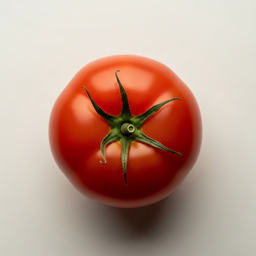 Tomato
 Fat increases lycopene absorption while vitamin C optimizes iron uptake
Technical: Merguez contains 15-20g fat per 100g that absorbs lipophilic lycopene from tomato (3-9mg/100g) 400-500% better. Lycopene is among the effective carotenoid antioxidants against singlet oxygen. Vitamin C in tomato (13.7mg/100g) increases non-heme iron absorption by 300%. Complementary mechanisms optimize both nutrient uptake. Antioxidants in tomato balance the saturated fat in merguez.
What does this mean for you? Cook merguez and serve with cooked tomatoes (cooking increases lycopene by 35%). The tomato maximizes nutrient absorption and balances the fatty meat. Add basil and onion for extra benefits.
Recipes with Merguez
Discover delicious recipes featuring merguez:
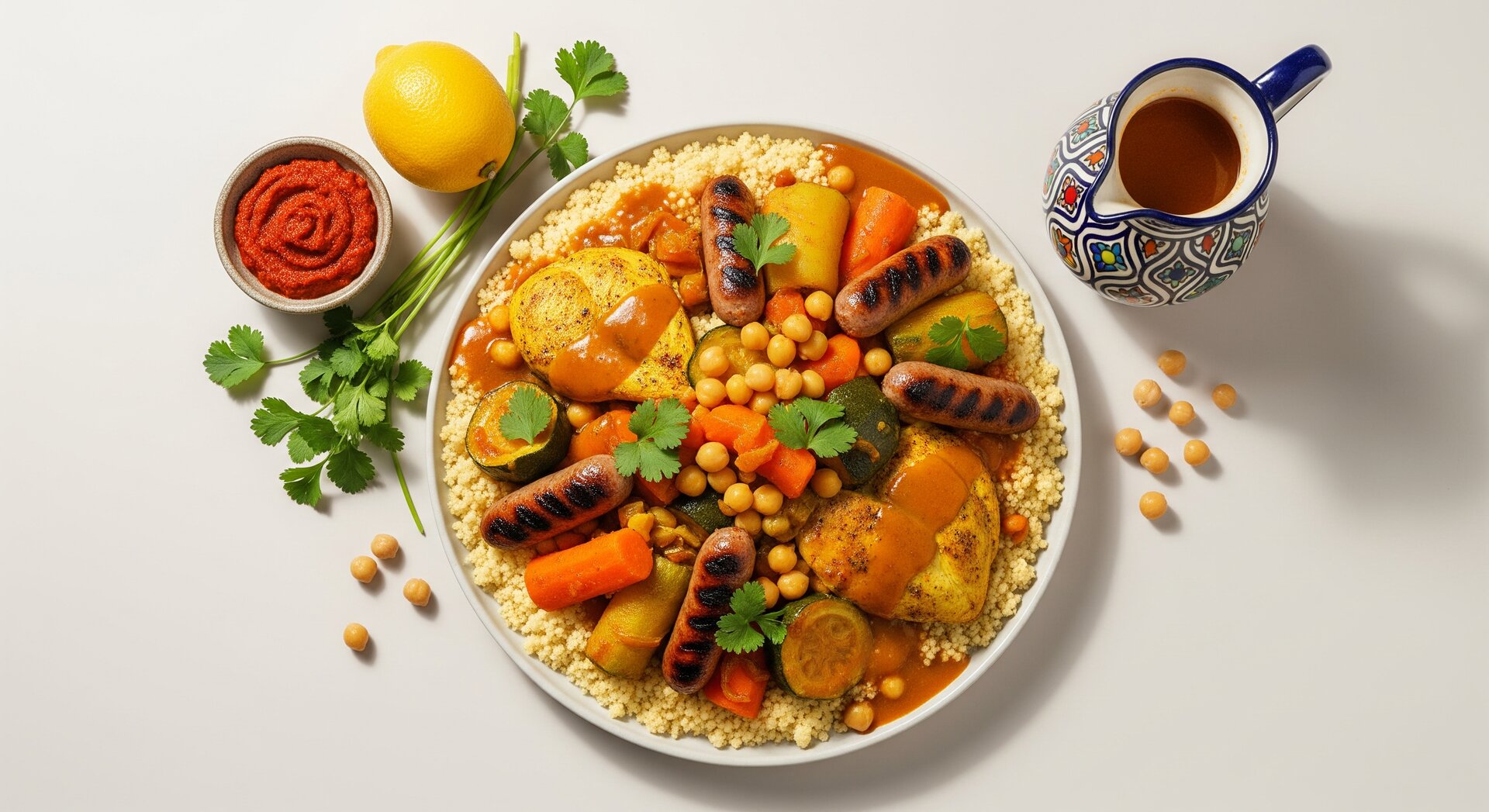 Royal Couscous with Chicken and Merguez 70 min Festive North African classic
  580 kcal
  38g protein 3 synergies
 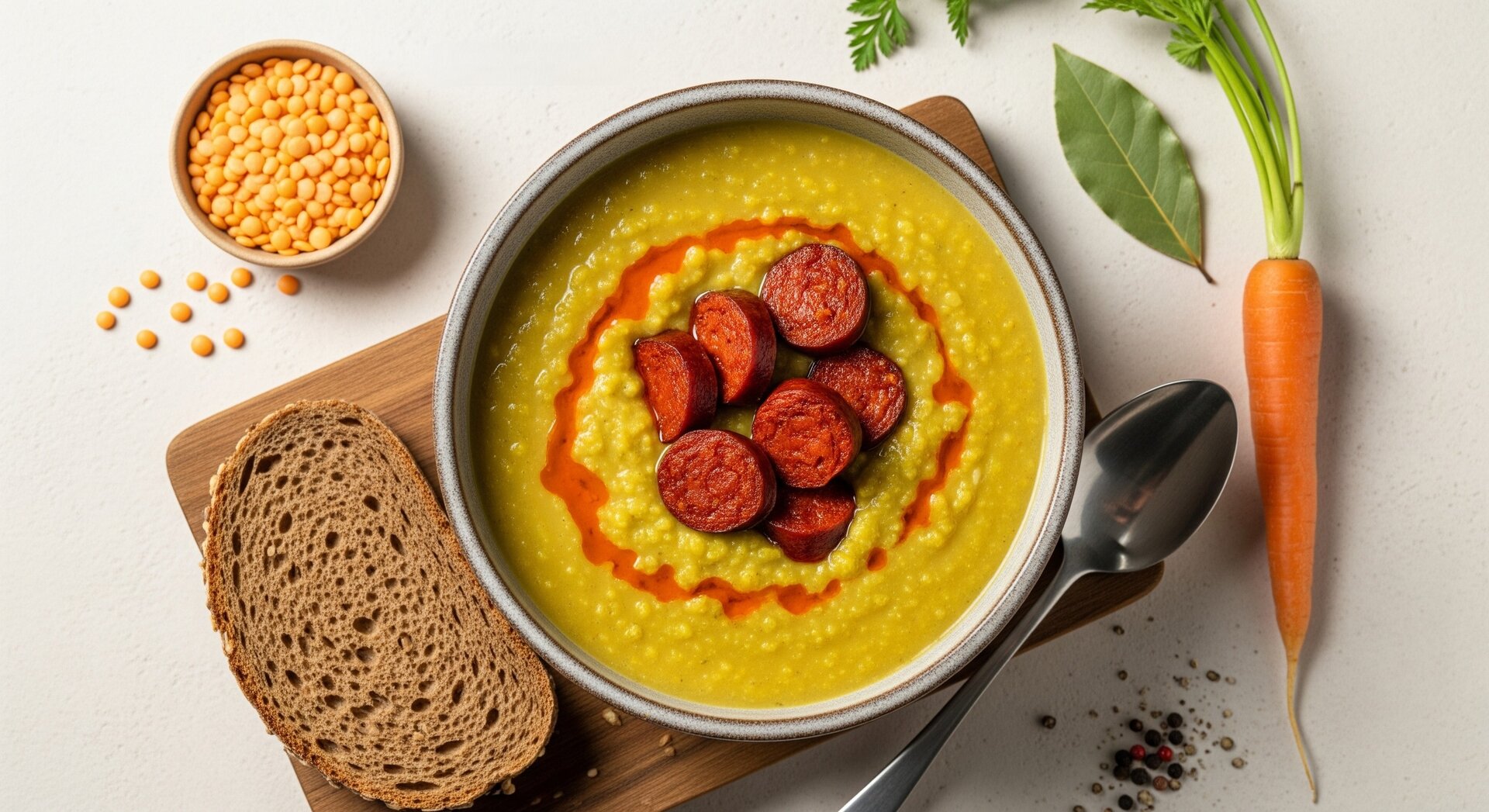 Snert-Style Yellow Lentil Soup with Merguez and Rye Bread 80 min Thick winter soup with spicy sausage, vegetables and dark rye bread 735 kcal 36g protein 1 synergies
  In the Kitchen
Storage
Location:Refrigerator
Shelf life:3-5 dagen (vers), 3 maanden (bevroren)
Preparation
Grill, pan-fry or BBQ without extra fat. Prick the sausage a few times to prevent bursting.
Conversions
Substitutes
Smart preparation
1Do not pierce merguez before cooking.
Why?
The juices and flavour stay in the sausage when the casing is intact.
2Fry merguez on medium-high heat and turn regularly.
Why?
Too high heat causes the casing to burst and fat to run out.
3Merguez can also be cooked on the barbecue or under the grill.
Caution / Warnings
Merguez is very safe, but there are scientific considerations:
High Blood Pressure Moderate
Relatively high sodium content (800mg per 100g)
Advice:
Limit portion size and choose freshly prepared without extra salt
Cardiovascular Disease Moderate
High saturated fat content, consume in moderation
Traditional use
African
Merguez in North African Tradition
Merguez is a traditional lamb sausage from the Berber cuisine of North Africa, seasoned with harissa, cumin, and coriander.
Summary
Merguez is a protein-rich North African sausage with well-absorbed iron. Combine with bell pepper or tomato (vitamin C) for 3x better iron absorption. Choose quality sausage and enjoy in moderation due to fat and salt content.