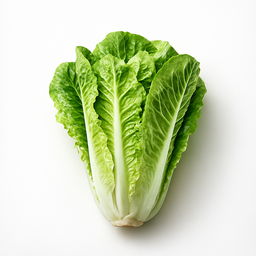
Lettuce (Romaine)
Low-Carb Wrap King
What is this ingredient?
Romaine lettuce is by far the most nutritious lettuce variety - with 17x more vitamin A and 4x more vitamin K than iceberg lettuce. The elongated, sturdy leaves make it perfect as an alternative to tortillas or bread in low-carb diets. Contains lactucarium, a compound with mild calming properties used by ancient Egyptians.
How does it taste?
Mild, fresh and neutral with a crisp, watery texture.
Pairs well with:
Pairs well with vinaigrettewalnutgoat cheeseavocado and tomato.
Did you know...?
- Lettuce descends from a wild plant that the Egyptians cultivated 4,500 years ago.
- The Romans ate lettuce at the end of meals as a sleep aid.
Nutritional Value & Energy
Per 100g
Lettuce (Romaine) is low in calories thanks to natural nutrients , buffered by fiber.
Per 100g
Minerals
Vitamins
Omega-3 fatty acids
More nutrients
B-Vitamins
Trace Minerals
What's in a serving?
1 serving
Lettuce (Romaine) naturally contains vitamin a (174 mcg per 100 g).
Lettuce (Romaine) naturally contains vitamin c (40 mg per 100 g).
Lettuce (Romaine) naturally contains vitamin k (128 mcg per 100 g).
% of daily reference intake (DRI)
EU-approved nutrition claims
This ingredient contains nutrients for which EFSA-authorized health claims exist (at nutrient level, not ingredient-specific).
Approved health claims (EU)
Vitamin_c EU 432/2012
Vitamin C contributes to the normal function of the immune system
Contains 40mg/100g (threshold: ≥12mg/100g)
Vitamin_c EU 432/2012
Vitamin C contributes to the reduction of tiredness and fatigue
Contains 40mg/100g (threshold: ≥12mg/100g)
Vitamin_c EU 432/2012
Vitamin C contributes to normal collagen formation for the normal function of skin
Contains 40mg/100g (threshold: ≥12mg/100g)
Vitamin_a EU 432/2012
Vitamin A contributes to the normal function of the immune system
Contains 174mcg/100g (threshold: ≥120mcg/100g)
Vitamin_a EU 432/2012
Vitamin A contributes to the maintenance of normal skin
Contains 174mcg/100g (threshold: ≥120mcg/100g)
Vitamin_a EU 432/2012
Vitamin A contributes to the maintenance of normal mucous membranes
Contains 174mcg/100g (threshold: ≥120mcg/100g)
Vitamin_a EU 432/2012
Vitamin A contributes to the maintenance of normal vision
Contains 174mcg/100g (threshold: ≥120mcg/100g)
Vitamin_a EU 432/2012
Vitamin A contributes to normal iron metabolism
Contains 174mcg/100g (threshold: ≥120mcg/100g)
Vitamin_a EU 432/2012
Vitamin A has a role in the process of cell specialisation
Contains 174mcg/100g (threshold: ≥120mcg/100g)
Vitamin_c EU 432/2012
Vitamin C contributes to normal collagen formation for the normal function of blood vessels
Contains 40mg/100g (threshold: ≥12mg/100g)
Vitamin_c EU 432/2012
Vitamin C contributes to normal collagen formation for the normal function of bones
Contains 40mg/100g (threshold: ≥12mg/100g)
Vitamin_c EU 432/2012
Vitamin C contributes to normal collagen formation for the normal function of cartilage
Contains 40mg/100g (threshold: ≥12mg/100g)
Vitamin_c EU 432/2012
Vitamin C contributes to normal collagen formation for the normal function of gums
Contains 40mg/100g (threshold: ≥12mg/100g)
Vitamin_c EU 432/2012
Vitamin C contributes to normal collagen formation for the normal function of teeth
Contains 40mg/100g (threshold: ≥12mg/100g)
Vitamin_c EU 432/2012
Vitamin C contributes to normal energy-yielding metabolism
Contains 40mg/100g (threshold: ≥12mg/100g)
Vitamin_c EU 432/2012
Vitamin C contributes to normal functioning of the nervous system
Contains 40mg/100g (threshold: ≥12mg/100g)
Vitamin_c EU 432/2012
Vitamin C contributes to normal psychological function
Contains 40mg/100g (threshold: ≥12mg/100g)
Vitamin_c EU 432/2012
Vitamin C contributes to the protection of cells from oxidative stress
Contains 40mg/100g (threshold: ≥12mg/100g)
Vitamin_c EU 432/2012
Vitamin C contributes to the regeneration of the reduced form of vitamin E
Contains 40mg/100g (threshold: ≥12mg/100g)
Vitamin_c EU 432/2012
Vitamin C increases iron absorption
Contains 40mg/100g (threshold: ≥12mg/100g)
Vitamin_c EU 432/2012
Vitamin C contributes to maintain the normal function of the immune system during and after intense physical exercise
Contains 40mg/100g (threshold: ≥12mg/100g)
Vitamin_k EU 432/2012
Vitamin K contributes to normal blood clotting
Contains 128mcg/100g (threshold: ≥11.25mcg/100g)
Vitamin_k EU 432/2012
Vitamin K contributes to the maintenance of normal bones
Contains 128mcg/100g (threshold: ≥11.25mcg/100g)
What's being researched?
Lactucarium and sleep research
Lactucarium in lettuce is being studied for potential mild sedative effects. Traditional use as a sleep aid is being scientifically evaluated, with limited but promising preliminary results.
Supported by: [3] Trojanowska A (2005)
Phenolic acids and antioxidant activity
Phenolic acids in dark green lettuce varieties are being studied for antioxidant activity. Concentration varies greatly by type, with higher values in colored varieties.
Supported by: [2] Dyląg A (2023)
Good Combinations (Synergy)
Combine lettuce (romaine) smartly to enhance the effect:
Lettuce (Romaine) 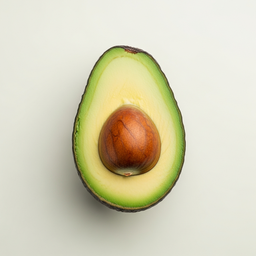 Avocado
 7x better carotenoid absorption with fats
Technical: Lettuce contains 1223μg beta-carotene and 1730μg lutein per 100g. Without fat only 3% is absorbed. A Purdue University study (2012, Molecular Nutrition & Food Research) showed olive oil or avocado increases absorption to 20%+ — a 7-fold improvement.
What does this mean for you? Always eat salad with olive oil dressing or avocado. Without fat you absorb almost nothing of the carotenoids. A dry salad without dressing is ironically less nutritious than one with a good olive oil dressing.
Lettuce (Romaine) 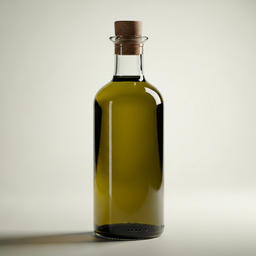 Olive Oil
 7x better carotenoid absorption with fats
Technical: Lettuce contains 1223μg beta-carotene and 1730μg lutein per 100g. Without fat only 3% is absorbed. A Purdue University study (2012, Molecular Nutrition & Food Research) showed olive oil or avocado increases absorption to 20%+ — a 7-fold improvement.
What does this mean for you? Always eat salad with olive oil dressing or avocado. Without fat you absorb almost nothing of the carotenoids. A dry salad without dressing is ironically less nutritious than one with a good olive oil dressing.
Lettuce (Romaine) 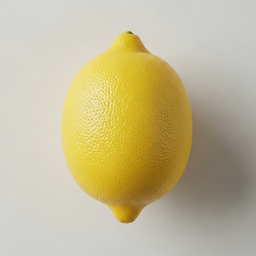 Lemon
Lemon Vitamin C protects lettuce polyphenols from oxidation
Technical: Lettuce contains polyphenols (caffeic acid, chlorogenic acid) that rapidly oxidize when cut (browning by polyphenol oxidase). Vitamin C from lemon (53mg/100g) acts as reductant restoring oxidized polyphenols to their active form and inhibiting polyphenol oxidase via pH reduction.
What does this mean for you? Lemon dressing on lettuce prevents browning and preserves active polyphenols. Make dressing in advance and mix right after cutting for optimal nutrient retention.
Lettuce (Romaine) 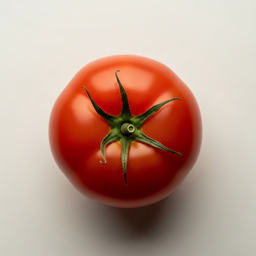 Tomato
 Lutein + lycopene: complementary carotenoids in two phases
Technical: Lettuce contains 1730μg lutein per 100g — a xanthophyll carotenoid filtering blue light in the macula. Tomato contains 2573μg lycopene — a carotenoid neutralizing singlet oxygen. These carotenoids work through different mechanisms and are active in different tissues. With olive oil both are optimally absorbed.
What does this mean for you? A salad of lettuce and tomato with olive oil dressing combines two carotenoid families. Lutein from lettuce is active in the macula, lycopene from tomato in the cardiovascular system. Without dressing you barely absorb anything — fat is essential.
Recipes with Lettuce (Romaine)
Discover delicious recipes featuring lettuce (romaine):
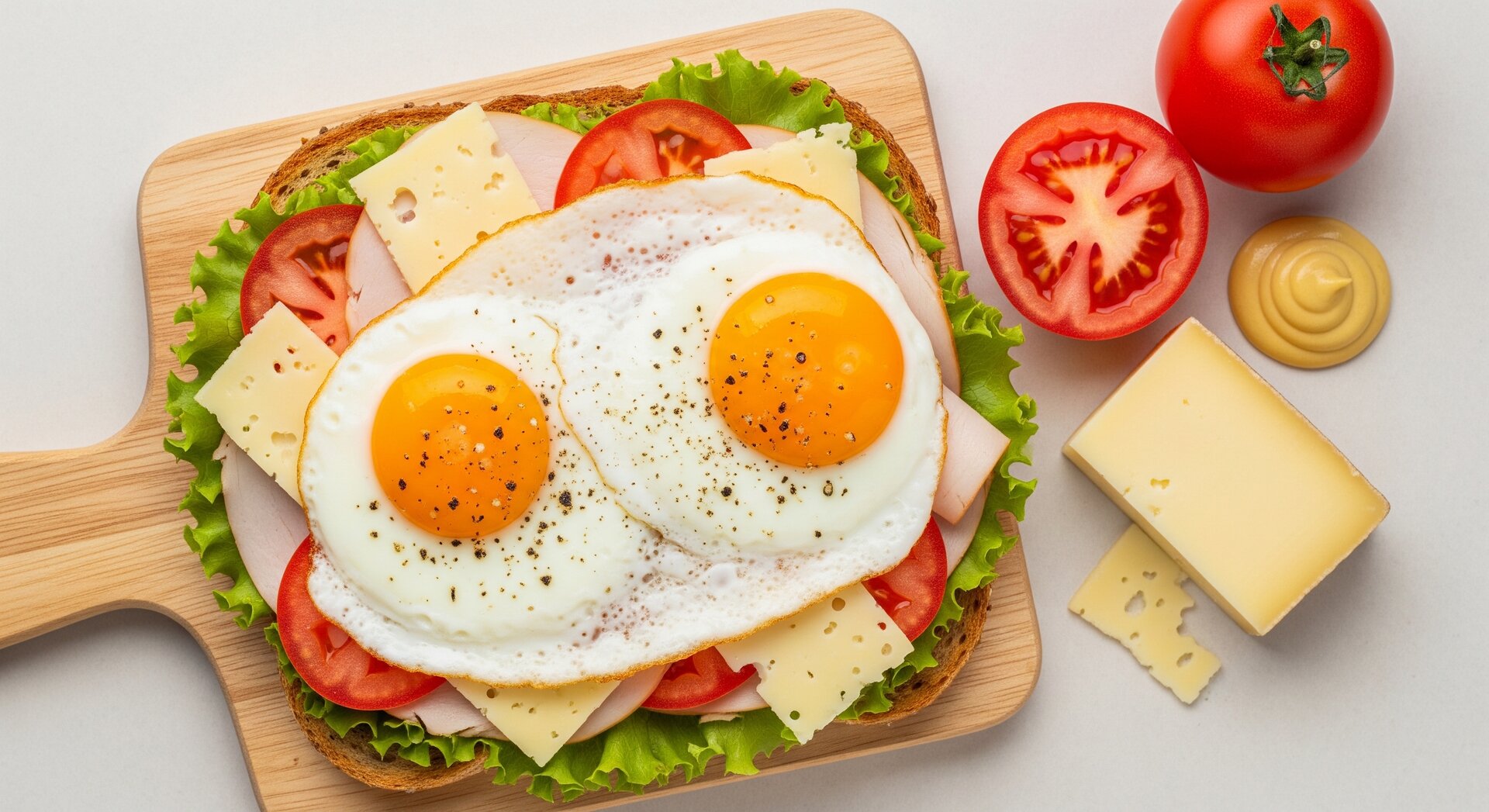 Belgian Uitsmijter with Aged Cheese and Tomato 18 min Classic Belgian lunch with fried egg and aged cheese
  823 kcal
  55g protein 2 synergies
 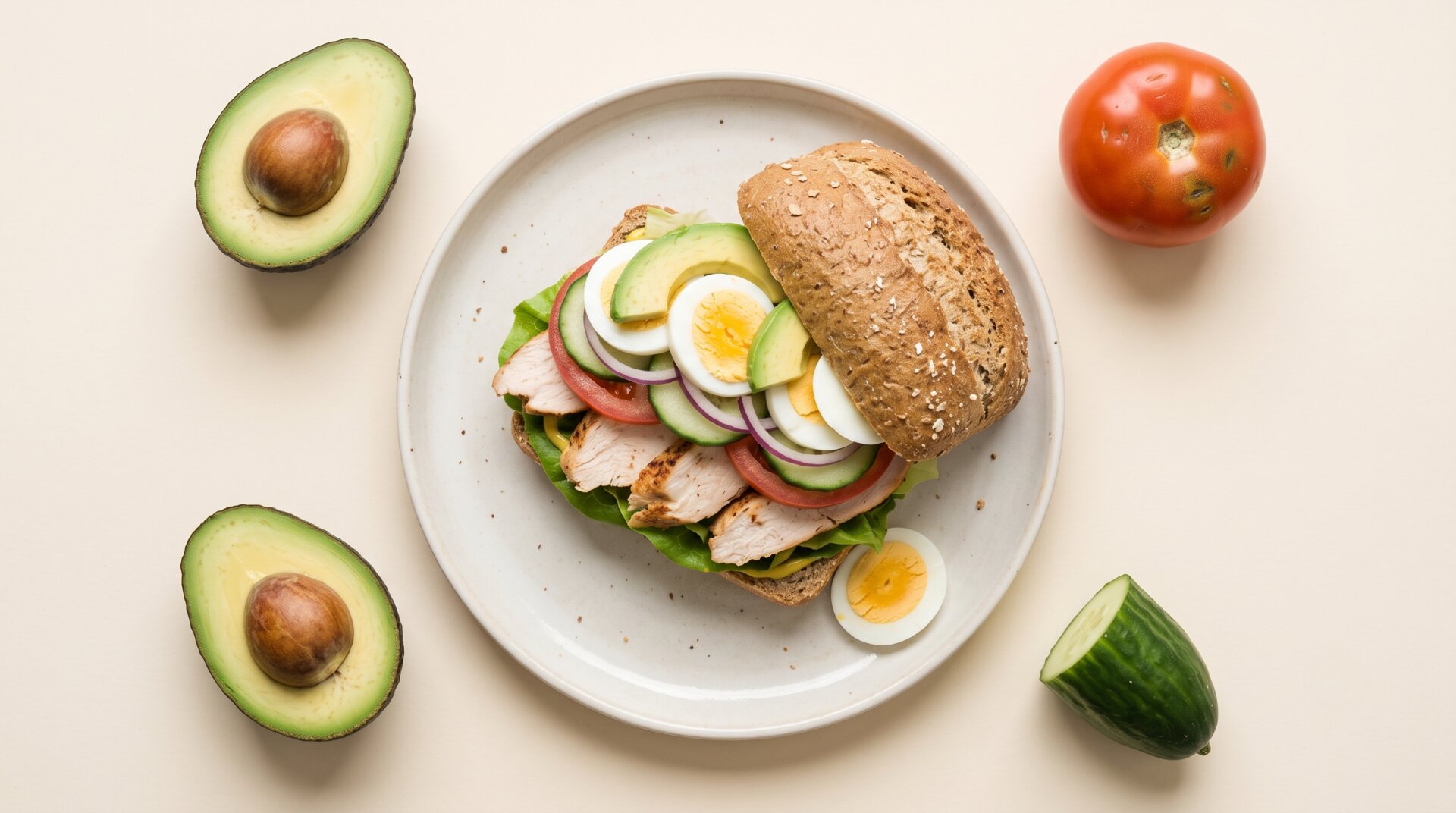 Deluxe Healthy Sandwich with Chicken and Avocado 30 min Dutch healthy sandwich with chicken, avocado and egg 764 kcal 54g protein 2 synergies
 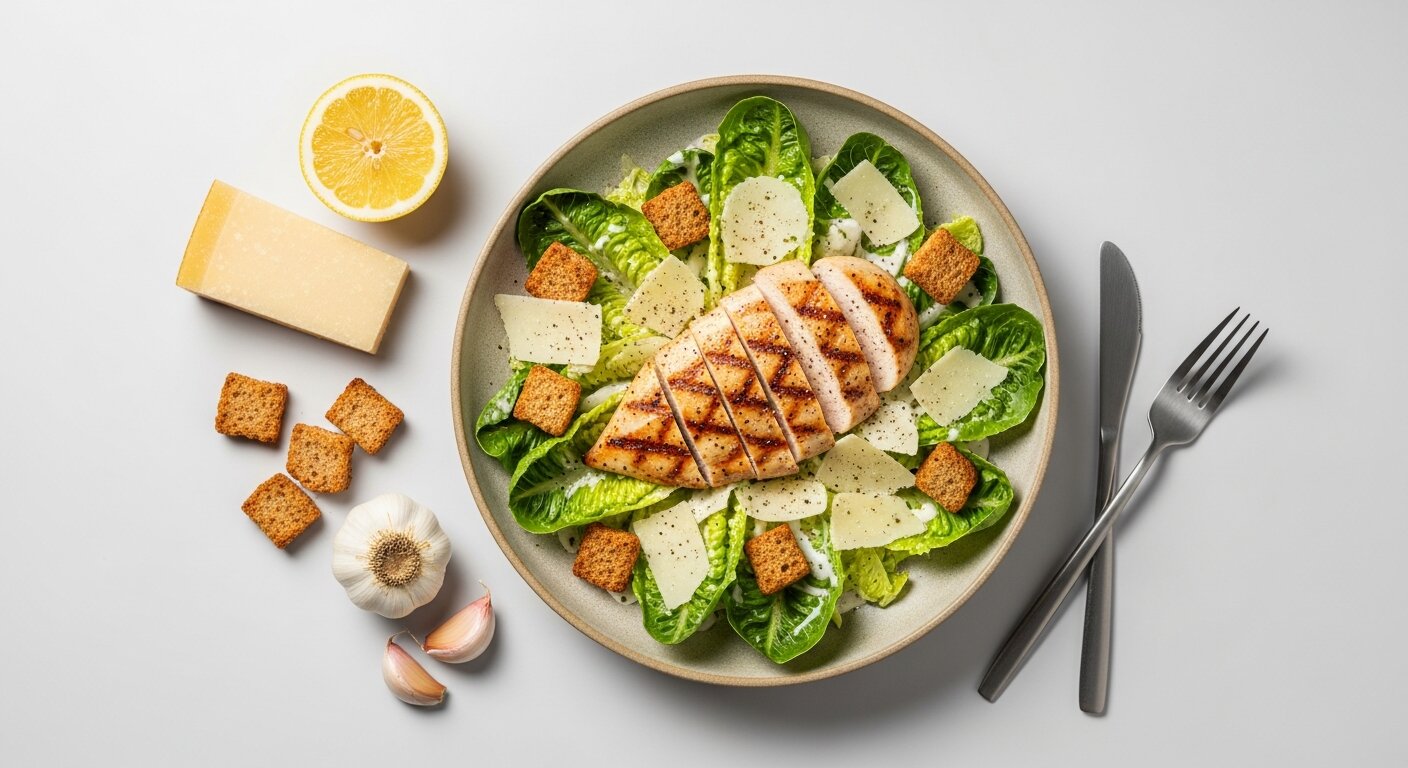 Caesar Salad with Chicken 25 min Classic Roman salad with crispy romaine and parmesan 340 kcal 32g protein 1 synergies
 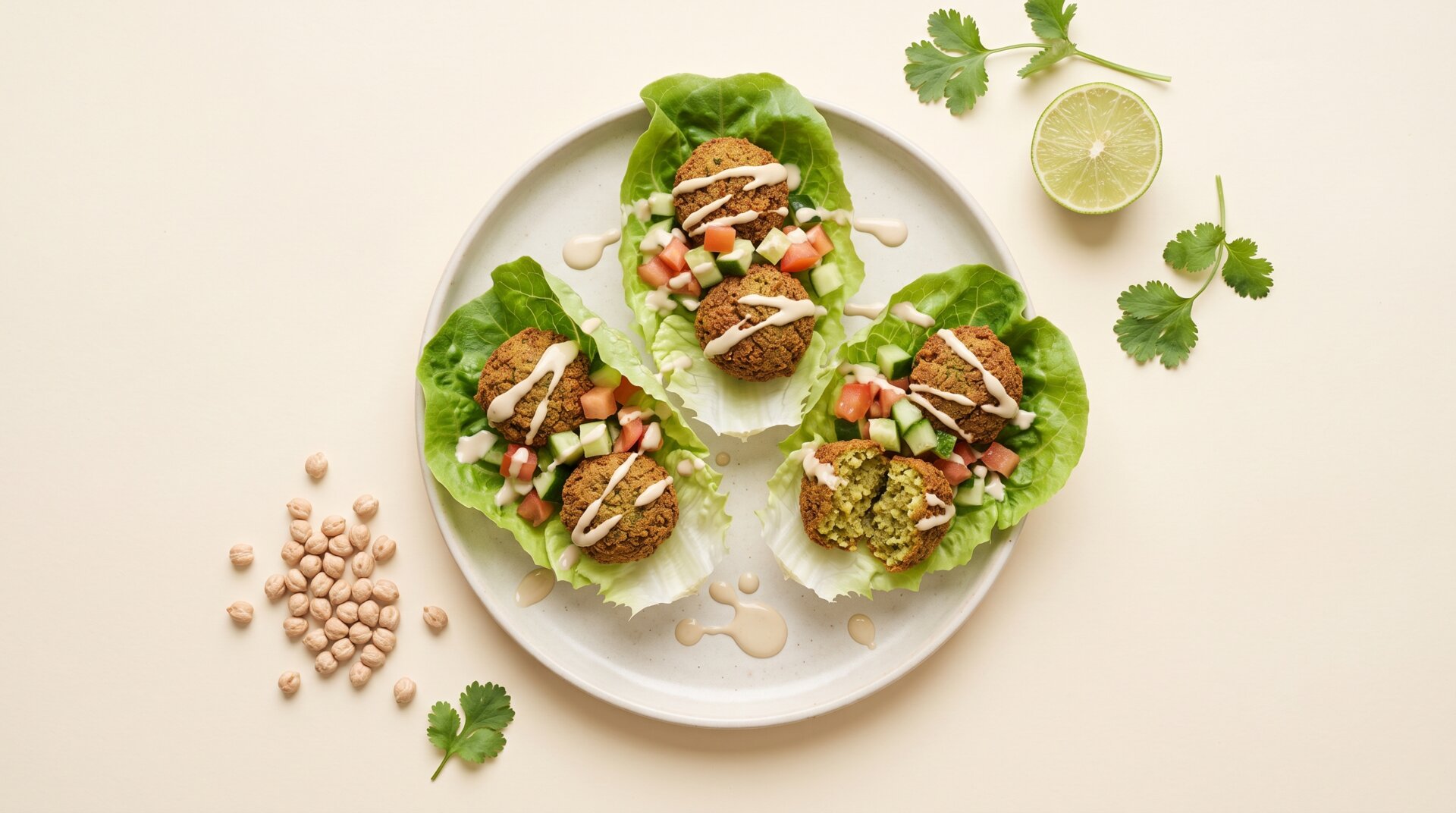 Falafel Lettuce Wrap with Tahini 28 min Crispy chickpea balls in crunchy lettuce leaves with creamy tahini sauce 580 kcal 18g protein 1 synergies
 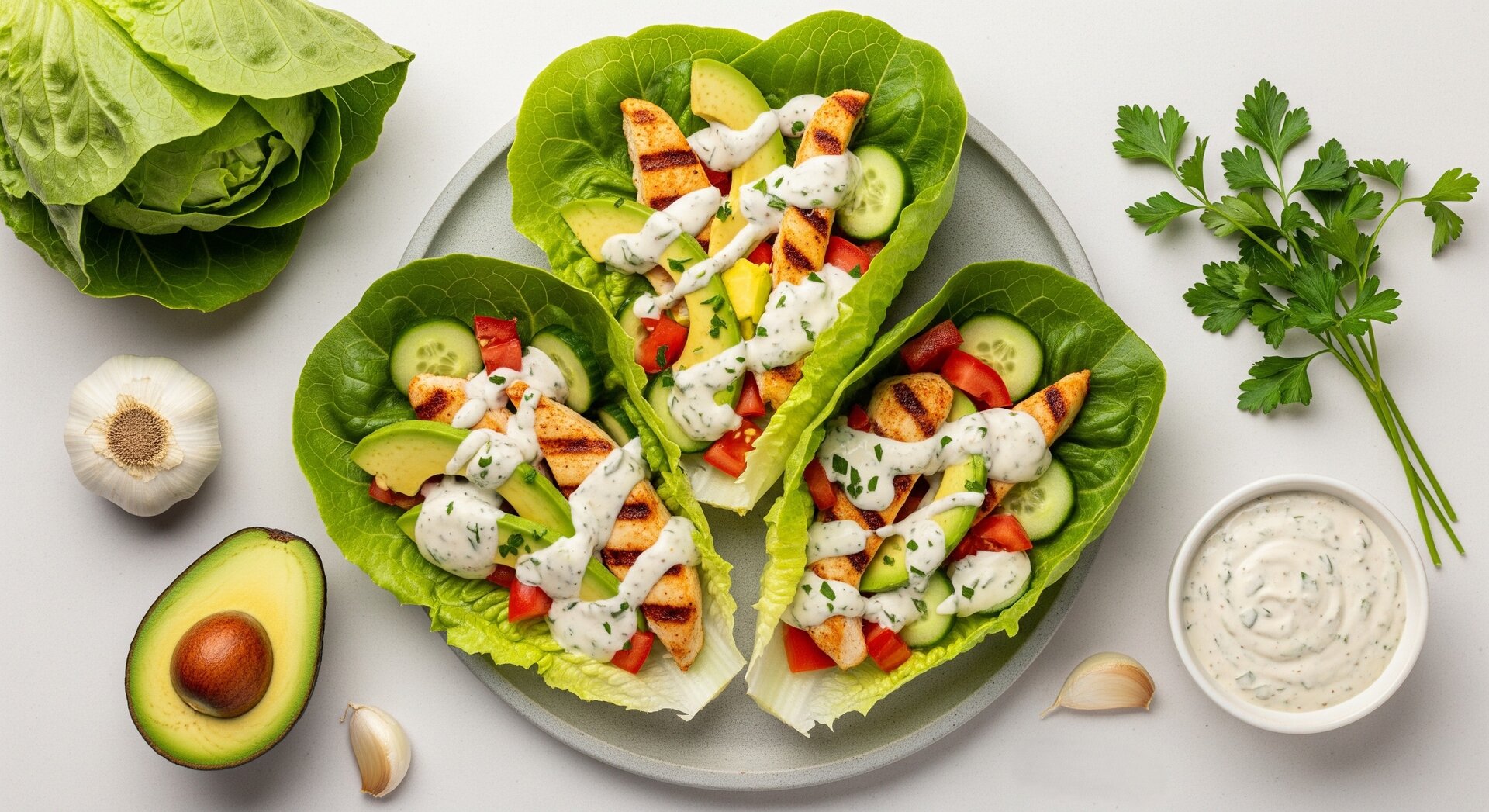 Grilled Chicken Caesar Lettuce Wrap 22 min Crisp lettuce leaves filled with grilled chicken, avocado and garlic-parsley dressing 550 kcal 38g protein 2 synergies
 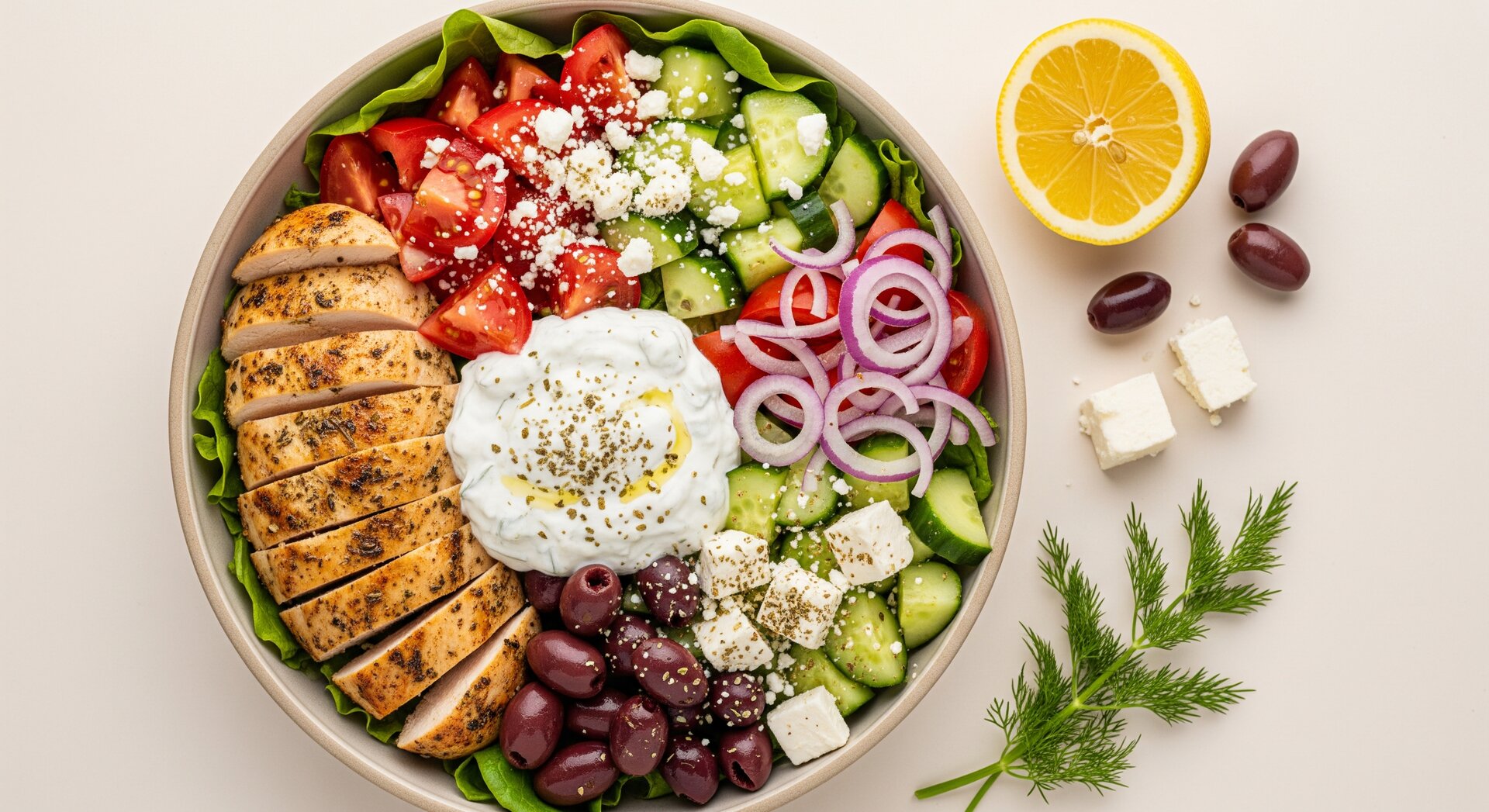 Greek Chicken Gyros Bowl 35 min Seasoned chicken with tzatziki, feta and Greek salad 520 kcal 42g protein 1 synergies
  In the Kitchen
Storage
Location:Refrigerator
Shelf life:5-7 dagen
Store unwashed in a plastic bag or container. Wash just before use. Wilted leaves? Remove and the rest is fine.
Preparation
Usually raw as wrap, in salads or as taco shell. Can also be briefly grilled for a smoky flavor. Crunchy inside, lightly charred outside.
Conversions
Substitutes
Smart preparation
1Tear lettuce leaves by hand instead of cutting.
Why?
Cutting with a knife causes brown edges from oxidation.
2Wash lettuce in cold water and dry thoroughly in a salad spinner.
Why?
Wet lettuce won't hold dressing and dilutes the dish.
3Add dressing to lettuce only just before serving.
Caution / Warnings
Lettuce (Romaine) is very safe, but there are scientific considerations:
Blood Thinners (Warfarin) Moderate
Very high vitamin K content (128% RDI) can affect warfarin effectiveness
Advice:
Maintain consistent intake and consult your doctor
Summary
Romaine lettuce is the nutritional champion among lettuce varieties - with 17x more vitamin A than iceberg! The sturdy leaves are perfect as low-carb wraps for taco filling, chicken salad or Asian dishes. Always choose romaine over iceberg for maximum nutrition. Note: high vitamin K, so consider with blood thinners.