Leek
The Mild Onion Substitute
What is this ingredient?
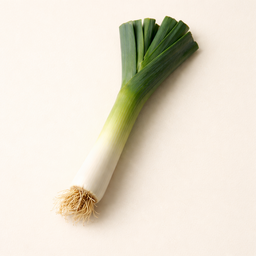
Leek is the 'national vegetable' of Wales, but also a staple in Dutch cuisine. The white shaft contains many prebiotic fibers (inulin) that feed gut bacteria. The dark green tops, often discarded, contain up to 100 times more beta-carotene and twice as much Vitamin C as the white part. Leeks also contain kaempferol, a polyphenol that protects blood vessels.
How does it taste?
Gently onion-like and delicately sweet. Milder and more elegant than regular onion.
Pairs well with:
Pairs well with creampotatothymegruyere and mustard.
Did you know...?
- The leek is the national symbol of Wales and is worn on St. David's Day.
- Emperor Nero ate leeks in olive oil to strengthen his voice and was nicknamed 'Porrophagus' (leek-eater).
Nutritional Value & Energy
Per 100g
Leek provides energy thanks to natural nutrients .
Per 100g
Minerals
Vitamins
More nutrients
B-Vitamins
Trace Minerals
What's in a serving?
1 serving
Leek naturally contains vitamin k (47 mcg per 100 g).
Leek naturally contains vitamin c (12 mg per 100 g).
Leek naturally contains folate (64 mcg per 100 g).
Leek naturally contains manganese (0.5 mg per 100 g).
Leek naturally contains iron (2.1 mg per 100 g).
Leek naturally contains vitamin b6 (0.23 mg per 100 g).
% of daily reference intake (DRI)
EU-approved nutrition claims
This ingredient contains nutrients for which EFSA-authorized health claims exist (at nutrient level, not ingredient-specific).
Approved health claims (EU)
Vitamin_c EU 432/2012
Vitamin C contributes to the normal function of the immune system
Contains 12mg/100g (threshold: ≥12mg/100g)
Vitamin_c EU 432/2012
Vitamin C contributes to the reduction of tiredness and fatigue
Contains 12mg/100g (threshold: ≥12mg/100g)
Vitamin_c EU 432/2012
Vitamin C contributes to normal collagen formation for the normal function of skin
Contains 12mg/100g (threshold: ≥12mg/100g)
Iron EU 432/2012
Iron contributes to normal energy-yielding metabolism
Contains 2.1mg/100g (threshold: ≥2.1mg/100g)
Iron EU 432/2012
Iron contributes to the reduction of tiredness and fatigue
Contains 2.1mg/100g (threshold: ≥2.1mg/100g)
Folate EU 432/2012
Folate contributes to normal blood formation
Contains 64mcg/100g (threshold: ≥30mcg/100g)
Vitamin_b6 EU 432/2012
Vitamin B6 contributes to normal cysteine synthesis
Contains 0.23mg/100g (threshold: ≥0.21mg/100g)
Vitamin_b6 EU 432/2012
Vitamin B6 contributes to normal energy-yielding metabolism
Contains 0.23mg/100g (threshold: ≥0.21mg/100g)
Vitamin_b6 EU 432/2012
Vitamin B6 contributes to normal functioning of the nervous system
Contains 0.23mg/100g (threshold: ≥0.21mg/100g)
Vitamin_b6 EU 432/2012
Vitamin B6 contributes to normal homocysteine metabolism
Contains 0.23mg/100g (threshold: ≥0.21mg/100g)
Vitamin_b6 EU 432/2012
Vitamin B6 contributes to normal protein and glycogen metabolism
Contains 0.23mg/100g (threshold: ≥0.21mg/100g)
Vitamin_b6 EU 432/2012
Vitamin B6 contributes to normal psychological function
Contains 0.23mg/100g (threshold: ≥0.21mg/100g)
Vitamin_b6 EU 432/2012
Vitamin B6 contributes to normal red blood cell formation
Contains 0.23mg/100g (threshold: ≥0.21mg/100g)
Vitamin_b6 EU 432/2012
Vitamin B6 contributes to the normal function of the immune system
Contains 0.23mg/100g (threshold: ≥0.21mg/100g)
Vitamin_b6 EU 432/2012
Vitamin B6 contributes to the regulation of hormonal activity
Contains 0.23mg/100g (threshold: ≥0.21mg/100g)
Vitamin_b6 EU 432/2012
Vitamin B6 contributes to the reduction of tiredness and fatigue
Contains 0.23mg/100g (threshold: ≥0.21mg/100g)
Folate EU 432/2012
Folate contributes to normal amino acid synthesis
Contains 64mcg/100g (threshold: ≥30mcg/100g)
Folate EU 432/2012
Folate contributes to normal homocysteine metabolism
Contains 64mcg/100g (threshold: ≥30mcg/100g)
Folate EU 432/2012
Folate contributes to normal psychological function
Contains 64mcg/100g (threshold: ≥30mcg/100g)
Folate EU 432/2012
Folate contributes to the normal function of the immune system
Contains 64mcg/100g (threshold: ≥30mcg/100g)
Folate EU 432/2012
Folate has a role in the process of cell division
Contains 64mcg/100g (threshold: ≥30mcg/100g)
Folate EU 432/2012
Folate contributes to maternal tissue growth during pregnancy
Contains 64mcg/100g (threshold: ≥30mcg/100g)
Vitamin_c EU 432/2012
Vitamin C contributes to normal collagen formation for the normal function of blood vessels
Contains 12mg/100g (threshold: ≥12mg/100g)
Vitamin_c EU 432/2012
Vitamin C contributes to normal collagen formation for the normal function of bones
Contains 12mg/100g (threshold: ≥12mg/100g)
Vitamin_c EU 432/2012
Vitamin C contributes to normal collagen formation for the normal function of cartilage
Contains 12mg/100g (threshold: ≥12mg/100g)
Vitamin_c EU 432/2012
Vitamin C contributes to normal collagen formation for the normal function of gums
Contains 12mg/100g (threshold: ≥12mg/100g)
Vitamin_c EU 432/2012
Vitamin C contributes to normal collagen formation for the normal function of teeth
Contains 12mg/100g (threshold: ≥12mg/100g)
Vitamin_c EU 432/2012
Vitamin C contributes to normal energy-yielding metabolism
Contains 12mg/100g (threshold: ≥12mg/100g)
Vitamin_c EU 432/2012
Vitamin C contributes to normal functioning of the nervous system
Contains 12mg/100g (threshold: ≥12mg/100g)
Vitamin_c EU 432/2012
Vitamin C contributes to normal psychological function
Contains 12mg/100g (threshold: ≥12mg/100g)
Vitamin_c EU 432/2012
Vitamin C contributes to the protection of cells from oxidative stress
Contains 12mg/100g (threshold: ≥12mg/100g)
Vitamin_c EU 432/2012
Vitamin C contributes to the regeneration of the reduced form of vitamin E
Contains 12mg/100g (threshold: ≥12mg/100g)
Vitamin_c EU 432/2012
Vitamin C increases iron absorption
Contains 12mg/100g (threshold: ≥12mg/100g)
Vitamin_c EU 432/2012
Vitamin C contributes to maintain the normal function of the immune system during and after intense physical exercise
Contains 12mg/100g (threshold: ≥12mg/100g)
Vitamin_k EU 432/2012
Vitamin K contributes to normal blood clotting
Contains 47mcg/100g (threshold: ≥11.25mcg/100g)
Vitamin_k EU 432/2012
Vitamin K contributes to the maintenance of normal bones
Contains 47mcg/100g (threshold: ≥11.25mcg/100g)
Iron EU 432/2012
Iron contributes to normal cognitive function
Contains 2.1mg/100g (threshold: ≥2.1mg/100g)
Iron EU 432/2012
Iron contributes to normal formation of red blood cells and haemoglobin
Contains 2.1mg/100g (threshold: ≥2.1mg/100g)
Iron EU 432/2012
Iron contributes to normal oxygen transport in the body
Contains 2.1mg/100g (threshold: ≥2.1mg/100g)
Iron EU 432/2012
Iron contributes to the normal function of the immune system
Contains 2.1mg/100g (threshold: ≥2.1mg/100g)
Iron EU 432/2012
Iron has a role in the process of cell division
Contains 2.1mg/100g (threshold: ≥2.1mg/100g)
Manganese EU 432/2012
Manganese contributes to normal energy-yielding metabolism
Contains 0.5mg/100g (threshold: ≥0.3mg/100g)
Manganese EU 432/2012
Manganese contributes to the maintenance of normal bones
Contains 0.5mg/100g (threshold: ≥0.3mg/100g)
Manganese EU 432/2012
Manganese contributes to the normal formation of connective tissue
Contains 0.5mg/100g (threshold: ≥0.3mg/100g)
Manganese EU 432/2012
Manganese contributes to the protection of cells from oxidative stress
Contains 0.5mg/100g (threshold: ≥0.3mg/100g)
What's being researched?
Inulin and prebiotic effects
Inulin fibers in leek are being studied for prebiotic effects and stimulation of beneficial gut bacteria. Evidence for inulin as a prebiotic is growing, but leek-specific research needs more work.
Supported by: [2] Yoo Y (2025)
Kaempferol and vascular protection
Kaempferol in leek is being studied for potential vascular protective properties. Preclinical studies suggest positive effects on endothelial function.
Supported by: [1] Chen (2013)
Good Combinations (Synergy)
Combine leek smartly to enhance the effect:
Leek 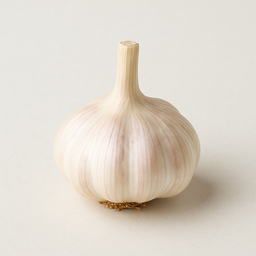 Garlic
 Double Allium power: inulin + allicin for gut and Nrf2
Technical: Leek contains 2-5g inulin per 100g (prebiotic for Bifidobacterium) and kaempferol. Garlic's allicin has bioactive properties and fructo-oligosaccharides (FOS) also feed beneficial gut bacteria. As Allium family members, they share organosulfur compounds that modulate NF-κB and activate the Nrf2 pathway.
What does this mean for you? Leek and garlic together (base of many soups and stews) give your gut bacteria a double feast of prebiotic fibers. Two Allium crops with complementary organosulfur compounds.
Leek 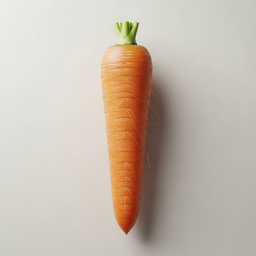 Carrot
 Prebiotic inulin + beta-carotene
Technical: Leek's inulin (2-5g/100g) feeds Bifidobacterium producing short-chain fatty acids (butyrate) for colonocytes. Carrot provides 8285μg beta-carotene per 100g. A healthy gut flora (fed by inulin) increases beta-carotene absorption efficiency, as gut bacteria optimize enterocyte function.
What does this mean for you? Leek-carrot soup is a classic combination. Inulin from leek feeds your gut flora, and a healthy gut flora in turn improves beta-carotene absorption from carrot. Double benefit from two simple ingredients.
Leek 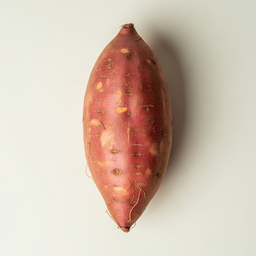 Sweet Potato
 Prebiotic combination: inulin + resistant starch
Technical: Leek contains 2-5g inulin per 100g — a fructo-oligosaccharide that selectively feeds Bifidobacterium. Cooled sweet potato forms resistant starch type 3 (retrograde amylose) that feeds Faecalibacterium prausnitzii. Together they stimulate two different probiotic strains for diverse gut flora.
What does this mean for you? Make a leek soup with sweet potato and let it cool before eating. Cooling creates resistant starch — an extra prebiotic bonus on top of the inulin from leeks.
Recipes with Leek
Discover delicious recipes featuring leek:
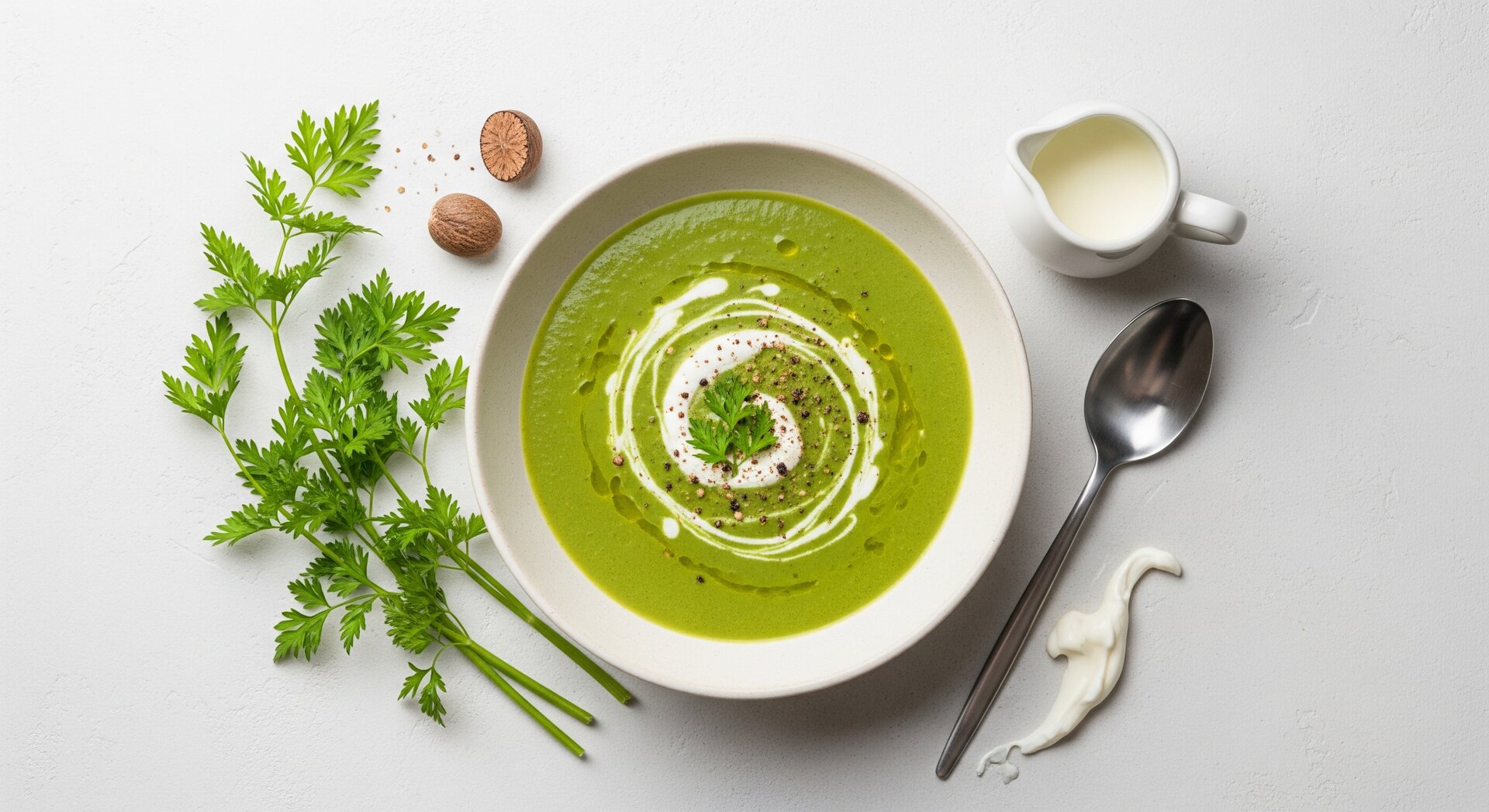 Belgian Chervil Soup with Cream 40 min Classic spring soup with fresh chervil, potato and a hint of nutmeg
  265 kcal
  5g protein 2 synergies
 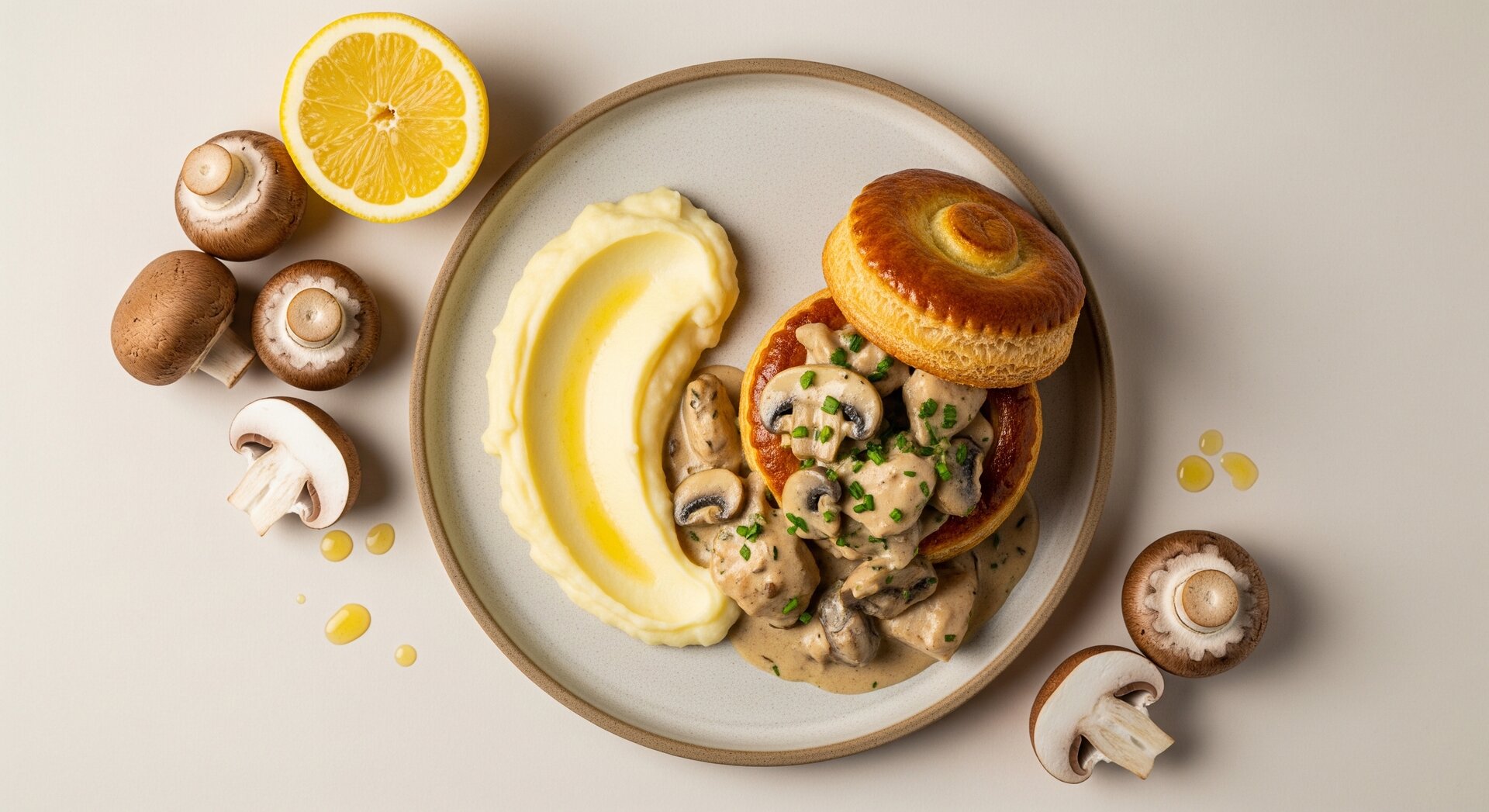 Belgian Vol-au-Vent with Mashed Potatoes 70 min Creamy chicken ragout with mushrooms, leek and soft mash 735 kcal 43g protein 2 synergies
 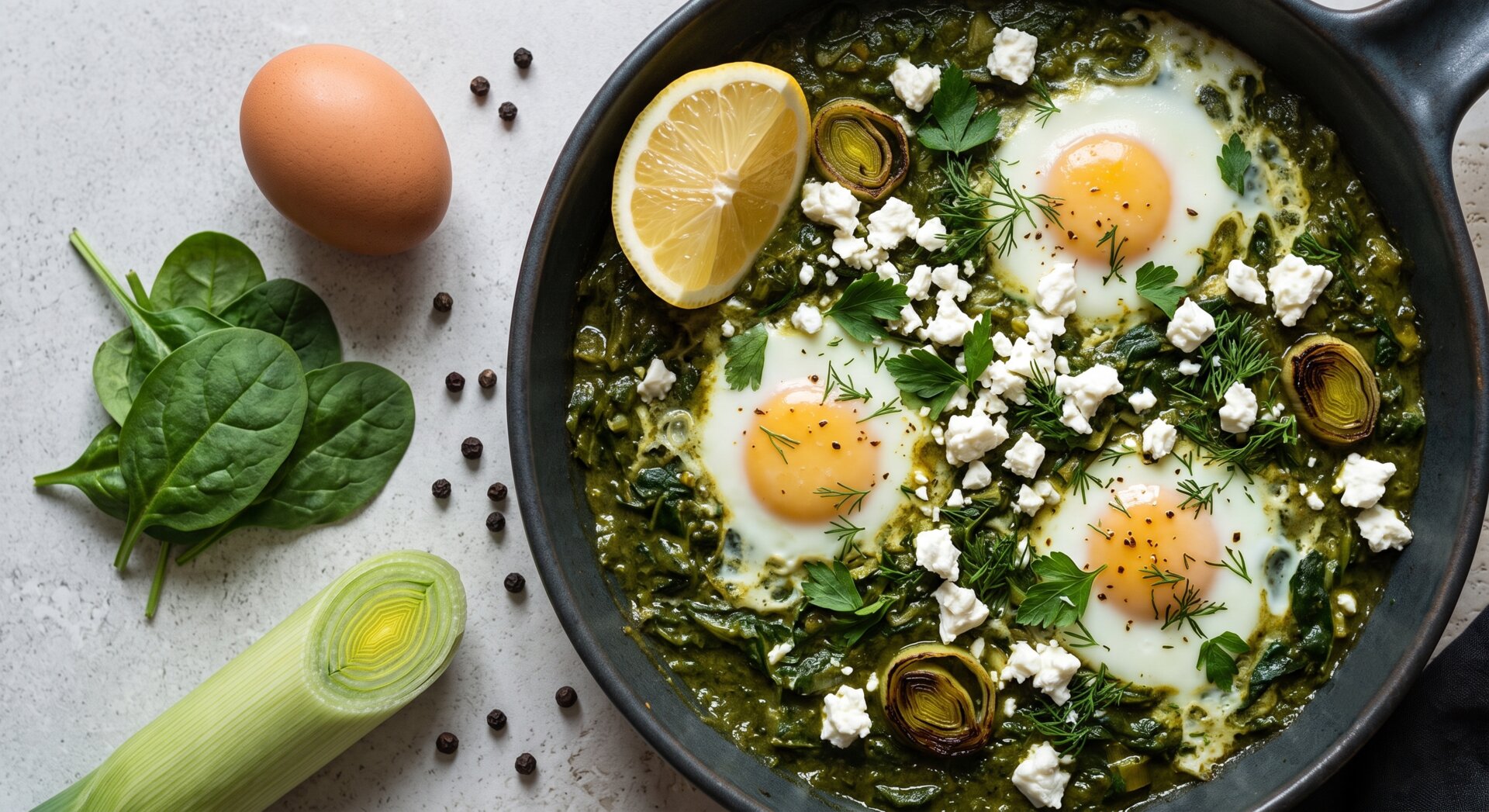 Green Shakshuka 25 min Eggs poached in a bed of spinach, leek and fresh herbs 320 kcal 22g protein 1 synergies
 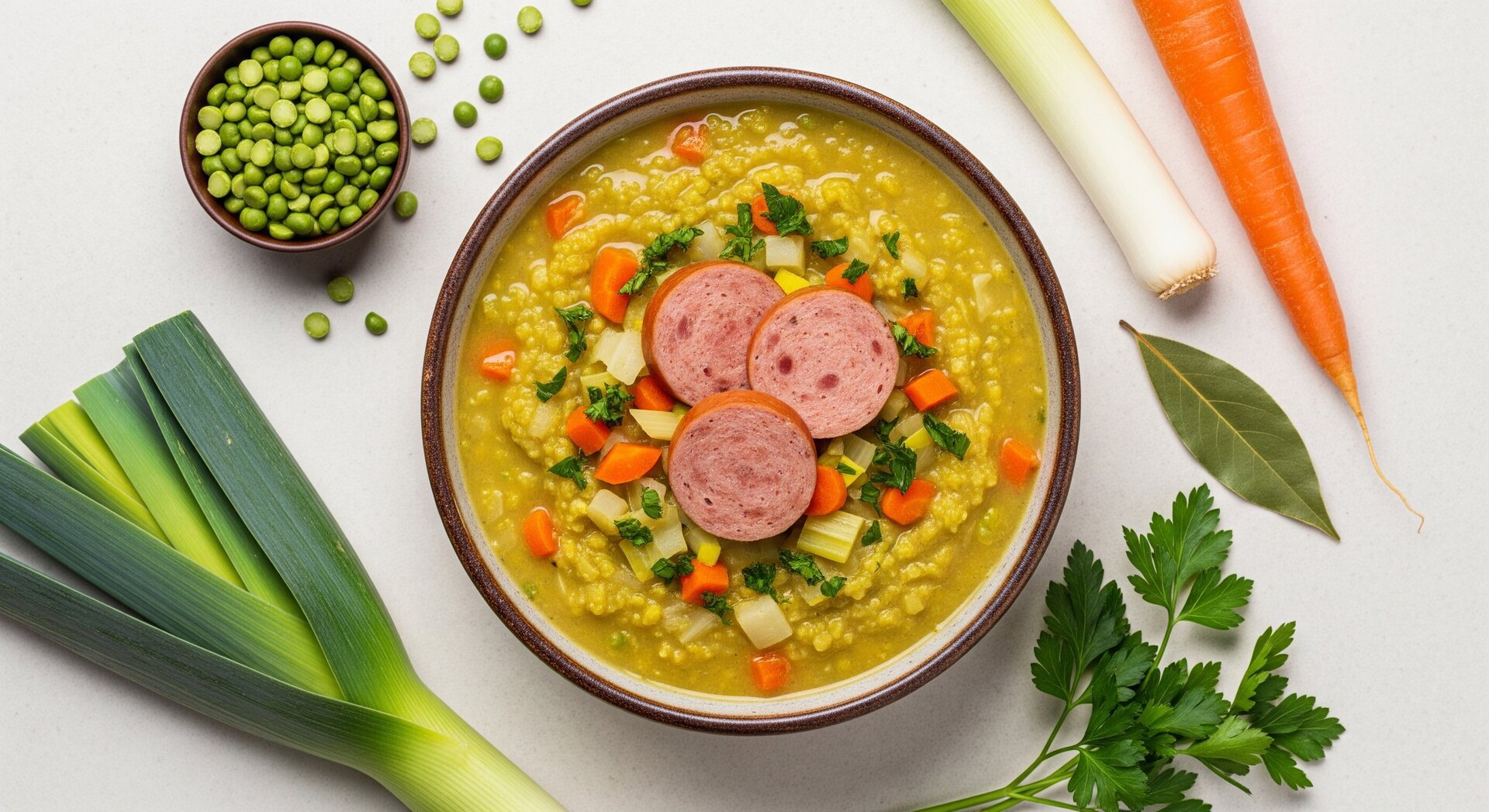 Dutch Split Pea Soup with Turkey Sausage 135 min Thick pea soup with split peas, vegetables and lean smoked sausage 774 kcal 49g protein 1 synergies
 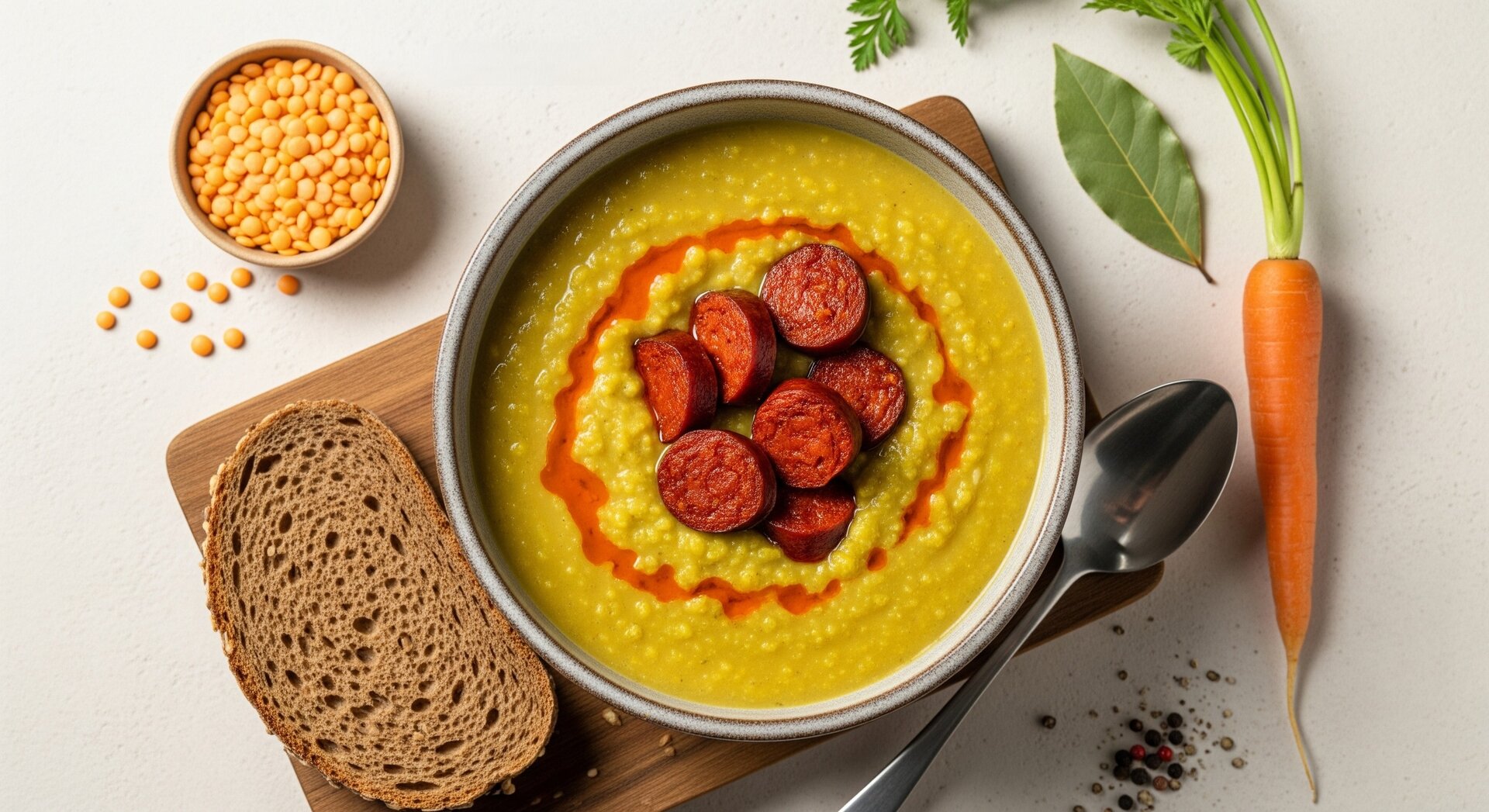 Snert-Style Yellow Lentil Soup with Merguez and Rye Bread 80 min Thick winter soup with spicy sausage, vegetables and dark rye bread 735 kcal 36g protein 1 synergies
 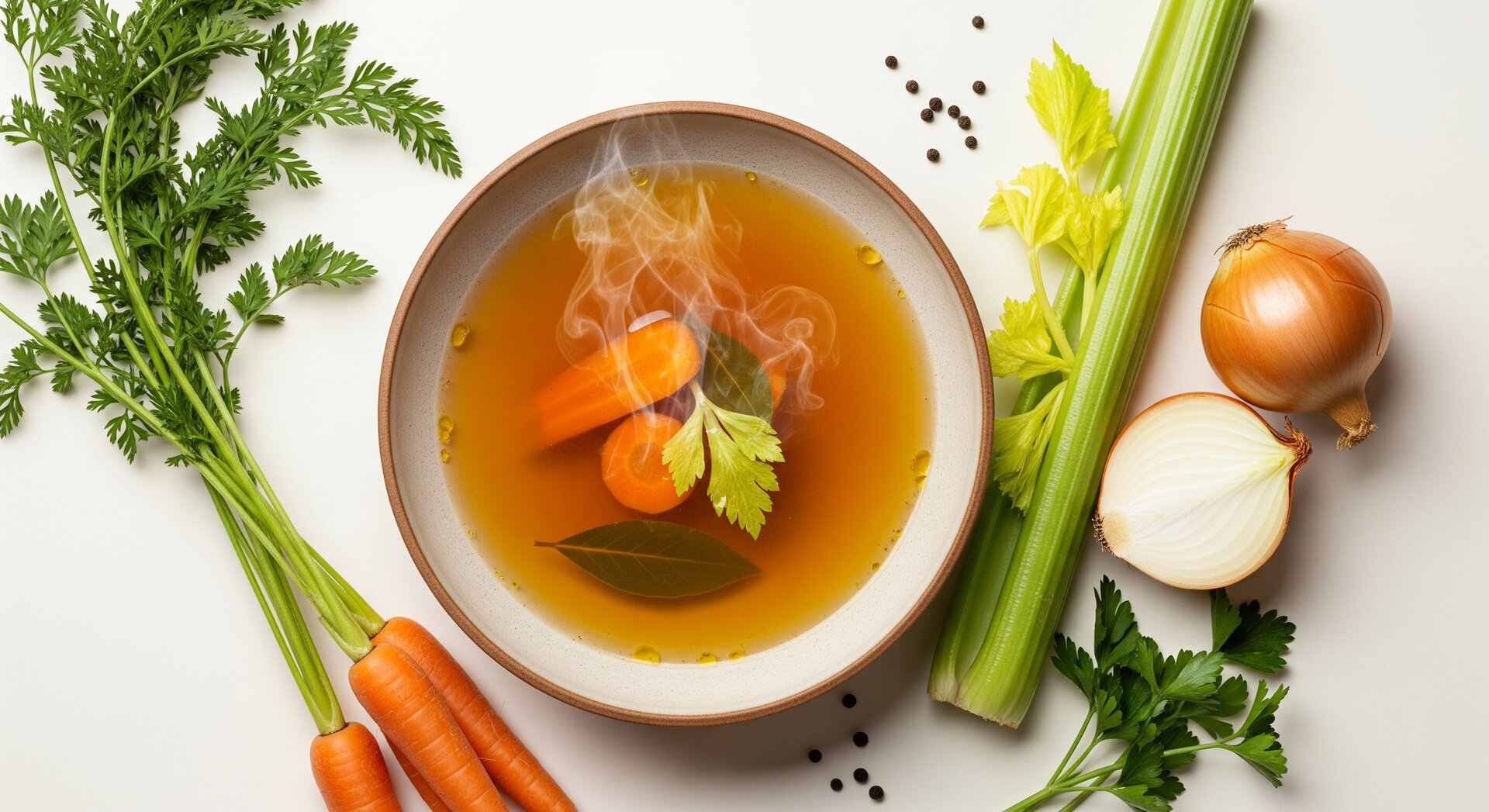 Homemade Vegetable Stock 105 min Flavorful base for vegetarian dishes 10 kcal 0.5g protein 1 synergies
  In the Kitchen
Storage
Location:Refrigerator
Shelf life:1-2 weken
In the crisper drawer. Do not cut beforehand, they lose moisture and vitamins.
Preparation
Slice lengthwise and rinse away sand. Braise gently in butter or oil (do not brown, it becomes bitter).
Conversions
Substitutes
Smart preparation
1Cut leek in half lengthwise and wash thoroughly under running water.
Why?
Sand and soil often hide between the layers.
2Use the light green part too; only the dark green is tough.
3Braise leek slowly on low heat for a sweet, mild flavor.
Caution / Warnings
Leek is very safe, but there are scientific considerations:
IBS / FODMAP Severe
The white part contains many fructans that can cause gas
Advice:
For IBS, use only the green part (low in FODMAPs)
Traditional use
Mediterranean
Roman and Egyptian use
Emperor Nero ate leeks daily to strengthen his voice. In ancient Egypt, leeks were cultivated over 4000 years ago and used in traditional herbalism.
Summary
An underrated super vegetable. Don't throw away the green! It's packed with vitamins. Do wash leeks very well, there is often sand between the layers.