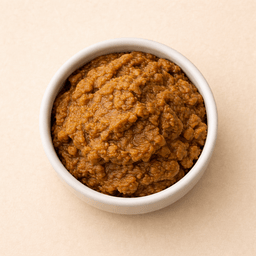
Doenjang (Korean soybean paste)
Korean fermented soybean paste with deep umami
What is this ingredient?
## Traditional Korean fermentation craft
Doenjang is one of Korea’s oldest and most valued fermented foods, with a history reaching back more than 2,000 years. This thick, dark brown soybean paste is made by fermenting cooked soybeans into meju and then aging them further in salty brine. During that maturation, the paste develops a firm texture, deep umami, earthy aromas and a complex mix of amino acids, organic acids and bioactive peptides (Park et al., 2014).
## Composition and research context
Research on doenjang mainly examines fermentation, microbial composition and soy-derived compounds. Studies describe changes in Bifidobacteria and Enterobacteriaceae in animal models (Lim et al., 2014), while other work has examined markers in brain tissue and metabolic tissue in animals fed a high-fat diet (Kim et al., 2019; Kim et al., 2023). This makes doenjang interesting in nutrition research, without presenting it as a treatment or medical product.
## Unique place in Korean cuisine
Unlike miso, doenjang is usually coarser in texture and more pronounced in flavor: salty, savory, earthy and intensely umami. It forms the base of doenjang-jjigae (Korean soybean paste stew), but is also used in marinades, dips, dressings and vegetable sauces. Note: doenjang contains very high sodium levels (3728 mg per 100 g), about 156% of a reference value per 100 g, so small culinary amounts are usually enough.
## Modern uses
Because of its deep flavor, doenjang pairs well with tofu, zucchini, onion, garlic, ginger, chili, sesame oil and mushrooms. The paste contains soy isoflavones such as genistein and daidzein and develops a richer aroma through fermentation than unfermented soybeans. Use it as a powerful seasoning: dissolve a small amount in broth or sauce first, taste, and only then add more.
How does it taste?
Deep umami with a robust, fermented soybean flavor and slight bitterness.
Pairs well with:
Pairs well with tofuzucchinigarlicchili and sesame oil.
Did you know...?
- Doenjang is a Korean fermented soybean paste that has been made for over 2,000 years.
- Traditional doenjang ferments in meju blocks that may be hung outside on straw during winter.
Nutritional Value & Energy
Per 100g
Doenjang (Korean soybean paste) provides energy thanks to natural nutrients , buffered by fiber.
Per 100g
Minerals
Vitamins
More nutrients
B-Vitamins
Trace Minerals
What's in a serving?
1 serving
Doenjang (Korean soybean paste) naturally contains iron (3.6 mg per 100 g).
Doenjang (Korean soybean paste) naturally contains zinc (2.6 mg per 100 g).
Doenjang (Korean soybean paste) naturally contains potassium (347 mg per 100 g).
Doenjang (Korean soybean paste) naturally contains selenium (16 mcg per 100 g).
Doenjang (Korean soybean paste) naturally contains folate (38 mcg per 100 g).
% of daily reference intake (DRI)
EU-approved nutrition claims
This ingredient contains nutrients for which EFSA-authorized health claims exist (at nutrient level, not ingredient-specific).
Approved health claims (EU)
Zinc EU 432/2012
Zinc contributes to the normal function of the immune system
Contains 2.6mg/100g (threshold: ≥1.5mg/100g)
Zinc EU 432/2012
Zinc contributes to the maintenance of normal skin
Contains 2.6mg/100g (threshold: ≥1.5mg/100g)
Iron EU 432/2012
Iron contributes to normal energy-yielding metabolism
Contains 3.6mg/100g (threshold: ≥2.1mg/100g)
Iron EU 432/2012
Iron contributes to the reduction of tiredness and fatigue
Contains 3.6mg/100g (threshold: ≥2.1mg/100g)
Potassium EU 432/2012
Potassium contributes to the maintenance of normal blood pressure
Contains 347mg/100g (threshold: ≥300mg/100g)
Folate EU 432/2012
Folate contributes to normal blood formation
Contains 38mcg/100g (threshold: ≥30mcg/100g)
Folate EU 432/2012
Folate contributes to normal amino acid synthesis
Contains 38mcg/100g (threshold: ≥30mcg/100g)
Folate EU 432/2012
Folate contributes to normal homocysteine metabolism
Contains 38mcg/100g (threshold: ≥30mcg/100g)
Folate EU 432/2012
Folate contributes to normal psychological function
Contains 38mcg/100g (threshold: ≥30mcg/100g)
Folate EU 432/2012
Folate contributes to the normal function of the immune system
Contains 38mcg/100g (threshold: ≥30mcg/100g)
Folate EU 432/2012
Folate has a role in the process of cell division
Contains 38mcg/100g (threshold: ≥30mcg/100g)
Folate EU 432/2012
Folate contributes to maternal tissue growth during pregnancy
Contains 38mcg/100g (threshold: ≥30mcg/100g)
Iron EU 432/2012
Iron contributes to normal cognitive function
Contains 3.6mg/100g (threshold: ≥2.1mg/100g)
Iron EU 432/2012
Iron contributes to normal formation of red blood cells and haemoglobin
Contains 3.6mg/100g (threshold: ≥2.1mg/100g)
Iron EU 432/2012
Iron contributes to normal oxygen transport in the body
Contains 3.6mg/100g (threshold: ≥2.1mg/100g)
Iron EU 432/2012
Iron contributes to the normal function of the immune system
Contains 3.6mg/100g (threshold: ≥2.1mg/100g)
Iron EU 432/2012
Iron has a role in the process of cell division
Contains 3.6mg/100g (threshold: ≥2.1mg/100g)
Zinc EU 432/2012
Zinc contributes to normal acid-base metabolism
Contains 2.6mg/100g (threshold: ≥1.5mg/100g)
Zinc EU 432/2012
Zinc contributes to normal carbohydrate metabolism
Contains 2.6mg/100g (threshold: ≥1.5mg/100g)
Zinc EU 432/2012
Zinc contributes to normal cognitive function
Contains 2.6mg/100g (threshold: ≥1.5mg/100g)
Zinc EU 432/2012
Zinc contributes to normal DNA synthesis
Contains 2.6mg/100g (threshold: ≥1.5mg/100g)
Zinc EU 432/2012
Zinc contributes to normal fertility and reproduction
Contains 2.6mg/100g (threshold: ≥1.5mg/100g)
Zinc EU 432/2012
Zinc contributes to normal macronutrient metabolism
Contains 2.6mg/100g (threshold: ≥1.5mg/100g)
Zinc EU 432/2012
Zinc contributes to normal metabolism of fatty acids
Contains 2.6mg/100g (threshold: ≥1.5mg/100g)
Zinc EU 432/2012
Zinc contributes to normal metabolism of vitamin A
Contains 2.6mg/100g (threshold: ≥1.5mg/100g)
Zinc EU 432/2012
Zinc contributes to normal protein synthesis
Contains 2.6mg/100g (threshold: ≥1.5mg/100g)
Zinc EU 432/2012
Zinc contributes to the maintenance of normal bones
Contains 2.6mg/100g (threshold: ≥1.5mg/100g)
Zinc EU 432/2012
Zinc contributes to the maintenance of normal hair
Contains 2.6mg/100g (threshold: ≥1.5mg/100g)
Zinc EU 432/2012
Zinc contributes to the maintenance of normal nails
Contains 2.6mg/100g (threshold: ≥1.5mg/100g)
Zinc EU 432/2012
Zinc contributes to the maintenance of normal testosterone levels in the blood
Contains 2.6mg/100g (threshold: ≥1.5mg/100g)
Zinc EU 432/2012
Zinc contributes to the maintenance of normal vision
Contains 2.6mg/100g (threshold: ≥1.5mg/100g)
Zinc EU 432/2012
Zinc contributes to the protection of cells from oxidative stress
Contains 2.6mg/100g (threshold: ≥1.5mg/100g)
Zinc EU 432/2012
Zinc has a role in the process of cell division
Contains 2.6mg/100g (threshold: ≥1.5mg/100g)
Selenium EU 432/2012
Selenium contributes to the maintenance of normal hair
Contains 16mcg/100g (threshold: ≥8.25mcg/100g)
Selenium EU 432/2012
Selenium contributes to the maintenance of normal nails
Contains 16mcg/100g (threshold: ≥8.25mcg/100g)
Selenium EU 432/2012
Selenium contributes to the normal function of the immune system
Contains 16mcg/100g (threshold: ≥8.25mcg/100g)
Selenium EU 432/2012
Selenium contributes to normal thyroid function
Contains 16mcg/100g (threshold: ≥8.25mcg/100g)
Selenium EU 432/2012
Selenium contributes to normal spermatogenesis
Contains 16mcg/100g (threshold: ≥8.25mcg/100g)
Selenium EU 432/2012
Selenium contributes to the protection of cells from oxidative stress
Contains 16mcg/100g (threshold: ≥8.25mcg/100g)
Potassium EU 432/2012
Potassium contributes to normal functioning of the nervous system
Contains 347mg/100g (threshold: ≥300mg/100g)
Potassium EU 432/2012
Potassium contributes to normal muscle function
Contains 347mg/100g (threshold: ≥300mg/100g)
What's being researched?
Doenjang and fermentation research
Doenjang is studied for its fermentation cultures, soy isoflavones, amino acids and peptides. Korean research describes microbial and metabolic markers in animal models, among other topics.
Supported by: [1] Lim (2014) , [2] Kim (2023) , [3] Kim (2019)
Good Combinations (Synergy)
Combine doenjang (korean soybean paste) smartly to enhance the effect:
Doenjang (Korean soybean paste) 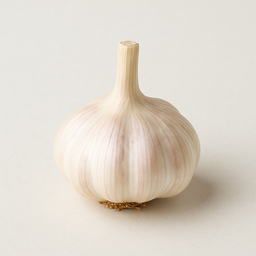 Garlic
 Isoflavones + allicin: complementary bioactive compounds
Isoflavones and allicin inhibit NF-κB inflammatory pathway via complementary mechanisms
Technical: Doenjang fermentation increases isoflavones (genistein, daidzein) studied in research in connection with NF-κB signaling. Allicin from garlic affects NF-κB through different mechanisms. Together they provide bioactive compounds via multiple pathways. Traditional Korean ssamjang combination.
What does this mean for you? Doenjang with garlic (traditional Korean) is a powerful combination of fermented and fresh bioactive compounds. Both work together through complementary mechanisms — a cornerstone of Korean cuisine for centuries.
Doenjang (Korean soybean paste) 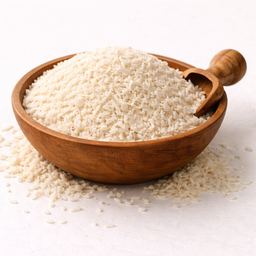 Rice
Rice Fermentation enzymes increase isoflavone bioavailability
β-glucosidase in doenjang increases aglycone isoflavones with better absorption (PMID: 30035387)
Technical: Doenjang contains β-glucosidase enzymes from fermentation converting isoflavone glycosides to bioactive aglycones (genistein, daidzein). Rice as traditional carrier slows gastric emptying, allowing longer enzymatic action and improving absorption.
What does this mean for you? Doenjang jjigae with rice is traditional Korean comfort food that is scientifically sound. The rice helps absorb the bioactive isoflavones better.
Doenjang (Korean soybean paste) 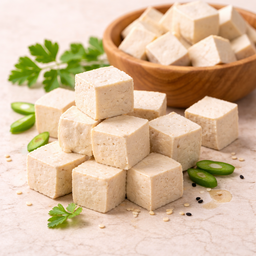 Tofu
Tofu Complementary isoflavone delivery: fermented aglycone + unfermented glycoside
Fermented soy aglycones are absorbed 2-3x faster than unfermented glycosides (PMID: 30035387)
Technical: Fermentation in doenjang converts isoflavone glycosides to aglycones (genistein, daidzein) absorbed 2-3x faster in the small intestine. Tofu still contains unhydrolyzed glycoside forms released more slowly but longer via intestinal bacterial hydrolysis. Together they create a pharmacokinetic profile with rapid peak concentration (doenjang) plus extended duration (tofu).
What does this mean for you? Doenjang jjigae with tofu (classic Korean) delivers isoflavones two ways: fast via the fermented paste and slow via the tofu. This provides longer-lasting exposure to these bioactive compounds.
Recipes with Doenjang (Korean soybean paste)
Discover delicious recipes featuring doenjang (korean soybean paste):
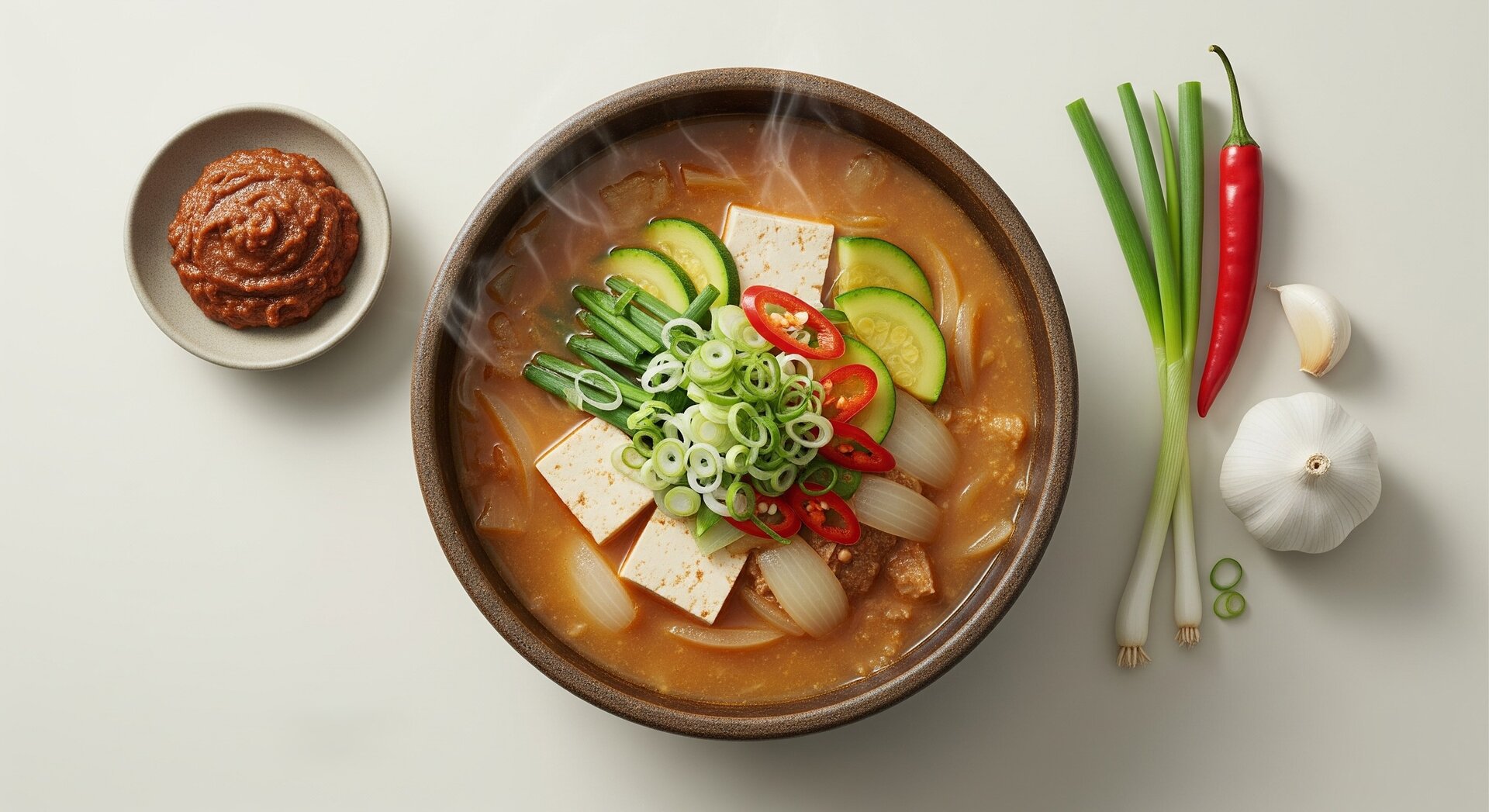 Doenjang Jjigae - Korean Soybean Paste Soup 30 min Umami-rich Korean soup with doenjang, tofu, zucchini and shiitake
  175 kcal
  13g protein 3 synergies
  In the Kitchen
Storage
Location:Refrigerator
Shelf life:6-12 maanden (na openen, gekoeld)
Store in an airtight container in the refrigerator. Traditional doenjang can sometimes develop a thin surface mold; remove it generously and only use product that smells and tastes normal.
Preparation
Use doenjang raw in marinades, dips and dressings, or stir it into stews and soups for deep umami. Preferably add it late and avoid unnecessarily long hard boiling, so its aroma stays fresh and rounded.
Substitutes
Smart preparation
1Dissolve doenjang in a bit of broth for smooth distribution in soups.
Why?
Doenjang is thick and can clump if you add it directly.
2Add doenjang toward the end; prolonged cooking diminishes the aroma.
3Combine doenjang with gochujang for a balanced Korean flavor profile.
Caution / Warnings
Doenjang (Korean soybean paste) is very safe, but there are scientific considerations:
High blood pressure and kidney disease Severe
Doenjang contains very high sodium levels (3728 mg per 100 g), about 156% of a reference value per 100 g. For people who need to limit salt intake, this can quickly count toward the daily total.
Advice:
Use doenjang sparingly, for example 1 teaspoon to 1 tablespoon as seasoning in a whole pot of soup or stew. Consult a doctor or dietitian if you have hypertension, chronic kidney disease, heart disease or a sodium-restricted diet.
Soy allergy Severe
Doenjang is made from fermented soybeans and may contain soy proteins that can trigger allergic reactions in sensitive people.
Advice:
Avoid doenjang if you have a known soy allergy. Fermentation does not automatically make the product suitable for people with soy allergy; choose a soy-free alternative instead.
Hormone-sensitive conditions Moderate
Doenjang contains soy isoflavones, plant compounds with a structure similar to estrogen. For hormone-sensitive conditions, personal advice may be needed, especially during medical treatment or supplement use.
Advice:
Keep intake to normal culinary amounts and avoid concentrated soy isoflavone products without professional advice. Consult your doctor if you have active hormone-sensitive cancer, endometriosis or treatment with hormone medication.
Traditional use
Other
Doenjang in Korean tradition
Doenjang is a fermented soybean paste that has been central to Korean cuisine and fermentation tradition (jang) for over 2,000 years.
Summary
Doenjang is a Korean fermented soybean paste with deep umami, plant protein, fiber and soy isoflavones. Use small amounts in stews, broths and marinades, because its sodium level is very high.