- Medium
- 540 min
- 8 serv.
- 7 synergies
- Now at its best: Honey
Barley bread was the most commonly eaten bread in the time of the Prophet ﷺ. This recipe uses sourdough instead of quick yeast, as bread was made for centuries. The long fermentation gives it a deep, nutty flavor and a sturdy-crispy crust.
There's a reason this bread was the daily staple in the Middle East for centuries. That dense, nutty crumb that chews slowly. That dark crust that cracks when you cut into it. That scent of toasted grain coming from the oven after nearly an hour of baking.
Barley bakes differently than wheat — heavier, denser, with a more earthy flavor that fills you without needing much. The sourdough starter takes it to another level: after a night of fermenting, the dough develops a subtle sourness that deepens the nutty barley flavor. Cut a thick slice, put cheese or olives on it, and you have a meal. It can be that simple.
- 30
- min prep
- 40
- min cook
- 540
- min total
Nutritional Synergies
This recipe combines ingredients that enhance each other:
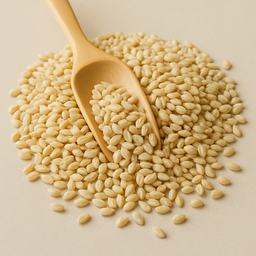 barley flour
 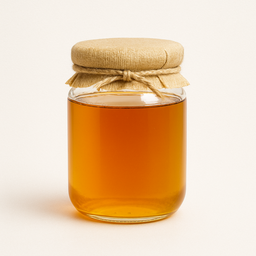 honey
honey Talbina variant: tryptophan + prebiotics for restful nights
Technical: Barley contains tryptophan (precursor of serotonin/melatonin) and beta-glucans. Raw honey contains prebiotic oligosaccharides that feed gut bacteria, which in turn influence tryptophan metabolism via the gut-brain axis. The combination calms and nourishes simultaneously.
What does this mean for you? Cook barley porridge and stir in raw honey (after cooking, so enzymes are preserved). This is a variant of the Prophetic recipe 'Talbina', traditionally recommended for grief and stress.
SleepStress ReliefDigestion
honey 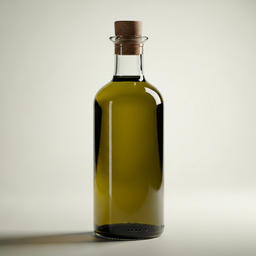 olive oil
 Dual bioactive action via chrysin + oleocanthal
Technical: Honey contains chrysin and olive oil oleocanthal — bioactive phenolic compounds studied in research in connection with NF-κB and COX signaling. Together they provide plant compounds through two independent routes.
What does this mean for you? A dressing of honey and olive oil is not just tasty — the chrysin and oleocanthal work through two different routes in your body.
Anti-inflammatoryHeartJoints
honey 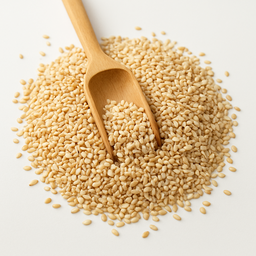 sesame seeds
 Honey antioxidants + sesame lignans for antioxidant support
Technical: Honey's water-soluble antioxidants (phenolic acids, flavonoids) and sesame seed's fat-soluble lignans (sesamin) provide antioxidant support in different compartments. Honey's fructose provides quick energy, sesame's fats and proteins give sustained satiety.
What does this mean for you? Sesame seeds with honey (as in Japanese dishes) combines quick energy with sustained satiety and broad antioxidant support.
EnergyAnti-inflammatorySkin & Hair
olive oil sesame seeds Olive oil fats improve absorption of sesame seed minerals and lignans
Technical: Olive oil's monounsaturated fats (oleic acid) improve absorption of fat-soluble lignans from sesame seeds. Additionally, olive oil polyphenols (oleocanthal) and sesame lignans form a broader antioxidant spectrum.
What does this mean for you? Use olive oil in dishes with sesame seeds — for example in an Asian salad or as a base for tahini dressing.
HeartAnti-inflammatorySkin & Hair
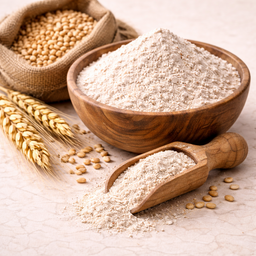 whole wheat flour
 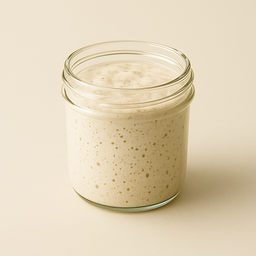 sourdough starter
 Sourdough fermentation breaks down 60-70% of phytic acid in whole grain
Technical: Whole wheat flour contains 800-1200mg phytic acid per 100g, which binds iron, zinc and magnesium making them unabsorbable. Lactic acid bacteria in the sourdough starter produce phytase enzymes during fermentation (pH 4-5) that break down the majority of phytates in 12-24 hours.
What does this mean for you? Sourdough bread is fundamentally different from regular bread in nutritional value. The long fermentation releases minerals that would otherwise be blocked. Let the dough rise for at least 12 hours for maximum effect.
EnergyGeneral WellnessDigestion
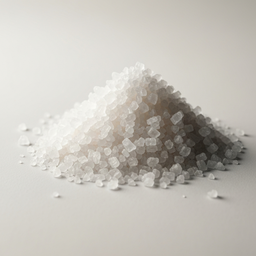 sea salt olive oil
 Minerals + polyphenols for cellular balance
Technical: Sea salt's sodium is essential for the sodium-potassium pump (Na+/K+-ATPase) that regulates every body cell. Olive oil's oleuropein and hydroxytyrosol provide antioxidant protection for cell membranes. The combination supports cell integrity: sea salt regulates ion balance, olive oil protects the membrane. In Mediterranean cuisine, coarse sea salt + olive oil is the most basic flavor profile.
What does this mean for you? Freshly ground sea salt with extra virgin olive oil is the simplest and most nutritious finishing of any dish. The combination provides the basic needs of your cells: minerals for function, polyphenols for protection.
HeartGeneral Wellness
sourdough starter barley flour Maximum mineral absorption from barley
Technical: Barley contains phytic acid that binds minerals (iron, zinc, magnesium, calcium) making them unabsorbable. Sourdough fermentation activates the enzyme phytase, which breaks down phytic acid. After 6-12 hours of fermentation, 60-80% of phytic acid is broken down, releasing minerals. The lactic acid bacteria also lower pH, further increasing phytase activity.
What does this mean for you? Let barley bread or porridge ferment long with sourdough (at least 6 hours). The longer the fermentation, the more minerals your body can absorb. This is the difference between 'eating barley' and 'actually utilizing barley'.
DigestionEnergy
Ingredients (8)
+6 more ingredientsInstructions
- 1 Mix the active sourdough starter with lukewarm water in a large bowl.
- 2 Add the barley flour, wheat flour, salt, olive oil and optional honey.
- 3 Mix to a cohesive dough and knead for 8-10 minutes. Barley flour absorbs slower — add water bit by bit if needed.
Nutrition per serving
Indicative values per serving.
Timing & Suitability
Shelf life: 4 days in fridge
Tags & Diet
Allergens: Gluten