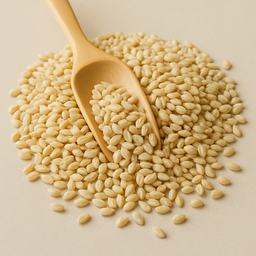
Barley
Ancient grain for porridge, soup and hearty dishes
What is this ingredient?
Barley (Hordeum vulgare) is one of the oldest cultivated grains, with archaeological traces in the Middle East going back thousands of years. The grain has a firm bite, a mild nutty flavor and works well in soups, stews, grain bowls and warm porridge.
## Fiber-rich whole grain
Barley naturally contains plenty of dietary fiber, including beta-glucans. These soluble fibers are widely studied in relation to grain products, texture, satiety and the maintenance of normal blood cholesterol levels when the conditions for the authorized nutrient claim are met. The exact amount depends on the barley variety and degree of processing.
## Talbina and culinary tradition
Talbina is a traditional porridge made from barley flour, milk or water and often a little honey. In Islamic and Middle Eastern food cultures, it is seen as a gentle, warming preparation that is easy to eat and fits breakfast, evening meals or comfort-style dishes.
## Culinary properties
Pearl barley cooks faster and has a softer texture, while hulled barley keeps more of the whole kernel and needs longer cooking. Barley absorbs plenty of liquid, lightly thickens soups and gives dishes a full, grain-like base.
How does it taste?
Mildly nutty and slightly sweet, with a firm, chewy grain that absorbs liquid well.
Pairs well with:
Pairs well with mushroomsroot vegetablesthymeoniongarlicbroth and mild dairy.
Sunnah
Talbina soothes the heart of the sick person and relieves some of the grief.
Bukhari & Muslim #Sahih al-Bukhari 5689, Sahih Muslim 2216
Varieties
Pearl Barley
Polished barley that cooks faster and becomes tender in texture. Useful for soups, casseroles and risotto-style preparations.
Hulled Barley
Barley with mainly the inedible outer layer removed. The grain stays firmer and needs a longer cooking time.
Barley Flour for Talbina
Finely ground barley for a smooth porridge with milk or water. Traditionally, honey is often added for flavor.
Did you know...?
- Barley is among the earliest cultivated grains and was grown in the Fertile Crescent thousands of years ago.
- Roman gladiators were nicknamed ‘hordearii’, a reference to barley as an important staple food.
- In ancient Mesopotamia, barley was used as a measure for trade and payments.
Nutritional Value & Energy
Per 100g
Barley provides energy thanks to natural nutrients , buffered by fiber.
Per 100g
Minerals
Vitamins
Omega-3 fatty acids
More nutrients
B-Vitamins
Trace Minerals
Low GI means blood sugar doesn't spike quickly.
What's in a serving?
1 serving (dry)
Barley naturally contains iron (3.6 mg per 100 g).
Barley naturally contains zinc (2.77 mg per 100 g).
Barley naturally contains magnesium (133 mg per 100 g).
Barley naturally contains potassium (452 mg per 100 g).
Barley naturally contains selenium (37.7 mcg per 100 g).
% of daily reference intake (DRI)
EU-approved nutrition claims
This ingredient contains nutrients for which EFSA-authorized health claims exist at nutrient level, not ingredient-specific.
Approved health claims (EU)
Magnesium EU 432/2012
Magnesium contributes to normal muscle function
Contains 133mg/100g (threshold: ≥56.25mg/100g)
Magnesium EU 432/2012
Magnesium contributes to the reduction of tiredness and fatigue
Contains 133mg/100g (threshold: ≥56.25mg/100g)
Magnesium EU 432/2012
Magnesium contributes to normal functioning of the nervous system
Contains 133mg/100g (threshold: ≥56.25mg/100g)
Zinc EU 432/2012
Zinc contributes to the normal function of the immune system
Contains 2.77mg/100g (threshold: ≥1.5mg/100g)
Zinc EU 432/2012
Zinc contributes to the maintenance of normal skin
Contains 2.77mg/100g (threshold: ≥1.5mg/100g)
Iron EU 432/2012
Iron contributes to normal energy-yielding metabolism
Contains 3.6mg/100g (threshold: ≥2.1mg/100g)
Iron EU 432/2012
Iron contributes to the reduction of tiredness and fatigue
Contains 3.6mg/100g (threshold: ≥2.1mg/100g)
Potassium EU 432/2012
Potassium contributes to the maintenance of normal blood pressure
Contains 452mg/100g (threshold: ≥300mg/100g)
Magnesium EU 432/2012
Magnesium contributes to normal energy-yielding metabolism
Contains 133mg/100g (threshold: ≥56.25mg/100g)
Magnesium EU 432/2012
Magnesium contributes to electrolyte balance
Contains 133mg/100g (threshold: ≥56.25mg/100g)
Magnesium EU 432/2012
Magnesium contributes to normal protein synthesis
Contains 133mg/100g (threshold: ≥56.25mg/100g)
Magnesium EU 432/2012
Magnesium contributes to normal psychological function
Contains 133mg/100g (threshold: ≥56.25mg/100g)
Magnesium EU 432/2012
Magnesium contributes to the maintenance of normal bones
Contains 133mg/100g (threshold: ≥56.25mg/100g)
Magnesium EU 432/2012
Magnesium contributes to the maintenance of normal teeth
Contains 133mg/100g (threshold: ≥56.25mg/100g)
Magnesium EU 432/2012
Magnesium has a role in the process of cell division
Contains 133mg/100g (threshold: ≥56.25mg/100g)
Iron EU 432/2012
Iron contributes to normal cognitive function
Contains 3.6mg/100g (threshold: ≥2.1mg/100g)
Iron EU 432/2012
Iron contributes to normal formation of red blood cells and haemoglobin
Contains 3.6mg/100g (threshold: ≥2.1mg/100g)
Iron EU 432/2012
Iron contributes to normal oxygen transport in the body
Contains 3.6mg/100g (threshold: ≥2.1mg/100g)
Iron EU 432/2012
Iron contributes to the normal function of the immune system
Contains 3.6mg/100g (threshold: ≥2.1mg/100g)
Iron EU 432/2012
Iron has a role in the process of cell division
Contains 3.6mg/100g (threshold: ≥2.1mg/100g)
Zinc EU 432/2012
Zinc contributes to normal acid-base metabolism
Contains 2.77mg/100g (threshold: ≥1.5mg/100g)
Zinc EU 432/2012
Zinc contributes to normal carbohydrate metabolism
Contains 2.77mg/100g (threshold: ≥1.5mg/100g)
Zinc EU 432/2012
Zinc contributes to normal cognitive function
Contains 2.77mg/100g (threshold: ≥1.5mg/100g)
Zinc EU 432/2012
Zinc contributes to normal DNA synthesis
Contains 2.77mg/100g (threshold: ≥1.5mg/100g)
Zinc EU 432/2012
Zinc contributes to normal fertility and reproduction
Contains 2.77mg/100g (threshold: ≥1.5mg/100g)
Zinc EU 432/2012
Zinc contributes to normal macronutrient metabolism
Contains 2.77mg/100g (threshold: ≥1.5mg/100g)
Zinc EU 432/2012
Zinc contributes to normal metabolism of fatty acids
Contains 2.77mg/100g (threshold: ≥1.5mg/100g)
Zinc EU 432/2012
Zinc contributes to normal metabolism of vitamin A
Contains 2.77mg/100g (threshold: ≥1.5mg/100g)
Zinc EU 432/2012
Zinc contributes to normal protein synthesis
Contains 2.77mg/100g (threshold: ≥1.5mg/100g)
Zinc EU 432/2012
Zinc contributes to the maintenance of normal bones
Contains 2.77mg/100g (threshold: ≥1.5mg/100g)
Zinc EU 432/2012
Zinc contributes to the maintenance of normal hair
Contains 2.77mg/100g (threshold: ≥1.5mg/100g)
Zinc EU 432/2012
Zinc contributes to the maintenance of normal nails
Contains 2.77mg/100g (threshold: ≥1.5mg/100g)
Zinc EU 432/2012
Zinc contributes to the maintenance of normal testosterone levels in the blood
Contains 2.77mg/100g (threshold: ≥1.5mg/100g)
Zinc EU 432/2012
Zinc contributes to the maintenance of normal vision
Contains 2.77mg/100g (threshold: ≥1.5mg/100g)
Zinc EU 432/2012
Zinc contributes to the protection of cells from oxidative stress
Contains 2.77mg/100g (threshold: ≥1.5mg/100g)
Zinc EU 432/2012
Zinc has a role in the process of cell division
Contains 2.77mg/100g (threshold: ≥1.5mg/100g)
Selenium EU 432/2012
Selenium contributes to the maintenance of normal hair
Contains 37.7mcg/100g (threshold: ≥8.25mcg/100g)
Selenium EU 432/2012
Selenium contributes to the maintenance of normal nails
Contains 37.7mcg/100g (threshold: ≥8.25mcg/100g)
Selenium EU 432/2012
Selenium contributes to the normal function of the immune system
Contains 37.7mcg/100g (threshold: ≥8.25mcg/100g)
Selenium EU 432/2012
Selenium contributes to normal thyroid function
Contains 37.7mcg/100g (threshold: ≥8.25mcg/100g)
Selenium EU 432/2012
Selenium contributes to normal spermatogenesis
Contains 37.7mcg/100g (threshold: ≥8.25mcg/100g)
Selenium EU 432/2012
Selenium contributes to the protection of cells from oxidative stress
Contains 37.7mcg/100g (threshold: ≥8.25mcg/100g)
Potassium EU 432/2012
Potassium contributes to normal functioning of the nervous system
Contains 452mg/100g (threshold: ≥300mg/100g)
Potassium EU 432/2012
Potassium contributes to normal muscle function
Contains 452mg/100g (threshold: ≥300mg/100g)
What's being researched?
Barley beta-glucan and lipid research
Barley beta-glucan is studied as a soluble dietary fiber in grain products. With sufficient intake, the authorized claim about the maintenance of normal blood cholesterol levels may be relevant.
Supported by: [1] AbuMweis SS (2010) , [4] EFSA Panel on Dietetic Products (2011)
Barley and glycemic response
Research examines how barley products and beta-glucans relate to glucose response after meals. Outcomes depend on portion size, preparation, product form and the rest of the meal.
Supported by: [2] Kellogg JA (2025)
Good Combinations (Synergy)
Combine barley smartly to enhance the effect:
Barley 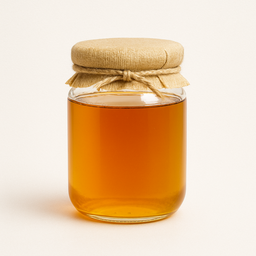 Honey
Honey Talbina variant: tryptophan + prebiotics for restful nights
Technical: Barley contains tryptophan (precursor of serotonin/melatonin) and beta-glucans. Raw honey contains prebiotic oligosaccharides that feed gut bacteria, which in turn influence tryptophan metabolism via the gut-brain axis. The combination calms and nourishes simultaneously.
What does this mean for you? Cook barley porridge and stir in raw honey (after cooking, so enzymes are preserved). This is a variant of the Prophetic recipe 'Talbina', traditionally recommended for grief and stress.
Barley 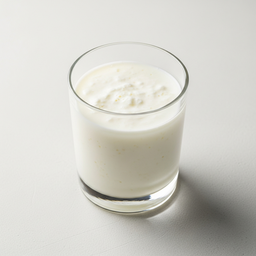 Kefir
Kefir Talbina — supports nervous system and gut flora
Technical: Barley contains beta-glucans (3-8g per 100g) that act as prebiotics — they selectively feed Lactobacillus and Bifidobacterium in the gut. Kefir delivers these live probiotic strains directly. Additionally, barley contains tryptophan that is converted to serotonin and melatonin via the gut-brain axis (vagus nerve). This combination is known as Talbina, a Prophetic recipe.
What does this mean for you? Cook barley porridge and stir in kefir or yogurt after cooking. This food is traditionally recommended for grief and stress. The prebiotics literally feed the probiotics — an ideal symbiosis for your gut flora and mood.
Barley 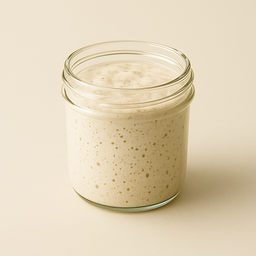 Sourdough Starter (Levain)
 Maximum mineral absorption from barley
Technical: Barley contains phytic acid that binds minerals (iron, zinc, magnesium, calcium) making them unabsorbable. Sourdough fermentation activates the enzyme phytase, which breaks down phytic acid. After 6-12 hours of fermentation, 60-80% of phytic acid is broken down, releasing minerals. The lactic acid bacteria also lower pH, further increasing phytase activity.
What does this mean for you? Let barley bread or porridge ferment long with sourdough (at least 6 hours). The longer the fermentation, the more minerals your body can absorb. This is the difference between 'eating barley' and 'actually utilizing barley'.
Recipes with Barley
Discover delicious recipes featuring barley:
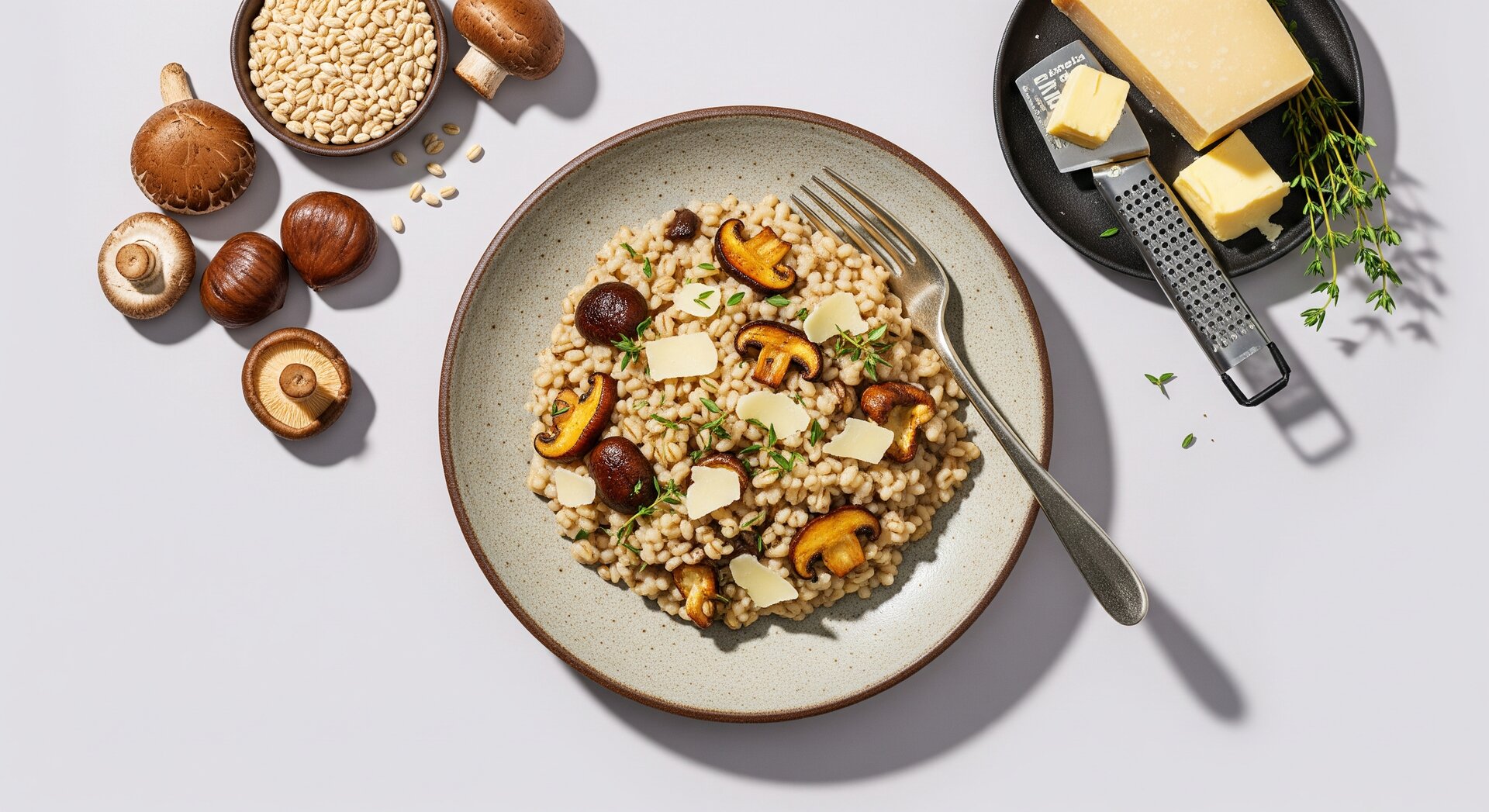 Barley Mushroom Risotto 55 min Creamy Italian classic with pearl barley and mixed mushrooms
  420 kcal
  14g protein 1 synergies
 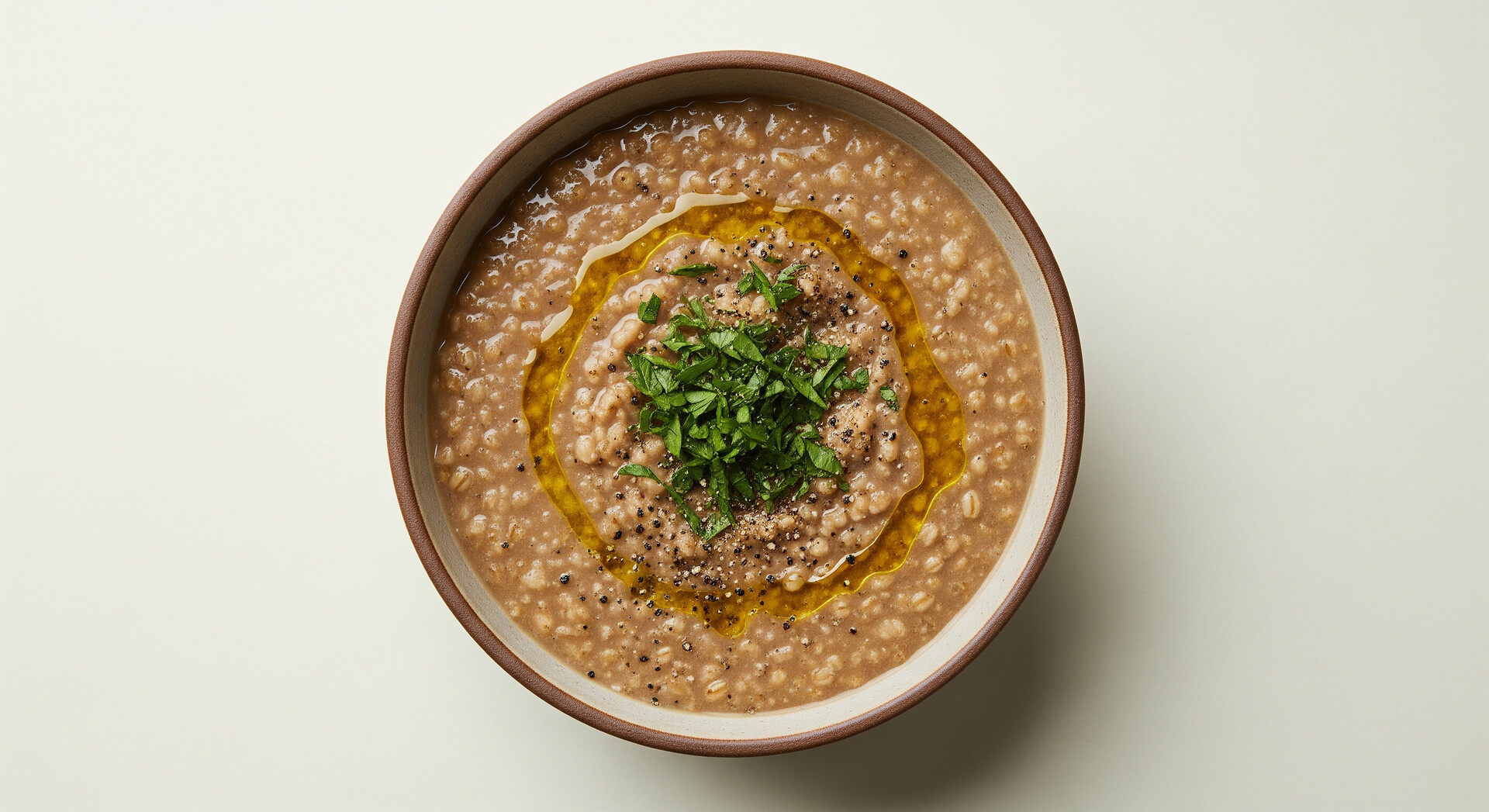 Khazir 35 min Nutritious barley soup from the Sunnah 180 kcal 6g protein 2 synergies
 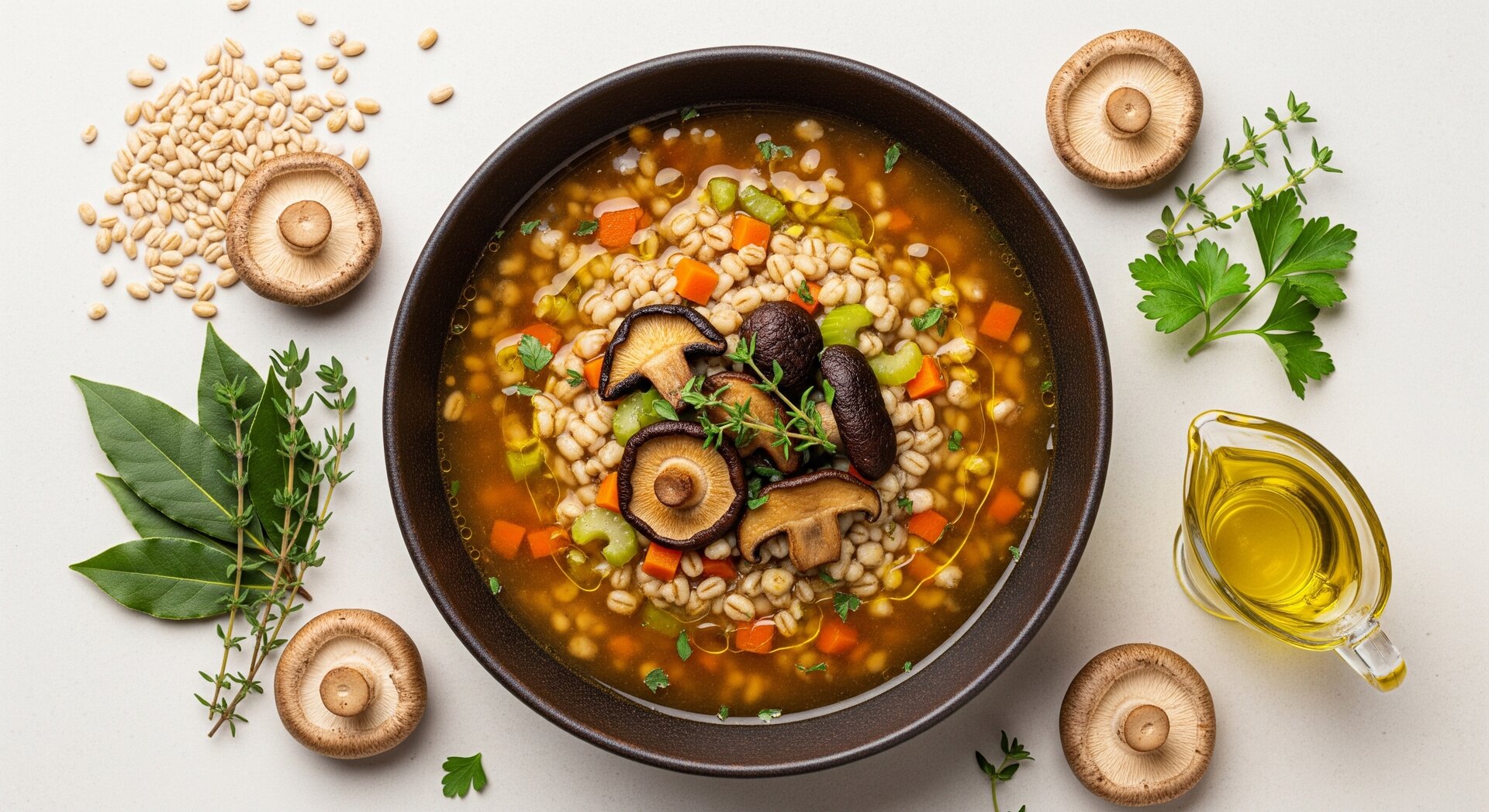 Mushroom Barley Soup with Thyme 80 min Hearty soup with mixed mushrooms, pearl barley, carrot, celery and fresh thyme 316 kcal 10g protein 2 synergies
 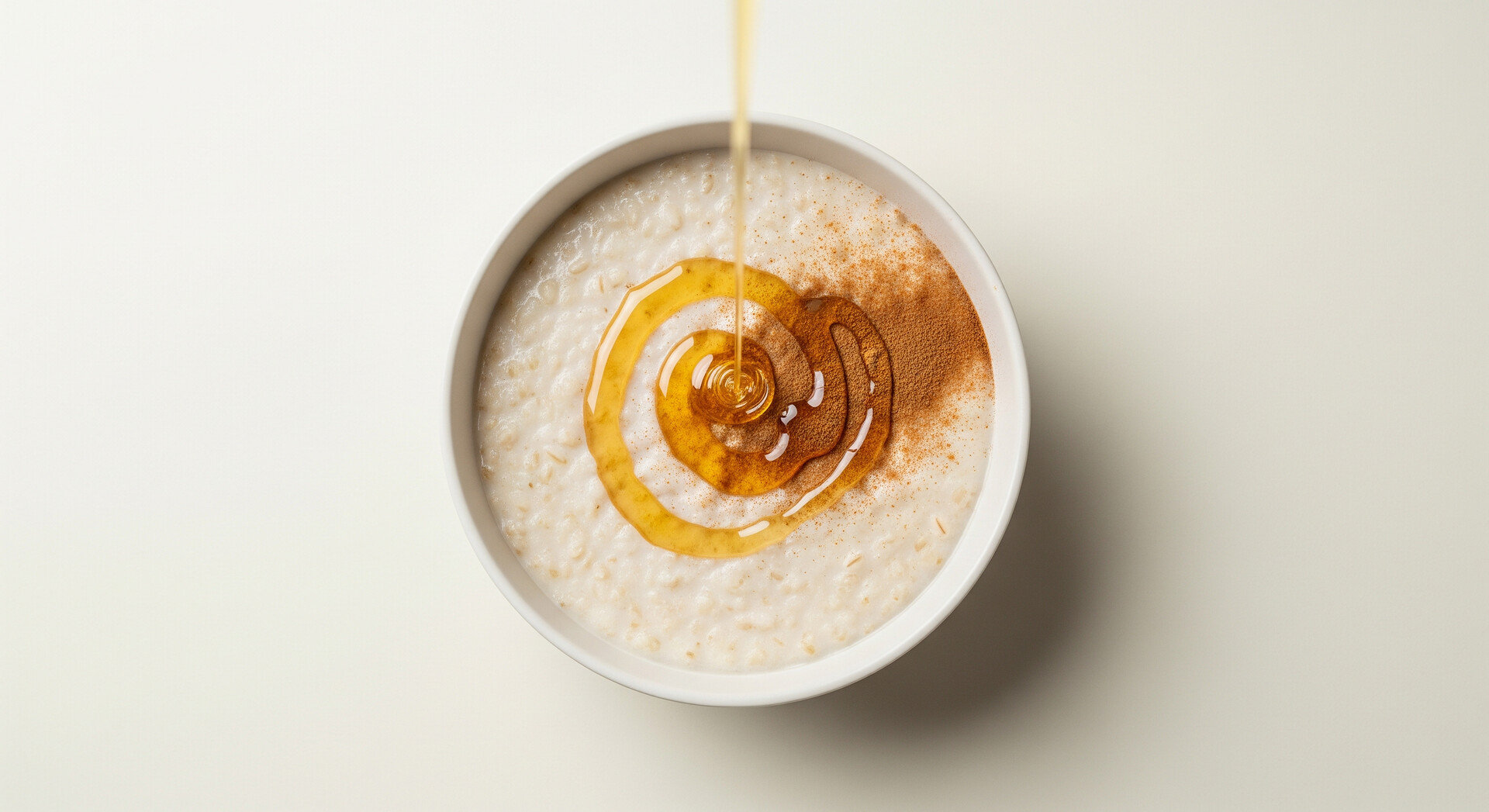 Talbina 20 min Traditional barley porridge with warm milk and honey 220 kcal 7g protein 1 synergies
 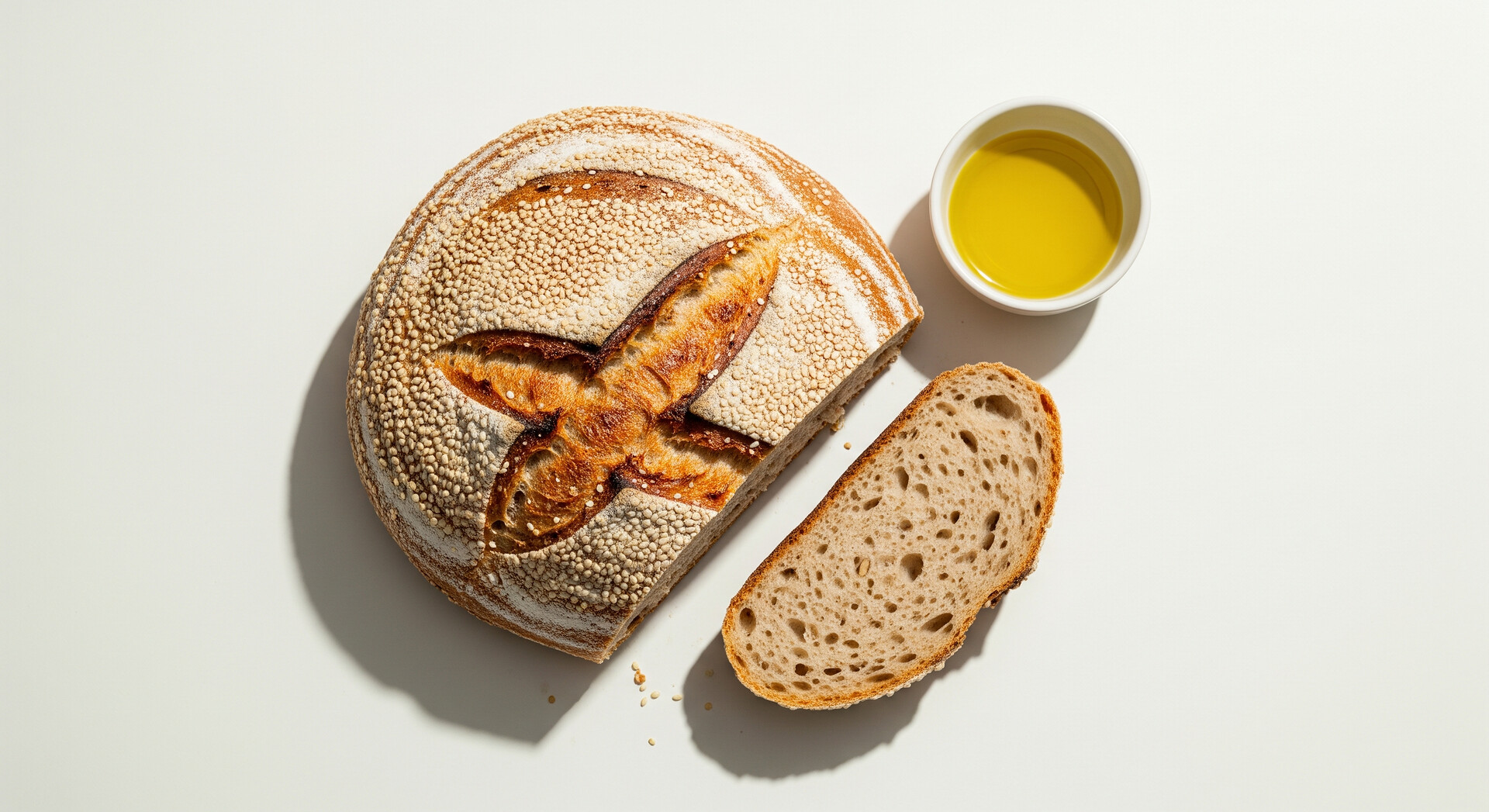 Sourdough Barley Bread 540 min The daily bread of the Prophet ﷺ — with natural fermentation 195 kcal 6g protein 3 synergies
  In the Kitchen
Storage
Location:Pantry
Shelf life:1 jaar (ongekookt), 3-5 dagen gekookt in koelkast
Store dry, cool and dark in a tightly sealed jar. Pearl barley usually keeps longer than hulled barley because part of the outer layers has been removed.
Preparation
Rinse barley and cook in about 3 parts water until the grains are tender but still firm. For talbina, gently cook barley flour with milk or water into a smooth porridge and add honey at the end.
Conversions
Substitutes
Smart preparation
1Soak pearl barley for at least 4 hours or overnight for a shorter cooking time.
Why?
Soaking helps the grains cook more evenly and can clearly shorten the cooking time.
2Cook barley in plenty of water like pasta, then drain.
3Add barley early to soups and stews.
Why?
The grains absorb plenty of liquid and give the dish a fuller texture.
Caution / Warnings
Barley is very safe, but there are scientific considerations:
Gluten intolerance / celiac disease Severe
Barley contains gluten from wheat-related grains, especially hordein, and is therefore not suitable for celiac disease.
Advice:
Avoid barley with celiac disease. Choose gluten-free alternatives such as buckwheat, quinoa, rice or certified gluten-free oats.
Traditional use
Islamic tradition
Talbina in Islamic food culture
Barley porridge, known as talbina, is mentioned in hadith literature as a gentle and comforting preparation. In many families it is made with barley flour, milk or water and honey.
Mediterranean
Barley around the Mediterranean
In Greek, Roman and broader Mediterranean culinary traditions, barley was used in porridge, bread-like preparations, soups and simple grain dishes.
Summary
Barley is a fiber-rich, nutty grain that works well in soup, risotto-style dishes and warm porridge. For talbina, cook barley flour with milk or water and add honey to taste.