- Easy
- 10 min
- 2 serv.
- 7 synergies
- Now at its best: Honey
A creamy chia pudding made with coconut milk and topped with fresh passion fruit, mango and coconut flakes. The chia seeds swell overnight into a soft, gel-like pudding that you serve cold from the fridge.
You open the fridge and there they are: two glass jars with a thick, creamy-white pudding that gently gives way as you unscrew the lid. The chia seeds have transformed the coconut milk overnight into something between custard and tapioca pudding — thick, silky-smooth, with that subtle crunch of seeds between your teeth. You spoon the passion fruit over it and the bright yellow flesh falls in vivid contrast on the white pudding, with those characteristic pips that crack along. Mango cubes beside it, a shower of coconut flakes. Cold, sweet, tropical — as if you ordered dessert for breakfast at a Thai beach bar, but right at your own kitchen table.
- 10
- min prep
- 0
- min cook
- 10
- min total
Nutritional Synergies
This recipe combines ingredients that enhance each other:
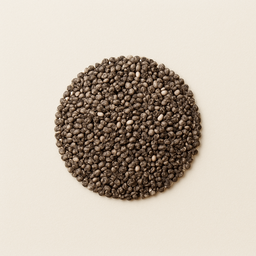 Chia Seeds
 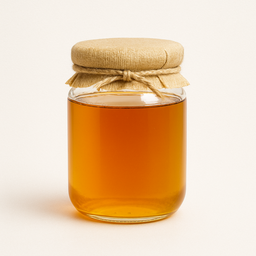 Honey
Honey Fiber + prebiotics for the microbiome and satiety
Technical: Chia seeds contain 34g fiber per 100g forming a gel in the gut promoting satiety. Honey contains prebiotic oligosaccharides (FOS) feeding beneficial gut bacteria. Together they support the microbiome.
What does this mean for you? Mix chia pudding with a spoonful of raw honey. The honey sweetens and feeds your good gut bacteria.
DigestionEnergyBlood Sugar
Chia Seeds 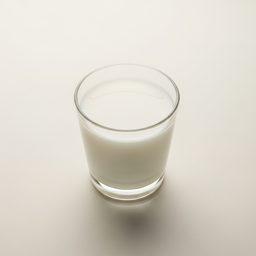 Coconut Milk
 Perfect chia pudding base
Technical: Chia seeds contain ALA omega-3 fatty acids that are fat-soluble. The MCTs (medium-chain triglycerides) in coconut milk are rapidly absorbed and form a fat matrix that increases bioavailability of omega-3 from chia seeds. Additionally, chia seeds absorb the liquid forming a pudding-like texture with optimal nutrient delivery.
What does this mean for you? Soak chia seeds overnight in coconut milk for the perfect pudding. The coconut fat helps your body absorb more omega-3 from the chia seeds.
HeartDigestion
Coconut Milk Honey MCTs + prebiotics for gut flora and energy
Technical: Coconut milk contains lauric acid (MCT) that is quickly converted to energy. Honey contains prebiotic oligosaccharides (FOS) feeding beneficial gut bacteria. The combination offers quick energy plus gut flora support.
What does this mean for you? Add honey to coconut milk-based smoothies, chia puddings or warm drinks. The MCTs provide quick energy while the prebiotics feed your gut flora.
EnergyDigestionImmune System
Coconut Milk 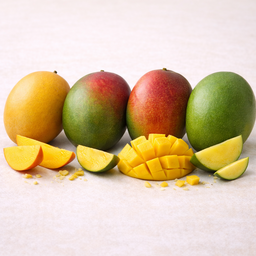 Mango
Mango Coconut fat increases beta-carotene absorption from mango
Technical: Mango is one of the richest sources of beta-carotene (provitamin A), which is fat-soluble. Coconut milk's MCTs (medium-chain triglycerides) are rapidly absorbed and form micelles that increase beta-carotene absorption up to 6x.
What does this mean for you? Mango with coconut milk (as in a smoothie or Thai dessert) is more than delicious — the coconut fat ensures you get up to 6x more vitamin A from the mango.
Skin & HairImmune SystemGeneral Wellness
Mango 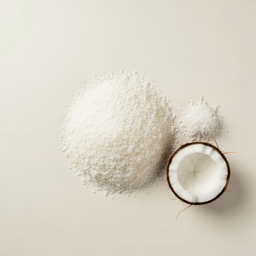 Desiccated Coconut
 Coconut fat improves beta-carotene absorption from mango by 3-6x
Fat-soluble carotenoids require fat for absorption (PMID: 15927929)
Technical: Mango contains 640ug beta-carotene per 100g plus other carotenoids — fat-soluble compounds. Coconut oil (MCT, 50% lauric acid) forms mixed micelles increasing intestinal absorption of carotenoids by 300-600%. Desiccated coconut provides the same fats in a fiber-rich matrix. Minimum 3-5g fat is needed for effective absorption.
What does this mean for you? Serve mango with desiccated coconut or a splash of coconut oil in a smoothie. The tropical combination is not just delicious but also functional: the coconut fat ensures you actually absorb the beta-carotene from the mango. Perfect in smoothie bowls, curries or as dessert.
Immune SystemSkin & HairGeneral Wellness
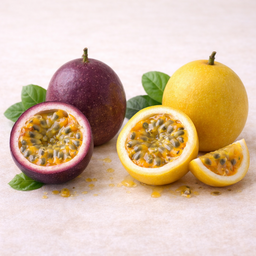 Passion Fruit (Maracuja) Coconut Milk
 MCT fats increase beta-carotene and vitamin A absorption by 250%
Technical: Passion fruit contains 1,274μg beta-carotene per 100g plus 64μg vitamin A (retinol). Coconut milk provides 24g fat per 100ml (MCT-dominant) incorporating fat-soluble carotenoids into micelles. MCTs are directly absorbed via portal vein and increase carotenoid bioavailability by 200-300%. Passion fruit also contains vitamin C (30mg/100g) — an antioxidant keeping beta-carotene stable before absorption. Result: superior vitamin A status.
What does this mean for you? Passion fruit-coconut smoothie or mousse delivers 2.5x more vitamin A than passion fruit alone. The tropical duo tastes delicious and is functional — great for eyes, skin and immune system.
Skin & HairImmune SystemGeneral Wellness
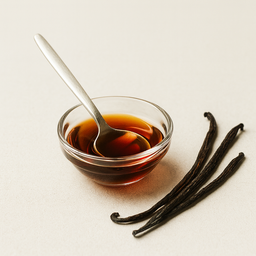 Vanilla Extract Honey
 Vanillin antioxidant + honey enzymes for aroma and well-being
Technical: Vanilla extract contains vanillin (1-2%) — a powerful antioxidant 5x stronger than vitamin C in DPPH assay. Vanillin also has anxiolytic action via GABA-A receptor modulation and inhibits MAO-B (mood improvement). Honey's enzymes and prebiotic FOS enhance the well-being effect: gut bacteria produce 90% of serotonin. The combination is aromatic (vanillin + honey flavors) and therapeutic (antioxidant + prebiotic + anxiolytic).
What does this mean for you? Add a few drops of real vanilla extract to warm honey milk or tea. The vanilla calms your nervous system, the honey feeds your gut bacteria that produce serotonin — comfort food at a molecular level.
Stress ReliefSleep
Instructions
- 1 Mix chia seeds, coconut milk, honey and vanilla extract in a bowl or glass jar.
Nutrition per serving
Indicative values per serving.
Timing & Suitability
Shelf life: 3 days in fridge