Passion Fruit (Maracuja)
The tropical fruit with exceptional fiber content
What is this ingredient?
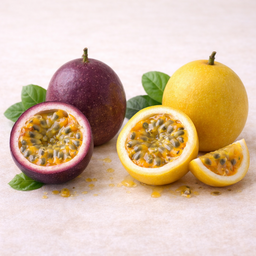
Passion fruit, also called maracuja, is the fruit of the passion flower vine and owes its name to the flower that was associated by missionaries with the Passion of Christ. The fruit has a crunchy shell with juicy pulp full of edible seeds.
What makes passion fruit unique are harman alkaloids (harmine, harmaline, harmalol), nitrogen-containing compounds that also occur in the passion flower vine but in lower concentrations in the fruit. These alkaloids have GABA-ergic action, causing calming and anxiety-reducing effects. Traditionally, passion flower extract is used as a mild sedative. Passion fruit also has extremely high fiber content (10.4g/100g - higher than most fruits) with much in the edible seeds. These seeds also contain omega-6 fatty acids (linoleic acid).
How does it taste?
Intensely aromatic with a sharp sweet-tart taste and tropical musk.
Pairs well with:
Pairs well with mangococonutwhite chocolateyoghurt and mint.
Varieties
Passiflora edulis f. edulis (Purple)
Purple shell, small size, very aromatic, most used
Passiflora edulis f. flavicarpa (Yellow)
Yellow shell, larger, more tart, used for juice
Did you know...?
- The name 'passion fruit' refers to the Passion of Christ, not romantic passion.
- Spanish missionaries in South America saw the flower as a symbol of the crucifixion.
Nutritional Value & Energy
Per 100g
Passion Fruit (Maracuja) provides energy thanks to natural nutrients , buffered by fiber.
Per 100g
Minerals
Vitamins
Omega-3 fatty acids
More nutrients
B-Vitamins
Trace Minerals
Low GI means blood sugar doesn't spike quickly.
Low GL means minimal impact on your blood sugar per serving.
What's in a serving?
1 serving
Passion Fruit (Maracuja) naturally contains potassium (348 mg per 100 g).
Passion Fruit (Maracuja) naturally contains vitamin c (50 mg per 100 g).
% of daily reference intake (DRI)
EU-approved nutrition claims
This ingredient contains nutrients for which EFSA-authorized health claims exist (at nutrient level, not ingredient-specific).
Approved health claims (EU)
Vitamin_c EU 432/2012
Vitamin C contributes to the normal function of the immune system
Contains 30mg/100g (threshold: ≥12mg/100g)
Vitamin_c EU 432/2012
Vitamin C contributes to the reduction of tiredness and fatigue
Contains 30mg/100g (threshold: ≥12mg/100g)
Vitamin_c EU 432/2012
Vitamin C contributes to normal collagen formation for the normal function of skin
Contains 30mg/100g (threshold: ≥12mg/100g)
Potassium EU 432/2012
Potassium contributes to the maintenance of normal blood pressure
Contains 348mg/100g (threshold: ≥300mg/100g)
Vitamin_c EU 432/2012
Vitamin C contributes to normal collagen formation for the normal function of blood vessels
Contains 30mg/100g (threshold: ≥12mg/100g)
Vitamin_c EU 432/2012
Vitamin C contributes to normal collagen formation for the normal function of bones
Contains 30mg/100g (threshold: ≥12mg/100g)
Vitamin_c EU 432/2012
Vitamin C contributes to normal collagen formation for the normal function of cartilage
Contains 30mg/100g (threshold: ≥12mg/100g)
Vitamin_c EU 432/2012
Vitamin C contributes to normal collagen formation for the normal function of gums
Contains 30mg/100g (threshold: ≥12mg/100g)
Vitamin_c EU 432/2012
Vitamin C contributes to normal collagen formation for the normal function of teeth
Contains 30mg/100g (threshold: ≥12mg/100g)
Vitamin_c EU 432/2012
Vitamin C contributes to normal energy-yielding metabolism
Contains 30mg/100g (threshold: ≥12mg/100g)
Vitamin_c EU 432/2012
Vitamin C contributes to normal functioning of the nervous system
Contains 30mg/100g (threshold: ≥12mg/100g)
Vitamin_c EU 432/2012
Vitamin C contributes to normal psychological function
Contains 30mg/100g (threshold: ≥12mg/100g)
Vitamin_c EU 432/2012
Vitamin C contributes to the protection of cells from oxidative stress
Contains 30mg/100g (threshold: ≥12mg/100g)
Vitamin_c EU 432/2012
Vitamin C contributes to the regeneration of the reduced form of vitamin E
Contains 30mg/100g (threshold: ≥12mg/100g)
Vitamin_c EU 432/2012
Vitamin C increases iron absorption
Contains 30mg/100g (threshold: ≥12mg/100g)
Vitamin_c EU 432/2012
Vitamin C contributes to maintain the normal function of the immune system during and after intense physical exercise
Contains 30mg/100g (threshold: ≥12mg/100g)
Potassium EU 432/2012
Potassium contributes to normal functioning of the nervous system
Contains 348mg/100g (threshold: ≥300mg/100g)
Potassium EU 432/2012
Potassium contributes to normal muscle function
Contains 348mg/100g (threshold: ≥300mg/100g)
What's being researched?
Harman alkaloids and relaxation
Harman alkaloids in passion fruit are being studied for potential anxiety-reducing effects. The peel contains higher concentrations of bioactive compounds than the flesh, but clinical evidence is still limited.
Supported by: [1] Appel K (2011)
Piceatannol and antioxidant activity
Piceatannol, a polyphenol in passion fruit seeds, is being studied for antioxidant activity. Preliminary evidence suggests activity comparable to resveratrol.
Supported by: [4] Fonseca AMA (2025) , [3] de Sousa GF (2021)
Good Combinations (Synergy)
Combine passion fruit (maracuja) smartly to enhance the effect:
Passion Fruit (Maracuja) 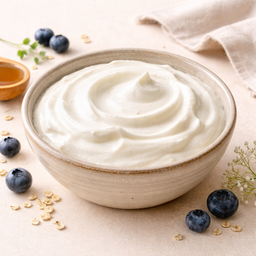 Greek Yogurt
 Bioactive alkaloids from passion fruit + probiotics from yogurt
Technical: Passion fruit contains harman and harmaline — beta-carboline alkaloids that activate GABA-A receptors (anxiety-reducing) and inhibit MAO-A (increases serotonin). Greek yogurt provides probiotics (Lactobacillus, Bifidobacterium) that via the gut-brain axis (vagus nerve) stimulate GABA production and lower cortisol. Together they enhance calming effects through two independent routes.
What does this mean for you? Mix passion fruit pulp into Greek yogurt as breakfast or dessert. The combination calms both your gut and nervous system. Ideal for stress, anxiety or sleep issues.
Passion Fruit (Maracuja)  Coconut Milk
 MCT fats increase beta-carotene and vitamin A absorption by 250%
Technical: Passion fruit contains 1,274μg beta-carotene per 100g plus 64μg vitamin A (retinol). Coconut milk provides 24g fat per 100ml (MCT-dominant) incorporating fat-soluble carotenoids into micelles. MCTs are directly absorbed via portal vein and increase carotenoid bioavailability by 200-300%. Passion fruit also contains vitamin C (30mg/100g) — an antioxidant keeping beta-carotene stable before absorption. Result: superior vitamin A status.
What does this mean for you? Passion fruit-coconut smoothie or mousse delivers 2.5x more vitamin A than passion fruit alone. The tropical duo tastes delicious and is functional — great for eyes, skin and immune system.
Passion Fruit (Maracuja)  Yogurt
 High fiber + probiotics + magnesium for gut and relaxation
Technical: Passion fruit contains 10.4g fiber per 100g (mostly pectin in seeds), 29mg magnesium and harmaline alkaloids that inhibit MAO-A. Yogurt provides Lactobacillus probiotics that ferment these fibers into butyrate — the primary fuel for colonocytes. Butyrate strengthens tight junctions by 35-40% and lowers gut permeability. Magnesium from passion fruit is cofactor for GABA-B receptor, promoting relaxation. Harmaline enhances serotonin action.
What does this mean for you? Mix passion fruit pulp into yogurt for a gut-friendly dessert. The fiber feeds your gut bacteria, probiotics strengthen your gut wall, and magnesium helps relax. Perfect as evening snack.
Recipes with Passion Fruit (Maracuja)
Discover delicious recipes featuring passion fruit (maracuja):
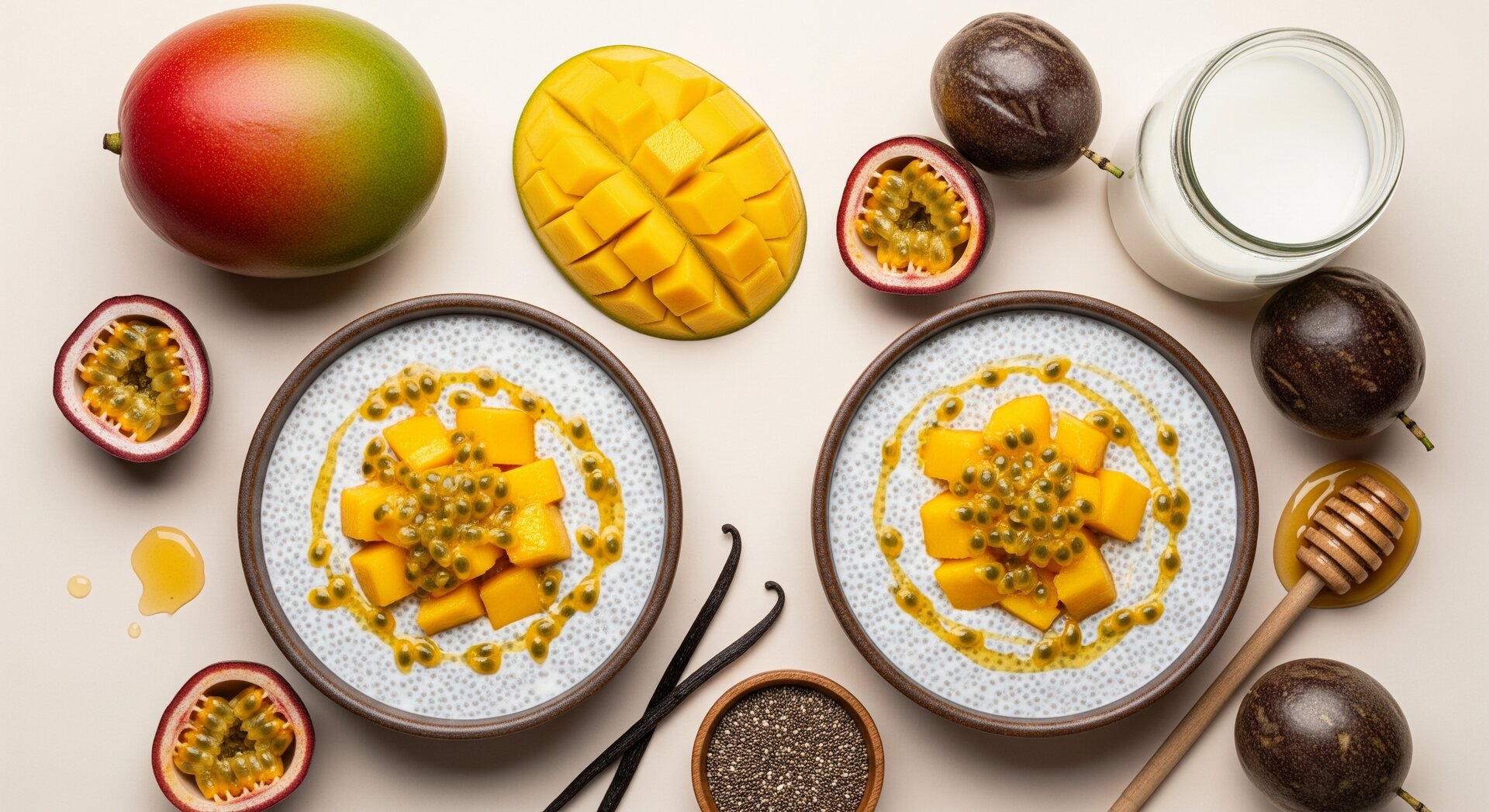 Chia Seed Pudding with Mango 10 min Tropical overnight pudding with passion fruit
  380 kcal
  8g protein 2 synergies
 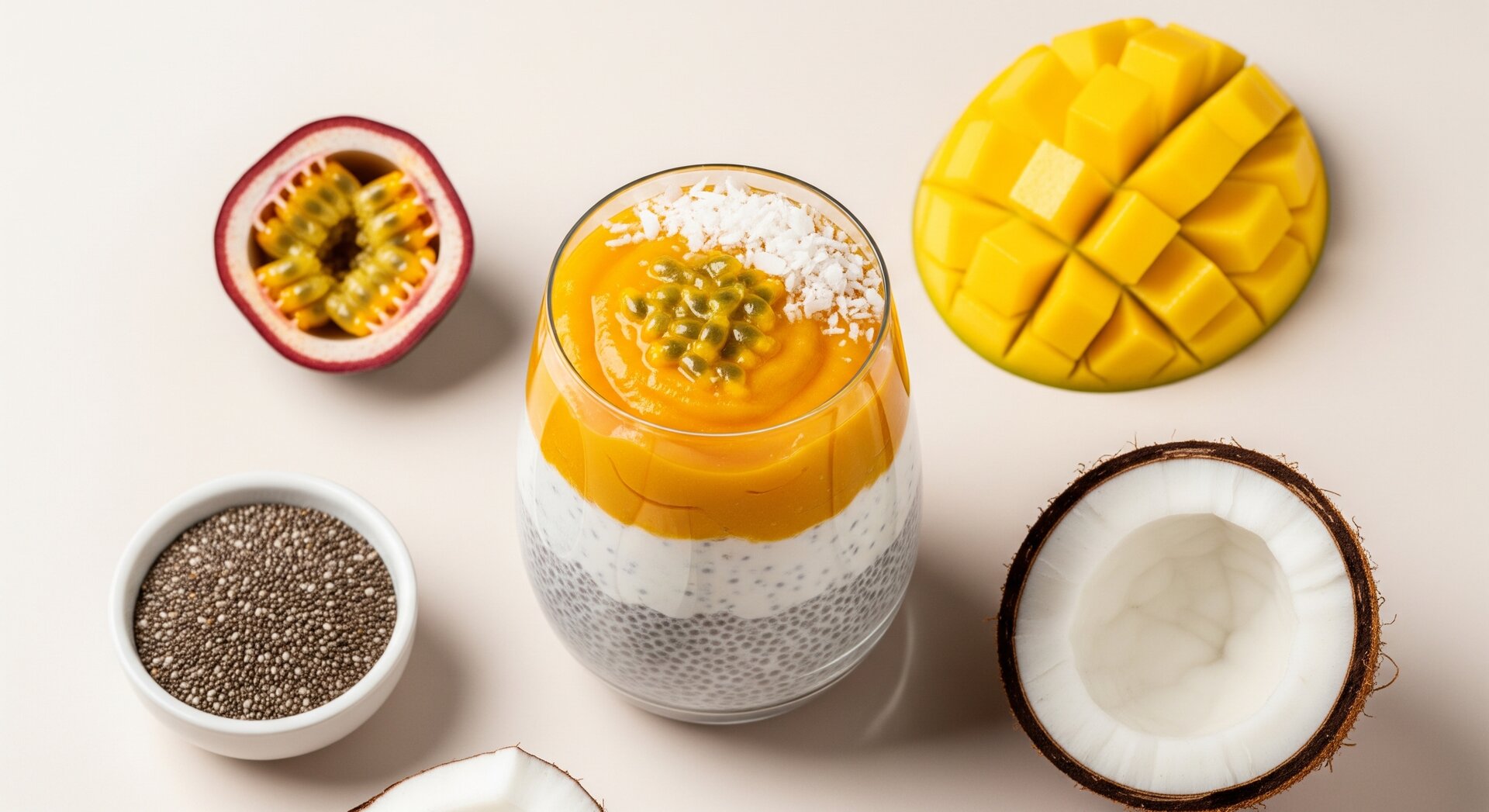 Mango-Coconut Chia Seed Parfait with Passion Fruit 255 min Layered tropical dessert with chia pudding, mango and passion fruit 492 kcal 8g protein 2 synergies
 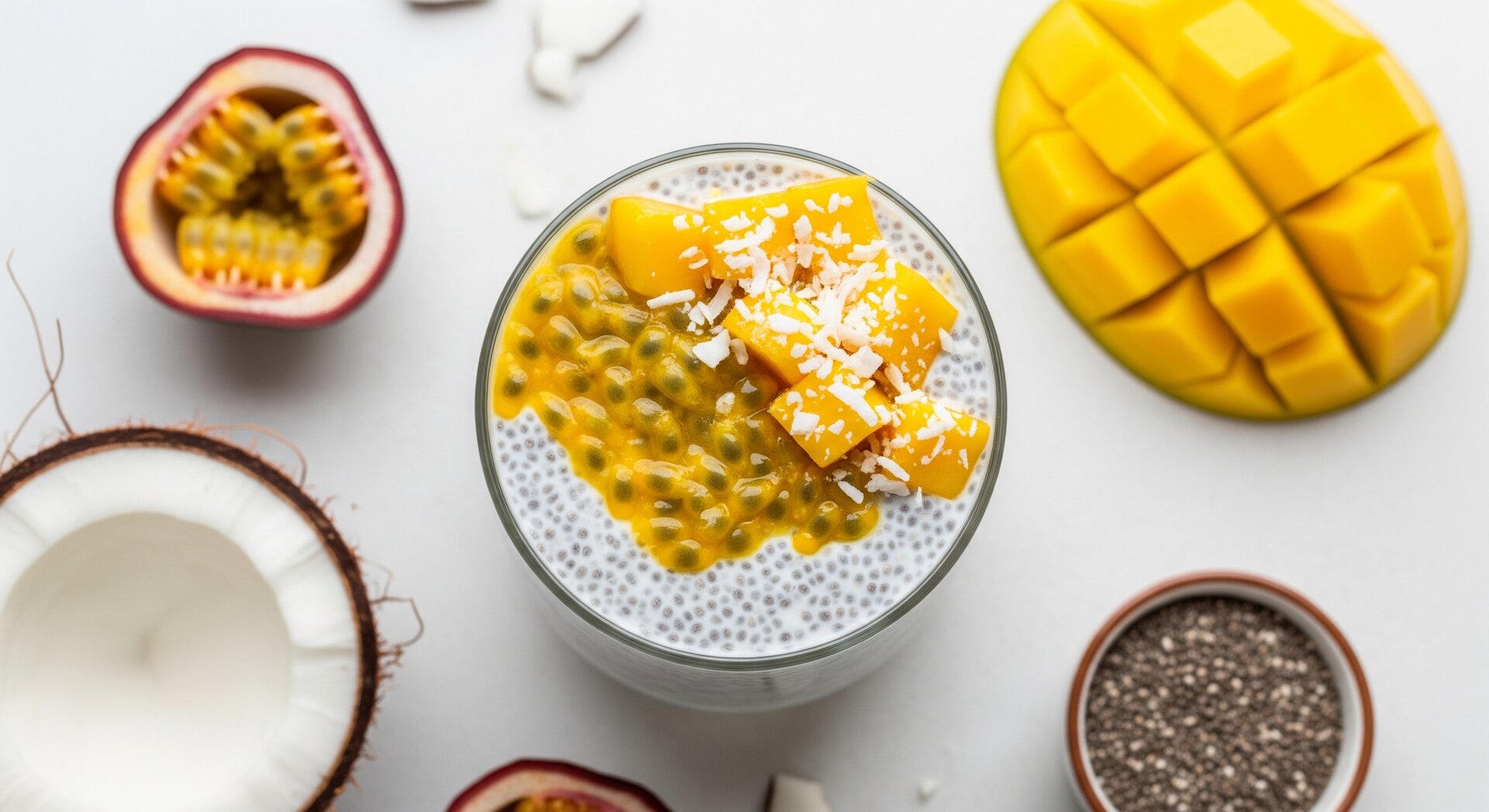 Overnight Chia-Coconut Pudding with Passion Fruit 10 min Tropical breakfast with omega-3 and fiber 534 kcal 9g protein 1 synergies
 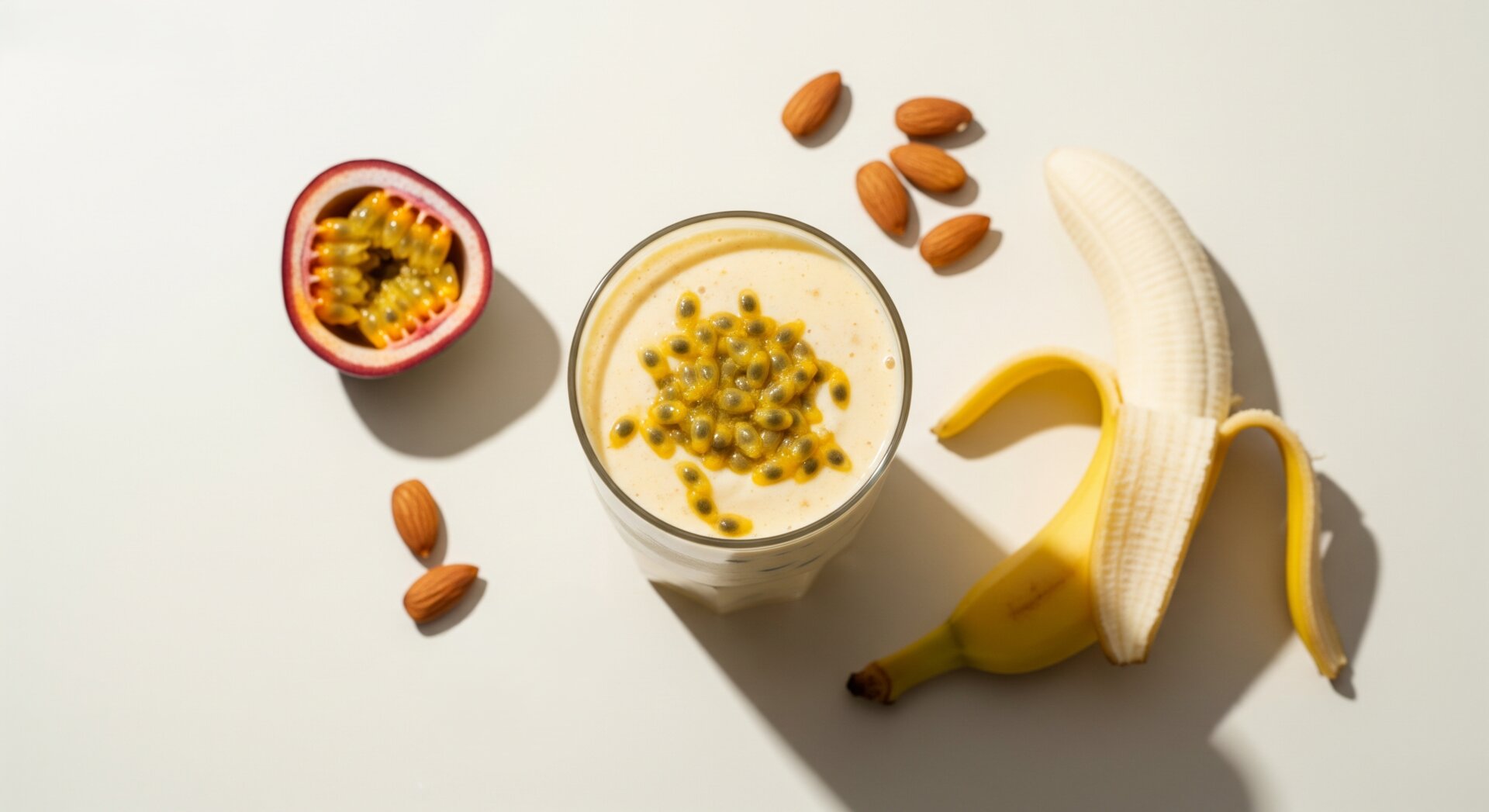 Passion Fruit Evening Smoothie 5 min Tropical smoothie with passion fruit, banana and almond butter 285 kcal 7g protein 1 synergies
 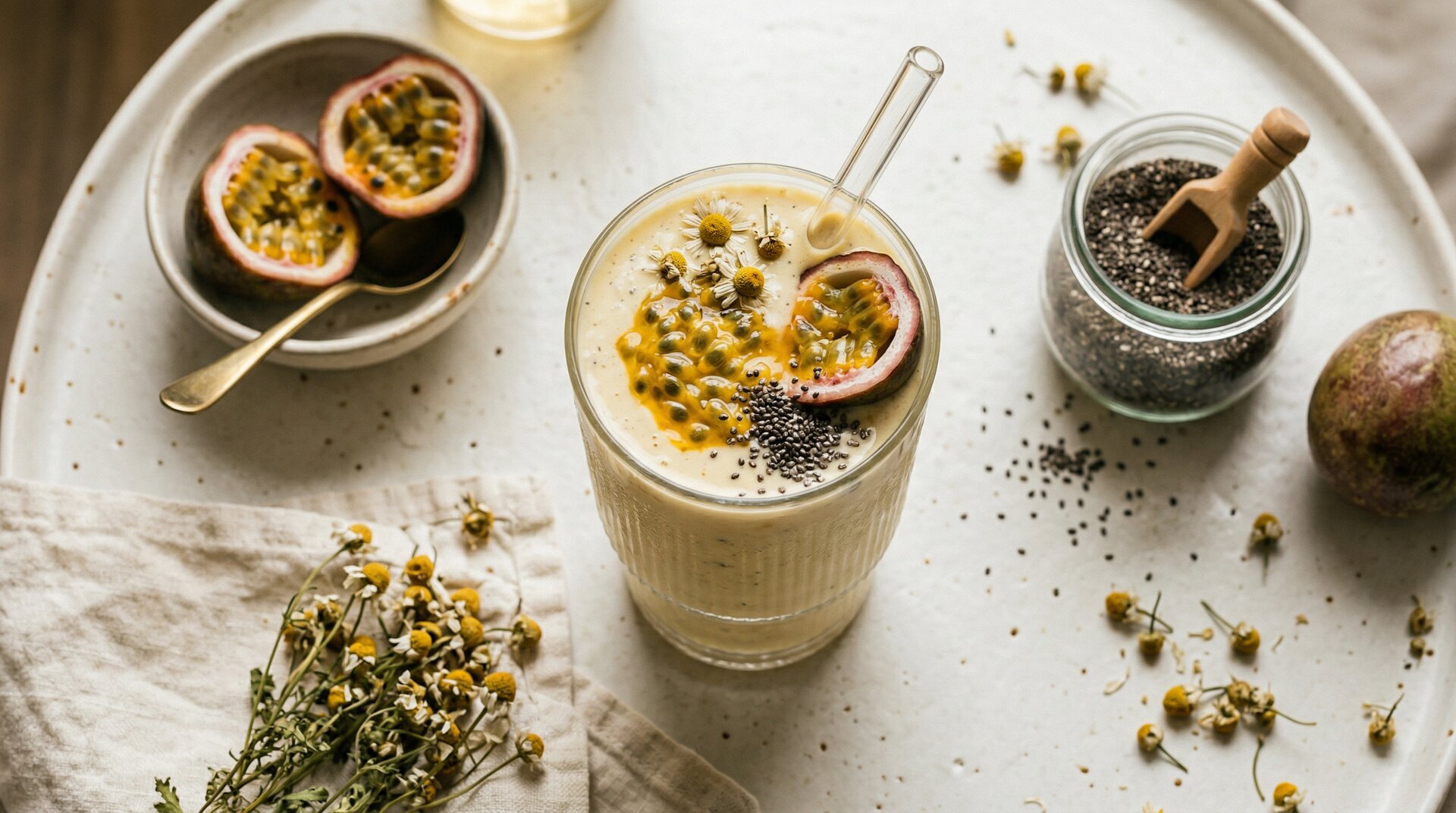 Creamy Passion Fruit Smoothie with Chamomile and Chia 10 min Floral, tropical and velvety 149 kcal 6g protein 2 synergies
 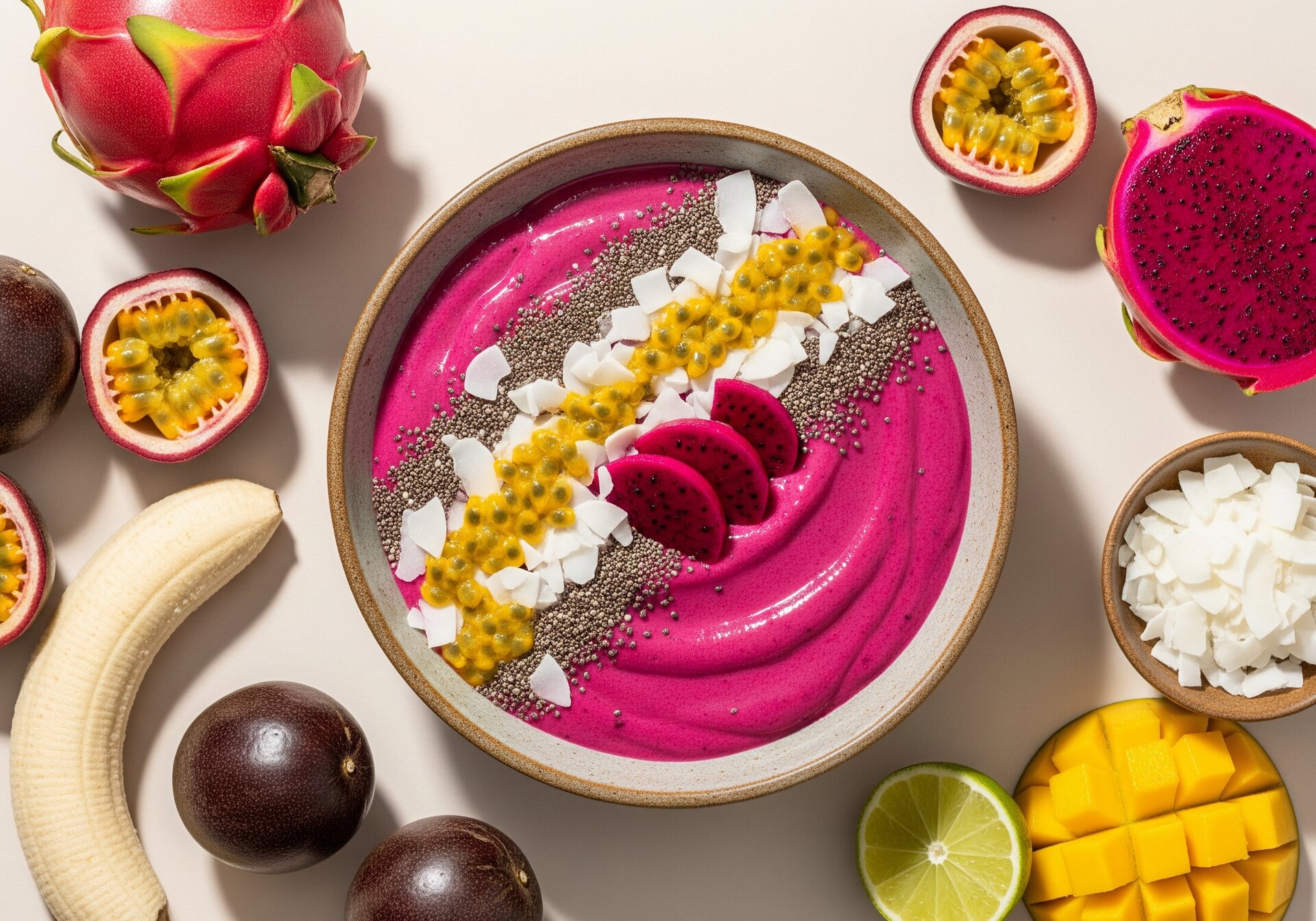 Pink Dragon Fruit Smoothie 5 min Tropical smoothie with pitaya, coconut, mango and passion fruit 320 kcal 5g protein 1 synergies
  In the Kitchen
Storage
Location:Refrigerator
Shelf life:1 week (kamertemperatuur), 2-3 weken (koelkast)
Ripe passion fruit: wrinkled skin (moisture loss concentrates sugars and flavor - GOOD sign!). Smooth = unripe. Store at room temperature until wrinkled, then refrigerator for longer life. Cut: spoon out pulp + seeds, store airtight max 3 days refrigerator. Seeds are edible and contain most fiber - do NOT spit out!
Preparation
Raw with seeds for maximum fiber, piceatannol and harman alkaloids. Cutting: halve, spoon out pulp + seeds. Use in: smoothies (tart-sweet flavor), yogurt, desserts, cocktails. Juice: strain out seeds (loses fiber!). For calming: eat whole fruit 1-2 hours before sleep. Combine with yogurt or kefir (probiotics + prebiotic fiber synergy).
Conversions
Substitutes
Smart preparation
1Halve passion fruit and scoop out the contents with a teaspoon.
2Strain passion fruit pulp through a sieve if you don't want the seeds.
3A wrinkled skin means the passion fruit is riper and sweeter.
Caution / Warnings
Passion Fruit (Maracuja) is very safe, but there are scientific considerations:
Sedatives & Tranquilizers Moderate
Harman alkaloids can enhance sedative effects of medications (benzodiazepines, barbiturates, antihistamines). Combination can cause excessive drowsiness.
Advice:
When using tranquilizers: limit to small portions (1-2 tablespoons pulp). Consult doctor with regular use. Avoid before driving if combined.
Pregnancy (High Doses) Moderate
Harmine can stimulate uterine contractions in high doses. Normal consumption (1-2 fruits) is safe, but avoid concentrated extracts.
Advice:
During pregnancy: limit to 1-2 fresh fruits per day. Avoid passion flower extract supplements. Consult doctor if in doubt.
Latex Allergy Mild
Cross-reactivity possible between latex and passion fruit (latex-fruit syndrome). Symptoms: itching, swelling, skin rash.
Advice:
Test tolerance with small amount if latex allergy. If symptoms: avoid.
Traditional use
Indigenous
South American traditional use
Indigenous peoples in South America used passionflower and its fruit for centuries as a calming agent and for sleep problems.
Summary
Passion fruit is the natural calmer with harman alkaloids (GABA-ergic) and extremely high fiber content (10.4g/100g - one fruit = 40% DV!). Traditionally used for anxiety and sleep - studies show comparable effectiveness with oxazepam but milder effects in fruit. Eat seeds for fiber, omega-6 and piceatannol (10x stronger than resveratrol). Ideal 1-2 hours before sleep for calming. Note: can enhance sedatives. Ripe = wrinkled skin (moisture loss concentrates sugars). Cutting: halve, spoon out pulp + seeds.