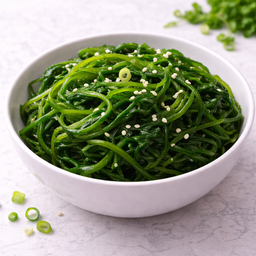
Wakame
Silky brown seaweed for miso soup, salads and umami-rich dishes
What is this ingredient?
Wakame stands out from many other seaweeds because of fucoxanthin, a brown-orange carotenoid studied in marine nutrition research. It also contains fucoidan, a sulfated polysaccharide characteristic of brown seaweeds. Like nori, dried wakame can provide a lot of iodine (about 1600 mcg per 100 g dried), while the usual serving is small: often 5-10 g of dry product before soaking. Once soaked, the texture becomes soft, supple and silky, with mild saltiness and a subtle ocean-like umami flavor. This makes wakame a natural fit for miso soup, sunomono salad, noodle soups and light rice dishes.
How does it taste?
Softly salty with a subtly sweet, oceanic umami flavor and a supple bite after soaking.
Pairs well with:
Pairs well with sesame oilrice vinegarcucumbertofumisoginger and light noodles.
Did you know...?
- Wakame has been eaten in Japan for over 1,300 years, as recorded in ancient tax registers.
- Wakame grows quickly and can spread easily outside its native habitat.
Nutritional Value & Energy
Per 100g
Wakame is low in calories thanks to natural nutrients .
Per 100g
Minerals
Vitamins
Omega-3 fatty acids
More nutrients
Trace Minerals
What's in a serving?
1 serving
Wakame naturally contains iodine (1600 mcg per 100 g dried product).
Wakame naturally contains manganese (1.4 mg per 100 g dried product).
Wakame naturally contains magnesium (107 mg per 100 g dried product).
Wakame naturally contains calcium (150 mg per 100 g dried product).
Wakame naturally contains iron (2.2 mg per 100 g dried product).
Wakame naturally contains folate (196 mcg per 100 g dried product).
% of daily reference intake (DRI)
EU-approved nutrition claims
This ingredient contains nutrients for which EFSA-authorized health claims exist (at nutrient level, not ingredient-specific).
Approved health claims (EU)
Magnesium EU 432/2012
Magnesium contributes to normal muscle function
Contains 107mg/100g (threshold: ≥56.25mg/100g)
Magnesium EU 432/2012
Magnesium contributes to the reduction of tiredness and fatigue
Contains 107mg/100g (threshold: ≥56.25mg/100g)
Magnesium EU 432/2012
Magnesium contributes to normal functioning of the nervous system
Contains 107mg/100g (threshold: ≥56.25mg/100g)
Iron EU 432/2012
Iron contributes to normal energy-yielding metabolism
Contains 2.2mg/100g (threshold: ≥2.1mg/100g)
Iron EU 432/2012
Iron contributes to the reduction of tiredness and fatigue
Contains 2.2mg/100g (threshold: ≥2.1mg/100g)
Calcium EU 432/2012
Calcium is needed for the maintenance of normal bones
Contains 150mg/100g (threshold: ≥120mg/100g)
Folate EU 432/2012
Folate contributes to normal blood formation
Contains 196mcg/100g (threshold: ≥30mcg/100g)
Folate EU 432/2012
Folate contributes to normal amino acid synthesis
Contains 196mcg/100g (threshold: ≥30mcg/100g)
Folate EU 432/2012
Folate contributes to normal homocysteine metabolism
Contains 196mcg/100g (threshold: ≥30mcg/100g)
Folate EU 432/2012
Folate contributes to normal psychological function
Contains 196mcg/100g (threshold: ≥30mcg/100g)
Folate EU 432/2012
Folate contributes to the normal function of the immune system
Contains 196mcg/100g (threshold: ≥30mcg/100g)
Folate EU 432/2012
Folate has a role in the process of cell division
Contains 196mcg/100g (threshold: ≥30mcg/100g)
Folate EU 432/2012
Folate contributes to maternal tissue growth during pregnancy
Contains 196mcg/100g (threshold: ≥30mcg/100g)
Calcium EU 432/2012
Calcium is needed for the maintenance of normal teeth
Contains 150mg/100g (threshold: ≥120mg/100g)
Calcium EU 432/2012
Calcium contributes to normal blood clotting
Contains 150mg/100g (threshold: ≥120mg/100g)
Calcium EU 432/2012
Calcium contributes to normal energy-yielding metabolism
Contains 150mg/100g (threshold: ≥120mg/100g)
Calcium EU 432/2012
Calcium contributes to normal muscle function
Contains 150mg/100g (threshold: ≥120mg/100g)
Calcium EU 432/2012
Calcium contributes to normal neurotransmission
Contains 150mg/100g (threshold: ≥120mg/100g)
Calcium EU 432/2012
Calcium contributes to the normal function of digestive enzymes
Contains 150mg/100g (threshold: ≥120mg/100g)
Calcium EU 432/2012
Calcium has a role in the process of cell division and specialisation
Contains 150mg/100g (threshold: ≥120mg/100g)
Magnesium EU 432/2012
Magnesium contributes to normal energy-yielding metabolism
Contains 107mg/100g (threshold: ≥56.25mg/100g)
Magnesium EU 432/2012
Magnesium contributes to electrolyte balance
Contains 107mg/100g (threshold: ≥56.25mg/100g)
Magnesium EU 432/2012
Magnesium contributes to normal protein synthesis
Contains 107mg/100g (threshold: ≥56.25mg/100g)
Magnesium EU 432/2012
Magnesium contributes to normal psychological function
Contains 107mg/100g (threshold: ≥56.25mg/100g)
Magnesium EU 432/2012
Magnesium contributes to the maintenance of normal bones
Contains 107mg/100g (threshold: ≥56.25mg/100g)
Magnesium EU 432/2012
Magnesium contributes to the maintenance of normal teeth
Contains 107mg/100g (threshold: ≥56.25mg/100g)
Magnesium EU 432/2012
Magnesium has a role in the process of cell division
Contains 107mg/100g (threshold: ≥56.25mg/100g)
Iron EU 432/2012
Iron contributes to normal cognitive function
Contains 2.2mg/100g (threshold: ≥2.1mg/100g)
Iron EU 432/2012
Iron contributes to normal formation of red blood cells and haemoglobin
Contains 2.2mg/100g (threshold: ≥2.1mg/100g)
Iron EU 432/2012
Iron contributes to normal oxygen transport in the body
Contains 2.2mg/100g (threshold: ≥2.1mg/100g)
Iron EU 432/2012
Iron contributes to the normal function of the immune system
Contains 2.2mg/100g (threshold: ≥2.1mg/100g)
Iron EU 432/2012
Iron has a role in the process of cell division
Contains 2.2mg/100g (threshold: ≥2.1mg/100g)
Manganese EU 432/2012
Manganese contributes to normal energy-yielding metabolism
Contains 1.4mg/100g (threshold: ≥0.3mg/100g)
Manganese EU 432/2012
Manganese contributes to the maintenance of normal bones
Contains 1.4mg/100g (threshold: ≥0.3mg/100g)
Manganese EU 432/2012
Manganese contributes to the normal formation of connective tissue
Contains 1.4mg/100g (threshold: ≥0.3mg/100g)
Manganese EU 432/2012
Manganese contributes to the protection of cells from oxidative stress
Contains 1.4mg/100g (threshold: ≥0.3mg/100g)
Iodine EU 432/2012
Iodine contributes to normal cognitive function
Contains 1600mcg/100g (threshold: ≥22.5mcg/100g)
Iodine EU 432/2012
Iodine contributes to normal energy-yielding metabolism
Contains 1600mcg/100g (threshold: ≥22.5mcg/100g)
Iodine EU 432/2012
Iodine contributes to normal functioning of the nervous system
Contains 1600mcg/100g (threshold: ≥22.5mcg/100g)
Iodine EU 432/2012
Iodine contributes to the maintenance of normal skin
Contains 1600mcg/100g (threshold: ≥22.5mcg/100g)
Iodine EU 432/2012
Iodine contributes to the normal production of thyroid hormones and normal thyroid function
Contains 1600mcg/100g (threshold: ≥22.5mcg/100g)
Iodine EU 432/2012
Iodine contributes to the normal growth of children
Contains 1600mcg/100g (threshold: ≥22.5mcg/100g)
What's being researched?
Fucoxanthin in wakame
Fucoxanthin is the brown-orange carotenoid pigment in wakame and other brown seaweeds. It is studied in nutrition and marine biochemistry, especially in relation to absorption, metabolites and how amounts vary by seaweed species and processing.
Supported by: [2] Maeda H (2009) , [1] Kumar (2013)
Wakame, alginate and seaweed peptides
Alginate, fucoidan and peptides from wakame are studied as marine food components. The literature describes their chemical structure, extraction methods and behavior in laboratory and nutrition models, without giving wakame an ingredient-specific health claim.
Supported by: [3] Park (2011)
Good Combinations (Synergy)
Combine wakame smartly to enhance the effect:
Wakame  Edamame
 Japanese combination: isoflavones + iodine
Technical: Soy isoflavones can affect thyroid function at high doses through TPO inhibition. Seaweed provides iodine (16-2000μg per serving) that compensates this effect. Good to know: iodine contributes to the normal production of thyroid hormones and normal thyroid function (EFSA-approved). In Japan where lots of soy AND seaweed are eaten, this combination is standard.
What does this mean for you? If you regularly eat edamame or tofu, combine with seaweed (miso soup with wakame, sushi with nori). This is the traditional Japanese approach followed for centuries.
Wakame  Vegetable Broth
 Mineral-rich base for Asian soups
Technical: Vegetable broth contains land minerals (potassium, magnesium, phosphorus) from vegetables. Nori and wakame add sea minerals: iodine (essential for thyroid), extra magnesium and trace elements (vanadium, chromium) scarce on land. Together they cover a broader mineral spectrum than land or sea sources alone.
What does this mean for you? Add a piece of nori or wakame to your vegetable broth or miso soup. You supplement minerals often lacking in land-based food — especially iodine for your thyroid.
Wakame  Sesame Oil
 Better absorption of fat-soluble vitamins from seaweed
Technical: Wakame contains fat-soluble vitamins A (360μg RAE/100g), E, and K, plus fucoxanthin — a unique carotenoid. Without dietary fat, these are barely absorbed. Sesame oil's unsaturated fats (42% oleic acid, 40% linoleic acid) form micelles that increase absorption of these fat-soluble compounds up to 5x.
What does this mean for you? Make a Japanese wakame salad with sesame oil dressing — the oil ensures your body actually absorbs the vitamins and rare fucoxanthin. Without the oil, you eat wakame but miss most of it.
Wakame 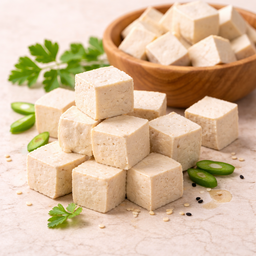 Tofu
Tofu Classic miso soup base: calcium + magnesium + isoflavones
Technical: Wakame contains 150mg calcium per 100g and fucoidans (polysaccharides studied in research). Tofu contains isoflavones that improve calcium retention in bones. Good to know: calcium is needed for the maintenance of normal bones (EFSA-approved).
What does this mean for you? Add wakame to your miso soup with tofu. This is a traditional Japanese combination — an excellent plant-based source of calcium, with isoflavones from soy.
Recipes with Wakame
Discover delicious recipes featuring wakame:
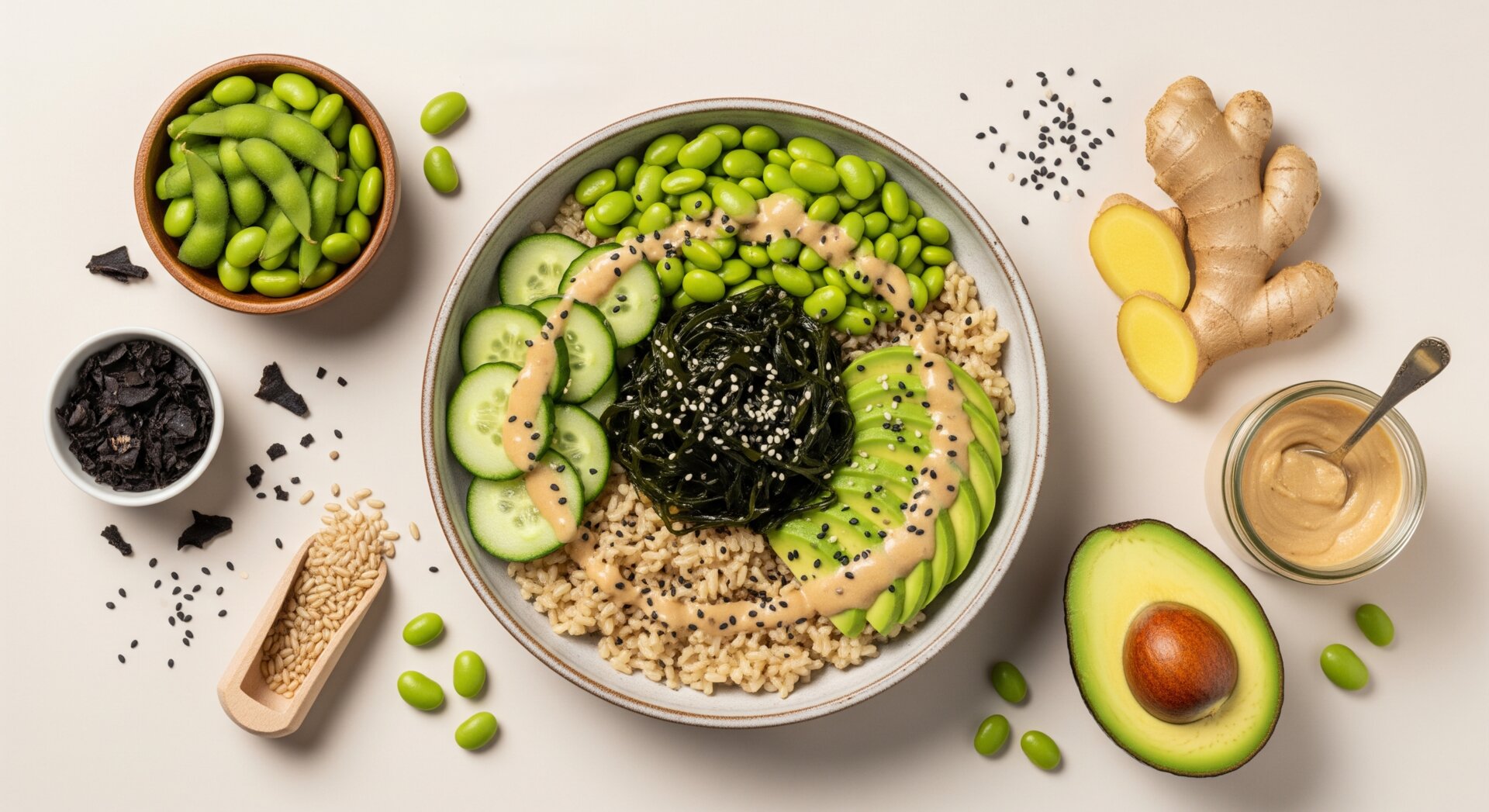 Edamame Seaweed Bowl with Ginger Tahini 15 min Fresh Japanese-style bowl with creamy dressing
  445 kcal
  16g protein 2 synergies
 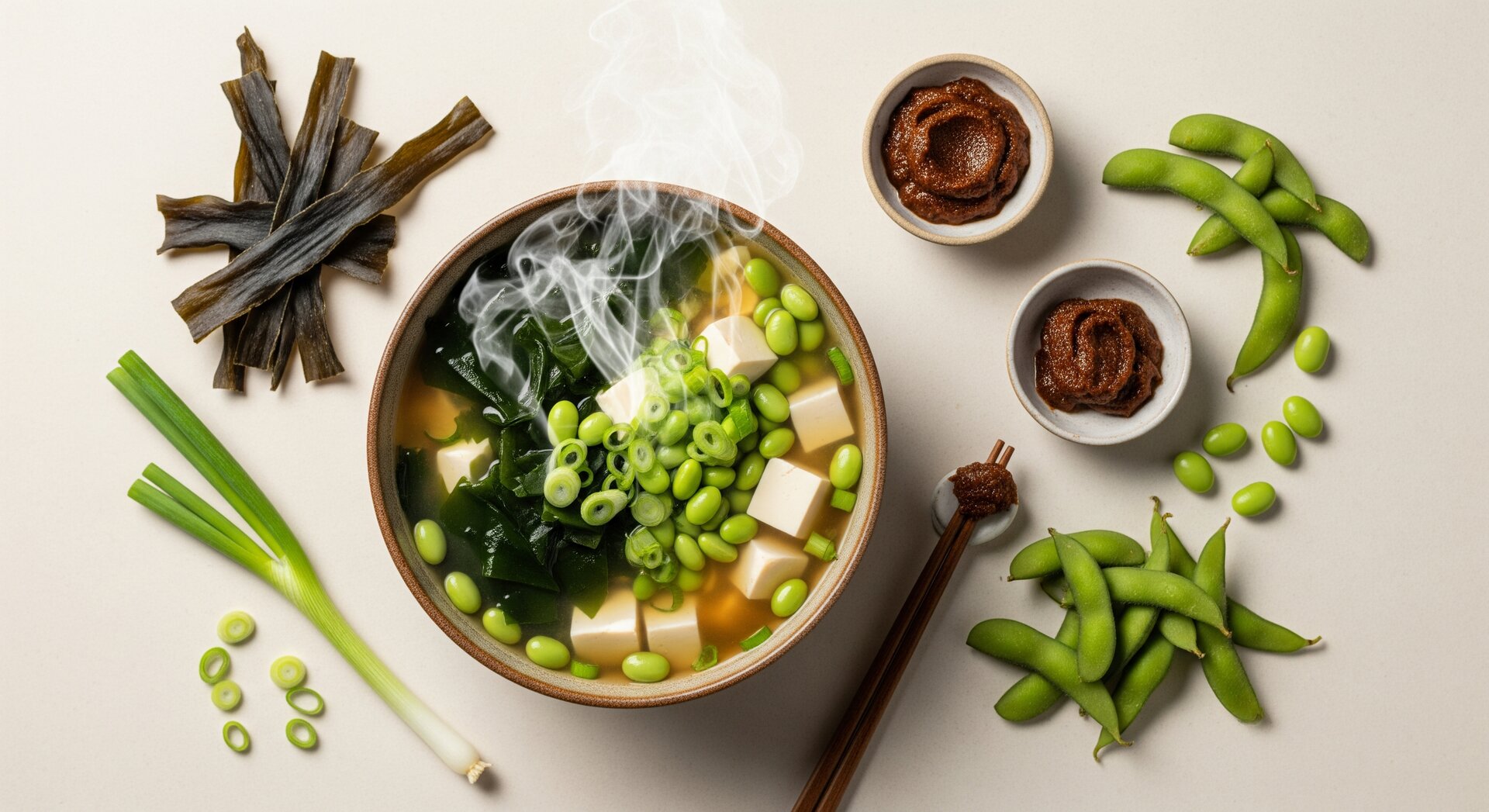 Japanese Edamame Miso Soup 20 min Light miso soup with edamame, tofu, wakame and ginger 245 kcal 18g protein 2 synergies
 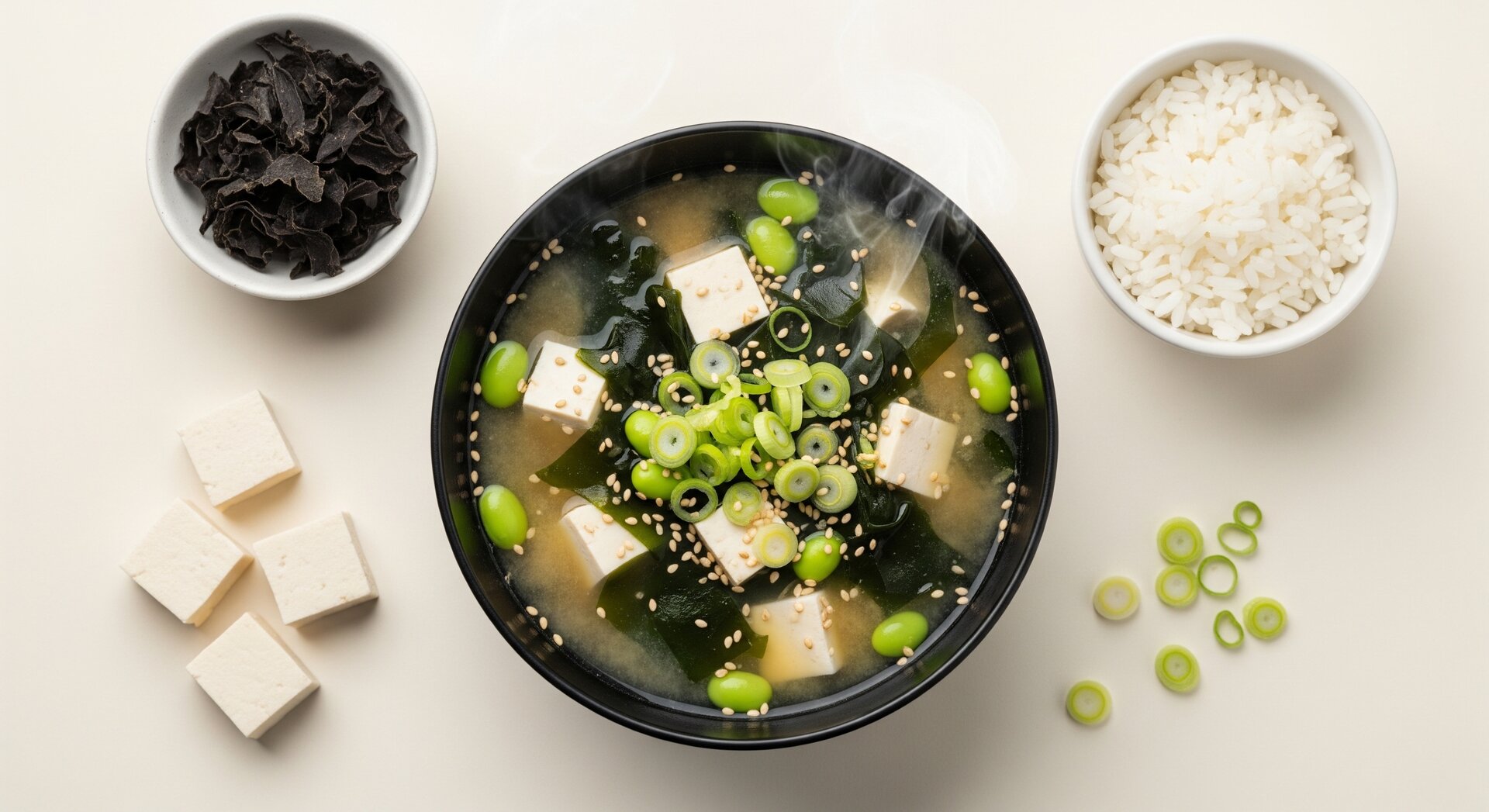 Japanese Miso Soup with Tofu and Seaweed 30 min Traditional Japanese breakfast with fermented soy and seaweed 310 kcal 19g protein 2 synergies
  Japanese Sesame Dressing Salad with Chicken and Seaweed 32 min Crispy salad with grilled chicken and mineral-rich seaweed 445 kcal 52g protein 1 synergies
 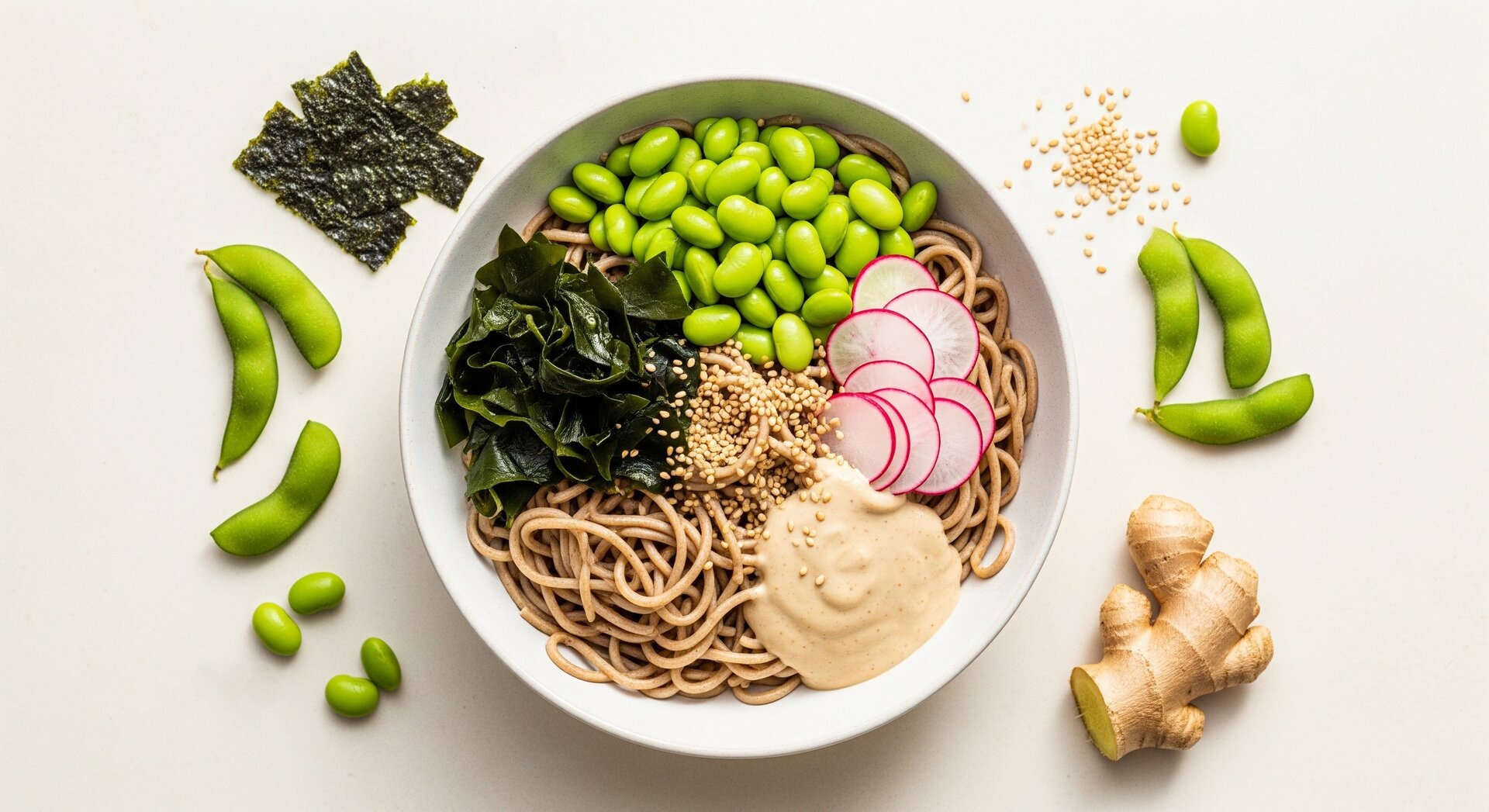 Cold Japanese Soba with Edamame and Seaweed 30 min Refreshing noodles with sesame-tahini dressing 820 kcal 35g protein 2 synergies
  Power Grain Bowl with Salmon, Avocado & Sesame Dressing 35 min Nutritious dish with omega-3-rich salmon, quinoa and seasonal vegetables 728 kcal 38g protein 2 synergies
  In the Kitchen
Storage
Location:Pantry
Shelf life:1-2 jaar gedroogd in afgesloten verpakking
Store dried wakame in an airtight container, away from moisture, heat and direct light. Use soaked wakame the same day or keep it briefly covered in the refrigerator.
Preparation
Soak dried wakame for 5-10 minutes in cold water until the leaves are soft and green. It expands strongly, so start with a small amount. Add it to miso soup just before serving, or squeeze and slice it for salads.
Substitutes
Smart preparation
1Soak dried wakame for 5 minutes in cold water; it expands strongly in volume.
Why?
Starting with a small amount keeps the texture and briny flavor balanced in soup, salad or rice bowls.
2Squeeze excess water from soaked wakame before adding it to salads.
3Add wakame only at the end to miso soup.
Caution / Warnings
Wakame is very safe, but there are scientific considerations:
Thyroid conditions Moderate
Dried wakame contains a lot of iodine. A small portion is often more appropriate than large amounts, especially when you are sensitive to iodine intake.
Advice:
Use small portions and ask a doctor or dietitian for personal advice if you have thyroid concerns or need to limit iodine.
Sodium content Mild
Wakame naturally contains sodium (872 mg per 100 g dried product), although typical servings are much smaller.
Advice:
Following a sodium-restricted diet? Soak wakame in plenty of water first, rinse it and use it as a small flavor accent.
Traditional use
Other
Wakame in Japanese and Korean food culture
Wakame has been used for centuries in Japan and Korea. In Korea, miyeok-guk, a seaweed soup, is connected with family traditions and is often eaten around birthdays and important occasions.
Traditional Chinese Medicine
Seaweed in Chinese culinary traditions
In Chinese culinary traditions, seaweeds are used in soups, broths and braised dishes for their briny taste, soft texture and deep umami. Wakame fits this broader habit of using sea vegetables as flavorful pantry ingredients.
Summary
Wakame is the soft seaweed often found in miso soup and Japanese salads. It contains a lot of iodine per 100 g dried product, but you usually use only a small amount. Soak dried wakame for about 5 minutes in cold water; it expands strongly and becomes soft and silky. A little adds a briny umami note to broths, salads and rice dishes.