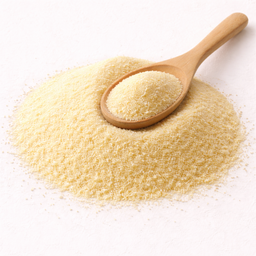
Semolina
the golden grain
What is this ingredient?
Semolina is made from the endosperm of hard wheat. Because durum wheat is the hardest wheat variety, semolina holds its shape well during cooking, making it ideal for pasta 'al dente'. The yellow color comes from carotenoids like lutein. Although often refined, durum wheat naturally contains more protein than regular bread wheat.
How does it taste?
Mild and slightly sweet with a fine-grained, soft texture.
Pairs well with:
Pairs well with butterlemonhoneyalmonds and orange blossom.
Did you know...?
- Semolina comes from the Italian 'semola', derived from the Latin 'simila' (fine flour).
- Semolina is made from durum wheat, the hardest wheat species in existence.
Nutritional Value & Energy
Per 100g
Semolina provides energy thanks to natural nutrients , buffered by fiber.
Per 100g
Minerals
Vitamins
Omega-3 fatty acids
More nutrients
Trace Minerals
What's in a serving?
1 serving (dry)
Semolina naturally contains selenium (66.4 mcg per 100 g).
Semolina naturally contains folate (72 mcg per 100 g).
Semolina naturally contains phosphorus (136 mg per 100 g).
Semolina naturally contains manganese (0.62 mg per 100 g).
Semolina naturally contains copper (0.19 mg per 100 g).
% of daily reference intake (DRI)
EU-approved nutrition claims
This ingredient contains nutrients for which EFSA-authorized health claims exist (at nutrient level, not ingredient-specific).
Approved health claims (EU)
Folate EU 432/2012
Folate contributes to normal blood formation
Contains 72mcg/100g (threshold: ≥30mcg/100g)
Folate EU 432/2012
Folate contributes to normal amino acid synthesis
Contains 72mcg/100g (threshold: ≥30mcg/100g)
Folate EU 432/2012
Folate contributes to normal homocysteine metabolism
Contains 72mcg/100g (threshold: ≥30mcg/100g)
Folate EU 432/2012
Folate contributes to normal psychological function
Contains 72mcg/100g (threshold: ≥30mcg/100g)
Folate EU 432/2012
Folate contributes to the normal function of the immune system
Contains 72mcg/100g (threshold: ≥30mcg/100g)
Folate EU 432/2012
Folate has a role in the process of cell division
Contains 72mcg/100g (threshold: ≥30mcg/100g)
Folate EU 432/2012
Folate contributes to maternal tissue growth during pregnancy
Contains 72mcg/100g (threshold: ≥30mcg/100g)
Phosphorus EU 432/2012
Phosphorus contributes to normal energy-yielding metabolism
Contains 136mg/100g (threshold: ≥105mg/100g)
Phosphorus EU 432/2012
Phosphorus contributes to the normal function of cell membranes
Contains 136mg/100g (threshold: ≥105mg/100g)
Phosphorus EU 432/2012
Phosphorus contributes to the maintenance of normal bones
Contains 136mg/100g (threshold: ≥105mg/100g)
Phosphorus EU 432/2012
Phosphorus contributes to the maintenance of normal teeth
Contains 136mg/100g (threshold: ≥105mg/100g)
Copper EU 432/2012
Copper contributes to the maintenance of normal connective tissues
Contains 0.19mg/100g (threshold: ≥0.15mg/100g)
Copper EU 432/2012
Copper contributes to normal energy-yielding metabolism
Contains 0.19mg/100g (threshold: ≥0.15mg/100g)
Copper EU 432/2012
Copper contributes to normal functioning of the nervous system
Contains 0.19mg/100g (threshold: ≥0.15mg/100g)
Copper EU 432/2012
Copper contributes to normal hair pigmentation
Contains 0.19mg/100g (threshold: ≥0.15mg/100g)
Copper EU 432/2012
Copper contributes to normal iron transport in the body
Contains 0.19mg/100g (threshold: ≥0.15mg/100g)
Copper EU 432/2012
Copper contributes to normal skin pigmentation
Contains 0.19mg/100g (threshold: ≥0.15mg/100g)
Copper EU 432/2012
Copper contributes to the normal function of the immune system
Contains 0.19mg/100g (threshold: ≥0.15mg/100g)
Copper EU 432/2012
Copper contributes to the protection of cells from oxidative stress
Contains 0.19mg/100g (threshold: ≥0.15mg/100g)
Manganese EU 432/2012
Manganese contributes to normal energy-yielding metabolism
Contains 0.62mg/100g (threshold: ≥0.3mg/100g)
Manganese EU 432/2012
Manganese contributes to the maintenance of normal bones
Contains 0.62mg/100g (threshold: ≥0.3mg/100g)
Manganese EU 432/2012
Manganese contributes to the normal formation of connective tissue
Contains 0.62mg/100g (threshold: ≥0.3mg/100g)
Manganese EU 432/2012
Manganese contributes to the protection of cells from oxidative stress
Contains 0.62mg/100g (threshold: ≥0.3mg/100g)
Selenium EU 432/2012
Selenium contributes to the maintenance of normal hair
Contains 66.4mcg/100g (threshold: ≥8.25mcg/100g)
Selenium EU 432/2012
Selenium contributes to the maintenance of normal nails
Contains 66.4mcg/100g (threshold: ≥8.25mcg/100g)
Selenium EU 432/2012
Selenium contributes to the normal function of the immune system
Contains 66.4mcg/100g (threshold: ≥8.25mcg/100g)
Selenium EU 432/2012
Selenium contributes to normal thyroid function
Contains 66.4mcg/100g (threshold: ≥8.25mcg/100g)
Selenium EU 432/2012
Selenium contributes to normal spermatogenesis
Contains 66.4mcg/100g (threshold: ≥8.25mcg/100g)
Selenium EU 432/2012
Selenium contributes to the protection of cells from oxidative stress
Contains 66.4mcg/100g (threshold: ≥8.25mcg/100g)
What's being researched?
Semolina and refined grains
Semolina is studied in the context of refined grains and glycemic response. It contains more protein than standard flour, but metabolic effects compared to whole grain variants are still being investigated.
Supported by: [1] Johnson M (2019) , [2] Oduro-Obeng H (2021)
Good Combinations (Synergy)
Combine semolina smartly to enhance the effect:
Semolina 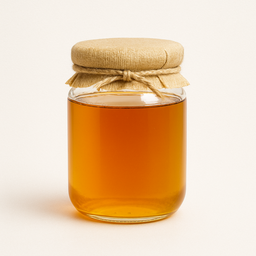 Honey
Honey Gluten protein + enzymatic honey for digestion
Technical: Semolina contains gluten protein (11-13g protein/100g). Raw honey contains proteases and diastase enzymes that support protein digestion. Fructo-oligosaccharides in honey feed gut bacteria. Glucose oxidase in honey produces hydrogen peroxide with bioactive effects in the digestive tract.
What does this mean for you? Semolina porridge with honey is a traditional breakfast or dessert in many cultures — and that is no coincidence. The honey adds not only sweetness but also digestive enzymes. Use raw honey for maximum effect.
Semolina 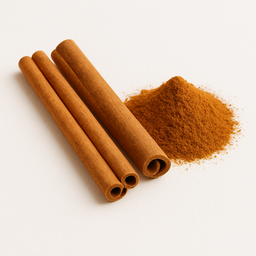 Cinnamon
 Fast carbs tempered by cinnamaldehyde glycemic regulation
Technical: Semolina (durum wheat) has a relatively high GI (65-70) from rapidly available starch. Cinnamon contains cinnamaldehyde (65-80% of oil) that activates AMPK and improves insulin receptor sensitivity by 20-30%. Methylhydroxychalcone polymer (MHCP) in cinnamon mimics insulin. Studies show 1-6g cinnamon per day lowers fasting blood sugar by 10-29%. With semolina, this tempers the rapid glucose spike.
What does this mean for you? Always add cinnamon to semolina porridge or pudding. The cinnamon lowers the blood sugar spike that semolina normally causes — a simple trick that makes a real difference.
Recipes with Semolina
Discover delicious recipes featuring semolina:
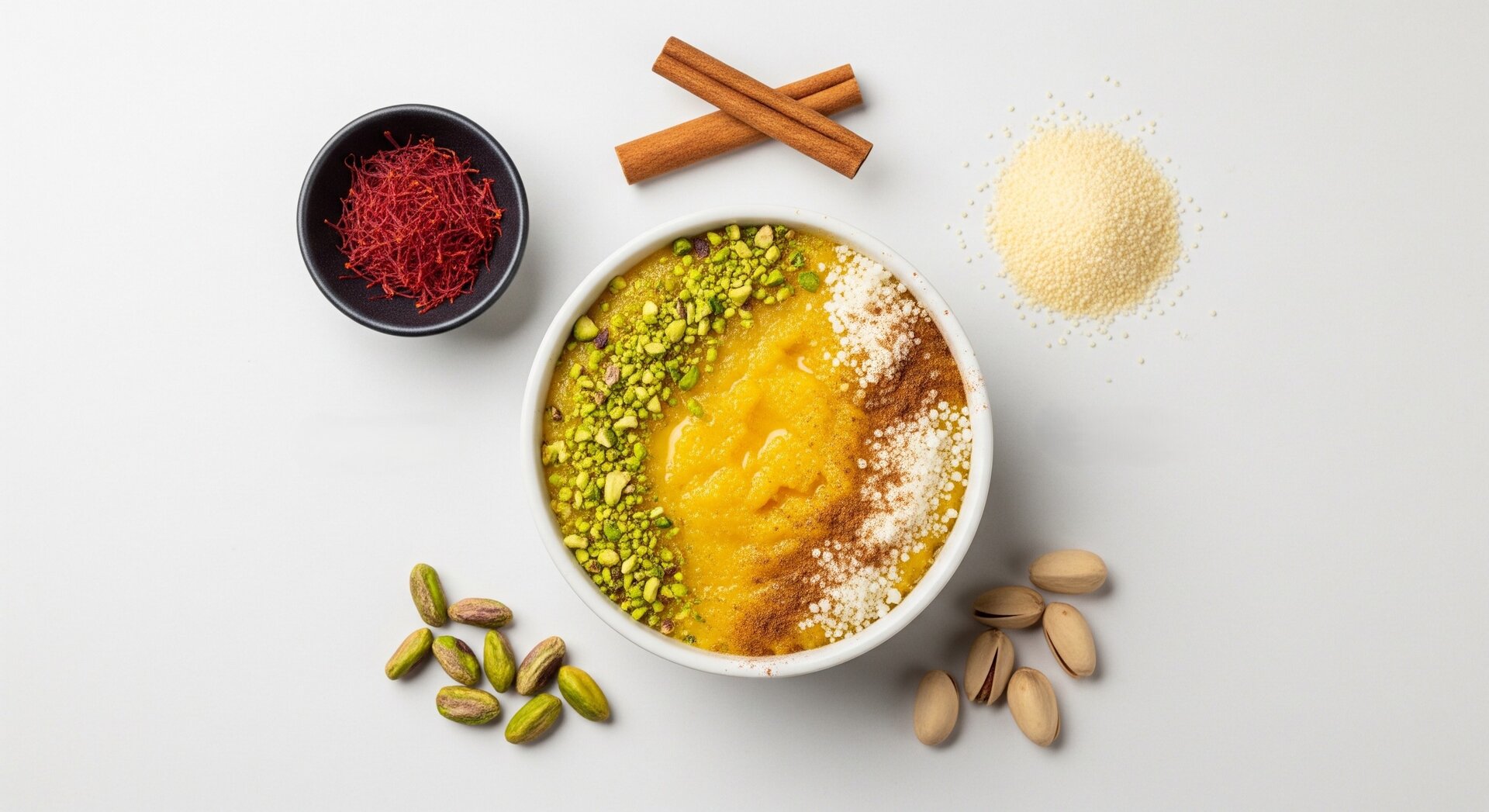 Halwa - Semolina Pudding with Saffron 35 min Creamy Turkish semolina pudding with saffron and pistachios
  329 kcal
  10g protein 2 synergies
 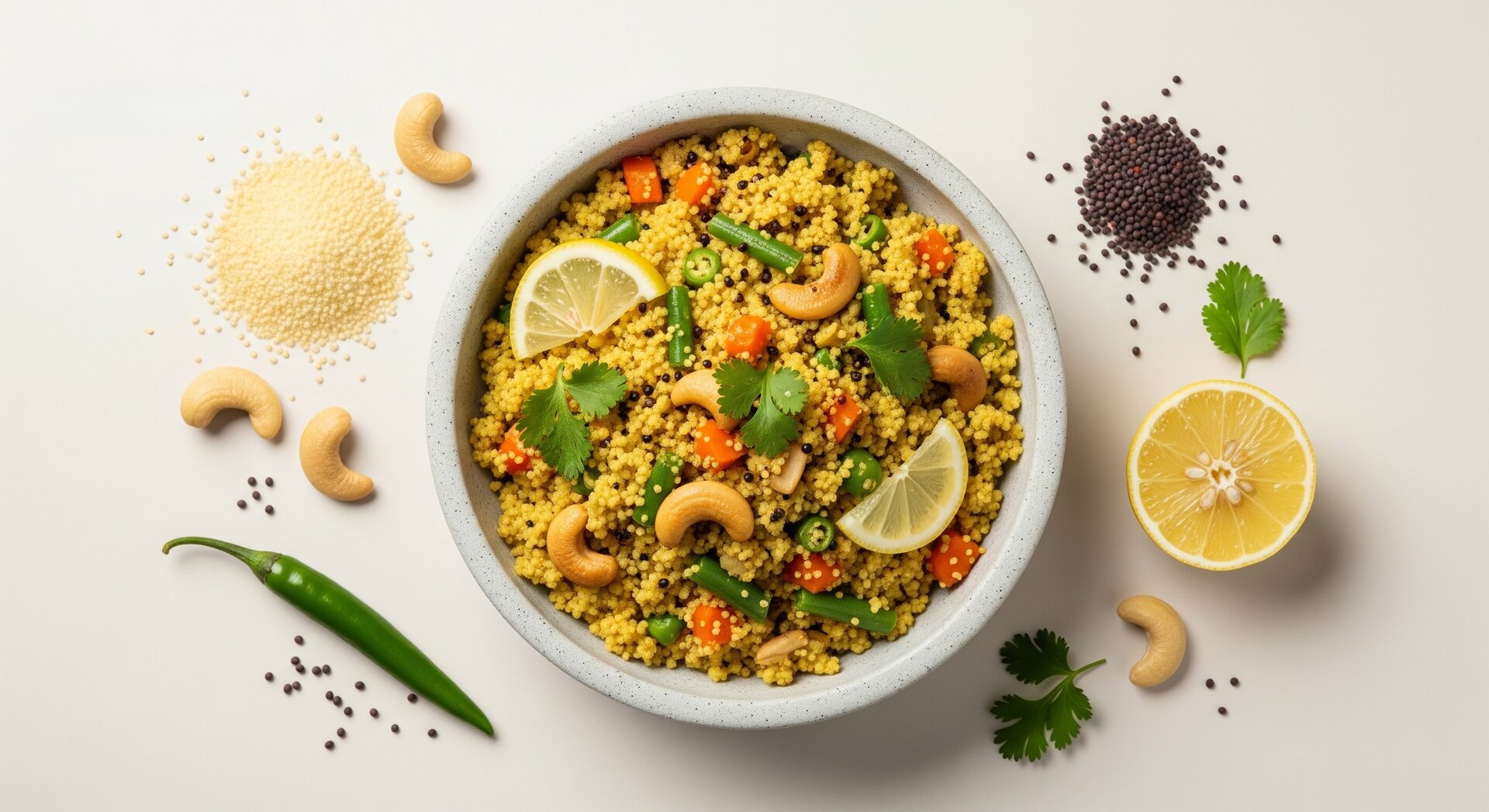 Indian Upma with Vegetables and Cashew 25 min Hearty South Indian semolina bowl with cashew nuts 529 kcal 15g protein 1 synergies
  Moroccan Msemen Layered Flatbread 63 min Crispy, layered and golden brown from the pan 318 kcal 9g protein 1 synergies
  Moroccan Beghrir with Honey 60 min Fluffy honeycomb pancakes with butter and honey 320 kcal 8g protein 1 synergies
  In the Kitchen
Storage
Location:Pantry
Shelf life:1 jaar
Store airtight to prevent pests.
Preparation
Boil in milk for porridge, or use in dough for fresh pasta. Swells when heated.
Substitutes
Smart preparation
1Slowly sprinkle semolina into boiling liquid while stirring.
Why?
Adding all at once forms insoluble lumps.
2Cook semolina on low heat and keep stirring until it thickens.
3Use coarse semolina for couscous, fine for pastries and porridge.
Caution / Warnings
Semolina is very safe, but there are scientific considerations:
Celiac Disease Severe
Contains very high amounts of gluten
Advice:
Strictly avoid. Use polenta (corn) as an alternative.
Summary
The king of pasta. Semolina is rich in protein and provides the firm 'bite' in your dishes. Not suitable for a gluten-free diet.