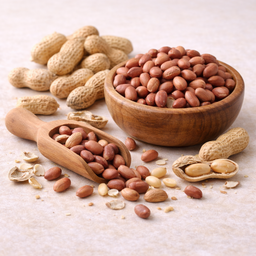
Peanuts
Protein-rich legume nut
What is this ingredient?
Peanuts (Arachis hypogaea) are actually NOT nuts, but legumes — they grow underground in pods, just like peas and beans. This explains their unique nutritional profile: extremely high protein (25.8g per 100g, higher than most true nuts) and bioactive compounds not found in other nuts. Botanical curiosity: After flowering, the flower stalk bends down and burrows 5-10cm into the ground, where the pods ripen (geocarpy). This underground growth process makes peanuts susceptible to mold growth → aflatoxin risk with poor storage. Nutritional Benefits: Rich in resveratrol (0.05-1.8μg/g, the same cellular research polyphenol as in red wine), arginine (3.1g, NO precursor for blood flow), niacin (13.4mg, 84% RDA), and biotin (for skin/hair). The Maillard reaction during roasting increases antioxidant activity by 20-30% and creates 100+ aroma compounds. Important: Available as: (1) Raw (must be well stored, aflatoxin risk), (2) Roasted (safer, better taste), (3) Blanched (without skin). Choose dry-roasted varieties without salt/oil for maximum benefits.
How does it taste?
Earthy, nutty and robust with a bold, roasted flavor.
Pairs well with:
Pairs well with chililimecilantrosoy sauce and coconut.
Did you know...?
- Peanuts are not nuts but legumes that grow underground, related to beans and peas.
- George Washington Carver developed over 300 products from peanuts, including ink and plastic.
Nutritional Value & Energy
Per 100g
Peanuts provides energy thanks to natural nutrients , buffered by fiber.
Per 100g
Minerals
Vitamins
Omega-3 fatty acids
More nutrients
B-Vitamins
Trace Minerals
What's in a serving?
1 handful
Peanuts naturally contains folate (240 mcg per 100 g).
Peanuts naturally contains iron (4.6 mg per 100 g).
Peanuts naturally contains magnesium (168 mg per 100 g).
Peanuts naturally contains potassium (705 mg per 100 g).
Peanuts naturally contains vitamin e (8.3 mg per 100 g).
Peanuts naturally contains zinc (3.3 mg per 100 g).
% of daily reference intake (DRI)
EU-approved nutrition claims
This ingredient contains nutrients for which EFSA-authorized health claims exist (at nutrient level, not ingredient-specific).
Approved health claims (EU)
Magnesium EU 432/2012
Magnesium contributes to normal muscle function
Contains 168mg/100g (threshold: ≥56.25mg/100g)
Magnesium EU 432/2012
Magnesium contributes to the reduction of tiredness and fatigue
Contains 168mg/100g (threshold: ≥56.25mg/100g)
Magnesium EU 432/2012
Magnesium contributes to normal functioning of the nervous system
Contains 168mg/100g (threshold: ≥56.25mg/100g)
Zinc EU 432/2012
Zinc contributes to the normal function of the immune system
Contains 3.3mg/100g (threshold: ≥1.5mg/100g)
Zinc EU 432/2012
Zinc contributes to the maintenance of normal skin
Contains 3.3mg/100g (threshold: ≥1.5mg/100g)
Iron EU 432/2012
Iron contributes to normal energy-yielding metabolism
Contains 4.6mg/100g (threshold: ≥2.1mg/100g)
Iron EU 432/2012
Iron contributes to the reduction of tiredness and fatigue
Contains 4.6mg/100g (threshold: ≥2.1mg/100g)
Potassium EU 432/2012
Potassium contributes to the maintenance of normal blood pressure
Contains 705mg/100g (threshold: ≥300mg/100g)
Folate EU 432/2012
Folate contributes to normal blood formation
Contains 240mcg/100g (threshold: ≥30mcg/100g)
Folate EU 432/2012
Folate contributes to normal amino acid synthesis
Contains 240mcg/100g (threshold: ≥30mcg/100g)
Folate EU 432/2012
Folate contributes to normal homocysteine metabolism
Contains 240mcg/100g (threshold: ≥30mcg/100g)
Folate EU 432/2012
Folate contributes to normal psychological function
Contains 240mcg/100g (threshold: ≥30mcg/100g)
Folate EU 432/2012
Folate contributes to the normal function of the immune system
Contains 240mcg/100g (threshold: ≥30mcg/100g)
Folate EU 432/2012
Folate has a role in the process of cell division
Contains 240mcg/100g (threshold: ≥30mcg/100g)
Folate EU 432/2012
Folate contributes to maternal tissue growth during pregnancy
Contains 240mcg/100g (threshold: ≥30mcg/100g)
Vitamin_e EU 432/2012
Vitamin E contributes to the protection of cells from oxidative stress
Contains 8.3mg/100g (threshold: ≥1.8mg/100g)
Magnesium EU 432/2012
Magnesium contributes to normal energy-yielding metabolism
Contains 168mg/100g (threshold: ≥56.25mg/100g)
Magnesium EU 432/2012
Magnesium contributes to electrolyte balance
Contains 168mg/100g (threshold: ≥56.25mg/100g)
Magnesium EU 432/2012
Magnesium contributes to normal protein synthesis
Contains 168mg/100g (threshold: ≥56.25mg/100g)
Magnesium EU 432/2012
Magnesium contributes to normal psychological function
Contains 168mg/100g (threshold: ≥56.25mg/100g)
Magnesium EU 432/2012
Magnesium contributes to the maintenance of normal bones
Contains 168mg/100g (threshold: ≥56.25mg/100g)
Magnesium EU 432/2012
Magnesium contributes to the maintenance of normal teeth
Contains 168mg/100g (threshold: ≥56.25mg/100g)
Magnesium EU 432/2012
Magnesium has a role in the process of cell division
Contains 168mg/100g (threshold: ≥56.25mg/100g)
Iron EU 432/2012
Iron contributes to normal cognitive function
Contains 4.6mg/100g (threshold: ≥2.1mg/100g)
Iron EU 432/2012
Iron contributes to normal formation of red blood cells and haemoglobin
Contains 4.6mg/100g (threshold: ≥2.1mg/100g)
Iron EU 432/2012
Iron contributes to normal oxygen transport in the body
Contains 4.6mg/100g (threshold: ≥2.1mg/100g)
Iron EU 432/2012
Iron contributes to the normal function of the immune system
Contains 4.6mg/100g (threshold: ≥2.1mg/100g)
Iron EU 432/2012
Iron has a role in the process of cell division
Contains 4.6mg/100g (threshold: ≥2.1mg/100g)
Zinc EU 432/2012
Zinc contributes to normal acid-base metabolism
Contains 3.3mg/100g (threshold: ≥1.5mg/100g)
Zinc EU 432/2012
Zinc contributes to normal carbohydrate metabolism
Contains 3.3mg/100g (threshold: ≥1.5mg/100g)
Zinc EU 432/2012
Zinc contributes to normal cognitive function
Contains 3.3mg/100g (threshold: ≥1.5mg/100g)
Zinc EU 432/2012
Zinc contributes to normal DNA synthesis
Contains 3.3mg/100g (threshold: ≥1.5mg/100g)
Zinc EU 432/2012
Zinc contributes to normal fertility and reproduction
Contains 3.3mg/100g (threshold: ≥1.5mg/100g)
Zinc EU 432/2012
Zinc contributes to normal macronutrient metabolism
Contains 3.3mg/100g (threshold: ≥1.5mg/100g)
Zinc EU 432/2012
Zinc contributes to normal metabolism of fatty acids
Contains 3.3mg/100g (threshold: ≥1.5mg/100g)
Zinc EU 432/2012
Zinc contributes to normal metabolism of vitamin A
Contains 3.3mg/100g (threshold: ≥1.5mg/100g)
Zinc EU 432/2012
Zinc contributes to normal protein synthesis
Contains 3.3mg/100g (threshold: ≥1.5mg/100g)
Zinc EU 432/2012
Zinc contributes to the maintenance of normal bones
Contains 3.3mg/100g (threshold: ≥1.5mg/100g)
Zinc EU 432/2012
Zinc contributes to the maintenance of normal hair
Contains 3.3mg/100g (threshold: ≥1.5mg/100g)
Zinc EU 432/2012
Zinc contributes to the maintenance of normal nails
Contains 3.3mg/100g (threshold: ≥1.5mg/100g)
Zinc EU 432/2012
Zinc contributes to the maintenance of normal testosterone levels in the blood
Contains 3.3mg/100g (threshold: ≥1.5mg/100g)
Zinc EU 432/2012
Zinc contributes to the maintenance of normal vision
Contains 3.3mg/100g (threshold: ≥1.5mg/100g)
Zinc EU 432/2012
Zinc contributes to the protection of cells from oxidative stress
Contains 3.3mg/100g (threshold: ≥1.5mg/100g)
Zinc EU 432/2012
Zinc has a role in the process of cell division
Contains 3.3mg/100g (threshold: ≥1.5mg/100g)
Potassium EU 432/2012
Potassium contributes to normal functioning of the nervous system
Contains 705mg/100g (threshold: ≥300mg/100g)
Potassium EU 432/2012
Potassium contributes to normal muscle function
Contains 705mg/100g (threshold: ≥300mg/100g)
Comparison
vsspinazie
Peanuts contains about 2× more iron per 100g than spinach.
vsbanaan
Peanuts contains about 2× more potassium per 100g than banana.
What's being researched?
Peanuts and cardiovascular risk
The association between peanut consumption and reduced cardiovascular risk is studied in large cohort studies. Results are consistent with broader nut research, with significant inverse associations across multiple populations.
Supported by: [3] Becerra-Tomás N (2019)
Peanuts and resveratrol
The resveratrol content of peanuts (particularly in the skin) is being studied for antioxidant properties. Although lower than in grapes, peanut skin contains measurable amounts of this polyphenol.
Supported by: [4] Sales JM (2014)
Good Combinations (Synergy)
Combine peanuts smartly to enhance the effect:
Peanuts  Turmeric
 Resveratrol + curcumin = double SIRT1 activation (longevity)
Technical: Peanuts contain resveratrol (0.05-1.8μg/g) and turmeric contains curcumin (3-5%). Both activate SIRT1 (sirtuins, 'longevity genes') via different mechanisms: resveratrol binds directly to SIRT1, curcumin increases NAD+ (the cofactor SIRT1 needs). This improves mitochondrial function, activates autophagy (cell cleaning) and modulates NF-κB signaling.
What does this mean for you? Use peanuts and turmeric together in a Thai curry or satay sauce. The two compounds activate the same sirtuin genes through two entry points — double effect.
Peanuts 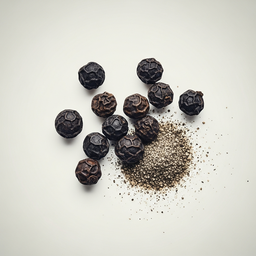 Black Pepper
 Piperine increases resveratrol absorption
Technical: Peanuts contain resveratrol, but absorption is extremely low (<1%) due to rapid breakdown in liver and gut. Piperine from black pepper inhibits the enzymes CYP3A4 and glucuronidation that break down resveratrol, increasing bioavailability 10-30x. Same mechanism as turmeric + pepper.
What does this mean for you? Add black pepper to dishes with peanuts — satay sauce with peppercorns or roasted peanuts with pepper. The pepper slows resveratrol breakdown so your body absorbs much more.
Peanuts 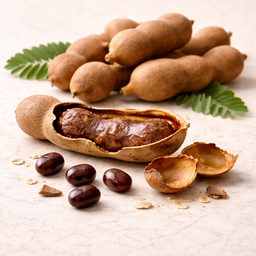 Tamarind
 Acid + fat + protein for satay sauce perfection
Technical: Tamarind contains tartaric acid that lowers stomach pH and promotes pepsinogen (protein digestion enzyme) activity. Peanut provides 25g protein and healthy fats. Coconut milk's MCTs improve absorption of fat-soluble compounds. The acid + protein + fat trio optimizes nutrient absorption from the entire dish.
What does this mean for you? Make satay sauce with tamarind, peanut and coconut milk. The acid from tamarind helps better digest proteins from peanut — traditional Indonesian nutritional wisdom.
Recipes with Peanuts
Discover delicious recipes featuring peanuts:
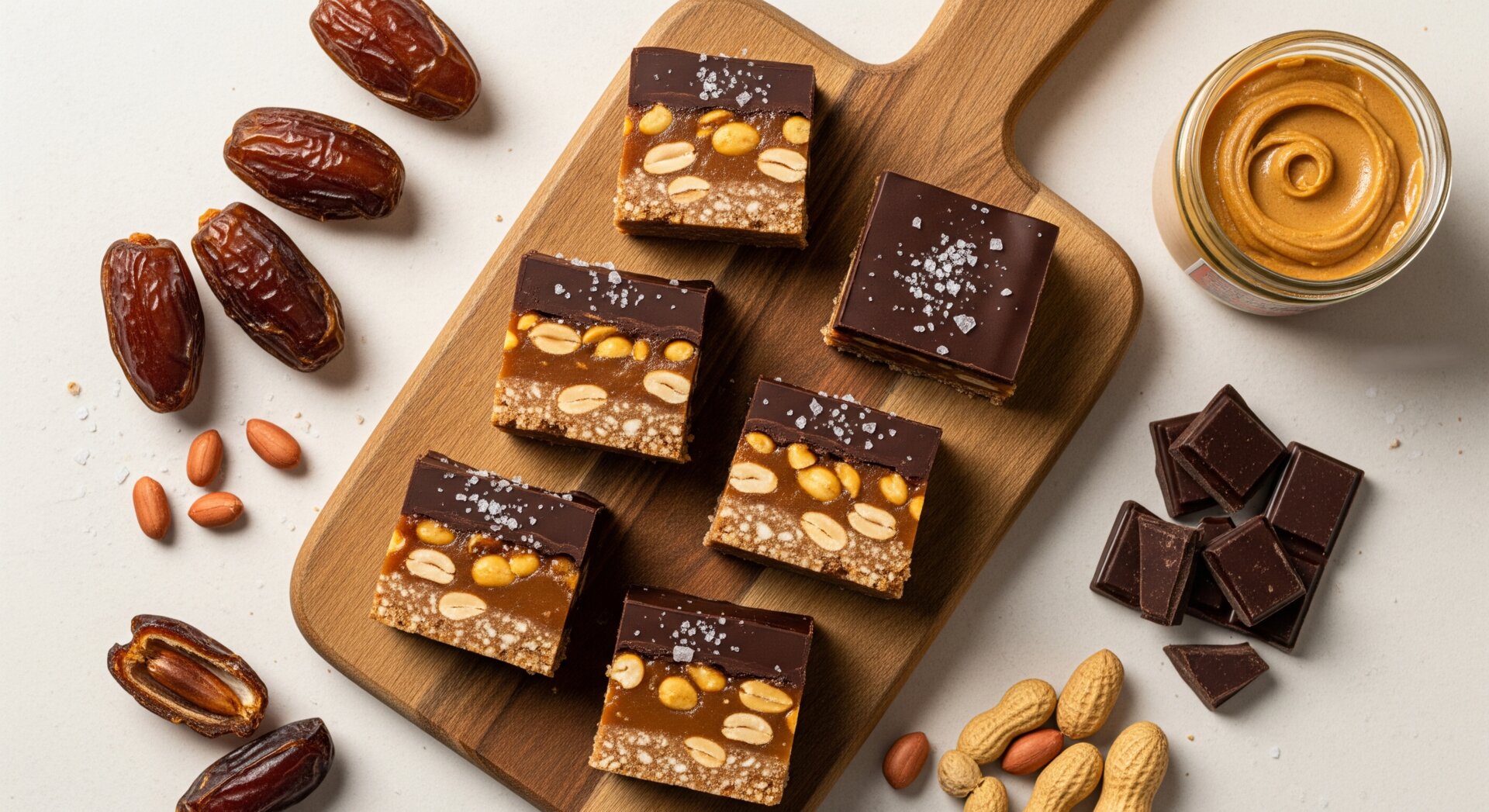 Date-Peanut-Chocolate Bars 80 min Chocolate bars with date caramel and crunchy peanuts
  185 kcal
  5g protein 2 synergies
 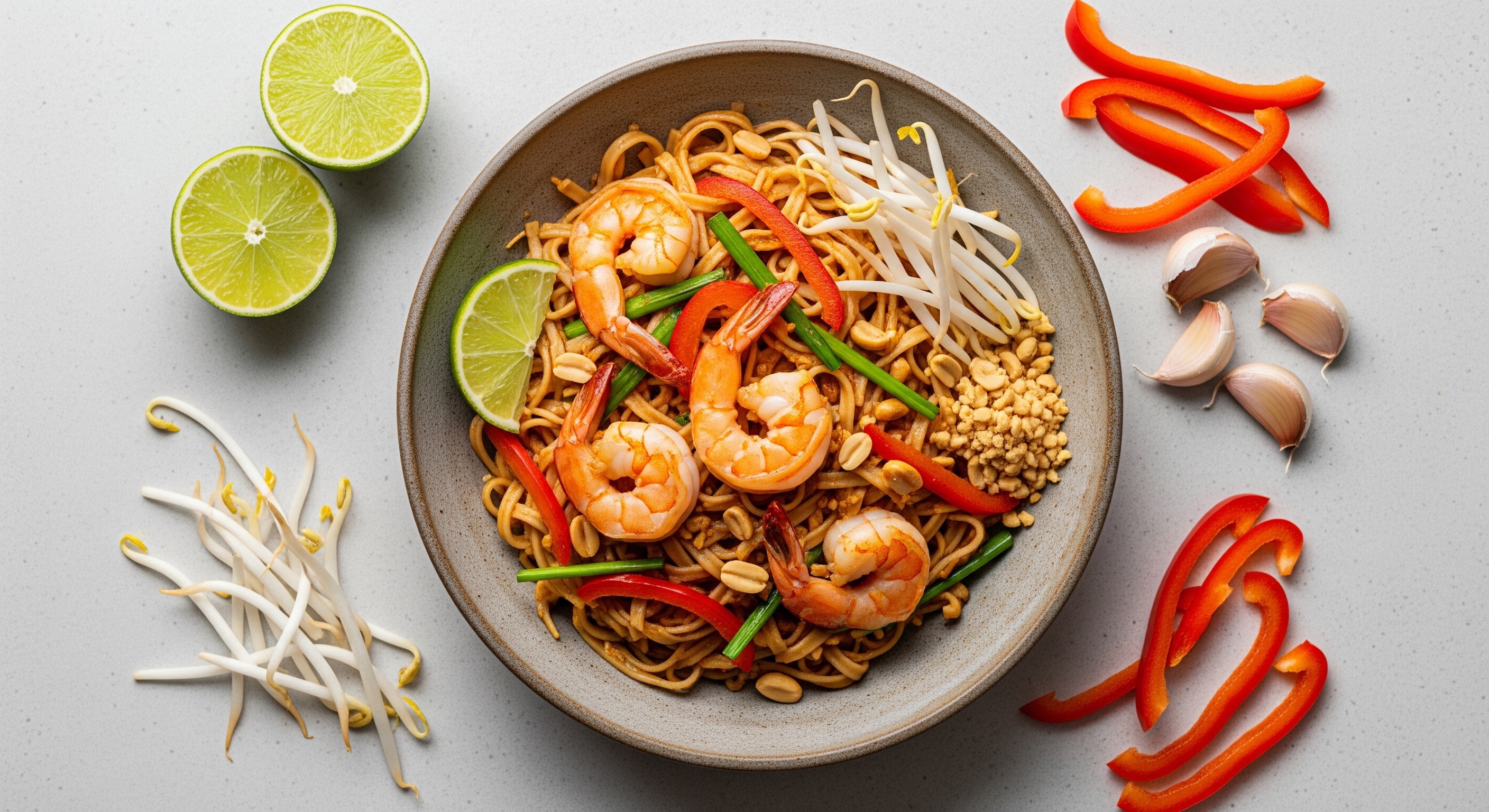 Shrimp Pad Thai with Rice Noodles 30 min Thai wok classic with tamarind, peanuts and lime 720 kcal 36g protein 2 synergies
 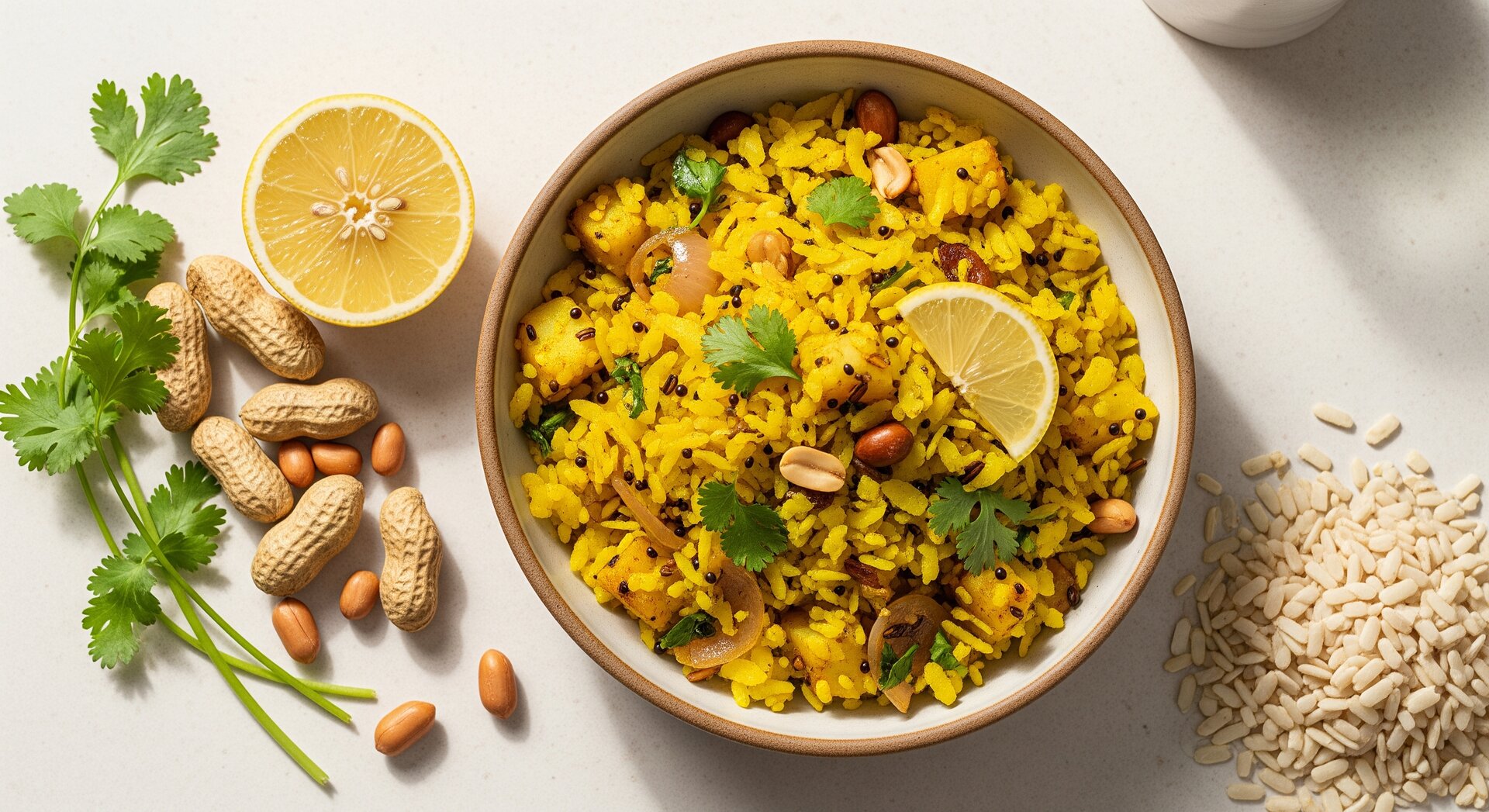 Indian Poha 25 min Light and spicy breakfast of flattened rice 340 kcal 8g protein 1 synergies
 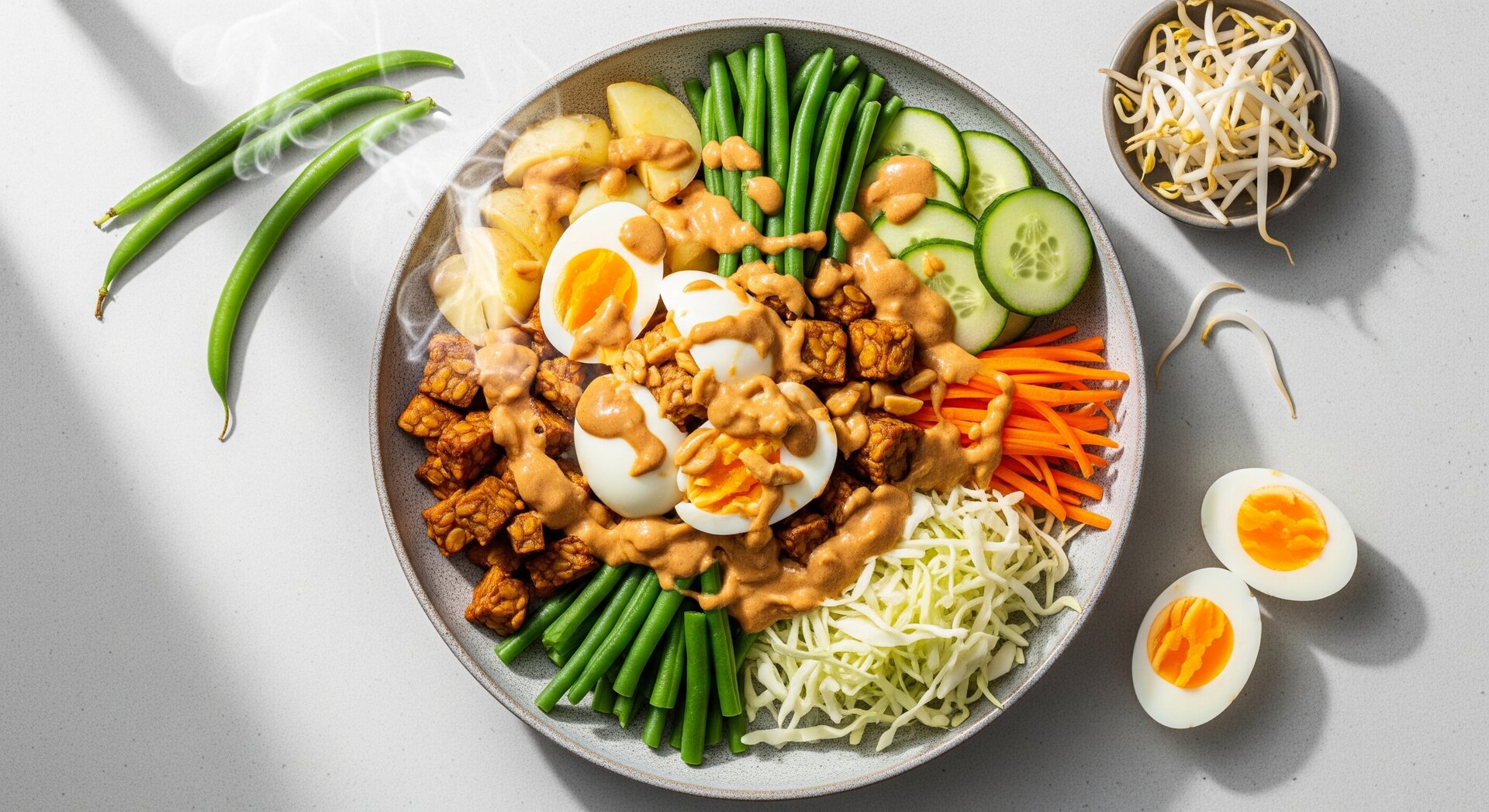 Indonesian Gado-Gado with Peanut Sauce & Tempeh 35 min Indonesian salad with fried tempeh, vegetables, egg and creamy peanut sauce 742 kcal 34g protein 2 synergies
 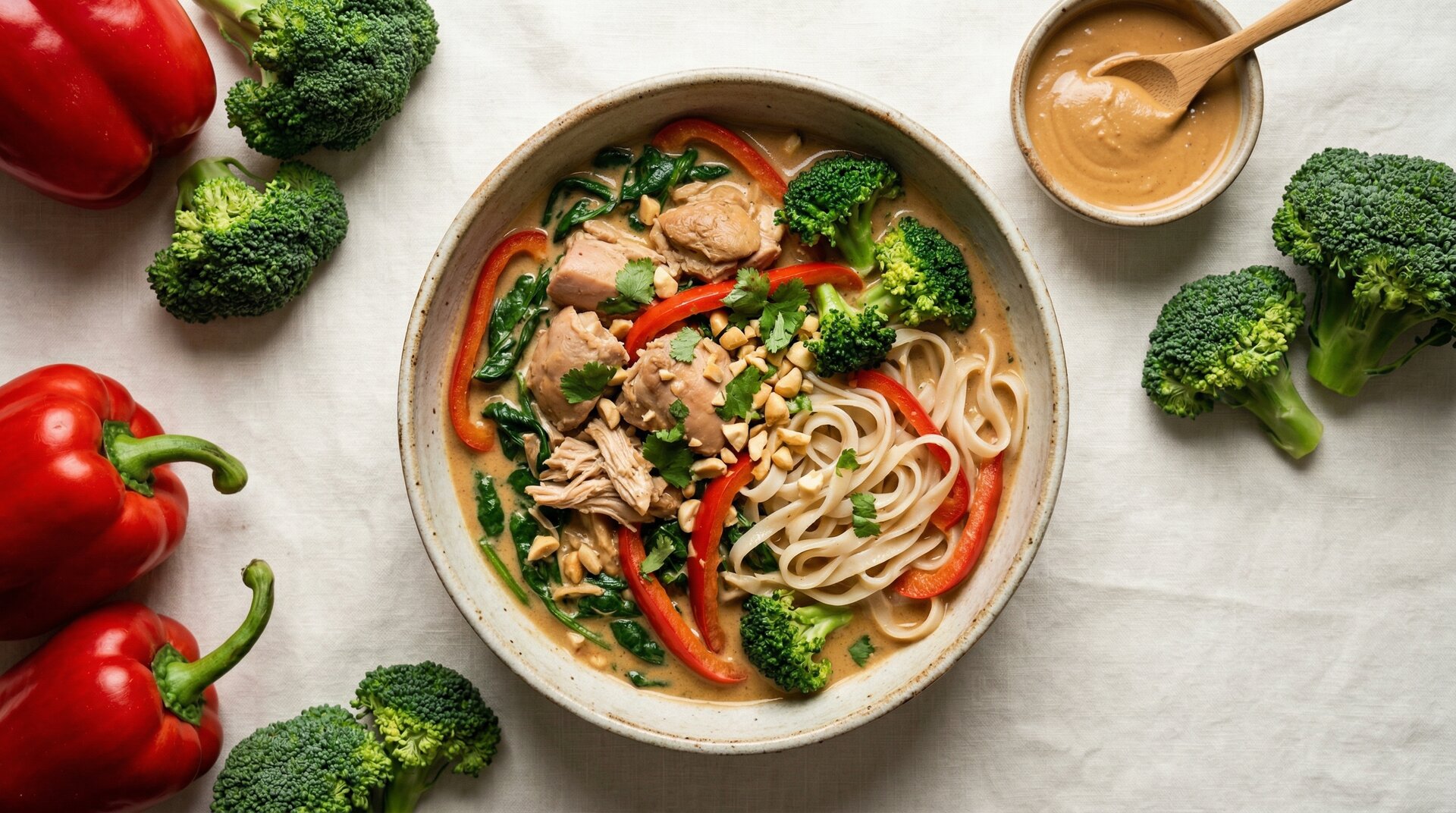 Peanut Chicken Noodle Bowl (West African-Inspired) 40 min Creamy peanut sauce with tender chicken, rice noodles and crisp vegetables 795 kcal 40g protein 3 synergies
 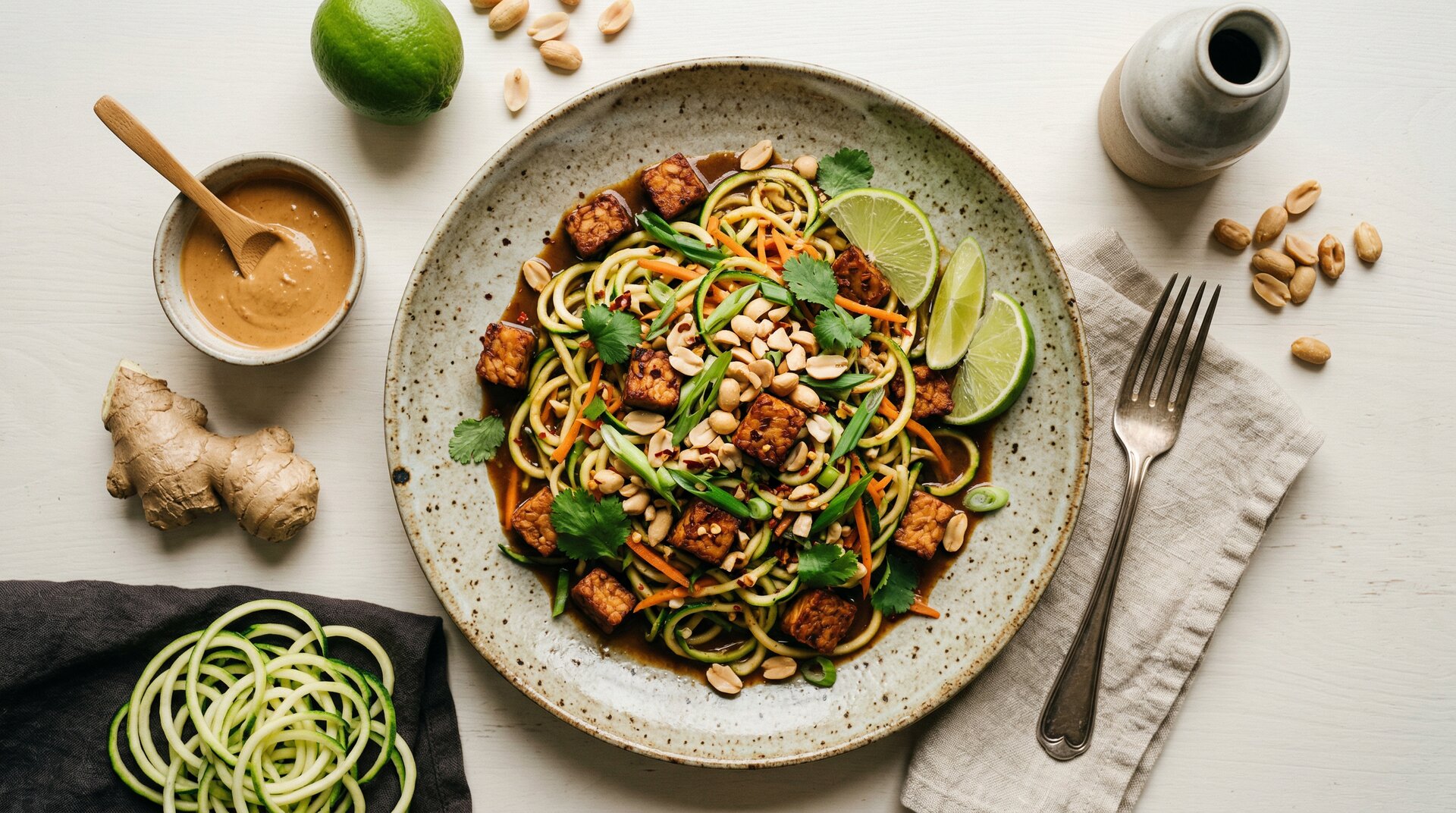 Tempeh Pad Thai with Zucchini Noodles 25 min Crispy fried tempeh with zucchini noodles in a creamy peanut sauce 435 kcal 28g protein 2 synergies
  In the Kitchen
Storage
Location:Pantry
Substitutes
Smart preparation
1Roast raw peanuts for 10-15 min at 160°C, shake halfway.
2Rub roasted peanuts in a tea towel to remove the skin.
3Chop peanuts coarsely for garnish, finely for satay sauce.
Caution / Warnings
Peanuts is very safe, but there are scientific considerations:
Peanut allergy (most common food allergy) Severe
Aflatoxin contamination (CRITICAL) Severe
Omega-6 excess (inflammation risk) Moderate
Traditional use
African
Peanut in West African Tradition
After introduction from South America, peanuts became a cornerstone of West African cuisine, central to stews and sauces.
Indigenous
Peanut Among South American Peoples
The peanut was cultivated as early as 7,600 years ago by Indigenous peoples in South America, particularly in Peru and Bolivia.
Summary
Peanuts = Protein Powerhouse (Legume, Not a Nut!) 25.8g protein + resveratrol (cellular research) + arginine (NO boost) per 100g. Associated with reduced heart disease risk in observational studies. ⚠️ CRITICAL: Allergy (lifelong!) + aflatoxin risk (choose roasted, reputable brands). Balance omega-6 with omega-3 sources.