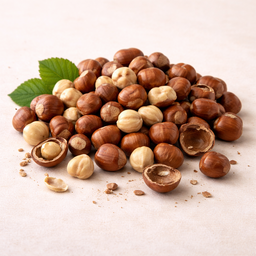
Hazelnuts
Aromatic European nut
What is this ingredient?
Hazelnuts (Corylus avellana) are the seeds of the hazel shrub, which has grown across Europe and Asia Minor since the Mesolithic period. They have a warm, roasted aroma and are widely used in pralines, chocolate spreads, baked goods and Italian torta di nocciole. From a nutrition perspective, they stand out for folate (113 μg per 100 g), vitamin E (15 mg per 100 g) and a high share of monounsaturated fats, especially oleic acid. The thin brown skin contains proanthocyanidins, plant polyphenols also found in other skins and seeds. Roasting at 150-160°C for 10-15 minutes deepens the flavor through the Maillard reaction and makes the skin easier to loosen; keep the skin on when you want a richer, slightly bitter taste.
How does it taste?
Warm, roasted and richly nutty with a sweet, deep aroma.
Pairs well with:
Pairs well with chocolatecoffeeapplepear and cinnamon.
Did you know...?
- Turkey produces approximately 70% of all hazelnuts worldwide.
- In Celtic mythology, the hazelnut was a symbol of wisdom and inspiration.
Nutritional Value & Energy
Per 100g
Hazelnuts provides energy thanks to natural nutrients , buffered by fiber.
Per 100g
Minerals
Vitamins
Omega-3 fatty acids
More nutrients
B-Vitamins
Trace Minerals
What's in a serving?
1 handful
Hazelnuts naturally contain folate (113 mcg per 100 g).
Hazelnuts naturally contain iron (4.7 mg per 100 g).
Hazelnuts naturally contain magnesium (163 mg per 100 g).
Hazelnuts naturally contain potassium (680 mg per 100 g).
Hazelnuts naturally contain vitamin e (15 mg per 100 g).
Hazelnuts naturally contain vitamin k (14.2 mcg per 100 g).
Hazelnuts naturally contain zinc (2.5 mg per 100 g).
% of daily reference intake (DRI)
EU-approved nutrition claims
This ingredient contains nutrients for which EFSA-authorized health claims exist (at nutrient level, not ingredient-specific).
Approved health claims (EU)
Magnesium EU 432/2012
Magnesium contributes to normal muscle function
Contains 163mg/100g (threshold: ≥56.25mg/100g)
Magnesium EU 432/2012
Magnesium contributes to the reduction of tiredness and fatigue
Contains 163mg/100g (threshold: ≥56.25mg/100g)
Magnesium EU 432/2012
Magnesium contributes to normal functioning of the nervous system
Contains 163mg/100g (threshold: ≥56.25mg/100g)
Zinc EU 432/2012
Zinc contributes to the normal function of the immune system
Contains 2.5mg/100g (threshold: ≥1.5mg/100g)
Zinc EU 432/2012
Zinc contributes to the maintenance of normal skin
Contains 2.5mg/100g (threshold: ≥1.5mg/100g)
Iron EU 432/2012
Iron contributes to normal energy-yielding metabolism
Contains 4.7mg/100g (threshold: ≥2.1mg/100g)
Iron EU 432/2012
Iron contributes to the reduction of tiredness and fatigue
Contains 4.7mg/100g (threshold: ≥2.1mg/100g)
Potassium EU 432/2012
Potassium contributes to the maintenance of normal blood pressure
Contains 680mg/100g (threshold: ≥300mg/100g)
Folate EU 432/2012
Folate contributes to normal blood formation
Contains 113mcg/100g (threshold: ≥30mcg/100g)
Folate EU 432/2012
Folate contributes to normal amino acid synthesis
Contains 113mcg/100g (threshold: ≥30mcg/100g)
Folate EU 432/2012
Folate contributes to normal homocysteine metabolism
Contains 113mcg/100g (threshold: ≥30mcg/100g)
Folate EU 432/2012
Folate contributes to normal psychological function
Contains 113mcg/100g (threshold: ≥30mcg/100g)
Folate EU 432/2012
Folate contributes to the normal function of the immune system
Contains 113mcg/100g (threshold: ≥30mcg/100g)
Folate EU 432/2012
Folate has a role in the process of cell division
Contains 113mcg/100g (threshold: ≥30mcg/100g)
Folate EU 432/2012
Folate contributes to maternal tissue growth during pregnancy
Contains 113mcg/100g (threshold: ≥30mcg/100g)
Vitamin_e EU 432/2012
Vitamin E contributes to the protection of cells from oxidative stress
Contains 15mg/100g (threshold: ≥1.8mg/100g)
Vitamin_k EU 432/2012
Vitamin K contributes to normal blood clotting
Contains 14.2mcg/100g (threshold: ≥11.25mcg/100g)
Vitamin_k EU 432/2012
Vitamin K contributes to the maintenance of normal bones
Contains 14.2mcg/100g (threshold: ≥11.25mcg/100g)
Magnesium EU 432/2012
Magnesium contributes to normal energy-yielding metabolism
Contains 163mg/100g (threshold: ≥56.25mg/100g)
Magnesium EU 432/2012
Magnesium contributes to electrolyte balance
Contains 163mg/100g (threshold: ≥56.25mg/100g)
Magnesium EU 432/2012
Magnesium contributes to normal protein synthesis
Contains 163mg/100g (threshold: ≥56.25mg/100g)
Magnesium EU 432/2012
Magnesium contributes to normal psychological function
Contains 163mg/100g (threshold: ≥56.25mg/100g)
Magnesium EU 432/2012
Magnesium contributes to the maintenance of normal bones
Contains 163mg/100g (threshold: ≥56.25mg/100g)
Magnesium EU 432/2012
Magnesium contributes to the maintenance of normal teeth
Contains 163mg/100g (threshold: ≥56.25mg/100g)
Magnesium EU 432/2012
Magnesium has a role in the process of cell division
Contains 163mg/100g (threshold: ≥56.25mg/100g)
Iron EU 432/2012
Iron contributes to normal cognitive function
Contains 4.7mg/100g (threshold: ≥2.1mg/100g)
Iron EU 432/2012
Iron contributes to normal formation of red blood cells and haemoglobin
Contains 4.7mg/100g (threshold: ≥2.1mg/100g)
Iron EU 432/2012
Iron contributes to normal oxygen transport in the body
Contains 4.7mg/100g (threshold: ≥2.1mg/100g)
Iron EU 432/2012
Iron contributes to the normal function of the immune system
Contains 4.7mg/100g (threshold: ≥2.1mg/100g)
Iron EU 432/2012
Iron has a role in the process of cell division
Contains 4.7mg/100g (threshold: ≥2.1mg/100g)
Zinc EU 432/2012
Zinc contributes to normal acid-base metabolism
Contains 2.5mg/100g (threshold: ≥1.5mg/100g)
Zinc EU 432/2012
Zinc contributes to normal carbohydrate metabolism
Contains 2.5mg/100g (threshold: ≥1.5mg/100g)
Zinc EU 432/2012
Zinc contributes to normal cognitive function
Contains 2.5mg/100g (threshold: ≥1.5mg/100g)
Zinc EU 432/2012
Zinc contributes to normal DNA synthesis
Contains 2.5mg/100g (threshold: ≥1.5mg/100g)
Zinc EU 432/2012
Zinc contributes to normal fertility and reproduction
Contains 2.5mg/100g (threshold: ≥1.5mg/100g)
Zinc EU 432/2012
Zinc contributes to normal macronutrient metabolism
Contains 2.5mg/100g (threshold: ≥1.5mg/100g)
Zinc EU 432/2012
Zinc contributes to normal metabolism of fatty acids
Contains 2.5mg/100g (threshold: ≥1.5mg/100g)
Zinc EU 432/2012
Zinc contributes to normal metabolism of vitamin A
Contains 2.5mg/100g (threshold: ≥1.5mg/100g)
Zinc EU 432/2012
Zinc contributes to normal protein synthesis
Contains 2.5mg/100g (threshold: ≥1.5mg/100g)
Zinc EU 432/2012
Zinc contributes to the maintenance of normal bones
Contains 2.5mg/100g (threshold: ≥1.5mg/100g)
Zinc EU 432/2012
Zinc contributes to the maintenance of normal hair
Contains 2.5mg/100g (threshold: ≥1.5mg/100g)
Zinc EU 432/2012
Zinc contributes to the maintenance of normal nails
Contains 2.5mg/100g (threshold: ≥1.5mg/100g)
Zinc EU 432/2012
Zinc contributes to the maintenance of normal testosterone levels in the blood
Contains 2.5mg/100g (threshold: ≥1.5mg/100g)
Zinc EU 432/2012
Zinc contributes to the maintenance of normal vision
Contains 2.5mg/100g (threshold: ≥1.5mg/100g)
Zinc EU 432/2012
Zinc contributes to the protection of cells from oxidative stress
Contains 2.5mg/100g (threshold: ≥1.5mg/100g)
Zinc EU 432/2012
Zinc has a role in the process of cell division
Contains 2.5mg/100g (threshold: ≥1.5mg/100g)
Potassium EU 432/2012
Potassium contributes to normal functioning of the nervous system
Contains 680mg/100g (threshold: ≥300mg/100g)
Potassium EU 432/2012
Potassium contributes to normal muscle function
Contains 680mg/100g (threshold: ≥300mg/100g)
Comparison
vsspinazie
Hazelnuts contain about 2× as much iron per 100 g as spinach.
vsbanaan
Hazelnuts contain about 2× as much potassium per 100 g as banana.
What's being researched?
Hazelnuts and cardiovascular eating patterns
The oleic acid and vitamin E content of hazelnuts is being studied within eating patterns focused on lipid profile and oxidative stress markers. Randomized feeding studies mainly examine regular consumption in defined portions.
Supported by: [1] O'Neil CE (2015) , [2] Poli A (2021)
Hazelnuts and vitamin E
Hazelnuts are studied as a dietary source of vitamin E and polyphenols from the brown skin. Studies measure vitamin E status, oxidative stress markers and differences between hazelnuts with and without skin.
Supported by: [4] Piccinelli AL (2016) , [3] Li D (1999)
Good Combinations (Synergy)
Combine hazelnuts smartly to enhance the effect:
Hazelnuts  Apple
Apple Folate + quercetin: complementary pathways via homocysteine metabolism and NO production
Technical: Hazelnuts contain 113μg folate that lowers homocysteine — an amino acid associated with endothelial dysfunction. Folate contributes to normal homocysteine metabolism (EFSA). Apples provide 4-13mg quercetin, a flavonoid that influences nitric oxide (NO) production and inhibits LDL oxidation. Folate influences the endothelium via homocysteine metabolism, quercetin via the NO pathway. Two independent biochemical pathways.
What does this mean for you? Snack on hazelnuts with apple slices, or add chopped hazelnuts to apple compote. Folate and quercetin work via two complementary biochemical pathways.
Hazelnuts  Banana
 Vitamin E + vitamin B6: complementary pathways for neurotransmitter precursors
Technical: Hazelnuts provide 15mg vitamin E per 100g plus 4.7mg manganese (204% RDI). Banana contains 0.37mg vitamin B6 per 100g (28% RDI) — cofactor for decarboxylation of 5-HTP to serotonin and DOPA to dopamine. Vitamin B6 contributes to normal functioning of the nervous system (EFSA). Vitamin E protects neuronal membranes against lipid peroxidation (brains contain 60% fat). Manganese is cofactor for superoxide dismutase (SOD2) in mitochondria.
What does this mean for you? Hazelnuts with banana slices is a snack with two complementary pathways: B6 is a cofactor for neurotransmitter precursors, vitamin E is a fat-soluble antioxidant for cell membranes.
Hazelnuts  Raw cacao
 Vitamin E + flavanols: complementary pathways via LDL oxidation inhibition and endothelial function
Technical: Hazelnuts contain 15mg vitamin E per 100g (100% RDI) — the highest concentration of all nuts. Cacao provides epicatechin and catechin (flavanols, 43mg/g in raw cacao). Vitamin E inhibits oxidation of LDL particles, while flavanols influence endothelial function via NO production (+30% flow-mediated dilation). Together: vitamin E inhibits ox-LDL formation, flavanols influence vascular function. Vitamin E also increases flavanol stability.
What does this mean for you? Hazelnut-cacao combination (like Nutella but pure) works through two complementary biochemical pathways. Use raw cacao and unroasted hazelnuts for maximum effect. 30g hazelnuts + 10g cacao per day.
Recipes with Hazelnuts
Discover delicious recipes featuring hazelnuts:
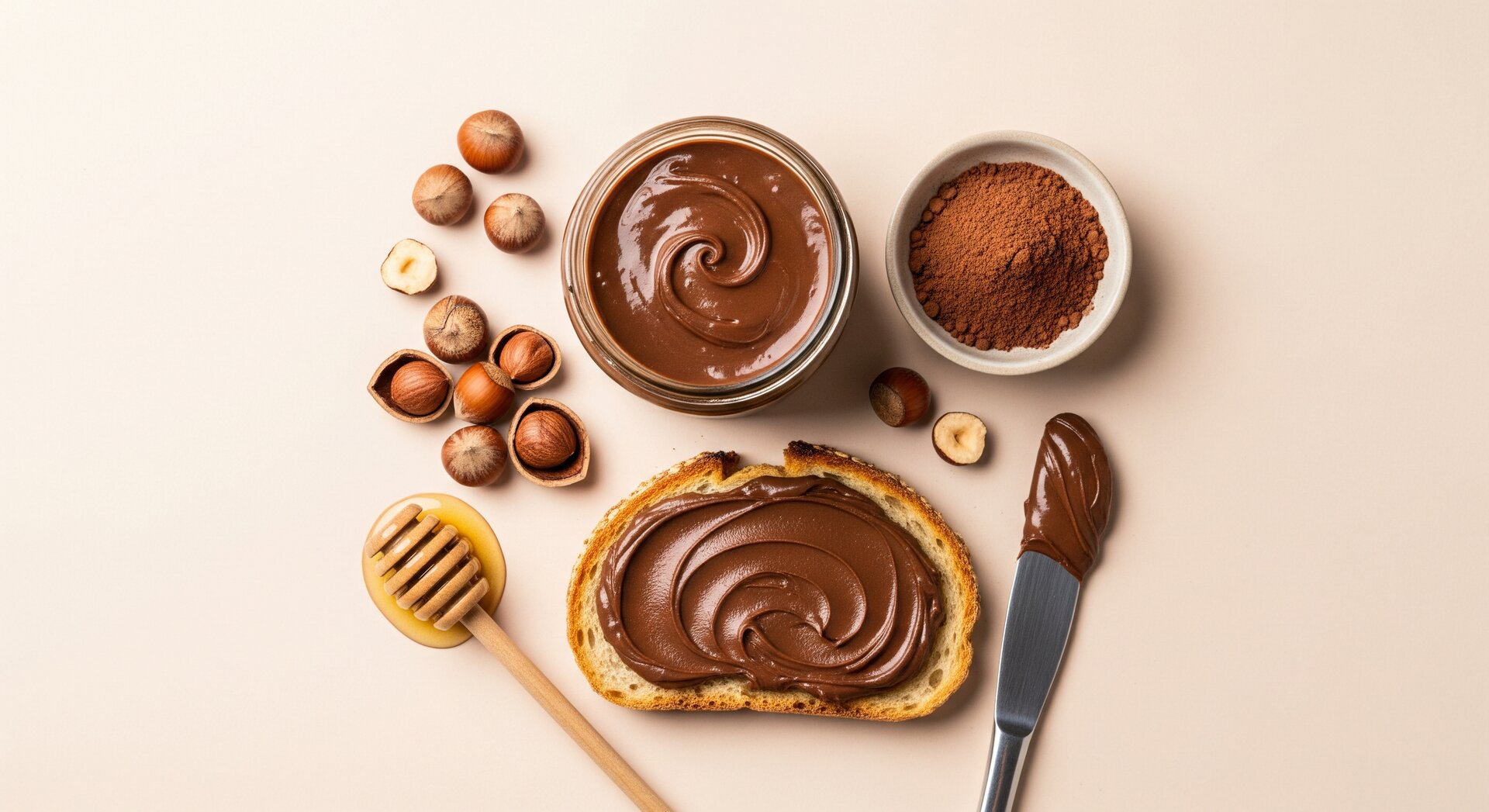 Hazelnut Cacao Spread 25 min Creamy chocolate spread of roasted hazelnuts, raw cacao and a little honey — without palm oil and without refined sugar
  120 kcal
  2g protein 2 synergies
 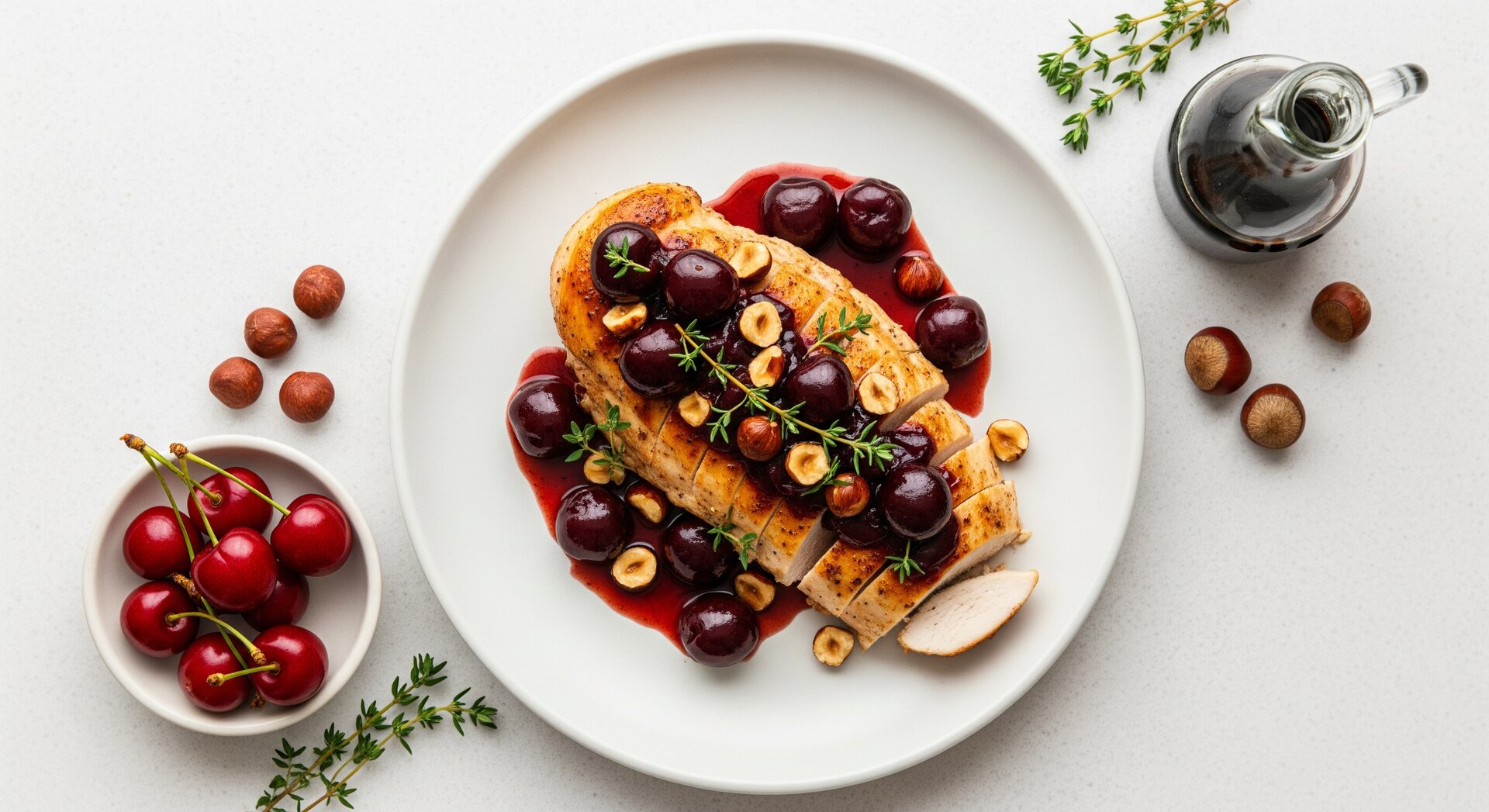 Chicken with Cherries and Hazelnuts 45 min Sweet-savory chicken with cherry sauce and toasted hazelnuts 420 kcal 42g protein 2 synergies
  In the Kitchen
Storage
Location:Pantry
Substitutes
Smart preparation
1Roast hazelnuts for 10-12 min at 180°C and rub the skin off.
Why?
The skin is bitter; rubbing in a tea towel removes it easily.
2Roughly chop roasted hazelnuts for more texture in dishes.
3Store hazelnuts in the freezer for maximum freshness.
Why?
Because of their oil content, hazelnuts can turn rancid over time.
Caution / Warnings
Hazelnuts is very safe, but there are scientific considerations:
Hazelnut allergy (tree nut allergy) Severe
Hazelnuts can cause serious allergic reactions in people with hazelnut or tree nut allergy, including from small amounts or cross-contact.
High manganese intake with very large portions Moderate
Hazelnuts naturally contain manganese. With a one-sided diet or very large daily portions, portion-aware use is sensible.
Energy-dense portions Mild
Hazelnuts provide 628 kcal per 100 g. A handful fits well into meals or snacks, but large portions quickly increase energy intake.
Traditional use
Other
Hazelnuts in European Traditions
Hazelnuts were gathered by prehistoric Europeans and gained a symbolic link with wisdom and inspiration in Celtic stories.
Mediterranean
Hazelnuts in Turkish Tradition
Turkey has been an important center of hazelnut cultivation for centuries, with use in pastries, confectionery, nut pastes and regional culinary traditions.
Summary
Hazelnuts = folate, oleic acid and roasted depth. They contain 113 μg folate per 100 g, plenty of monounsaturated fat and 15 mg vitamin E per 100 g. The brown skin provides proanthocyanidins and adds a lightly bitter note. Use them roasted in baking, with chocolate or roughly chopped in salads. ⚠️ Take care with hazelnut or tree nut allergy.