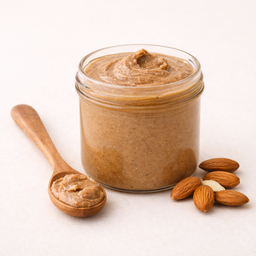
Almond butter
Creamy almond butter with vitamin E, magnesium and unsaturated fats
What is this ingredient?
Almond butter is a creamy nut butter made from finely ground almonds. Per 100 g it provides 24 mg vitamin E, 279 mg magnesium, 347 mg calcium, 21 g protein and 10 g fibre. Vitamin E contributes to the protection of cells from oxidative stress. Its mix of fat, protein and fibre gives it a full texture and makes a small portion useful in breakfasts, snacks, sauces and baking. Prefer 100% almonds without added sugar, salt or oils; a layer of oil on top is normal and blends back in after stirring well.
How does it taste?
Intensely almondy, lightly sweet and full-bodied, with a creamy texture and marzipan-like depth.
Pairs well with:
Pairs well with cherrychocolatevanillaorangeraspberriesoats and yoghurt.
Did you know...?
- Almond paste and marzipan-like fillings were luxury products in the Middle Ages because almonds and sugar were valuable trade goods.
- The German city of Lübeck has been known for its marzipan culture since the 15th century.
Nutritional Value & Energy
Per 100g
Almond butter provides energy thanks to natural nutrients , buffered by fiber.
Per 100g
Minerals
Vitamins
Omega-3 fatty acids
More nutrients
B-Vitamins
Trace Minerals
What's in a serving?
2 tablespoons
Almond butter naturally contains vitamin e (24 mg per 100 g).
Almond butter naturally contains magnesium (279 mg per 100 g).
Almond butter naturally contains calcium (347 mg per 100 g).
Almond butter naturally contains iron (3.5 mg per 100 g).
Almond butter naturally contains zinc (3.3 mg per 100 g).
Almond butter naturally contains phosphorus (508 mg per 100 g).
Almond butter naturally contains potassium (748 mg per 100 g).
Almond butter naturally contains manganese (2.5 mg per 100 g).
Almond butter naturally contains copper (1 mg per 100 g).
Almond butter naturally contains folate (63 mcg per 100 g).
% of daily reference intake (DRI)
EU-approved nutrition claims
This ingredient contains nutrients for which EFSA-authorized health claims exist at nutrient level, not as an ingredient-specific claim.
Approved health claims (EU)
Magnesium EU 432/2012
Magnesium contributes to normal muscle function
Contains 279mg/100g (threshold: ≥56.25mg/100g)
Magnesium EU 432/2012
Magnesium contributes to the reduction of tiredness and fatigue
Contains 279mg/100g (threshold: ≥56.25mg/100g)
Magnesium EU 432/2012
Magnesium contributes to normal functioning of the nervous system
Contains 279mg/100g (threshold: ≥56.25mg/100g)
Zinc EU 432/2012
Zinc contributes to the normal function of the immune system
Contains 3.3mg/100g (threshold: ≥1.5mg/100g)
Zinc EU 432/2012
Zinc contributes to the maintenance of normal skin
Contains 3.3mg/100g (threshold: ≥1.5mg/100g)
Iron EU 432/2012
Iron contributes to normal energy-yielding metabolism
Contains 3.5mg/100g (threshold: ≥2.1mg/100g)
Iron EU 432/2012
Iron contributes to the reduction of tiredness and fatigue
Contains 3.5mg/100g (threshold: ≥2.1mg/100g)
Calcium EU 432/2012
Calcium is needed for the maintenance of normal bones
Contains 347mg/100g (threshold: ≥120mg/100g)
Potassium EU 432/2012
Potassium contributes to the maintenance of normal blood pressure
Contains 748mg/100g (threshold: ≥300mg/100g)
Folate EU 432/2012
Folate contributes to normal blood formation
Contains 63mcg/100g (threshold: ≥30mcg/100g)
Folate EU 432/2012
Folate contributes to normal amino acid synthesis
Contains 63mcg/100g (threshold: ≥30mcg/100g)
Folate EU 432/2012
Folate contributes to normal homocysteine metabolism
Contains 63mcg/100g (threshold: ≥30mcg/100g)
Folate EU 432/2012
Folate contributes to normal psychological function
Contains 63mcg/100g (threshold: ≥30mcg/100g)
Folate EU 432/2012
Folate contributes to the normal function of the immune system
Contains 63mcg/100g (threshold: ≥30mcg/100g)
Folate EU 432/2012
Folate has a role in the process of cell division
Contains 63mcg/100g (threshold: ≥30mcg/100g)
Folate EU 432/2012
Folate contributes to maternal tissue growth during pregnancy
Contains 63mcg/100g (threshold: ≥30mcg/100g)
Vitamin_e EU 432/2012
Vitamin E contributes to the protection of cells from oxidative stress
Contains 24mg/100g (threshold: ≥1.8mg/100g)
Calcium EU 432/2012
Calcium is needed for the maintenance of normal teeth
Contains 347mg/100g (threshold: ≥120mg/100g)
Calcium EU 432/2012
Calcium contributes to normal blood clotting
Contains 347mg/100g (threshold: ≥120mg/100g)
Calcium EU 432/2012
Calcium contributes to normal energy-yielding metabolism
Contains 347mg/100g (threshold: ≥120mg/100g)
Calcium EU 432/2012
Calcium contributes to normal muscle function
Contains 347mg/100g (threshold: ≥120mg/100g)
Calcium EU 432/2012
Calcium contributes to normal neurotransmission
Contains 347mg/100g (threshold: ≥120mg/100g)
Calcium EU 432/2012
Calcium contributes to the normal function of digestive enzymes
Contains 347mg/100g (threshold: ≥120mg/100g)
Calcium EU 432/2012
Calcium has a role in the process of cell division and specialisation
Contains 347mg/100g (threshold: ≥120mg/100g)
Phosphorus EU 432/2012
Phosphorus contributes to normal energy-yielding metabolism
Contains 508mg/100g (threshold: ≥105mg/100g)
Phosphorus EU 432/2012
Phosphorus contributes to the normal function of cell membranes
Contains 508mg/100g (threshold: ≥105mg/100g)
Phosphorus EU 432/2012
Phosphorus contributes to the maintenance of normal bones
Contains 508mg/100g (threshold: ≥105mg/100g)
Phosphorus EU 432/2012
Phosphorus contributes to the maintenance of normal teeth
Contains 508mg/100g (threshold: ≥105mg/100g)
Magnesium EU 432/2012
Magnesium contributes to normal energy-yielding metabolism
Contains 279mg/100g (threshold: ≥56.25mg/100g)
Magnesium EU 432/2012
Magnesium contributes to electrolyte balance
Contains 279mg/100g (threshold: ≥56.25mg/100g)
Magnesium EU 432/2012
Magnesium contributes to normal protein synthesis
Contains 279mg/100g (threshold: ≥56.25mg/100g)
Magnesium EU 432/2012
Magnesium contributes to normal psychological function
Contains 279mg/100g (threshold: ≥56.25mg/100g)
Magnesium EU 432/2012
Magnesium contributes to the maintenance of normal bones
Contains 279mg/100g (threshold: ≥56.25mg/100g)
Magnesium EU 432/2012
Magnesium contributes to the maintenance of normal teeth
Contains 279mg/100g (threshold: ≥56.25mg/100g)
Magnesium EU 432/2012
Magnesium has a role in the process of cell division
Contains 279mg/100g (threshold: ≥56.25mg/100g)
Iron EU 432/2012
Iron contributes to normal cognitive function
Contains 3.5mg/100g (threshold: ≥2.1mg/100g)
Iron EU 432/2012
Iron contributes to normal formation of red blood cells and haemoglobin
Contains 3.5mg/100g (threshold: ≥2.1mg/100g)
Iron EU 432/2012
Iron contributes to normal oxygen transport in the body
Contains 3.5mg/100g (threshold: ≥2.1mg/100g)
Iron EU 432/2012
Iron contributes to the normal function of the immune system
Contains 3.5mg/100g (threshold: ≥2.1mg/100g)
Iron EU 432/2012
Iron has a role in the process of cell division
Contains 3.5mg/100g (threshold: ≥2.1mg/100g)
Zinc EU 432/2012
Zinc contributes to normal acid-base metabolism
Contains 3.3mg/100g (threshold: ≥1.5mg/100g)
Zinc EU 432/2012
Zinc contributes to normal carbohydrate metabolism
Contains 3.3mg/100g (threshold: ≥1.5mg/100g)
Zinc EU 432/2012
Zinc contributes to normal cognitive function
Contains 3.3mg/100g (threshold: ≥1.5mg/100g)
Zinc EU 432/2012
Zinc contributes to normal DNA synthesis
Contains 3.3mg/100g (threshold: ≥1.5mg/100g)
Zinc EU 432/2012
Zinc contributes to normal fertility and reproduction
Contains 3.3mg/100g (threshold: ≥1.5mg/100g)
Zinc EU 432/2012
Zinc contributes to normal macronutrient metabolism
Contains 3.3mg/100g (threshold: ≥1.5mg/100g)
Zinc EU 432/2012
Zinc contributes to normal metabolism of fatty acids
Contains 3.3mg/100g (threshold: ≥1.5mg/100g)
Zinc EU 432/2012
Zinc contributes to normal metabolism of vitamin A
Contains 3.3mg/100g (threshold: ≥1.5mg/100g)
Zinc EU 432/2012
Zinc contributes to normal protein synthesis
Contains 3.3mg/100g (threshold: ≥1.5mg/100g)
Zinc EU 432/2012
Zinc contributes to the maintenance of normal bones
Contains 3.3mg/100g (threshold: ≥1.5mg/100g)
Zinc EU 432/2012
Zinc contributes to the maintenance of normal hair
Contains 3.3mg/100g (threshold: ≥1.5mg/100g)
Zinc EU 432/2012
Zinc contributes to the maintenance of normal nails
Contains 3.3mg/100g (threshold: ≥1.5mg/100g)
Zinc EU 432/2012
Zinc contributes to the maintenance of normal testosterone levels in the blood
Contains 3.3mg/100g (threshold: ≥1.5mg/100g)
Zinc EU 432/2012
Zinc contributes to the maintenance of normal vision
Contains 3.3mg/100g (threshold: ≥1.5mg/100g)
Zinc EU 432/2012
Zinc contributes to the protection of cells from oxidative stress
Contains 3.3mg/100g (threshold: ≥1.5mg/100g)
Zinc EU 432/2012
Zinc has a role in the process of cell division
Contains 3.3mg/100g (threshold: ≥1.5mg/100g)
Copper EU 432/2012
Copper contributes to the maintenance of normal connective tissues
Contains 1mg/100g (threshold: ≥0.15mg/100g)
Copper EU 432/2012
Copper contributes to normal energy-yielding metabolism
Contains 1mg/100g (threshold: ≥0.15mg/100g)
Copper EU 432/2012
Copper contributes to normal functioning of the nervous system
Contains 1mg/100g (threshold: ≥0.15mg/100g)
Copper EU 432/2012
Copper contributes to normal hair pigmentation
Contains 1mg/100g (threshold: ≥0.15mg/100g)
Copper EU 432/2012
Copper contributes to normal iron transport in the body
Contains 1mg/100g (threshold: ≥0.15mg/100g)
Copper EU 432/2012
Copper contributes to normal skin pigmentation
Contains 1mg/100g (threshold: ≥0.15mg/100g)
Copper EU 432/2012
Copper contributes to the normal function of the immune system
Contains 1mg/100g (threshold: ≥0.15mg/100g)
Copper EU 432/2012
Copper contributes to the protection of cells from oxidative stress
Contains 1mg/100g (threshold: ≥0.15mg/100g)
Manganese EU 432/2012
Manganese contributes to normal energy-yielding metabolism
Contains 2.5mg/100g (threshold: ≥0.3mg/100g)
Manganese EU 432/2012
Manganese contributes to the maintenance of normal bones
Contains 2.5mg/100g (threshold: ≥0.3mg/100g)
Manganese EU 432/2012
Manganese contributes to the normal formation of connective tissue
Contains 2.5mg/100g (threshold: ≥0.3mg/100g)
Manganese EU 432/2012
Manganese contributes to the protection of cells from oxidative stress
Contains 2.5mg/100g (threshold: ≥0.3mg/100g)
Potassium EU 432/2012
Potassium contributes to normal functioning of the nervous system
Contains 748mg/100g (threshold: ≥300mg/100g)
Potassium EU 432/2012
Potassium contributes to normal muscle function
Contains 748mg/100g (threshold: ≥300mg/100g)
Comparison
vsmelk
Almond butter contains about 3× as much calcium per 100 g as milk.
vsbanaan
Almond butter contains about 2× as much potassium per 100 g as banana.
What's being researched?
Almond butter in nut research
Almond butter is discussed within broader research on almonds and nuts, with attention to fatty acid profile, fibre, vitamin E, minerals and polyphenols from almond skins. Pastes made with skins can contain more polyphenols, while their energy density remains higher than many fresh ingredients.
Supported by: [2] Berryman (2011)
Good Combinations (Synergy)
Combine almond butter smartly to enhance the effect:
Almond butter  Banana
 Monounsaturated fats + potassium: complementary electrolytes for muscle and nerve function
Technical: Almond paste contains 56g fat per 100g (of which 35g monounsaturated oleic acid) plus 270mg magnesium (72% RDI). Banana provides 358mg potassium per 100g (9% RDI) and fast carbohydrates (22.8g/100g). Magnesium and potassium work synergistically as electrolytes: potassium regulates cell repolarization, magnesium stabilizes resting membrane potential. Oleic acid from almond paste influences hepatic VLDL secretion via lipid metabolism.
What does this mean for you? Almond paste on banana slices is an ideal pre-workout snack. The banana provides quick energy, the almond fat slows absorption for longer-lasting fuel. Great combination for electrolyte balance after exercise.
Almond butter 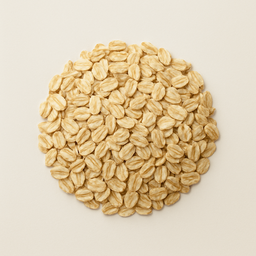 Oatmeal
 Monounsaturated fats + beta-glucans: complementary lipid pathways
Technical: Almond paste provides 22g protein per 100g plus 56g fat (35g MUFA). Oatmeal contains 4g beta-glucans per 100g — soluble fibers that bind bile acids in the gut. Oat beta-glucans contribute to the maintenance of normal blood cholesterol levels (EFSA, at minimum 3g/day). Almond MUFA influences hepatic VLDL secretion via complementary lipid pathways. Proteins from almond paste (lysine-poor) are complemented by oatmeal (lysine-richer in cereals).
What does this mean for you? Stir a tablespoon of almond paste into your oatmeal porridge. Two complementary pathways for lipid metabolism plus longer-lasting fullness. Oat beta-glucans contribute to the maintenance of normal blood cholesterol levels (EFSA).
Almond butter 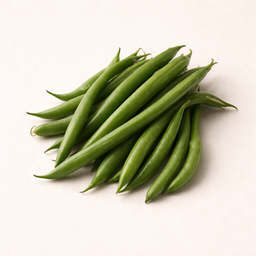 Green Beans
 Better vitamin K absorption through almond fats
Technical: Green beans contain 43μg vitamin K per 100g (36% RDI) and folate (33μg). Almonds provide 50g fats per 100g (32g monounsaturated) plus 25.6mg vitamin E. The fats are essential for fat-soluble vitamin K absorption, with up to 3x higher bioavailability.
What does this mean for you? Green beans amandine (with sliced almonds) is a French classic that's also scientifically smart. The almonds make vitamin K from green beans properly absorbable.
Recipes with Almond butter
Discover delicious recipes featuring almond butter:
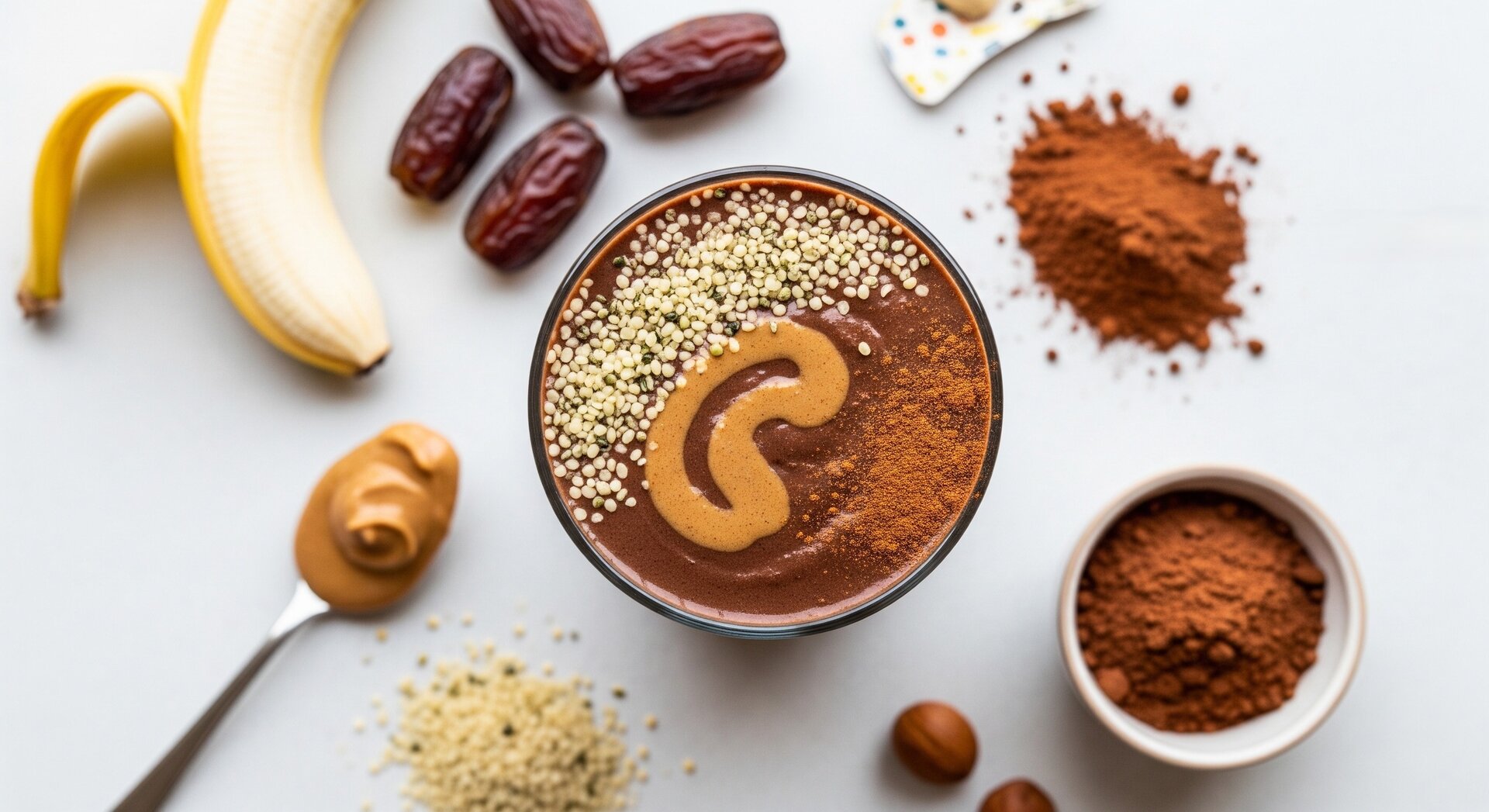 Chocolate Protein Smoothie 5 min Plant-based smoothie with raw cacao, almond butter and hemp seeds
  520 kcal
  28g protein 1 synergies
 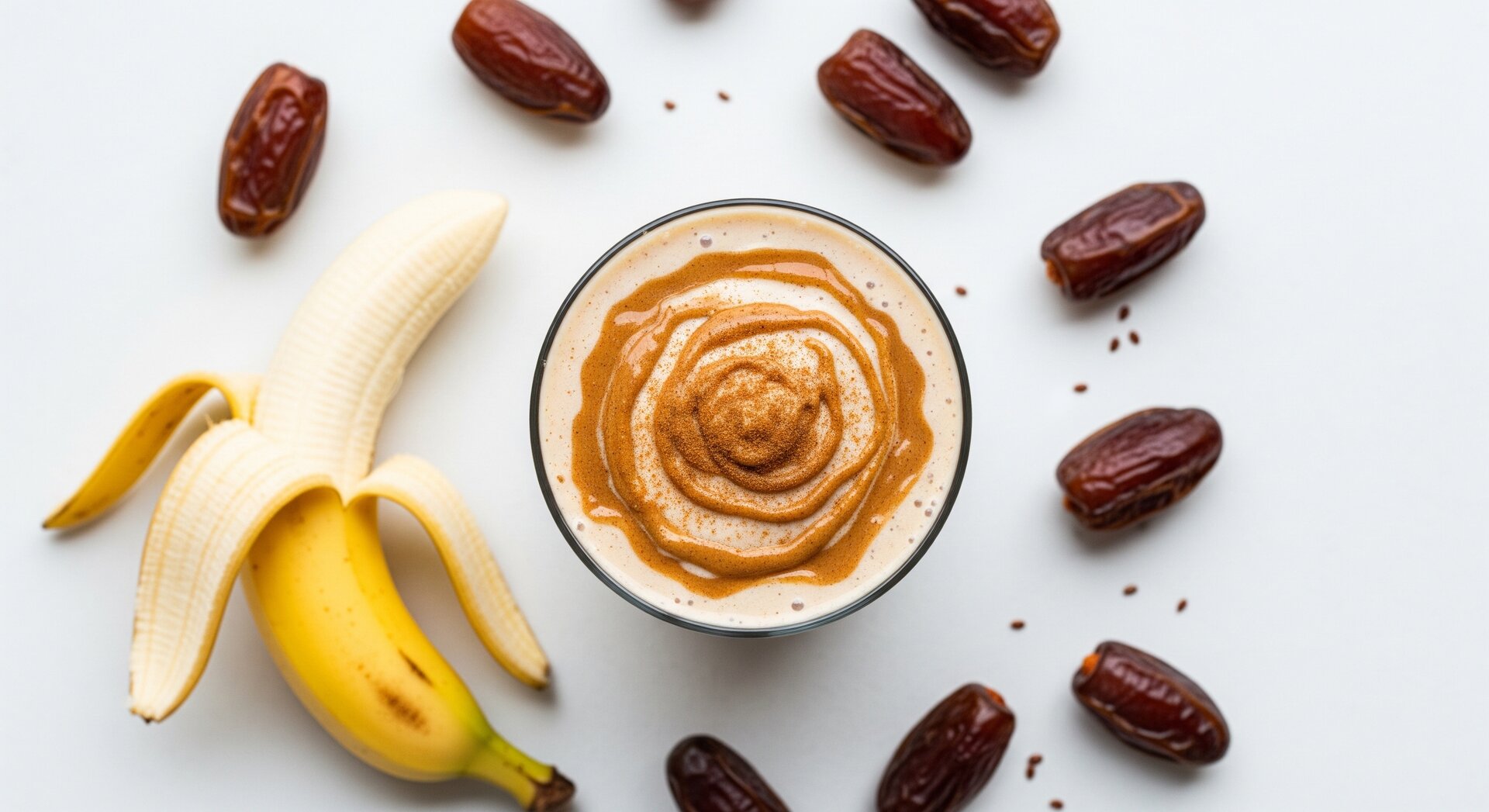 Date Banana Mass Shake 15 min Hearty shake with dates, oats, almond butter and cinnamon 724 kcal 36g protein 1 synergies
  In the Kitchen
Storage
Location:Pantry
Shelf life:3-6 maanden ongeopend, na openen koelen verlengt houdbaarheid
Natural oil separation is normal: stir well before use. Refrigerating after opening slows rancidity. Turn the closed jar upside down briefly so the oil mixes back into the paste more easily.
Preparation
Use in smoothies, oats, on toast, in baking or in savoury sauces. Gentle warming makes the paste more fluid. Avoid long high-temperature cooking, as nut butter can darken quickly.
Conversions
Substitutes
Smart preparation
1Always stir almond butter well before taking a portion.
Why?
Oil and almond solids can separate, making the first spoonfuls different in texture from the rest of the jar.
2Warm the jar briefly in a bain-marie or place it in warm water for a few minutes if the paste is too firm.
3Use a clean, dry spoon and close the jar straight after use.
Caution / Warnings
Almond butter is very safe, but there are scientific considerations:
Tree nut allergy Severe
Almonds are tree nuts and can cause severe allergic reactions in sensitive people.
Advice:
Avoid completely with a tree nut allergy. Also watch for possible cross-contamination during production or packaging.
Calorie dense Mild
At 614 kcal per 100 g, almond butter is an energy-dense nut butter.
Advice:
Use around 1-2 tablespoons per portion (15-30 g). Choose 100% almonds without added sugars or oils.
Traditional use
Islamic tradition
Almond paste in Arab and Ottoman kitchens
Almond paste and ground almond fillings are part of Arab and Ottoman confectionery traditions, where they are used in baklava, filled cookies, marzipan-like sweets and festive desserts.
Summary
Creamy nut butter made from 100% almonds, with vitamin E, magnesium, calcium, protein and fibre. Use a small portion on toast, in oats, smoothies, sauces or baking, and stir natural oil separation back in well.