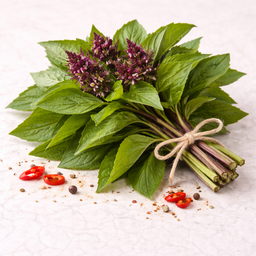
Thai Basil
The Aromatic Herb with Calming Power
What is this ingredient?
Thai basil (Ocimum basilicum var. thyrsiflora) is more than a flavoring - it belongs to the Ocimum family, several species of which are revered in Ayurveda as 'Tulsi' (holy basil).
Scientific research reveals surprising bioactivity:
- Bioactive compounds: Contains estragole, eugenol and rosmarinic acid (Cohen, 2014)
- Aromatic components: Eugenol and estragole provide the characteristic aroma (Suppakul et al., 2003)
- Phenolic compounds: Contains phenolic antioxidants (Kelm et al., 2000)
- Antioxidant: High ORAC value from rosmarinic acid
The unique anise-pepper flavor comes from estragole (methyl chavicol), while eugenol provides the clove undertone.
Practically speaking, Thai basil is the 'finishing touch' that makes healthy dishes restaurant-worthy without adding calories - plus scientifically researched components.
How does it taste?
Sweet anise-like with a peppery, slightly clove-like note.
Pairs well with:
Pairs well with chiligarliccoconut milkshrimp and eggplant.
Did you know...?
- Thai basil has purple stems and an anise-like flavor, different from sweet basil.
- Thai basil retains its flavor better at high temperatures than regular basil.
Nutritional Value & Energy
Per 100g
Thai Basil is low in calories thanks to natural nutrients .
Per 100g
Minerals
Vitamins
More nutrients
Trace Minerals
What's in a serving?
Thai Basil naturally contains vitamin k (415 mcg per 100 g fresh). At typical herb (5–10 g) usage, the contribution is limited.
Thai Basil naturally contains vitamin k (415 mcg per 100 g fresh). At typical herb (5–10 g) usage, the contribution is limited.
Thai Basil naturally contains manganese (1.15 mg per 100 g fresh). At typical herb (5–10 g) usage, the contribution is limited.
Thai Basil naturally contains folate (60 mcg per 100 g fresh). At typical herb (5–10 g) usage, the contribution is limited.
% of daily reference intake (DRI)
EU-approved nutrition claims
This ingredient contains nutrients for which EFSA-authorized health claims exist (at nutrient level, not ingredient-specific).
Approved health claims (EU)
Vitamin_k EU 432/2012
Vitamin K contributes to normal blood clotting
Contains 415mcg/100g (threshold: ≥11.25mcg/100g)
Vitamin_k EU 432/2012
Vitamin K contributes to the maintenance of normal bones
Contains 415mcg/100g (threshold: ≥11.25mcg/100g)
What's being researched?
Antioxidants in Thai basil
Thai basil contains estragole and eugenol with antioxidant activity. Research is mainly in the preclinical stage.
Supported by: [5] Petersen (2003) , [3] Kelm (2000)
Good Combinations (Synergy)
Combine thai basil smartly to enhance the effect:
Thai Basil 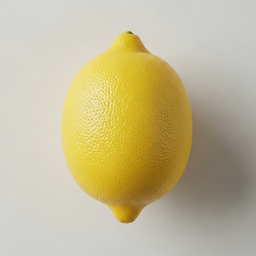 Lemon
Lemon Estragole + vitamin C for antioxidant and digestive synergy
Technical: Thai basil (Ocimum basilicum var. thyrsiflora) contains estragole (methyl chavicol, 70-80%) and linalool — compounds with antioxidant and antispasmodic action in the gastrointestinal tract. Lemon's citric acid promotes bile flow and gastric acid secretion. Together they promote digestion via two routes: Thai basil relaxes smooth muscles of the intestinal tract, lemon promotes enzyme production. Vitamin C also protects the volatile oils from oxidation.
What does this mean for you? Add lemon to dishes with Thai basil — like in Tom Yum soup or a Thai salad. It enhances both the flavor and the digestive benefits.
Thai Basil 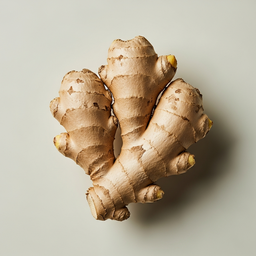 Ginger
 Anise-like basil + gingerols for Asian aromatherapy and digestion
Technical: Thai basil's estragole relaxes smooth muscles of the digestive tract via calcium channel blockade. Ginger's gingerols promote gastric motility via 5-HT3 antagonism — the opposite but complementary mechanism. Together they prevent both spasms (basil) and stagnation (ginger). Both also contain volatile oils that promote bile flow. This is the scientific basis behind the Thai cuisine combination.
What does this mean for you? Thai basil and ginger are the backbone of Thai cuisine (pad krapao, curries). They make fatty dishes more digestible — Thai cuisine isn't easily digestible despite rich flavors by accident.
Thai Basil  Coconut Milk
 Eugenol + lauric acid for broad bioactive action
Technical: Thai basil contains eugenol (15-25%) and estragole — bioactive phenolic compounds that disrupt cell walls of microorganisms. Coconut milk provides lauric acid — an MCT with independent bioactive action via lipid envelope disruption. Ginger adds gingerol. Together: three bioactive mechanisms in one dish.
What does this mean for you? Use Thai basil with coconut milk and ginger in Thai curries. The three ingredients together offer broad bioactive action through three different routes.
Recipes with Thai Basil
Discover delicious recipes featuring thai basil:
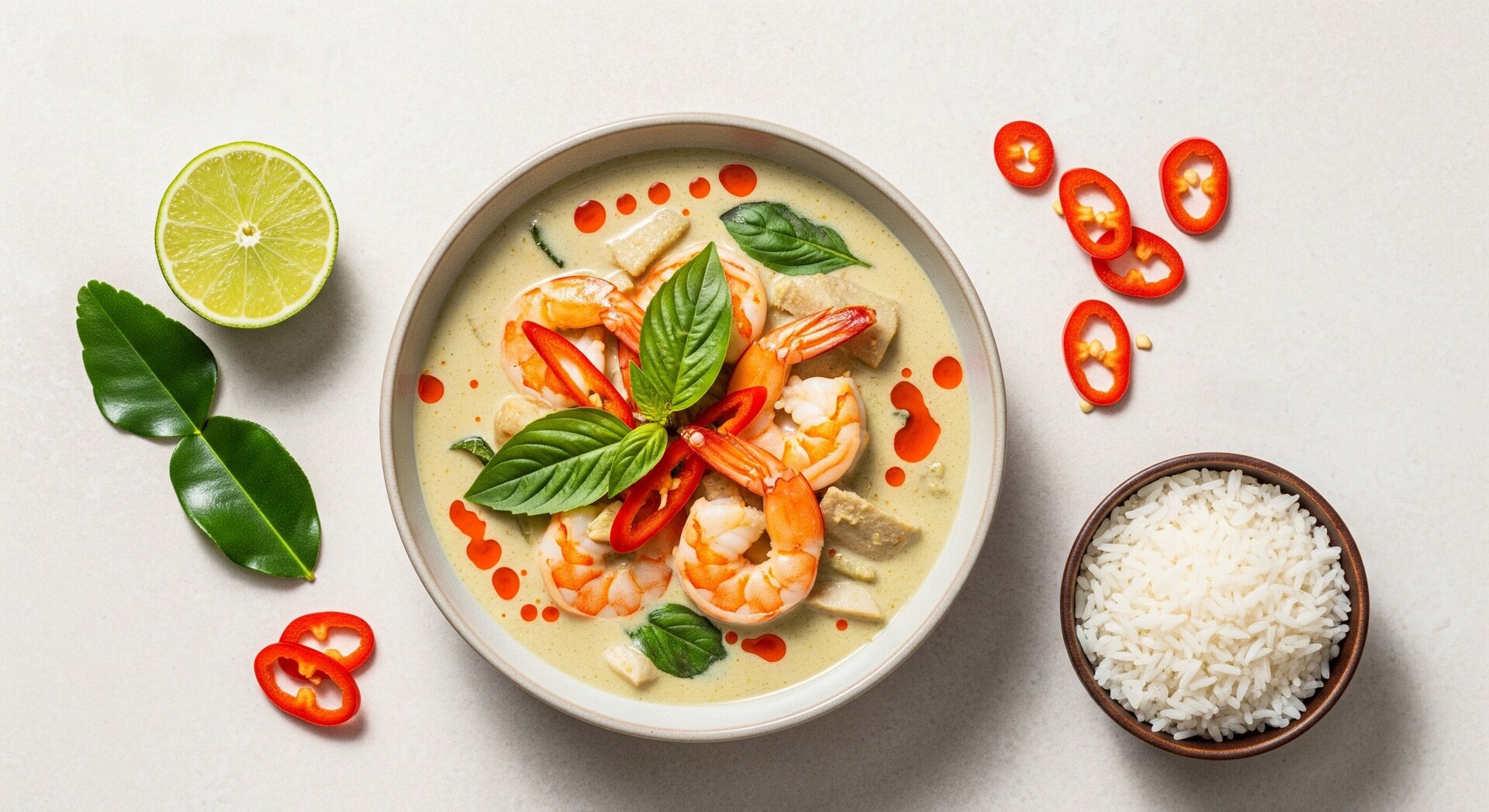 Thai Green Curry with Shrimp and Coconut 35 min Creamy green curry with juicy shrimp and Thai basil
  716 kcal
  46g protein 1 synergies
 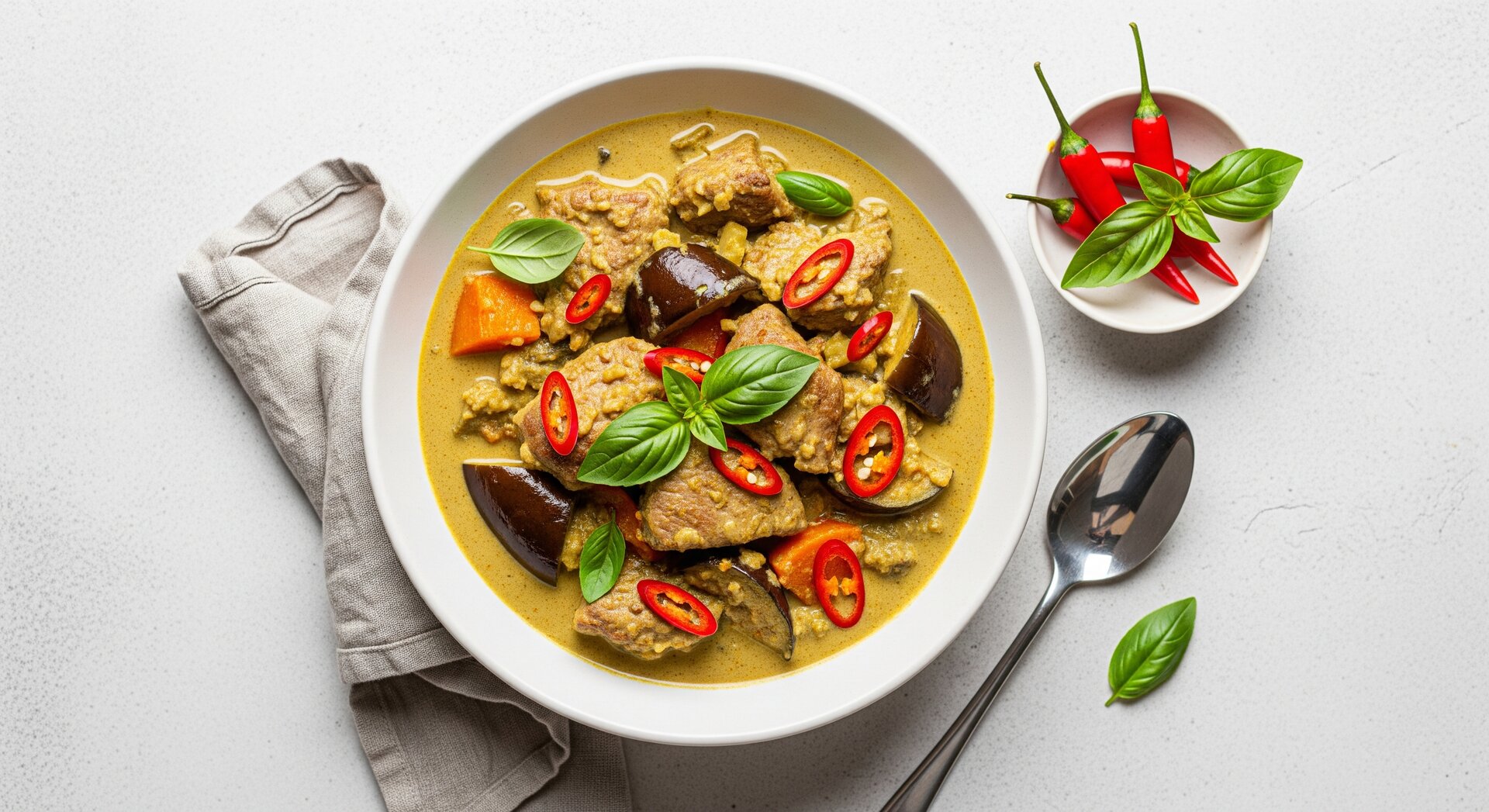 Thai Green Curry with Chicken 35 min Creamy coconut curry with fresh vegetables 520 kcal 32g protein 1 synergies
 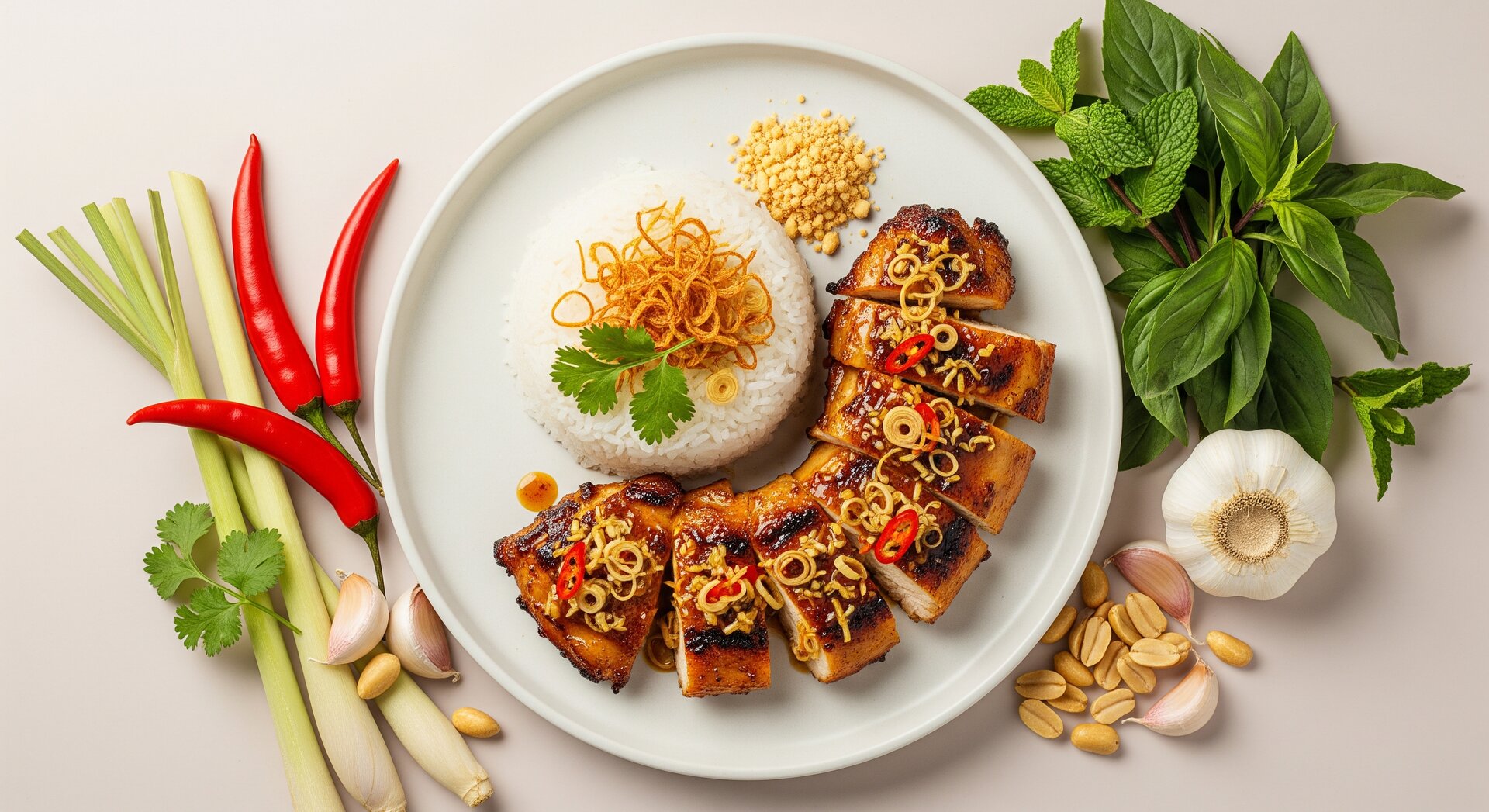 Vietnamese Lemongrass Chicken 45 min Fragrant wok chicken with crispy shallots and Thai basil 380 kcal 32g protein 2 synergies
 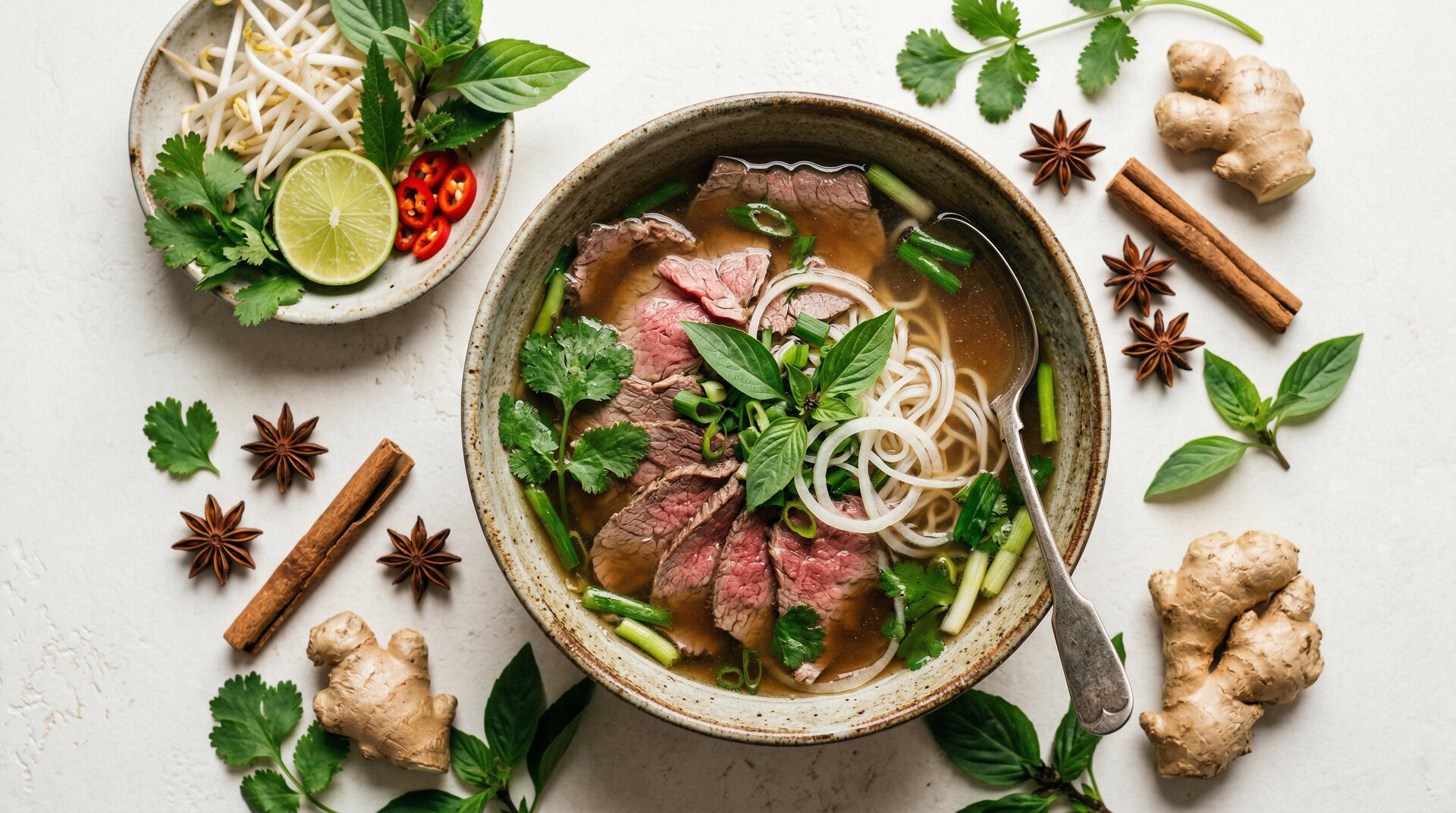 Vietnamese Pho with Beef and Herbs 45 min Clear noodle soup with spiced beef broth, lime and fresh herbs 550 kcal 36g protein 2 synergies
 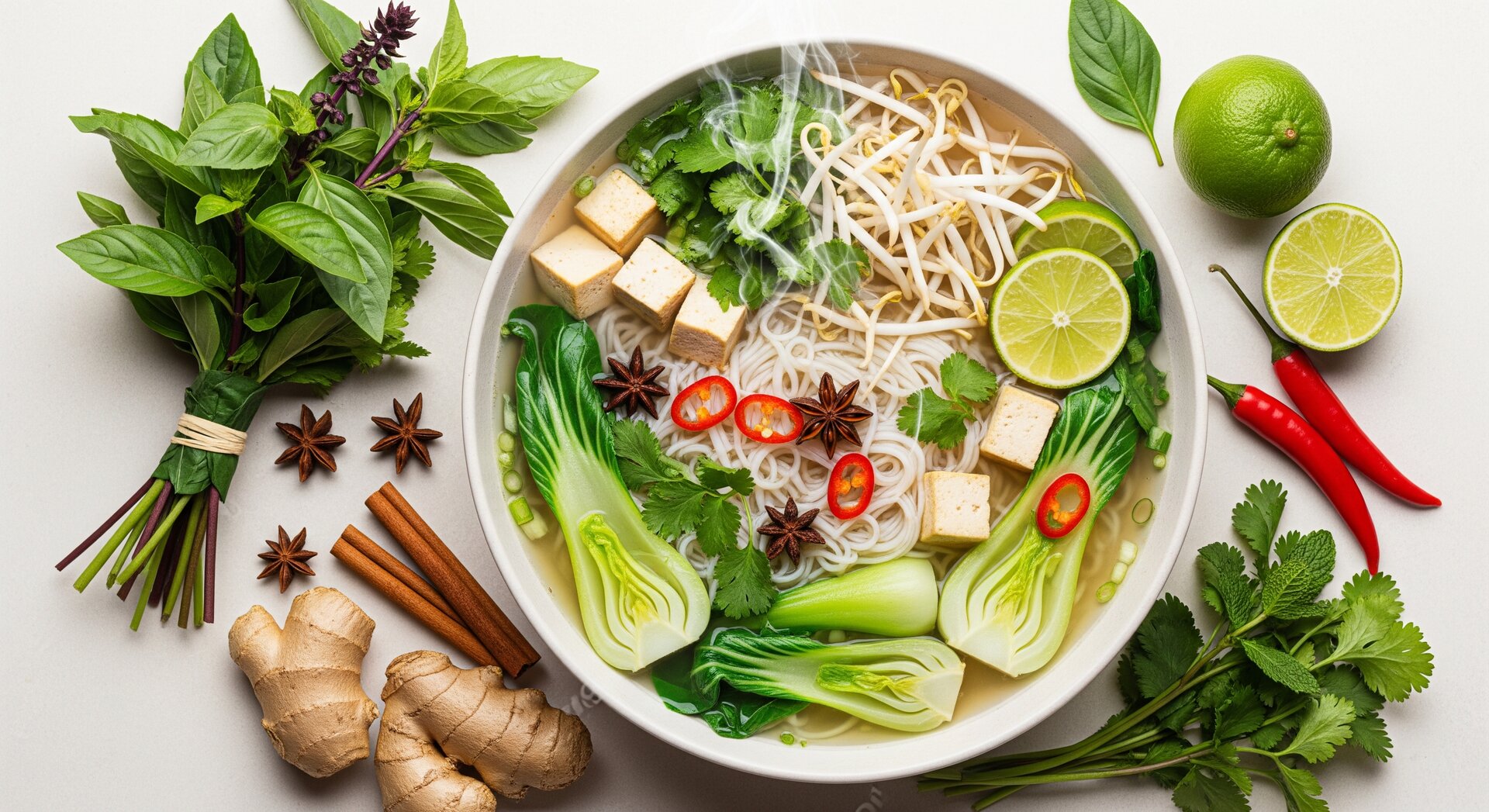 Vietnamese Pho with Tofu and Fresh Herbs 45 min Clear noodle soup with spiced broth, bok choy, lime and bean sprouts 320 kcal 14g protein 2 synergies
 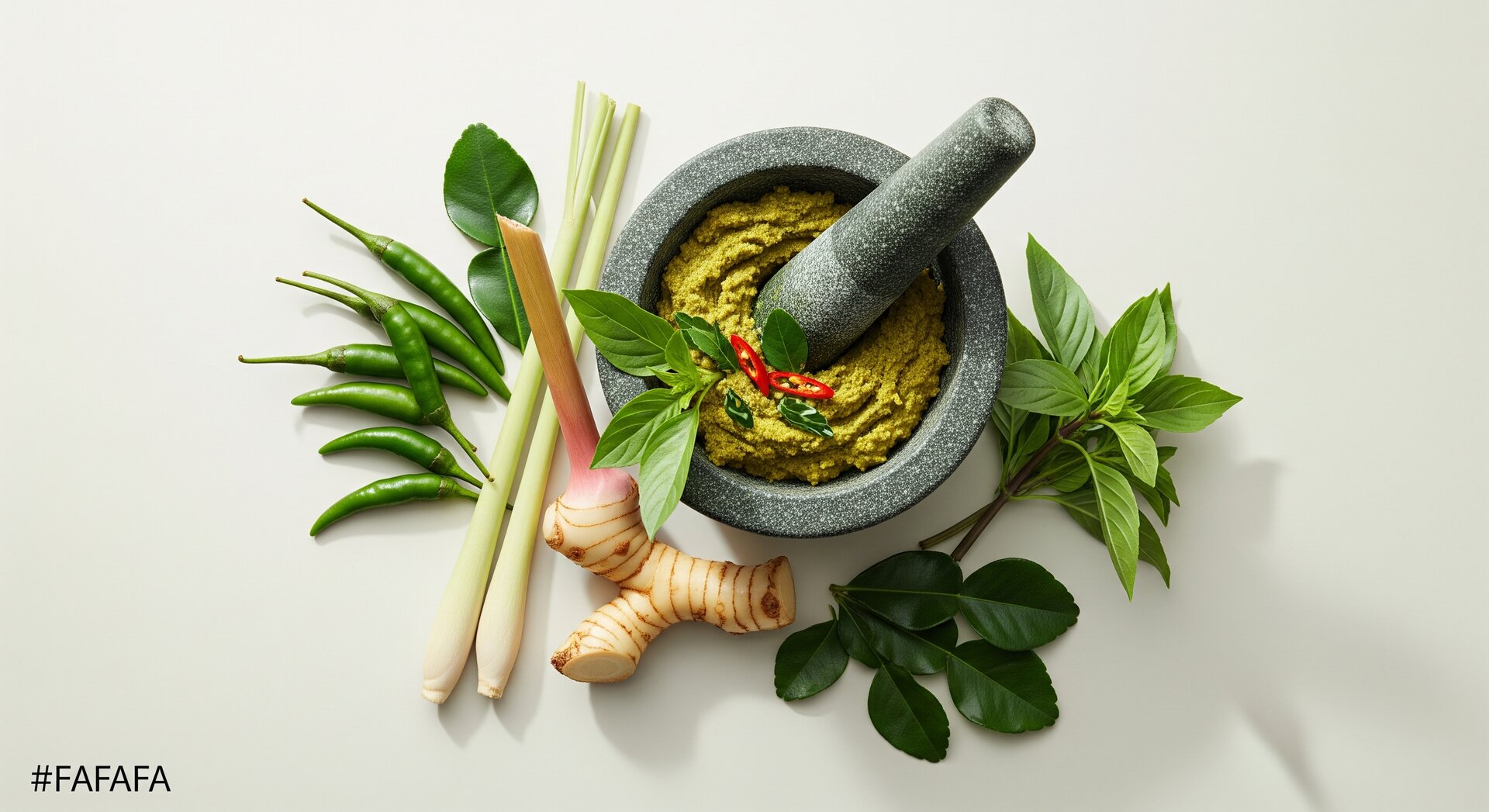 Homemade Green Curry Paste 30 min Fresh Thai herb paste full of aroma 12 kcal 1g protein 2 synergies
  In the Kitchen
Storage
Location:Refrigerator
Shelf life:3-5 dagen (vers), 6+ maanden (ingevroren)
Stand stems in glass of water (like flowers) with loose bag over top on counter or fridge. Freezing: wash, dry, freeze loose on sheet, store in bag.
Preparation
Add FRESH at END of cooking - heat destroys volatile aromas and bioactives. Add whole leaves, don't chop.
Conversions
Substitutes
Smart preparation
1Add Thai basil at the last moment to curries and stir-fries.
Why?
The anise-like flavor disappears with prolonged cooking.
2Thai basil is more heat-resistant than regular basil, but not endlessly.
3Use whole leaves; chopping quickly turns them black.
Caution / Warnings
Thai Basil is very safe, but there are scientific considerations:
Pregnancy Moderate
Estragole in high doses may cause uterine contractions. Culinary amounts are safe.
Blood thinners Mild
High vitamin K content may affect warfarin efficacy. Consistent intake matters more than avoidance.
Traditional use
Southeast Asian
Horapha in Thai cuisine
Thai basil (horapha) has been an indispensable ingredient in Thai cuisine for centuries and is traditionally used in curries, stir-fries, and soups for its characteristic anise flavor.
Summary
Thai basil is calorie-free luxury: makes simple dishes restaurant-worthy. Contains eugenol and estragole as bioactive compounds. Add FRESH at end of cooking for maximum aroma and volatile compound preservation.