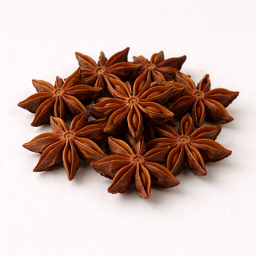
Star Anise
The licorice-like star for broths, chai, and stews
What is this ingredient?
Star anise is not botanically related to anise, but it shares the aromatic compound anethole, which creates its signature licorice note. It is a key ingredient in Chinese Five Spice and Vietnamese Pho. Beyond cooking, star anise is known for containing shikimic acid, a plant-derived raw material used in pharmaceutical production processes. In food, star anise acts as a depth builder: a single star can give broths, poached pears, chai, and mulled drinks a warm, rounded backbone—but too much quickly dominates.
How does it taste?
Intensely sweet-anise with a warm, slightly bitter depth.
Pairs well with:
Pairs well with cinnamongingerporkduckand fennel.
Did you know...?
- Star anise is an important natural source of shikimic acid, a plant-derived raw material for pharmaceutical production processes.
- Despite the similar name, anise and star anise are botanically completely unrelated.
Nutritional Value & Energy
Per 100g
Star Anise provides energy thanks to natural nutrients , buffered by fiber.
Per 100g
Minerals
Vitamins
More nutrients
Trace Minerals
What's in a serving?
Star anise naturally contains iron (37 mg per 100 g dried powder). At typical spice usage (3–9 g), the contribution is limited.
Star anise naturally contains manganese (2.3 mg per 100 g dried powder). At typical spice usage (3–9 g), the contribution is limited.
Star anise naturally contains copper (0.9 mg per 100 g dried powder). At typical spice usage (3–9 g), the contribution is limited.
Star anise naturally contains calcium (646 mg per 100 g dried powder). At typical spice usage (3–9 g), the contribution is limited.
Star anise naturally contains iron (37 mg per 100 g dried powder). At typical spice usage (3–9 g), the contribution is limited.
Star anise naturally contains magnesium (170 mg per 100 g dried powder). At typical spice usage (3–9 g), the contribution is limited.
Star anise naturally contains phosphorus (440 mg per 100 g dried powder). At typical spice usage (3–9 g), the contribution is limited.
Star anise naturally contains potassium (1441 mg per 100 g dried powder). At typical spice usage (3–9 g), the contribution is limited.
Star anise naturally contains zinc (5.3 mg per 100 g dried powder). At typical spice usage (3–9 g), the contribution is limited.
Star anise naturally contains manganese (2.3 mg per 100 g dried powder). At typical spice usage (3–9 g), the contribution is limited.
Star anise naturally contains copper (0.9 mg per 100 g dried powder). At typical spice usage (3–9 g), the contribution is limited.
Star anise naturally contains Vitamin B6 (0.65 mg per 100 g dried powder). At typical spice usage (3–9 g), the contribution is limited.
% of daily reference intake (DRI)
EU-approved nutrition claims
This ingredient contains nutrients for which EFSA-authorized health claims exist (at nutrient level, not ingredient-specific).
Approved health claims (EU)
Iron EU 432/2012
Iron contributes to normal energy-yielding metabolism
Contains 37mg/100g (threshold: ≥2.1mg/100g)
Iron EU 432/2012
Iron contributes to the reduction of tiredness and fatigue
Contains 37mg/100g (threshold: ≥2.1mg/100g)
Iron EU 432/2012
Iron contributes to normal cognitive function
Contains 37mg/100g (threshold: ≥2.1mg/100g)
Iron EU 432/2012
Iron contributes to normal formation of red blood cells and haemoglobin
Contains 37mg/100g (threshold: ≥2.1mg/100g)
Iron EU 432/2012
Iron contributes to normal oxygen transport in the body
Contains 37mg/100g (threshold: ≥2.1mg/100g)
Iron EU 432/2012
Iron contributes to the normal function of the immune system
Contains 37mg/100g (threshold: ≥2.1mg/100g)
Iron EU 432/2012
Iron has a role in the process of cell division
Contains 37mg/100g (threshold: ≥2.1mg/100g)
Comparison
vsspinazie
Star anise contains about 14× more iron per 100 g than spinach — but you use much less star anise per serving.
vsmelk
Star anise contains about 5× more calcium per 100 g than milk — but you use much less star anise per serving.
vsbanaan
Star anise contains about 4× more potassium per 100 g than banana — but you use much less star anise per serving.
What's being researched?
Shikimic acid in star anise
Star anise is an important natural source of shikimic acid, a plant-derived raw material used in pharmaceutical production processes. Further research examines the aromatic oil components of star anise in laboratory models.
Supported by: [2] De (2002) , [1] Ghosh (2012)
Good Combinations (Synergy)
Combine star anise smartly to enhance the effect:
Star Anise 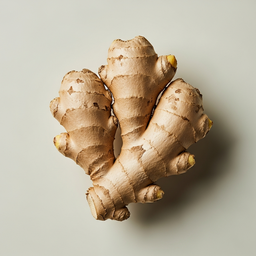 Ginger
 Enhanced digestion and bioactive action
Technical: Star anise contains shikimic acid and anethole, plant compounds with broad bioactivity. Ginger's gingerol is studied for similar bioactive properties and combats nausea via 5-HT3 receptor blockade. Together: broad bioactive + antiemetic action.
What does this mean for you? Make tea from star anise and ginger as a warm, spicy drink. The star anise provides shikimic acid, the ginger a spicy warmth — a powerful combination.
Star Anise 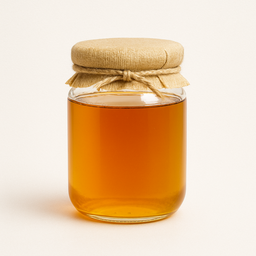 Honey
Honey Shikimic acid + bioactive honey: traditional herbal drink
Technical: Star anise is the primary source of shikimic acid. Shikimic acid is a plant compound with broad bioactivity. Honey contains glucose oxidase (bioactive) and physically coats the throat mucosa. Star anise-honey tea is a traditional Asian herbal drink.
What does this mean for you? Star anise-honey tea is a traditional Asian herbal drink. The star anise provides shikimic acid, the honey protects your throat and adds bioactive enzymes.
Star Anise 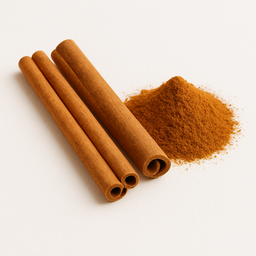 Cinnamon
 Anethole + cinnamaldehyde for blood sugar and bioactive action
Technical: Star anise contains anethole (80-90% of essential oil) that inhibits α-glucosidase — the enzyme that breaks down carbohydrates in the gut. Cinnamon's cinnamaldehyde activates AMPK for insulin-independent glucose uptake. Together they inhibit carbohydrate digestion (star anise) and improve glucose uptake in cells (cinnamon). Both also contain bioactive phenolic compounds traditionally valued in food preservation: star anise effective against E. coli, cinnamon against Candida.
What does this mean for you? Add star anise and cinnamon together to stews, chai or compote. The combination is traditional in Chinese five-spice and lowers the blood sugar impact of sweet dishes.
Recipes with Star Anise
Discover delicious recipes featuring star anise:
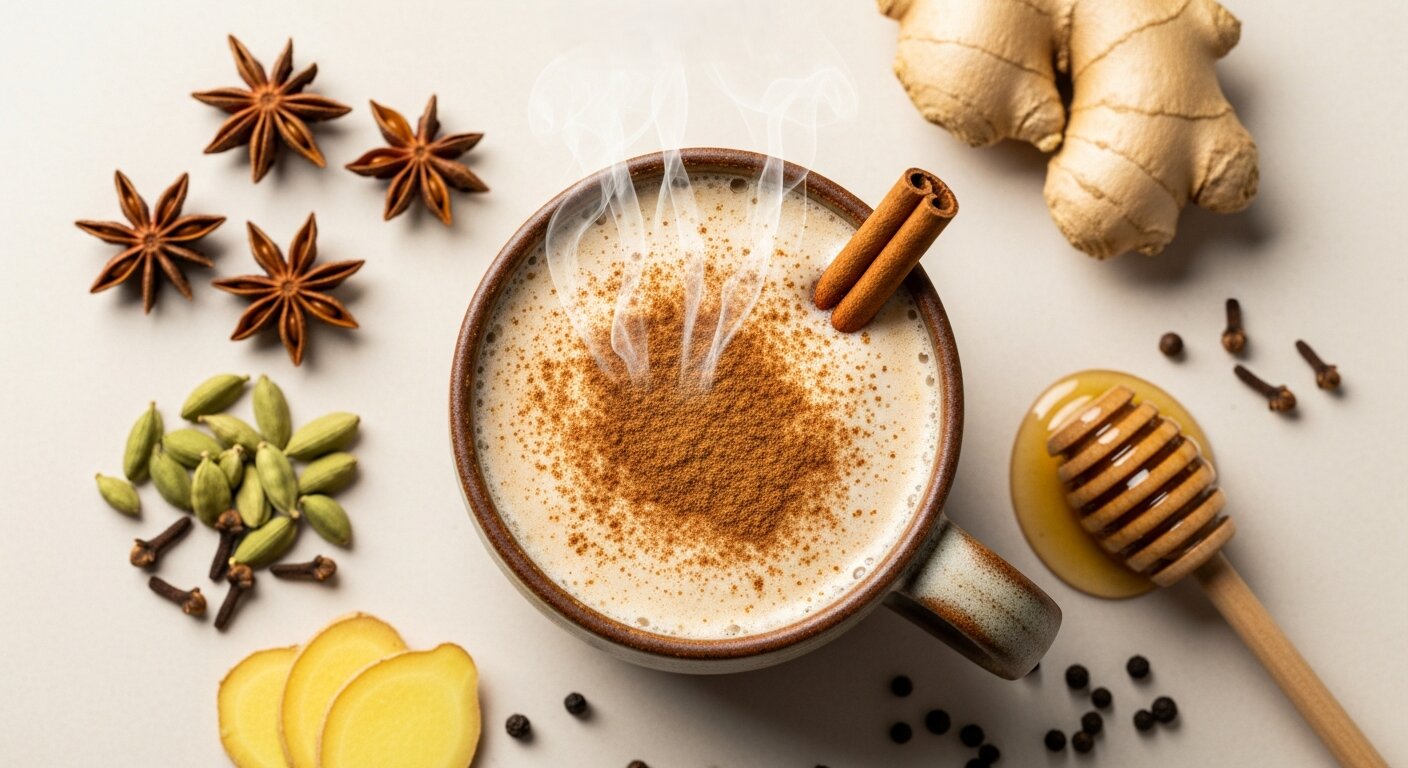 Spiced Chai Latte 20 min Indian spiced tea with black tea and warming spices
  120 kcal
  2g protein 2 synergies
 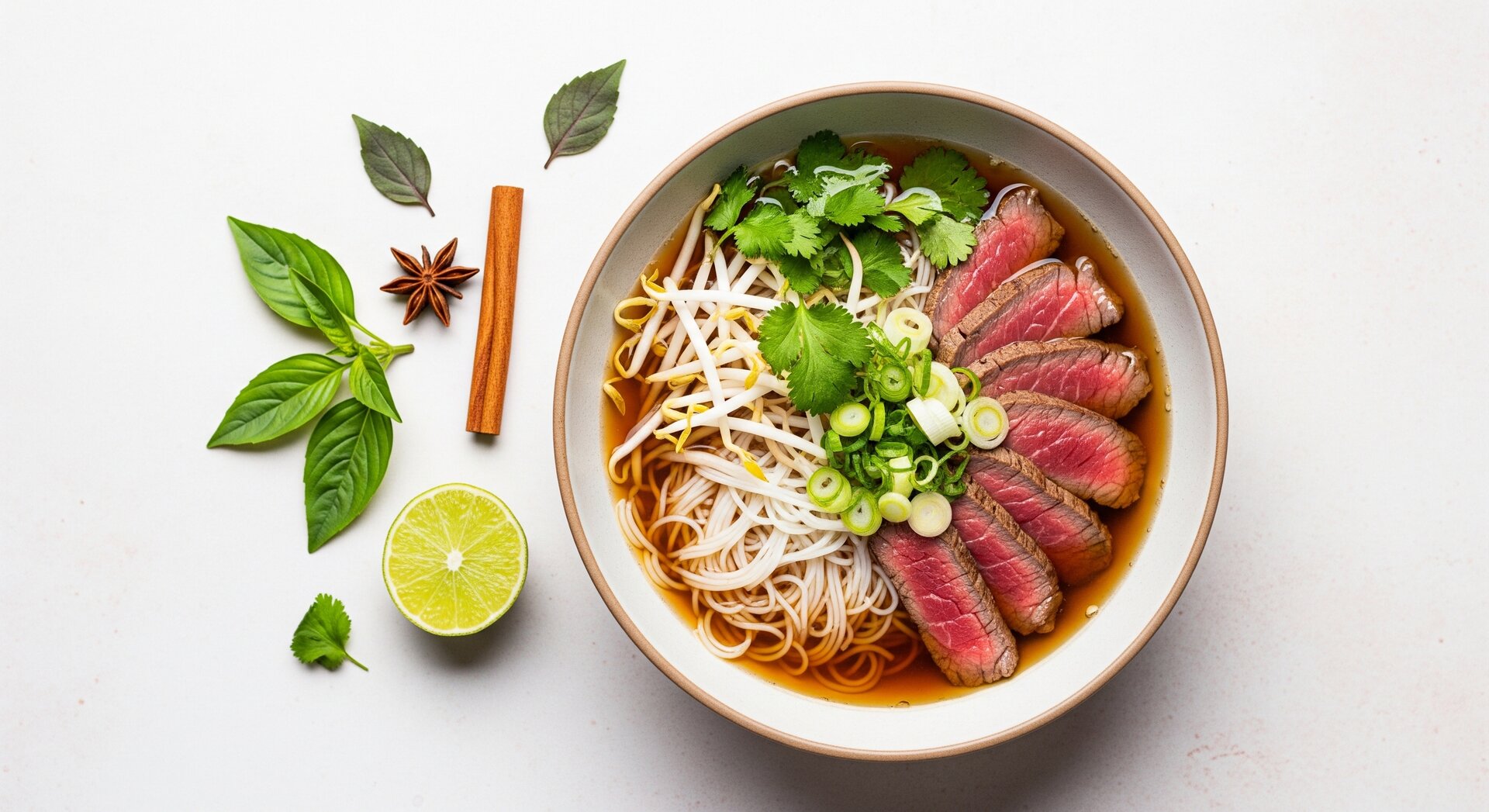 Vietnamese Pho with Beef 65 min Clear noodle soup with spiced broth, beef and fresh herbs 664 kcal 63g protein 2 synergies
 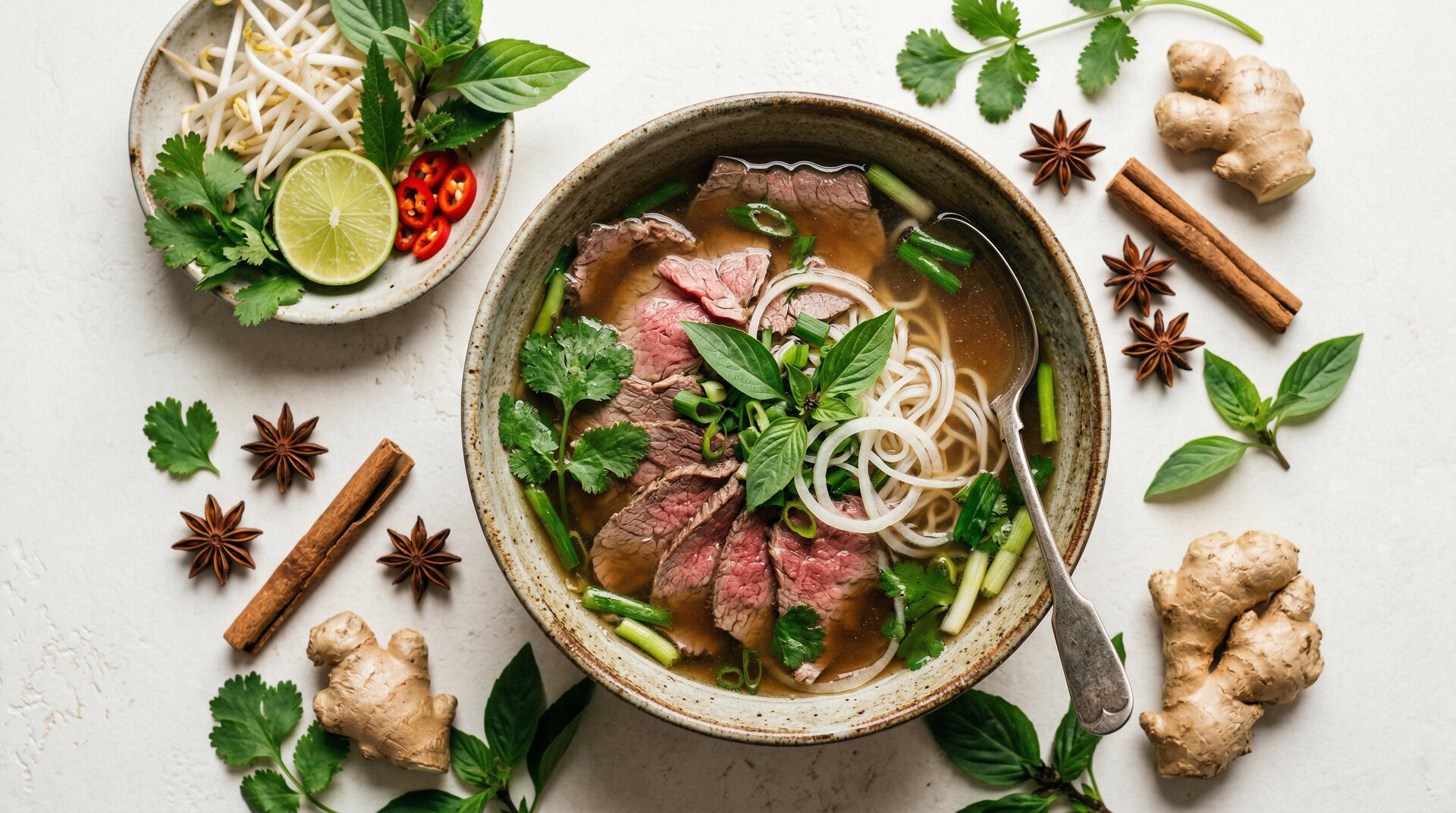 Vietnamese Pho with Beef and Herbs 45 min Clear noodle soup with spiced beef broth, lime and fresh herbs 550 kcal 36g protein 2 synergies
 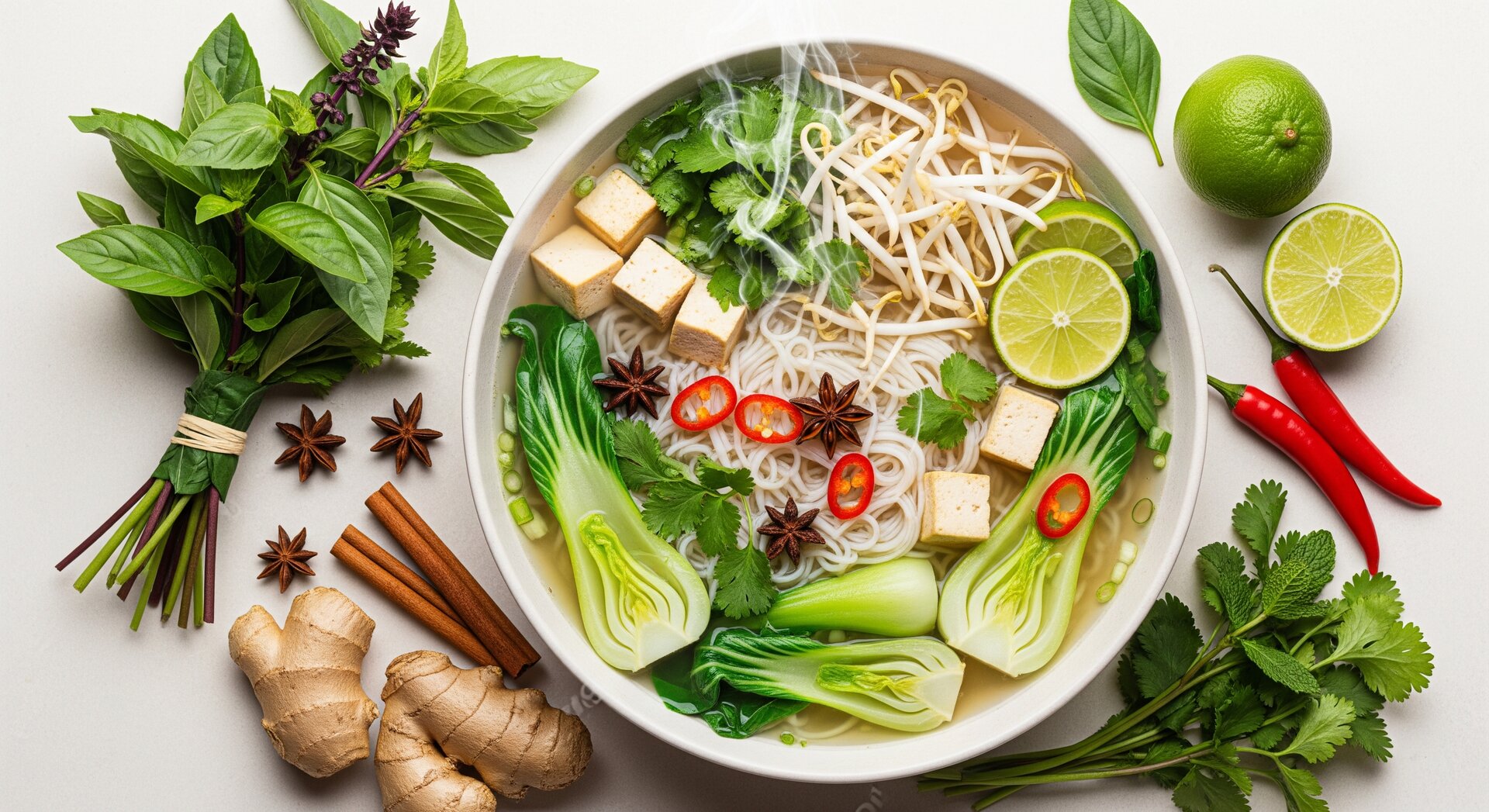 Vietnamese Pho with Tofu and Fresh Herbs 45 min Clear noodle soup with spiced broth, bok choy, lime and bean sprouts 320 kcal 14g protein 2 synergies
  In the Kitchen
Storage
Location:Pantry
Shelf life:2 jaar
Store airtight and away from light. Whole stars stay aromatic much longer than ground powder.
Preparation
Simmer whole in soups, broths, stews, or compotes and remove before serving. Or grind for five-spice blends and rubs; use very sparingly.
Substitutes
Smart preparation
1Add whole star anise to liquids and remove before serving.
2Use a maximum of 1–2 stars per dish; the flavor is very intense.
Why?
Star anise has a powerful anise aroma that quickly dominates.
3Dry-toast star anise in a pan to deepen the aroma.
Caution / Warnings
Star Anise is very safe, but there are scientific considerations:
Japanese star anise (look-alike) Severe
A toxic look-alike (Illicium anisatum) exists and can be neurotoxic. Only buy culinary Illicium verum from reputable brands.
Advice:
Do not use for infants or herbal tea if the source is uncertain; when in doubt, skip it.
Traditional use
Traditional Chinese Medicine
Ba jiao in Chinese cuisine and herbal tradition
Star anise (ba jiao) is one of the five spices in Chinese five-spice powder. In Chinese culinary traditions, it has long added warmth and depth to broths, braises, and fragrant spice blends.
Summary
One of the most beautiful spices: warm, sweet, and licorice-like. Perfect for pho, chai, and mulled drinks—use sparingly: one star per pot is often enough.