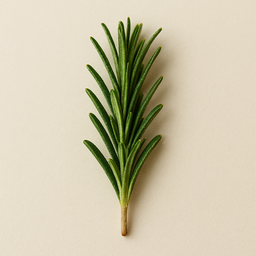
Rosemary
Resinous Mediterranean herb for potatoes, bread and grilled dishes
What is this ingredient?
Rosemary (Rosmarinus officinalis) is a sturdy, woody herb from the Mediterranean region. Its name is often interpreted as 'dew of the sea', because the plant grows well in dry, sunny coastal areas. In the kitchen, rosemary is recognized by its needle-like leaves, resinous aroma and deep flavor that holds up well to oven heat and grilling.
## Aroma and culinary role
Its distinctive scent comes in part from volatile aromatic compounds such as 1,8-cineole, camphor-like notes and resinous components. This makes rosemary a good match for potatoes, bread, beans, roasted vegetables, lamb, chicken and olive oil. Because the leaves are firm, the herb works best when added early or chopped very finely.
## In marinades and high-heat cooking
Rosemary is widely used in marinades for meat and vegetables. In food chemistry research, rosemary extract is examined in relation to HCA formation, unwanted cooking-reaction compounds that can form when meat is prepared at high temperatures. The polyphenols and resinous components in rosemary add flavor to marinades and are also studied for their role in these cooking processes.
## Cultural background
In Greek and Roman traditions, rosemary symbolized remembrance, fidelity and a clean fragrance. Today it remains a classic kitchen herb for Mediterranean dishes, tray bakes, focaccia, roasted potatoes and aromatic oil infusions.
How does it taste?
Intensely aromatic, resinous and slightly peppery with pine, camphor and citrus notes.
Pairs well with:
Pairs well with lambpotatoolive oilgarlic and lemon.
Did you know...?
- The Latin name 'rosmarinus' is often interpreted as 'dew of the sea', matching its habitat along sunny coasts.
- In the Middle Ages, rosemary was woven into wedding bouquets as a symbol of fidelity and remembrance.
Nutritional Value & Energy
Per 100g
Rosemary provides energy thanks to natural nutrients , buffered by fiber.
Per 100g
Minerals
Vitamins
Omega-3 fatty acids
More nutrients
Trace Minerals
What's in a serving?
1 tablespoon (in a tray bake)
Rosemary naturally contains calcium (317 mg per 100 g fresh). At typical herb use (5–10 g), the contribution is limited.
Rosemary naturally contains iron (6.65 mg per 100 g fresh). At typical herb use (5–10 g), the contribution is limited.
Rosemary naturally contains potassium (668 mg per 100 g fresh). At typical herb use (5–10 g), the contribution is limited.
Rosemary naturally contains folate (109 mcg per 100 g fresh). At typical herb use (5–10 g), the contribution is limited.
% of daily reference intake (DRI)
EU-approved nutrition claims
There are currently no EFSA-authorized health claims specific to rosemary. Various applications for herbs and spices have been submitted but not yet assessed (botanical 'on hold' list).
Comparison
vsmelk
Rosemary contains about 3× more calcium per 100 g than milk — but you use much less rosemary per serving.
vsspinazie
Rosemary contains about 2× more iron per 100 g than spinach — but you use much less rosemary per serving.
vsbanaan
Rosemary contains about 2× more potassium per 100 g than banana — but you use much less rosemary per serving.
What's being researched?
Rosemary aroma and cognitive tests
1,8-cineole and other volatile aromatic compounds from rosemary are studied in relation to aroma perception and performance on cognitive tasks. The available literature remains exploratory and is not the same as an ingredient-specific health claim.
Supported by: [1] Moss (2012)
Rosemary in food chemistry
Rosemary extract is studied and used in the food industry because of its aromatic and polyphenol-rich composition. Rosmarinic acid, carnosol and carnosic acid are among the often discussed components.
Supported by: [2] Smith (2008) , [3] Awney HA (2010)
Good Combinations (Synergy)
Combine rosemary smartly to enhance the effect:
Rosemary 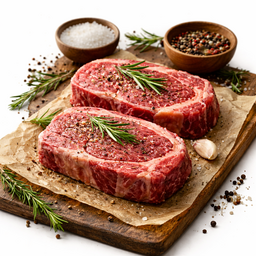 Beef Steak
 Rosemary helps reduce HCA formation when grilling
Rosemary extract reduces HCA formation in grilled meat (PMID: 18444144)
Technical: Grilling meat forms heterocyclic amines (HCAs) that are carcinogenic. Rosemary contains carnosol, rosmanol and carnosic acid — powerful antioxidants that can help reduce HCA formation. Herbs add antioxidants during grilling.
What does this mean for you? Marinate steak at least 30 minutes in oil with rosemary before grilling, or place fresh rosemary sprigs on the meat while cooking. This is healthier than grilling without herbs!
Rosemary 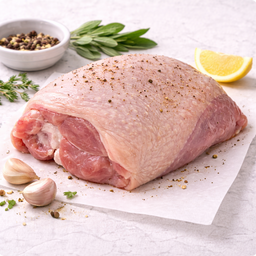 Turkey Thigh
 Antioxidants protect fats during heating
Technical: Turkey thighs contain more unsaturated fat than chicken breast. At high temperatures these fats oxidize and form heterocyclic amines (HCAs) and Advanced Glycation End-products (AGEs). Rosemary contains heat-stable carnosol and carnosic acid that can reduce HCA formation. Thyme contains thymol and carvacrol with similar antioxidant action.
What does this mean for you? Sprinkle turkey thighs with rosemary and thyme before roasting. These herbs do more than add flavor — they actively protect the meat against harmful compounds formed during heating. Marinating is even more thorough than sprinkling.
Rosemary 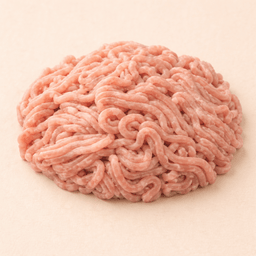 Turkey Mince
 Rosemary protects lean meat from oxidative damage during heating
Technical: Turkey mince contains polyunsaturated fatty acids (2.5g/100g) that oxidize during heating to heterocyclic amines (HCAs) and malondialdehyde (MDA). Rosemary contains carnosol and carnosic acid, diterpene antioxidants that reduce HCA formation by 72-92% (Puangsombat & Smith, 2010; PMID: 20492265). These antioxidants are heat-stable and work directly in the meat during cooking.
What does this mean for you? Mix rosemary into your turkey mince before cooking. The antioxidants in rosemary protect the meat from harmful substances formed during cooking. Delicious and healthier.
Rosemary 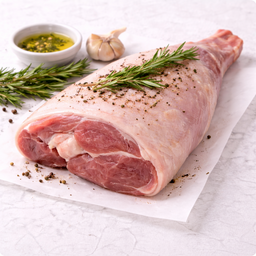 Leg of Lamb
 Carnosol helps reduce HCA formation
Technical: When roasting leg of lamb (180-220°C), heterocyclic amines (HCAs) form — mutagenic compounds that arise from amino acids and creatine at high temperature. Rosemary contains carnosol, rosmanol and carnosic acid (diterpene phenols) that as hydrogen donors can help reduce HCA formation. Garlic's diallyl sulfide also inhibits lipid peroxidation and AGE formation.
What does this mean for you? Insert rosemary sprigs into slits in the leg of lamb and add whole garlic cloves. Marinate at least 30 minutes, preferably overnight. This is a classic Mediterranean preparation that makes the meat both tastier and healthier.
Rosemary 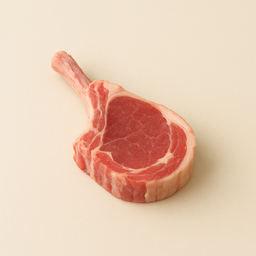 Lamb
Lamb Classic pairing: rosemary neutralizes fat oxidation
Technical: Lamb contains unsaturated fats that oxidize when heated into malondialdehyde (MDA) and other lipid peroxidation products. Rosemary contains carnosol, rosmanol and carnosic acid — diterpene antioxidants that reduce lipid peroxidation by 60-90%. Carnosol is particularly effective because it is heat-stable and thus remains active during cooking. The bitter compounds in rosemary are traditionally valued with fatty dishes.
What does this mean for you? Marinate lamb with rosemary or place fresh sprigs on the meat during roasting. Rosemary makes lamb not only tastier but measurably healthier by preventing fat oxidation. Use fresh rosemary for the strongest effect.
Rosemary 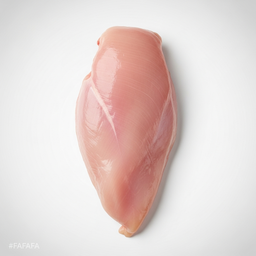 Chicken Breast
 Neutralizes HCAs (cooking toxins) during grilling/frying
Smith JS et al. (2008) in Journal of Food Science showed rosemary extract reduces HCA formation by 90%.
Technical: When grilling/frying meat above 150°C, heterocyclic amines (HCAs) form — potentially carcinogenic. Rosemary's carnosol, carnosic acid and rosmanol are diterpene antioxidants that significantly reduce HCA formation by scavenging free radicals before they can modify amino acids.
What does this mean for you? ALWAYS marinate meat with rosemary before grilling or high-heat frying. The rosemary significantly reduces harmful cooking compounds — possibly the most important cooking tip there is.
Rosemary 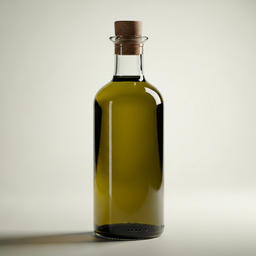 Olive Oil
 Carnosic acid + oleocanthal for Mediterranean bioactive action
Technical: Rosemary's carnosic acid and carnosol are fat-soluble diterpenes with powerful antioxidant action. Olive oil's oleocanthal modulates COX signal transduction. Together they provide the 'Mediterranean diet effect': broader bioactive action than each ingredient alone.
What does this mean for you? Rosemary in olive oil is a powerful Mediterranean duo — use it as a marinade or roast vegetables with it for maximum flavor and antioxidant absorption.
Recipes with Rosemary
Discover delicious recipes featuring rosemary:
 Djaaj Mhammer - Whole Rotisserie Chicken 130 min Golden roasted with green olives and preserved lemon
  520 kcal
  38g protein 2 synergies
 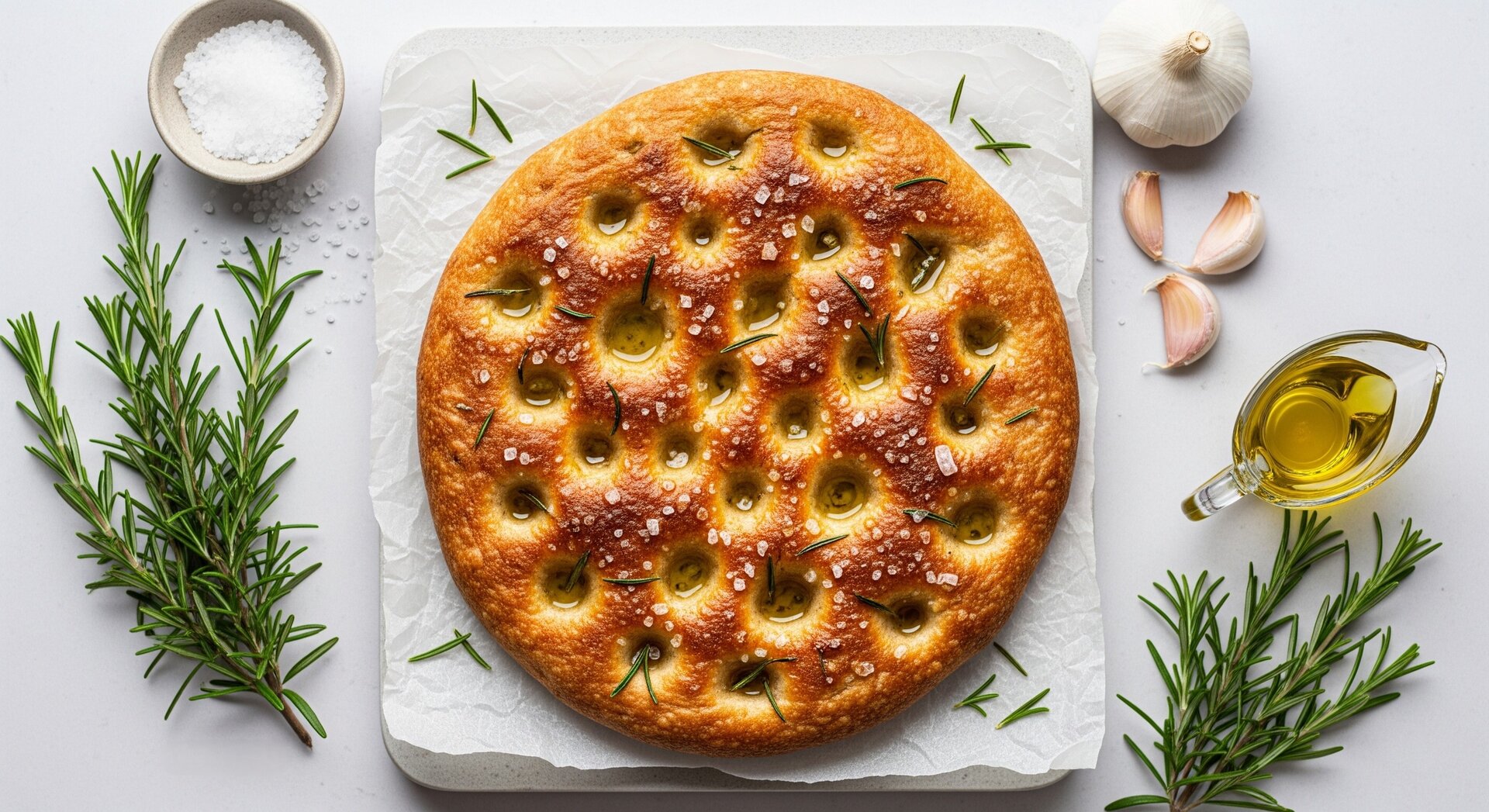 Focaccia with Rosemary and Olive Oil 125 min Crispy outside, soft inside, drenched in olive oil 276 kcal 7g protein 1 synergies
 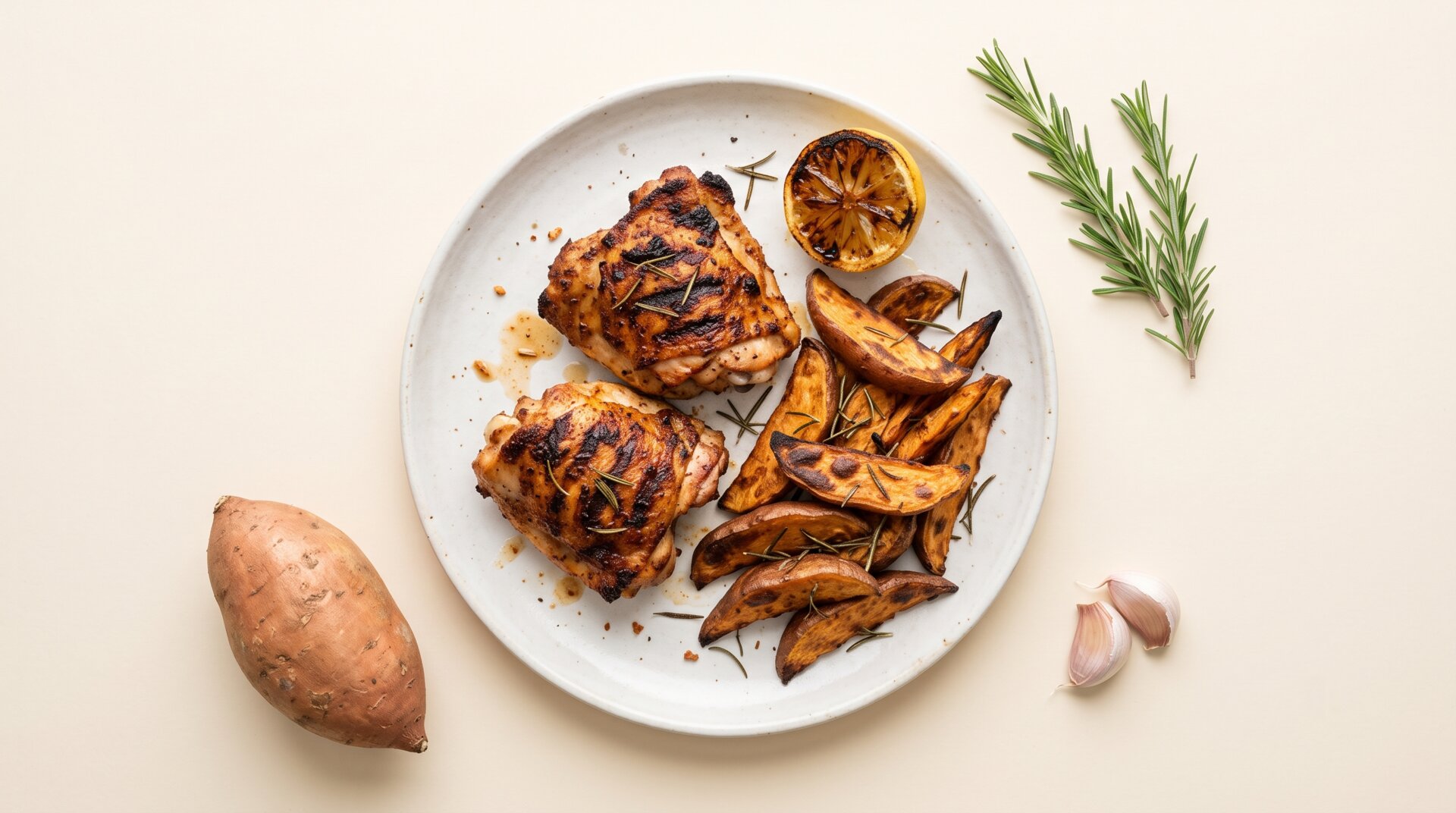 Grilled Chicken with Sweet Potato and Rosemary (Paleo) 40 min Grilled chicken thighs with crispy sweet potato and fresh rosemary 700 kcal 44g protein 2 synergies
 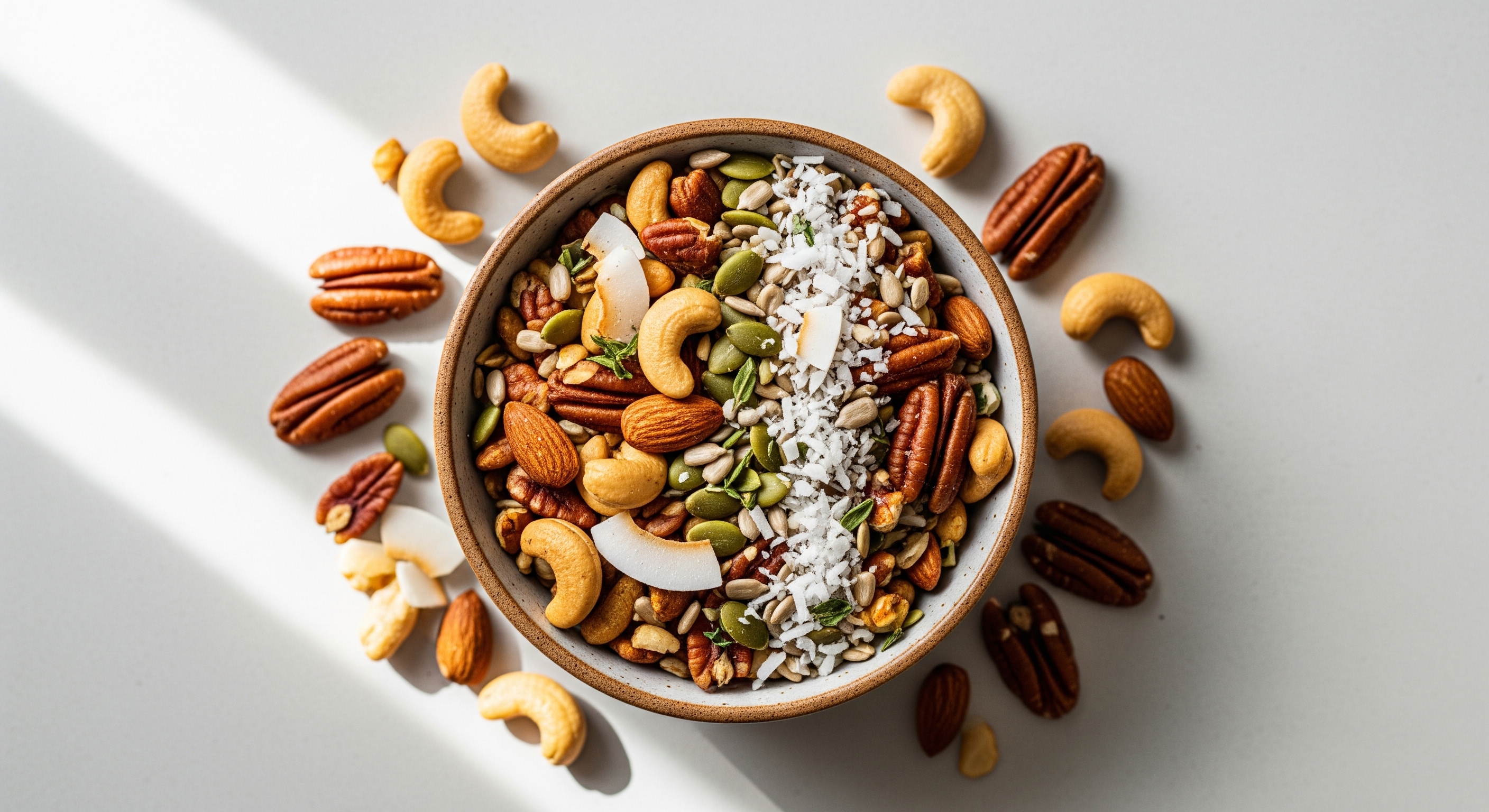 Savory Spiced Nut Mix with Herbs & Coconut 25 min Roasted nuts and seeds with spices, coconut flakes and a hint of cayenne 478 kcal 14g protein 1 synergies
 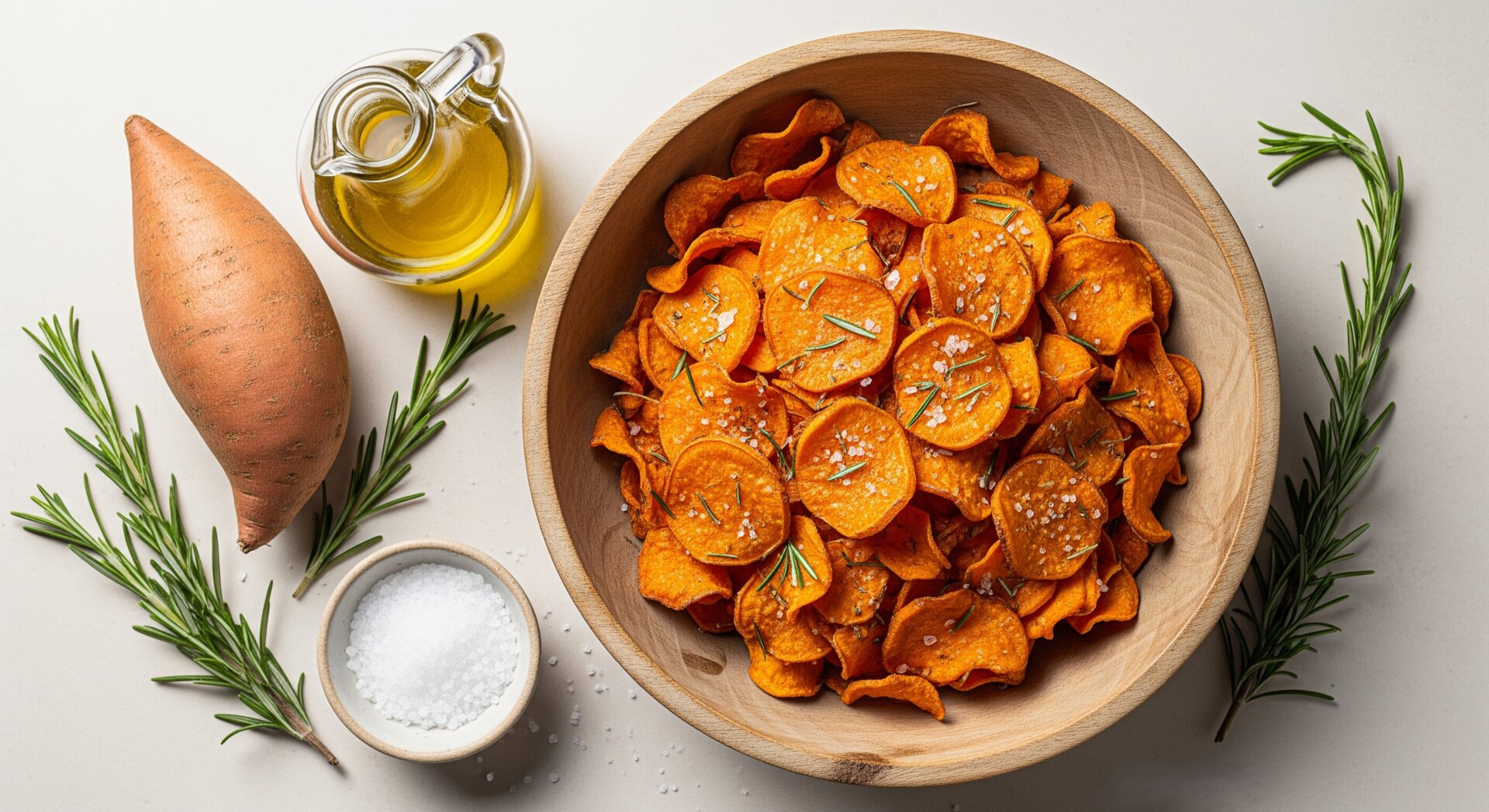 Crispy Sweet Potato Chips 60 min Thin oven chips of sweet potato with rosemary, paprika and sea salt 130 kcal 2g protein 2 synergies
 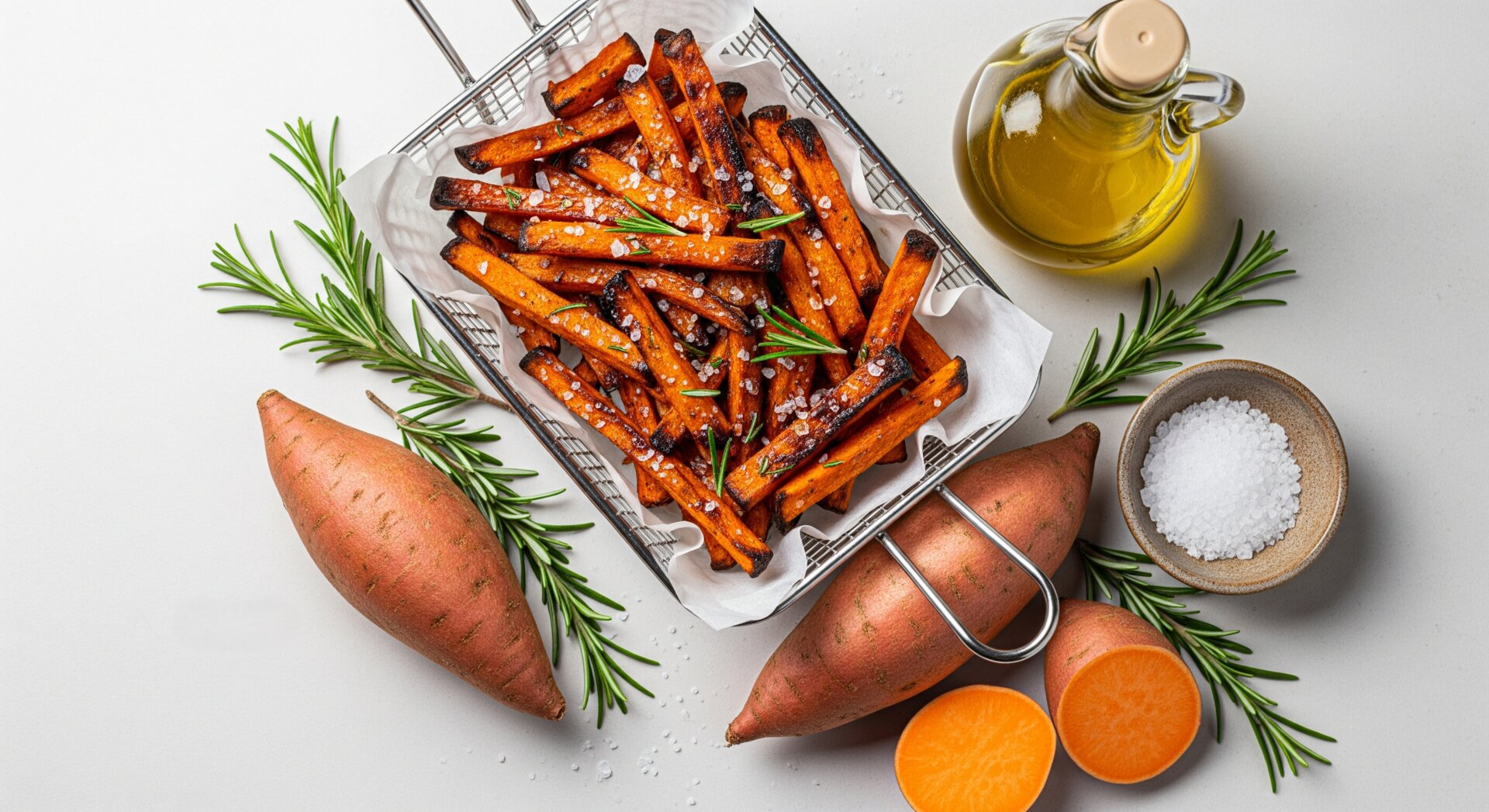 Crispy Sweet Potato Fries 80 min Oven-baked with rosemary and sea salt 165 kcal 2g protein 2 synergies
  In the Kitchen
Storage
Location:Refrigerator
Shelf life:2 weken vers, 6 maanden gedroogd
Store fresh rosemary loosely in damp paper towel in the refrigerator. Dried rosemary keeps best in an airtight jar, cool and dark.
Preparation
Use rosemary early in tray bakes, stews, marinades and roasted potatoes so the firm needles can release their aroma. For marinades, it pairs well with olive oil, lemon, garlic and black pepper. Chop the leaves finely or use whole sprigs that you remove before serving.
Conversions
Substitutes
Smart preparation
1Strip the needles from the woody stem; the stem gives aroma but is usually too tough to eat.
2Chop rosemary very finely; the needles can feel tough if left too large.
Why?
Small pieces distribute the aroma better and give a more pleasant texture in the dish.
3Add rosemary early to tray bakes and stews; it needs time to release its aroma.
Caution / Warnings
Rosemary is very safe, but there are scientific considerations:
Blood thinners Moderate
Large amounts of rosemary or concentrated products may be relevant with medication that affects blood clotting.
Advice:
Culinary amounts are usually appropriate. Avoid supplements or concentrated extracts with anticoagulants without personal advice.
Epilepsy Moderate
Concentrated rosemary essential oil contains potent aromatic compounds and is not the same as normal culinary use.
Advice:
Avoid concentrated essential oil without professional advice. Normal culinary use remains a different, much lower exposure.
Traditional use
Mediterranean
Herb of remembrance in Greek and Roman Antiquity
In Greek and Roman Antiquity, rosemary was linked with remembrance, fidelity and fragrant rituals. The name comes from the Latin 'ros marinus' (dew of the sea), a reference to its Mediterranean habitat.
Summary
Rosemary is a strongly aromatic kitchen herb for potatoes, bread, olive oil and grilled dishes. In marinades it gives deep, resinous flavor; in food chemistry research, rosemary extract is also studied in relation to cooking-reaction compounds formed at high temperatures. Chop the needles finely or add the herb early so its flavor infuses the dish well.