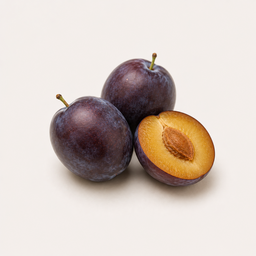
Plums
Versatile stone fruit for sweet and savoury dishes
What is this ingredient?
Plums have two very different culinary sides. Fresh, they are juicy, lightly tart and sweet, and ideal as a summer fruit. Dried, they become prunes: darker, sweeter and more compact, with a concentrated flavour that works well in breakfast bowls, compotes, tagines and stews.
## Fresh and dried
Fresh plums provide plenty of moisture and a gentle sweet-tart taste. Dried plums contain more concentrated carbohydrates, fibre and sorbitol per 100 grams because of the drying process. They are therefore usually used in smaller portions, for example with yogurt, oatmeal or warm compote.
## Research context
Dried plums are studied in nutrition research in relation to bone markers and bone density, especially in postmenopausal women. These studies involve specific amounts and study designs and do not constitute an ingredient-specific authorised health claim. For public communication, it is safest to describe plums as fibre-containing dried fruit with an interesting polyphenol profile.
## In the kitchen
Plums pair well with cinnamon, lavender, honey, walnuts, goat cheese and savoury dishes with lamb or game. Fresh plums add juiciness to salads; dried plums add deep sweetness to compotes and stews.
Nutritional Value & Energy
Per 100g
Plums is low in calories thanks to natural nutrients .
Per 100g
Minerals
Vitamins
Omega-3 fatty acids
More nutrients
B-Vitamins
Trace Minerals
Low GI means blood sugar doesn't spike quickly.
EU-approved nutrition claims
There are currently no EFSA-authorised health claims specific to plums as an ingredient.
What's being researched?
Research on dried plums and bone markers
Review papers discuss cell, animal and clinical studies on dried plums in relation to bone markers and bone density, especially in postmenopausal women. Some studies report favourable findings with daily portions of 50-100 g, but this remains research context and is not an EFSA-authorised ingredient-specific health claim.
Supported by: [1] Wallace (2017) , [2] Arjmandi (2017) , [3] Damani (2022)
Recipes with Plums
Discover delicious recipes featuring plums:
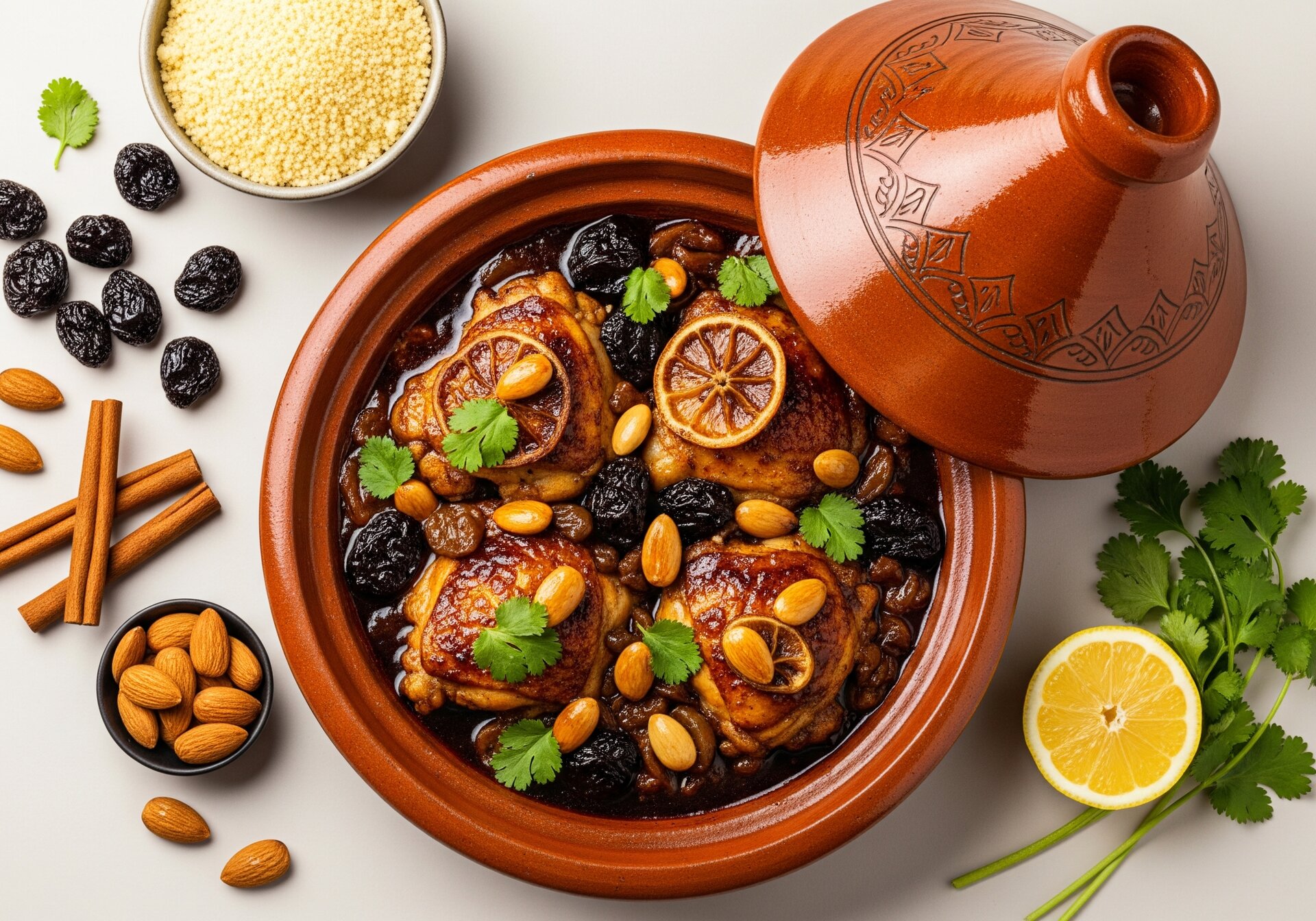 Moroccan Chicken Tagine with Prunes and Almonds 80 min Slow-braised chicken with sweet prunes, warm spices and toasted almonds
  495 kcal
  36g protein 3 synergies
  In the Kitchen
Storage
Location:Refrigerator
Shelf life:3-5 dagen vers in de koelkast, 6-12 maanden gedroogd
Store fresh plums in the fridge; take them out an hour before eating for the best flavour. Store dried plums (prunes) in an airtight container at room temperature. Soak dried plums for 30 minutes in warm water or tea before use in baking.
Preparation
Fresh plums: halve, remove the pit, and serve raw, grill or stew with cinnamon and a splash of honey. Dried plums: soak in warm water or tea (30 min), or cook slowly in a compote. Fantastic in tagines, braised meats, and baking.
Conversions
Substitutes
Caution / Warnings
Plums is very safe, but there are scientific considerations:
Sorbitol intolerance / IBS Mild
Dried plums contain approx. 15 g sorbitol per 100 g. With sorbitol intolerance or IBS this can cause abdominal pain, gas and diarrhoea.
Advice:
Start with 2-3 prunes per day and increase gradually. If symptoms occur: limit to fresh plums (lower sorbitol content).
Summary
Plums are juicy stone fruits eaten fresh or dried as prunes. Fresh plums are light and sweet-tart; dried plums are more compact and contain concentrated fibre, sorbitol and polyphenols. In nutrition research, dried plums are studied in relation to bone markers, especially in postmenopausal women. If sensitive to sorbitol, start with small portions.