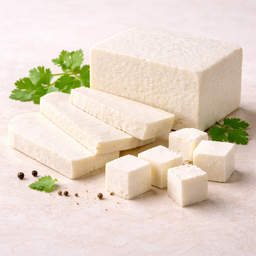
Paneer
the firm Indian fresh cheese
What is this ingredient?
Paneer is a fresh cheese from India, made by heating milk (80-85°C) and coagulating with acid (lemon juice, vinegar, yogurt). Acid lowers pH to ~5.2 → casein proteins denature and clump. Curd is drained, pressed under weight → compact, non-melting texture (heat during production permanently denatures proteins → loses meltability). This makes paneer uniquely suitable for grilling, frying, deep-frying without losing shape. High protein (18-20g/100g), moderate calcium (200-250mg/100g, 20-25% RDA), low lactose (~3% vs 4.8% milk). Mild, fresh flavor absorbs spices perfectly → base of Indian dishes: palak paneer (spinach), paneer tikka (grilled), matar paneer (peas). Popular in vegetarian Indian cuisine as complete protein source. Easy to make at home: boil milk, add lemon juice, press curd.
How does it taste?
Mild, milky and neutral; absorbs herbs and spices beautifully.
Pairs well with:
Pairs well with spinachturmericcumingaram masala and tomato.
Did you know...?
- Paneer is a non-aged cheese made by curdling milk with lemon juice or vinegar.
- In India, paneer is the primary protein source for millions of vegetarians.
Nutritional Value & Energy
Per 100g
Paneer provides energy thanks to natural nutrients .
Per 100g
Minerals
Vitamins
Omega-3 fatty acids
More nutrients
Trace Minerals
What's in a serving?
1 serving
Paneer naturally contains calcium (208 mg per 100 g).
Paneer naturally contains vitamin a (560 mcg per 100 g).
Paneer naturally contains vitamin b12 (0.83 mcg per 100 g).
Paneer naturally contains iodine (40 mcg per 100 g).
% of daily reference intake (DRI)
EU-approved nutrition claims
This ingredient contains nutrients for which EFSA-authorized health claims exist (at nutrient level, not ingredient-specific).
Approved health claims (EU)
Vitamin_b12 EU 432/2012
Vitamin B12 contributes to the normal function of the immune system
Contains 0.83mcg/100g (threshold: ≥0.375mcg/100g)
Vitamin_b12 EU 432/2012
Vitamin B12 contributes to the reduction of tiredness and fatigue
Contains 0.83mcg/100g (threshold: ≥0.375mcg/100g)
Vitamin_b12 EU 432/2012
Vitamin B12 contributes to the normal functioning of the nervous system
Contains 0.83mcg/100g (threshold: ≥0.375mcg/100g)
Calcium EU 432/2012
Calcium is needed for the maintenance of normal bones
Contains 208mg/100g (threshold: ≥120mg/100g)
Vitamin_a EU 432/2012
Vitamin A contributes to the normal function of the immune system
Contains 560mcg/100g (threshold: ≥120mcg/100g)
Vitamin_a EU 432/2012
Vitamin A contributes to the maintenance of normal skin
Contains 560mcg/100g (threshold: ≥120mcg/100g)
Vitamin_a EU 432/2012
Vitamin A contributes to the maintenance of normal mucous membranes
Contains 560mcg/100g (threshold: ≥120mcg/100g)
Vitamin_a EU 432/2012
Vitamin A contributes to the maintenance of normal vision
Contains 560mcg/100g (threshold: ≥120mcg/100g)
Vitamin_a EU 432/2012
Vitamin A contributes to normal iron metabolism
Contains 560mcg/100g (threshold: ≥120mcg/100g)
Vitamin_a EU 432/2012
Vitamin A has a role in the process of cell specialisation
Contains 560mcg/100g (threshold: ≥120mcg/100g)
Vitamin_b12 EU 432/2012
Vitamin B12 contributes to normal energy-yielding metabolism
Contains 0.83mcg/100g (threshold: ≥0.375mcg/100g)
Vitamin_b12 EU 432/2012
Vitamin B12 contributes to normal homocysteine metabolism
Contains 0.83mcg/100g (threshold: ≥0.375mcg/100g)
Vitamin_b12 EU 432/2012
Vitamin B12 contributes to normal psychological function
Contains 0.83mcg/100g (threshold: ≥0.375mcg/100g)
Vitamin_b12 EU 432/2012
Vitamin B12 contributes to normal red blood cell formation
Contains 0.83mcg/100g (threshold: ≥0.375mcg/100g)
Vitamin_b12 EU 432/2012
Vitamin B12 has a role in the process of cell division
Contains 0.83mcg/100g (threshold: ≥0.375mcg/100g)
Calcium EU 432/2012
Calcium is needed for the maintenance of normal teeth
Contains 208mg/100g (threshold: ≥120mg/100g)
Calcium EU 432/2012
Calcium contributes to normal blood clotting
Contains 208mg/100g (threshold: ≥120mg/100g)
Calcium EU 432/2012
Calcium contributes to normal energy-yielding metabolism
Contains 208mg/100g (threshold: ≥120mg/100g)
Calcium EU 432/2012
Calcium contributes to normal muscle function
Contains 208mg/100g (threshold: ≥120mg/100g)
Calcium EU 432/2012
Calcium contributes to normal neurotransmission
Contains 208mg/100g (threshold: ≥120mg/100g)
Calcium EU 432/2012
Calcium contributes to the normal function of digestive enzymes
Contains 208mg/100g (threshold: ≥120mg/100g)
Calcium EU 432/2012
Calcium has a role in the process of cell division and specialisation
Contains 208mg/100g (threshold: ≥120mg/100g)
Iodine EU 432/2012
Iodine contributes to normal cognitive function
Contains 40mcg/100g (threshold: ≥22.5mcg/100g)
Iodine EU 432/2012
Iodine contributes to normal energy-yielding metabolism
Contains 40mcg/100g (threshold: ≥22.5mcg/100g)
Iodine EU 432/2012
Iodine contributes to normal functioning of the nervous system
Contains 40mcg/100g (threshold: ≥22.5mcg/100g)
Iodine EU 432/2012
Iodine contributes to the maintenance of normal skin
Contains 40mcg/100g (threshold: ≥22.5mcg/100g)
Iodine EU 432/2012
Iodine contributes to the normal production of thyroid hormones and normal thyroid function
Contains 40mcg/100g (threshold: ≥22.5mcg/100g)
Iodine EU 432/2012
Iodine contributes to the normal growth of children
Contains 40mcg/100g (threshold: ≥22.5mcg/100g)
Comparison
vsmelk
Paneer contains about 2× more calcium per 100g than milk.
What's being researched?
Paneer as protein source in vegetarian diet
Paneer as an important protein source in vegetarian South Asian dietary patterns is being studied. The high protein and calcium content makes it relevant in studies on nutrient provision in vegetarians.
Supported by: [3] Campbell WW (2010)
Good Combinations (Synergy)
Combine paneer smartly to enhance the effect:
Paneer 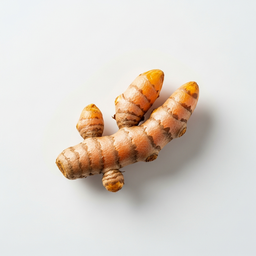 Turmeric
 Ayurvedic trio: paneer fat increases curcumin absorption 7-8x
Technical: Paneer contains 22g fat per 100g that dissolves curcumin from turmeric (2-5% curcuminoids). Curcumin, and ginger's gingerols (5-gingerol 80-300mg/100g fresh), are studied in research in connection with NF-κB, COX-2 and LOX signaling. Paneer's fat increases curcumin absorption 7-8x via micelle formation.
What does this mean for you? Paneer tikka masala with turmeric and fresh ginger is Indian nutritional wisdom. The paneer fat ensures the bioactive compounds from spices are actually absorbed — a functional meal with deep culinary roots.
Paneer 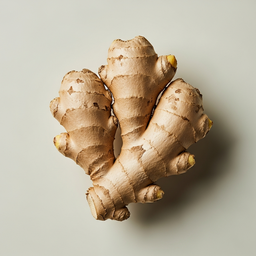 Ginger
 Ayurvedic trio: paneer fat increases curcumin absorption 7-8x
Technical: Paneer contains 22g fat per 100g that dissolves curcumin from turmeric (2-5% curcuminoids). Curcumin, and ginger's gingerols (5-gingerol 80-300mg/100g fresh), are studied in research in connection with NF-κB, COX-2 and LOX signaling. Paneer's fat increases curcumin absorption 7-8x via micelle formation.
What does this mean for you? Paneer tikka masala with turmeric and fresh ginger is Indian nutritional wisdom. The paneer fat ensures the bioactive compounds from spices are actually absorbed — a functional meal with deep culinary roots.
Paneer 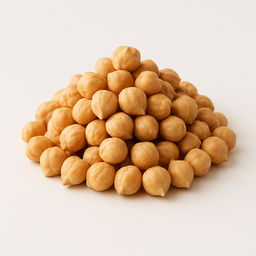 Chickpeas
 Chana paneer: complete proteins + digestive support
Technical: Paneer provides 18g complete protein per 100g (all EAAs). Chickpeas offer 19g protein per 100g but are low in methionine — paneer complements this perfectly. Cumin contains cuminaldehyde, which is studied in research in connection with digestive enzyme activity (amylase, protease, lipase). Together: complementary protein sources + a lower glycemic response through fiber.
What does this mean for you? Paneer tikka with chickpea dhal and cumin is an Indian protein feast. The paneer fills the missing amino acid in chickpeas — together they provide a complete amino acid profile.
Paneer 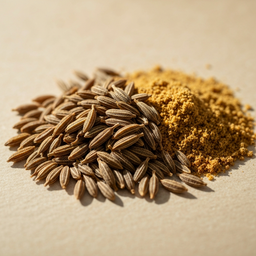 Cumin
Cumin Chana paneer: complete proteins + digestive support
Technical: Paneer provides 18g complete protein per 100g (all EAAs). Chickpeas offer 19g protein per 100g but are low in methionine — paneer complements this perfectly. Cumin contains cuminaldehyde, which is studied in research in connection with digestive enzyme activity (amylase, protease, lipase). Together: complementary protein sources + a lower glycemic response through fiber.
What does this mean for you? Paneer tikka with chickpea dhal and cumin is an Indian protein feast. The paneer fills the missing amino acid in chickpeas — together they provide a complete amino acid profile.
Paneer 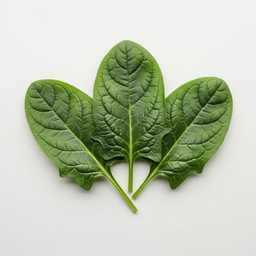 Spinach
 Palak paneer: calcium + iron with vitamin C
Technical: Paneer provides 18g protein and 321mg calcium per 100g. Spinach contains 2.7mg iron and 194μg folate. Tomato adds vitamin C that reduces Fe³⁺ (non-heme iron) to Fe²⁺, increasing iron absorption 3-6x. Paneer's calcium and spinach's iron are absorbed via different transporters, so they don't compete. Classic Indian nutritional wisdom.
What does this mean for you? Palak paneer with tomato is a nutritionally well-composed meal. The paneer gives protein and calcium, the spinach iron and folate, the tomato ensures the iron is properly absorbed.
Paneer 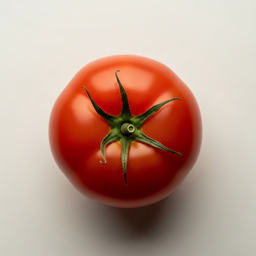 Tomato
 Palak paneer: calcium + iron with vitamin C
Technical: Paneer provides 18g protein and 321mg calcium per 100g. Spinach contains 2.7mg iron and 194μg folate. Tomato adds vitamin C that reduces Fe³⁺ (non-heme iron) to Fe²⁺, increasing iron absorption 3-6x. Paneer's calcium and spinach's iron are absorbed via different transporters, so they don't compete. Classic Indian nutritional wisdom.
What does this mean for you? Palak paneer with tomato is a nutritionally well-composed meal. The paneer gives protein and calcium, the spinach iron and folate, the tomato ensures the iron is properly absorbed.
Recipes with Paneer
Discover delicious recipes featuring paneer:
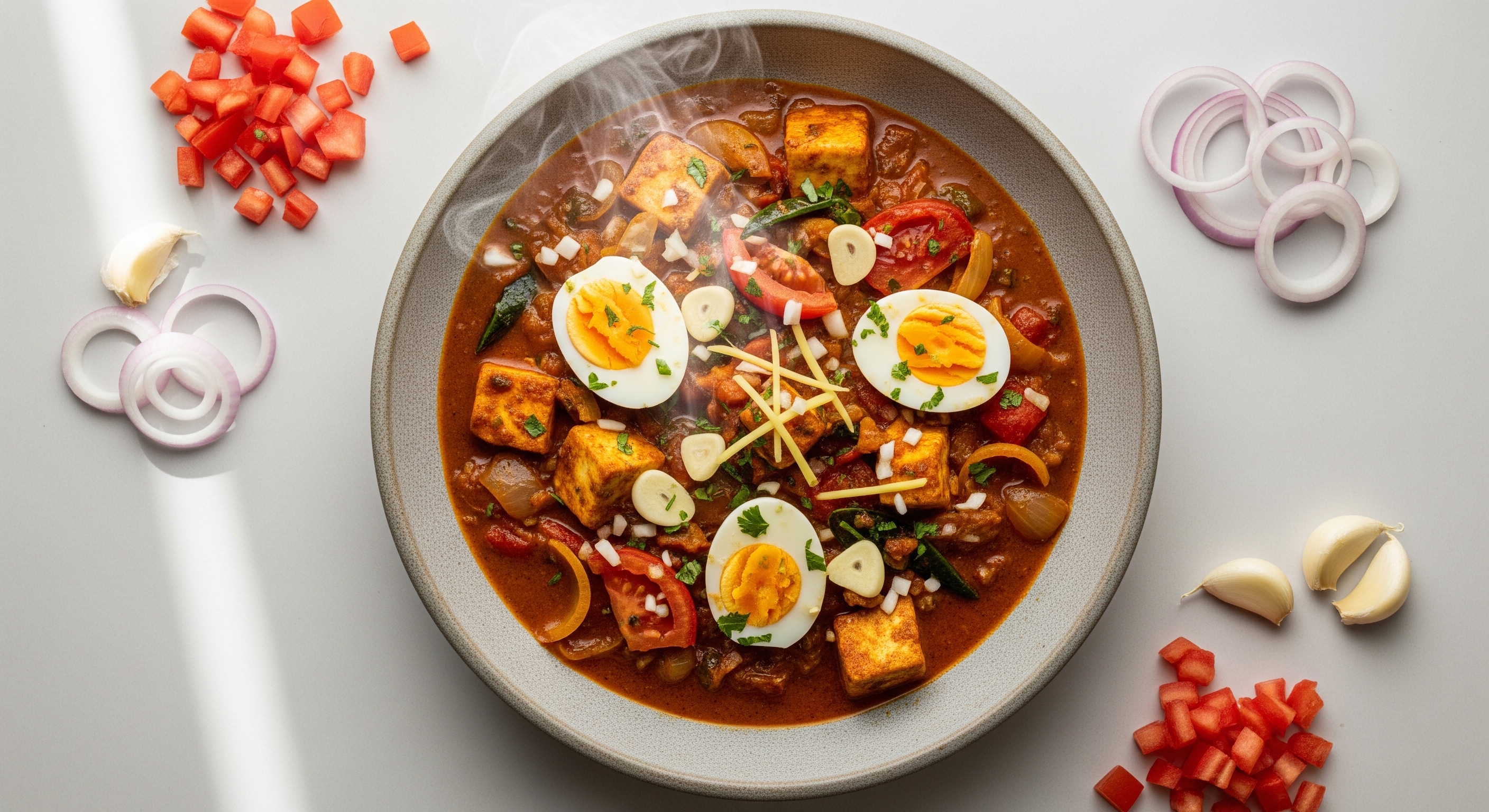 Egg and Paneer Curry with Tomato and Spinach 35 min Creamy, spiced and full of flavour
  510 kcal
  36g protein 2 synergies
 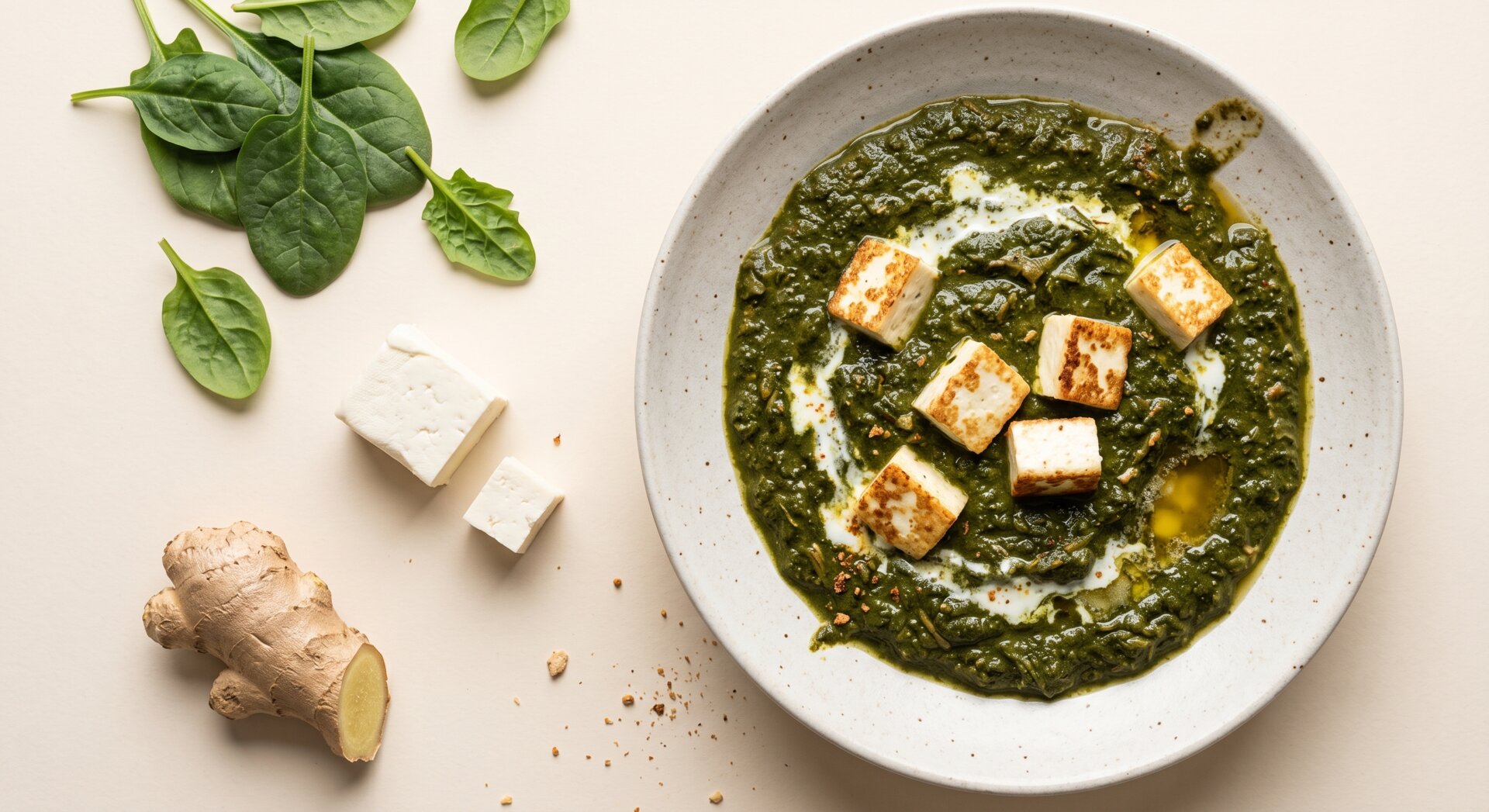 Indian Palak Paneer 45 min Creamy spinach curry with Indian cottage cheese 340 kcal 22g protein 2 synergies
  In the Kitchen
Storage
Location:Refrigerator
Substitutes
Smart preparation
1Cut paneer into cubes and fry golden brown in hot oil.
Why?
A crispy outside provides contrast with the soft inside.
2Soak paneer in warm water for 10 minutes for a softer texture.
3Add fried paneer only at the end to curry.
Why?
Cooking too long makes paneer tough.
Caution / Warnings
Paneer is very safe, but there are scientific considerations:
Dairy allergy Severe
Advice:
IgE-mediated milk protein allergy (casein): completely avoid. Acid coagulation + heating doesn't change protein structure enough to prevent allergy. Symptoms: urticaria, gastrointestinal complaints, angioedema, anaphylaxis (rare). Alternatives: tofu (soy), tempeh. lactose intolerance paneer is often OK (low lactose ~3%, acid fermentation partially breaks down lactose).
High saturated fat content Moderate
Paneer contains 20.8g fat/100g of which 11.8g saturated (59% recommended daily limit of <20g).
Advice:
cardiovascular risk factors: use light paneer (12-15% fat instead of 20%), limit portion to 100-150g, or choose low-fat tofu alternative. Modern studies show however neutral cardiovascular effects of dairy fat moderate intake (dairy matrix effect). Choose quality over quantity.
Traditional use
Ayurveda
Paneer in Indian Tradition
Paneer has been an important protein source in vegetarian Indian cuisine for centuries and is considered soothing and nourishing in Ayurveda.
Summary
Paneer is the ultimate complete protein source for vegetarians (18.3g/100g with all essential amino acids). Unique non-melting property makes it perfect for grilling, frying, deep-frying — base of Indian dishes: palak paneer, paneer tikka, matar paneer. Also rich in calcium (21% RDA), phosphorus, vitamin B12 (crucial for vegetarians). Low lactose (~3%) and mild flavor absorbs spices perfectly. Easy to make at home: boil milk, add lemon juice, press curd. Use 100-150g per meal with rice/roti and vegetables for complete protein combination. Perfect for muscle building, bone health, and Indian/Pakistani cuisine. Marinate for extra flavor: yogurt + turmeric + garam masala.