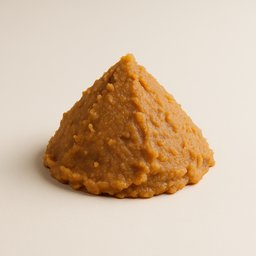
Miso
Japanese fermented soybean paste with deep umami
What is this ingredient?
Miso is the result of a complex fermentation craft practiced in Japan for more than 1,300 years. Fermentation with Aspergillus oryzae (koji) transforms soybeans, and often rice or barley, into a savory paste with strong umami, gentle sweetness and a recognizably salty depth. During this process, amino acids, organic acids, aromas and enzymes develop and contribute to its characteristic flavor and texture.
What makes miso special is its wide variation in color, maturation and intensity. Light shiro miso is fermented for a shorter time, making it milder and slightly sweet. Red aka miso matures longer and has a more robust, saltier flavor. Dark hatcho miso is traditionally fermented for a long time and has a very deep, earthy umami. Because of this range, miso works in classic miso soup as well as in dressings, marinades, glazes and sauces.
Research on miso focuses on fermentation products such as melanoidins, isoflavones, peptides and live or derived fermentation cultures. These compounds are mainly studied in relation to food quality, antioxidant capacity, digestion and the broader dietary pattern in which miso is eaten. Because miso contains a lot of sodium (3728 mg per 100 g), it is best used as a concentrated seasoning in small amounts.
Culinarily, miso is sensitive to prolonged boiling: its fragrant aromas and live fermentation cultures are best preserved when miso is added at the end, after the pot is taken off the heat. Dissolve the paste first in a little warm broth or sauce, then stir it back into the dish. This gives a smooth, full umami flavor without lumps.
How does it taste?
Rich umami with a salty, fermented depth and a mildly sweet note.
Pairs well with:
Pairs well with tofuseaweedsesame oilginger and green onion.
Varieties
Shiro miso (white)
Mild, gently sweet and short-fermented; ideal for light soups, dressings and gentle marinades.
Aka miso (red)
More robust and longer-fermented; adds depth to stews, glazes and savory sauces.
Hatcho miso
Very dark and long-fermented; intense, earthy and suited to strong broths and sauces.
Did you know...?
- Miso can ferment from a few months to three years; the longer the maturation, the darker and stronger the flavor usually becomes.
- In Japan, miso soup is a classic part of breakfast, often with rice, vegetables, tofu or seaweed.
Nutritional Value & Energy
Per 100g
Miso provides energy thanks to natural nutrients , buffered by fiber.
Per 100g
Minerals
Vitamins
Omega-3 fatty acids
More nutrients
B-Vitamins
Trace Minerals
What's in a serving?
1 serving
Miso naturally contains iron (2.49 mg per 100 g).
Miso naturally contains zinc (2.56 mg per 100 g).
Miso naturally contains vitamin K (29 mcg per 100 g).
% of daily reference intake (DRI)
EU-approved nutrition claims
This ingredient contains nutrients for which EFSA-authorized health claims exist at nutrient level, not specifically for miso as an ingredient.
Approved health claims (EU)
Zinc EU 432/2012
Zinc contributes to the normal function of the immune system
Contains 2.56mg/100g (threshold: ≥1.5mg/100g)
Zinc EU 432/2012
Zinc contributes to the maintenance of normal skin
Contains 2.56mg/100g (threshold: ≥1.5mg/100g)
Iron EU 432/2012
Iron contributes to normal energy-yielding metabolism
Contains 2.49mg/100g (threshold: ≥2.1mg/100g)
Iron EU 432/2012
Iron contributes to the reduction of tiredness and fatigue
Contains 2.49mg/100g (threshold: ≥2.1mg/100g)
Vitamin_k EU 432/2012
Vitamin K contributes to normal blood clotting
Contains 29mcg/100g (threshold: ≥11.25mcg/100g)
Vitamin_k EU 432/2012
Vitamin K contributes to the maintenance of normal bones
Contains 29mcg/100g (threshold: ≥11.25mcg/100g)
Iron EU 432/2012
Iron contributes to normal cognitive function
Contains 2.49mg/100g (threshold: ≥2.1mg/100g)
Iron EU 432/2012
Iron contributes to normal formation of red blood cells and haemoglobin
Contains 2.49mg/100g (threshold: ≥2.1mg/100g)
Iron EU 432/2012
Iron contributes to normal oxygen transport in the body
Contains 2.49mg/100g (threshold: ≥2.1mg/100g)
Iron EU 432/2012
Iron contributes to the normal function of the immune system
Contains 2.49mg/100g (threshold: ≥2.1mg/100g)
Iron EU 432/2012
Iron has a role in the process of cell division
Contains 2.49mg/100g (threshold: ≥2.1mg/100g)
Zinc EU 432/2012
Zinc contributes to normal acid-base metabolism
Contains 2.56mg/100g (threshold: ≥1.5mg/100g)
Zinc EU 432/2012
Zinc contributes to normal carbohydrate metabolism
Contains 2.56mg/100g (threshold: ≥1.5mg/100g)
Zinc EU 432/2012
Zinc contributes to normal cognitive function
Contains 2.56mg/100g (threshold: ≥1.5mg/100g)
Zinc EU 432/2012
Zinc contributes to normal DNA synthesis
Contains 2.56mg/100g (threshold: ≥1.5mg/100g)
Zinc EU 432/2012
Zinc contributes to normal fertility and reproduction
Contains 2.56mg/100g (threshold: ≥1.5mg/100g)
Zinc EU 432/2012
Zinc contributes to normal macronutrient metabolism
Contains 2.56mg/100g (threshold: ≥1.5mg/100g)
Zinc EU 432/2012
Zinc contributes to normal metabolism of fatty acids
Contains 2.56mg/100g (threshold: ≥1.5mg/100g)
Zinc EU 432/2012
Zinc contributes to normal metabolism of vitamin A
Contains 2.56mg/100g (threshold: ≥1.5mg/100g)
Zinc EU 432/2012
Zinc contributes to normal protein synthesis
Contains 2.56mg/100g (threshold: ≥1.5mg/100g)
Zinc EU 432/2012
Zinc contributes to the maintenance of normal bones
Contains 2.56mg/100g (threshold: ≥1.5mg/100g)
Zinc EU 432/2012
Zinc contributes to the maintenance of normal hair
Contains 2.56mg/100g (threshold: ≥1.5mg/100g)
Zinc EU 432/2012
Zinc contributes to the maintenance of normal nails
Contains 2.56mg/100g (threshold: ≥1.5mg/100g)
Zinc EU 432/2012
Zinc contributes to the maintenance of normal testosterone levels in the blood
Contains 2.56mg/100g (threshold: ≥1.5mg/100g)
Zinc EU 432/2012
Zinc contributes to the maintenance of normal vision
Contains 2.56mg/100g (threshold: ≥1.5mg/100g)
Zinc EU 432/2012
Zinc contributes to the protection of cells from oxidative stress
Contains 2.56mg/100g (threshold: ≥1.5mg/100g)
Zinc EU 432/2012
Zinc has a role in the process of cell division
Contains 2.56mg/100g (threshold: ≥1.5mg/100g)
What's being researched?
Miso and fermentation cultures
Miso is studied as a fermented soy product with koji enzymes, peptides and fermentation cultures. Research looks at food quality, digestion and microbial composition, among other topics.
Supported by: [3] Matsuo M (2004)
Miso, sodium and dietary patterns
Because of its high sodium content, miso is studied within broader Japanese dietary patterns. Animal and observational studies examine how fermented soy products differ from isolated salt.
Supported by: [4] Watanabe (2006)
Good Combinations (Synergy)
Combine miso smartly to enhance the effect:
Miso 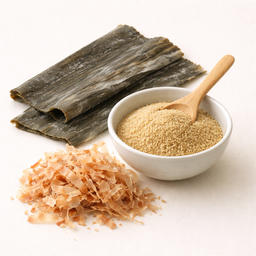 Dashi
Dashi Umami stacking: glutamate + inosinate = 8x flavor
Technical: Dashi (kombu + bonito) combines two umami sources: glutamate from kombu and inosinate from bonito. Miso/soy sauce adds a third source: more glutamate from soy fermentation. The synergistic effect of glutamate + inosinate amplifies flavor perception up to 8x — the scientific basis of Japanese cuisine.
What does this mean for you? Dissolve miso in dashi for the most flavorful soup. The combination activates your taste buds 8x stronger than each ingredient alone — this is Japan's umami secret.
Miso 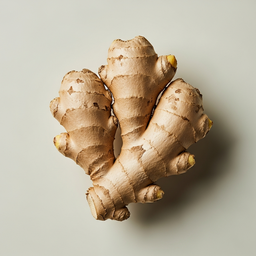 Ginger
 Japanese soup base: enzymes + gingerols
Technical: Miso contains Aspergillus oryzae enzymes (amylase, protease) that support digestion, plus isoflavones. Ginger contains gingerols that speed up gastric emptying. Together they optimize digestion through complementary mechanisms: miso enzymes break down food components, gingerols promote gut transit.
What does this mean for you? Add grated ginger to your miso soup just before serving (don't boil with miso — this kills the enzymes). This is an authentic Japanese variation.
Miso 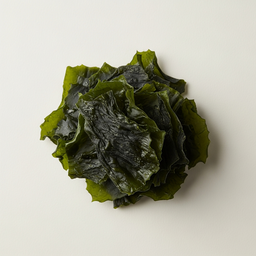 Seaweed
 Classic Japanese combination: enzymes + minerals
Technical: Miso contains Aspergillus oryzae enzymes (amylase, protease, lipase) that help break down complex polysaccharides in seaweed (alginate, fucoidan) for better absorption. Seaweed provides iodine, calcium and unique antioxidants. Miso enzymes are killed at >60°C, so miso must be added after cooking. Good to know: iodine contributes to the normal production of thyroid hormones and normal thyroid function (EFSA-approved).
What does this mean for you? Make miso soup with wakame: cook the wakame first, let it cool to ~60°C, then stir in the miso. This preserves the live enzymes that make seaweed nutrients more absorbable.
Recipes with Miso
Discover delicious recipes featuring miso:
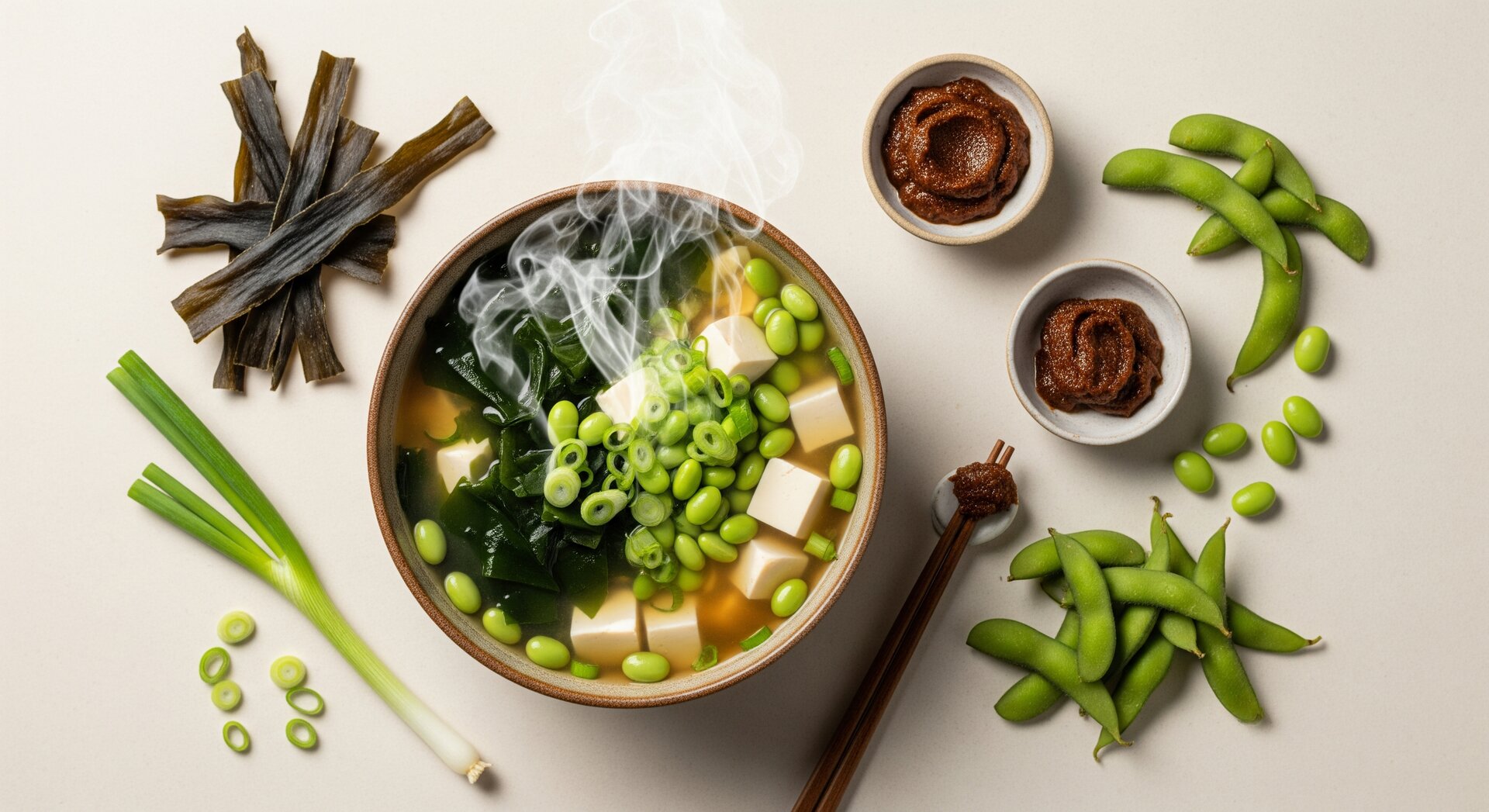 Japanese Edamame Miso Soup 20 min Light miso soup with edamame, tofu, wakame and ginger
  245 kcal
  18g protein 2 synergies
 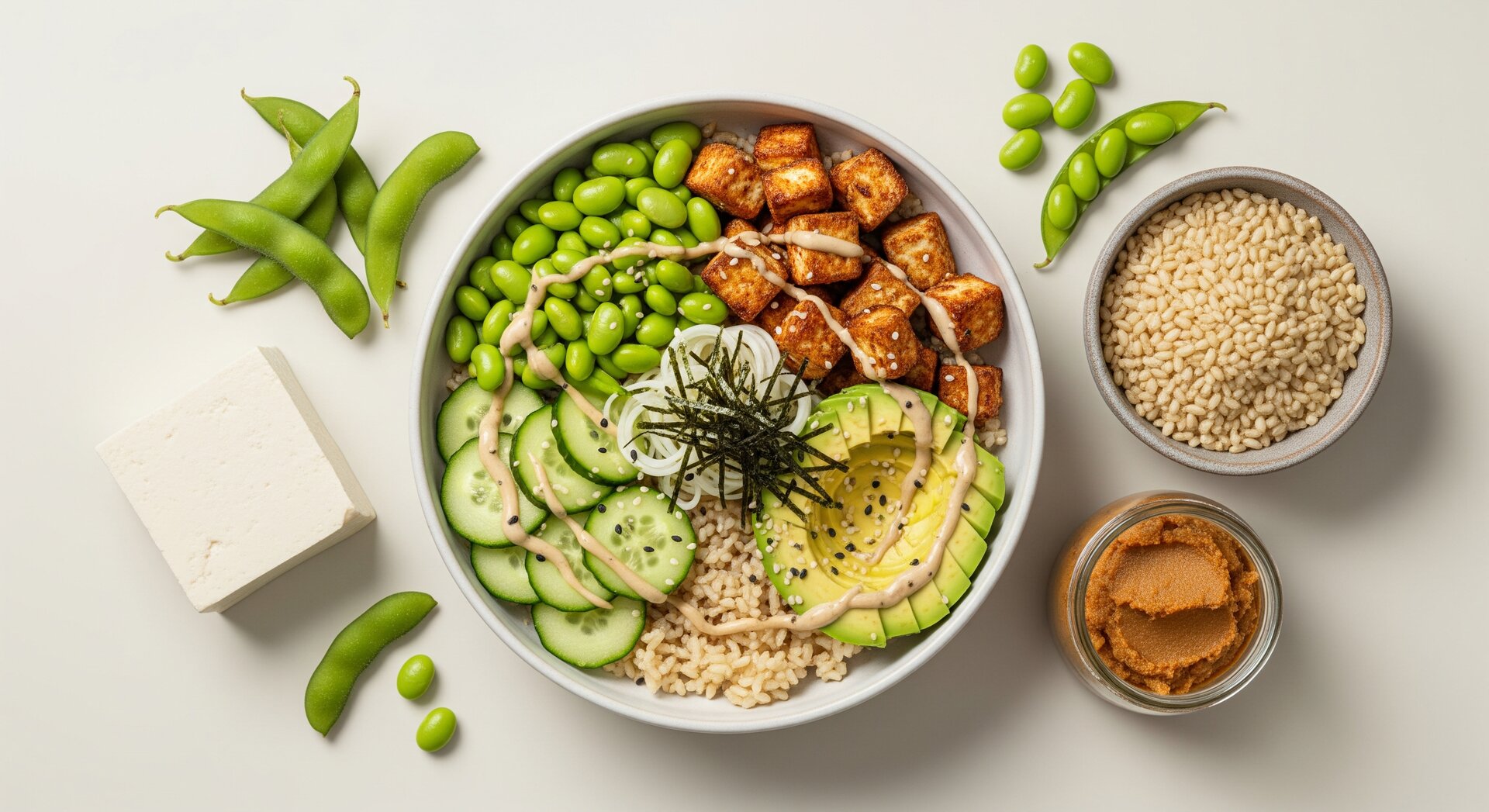 Japanese Edamame-Tofu Bowl 50 min Crispy tofu with edamame and miso-tahini dressing 620 kcal 32g protein 2 synergies
 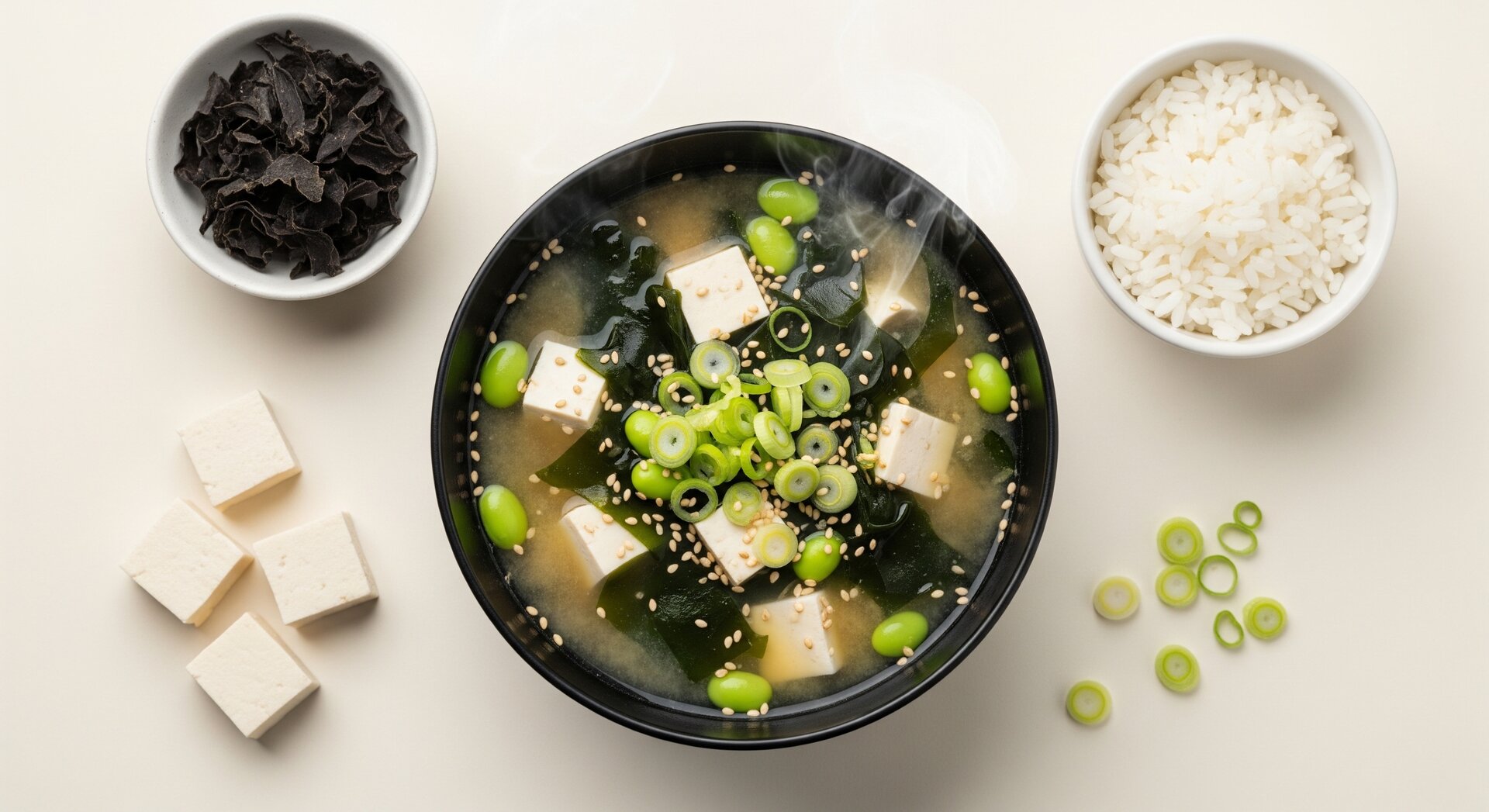 Japanese Miso Soup with Tofu and Seaweed 30 min Traditional Japanese breakfast with fermented soy and seaweed 310 kcal 19g protein 2 synergies
 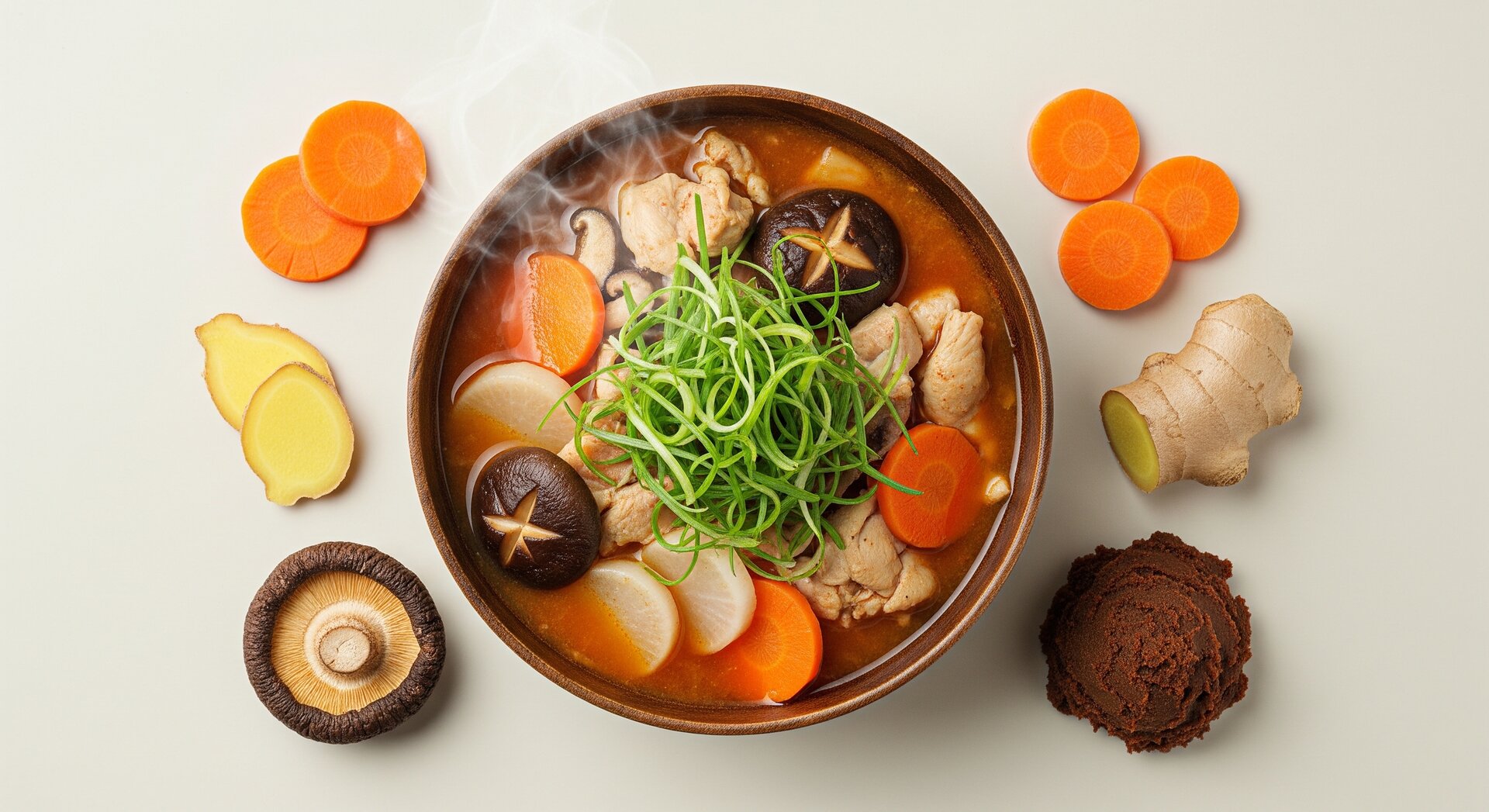 Japanese Tonjiru with Chicken and Root Vegetables 40 min Savoury miso soup with chicken, root vegetables, shiitake and ginger 235 kcal 24g protein 1 synergies
 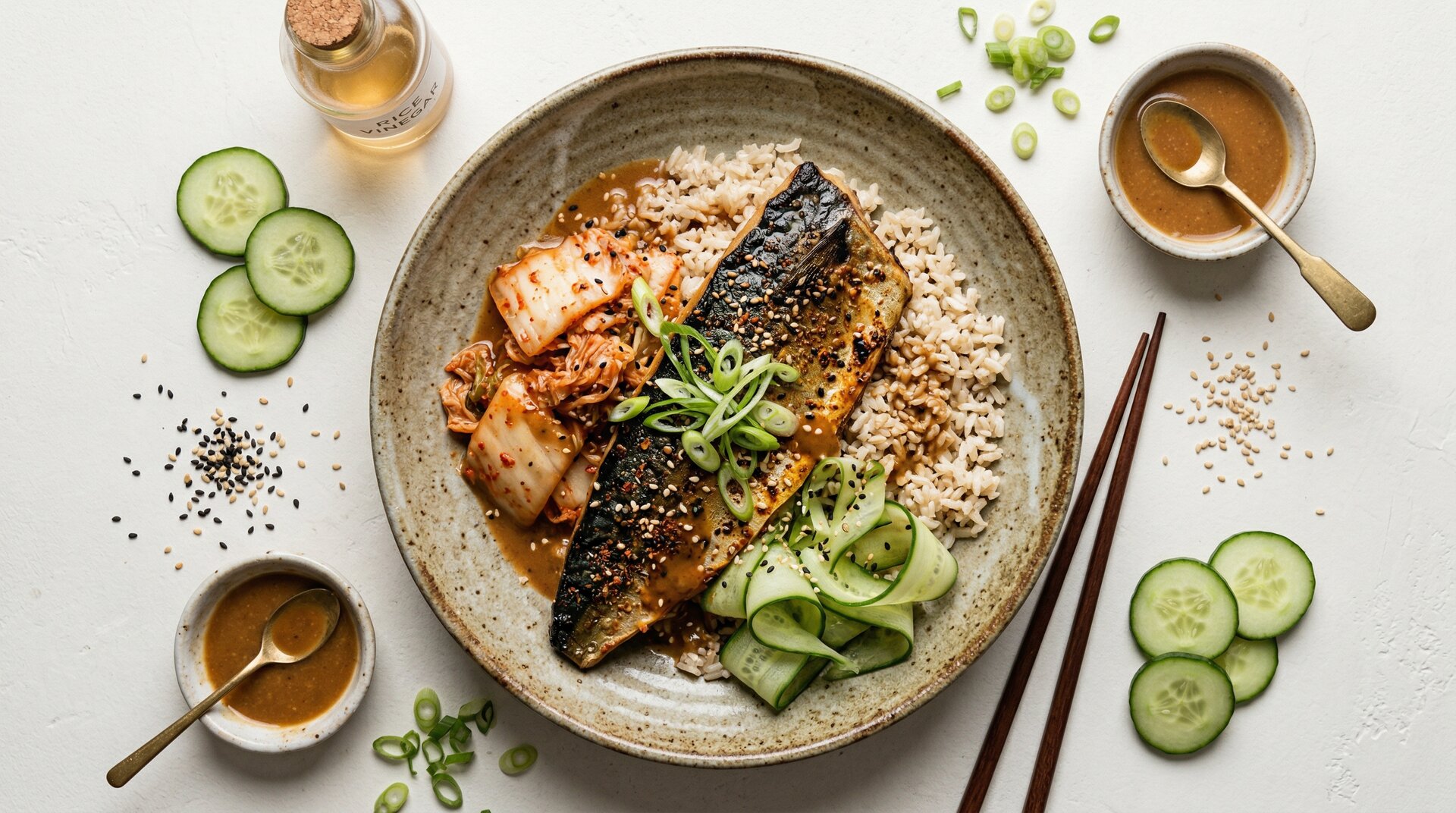 Mackerel with Kimchi and Miso Dressing 40 min Crispy pan-seared mackerel with brown rice, kimchi and creamy miso-sesame dressing 620 kcal 31g protein 2 synergies
 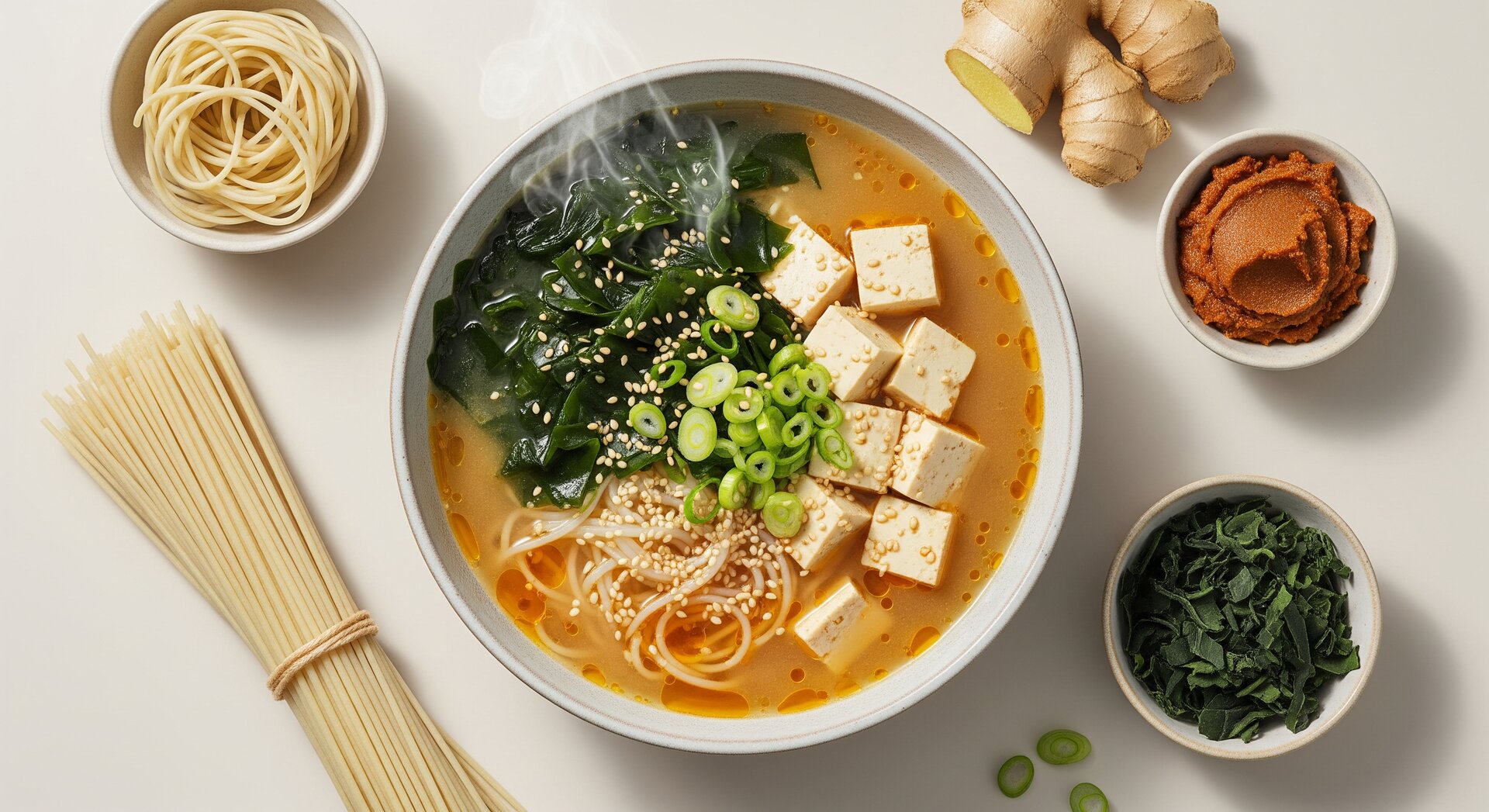 Miso Noodle Soup with Tofu and Wakame 25 min Light Japanese noodle soup with miso, silken tofu and sesame 320 kcal 14g protein 2 synergies
  In the Kitchen
Storage
Location:Refrigerator
Shelf life:1+ jaar in koelkast (ongeopend), 3-6 maanden na openen
Press excess air out of the package and seal well after each use. Keep miso cool, dark and clean in the refrigerator to maintain aroma and texture for longer.
Preparation
Do not boil miso for a long time. Loosen the paste first in a little warm liquid and add it at the end to soup, sauce, dressing or marinade. This spreads the flavor evenly and keeps the delicate aromas more present.
Conversions
Substitutes
Smart preparation
1Dissolve miso with a strainer or whisk; do not stir it directly into boiling water.
Why?
This prevents lumps and keeps the delicate aromas more present.
2Use light miso for gentle dressings and dark miso for strong broths or glazes.
3Add miso only after soup or sauce has been taken off the heat.
Caution / Warnings
Miso is very safe, but there are scientific considerations:
High blood pressure or sodium restriction Severe
Miso contains a lot of sodium (3728 mg per 100 g). For people who need to restrict sodium, even a small serving can contribute substantially to daily salt intake.
Advice:
Use sparingly, for example 1 teaspoon as a seasoning, and taste before adding extra salt. Choose a reduced-sodium version if available and follow personal advice from your doctor or dietitian.
Soy allergy Severe
Miso is usually made from fermented soybeans and may contain soy proteins that can trigger an allergic reaction in sensitive people.
Advice:
Avoid miso if you have a known soy allergy. Also check labels, because some varieties contain rice or barley alongside soy, but usually are not soy-free.
Thyroid medication or iodine-sensitive situation Mild
Miso contains soy isoflavones and, depending on the recipe and combination with seaweed, may be part of a meal with variable iodine intake.
Advice:
With thyroid medication or strict iodine guidance: keep portions normal and discuss regular consumption with your doctor or dietitian.
Traditional use
Other
Miso in Japanese cuisine
Miso has been a basic ingredient in Japanese cuisine for more than 1,300 years. It is used in soup, marinades, pickles, sauces and simple everyday meals.
Traditional Chinese Medicine
Miso’s Chinese origin
The precursor to miso, jiang, was prepared in ancient China and later developed further in Japan through Buddhist monks and trade routes.
Summary
Miso is a Japanese fermented soybean paste with deep umami, koji-derived enzymes and a salty, savory character. Add miso only after soup or sauce is taken off the heat, so aroma and fermentation cultures are better preserved. Dark miso (hatcho, aka) tastes stronger; light miso (shiro) is milder and sweeter. Watch the high sodium content.