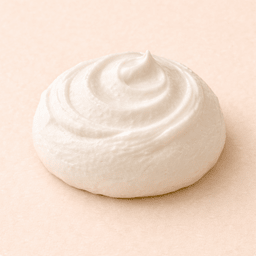
Labneh
Middle Eastern strained yogurt cheese
What is this ingredient?
## Levantine Tradition and Modern Rediscovery
Labneh (also spelled labaneh or labné) is a traditional dairy product from the Levant region, with a culinary history spanning over a thousand years. It is produced by straining full-fat yogurt for 12-24 hours in cheesecloth, removing whey (watery fraction) and leaving a concentrated yogurt cheese with approximately 23-25% dry matter (versus 12-15% in regular yogurt). This traditional preservation process made it possible to keep yogurt longer in the pre-refrigeration era (Tamime et al., 2012).
## Superior Protein Profile and Probiotic Density
The straining process concentrates not only proteins (8-12g per 100g versus 3-5g in yogurt), but also probiotic bacteria such as Streptococcus thermophilus and Lactobacillus bulgaricus. Research shows that labneh can contain CFU counts (Colony Forming Units) of 10^8-10^9 per gram, with bacteria remaining viable for up to 28 days under refrigeration (Nsabimana et al., 2019). This high probiotic density, combined with rich calcium content (180mg/100g), makes labneh a functional food with proven properties.
## Modern Variations and Fortification
While traditional labneh is made from cow, goat or sheep milk, modern producers are experimenting with fortification and alternative starter cultures. Studies have shown that addition of probiotic strains like Enterococcus faecalis can improve sensory properties and shelf-life of labneh without compromising creamy texture (El-Gendy et al., 2019). Plant-based varieties made from cashew milk show promising antioxidant activity, though protein content remains lower than dairy labneh.
## Culinary Versatility and properties
In the Middle East, labneh is traditionally eaten at breakfast, served with olive oil, za'atar and warm pita. The creamy, slightly sour taste also makes it suitable as a spread, dip base or dairy substitute in recipes requiring cream cheese. Health benefit: Labneh offers all probiotic benefits of yogurt in a form with higher protein and lower lactose content (much lactose disappears with the whey), making it more suitable for people with mild lactose intolerance.
## Quality Criteria and Selection
When choosing labneh, look for products without thickeners (authentic labneh only needs yogurt and salt) and with clearly listed probiotic strains. Fat content ranges from full-fat (10-12% fat) to light varieties (2-4% fat), with full-fat versions tasting richer but also containing more saturated fat. Organic, grass-fed varieties have a more favorable omega-3/omega-6 ratio.
How does it taste?
Thick, creamy and distinctly tangy with a velvety smooth texture.
Pairs well with:
Pairs well with olive oilza'atarpomegranategarlic and mint.
Did you know...?
- Labneh is made by straining yogurt for 24-48 hours until it reaches cream cheese consistency.
- In the Middle East, labneh is often rolled into balls and preserved in olive oil.
Nutritional Value & Energy
Per 100g
Labneh provides energy thanks to natural nutrients .
Per 100g
Minerals
Vitamins
More nutrients
Trace Minerals
What's in a serving?
1 serving
Labneh naturally contains calcium (180 mg per 100 g).
Labneh naturally contains vitamin b12 (0.5 mcg per 100 g).
Labneh naturally contains phosphorus (140 mg per 100 g).
% of daily reference intake (DRI)
EU-approved nutrition claims
This ingredient contains nutrients for which EFSA-authorized health claims exist (at nutrient level, not ingredient-specific).
Approved health claims (EU)
Vitamin_b12 EU 432/2012
Vitamin B12 contributes to the normal function of the immune system
Contains 0.5mcg/100g (threshold: ≥0.375mcg/100g)
Vitamin_b12 EU 432/2012
Vitamin B12 contributes to the reduction of tiredness and fatigue
Contains 0.5mcg/100g (threshold: ≥0.375mcg/100g)
Vitamin_b12 EU 432/2012
Vitamin B12 contributes to the normal functioning of the nervous system
Contains 0.5mcg/100g (threshold: ≥0.375mcg/100g)
Calcium EU 432/2012
Calcium is needed for the maintenance of normal bones
Contains 180mg/100g (threshold: ≥120mg/100g)
Vitamin_b12 EU 432/2012
Vitamin B12 contributes to normal energy-yielding metabolism
Contains 0.5mcg/100g (threshold: ≥0.375mcg/100g)
Vitamin_b12 EU 432/2012
Vitamin B12 contributes to normal homocysteine metabolism
Contains 0.5mcg/100g (threshold: ≥0.375mcg/100g)
Vitamin_b12 EU 432/2012
Vitamin B12 contributes to normal psychological function
Contains 0.5mcg/100g (threshold: ≥0.375mcg/100g)
Vitamin_b12 EU 432/2012
Vitamin B12 contributes to normal red blood cell formation
Contains 0.5mcg/100g (threshold: ≥0.375mcg/100g)
Vitamin_b12 EU 432/2012
Vitamin B12 has a role in the process of cell division
Contains 0.5mcg/100g (threshold: ≥0.375mcg/100g)
Calcium EU 432/2012
Calcium is needed for the maintenance of normal teeth
Contains 180mg/100g (threshold: ≥120mg/100g)
Calcium EU 432/2012
Calcium contributes to normal blood clotting
Contains 180mg/100g (threshold: ≥120mg/100g)
Calcium EU 432/2012
Calcium contributes to normal energy-yielding metabolism
Contains 180mg/100g (threshold: ≥120mg/100g)
Calcium EU 432/2012
Calcium contributes to normal muscle function
Contains 180mg/100g (threshold: ≥120mg/100g)
Calcium EU 432/2012
Calcium contributes to normal neurotransmission
Contains 180mg/100g (threshold: ≥120mg/100g)
Calcium EU 432/2012
Calcium contributes to the normal function of digestive enzymes
Contains 180mg/100g (threshold: ≥120mg/100g)
Calcium EU 432/2012
Calcium has a role in the process of cell division and specialisation
Contains 180mg/100g (threshold: ≥120mg/100g)
Phosphorus EU 432/2012
Phosphorus contributes to normal energy-yielding metabolism
Contains 140mg/100g (threshold: ≥105mg/100g)
Phosphorus EU 432/2012
Phosphorus contributes to the normal function of cell membranes
Contains 140mg/100g (threshold: ≥105mg/100g)
Phosphorus EU 432/2012
Phosphorus contributes to the maintenance of normal bones
Contains 140mg/100g (threshold: ≥105mg/100g)
Phosphorus EU 432/2012
Phosphorus contributes to the maintenance of normal teeth
Contains 140mg/100g (threshold: ≥105mg/100g)
What's being researched?
Labneh and fermented dairy
Labneh as a concentrated fermented dairy product is being studied for probiotic properties. The draining process results in a high concentration of live cultures per gram.
Supported by: [1] El-Gendy (2019) , [3] Nsabimana (2019)
Good Combinations (Synergy)
Combine labneh smartly to enhance the effect:
Labneh 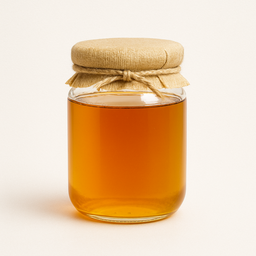 Honey
Honey Synbiotic effect: probiotics + prebiotics support gut flora
Probiotics from yogurt + prebiotics from honey = synbiotic effect (PMID: 27865495)
Technical: Labneh contains concentrated probiotics (10⁸-10⁹ CFU/g) through the straining process. Honey provides prebiotic oligosaccharides feeding these bacteria. Together they form a synbiotic combination — probiotics are fed by prebiotic fibers, extending their survival in the gut.
What does this mean for you? Labneh with honey is a synbiotic dessert. The probiotics from labneh are fed by the prebiotics from honey — a Levantine tradition with scientific foundation.
Labneh  Cucumber
 Synbiotic: cucumber prebiotic fibers + labneh concentrated probiotics
Strained yogurt (labneh) contains 2-3x higher probiotic concentrations than regular yogurt
Technical: Labneh contains concentrated probiotics (10⁸-10⁹ CFU/g) through the straining process — 2-3x higher than regular yogurt. Cucumber peel contains indigestible cellulose and hemicellulose serving as prebiotic substrate. The high water content of cucumber (96%) also creates a favorable hydration environment for bacterial fermentation in the colon.
What does this mean for you? Labneh with cucumber (traditional Middle Eastern breakfast) is a synbiotic combination. The fibers from cucumber peel feed the concentrated probiotics from labneh — an ancient tradition with scientific logic.
Labneh 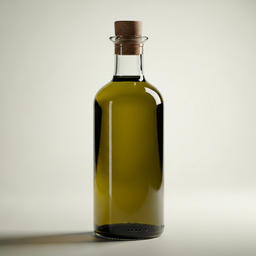 Olive Oil
 Bioactive peptides (VPP, IPP) + oleuropein influence ACE enzymes via complementary pathways
Fermentation peptides and oleuropein inhibit ACE enzyme via complementary mechanisms
Technical: Labneh fermentation produces bioactive peptides (VPP, IPP) that influence ACE enzymes. Oleuropein from olive oil modulates the same enzymes but via different binding sites. Together they reach the ACE system via complementary pathways — a traditional Levantine combination with biochemical logic.
What does this mean for you? Labneh with olive oil (traditional Levantine breakfast) is a classic combination. Both ingredients contain bioactive compounds working via complementary pathways — centuries-old culinary wisdom.
Recipes with Labneh
Discover delicious recipes featuring labneh:
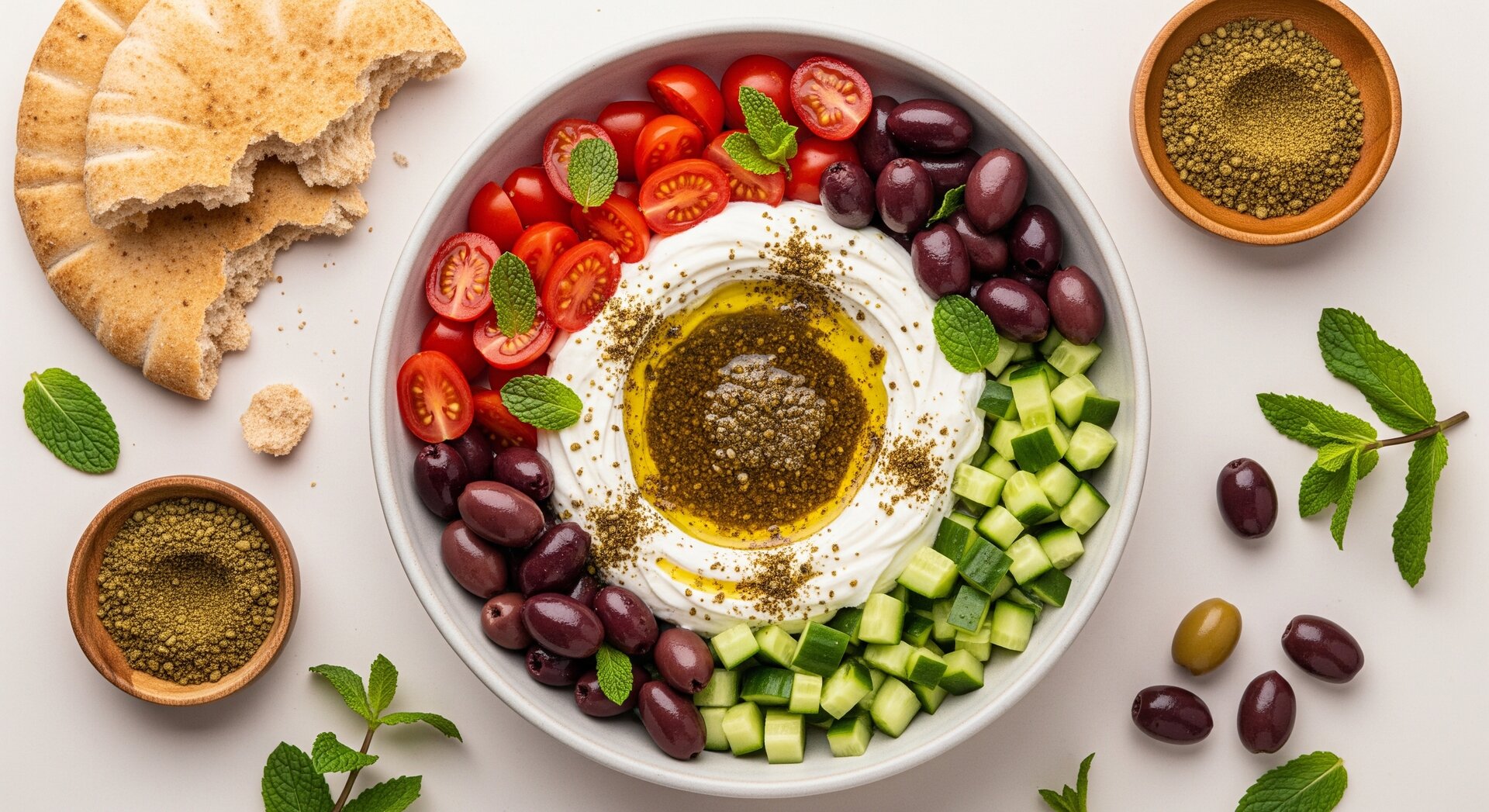 Labneh Bowl with Za'atar, Olives and Vegetables 5 min Creamy Levantine yogurt cheese with Middle Eastern herbs
  374 kcal
  15g protein 1 synergies
 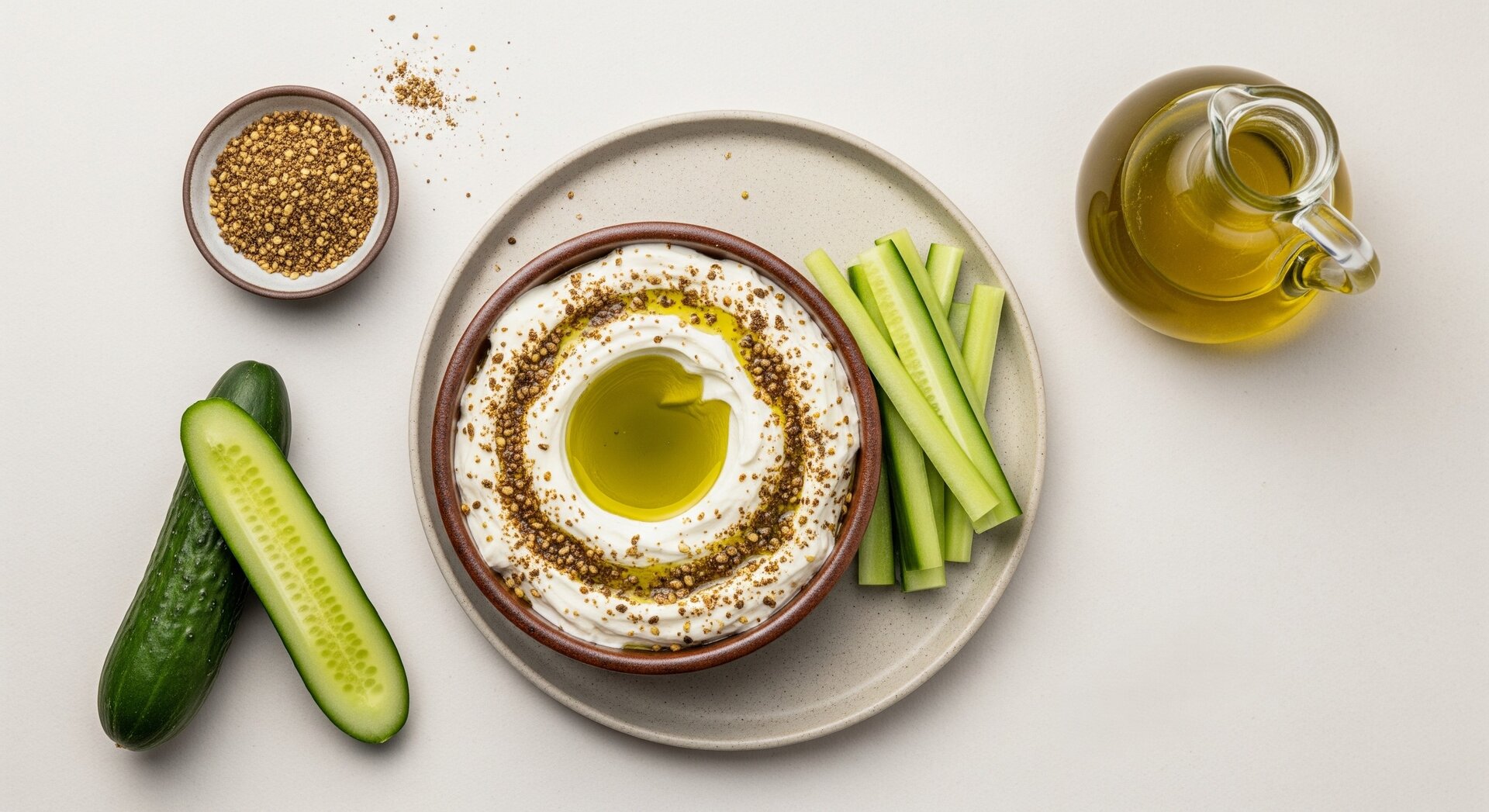 Labneh with Za'atar and Olive Oil 5 min Creamy yogurt cheese with Middle Eastern herbs 255 kcal 9g protein 1 synergies
 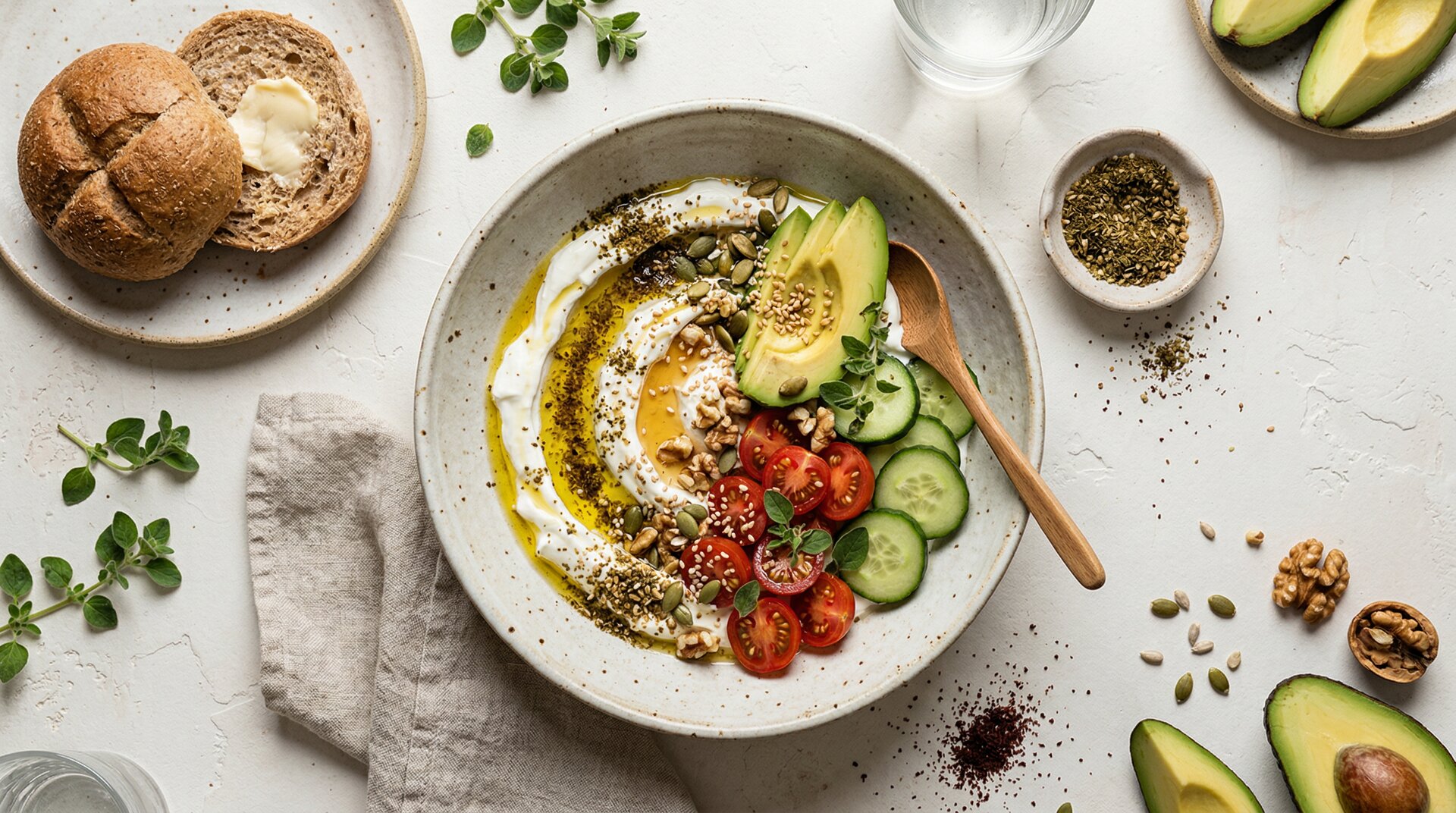 Labneh Breakfast Bowl with Za'atar, Olive Oil & Seeds 10 min Savory breakfast with ingredients that may contribute to digestive and nutritional properties widely studied 718 kcal 18g protein 2 synergies
  In the Kitchen
Storage
Location:Refrigerator
Shelf life:7-14 dagen (na openen, gekoeld)
Store in sealed container in refrigerator at 2-4°C. A thin layer of liquid on surface is normal; stir before use. For longer shelf-life: store in olive oil (traditional method).
Preparation
Labneh is traditionally eaten cold as spread or dip. Can be used in hot dishes but add only after cooking to preserve probiotics. Mix with herbs (za'atar, mint, garlic) for varied flavors.
Substitutes
Smart preparation
1Make labneh by draining yoghurt for 12-24 hours in a cloth.
2The longer you drain, the firmer the labneh becomes.
Why?
After 48 hours it is firm enough to roll into balls.
3Serve labneh with olive oil and za'atar as mezze.
Caution / Warnings
Labneh is very safe, but there are scientific considerations:
Lactose Intolerance (Moderate-Severe) Moderate
Although labneh contains less lactose than yogurt due to straining process (whey contains most lactose), it still contains 2-4g lactose per 100g, which can cause symptoms in individuals with moderate to severe lactose intolerance.
Advice:
Start with small portions (30-50g) to test tolerance. Take lactase enzyme supplement if needed. Individuals with severe lactose intolerance may better choose lactose-free varieties or plant-based alternatives.
Milk Protein Allergy Severe
Labneh contains high concentrations of milk proteins (casein and whey), which can cause severe allergic reactions in individuals with milk protein allergy.
Advice:
Completely avoid if you have known milk protein allergy. Fermentation does not reduce allergenicity. Choose plant-based alternatives like cashew labneh or coconut yogurt. Watch for cross-contamination in restaurants.
Saturated Fat and Cardiovascular Risks Moderate
Full-fat labneh (10-12% fat) contains approximately 6-7g saturated fat per 100g. In individuals with hypercholesterolemia or cardiovascular disease, this may elevate LDL-cholesterol.
Advice:
Choose light varieties (2-4% fat) with cardiovascular risks. Combine with unsaturated fats (olive oil, nuts) for balance. Limit consumption to 50-100g per day. Monitor cholesterol levels with regular consumption.
Traditional use
Islamic tradition
Labneh in Arab Tradition
Labneh has been a staple food in the Levant and Middle East for centuries, traditionally preserved in olive oil with herbs.
Mediterranean
Labneh in Levantine Cuisine
In the Levantine tradition, labneh is a daily breakfast food, served with olive oil, za'atar, and fresh bread.
Summary
Labneh is strained yogurt with 2× more protein and high probiotic density, suitable for people with mild lactose intolerance due to reduced lactose content.