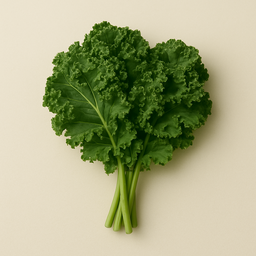
Kale
The Queen of Leafy Greens
What is this ingredient?
Kale (Brassica oleracea var. sabellica) is an ancient leafy vegetable that was already eaten by the Romans. It's one of the most nutrient-dense foods in the world: 100g contains 684% of daily vitamin K1 needs, essential for blood clotting and bone health. Kale also contains exceptionally high lutein and zeaxanthin, carotenoids that concentrate in the macula of the eye and are studied in relation to age-related macular degeneration. After the first frost, kale becomes sweeter as starch converts to sugar. Always combine with fat (avocado, olive oil) — this way, fat-soluble vitamins and carotenoids come into their own.
How does it taste?
Robust, slightly bitter and earthy with a hearty cabbage flavor that mellows after frost.
Pairs well with:
Pairs well with smoked sausagemustardpotatogarlic and bacon.
Varieties
Curly Kale
Traditional Dutch kale, firm texture
Lacinato/Tuscan Kale
Dark green, softer, nutty - ideal for salads
Red Russian Kale
Purple-green leaves, mildest flavor, extra anthocyanins
Did you know...?
- Kale is one of the oldest cabbage varieties and was already cultivated by the Romans.
- In Scotland, a vegetable garden was traditionally called a 'kailyard', after the word for kale.
Nutritional Value & Energy
Per 100g
Kale is low in calories thanks to natural nutrients , buffered by fiber.
Per 100g
Minerals
Vitamins
Omega-3 fatty acids
More nutrients
B-Vitamins
Trace Minerals
What's in a serving?
1 serving
Kale naturally contains calcium (150 mg per 100 g).
Kale naturally contains potassium (491 mg per 100 g).
Kale naturally contains vitamin a (206 mcg per 100 g).
Kale naturally contains vitamin c (120 mg per 100 g).
Kale naturally contains vitamin k (704 mcg per 100 g).
Kale naturally contains folate (141 mcg per 100 g).
% of daily reference intake (DRI)
EU-approved nutrition claims
This ingredient contains nutrients for which EFSA-authorized health claims exist (at nutrient level, not ingredient-specific).
Approved health claims (EU)
Vitamin_c EU 432/2012
Vitamin C contributes to the normal function of the immune system
Contains 120mg/100g (threshold: ≥12mg/100g)
Vitamin_c EU 432/2012
Vitamin C contributes to the reduction of tiredness and fatigue
Contains 120mg/100g (threshold: ≥12mg/100g)
Vitamin_c EU 432/2012
Vitamin C contributes to normal collagen formation for the normal function of skin
Contains 120mg/100g (threshold: ≥12mg/100g)
Calcium EU 432/2012
Calcium is needed for the maintenance of normal bones
Contains 150mg/100g (threshold: ≥120mg/100g)
Potassium EU 432/2012
Potassium contributes to the maintenance of normal blood pressure
Contains 491mg/100g (threshold: ≥300mg/100g)
Folate EU 432/2012
Folate contributes to normal blood formation
Contains 141mcg/100g (threshold: ≥30mcg/100g)
Vitamin_a EU 432/2012
Vitamin A contributes to the normal function of the immune system
Contains 206mcg/100g (threshold: ≥120mcg/100g)
Vitamin_a EU 432/2012
Vitamin A contributes to the maintenance of normal skin
Contains 206mcg/100g (threshold: ≥120mcg/100g)
Vitamin_a EU 432/2012
Vitamin A contributes to the maintenance of normal mucous membranes
Contains 206mcg/100g (threshold: ≥120mcg/100g)
Vitamin_a EU 432/2012
Vitamin A contributes to the maintenance of normal vision
Contains 206mcg/100g (threshold: ≥120mcg/100g)
Vitamin_a EU 432/2012
Vitamin A contributes to normal iron metabolism
Contains 206mcg/100g (threshold: ≥120mcg/100g)
Vitamin_a EU 432/2012
Vitamin A has a role in the process of cell specialisation
Contains 206mcg/100g (threshold: ≥120mcg/100g)
Folate EU 432/2012
Folate contributes to normal amino acid synthesis
Contains 141mcg/100g (threshold: ≥30mcg/100g)
Folate EU 432/2012
Folate contributes to normal homocysteine metabolism
Contains 141mcg/100g (threshold: ≥30mcg/100g)
Folate EU 432/2012
Folate contributes to normal psychological function
Contains 141mcg/100g (threshold: ≥30mcg/100g)
Folate EU 432/2012
Folate contributes to the normal function of the immune system
Contains 141mcg/100g (threshold: ≥30mcg/100g)
Folate EU 432/2012
Folate has a role in the process of cell division
Contains 141mcg/100g (threshold: ≥30mcg/100g)
Folate EU 432/2012
Folate contributes to maternal tissue growth during pregnancy
Contains 141mcg/100g (threshold: ≥30mcg/100g)
Vitamin_c EU 432/2012
Vitamin C contributes to normal collagen formation for the normal function of blood vessels
Contains 120mg/100g (threshold: ≥12mg/100g)
Vitamin_c EU 432/2012
Vitamin C contributes to normal collagen formation for the normal function of bones
Contains 120mg/100g (threshold: ≥12mg/100g)
Vitamin_c EU 432/2012
Vitamin C contributes to normal collagen formation for the normal function of cartilage
Contains 120mg/100g (threshold: ≥12mg/100g)
Vitamin_c EU 432/2012
Vitamin C contributes to normal collagen formation for the normal function of gums
Contains 120mg/100g (threshold: ≥12mg/100g)
Vitamin_c EU 432/2012
Vitamin C contributes to normal collagen formation for the normal function of teeth
Contains 120mg/100g (threshold: ≥12mg/100g)
Vitamin_c EU 432/2012
Vitamin C contributes to normal energy-yielding metabolism
Contains 120mg/100g (threshold: ≥12mg/100g)
Vitamin_c EU 432/2012
Vitamin C contributes to normal functioning of the nervous system
Contains 120mg/100g (threshold: ≥12mg/100g)
Vitamin_c EU 432/2012
Vitamin C contributes to normal psychological function
Contains 120mg/100g (threshold: ≥12mg/100g)
Vitamin_c EU 432/2012
Vitamin C contributes to the protection of cells from oxidative stress
Contains 120mg/100g (threshold: ≥12mg/100g)
Vitamin_c EU 432/2012
Vitamin C contributes to the regeneration of the reduced form of vitamin E
Contains 120mg/100g (threshold: ≥12mg/100g)
Vitamin_c EU 432/2012
Vitamin C increases iron absorption
Contains 120mg/100g (threshold: ≥12mg/100g)
Vitamin_c EU 432/2012
Vitamin C contributes to maintain the normal function of the immune system during and after intense physical exercise
Contains 120mg/100g (threshold: ≥12mg/100g)
Vitamin_k EU 432/2012
Vitamin K contributes to normal blood clotting
Contains 704mcg/100g (threshold: ≥11.25mcg/100g)
Vitamin_k EU 432/2012
Vitamin K contributes to the maintenance of normal bones
Contains 704mcg/100g (threshold: ≥11.25mcg/100g)
Calcium EU 432/2012
Calcium is needed for the maintenance of normal teeth
Contains 150mg/100g (threshold: ≥120mg/100g)
Calcium EU 432/2012
Calcium contributes to normal blood clotting
Contains 150mg/100g (threshold: ≥120mg/100g)
Calcium EU 432/2012
Calcium contributes to normal energy-yielding metabolism
Contains 150mg/100g (threshold: ≥120mg/100g)
Calcium EU 432/2012
Calcium contributes to normal muscle function
Contains 150mg/100g (threshold: ≥120mg/100g)
Calcium EU 432/2012
Calcium contributes to normal neurotransmission
Contains 150mg/100g (threshold: ≥120mg/100g)
Calcium EU 432/2012
Calcium contributes to the normal function of digestive enzymes
Contains 150mg/100g (threshold: ≥120mg/100g)
Calcium EU 432/2012
Calcium has a role in the process of cell division and specialisation
Contains 150mg/100g (threshold: ≥120mg/100g)
Potassium EU 432/2012
Potassium contributes to normal functioning of the nervous system
Contains 491mg/100g (threshold: ≥300mg/100g)
Potassium EU 432/2012
Potassium contributes to normal muscle function
Contains 491mg/100g (threshold: ≥300mg/100g)
Comparison
vssinaasappel
Kale contains about 2x more vitamin C per 100g than orange.
What's being researched?
Bile acid binding and cholesterol
The ability of kale to bind bile acids is being studied in relation to cholesterol levels. In-vitro studies show strong binding capacity, but clinical confirmation is still limited.
Supported by: [4] Kahlon (2008)
Carotenoids and lutein
High concentrations of lutein and zeaxanthin in kale are being studied for potential protective effects on the eyes. Observational studies are promising.
Supported by: [2] Abdel-Aal (2013)
Good Combinations (Synergy)
Combine kale smartly to enhance the effect:
Kale 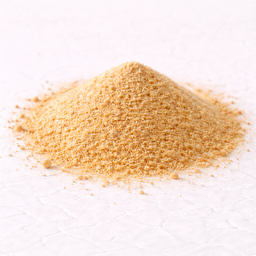 Garlic Powder
 Glucosinolates + allicin activate phase-II enzymes
Technical: Kale's glucosinolates are converted to sulforaphane that activates Nrf2. Garlic powder's allicin and diallyl disulfide activate the same Nrf2 pathway via a different mechanism. Together they enhance induction of phase-II enzymes (glutathione S-transferase, NAD(P)H quinone oxidoreductase).
What does this mean for you? Kale chips with garlic powder are not just tasty — both ingredients together activate the Nrf2 pathway, a biochemical route that drives phase-II enzymes.
Kale 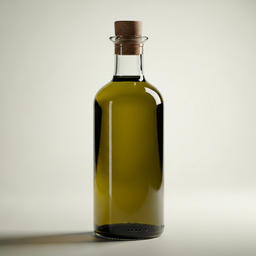 Olive Oil
 Olive oil increases absorption of kale's vitamin K and beta-carotene
Technical: Kale is extremely rich in vitamin K1 (phylloquinone) and beta-carotene (provitamin A), both fat-soluble. Without fat, only 5-10% is absorbed. Olive oil's unsaturated fats form micelles that increase absorption 5-15x.
What does this mean for you? Always sauté or massage your kale with olive oil — without fat you barely absorb any vitamins from this nutrient-dense leaf.
Kale 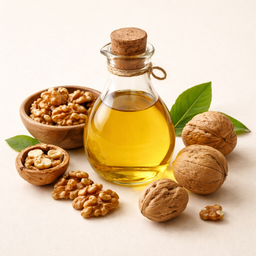 Walnut Oil
 Omega-3 increases fat-soluble vitamin absorption from spinach
Technical: Walnut oil contains 10-15% ALA (omega-3) and ellagic acid (polyphenol). Spinach is rich in lutein (12198μg/100g), vitamin K (483μg, 400% RDI) and folate — all fat-soluble or fat-dependent for absorption. The fat from walnut oil increases absorption of lutein and vitamin K by 3-5x. Ellagic acid from the oil protects unsaturated fats in spinach from oxidation.
What does this mean for you? Make a spinach salad with walnut oil as dressing. The oil helps your body absorb the lutein, vitamin K and beta-carotene from spinach. The nutty flavor pairs perfectly with spinach.
Recipes with Kale
Discover delicious recipes featuring kale:
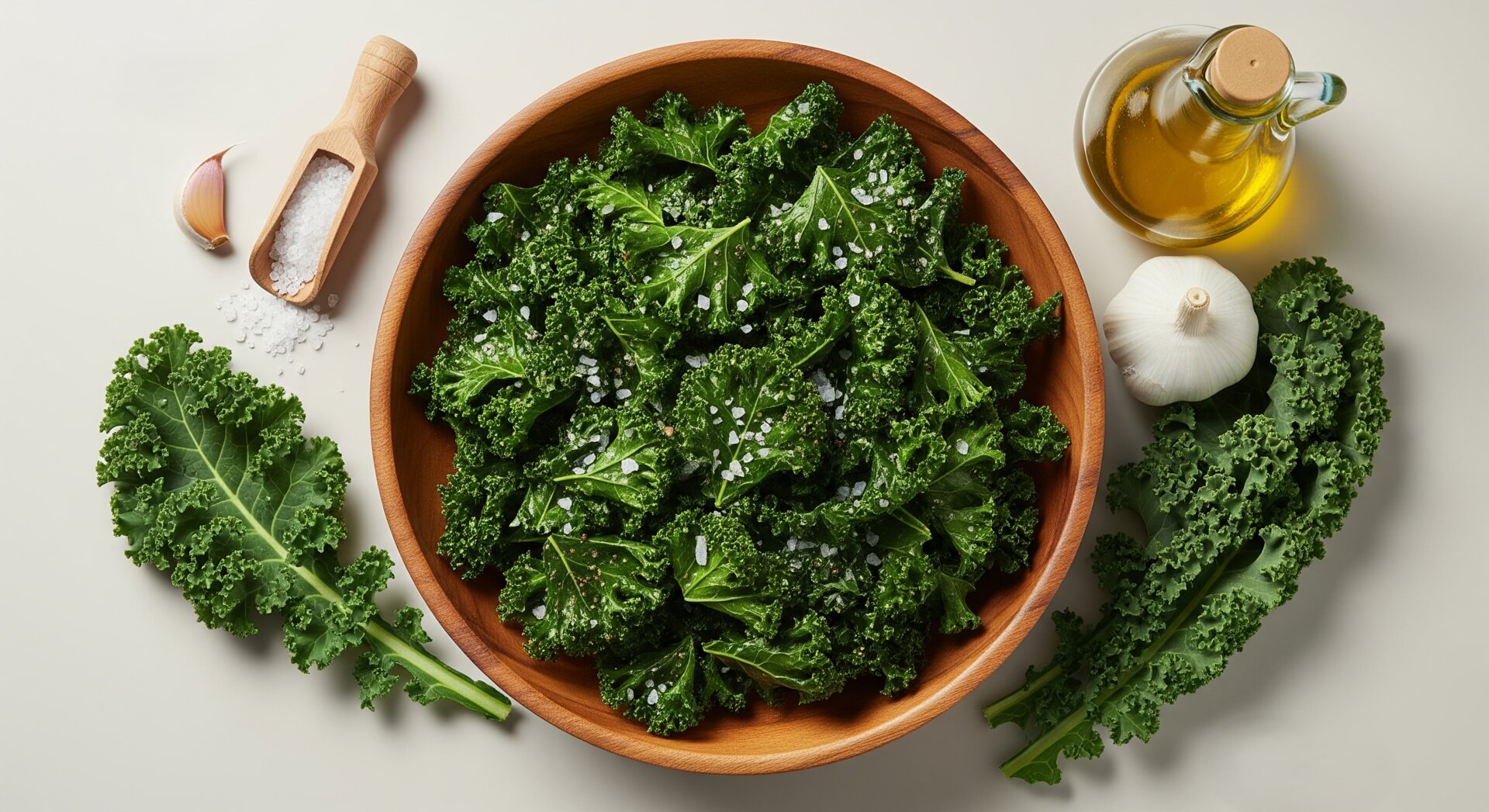 Kale Chips with Sea Salt 35 min Crispy vegetable chips from the oven with olive oil and garlic powder
  75 kcal
  2g protein 2 synergies
 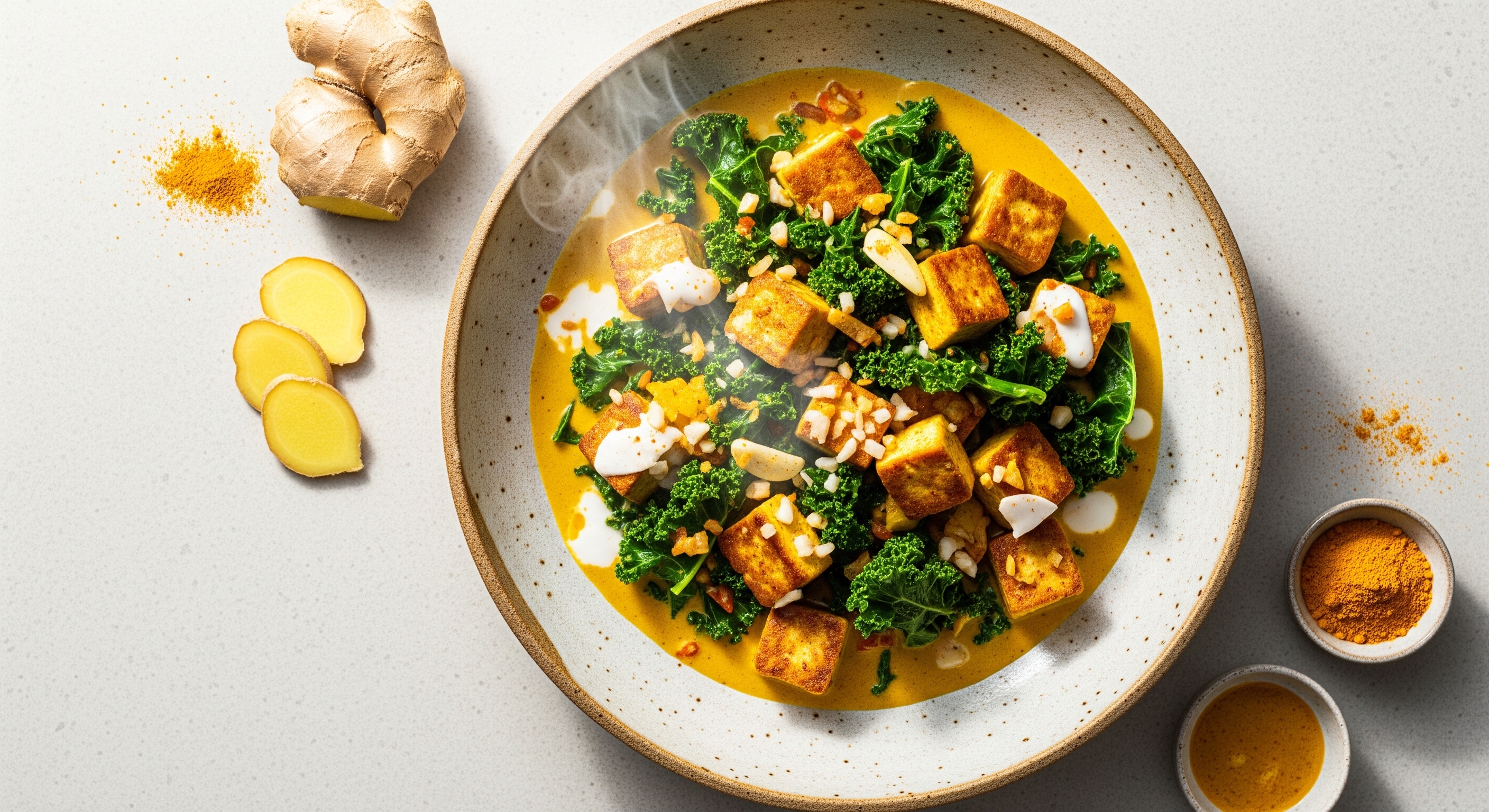 Kale Tofu Curry with Ginger 40 min Creamy curry with crisp tofu and coconut 365 kcal 16g protein 3 synergies
 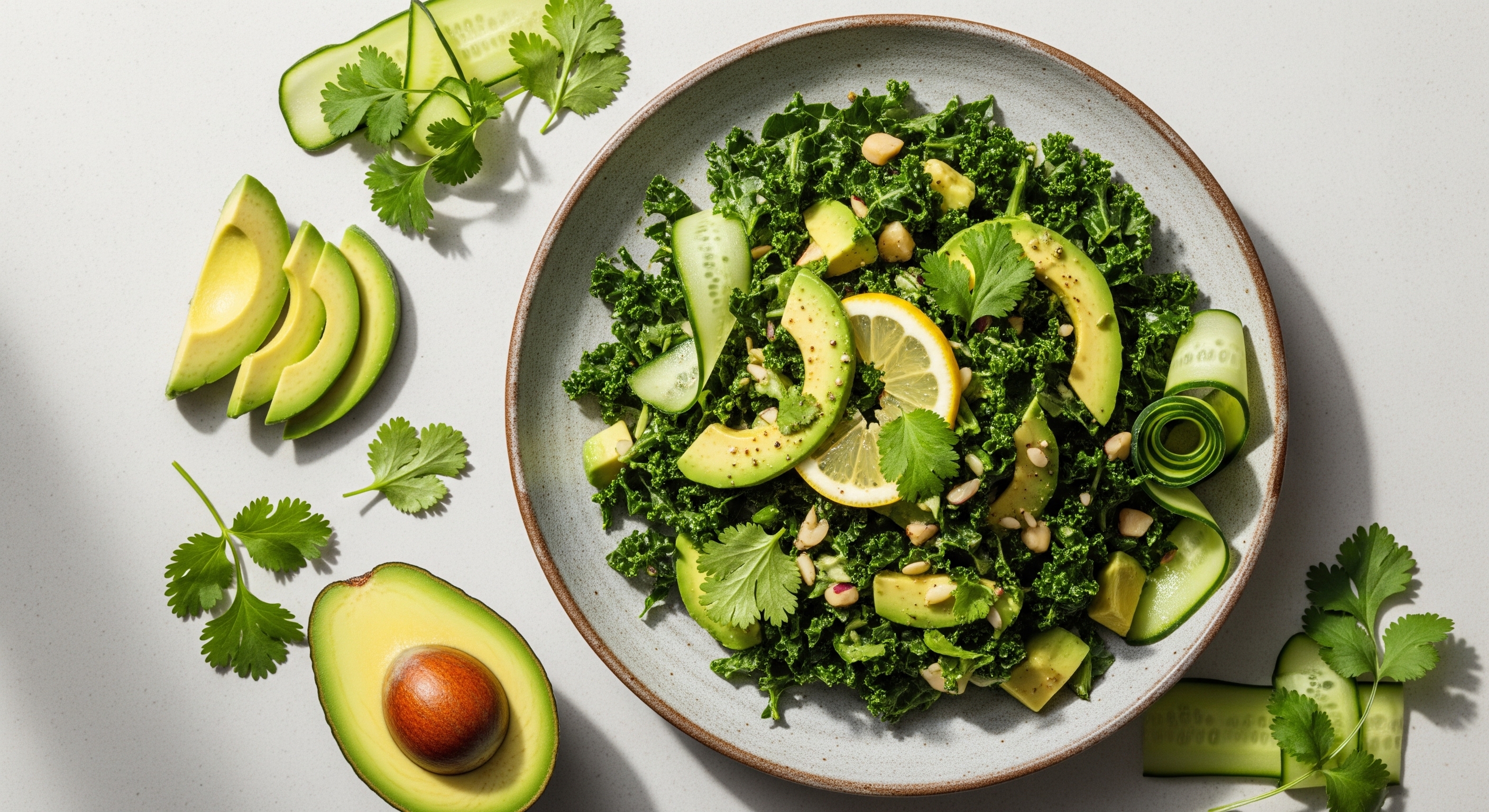 Kale Salad with Avocado, Cucumber and Coriander 15 min Fresh, green and creamy-crisp 344 kcal 8g protein 2 synergies
 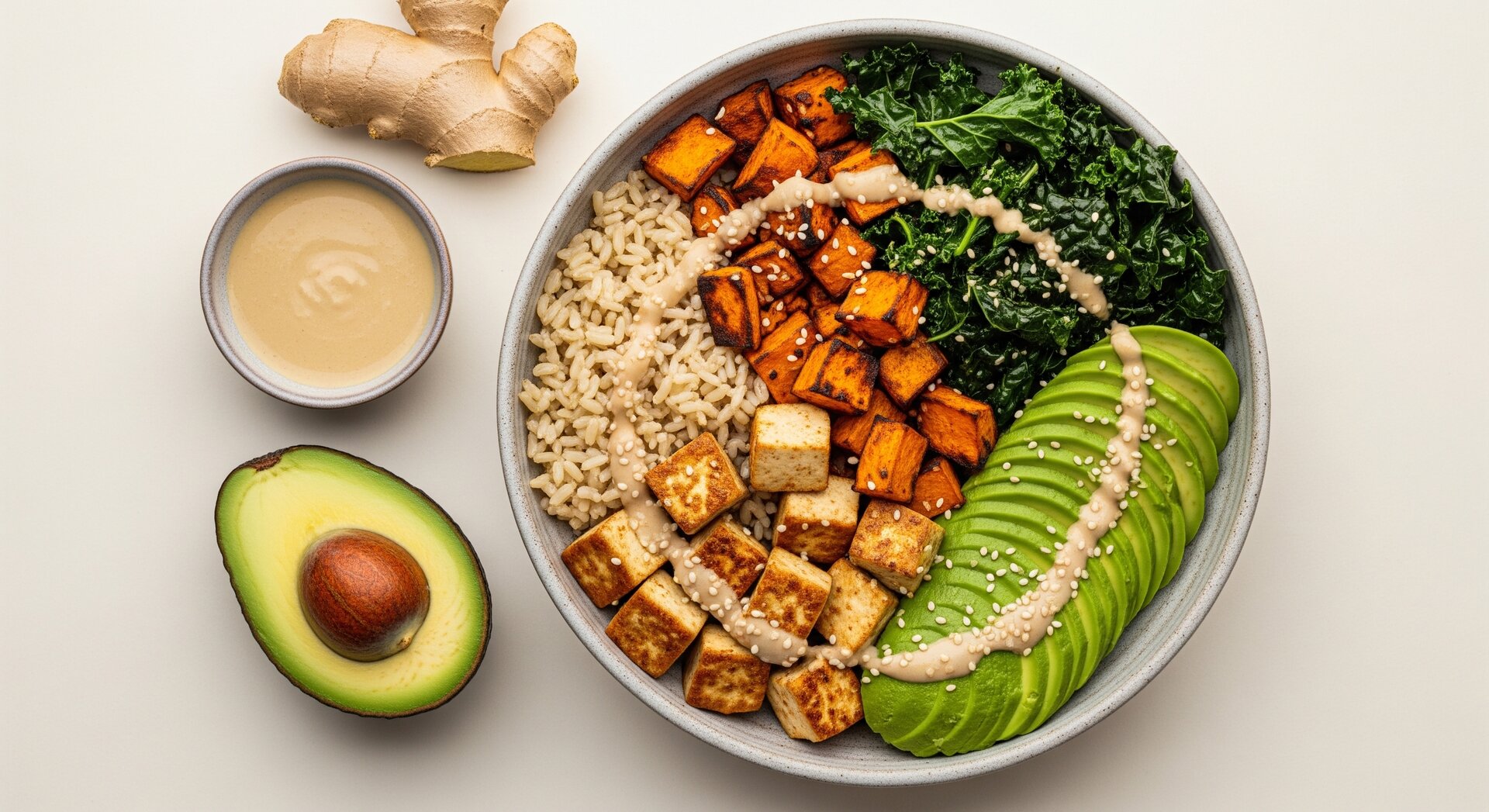 Buddha Bowl with Tofu, Sweet Potato and Kale 50 min Warm bowl with roasted vegetables 790 kcal 30g protein 3 synergies
 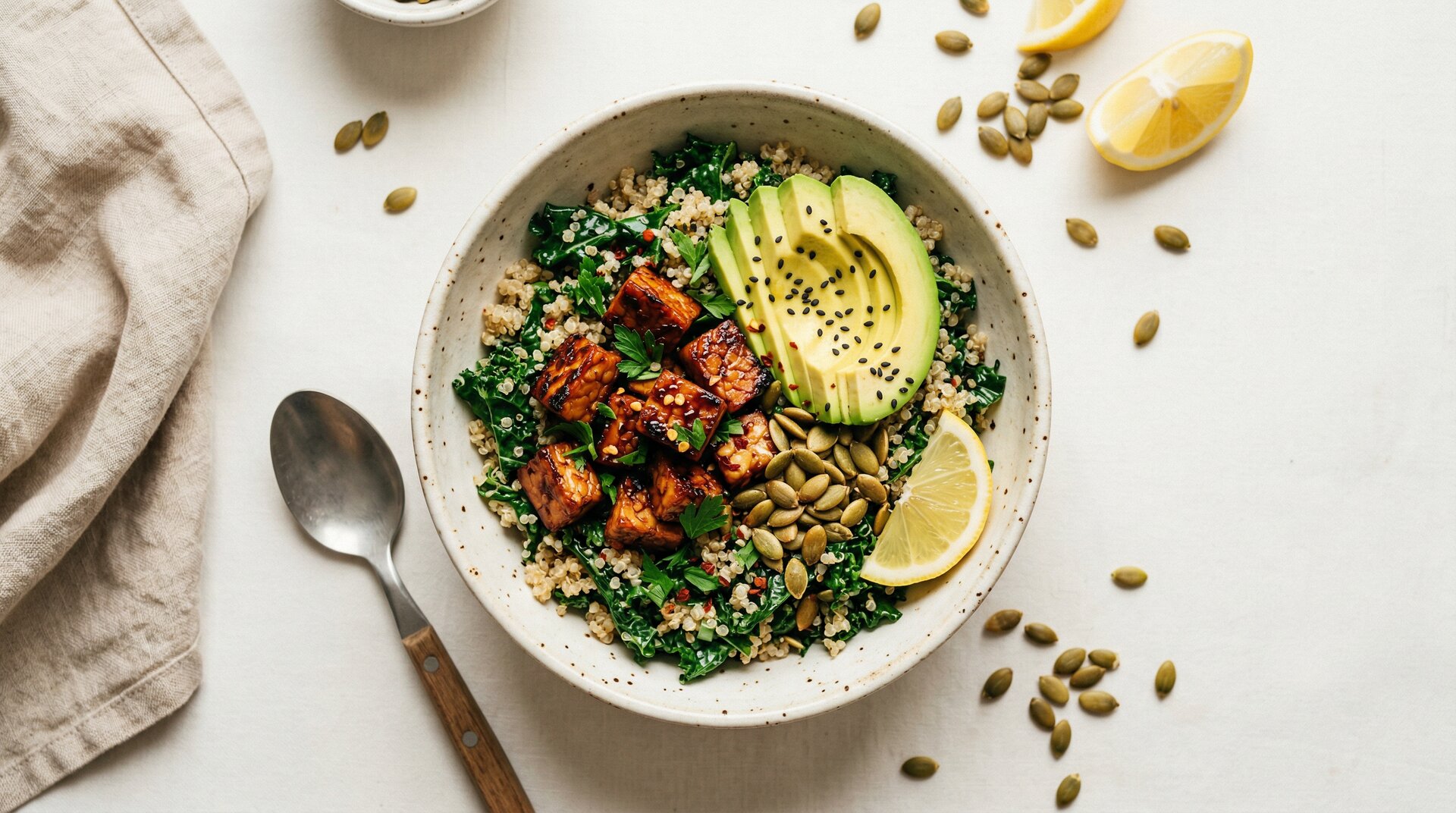 Crispy Tempeh Kale Bowl 35 min Savory, smoky and full of bite with tamari tempeh 520 kcal 28g protein 2 synergies
 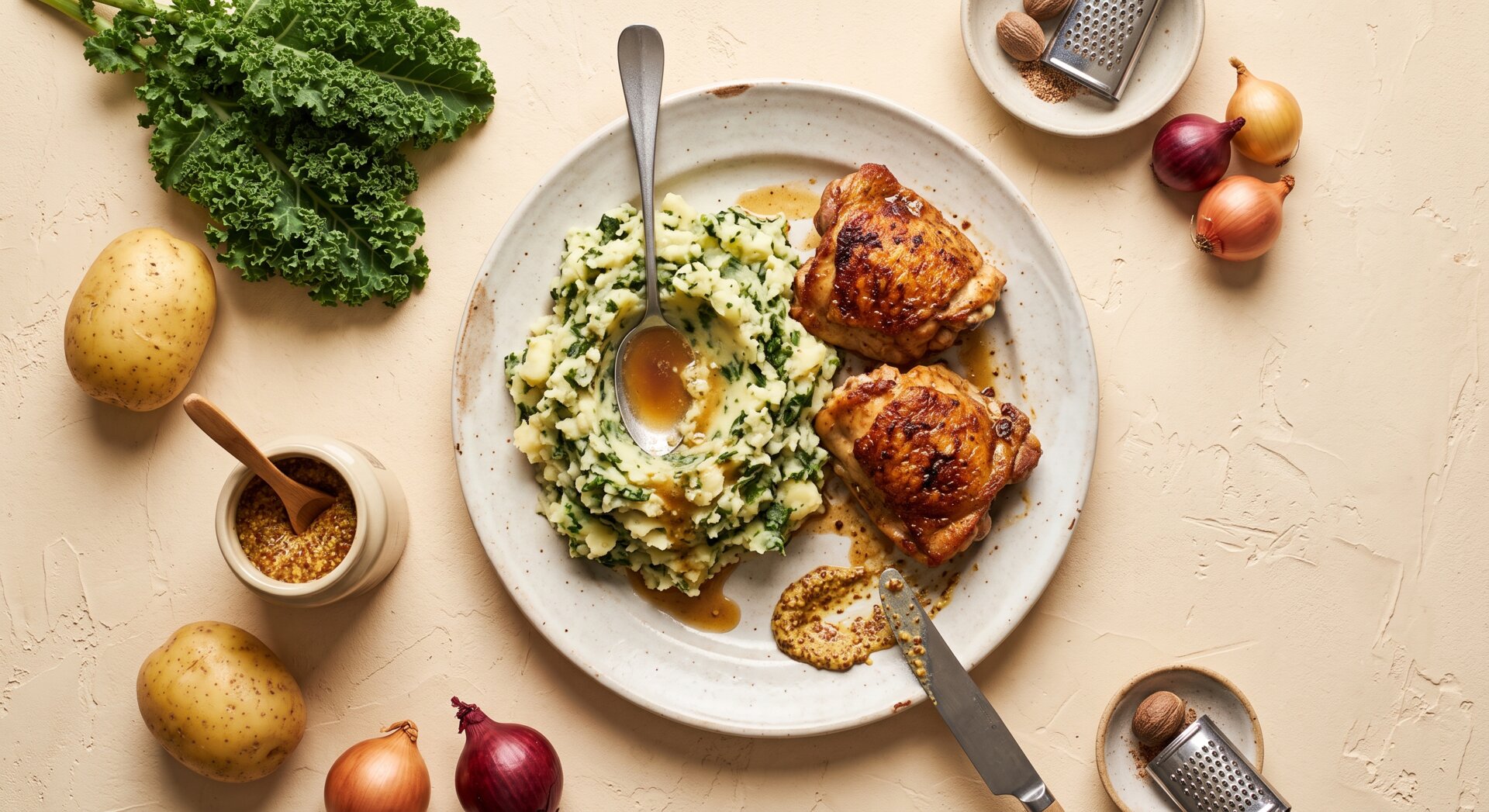 Kale Mash with Pan-Fried Chicken Thighs 45 min Dutch classic with crispy chicken thighs 679 kcal 49g protein 2 synergies
  In the Kitchen
Storage
Location:Refrigerator
Shelf life:5-7 dagen in plastic zak
Store unwashed in vegetable drawer. Wash just before use. Remove yellow leaves.
Preparation
Raw: massage with olive oil and salt to break fibers. Cooked: steam or briefly blanch. Chips: roast with olive oil. BEST SYNERGY: avocado (fat for lutein absorption) or olive oil.
Conversions
Substitutes
Smart preparation
1Remove tough stems by stripping the leaf along the stalk.
2Massage raw kale with olive oil and salt for salads.
Why?
Massaging breaks down cell walls, making the leaves more tender.
3Kale becomes sweeter after exposure to frost.
Caution / Warnings
Kale is very safe, but there are scientific considerations:
Blood Thinners (Warfarin) Severe
Extremely high vitamin K can counteract warfarin effect
Advice:
With warfarin use: eat consistent amounts and consult doctor. Fluctuations in vitamin K intake are the problem
Thyroid Problems Moderate
Cruciferous vegetables contain goitrogens
Advice:
Cooking significantly reduces goitrogens. Don't eat large amounts raw daily
Kidney Stones (Oxalate) Moderate
Kale contains oxalates that may promote kidney stones
Advice:
With oxalate kidney stones: cook kale (reduces oxalate) and drink extra water
Traditional use
Mediterranean
Greek and Roman heritage crop
Greeks and Romans cultivated kale as early as 600 BCE. The crop held a central place in Mediterranean cuisine and was extensively described by Cato the Elder as a versatile vegetable for everyday use.
Summary
Kale is an exceptionally nutrient-dense leafy green: 7x daily vitamin K and the highest lutein concentration of any common vegetable. Always combine with fat (avocado, olive oil), as this helps fat-soluble nutrients come into their own. Tip: massage raw kale with olive oil and a pinch of salt to soften its sturdy fibers.