Coconut Flour
Fiber-rich gluten-free flour
What is this ingredient?
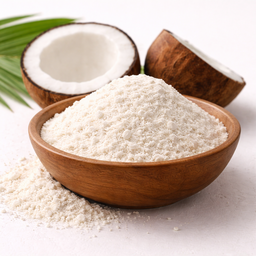
Coconut flour is made after coconut milk production: the remaining coconut flesh is dried and finely ground into a mildly sweet, aromatic flour. It contains 39 g fiber per 100 g and therefore behaves very differently from wheat flour, rice flour, or almond flour. The fiber binds a lot of moisture, so batters thicken quickly and recipes usually need extra liquid, eggs, or a second flour.
Because of its clear coconut flavor, coconut flour works especially well in pancakes, muffins, cookies, cakes, crumb bases, and tropical desserts. In savory recipes it needs a light hand, because the sweet coconut note remains easy to recognize. Do not replace regular flour 1:1: often 1/4 to 1/3 of the amount is enough. Let batter rest for a few minutes so the flour can absorb moisture before judging the thickness.
Coconut flour also naturally contains coconut fats, including medium-chain triglycerides (MCTs), plus minerals such as iron, magnesium, phosphorus, potassium, zinc, manganese, and selenium. In cooking, its main features are high fiber content, strong moisture absorption, and tropical aroma: it can make compact, tender bakes when the liquid balance is right, but it can become dry and grainy if too much is used.
How does it taste?
Mildly sweet with a distinct coconut flavor and a dry, highly absorbent texture.
Pairs well with:
Pairs well with chocolatelimebananavanillaand tropical fruit.
Did you know...?
- Coconut flour is a byproduct of coconut milk production: the dried, partly defatted flesh is ground.
- Coconut flour absorbs much more moisture than wheat flour, so recipes usually need much less of it.
Nutritional Value & Energy
Per 100g
Coconut Flour provides energy thanks to natural nutrients , buffered by fiber.
Per 100g
Minerals
Vitamins
More nutrients
B-Vitamins
Trace Minerals
What's in a serving?
1 serving (dry)
Coconut flour naturally contains iron (3.6 mg per 100 g).
Coconut flour naturally contains magnesium (90 mg per 100 g).
Coconut flour naturally contains phosphorus (206 mg per 100 g).
Coconut flour naturally contains potassium (515 mg per 100 g).
Coconut flour naturally contains zinc (2 mg per 100 g).
Coconut flour naturally contains manganese (2.7 mg per 100 g).
Coconut flour naturally contains selenium (14 mcg per 100 g).
% of daily reference intake (DRI)
EU-approved nutrition claims
This ingredient contains nutrients for which EFSA-authorized health claims exist (at nutrient level, not ingredient-specific).
Approved health claims (EU)
Magnesium EU 432/2012
Magnesium contributes to normal muscle function
Contains 90mg/100g (threshold: ≥56.25mg/100g)
Magnesium EU 432/2012
Magnesium contributes to the reduction of tiredness and fatigue
Contains 90mg/100g (threshold: ≥56.25mg/100g)
Magnesium EU 432/2012
Magnesium contributes to normal functioning of the nervous system
Contains 90mg/100g (threshold: ≥56.25mg/100g)
Zinc EU 432/2012
Zinc contributes to the normal function of the immune system
Contains 2mg/100g (threshold: ≥1.5mg/100g)
Zinc EU 432/2012
Zinc contributes to the maintenance of normal skin
Contains 2mg/100g (threshold: ≥1.5mg/100g)
Iron EU 432/2012
Iron contributes to normal energy-yielding metabolism
Contains 3.6mg/100g (threshold: ≥2.1mg/100g)
Iron EU 432/2012
Iron contributes to the reduction of tiredness and fatigue
Contains 3.6mg/100g (threshold: ≥2.1mg/100g)
Potassium EU 432/2012
Potassium contributes to the maintenance of normal blood pressure
Contains 515mg/100g (threshold: ≥300mg/100g)
Phosphorus EU 432/2012
Phosphorus contributes to normal energy-yielding metabolism
Contains 206mg/100g (threshold: ≥105mg/100g)
Phosphorus EU 432/2012
Phosphorus contributes to the normal function of cell membranes
Contains 206mg/100g (threshold: ≥105mg/100g)
Phosphorus EU 432/2012
Phosphorus contributes to the maintenance of normal bones
Contains 206mg/100g (threshold: ≥105mg/100g)
Phosphorus EU 432/2012
Phosphorus contributes to the maintenance of normal teeth
Contains 206mg/100g (threshold: ≥105mg/100g)
Magnesium EU 432/2012
Magnesium contributes to normal energy-yielding metabolism
Contains 90mg/100g (threshold: ≥56.25mg/100g)
Magnesium EU 432/2012
Magnesium contributes to electrolyte balance
Contains 90mg/100g (threshold: ≥56.25mg/100g)
Magnesium EU 432/2012
Magnesium contributes to normal protein synthesis
Contains 90mg/100g (threshold: ≥56.25mg/100g)
Magnesium EU 432/2012
Magnesium contributes to normal psychological function
Contains 90mg/100g (threshold: ≥56.25mg/100g)
Magnesium EU 432/2012
Magnesium contributes to the maintenance of normal bones
Contains 90mg/100g (threshold: ≥56.25mg/100g)
Magnesium EU 432/2012
Magnesium contributes to the maintenance of normal teeth
Contains 90mg/100g (threshold: ≥56.25mg/100g)
Magnesium EU 432/2012
Magnesium has a role in the process of cell division
Contains 90mg/100g (threshold: ≥56.25mg/100g)
Iron EU 432/2012
Iron contributes to normal cognitive function
Contains 3.6mg/100g (threshold: ≥2.1mg/100g)
Iron EU 432/2012
Iron contributes to normal formation of red blood cells and haemoglobin
Contains 3.6mg/100g (threshold: ≥2.1mg/100g)
Iron EU 432/2012
Iron contributes to normal oxygen transport in the body
Contains 3.6mg/100g (threshold: ≥2.1mg/100g)
Iron EU 432/2012
Iron contributes to the normal function of the immune system
Contains 3.6mg/100g (threshold: ≥2.1mg/100g)
Iron EU 432/2012
Iron has a role in the process of cell division
Contains 3.6mg/100g (threshold: ≥2.1mg/100g)
Zinc EU 432/2012
Zinc contributes to normal acid-base metabolism
Contains 2mg/100g (threshold: ≥1.5mg/100g)
Zinc EU 432/2012
Zinc contributes to normal carbohydrate metabolism
Contains 2mg/100g (threshold: ≥1.5mg/100g)
Zinc EU 432/2012
Zinc contributes to normal cognitive function
Contains 2mg/100g (threshold: ≥1.5mg/100g)
Zinc EU 432/2012
Zinc contributes to normal DNA synthesis
Contains 2mg/100g (threshold: ≥1.5mg/100g)
Zinc EU 432/2012
Zinc contributes to normal fertility and reproduction
Contains 2mg/100g (threshold: ≥1.5mg/100g)
Zinc EU 432/2012
Zinc contributes to normal macronutrient metabolism
Contains 2mg/100g (threshold: ≥1.5mg/100g)
Zinc EU 432/2012
Zinc contributes to normal metabolism of fatty acids
Contains 2mg/100g (threshold: ≥1.5mg/100g)
Zinc EU 432/2012
Zinc contributes to normal metabolism of vitamin A
Contains 2mg/100g (threshold: ≥1.5mg/100g)
Zinc EU 432/2012
Zinc contributes to normal protein synthesis
Contains 2mg/100g (threshold: ≥1.5mg/100g)
Zinc EU 432/2012
Zinc contributes to the maintenance of normal bones
Contains 2mg/100g (threshold: ≥1.5mg/100g)
Zinc EU 432/2012
Zinc contributes to the maintenance of normal hair
Contains 2mg/100g (threshold: ≥1.5mg/100g)
Zinc EU 432/2012
Zinc contributes to the maintenance of normal nails
Contains 2mg/100g (threshold: ≥1.5mg/100g)
Zinc EU 432/2012
Zinc contributes to the maintenance of normal testosterone levels in the blood
Contains 2mg/100g (threshold: ≥1.5mg/100g)
Zinc EU 432/2012
Zinc contributes to the maintenance of normal vision
Contains 2mg/100g (threshold: ≥1.5mg/100g)
Zinc EU 432/2012
Zinc contributes to the protection of cells from oxidative stress
Contains 2mg/100g (threshold: ≥1.5mg/100g)
Zinc EU 432/2012
Zinc has a role in the process of cell division
Contains 2mg/100g (threshold: ≥1.5mg/100g)
Manganese EU 432/2012
Manganese contributes to normal energy-yielding metabolism
Contains 2.7mg/100g (threshold: ≥0.3mg/100g)
Manganese EU 432/2012
Manganese contributes to the maintenance of normal bones
Contains 2.7mg/100g (threshold: ≥0.3mg/100g)
Manganese EU 432/2012
Manganese contributes to the normal formation of connective tissue
Contains 2.7mg/100g (threshold: ≥0.3mg/100g)
Manganese EU 432/2012
Manganese contributes to the protection of cells from oxidative stress
Contains 2.7mg/100g (threshold: ≥0.3mg/100g)
Selenium EU 432/2012
Selenium contributes to the maintenance of normal hair
Contains 14mcg/100g (threshold: ≥8.25mcg/100g)
Selenium EU 432/2012
Selenium contributes to the maintenance of normal nails
Contains 14mcg/100g (threshold: ≥8.25mcg/100g)
Selenium EU 432/2012
Selenium contributes to the normal function of the immune system
Contains 14mcg/100g (threshold: ≥8.25mcg/100g)
Selenium EU 432/2012
Selenium contributes to normal thyroid function
Contains 14mcg/100g (threshold: ≥8.25mcg/100g)
Selenium EU 432/2012
Selenium contributes to normal spermatogenesis
Contains 14mcg/100g (threshold: ≥8.25mcg/100g)
Selenium EU 432/2012
Selenium contributes to the protection of cells from oxidative stress
Contains 14mcg/100g (threshold: ≥8.25mcg/100g)
Potassium EU 432/2012
Potassium contributes to normal functioning of the nervous system
Contains 515mg/100g (threshold: ≥300mg/100g)
Potassium EU 432/2012
Potassium contributes to normal muscle function
Contains 515mg/100g (threshold: ≥300mg/100g)
What's being researched?
Coconut flour as a high-fiber ingredient
The high fiber content of coconut flour is being studied as a functional ingredient in gluten-free products. Studies examine texture, satiety, moisture binding, and use in baked goods.
Supported by: [1] Fu L (2022)
Good Combinations (Synergy)
Combine coconut flour smartly to enhance the effect:
Coconut Flour  Raw cacao
 MCTs + flavonoids for cognitive support and energy
Technical: MCTs in coconut flour are directly converted to ketones, an alternative fuel for the brain. Cacao's flavonoids influence cerebral blood flow. Together they provide both rapid energy (ketones) and bioactive flavonoids.
What does this mean for you? Baking with coconut flour and cacao gives you more than a tasty brownie — the MCTs provide rapid energy, the flavonoids from cacao are powerful bioactive compounds.
Coconut Flour 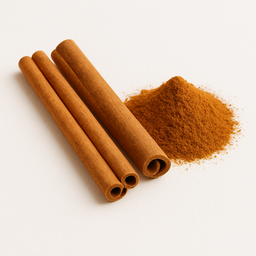 Cinnamon
 Fiber + cinnamaldehyde for glycemic balance
Technical: Coconut flour contains 39g fiber per 100g (highest of all flours) that slow carbohydrate absorption. Cinnamon's cinnamaldehyde activates AMPK and stimulates GLUT4 transporters. Together they provide glycemic support via two independent pathways: fiber delay + GLUT4 activation.
What does this mean for you? Coconut flour with cinnamon is ideal for low-carb pancakes or muffins. The extreme fiber richness of coconut flour + the AMPK activation of cinnamon work together.
Coconut Flour  Turmeric
 MCTs in coconut flour significantly increase curcumin absorption
Technical: Coconut flour contains MCTs (medium-chain triglycerides) that increase curcumin bioavailability. MCTs pass directly through the gut wall and transport fat-soluble compounds like curcumin more efficiently.
What does this mean for you? Use coconut flour in curries or bake golden latte muffins with coconut flour and turmeric. Add black pepper for 2000% extra boost.
Recipes with Coconut Flour
Discover delicious recipes featuring coconut flour:
 Egg-Free Keto Waffles with Coconut and Flaxseed 20 min Crispy on the outside, soft on the inside, warm with cinnamon
  330 kcal
  9g protein 2 synergies
  Sweet Potato Brownies 50 min Fudgy brownies without grains, nuts or eggs 175 kcal 3g protein 2 synergies
  In the Kitchen
Storage
Location:Pantry
Shelf life:1 jaar ongeopend, 3-6 maanden na openen
Store in an airtight container in a cool, dry place. Coconut flour clumps quickly; sift it before use.
Preparation
Use 1/4 to 1/3 of the amount of wheat flour. For every 30 g coconut flour, often add 1 extra egg or extra liquid. Let batter rest for 5 minutes so the flour can absorb moisture. Optionally combine with almond flour for a softer texture.
Conversions
Substitutes
Smart preparation
1Use only 1/4 to 1/3 coconut flour to replace wheat flour.
Why?
Coconut flour absorbs 3 to 4 times more moisture than wheat flour.
2Add extra eggs or liquid to recipes with coconut flour.
3Sift coconut flour before use to break up clumps.
Caution / Warnings
Coconut Flour is very safe, but there are scientific considerations:
Coconut Allergy Severe
Coconut flour is made from dried coconut meat and is therefore a coconut product.
Advice:
Avoid it with a known coconut allergy. Choose a suitable alternative, such as almond flour if it is appropriate for you.
High Fiber Intake Mild
The high fiber content may cause discomfort such as bloating in sensitive people, especially with large portions.
Advice:
Start with small amounts, combine with enough fluid, and increase use gradually.
Summary
Coconut flour is a very high-fiber, gluten-free flour with a clear coconut flavor. Use it mainly in adjusted baking recipes: it absorbs a lot of moisture, so 1/4 to 1/3 of the regular flour amount is often enough, with extra egg or liquid for a tender texture.