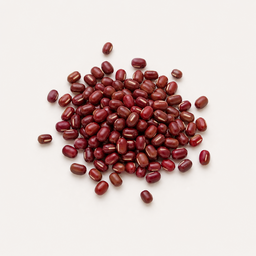
Adzuki Beans
The red pearl of East Asian cuisine
What is this ingredient?
In Japan, New Year revolves around the adzuki bean. On January 15th you eat azuki-gayu — rice porridge with red beans — to pray for health and prosperity. At weddings and births appears sekihan: sticky rice steamed with adzuki beans, which colour the rice pink. The colour red protects, traditions say, against evil spirits.
But the adzuki bean is much more than folklore. In dried form this legume contains nearly 20 grams of protein per 100 grams, more folate than any other common food (622 mcg, well over double the recommended daily intake), and generous portions of iron and potassium. The glycemic index is low: the combination of fibre and resistant starch ensures a slow, steady blood sugar rise.
The most surprising application is sweet. Adzuki beans are cooked with a touch of sugar into anko — a velvety paste that regularly makes Western chocolate lovers question their loyalty. In mochi, dorayaki, taiyaki and manju, anko plays the leading role. In Tayb's sweet kitchen we use adzuki beans in mochi with sesame paste, where the earthy sweetness of the bean meets the nutty bitterness of black sesame.
How does it taste?
Mild-sweet with an earthy, slightly nutty undertone. Softer and less mealy than kidney beans. The sweetness makes them uniquely suitable for desserts — something unthinkable with Western legumes.
Pairs well with:
Black sesamecoconut milksticky ricematchagingersweet potatochestnuts. In savoury dishes: mushroomsseaweedmisorice.
Did you know...?
- In Japan, adzuki beans are eaten on January 15th as a New Year ritual (azuki-gayu). The red colour symbolises good fortune and prosperity in Japanese culture.
- Adzuki beans are the second most consumed legume in Japan, after soybeans. Over 100,000 tonnes are cultivated annually in the country.
Nutritional Value & Energy
Per 100g
Adzuki Beans provides energy thanks to natural nutrients , buffered by fiber.
Per 100g
Minerals
Vitamins
Omega-3 fatty acids
More nutrients
Trace Minerals
Low GI means blood sugar doesn't spike quickly.
What's in a serving?
50 g dried (= approx. 125 g cooked)
Adzuki beans contain 622 mcg folate per 100 g (dried), well over double the recommended daily intake of 300 mcg. Folate is essential for cell division and particularly important during pregnancy.
% of daily reference intake (DRI)
EU-approved nutrition claims
This ingredient contains nutrients for which EFSA-authorized health claims exist (at nutrient level, not ingredient-specific).
Approved health claims (EU)
Magnesium EU 432/2012
Magnesium contributes to normal muscle function
Contains 127mg/100g (threshold: ≥56.25mg/100g)
Magnesium EU 432/2012
Magnesium contributes to the reduction of tiredness and fatigue
Contains 127mg/100g (threshold: ≥56.25mg/100g)
Magnesium EU 432/2012
Magnesium contributes to normal functioning of the nervous system
Contains 127mg/100g (threshold: ≥56.25mg/100g)
Zinc EU 432/2012
Zinc contributes to the normal function of the immune system
Contains 5mg/100g (threshold: ≥1.5mg/100g)
Zinc EU 432/2012
Zinc contributes to the maintenance of normal skin
Contains 5mg/100g (threshold: ≥1.5mg/100g)
Iron EU 432/2012
Iron contributes to normal energy-yielding metabolism
Contains 5mg/100g (threshold: ≥2.1mg/100g)
Iron EU 432/2012
Iron contributes to the reduction of tiredness and fatigue
Contains 5mg/100g (threshold: ≥2.1mg/100g)
Potassium EU 432/2012
Potassium contributes to the maintenance of normal blood pressure
Contains 1254mg/100g (threshold: ≥300mg/100g)
Folate EU 432/2012
Folate contributes to normal blood formation
Contains 622mcg/100g (threshold: ≥30mcg/100g)
Vitamin_b6 EU 432/2012
Vitamin B6 contributes to normal cysteine synthesis
Contains 0.35mg/100g (threshold: ≥0.21mg/100g)
Vitamin_b6 EU 432/2012
Vitamin B6 contributes to normal energy-yielding metabolism
Contains 0.35mg/100g (threshold: ≥0.21mg/100g)
Vitamin_b6 EU 432/2012
Vitamin B6 contributes to normal functioning of the nervous system
Contains 0.35mg/100g (threshold: ≥0.21mg/100g)
Vitamin_b6 EU 432/2012
Vitamin B6 contributes to normal homocysteine metabolism
Contains 0.35mg/100g (threshold: ≥0.21mg/100g)
Vitamin_b6 EU 432/2012
Vitamin B6 contributes to normal protein and glycogen metabolism
Contains 0.35mg/100g (threshold: ≥0.21mg/100g)
Vitamin_b6 EU 432/2012
Vitamin B6 contributes to normal psychological function
Contains 0.35mg/100g (threshold: ≥0.21mg/100g)
Vitamin_b6 EU 432/2012
Vitamin B6 contributes to normal red blood cell formation
Contains 0.35mg/100g (threshold: ≥0.21mg/100g)
Vitamin_b6 EU 432/2012
Vitamin B6 contributes to the normal function of the immune system
Contains 0.35mg/100g (threshold: ≥0.21mg/100g)
Vitamin_b6 EU 432/2012
Vitamin B6 contributes to the regulation of hormonal activity
Contains 0.35mg/100g (threshold: ≥0.21mg/100g)
Vitamin_b6 EU 432/2012
Vitamin B6 contributes to the reduction of tiredness and fatigue
Contains 0.35mg/100g (threshold: ≥0.21mg/100g)
Folate EU 432/2012
Folate contributes to normal amino acid synthesis
Contains 622mcg/100g (threshold: ≥30mcg/100g)
Folate EU 432/2012
Folate contributes to normal homocysteine metabolism
Contains 622mcg/100g (threshold: ≥30mcg/100g)
Folate EU 432/2012
Folate contributes to normal psychological function
Contains 622mcg/100g (threshold: ≥30mcg/100g)
Folate EU 432/2012
Folate contributes to the normal function of the immune system
Contains 622mcg/100g (threshold: ≥30mcg/100g)
Folate EU 432/2012
Folate has a role in the process of cell division
Contains 622mcg/100g (threshold: ≥30mcg/100g)
Folate EU 432/2012
Folate contributes to maternal tissue growth during pregnancy
Contains 622mcg/100g (threshold: ≥30mcg/100g)
Phosphorus EU 432/2012
Phosphorus contributes to normal energy-yielding metabolism
Contains 381mg/100g (threshold: ≥105mg/100g)
Phosphorus EU 432/2012
Phosphorus contributes to the normal function of cell membranes
Contains 381mg/100g (threshold: ≥105mg/100g)
Phosphorus EU 432/2012
Phosphorus contributes to the maintenance of normal bones
Contains 381mg/100g (threshold: ≥105mg/100g)
Phosphorus EU 432/2012
Phosphorus contributes to the maintenance of normal teeth
Contains 381mg/100g (threshold: ≥105mg/100g)
Magnesium EU 432/2012
Magnesium contributes to normal energy-yielding metabolism
Contains 127mg/100g (threshold: ≥56.25mg/100g)
Magnesium EU 432/2012
Magnesium contributes to electrolyte balance
Contains 127mg/100g (threshold: ≥56.25mg/100g)
Magnesium EU 432/2012
Magnesium contributes to normal protein synthesis
Contains 127mg/100g (threshold: ≥56.25mg/100g)
Magnesium EU 432/2012
Magnesium contributes to normal psychological function
Contains 127mg/100g (threshold: ≥56.25mg/100g)
Magnesium EU 432/2012
Magnesium contributes to the maintenance of normal bones
Contains 127mg/100g (threshold: ≥56.25mg/100g)
Magnesium EU 432/2012
Magnesium contributes to the maintenance of normal teeth
Contains 127mg/100g (threshold: ≥56.25mg/100g)
Magnesium EU 432/2012
Magnesium has a role in the process of cell division
Contains 127mg/100g (threshold: ≥56.25mg/100g)
Iron EU 432/2012
Iron contributes to normal cognitive function
Contains 5mg/100g (threshold: ≥2.1mg/100g)
Iron EU 432/2012
Iron contributes to normal formation of red blood cells and haemoglobin
Contains 5mg/100g (threshold: ≥2.1mg/100g)
Iron EU 432/2012
Iron contributes to normal oxygen transport in the body
Contains 5mg/100g (threshold: ≥2.1mg/100g)
Iron EU 432/2012
Iron contributes to the normal function of the immune system
Contains 5mg/100g (threshold: ≥2.1mg/100g)
Iron EU 432/2012
Iron has a role in the process of cell division
Contains 5mg/100g (threshold: ≥2.1mg/100g)
Zinc EU 432/2012
Zinc contributes to normal acid-base metabolism
Contains 5mg/100g (threshold: ≥1.5mg/100g)
Zinc EU 432/2012
Zinc contributes to normal carbohydrate metabolism
Contains 5mg/100g (threshold: ≥1.5mg/100g)
Zinc EU 432/2012
Zinc contributes to normal cognitive function
Contains 5mg/100g (threshold: ≥1.5mg/100g)
Zinc EU 432/2012
Zinc contributes to normal DNA synthesis
Contains 5mg/100g (threshold: ≥1.5mg/100g)
Zinc EU 432/2012
Zinc contributes to normal fertility and reproduction
Contains 5mg/100g (threshold: ≥1.5mg/100g)
Zinc EU 432/2012
Zinc contributes to normal macronutrient metabolism
Contains 5mg/100g (threshold: ≥1.5mg/100g)
Zinc EU 432/2012
Zinc contributes to normal metabolism of fatty acids
Contains 5mg/100g (threshold: ≥1.5mg/100g)
Zinc EU 432/2012
Zinc contributes to normal metabolism of vitamin A
Contains 5mg/100g (threshold: ≥1.5mg/100g)
Zinc EU 432/2012
Zinc contributes to normal protein synthesis
Contains 5mg/100g (threshold: ≥1.5mg/100g)
Zinc EU 432/2012
Zinc contributes to the maintenance of normal bones
Contains 5mg/100g (threshold: ≥1.5mg/100g)
Zinc EU 432/2012
Zinc contributes to the maintenance of normal hair
Contains 5mg/100g (threshold: ≥1.5mg/100g)
Zinc EU 432/2012
Zinc contributes to the maintenance of normal nails
Contains 5mg/100g (threshold: ≥1.5mg/100g)
Zinc EU 432/2012
Zinc contributes to the maintenance of normal testosterone levels in the blood
Contains 5mg/100g (threshold: ≥1.5mg/100g)
Zinc EU 432/2012
Zinc contributes to the maintenance of normal vision
Contains 5mg/100g (threshold: ≥1.5mg/100g)
Zinc EU 432/2012
Zinc contributes to the protection of cells from oxidative stress
Contains 5mg/100g (threshold: ≥1.5mg/100g)
Zinc EU 432/2012
Zinc has a role in the process of cell division
Contains 5mg/100g (threshold: ≥1.5mg/100g)
Copper EU 432/2012
Copper contributes to the maintenance of normal connective tissues
Contains 1.1mg/100g (threshold: ≥0.15mg/100g)
Copper EU 432/2012
Copper contributes to normal energy-yielding metabolism
Contains 1.1mg/100g (threshold: ≥0.15mg/100g)
Copper EU 432/2012
Copper contributes to normal functioning of the nervous system
Contains 1.1mg/100g (threshold: ≥0.15mg/100g)
Copper EU 432/2012
Copper contributes to normal hair pigmentation
Contains 1.1mg/100g (threshold: ≥0.15mg/100g)
Copper EU 432/2012
Copper contributes to normal iron transport in the body
Contains 1.1mg/100g (threshold: ≥0.15mg/100g)
Copper EU 432/2012
Copper contributes to normal skin pigmentation
Contains 1.1mg/100g (threshold: ≥0.15mg/100g)
Copper EU 432/2012
Copper contributes to the normal function of the immune system
Contains 1.1mg/100g (threshold: ≥0.15mg/100g)
Copper EU 432/2012
Copper contributes to the protection of cells from oxidative stress
Contains 1.1mg/100g (threshold: ≥0.15mg/100g)
Manganese EU 432/2012
Manganese contributes to normal energy-yielding metabolism
Contains 1.7mg/100g (threshold: ≥0.3mg/100g)
Manganese EU 432/2012
Manganese contributes to the maintenance of normal bones
Contains 1.7mg/100g (threshold: ≥0.3mg/100g)
Manganese EU 432/2012
Manganese contributes to the normal formation of connective tissue
Contains 1.7mg/100g (threshold: ≥0.3mg/100g)
Manganese EU 432/2012
Manganese contributes to the protection of cells from oxidative stress
Contains 1.7mg/100g (threshold: ≥0.3mg/100g)
Potassium EU 432/2012
Potassium contributes to normal functioning of the nervous system
Contains 1254mg/100g (threshold: ≥300mg/100g)
Potassium EU 432/2012
Potassium contributes to normal muscle function
Contains 1254mg/100g (threshold: ≥300mg/100g)
Comparison
vskidney-bonen
Adzuki beans contain nearly 3x as much folate as kidney beans (622 vs 215 mcg/100g) and have a softer, sweeter flavour that makes them suitable for desserts.
What's being researched?
Nutritional composition and bioactive compounds
Two review studies (Wang et al. 2022, Li et al. 2022) describe the nutritional composition and bioactive compounds of adzuki beans. Researchers study the polyphenol profiles (catechins, proanthocyanidins) and alpha-amylase inhibitors in the bean. Scientific literature documents the nutrient density and potential as functional food.
Supported by: [1] Wang (2022) , [2] Li (2022)
Recipes with Adzuki Beans
Discover delicious recipes featuring adzuki beans:
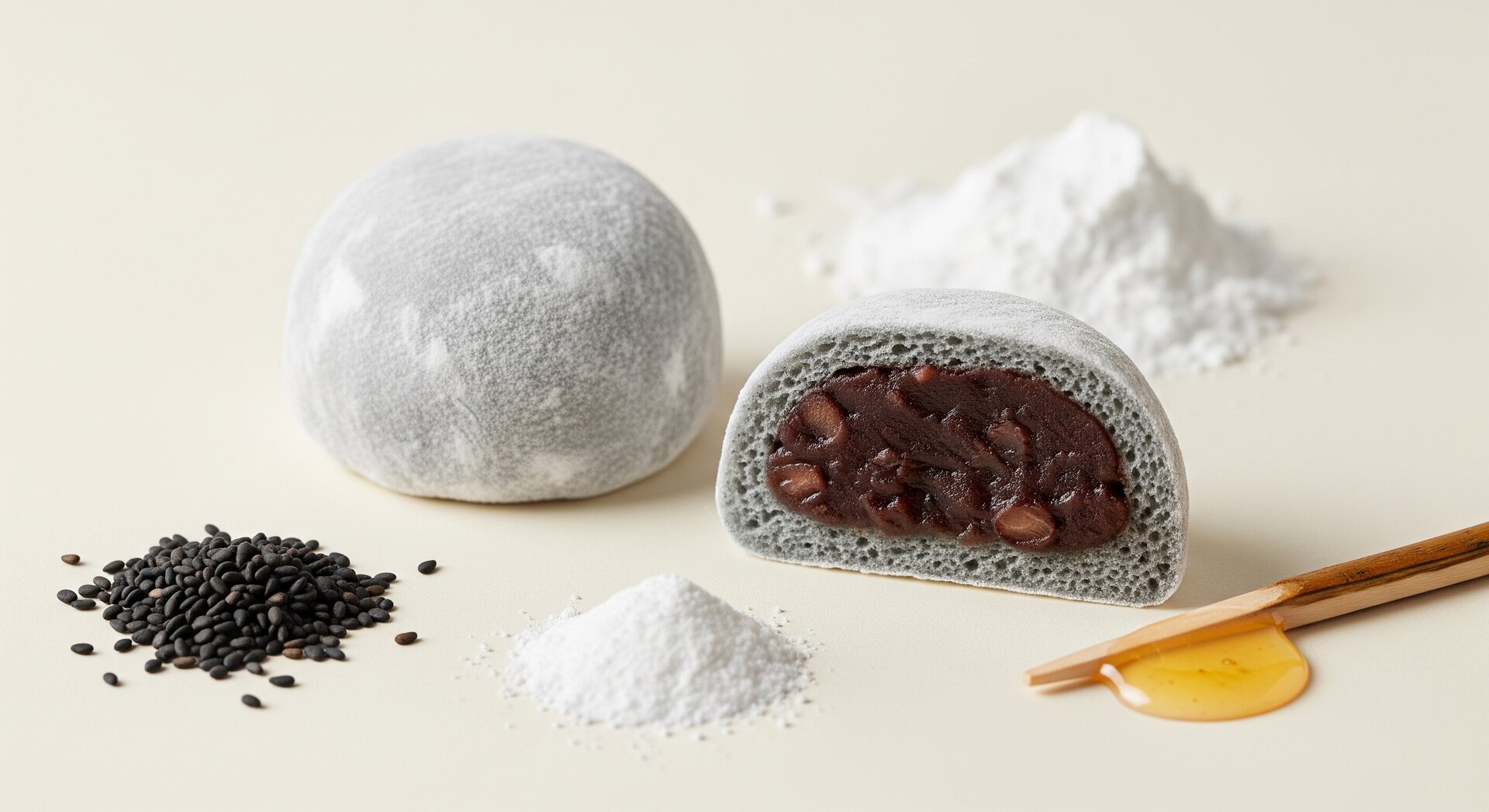 Black Sesame Mochi with Red Bean Paste 31 min Soft Japanese mochi with sesame and sweet anko filling
  253 kcal
  5g protein 2 synergies
  In the Kitchen
Storage
Location:Pantry
Shelf life:1-2 jaar droog, 3-5 dagen gekookt in de koelkast
Store dried adzuki beans in an airtight container in a cool, dark place. Keep cooked beans covered in the fridge and use within 5 days. You can also freeze cooked adzuki beans in portions for up to 3 months.
Preparation
Soak the beans for at least 8 hours (or overnight) in plenty of cold water. Drain the soaking water and rinse. Cook in fresh water on medium heat for 45-60 minutes until tender but holding their shape. For sweet anko paste: cook until completely soft and mash with a touch of sugar.
Conversions
Substitutes
Smart preparation
1Always soak adzuki beans for at least 8 hours in cold water
Why?
Soaking reduces phytic acid content (which inhibits iron and zinc absorption), decreases oligosaccharides (which cause gas), and halves cooking time.
2Discard the soaking water and cook in fresh water
Why?
The soaking water contains dissolved anti-nutrients and oligosaccharides. Fresh water gives a cleaner flavour and reduces gas.
Caution / Warnings
Adzuki Beans is very safe, but there are scientific considerations:
Irritable Bowel Syndrome (IBS) Mild
Legumes contain oligosaccharides (raffinose, stachyose) that can cause gas and bloating in sensitive individuals
Advice:
Soak the beans for at least 8 hours and discard the soaking water. Start with small portions (2-3 tablespoons) and gradually increase.
Traditional use
Southeast Asian
Red beans in Japanese and Korean cuisine
Adzuki beans have been cultivated in Japan for over 3000 years and play a central role in food culture. Anko (red bean paste) is the heart of hundreds of desserts: daifuku mochi, dorayaki, taiyaki, yokan. At festive occasions (New Year, weddings, births) sekihan is served — sticky rice with adzuki beans. The red colour symbolises luck and protection.
Summary
Adzuki beans are small, dark red legumes with a mild-sweet flavour that works excellently in both savoury and sweet dishes. They are one of the richest plant-based sources of folate (622 mcg per 100 g dried, more than double the RDI), contain nearly 20 grams of protein per 100 grams, and have a low glycemic index. Soak them for at least 8 hours before use. Combine with sesame or rice for a complete amino acid profile.