- Medium
- 45 min
- 4 serv.
- 10 synergies
- Now at its best: Carrot
A hearty stew with golden-fried tempeh, kale, carrot, tomato passata and vegetable broth. Seasoned with turmeric, black pepper and garlic. Finished with fresh parsley.
A deep pan of wintry comfort: golden-fried tempeh cubes with a lightly crispy crust, surrounded by dark green kale leaves that have softened in a golden broth. The carrots provide a sweet counterpoint to the earthy tones of turmeric and garlic, while the tomato passata brings a rich red depth. The whole house smells of this stew — warm, hearty, and irresistibly inviting. Fresh parsley on top brings a bright accent that lifts the whole dish.
- 15
- min prep
- 30
- min cook
- 45
- min total
Nutritional Synergies
This recipe combines ingredients that enhance each other:
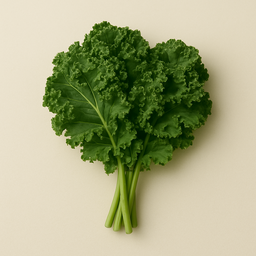 Kale
Kale 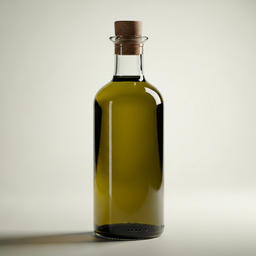 Olive Oil
 Olive oil increases absorption of kale's vitamin K and beta-carotene
Technical: Kale is extremely rich in vitamin K1 (phylloquinone) and beta-carotene (provitamin A), both fat-soluble. Without fat, only 5-10% is absorbed. Olive oil's unsaturated fats form micelles that increase absorption 5-15x.
What does this mean for you? Always sauté or massage your kale with olive oil — without fat you barely absorb any vitamins from this nutrient-dense leaf.
Immune SystemSkin & HairHeart
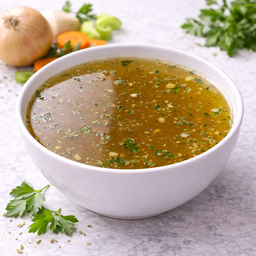 Vegetable Broth
 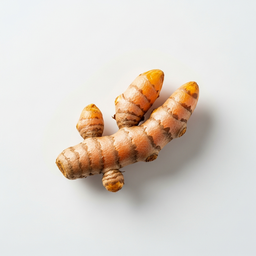 Turmeric
 Mineral-rich broth + curcumin for immune and recovery
Technical: Vegetable broth contains leached minerals (potassium, magnesium, sodium) and glutamate (umami flavor). Turmeric's curcumin (3-5%) modulates NF-kB and COX-2 signaling pathways. The warm broth increases curcumin bioavailability by improving solubility (heat + aqueous matrix). Glutamate in broth also activates T-cell receptors.
What does this mean for you? Add turmeric (plus black pepper) to vegetable broth for a powerful recovery soup. Ideal when you're feeling unwell or recovering from exertion.
Immune SystemAnti-inflammatory
Turmeric 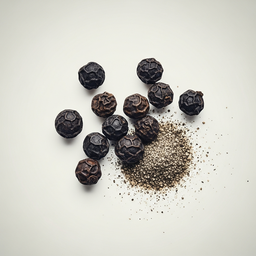 Black Pepper
 Increases curcumin absorption by 2000%
Technical: Curcumin from turmeric has bioavailability below 1% due to rapid glucuronidation in the liver. Piperine from black pepper inhibits UGT (UDP-glucuronosyltransferase) and CYP3A4, preventing curcumin breakdown. This increases bioavailability by 2000% (20x). Use ratio ¼ teaspoon pepper to 1 teaspoon turmeric.
What does this mean for you? ALWAYS add black pepper when using turmeric. Without pepper your body absorbs virtually nothing — with pepper 20x more. This is the most important food synergy there is.
Anti-inflammatoryJointsFocus
Olive Oil 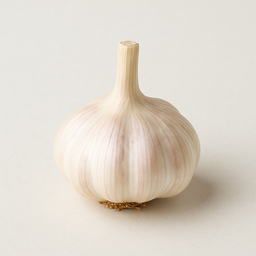 Garlic
 Aglio e olio: allicin + oleocanthal via complementary biochemical pathways
Technical: Garlic contains allicin (formed when cutting/crushing) that influences HMG-CoA reductase (involved in lipid metabolism). Olive oil contains oleocanthal that modulates COX-1/2 enzymes. Together they influence lipid metabolism and prostaglandin cascade via complementary biochemical pathways. The fat also helps absorb fat-soluble garlic compounds.
What does this mean for you? Gently warm garlic in olive oil (don't burn!) as the base for many dishes. This is why 'aglio e olio' pasta is so beloved — two bioactive compounds that reinforce each other.
HeartImmune System
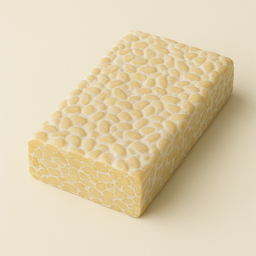 Tempeh Turmeric
 Fermentation + curcumin: fermented isoflavones with enhanced absorption
Technical: Tempeh contains fermented isoflavones (genistein, daidzein) with higher bioavailability than in tofu. Turmeric's curcumin is fat-soluble and better absorbed through the fats in tempeh. Both compounds are studied in research on NF-κB signaling and cellular mechanisms.
What does this mean for you? Fry tempeh in coconut oil with turmeric and black pepper. A classic Indonesian preparation that also provides complete protein. Black pepper increases curcumin absorption by 2000%.
Anti-inflammatoryMuscle GainHormonal Balance
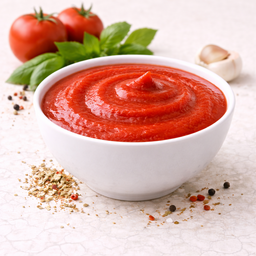 Tomato Passata Olive Oil
 Heated + fats = 5x more lycopene absorption
Technical: Tomato passata is already heated, releasing lycopene from cell walls in cis-form (better absorbable than trans-lycopene in raw tomato). Olive oil fats create micelles transporting this released lycopene through the gut wall. Basil adds eugenol (COX-2 inhibitor). Absorption increases up to 5x.
What does this mean for you? Make pasta sauce with tomato passata, olive oil and basil. You absorb up to 5x more lycopene than from raw tomato — great for your heart and skin.
HeartSkin & Hair
Tomato Passata  Onion
Onion Lycopene + quercetin for broad-spectrum antioxidant protection
Technical: Tomato passata contains bioavailable lycopene (12-15mg/100g) from the cooking process. Onion's quercetin (20mg/100g) is a flavonoid that works complementarily to lycopene: lycopene neutralizes singlet oxygen (lipid phase), quercetin scavenges hydroxyl radicals and superoxide (aqueous phase). Together they cover the complete antioxidant spectrum. Onion's sulfur compounds also support Phase II biotransformation enzymes that process lycopene metabolites.
What does this mean for you? Passata with sauteed onion is the base of Italian cuisine (sugo). It's a top antioxidant duo you can eat daily — simple, affordable and effective.
HeartSkin & HairAnti-inflammatory
Onion Garlic More than 20 organosulfur compounds in one soffritto
Technical: Onion contains diallyl disulfide and quercetin (20-40mg/100g). Garlic contains allicin, ajoene and S-allylcysteine. Together they provide more than 20 different organosulfur compounds that modulate NF-κB. Allium crops are intensively studied in nutrition science for their unique sulfur chemistry.
What does this mean for you? Start every dish with sautéed onion and garlic — not just for flavor, but for the unique concentration of organosulfur compounds. Cut garlic 10 minutes before heating to allow allicin formation.
DigestionImmune System
 Carrot Olive Oil
 Up to 5x more beta-carotene absorption
Technical: Carrot contains 8285μg beta-carotene per 100g, but bioavailability from raw carrot is only 3-4%. Heating + olive oil increases this to 20-25%. Oleic acid (73% of olive oil) forms mixed micelles that efficiently transport beta-carotene to enterocytes for absorption.
What does this mean for you? Roast carrots with olive oil or eat them in a salad with dressing. Without fat you absorb only 3% of beta-carotene — with olive oil up to 5x more.
Skin & HairFocusImmune System
Black Pepper Olive Oil Fat increases piperine absorption and enhances polyphenols
Technical: Piperine is fat-soluble and absorbed 2-3x better with dietary fat. Olive oil's oleocanthal and piperine both modulate COX signal transduction through different mechanisms, providing additive bioactive effect.
What does this mean for you? Grind fresh pepper over salads with olive oil dressing. The combination enhances both pepper absorption and bioactive action.
Anti-inflammatoryHeartDigestion
Instructions
- 1 Cut the tempeh into cubes. Slice the carrot. Remove the thick stems from the kale and tear the leaves into pieces.
- 2 Heat the olive oil in a large pan. Fry the tempeh cubes until golden on all sides (about 4 minutes). Remove and set aside.
Nutrition per serving
Indicative values per serving.
Timing & Suitability
Shelf life: 3 days in fridge
Tags & Diet
Allergens: Soy