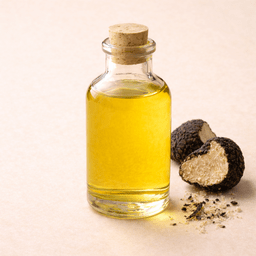
Truffle Oil
Luxury finishing oil with truffle aroma
What is this ingredient?
Truffle oil combines the healthy properties of olive oil with the distinctive aroma of truffles. While authentic truffle oil is made by macerating real truffles in olive oil, most commercial truffle oil contains synthetic aromatics like 2,4-dithiapentane. Real truffles contain more than 60 volatile compounds that together create a complex aroma profile, while synthetic versions typically use 4-10 chemicals to mimic the truffle aroma. The nutritional value comes entirely from the olive oil base and provides healthy monounsaturated fatty acids. Truffle oil should always be used cold as a finishing oil, never heated, as this destroys the delicate aroma compounds. When purchasing, it's important to check whether the product contains real truffles or synthetic aromatics, with the former offering a more complex and authentic flavor.
How does it taste?
Intensely earthy and musky with a penetrating, mushroom-like aroma.
Pairs well with:
Pairs well with pastarisottoeggparmesan and potato.
Did you know...?
- Most commercial truffle oil contains no real truffle but synthetic aroma (2,4-dithiapentane).
- Real truffles cannot be cultivated and are found with trained dogs or pigs.
Nutritional Value & Energy
Per 100ml
Truffle Oil provides energy thanks to natural nutrients .
Per 100g
Minerals
Vitamins
What's in a serving?
1 tablespoon
Truffle Oil naturally contains vitamin e (14.4 mg per 100 g).
% of daily reference intake (DRI)
EU-approved nutrition claims
This ingredient contains nutrients for which EFSA-authorized health claims exist (at nutrient level, not ingredient-specific).
Approved health claims (EU)
Vitamin_e EU 432/2012
Vitamin E contributes to the protection of cells from oxidative stress
Contains 14.4mg/100g (threshold: ≥1.8mg/100g)
What's being researched?
Antioxidants in truffle
Truffles contain various polyphenols and ergothioneine with antioxidant activity. Research on truffle oil specifically is very limited.
Supported by: [3] Ranković N (2025) , [1] Lee H (2020)
Recipes with Truffle Oil
Discover delicious recipes featuring truffle oil:
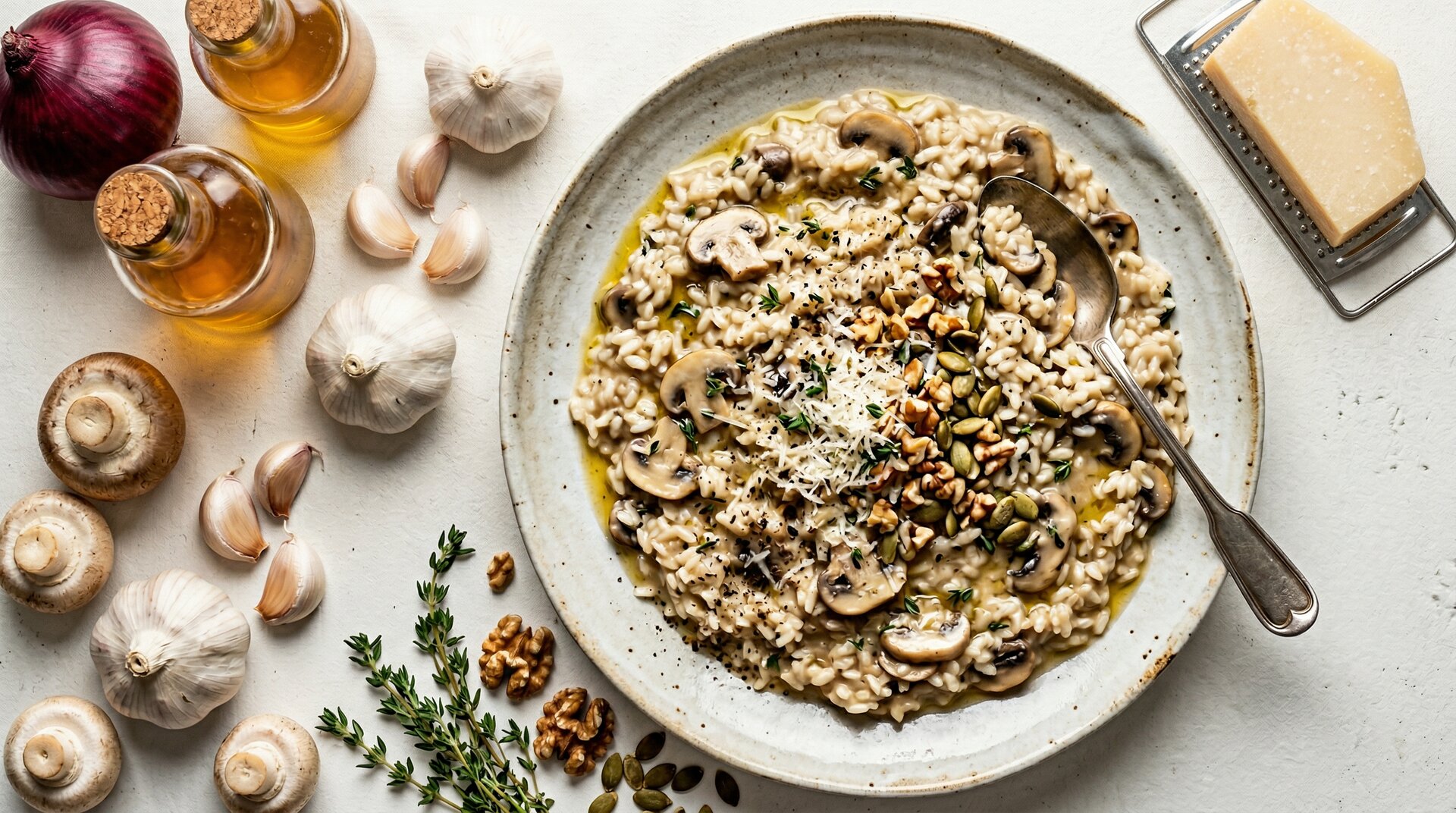 Creamy Mushroom Risotto with Truffle Oil and Parmesan 45 min Soft risotto with sautéed mushrooms, nuts and a fragrant finish
  745 kcal
  23g protein 2 synergies
  In the Kitchen
Storage
Location:Pantry
Shelf life:6-12 maanden na opening (koel en donker bewaren)
Store truffle oil in a dark, cool cupboard or pantry. Avoid direct sunlight and heat to prevent oxidation. Use within 6-12 months after opening for optimal aroma. Always close tightly to minimize aroma loss.
Preparation
Use ONLY as a finishing oil at room temperature. Add a few drops to finished dishes like pasta, risotto, pizza, roasted vegetables, or soup. NEVER heat or fry, this destroys the delicate aroma compounds. For best flavor: a few drops per serving is sufficient.
Conversions
Substitutes
Smart preparation
1Use truffle oil exclusively as finishing; never heat.
Why?
The delicate truffle aroma evaporates completely when heated.
2Drizzle truffle oil sparingly: 2-3 drops per serving is sufficient.
3Store truffle oil cool and dark; use within 6 months of opening.
Caution / Warnings
Truffle Oil is very safe, but there are scientific considerations:
High calorie intake with excessive use Mild
Truffle oil is very high in calories (800 kcal/100ml) and should be used sparingly as a finishing oil.
Advice:
Use small amounts (a few drops) for flavor, not for frying or heating.
Quality differences between products Mild
Most commercial truffle oils contain synthetic aromatics (2,4-dithiapentane) instead of real truffles, resulting in a simpler aroma profile.
Advice:
Check the label to see if the product contains real truffles for a more authentic flavor and potentially more bioactive compounds.
Summary
Truffle oil is olive oil with the luxury aroma of truffles, but most commercial varieties use synthetic aromatics instead of real truffles. The nutritional value comes entirely from the olive oil base: rich in healthy monounsaturated fatty acids and vitamin E. Use sparingly as a finishing oil (never heat) to give pasta, risotto, or vegetables an earthy, umami-rich flavor.