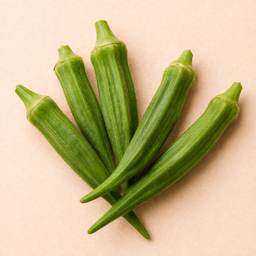
Okra
Tropical vegetable for the gut microbiome
What is this ingredient?
## Botanical Characteristics and Cultural Significance
Okra (Abelmoschus esculentus) is a tropical vegetable from the mallow family (Malvaceae), whose edible green pods are rich in nutrients and bioactive compounds. Originally from West Africa, okra is now cultivated worldwide in tropical and subtropical regions. The plant produces distinctive five-sided pods 5-15 cm long, harvested young for culinary use. Okra is a cornerstone of many traditional cuisines: in Louisiana gumbo, Middle Eastern bamia, Indian bhindi masala, and many African stews.
## Mucilage: The Unique Mucilaginous Substance for the Gut Microbiome
The most distinctive property of okra is mucilage, a gel-like viscous substance released when cutting or cooking. This mucilage consists of soluble fibers in the form of gums and pectins (Gemede et al., 2015). Scientific research shows that okra mucilage supports the gut microbiome by protecting the intestinal lining, reducing inflammation, and promoting growth of healthy gut bacteria. In a study with obese mice, okra powder supplementation strongly inhibited high-fat diet-induced high blood glucose, body weight gain and liver fat accumulation, while improving gut microbiota diversity (Chen et al., 2020).
## Soluble Fiber and Lipid Interaction Under Investigation
Okra has proven effects on metabolic health. Multiple randomized clinical trials have investigated the effects of okra supplementation on blood glucose parameters, hemoglobin A1c and lipid profiles in patients with type 2 diabetes (Sabitha et al., 2011; Khosravi et al., 2022). A meta-analysis concludes that okra treatment improves glycemic control and can be used as a supplemental dietary nutrient, especially in pre-diabetic patients due to its potential to regulate hyperglycemia (Afroz et al., 2023).
The preclinically studied interaction of okra fiber with lipids is mediated by inhibition of lipogenesis (fat formation) via SREBP1c and FAS, and by upregulation of cholesterol degradation via CYP7A1 (Sabitha et al., 2013). The soluble fibers in okra bind to bile salts in the intestine, increasing fecal excretion of bile acids — a mechanism associated with lower lipid values in animal studies.
## Antioxidants and Bioactive Compounds Under Investigation
Okra is rich in polyphenols and flavonoids that reduce oxidative stress and inflammation. Okra polysaccharide improves antioxidant capacity via PI3K/AKT pathways and Nrf2 translocation in a type 2 diabetes model (Liao et al., 2019). The antioxidant properties of okra mucilage show higher total phenolic content and stronger free radical-scavenging activity compared to peel-seed extracts (Kumar et al., 2021).
How does it taste?
Mild, grassy and slightly earthy. Has a characteristic mucilaginous texture when stewed.
Pairs well with:
Pairs well with tomatocumincorianderlemon and garlic.
Did you know...?
- Okra is related to hibiscus and has similar flowers before the pods form.
- Okra originates from Ethiopia and was brought to the Americas via the slave trade.
Nutritional Value & Energy
Per 100g
Okra is low in calories thanks to natural nutrients , buffered by fiber.
Per 100g
Minerals
Vitamins
Omega-3 fatty acids
More nutrients
B-Vitamins
Trace Minerals
What's in a serving?
1 serving
Okra naturally contains vitamin c (23 mg per 100 g).
Okra naturally contains vitamin k (31.3 mcg per 100 g).
Okra naturally contains folate (60 mcg per 100 g).
Okra naturally contains magnesium (57 mg per 100 g).
% of daily reference intake (DRI)
EU-approved nutrition claims
This ingredient contains nutrients for which EFSA-authorized health claims exist (at nutrient level, not ingredient-specific).
Approved health claims (EU)
Vitamin_c EU 432/2012
Vitamin C contributes to the normal function of the immune system
Contains 23mg/100g (threshold: ≥12mg/100g)
Vitamin_c EU 432/2012
Vitamin C contributes to the reduction of tiredness and fatigue
Contains 23mg/100g (threshold: ≥12mg/100g)
Vitamin_c EU 432/2012
Vitamin C contributes to normal collagen formation for the normal function of skin
Contains 23mg/100g (threshold: ≥12mg/100g)
Magnesium EU 432/2012
Magnesium contributes to normal muscle function
Contains 57mg/100g (threshold: ≥56.25mg/100g)
Magnesium EU 432/2012
Magnesium contributes to the reduction of tiredness and fatigue
Contains 57mg/100g (threshold: ≥56.25mg/100g)
Magnesium EU 432/2012
Magnesium contributes to normal functioning of the nervous system
Contains 57mg/100g (threshold: ≥56.25mg/100g)
Folate EU 432/2012
Folate contributes to normal blood formation
Contains 60mcg/100g (threshold: ≥30mcg/100g)
Folate EU 432/2012
Folate contributes to normal amino acid synthesis
Contains 60mcg/100g (threshold: ≥30mcg/100g)
Folate EU 432/2012
Folate contributes to normal homocysteine metabolism
Contains 60mcg/100g (threshold: ≥30mcg/100g)
Folate EU 432/2012
Folate contributes to normal psychological function
Contains 60mcg/100g (threshold: ≥30mcg/100g)
Folate EU 432/2012
Folate contributes to the normal function of the immune system
Contains 60mcg/100g (threshold: ≥30mcg/100g)
Folate EU 432/2012
Folate has a role in the process of cell division
Contains 60mcg/100g (threshold: ≥30mcg/100g)
Folate EU 432/2012
Folate contributes to maternal tissue growth during pregnancy
Contains 60mcg/100g (threshold: ≥30mcg/100g)
Vitamin_c EU 432/2012
Vitamin C contributes to normal collagen formation for the normal function of blood vessels
Contains 23mg/100g (threshold: ≥12mg/100g)
Vitamin_c EU 432/2012
Vitamin C contributes to normal collagen formation for the normal function of bones
Contains 23mg/100g (threshold: ≥12mg/100g)
Vitamin_c EU 432/2012
Vitamin C contributes to normal collagen formation for the normal function of cartilage
Contains 23mg/100g (threshold: ≥12mg/100g)
Vitamin_c EU 432/2012
Vitamin C contributes to normal collagen formation for the normal function of gums
Contains 23mg/100g (threshold: ≥12mg/100g)
Vitamin_c EU 432/2012
Vitamin C contributes to normal collagen formation for the normal function of teeth
Contains 23mg/100g (threshold: ≥12mg/100g)
Vitamin_c EU 432/2012
Vitamin C contributes to normal energy-yielding metabolism
Contains 23mg/100g (threshold: ≥12mg/100g)
Vitamin_c EU 432/2012
Vitamin C contributes to normal functioning of the nervous system
Contains 23mg/100g (threshold: ≥12mg/100g)
Vitamin_c EU 432/2012
Vitamin C contributes to normal psychological function
Contains 23mg/100g (threshold: ≥12mg/100g)
Vitamin_c EU 432/2012
Vitamin C contributes to the protection of cells from oxidative stress
Contains 23mg/100g (threshold: ≥12mg/100g)
Vitamin_c EU 432/2012
Vitamin C contributes to the regeneration of the reduced form of vitamin E
Contains 23mg/100g (threshold: ≥12mg/100g)
Vitamin_c EU 432/2012
Vitamin C increases iron absorption
Contains 23mg/100g (threshold: ≥12mg/100g)
Vitamin_c EU 432/2012
Vitamin C contributes to maintain the normal function of the immune system during and after intense physical exercise
Contains 23mg/100g (threshold: ≥12mg/100g)
Vitamin_k EU 432/2012
Vitamin K contributes to normal blood clotting
Contains 31.3mcg/100g (threshold: ≥11.25mcg/100g)
Vitamin_k EU 432/2012
Vitamin K contributes to the maintenance of normal bones
Contains 31.3mcg/100g (threshold: ≥11.25mcg/100g)
Magnesium EU 432/2012
Magnesium contributes to normal energy-yielding metabolism
Contains 57mg/100g (threshold: ≥56.25mg/100g)
Magnesium EU 432/2012
Magnesium contributes to electrolyte balance
Contains 57mg/100g (threshold: ≥56.25mg/100g)
Magnesium EU 432/2012
Magnesium contributes to normal protein synthesis
Contains 57mg/100g (threshold: ≥56.25mg/100g)
Magnesium EU 432/2012
Magnesium contributes to normal psychological function
Contains 57mg/100g (threshold: ≥56.25mg/100g)
Magnesium EU 432/2012
Magnesium contributes to the maintenance of normal bones
Contains 57mg/100g (threshold: ≥56.25mg/100g)
Magnesium EU 432/2012
Magnesium contributes to the maintenance of normal teeth
Contains 57mg/100g (threshold: ≥56.25mg/100g)
Magnesium EU 432/2012
Magnesium has a role in the process of cell division
Contains 57mg/100g (threshold: ≥56.25mg/100g)
What's being researched?
Mucilage and blood sugar research
Mucilage in okra is being studied for potential effects on blood sugar levels through delayed sugar absorption. Animal studies are promising, but human clinical trials are still limited.
Supported by: [2] Afroz (2023) , [1] Chen (2020) , [4] Liao (2019)
Soluble fiber and the gut microbiome
Soluble fiber in okra is being studied for prebiotic properties and gut flora support. Preliminary evidence suggests beneficial effects on gut microbiota.
Supported by: [5] Gemede (2015) , [1] Chen (2020)
Good Combinations (Synergy)
Combine okra smartly to enhance the effect:
Okra  Turmeric
 Double glycemic modulation via mechanical delay and AMPK activation
Okra polysaccharides delay glucose absorption (PMID: 32156377), curcumin activates AMPK and GLUT4 (PMID: 24672885)
Technical: Okra mucilage forms a gel in the gut that mechanically delays glucose absorption, flattening postprandial spikes. Curcumin from turmeric activates the AMPK pathway and stimulates GLUT4 expression. Together they influence glycemic response complementarily: okra slows glucose influx, curcumin modulates cellular glucose uptake via AMPK.
What does this mean for you? Okra curry with turmeric (like bhindi masala) influences glycemic response through two pathways. Okra mechanically slows sugar absorption, turmeric modulates via the AMPK pathway — complementary biochemical mechanisms in one dish.
Okra 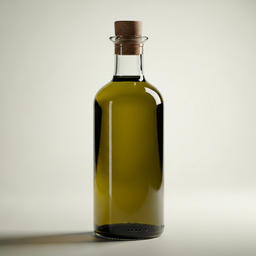 Olive Oil
 Olive oil increases absorption of fat-soluble vitamin K and polyphenols from okra
Phylloquinone in plant foods requires dietary fat for adequate absorption, only 4-17% is absorbed without fat (NIH Office of Dietary Supplements)
Technical: Okra contains 31.3μg vitamin K1 (phylloquinone) per 100g, which is fat-soluble and tightly bound to chloroplasts in plant foods. Without fat, only 4-17% is absorbed. Oleic acid (73%) from olive oil forms mixed micelles that release phylloquinone from the cell matrix and improve intestinal absorption up to 3x. Olive oil itself also contains 8.1μg vitamin K per tablespoon.
What does this mean for you? Fry okra in olive oil for maximum vitamin K absorption. The traditional preparation method (frying in oil) is scientifically optimal — the fat makes vitamin K accessible to your body.
Okra  Tomato
 Complementary lipid pathways via bile acid binding and LDL oxidation modulation
Okra soluble fibers bind bile acids and inhibit lipogenesis via SREBP1c (PMID: 23606408)
Technical: Okra mucilage binds 35% of bile acids in the gut (comparable to chitosan), causing the liver to convert cholesterol into new bile acids — influencing lipid metabolism. Tomato lycopene (2573μg/100g) modulates LDL oxidation. Together they work complementarily through two lipid pathways: okra influences lipid metabolism quantitatively, tomato modulates LDL oxidation.
What does this mean for you? Okra stewed with tomato (like in gumbo or bamia) combines two complementary lipid pathways. The bile acid binding from okra and LDL oxidation modulation from tomato work through different biochemical mechanisms.
Okra  Yogurt
 Synbiotic effect: okra mucilage prebiotic + yogurt probiotics increase butyrate
Okra polysaccharides increase butyrate-producing bacteria and SCFA production in the gut (PMID: 32156377)
Technical: Okra mucilage contains soluble fibers (gums and pectins) serving as prebiotic substrate for gut bacteria. Yogurt provides Lactobacillus and Bifidobacterium strains (probiotic). Okra polysaccharides are selectively fermented by these probiotics into short-chain fatty acids, especially butyrate, which nourishes colonocytes and modulates NF-κB.
What does this mean for you? Okra in curry with a dollop of yogurt is a synbiotic combination. The mucilage fibers from okra feed the beneficial bacteria from yogurt — prebiotic and probiotic in one meal.
 In the Kitchen
Storage
Location:Refrigerator
Shelf life:3-4 dagen in de koelkast
Store okra in a paper bag in the vegetable drawer to absorb moisture. Wash okra only just before use to prevent spoilage. Freeze okra after blanching for long-term storage.
Preparation
Okra can be fried in hot oil until crispy (to reduce sliminess), stewed in gumbo or curry, grilled as a side dish, or raw in salads. To minimize mucilage: keep okra whole, don't cut before cooking, and fry at high heat. To utilize mucilage: cut okra and slow-cook as thickening agent in soups.
Substitutes
Smart preparation
1Don't cut okra too small to limit the sliminess.
Why?
The more cut surface, the more slime is released during cooking.
2Fry okra on high heat or roast in the oven for less slime.
3Add a splash of lemon juice or vinegar to reduce slime formation.
Caution / Warnings
Okra is very safe, but there are scientific considerations:
Diabetes medication (metformin, insulin) Moderate
Okra can lower blood glucose, which in combination with diabetes medication can lead to hypoglycemia
Advice:
Monitor blood glucose closely with concurrent use and consult your doctor about possible medication dose adjustment
Allergy to Malvaceae family Severe
People with allergy to hibiscus or other plants from the mallow family may also be allergic to okra
Advice:
Avoid okra with known allergy to Malvaceae plants
Kidney stones (oxalate-rich) Moderate
Okra contains oxalates that can contribute to kidney stone formation in susceptible individuals
Advice:
With a history of calcium oxalate kidney stones: eat okra in moderate amounts and drink plenty of water
Traditional use
African
West African traditional use
Okra originates from West Africa and has been used there for centuries, both as food and in folk medicine for stomach complaints and during childbirth.
Ayurveda
Ayurvedic mucous membrane restorative
In Ayurveda, okra is valued for its mucilaginous properties that protect and soothe the digestive tract.
Summary
Okra is a tropical vegetable with unique mucilage (viscous substance) that supports the gut microbiome and protects the intestinal lining. Its soluble fiber is being studied for interactions with blood sugar and lipids, and for potential effects on gut microbiota, making okra an especially interesting subject in metabolic and digestive research.