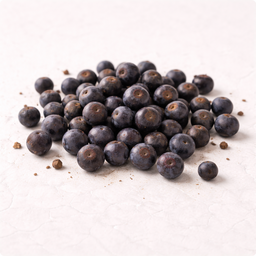
Juniper Berry
Aromatic berry for game and brine
What is this ingredient?
Juniper berries are a distinctive spice from the world of coniferous trees. Their characteristic flavor forms the base of genever and gin, but they are also essential in European charcuterie, sauerkraut and game dishes.
The berries contain aromatic terpenes such as α-pinene (piney), myrcene (herbal) and limonene (citrus), which together create their complex aroma. These same fragrance compounds explain why a small amount is enough to give brines, stews and sauces a pronounced woodland depth.
In traditional European cooking, juniper berries are used to soften the strong flavor of game and to give cured preparations a recognizable resinous, fresh note.
How does it taste?
Resinous, slightly sweet and woodsy, with piney, citrusy and peppery undertones.
Pairs well with:
Pairs well with gamered cabbagebay leafthymegarlic and blueberries.
Did you know...?
- Juniper is the ingredient that gives genever and gin their name and recognizable flavor.
- Juniper berries are botanically not true berries, but small cones from a conifer.
Nutritional Value & Energy
Per 100g
Juniper Berry provides energy thanks to natural nutrients , buffered by fiber.
Per 100g
Minerals
Vitamins
More nutrients
Trace Minerals
What's in a serving?
1 tablespoon (in a stew)
Juniper berry naturally contains manganese (0.8 mg per 100 g dried powder). At typical spice usage (3–9 g), the contribution is limited.
% of daily reference intake (DRI)
EU-approved nutrition claims
There are currently no EFSA-authorized health claims specific to juniper berry. Various applications for herbs and spices have been submitted but have not yet been assessed (botanical 'on hold' list).
What's being researched?
Juniper and aromatic oils
Essential oils from juniper are studied for their aromatic composition, including α-pinene and other terpenes. Much of the research is done in laboratory models and mainly describes the compounds themselves, not normal culinary use.
Supported by: [1] Bajac J (2025)
Good Combinations (Synergy)
Combine juniper berry smartly to enhance the effect:
Juniper Berry 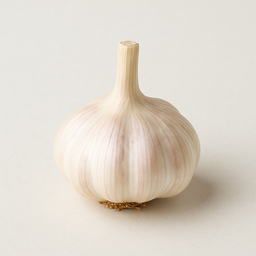 Garlic
 Terpenes + allicin for dual bioactive action
Technical: Juniper's essential oil (α-pinene 35%, sabinene 15%) contains bioactive compounds that disrupt gram-positive bacteria. Garlic's allicin works broad-spectrum against bacteria, fungi and some viruses by blocking thiol groups in pathogen enzymes. Together they cover complementary pathogen spectra: juniper effective against Staphylococcus, garlic against E. coli and Candida. The combination is traditional in Northern European meat preparations.
What does this mean for you? Combine juniper berries with garlic in marinades and stews. Historically this served as a preservation method — a tradition that also works exceptionally well for flavor.
Juniper Berry 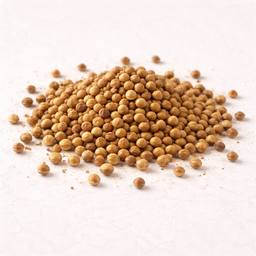 Coriander Seeds
 a-pinene + linalool enhance bioactive and digestive action
Technical: Juniper contains a-pinene (30%) with bioactive action via cell wall disruption. Coriander seed contains linalool (60-80%) that works bioactively via a different mechanism (membrane permeabilization). Together they provide broader bioactive action. Both promote digestion via bile stimulation.
What does this mean for you? Juniper + coriander seed is a classic herb combination for stews and game. The two spices enhance each other's bioactive and digestive action.
Juniper Berry 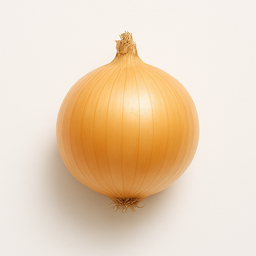 Onion
Onion Terpenes + quercetin, aromatic bioactive compounds
Technical: Juniper berries contain α-pinene and myrcene (terpenes) that act as mild diuretics and increase kidney filtration by 15-20%. Onion's quercetin (20mg/100g) is a powerful antioxidant that reduces oxidative stress in renal tubules. The combination offers safe support: juniper stimulates urine production, quercetin reduces oxidative stress in renal tissue during this process. Traditionally used in game dishes (juniper + onion with venison/boar).
What does this mean for you? Use juniper berries with onion in stews and game preparations. Besides the amazing flavor, the combination supports your kidneys and helps with fluid retention naturally.
Recipes with Juniper Berry
Discover delicious recipes featuring juniper berry:
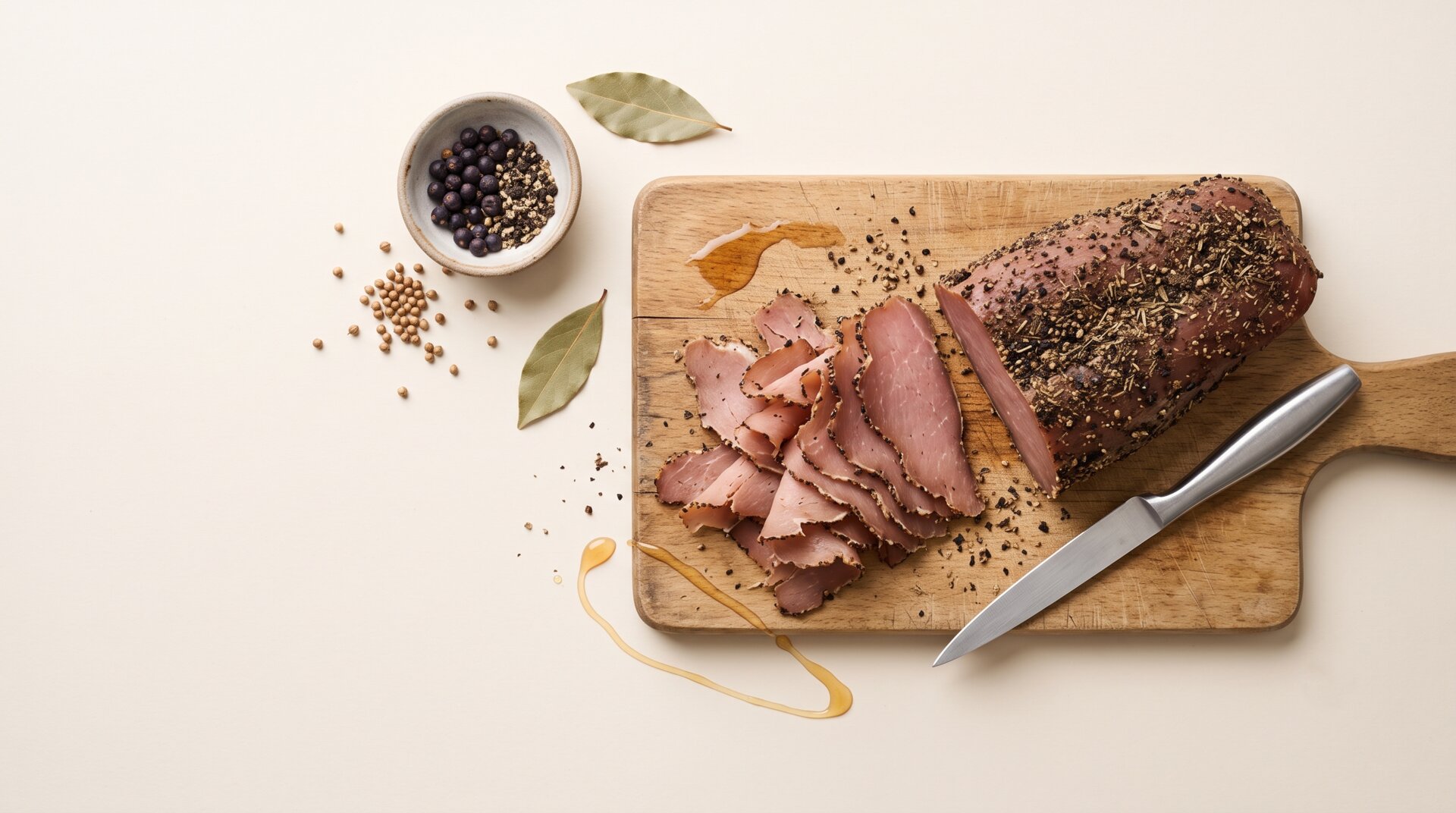 Turkey Filet d'Anvers Cold Cut 200 min Belgian delicacy as halal sandwich meat
  50 kcal
  10g protein 2 synergies
  In the Kitchen
Storage
Location:Pantry
Shelf life:2-3 jaar
Store in an airtight jar, dark and cool. Whole berries keep their aroma longer than ground juniper.
Preparation
Lightly crush the berries with a knife or mortar. Add them early to stews, sauces or brines so the aroma can infuse gently. Remove before serving or strain the sauce.
Conversions
Substitutes
Smart preparation
1Lightly crush juniper berries with the flat side of a knife before use.
Why?
Crushing breaks the skin and releases the aromatic oils.
2Use four to six berries per dish; too many can give a soapy taste.
3Remove the berries from stews before serving.
Caution / Warnings
Juniper Berry is very safe, but there are scientific considerations:
Pregnancy Severe
High or concentrated amounts of juniper are not recommended during pregnancy
Advice:
Use only normal culinary amounts and seek professional advice if unsure
Kidney disease Moderate
High or concentrated amounts of juniper may be unsuitable with existing kidney problems
Advice:
Use normal culinary amounts, such as a few berries in a dish, and consult a professional if unsure
Traditional use
Mediterranean
European herbal traditions
Juniper berries were known to the Romans and later gained a fixed place in medieval European culinary and herbal traditions. In the Low Countries, they have formed the aromatic base of genever since the 16th century.
Summary
Juniper berries are classic in sauerkraut, game dishes and charcuterie. Crush them lightly before use to release the aromatic oils. Four to six berries are usually enough for a stew, sauce or brine.