Falafel
Spiced chickpea balls from Middle Eastern cooking
What is this ingredient?
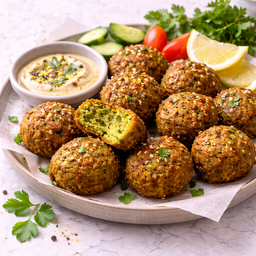
Falafel are crispy balls made from ground, soaked chickpeas with coriander, cumin, garlic and often parsley or fresh cilantro. This traditional Middle Eastern dish combines the hearty texture of legumes with aromatic spices and is usually served with tahini, salad, pickled vegetables or pita bread.
## Plant Protein
Chickpeas provide about 13 g protein per 100 g of falafel, depending on the recipe and cooking method. Wallace et al. (2019) discuss legumes as an important plant protein source within varied eating patterns. Homemade falafel also gives control over salt, oil and portion size.
## Chickpeas and carbohydrate profile
Chickpeas naturally have a low glycemic index, often around 28. Jenkins et al. (1981) describe how different carbohydrate foods have different glycemic index values. In falafel, this is combined with fiber, protein and spices, giving the dish a hearty and satisfying role within a meal.
## Fiber, herbs and texture
With about 5 g fiber per 100 g, falafel fits well into a fiber-rich eating pattern. Polak et al. (2015) describe legumes as versatile ingredients in cuisines around the world. The classic crisp exterior comes from hot oil or air-fryer heat, while the inside stays soft, green and aromatic from fresh herbs.
How does it taste?
Nutty and herbal with a crunchy crust and creamy chickpea interior.
Pairs well with:
Pairs well with tahinihummuspickled vegetablespita bread and salad.
Did you know...?
- The exact origin of falafel is disputed: Egypt, Lebanon and Palestine are among the places often mentioned.
- Egyptian falafel, often called ta'ameya, is traditionally made from fava beans instead of chickpeas.
Nutritional Value & Energy
Per 100g
Falafel provides energy thanks to natural nutrients , buffered by fiber.
Per 100g
Minerals
Vitamins
More nutrients
Trace Minerals
What's in a serving?
1 serving
Falafel naturally contains iron (3.4 mg per 100 g).
Falafel naturally contains zinc (2.5 mg per 100 g).
Falafel naturally contains magnesium (82 mg per 100 g).
Falafel naturally contains potassium (585 mg per 100 g).
Falafel naturally contains phosphorus (168 mg per 100 g).
Falafel naturally contains folate (70 mcg per 100 g).
Falafel naturally contains vitamin B6 (0.3 mg per 100 g).
% of daily reference intake (DRI)
EU-approved nutrition claims
This ingredient contains nutrients for which EFSA-authorized health claims exist (at nutrient level, not ingredient-specific).
Approved health claims (EU)
Magnesium EU 432/2012
Magnesium contributes to normal muscle function
Contains 82mg/100g (threshold: ≥56.25mg/100g)
Magnesium EU 432/2012
Magnesium contributes to the reduction of tiredness and fatigue
Contains 82mg/100g (threshold: ≥56.25mg/100g)
Magnesium EU 432/2012
Magnesium contributes to normal functioning of the nervous system
Contains 82mg/100g (threshold: ≥56.25mg/100g)
Zinc EU 432/2012
Zinc contributes to the normal function of the immune system
Contains 2.5mg/100g (threshold: ≥1.5mg/100g)
Zinc EU 432/2012
Zinc contributes to the maintenance of normal skin
Contains 2.5mg/100g (threshold: ≥1.5mg/100g)
Iron EU 432/2012
Iron contributes to normal energy-yielding metabolism
Contains 3.4mg/100g (threshold: ≥2.1mg/100g)
Iron EU 432/2012
Iron contributes to the reduction of tiredness and fatigue
Contains 3.4mg/100g (threshold: ≥2.1mg/100g)
Potassium EU 432/2012
Potassium contributes to the maintenance of normal blood pressure
Contains 585mg/100g (threshold: ≥300mg/100g)
Folate EU 432/2012
Folate contributes to normal blood formation
Contains 70mcg/100g (threshold: ≥30mcg/100g)
Vitamin_b6 EU 432/2012
Vitamin B6 contributes to normal cysteine synthesis
Contains 0.3mg/100g (threshold: ≥0.21mg/100g)
Vitamin_b6 EU 432/2012
Vitamin B6 contributes to normal energy-yielding metabolism
Contains 0.3mg/100g (threshold: ≥0.21mg/100g)
Vitamin_b6 EU 432/2012
Vitamin B6 contributes to normal functioning of the nervous system
Contains 0.3mg/100g (threshold: ≥0.21mg/100g)
Vitamin_b6 EU 432/2012
Vitamin B6 contributes to normal homocysteine metabolism
Contains 0.3mg/100g (threshold: ≥0.21mg/100g)
Vitamin_b6 EU 432/2012
Vitamin B6 contributes to normal protein and glycogen metabolism
Contains 0.3mg/100g (threshold: ≥0.21mg/100g)
Vitamin_b6 EU 432/2012
Vitamin B6 contributes to normal psychological function
Contains 0.3mg/100g (threshold: ≥0.21mg/100g)
Vitamin_b6 EU 432/2012
Vitamin B6 contributes to normal red blood cell formation
Contains 0.3mg/100g (threshold: ≥0.21mg/100g)
Vitamin_b6 EU 432/2012
Vitamin B6 contributes to the normal function of the immune system
Contains 0.3mg/100g (threshold: ≥0.21mg/100g)
Vitamin_b6 EU 432/2012
Vitamin B6 contributes to the regulation of hormonal activity
Contains 0.3mg/100g (threshold: ≥0.21mg/100g)
Vitamin_b6 EU 432/2012
Vitamin B6 contributes to the reduction of tiredness and fatigue
Contains 0.3mg/100g (threshold: ≥0.21mg/100g)
Folate EU 432/2012
Folate contributes to normal amino acid synthesis
Contains 70mcg/100g (threshold: ≥30mcg/100g)
Folate EU 432/2012
Folate contributes to normal homocysteine metabolism
Contains 70mcg/100g (threshold: ≥30mcg/100g)
Folate EU 432/2012
Folate contributes to normal psychological function
Contains 70mcg/100g (threshold: ≥30mcg/100g)
Folate EU 432/2012
Folate contributes to the normal function of the immune system
Contains 70mcg/100g (threshold: ≥30mcg/100g)
Folate EU 432/2012
Folate has a role in the process of cell division
Contains 70mcg/100g (threshold: ≥30mcg/100g)
Folate EU 432/2012
Folate contributes to maternal tissue growth during pregnancy
Contains 70mcg/100g (threshold: ≥30mcg/100g)
Phosphorus EU 432/2012
Phosphorus contributes to normal energy-yielding metabolism
Contains 168mg/100g (threshold: ≥105mg/100g)
Phosphorus EU 432/2012
Phosphorus contributes to the normal function of cell membranes
Contains 168mg/100g (threshold: ≥105mg/100g)
Phosphorus EU 432/2012
Phosphorus contributes to the maintenance of normal bones
Contains 168mg/100g (threshold: ≥105mg/100g)
Phosphorus EU 432/2012
Phosphorus contributes to the maintenance of normal teeth
Contains 168mg/100g (threshold: ≥105mg/100g)
Magnesium EU 432/2012
Magnesium contributes to normal energy-yielding metabolism
Contains 82mg/100g (threshold: ≥56.25mg/100g)
Magnesium EU 432/2012
Magnesium contributes to electrolyte balance
Contains 82mg/100g (threshold: ≥56.25mg/100g)
Magnesium EU 432/2012
Magnesium contributes to normal protein synthesis
Contains 82mg/100g (threshold: ≥56.25mg/100g)
Magnesium EU 432/2012
Magnesium contributes to normal psychological function
Contains 82mg/100g (threshold: ≥56.25mg/100g)
Magnesium EU 432/2012
Magnesium contributes to the maintenance of normal bones
Contains 82mg/100g (threshold: ≥56.25mg/100g)
Magnesium EU 432/2012
Magnesium contributes to the maintenance of normal teeth
Contains 82mg/100g (threshold: ≥56.25mg/100g)
Magnesium EU 432/2012
Magnesium has a role in the process of cell division
Contains 82mg/100g (threshold: ≥56.25mg/100g)
Iron EU 432/2012
Iron contributes to normal cognitive function
Contains 3.4mg/100g (threshold: ≥2.1mg/100g)
Iron EU 432/2012
Iron contributes to normal formation of red blood cells and haemoglobin
Contains 3.4mg/100g (threshold: ≥2.1mg/100g)
Iron EU 432/2012
Iron contributes to normal oxygen transport in the body
Contains 3.4mg/100g (threshold: ≥2.1mg/100g)
Iron EU 432/2012
Iron contributes to the normal function of the immune system
Contains 3.4mg/100g (threshold: ≥2.1mg/100g)
Iron EU 432/2012
Iron has a role in the process of cell division
Contains 3.4mg/100g (threshold: ≥2.1mg/100g)
Zinc EU 432/2012
Zinc contributes to normal acid-base metabolism
Contains 2.5mg/100g (threshold: ≥1.5mg/100g)
Zinc EU 432/2012
Zinc contributes to normal carbohydrate metabolism
Contains 2.5mg/100g (threshold: ≥1.5mg/100g)
Zinc EU 432/2012
Zinc contributes to normal cognitive function
Contains 2.5mg/100g (threshold: ≥1.5mg/100g)
Zinc EU 432/2012
Zinc contributes to normal DNA synthesis
Contains 2.5mg/100g (threshold: ≥1.5mg/100g)
Zinc EU 432/2012
Zinc contributes to normal fertility and reproduction
Contains 2.5mg/100g (threshold: ≥1.5mg/100g)
Zinc EU 432/2012
Zinc contributes to normal macronutrient metabolism
Contains 2.5mg/100g (threshold: ≥1.5mg/100g)
Zinc EU 432/2012
Zinc contributes to normal metabolism of fatty acids
Contains 2.5mg/100g (threshold: ≥1.5mg/100g)
Zinc EU 432/2012
Zinc contributes to normal metabolism of vitamin A
Contains 2.5mg/100g (threshold: ≥1.5mg/100g)
Zinc EU 432/2012
Zinc contributes to normal protein synthesis
Contains 2.5mg/100g (threshold: ≥1.5mg/100g)
Zinc EU 432/2012
Zinc contributes to the maintenance of normal bones
Contains 2.5mg/100g (threshold: ≥1.5mg/100g)
Zinc EU 432/2012
Zinc contributes to the maintenance of normal hair
Contains 2.5mg/100g (threshold: ≥1.5mg/100g)
Zinc EU 432/2012
Zinc contributes to the maintenance of normal nails
Contains 2.5mg/100g (threshold: ≥1.5mg/100g)
Zinc EU 432/2012
Zinc contributes to the maintenance of normal testosterone levels in the blood
Contains 2.5mg/100g (threshold: ≥1.5mg/100g)
Zinc EU 432/2012
Zinc contributes to the maintenance of normal vision
Contains 2.5mg/100g (threshold: ≥1.5mg/100g)
Zinc EU 432/2012
Zinc contributes to the protection of cells from oxidative stress
Contains 2.5mg/100g (threshold: ≥1.5mg/100g)
Zinc EU 432/2012
Zinc has a role in the process of cell division
Contains 2.5mg/100g (threshold: ≥1.5mg/100g)
Potassium EU 432/2012
Potassium contributes to normal functioning of the nervous system
Contains 585mg/100g (threshold: ≥300mg/100g)
Potassium EU 432/2012
Potassium contributes to normal muscle function
Contains 585mg/100g (threshold: ≥300mg/100g)
Comparison
vsbanaan
Falafel contains about twice as much potassium per 100 g as banana, but it is also higher in calories because it is prepared with oil.
What's being researched?
Chickpeas in falafel
The nutritional value of chickpeas in falafel is studied within legume research. The focus is mainly on protein content, fiber content and culinary ways to use legumes more often.
Supported by: [1] Lee YP (2008) , [3] Polak R (2015)
Good Combinations (Synergy)
Combine falafel smartly to enhance the effect:
Falafel 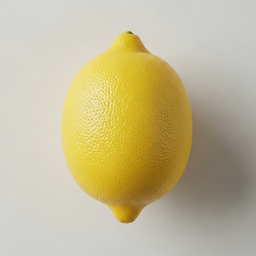 Lemon
Lemon Vitamin C from lemon enhances iron absorption from chickpea falafel
Technical: Falafel (fried chickpea dough) contains 3.4mg non-heme iron per 100g, but phytic acid binds 50-60% of this. Lemon's vitamin C reduces Fe³⁺ to Fe²⁺ and forms soluble iron-ascorbate complexes that bypass phytate binding. Frying falafel already reduces phytate by 20-30% (heat degradation), and lemon triples absorption of the remainder. Together they restore 70-80% of potential iron absorption.
What does this mean for you? Always squeeze lemon over your falafel or use a lemon-tahini dressing. This is standard in Middle Eastern cuisine and makes the iron from chickpeas available.
Falafel 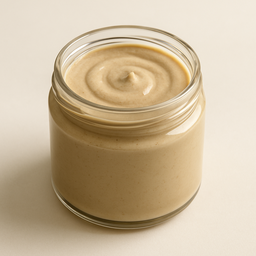 Tahini
 Complete protein through chickpea + sesame + wheat
Technical: Falafel (chickpeas) lacks the essential amino acid methionine. Tahini (sesame) and wheat (whole wheat pita) are rich in methionine. Together they form a complete protein profile with all 9 essential amino acids — comparable to animal protein but plant-based. This principle is called 'protein complementarity'.
What does this mean for you? Always eat falafel with tahini and pita — not just delicious but also a complete plant protein. Middle Eastern cuisine discovered this centuries ago.
Falafel 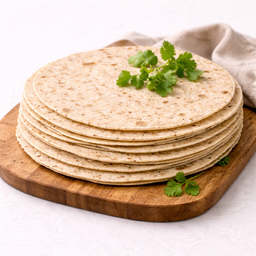 Whole Wheat Tortilla
 Complete protein through chickpea + sesame + wheat
Technical: Falafel (chickpeas) lacks the essential amino acid methionine. Tahini (sesame) and wheat (whole wheat pita) are rich in methionine. Together they form a complete protein profile with all 9 essential amino acids — comparable to animal protein but plant-based. This principle is called 'protein complementarity'.
What does this mean for you? Always eat falafel with tahini and pita — not just delicious but also a complete plant protein. Middle Eastern cuisine discovered this centuries ago.
Falafel  Yogurt
 Legume protein + probiotics for protein synthesis and digestion
Technical: Falafel provides 13g plant protein per 100g (chickpea PDCAAS 0.78). Yogurt adds complete animal protein (10g) with high PDCAAS (1.0), plus probiotic lactobacilli that support digestion of legume fibers. The amino acid profiles are complementary: falafel provides lysine, yogurt methionine. Yogurt's lactic acid also lowers gut pH, promoting mineral absorption.
What does this mean for you? Falafel with yogurt sauce is the classic combination that's not only delicious but also completes your protein. The yogurt supports digestion of the chickpeas.
Recipes with Falafel
Discover delicious recipes featuring falafel:
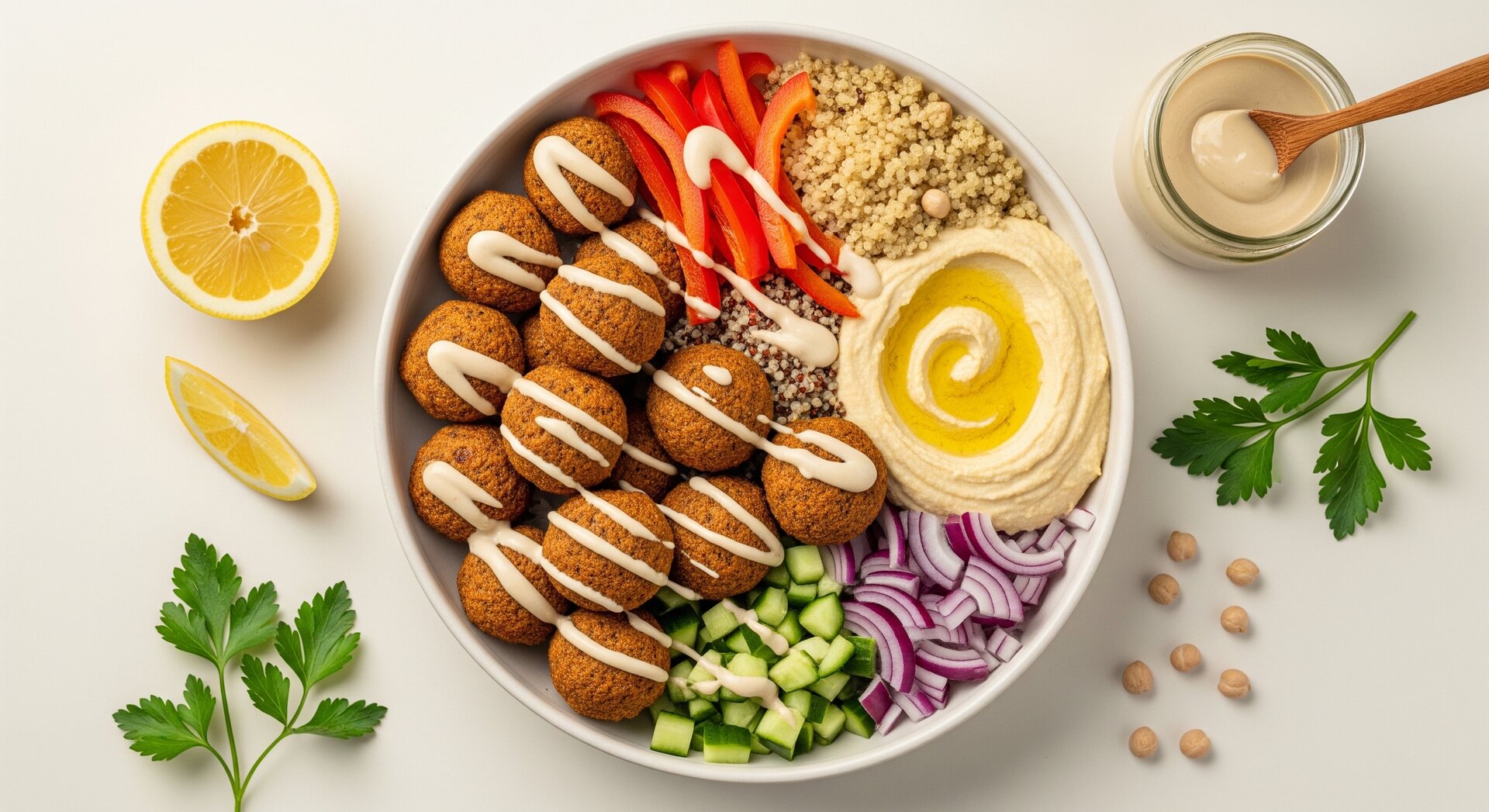 Falafel Bowl with Hummus and Tahini Dressing 25 min Mediterranean bowl with warm and fresh layers
  946 kcal
  32g protein 2 synergies
 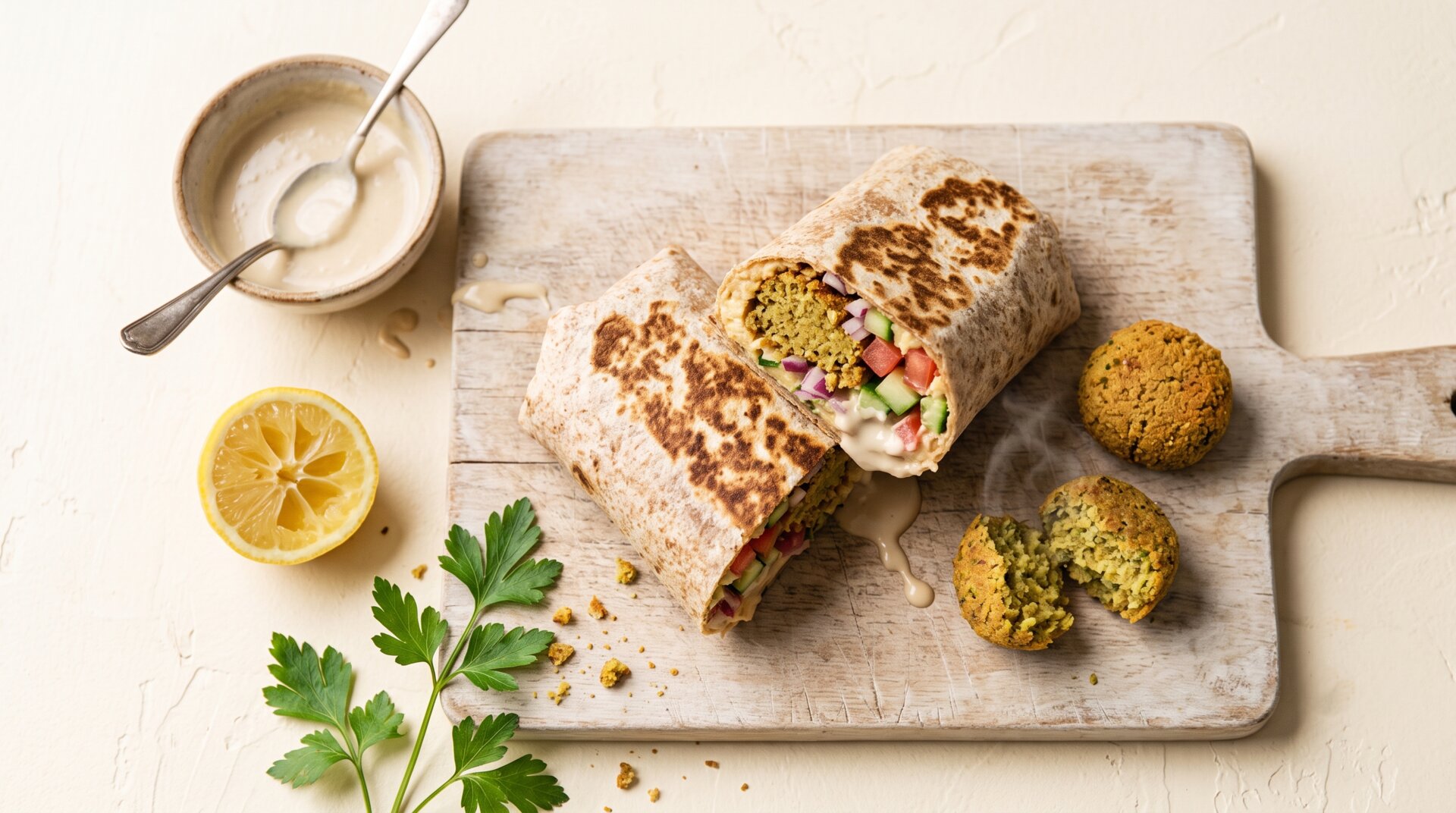 Mediterranean Falafel Wrap 25 min Crispy falafel, creamy hummus and tahini in whole wheat tortilla 520 kcal 22g protein 2 synergies
  In the Kitchen
Storage
Location:Refrigerator
Shelf life:3-4 dagen, ook in te vriezen
Preparation
Pan-fry falafel in a thin layer of olive oil, bake it, or cook it in the air fryer. Use soaked, uncooked chickpeas for the best texture and avoid frying too long so the outside stays crisp without becoming too dark.
Conversions
Substitutes
Smart preparation
1Make falafel from soaked, not cooked, chickpeas.
Why?
Cooked chickpeas give a mushy texture; raw soaked chickpeas become firmer and crispier.
2Let the falafel mixture rest in the fridge for 30 minutes before shaping.
3Deep-fry falafel at 180 degrees; lower makes them greasy, higher burns the outside too quickly.
Caution / Warnings
Falafel is very safe, but there are scientific considerations:
FODMAP sensitivity Moderate
Chickpeas contain GOS (galactooligosaccharides), a type of carbohydrate that may cause gas or bloating in sensitive people.
Traditional use
Islamic tradition
Falafel in Middle Eastern tradition
Falafel has a long history in the Middle East and is often linked with street food, mezze and fasting dishes. Some regions use chickpeas, while Egyptian ta'ameya is usually made with fava beans.
Summary
Falafel combines chickpeas, fresh herbs and spices in crisp balls with plant protein and fiber. Make them from soaked chickpeas and choose baking or air frying for a lighter preparation.